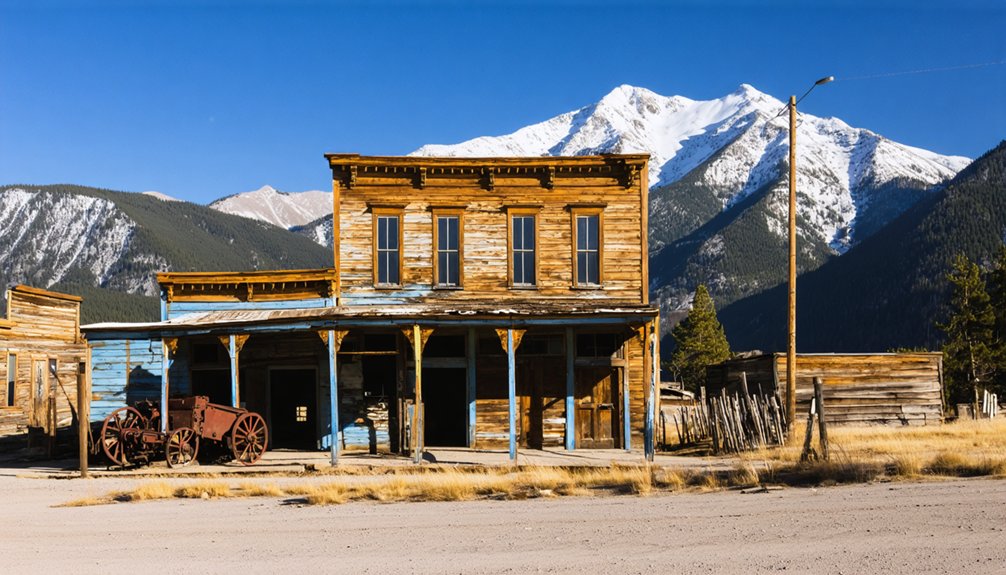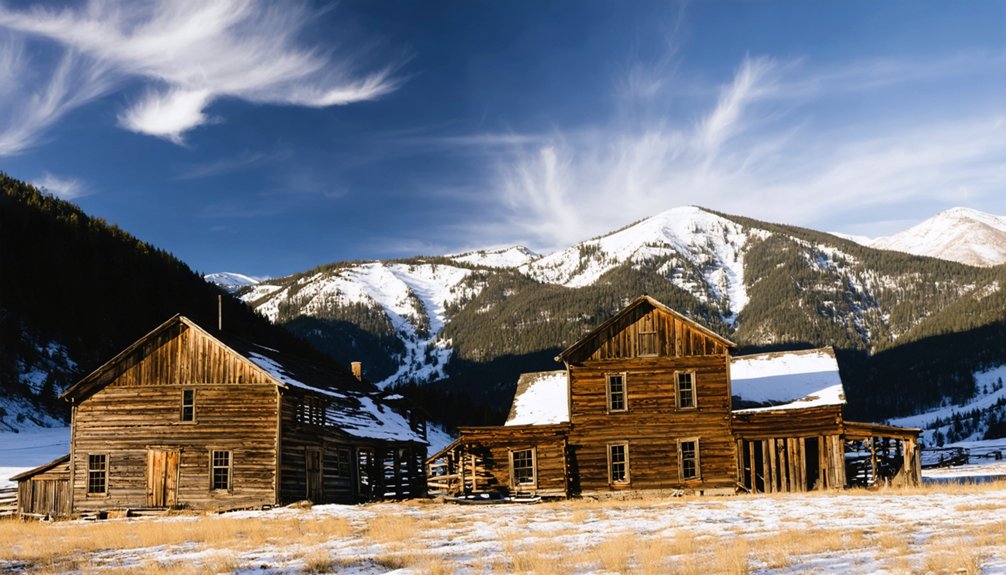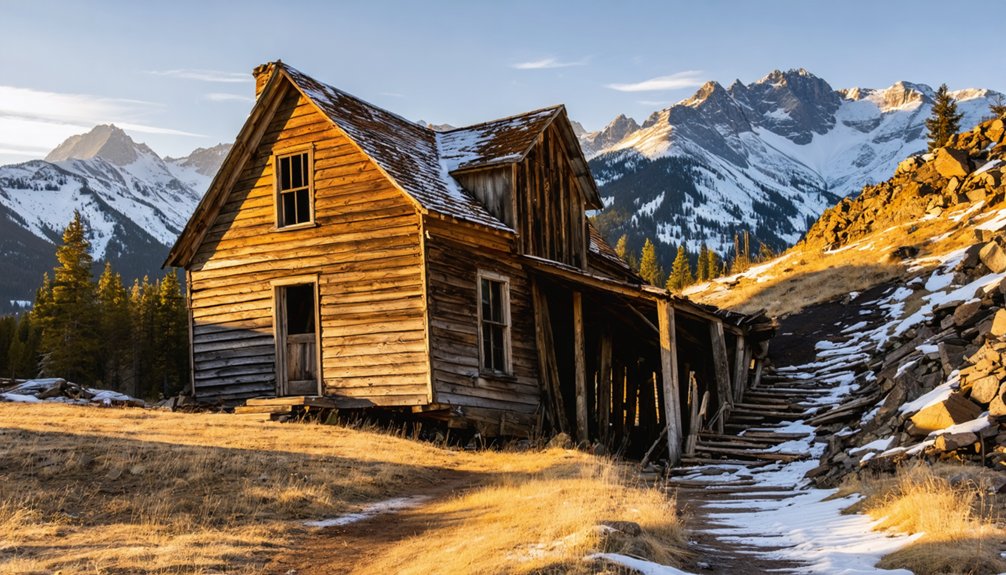
Pearl, Colorado was a mining settlement established in 1889 near the Wyoming border at 8,400 feet elevation. You’ll find it thrived briefly during the copper mining boom, centered around the productive Wolverine Mine. The town featured businesses and a post office until declining ore deposits led to its abandonment by 1919. Today, you can explore crumbling smelter foundations and weathered mining infrastructure—remnants of this once-vibrant mountain community’s short-lived prosperity.
Key Takeaways
- Pearl was a copper mining town established in 1889 near the Wyoming border, named after its first postmistress Pearl Wheeler.
- The Wolverine Mine was the area’s most productive copper source until depleted resources led to the town’s abandonment by 1919.
- Situated at 8,400 feet elevation, Pearl’s harsh mountain environment contributed to its difficulty sustaining permanent settlement after mining declined.
- Visitors can explore crumbling smelter foundations, weathered mining infrastructure, and preserved residential quarters that showcase the town’s mining heritage.
- Access requires high-clearance vehicles on unpaved forest roads, with rocky terrain necessitating careful navigation and proper preparation.
The Birth of a Mining Settlement (1889)
As the last decade of the 19th century approached, Pearl, Colorado emerged from the rugged terrain of North Park as a promising mining settlement built on copper discoveries.
You’ll find its origins firmly rooted in the copper boom that attracted early settlers to this northwestern corner of the region. The town was officially established in 1889 and named after Pearl Wheeler, who served as the first postmistress and had family connections to prominent local Benjamin Franklin Burnett, her father.
Mining technology of the era supported the development of approximately twelve mines in the area, with the Wolverine Mine standing as the most productive. During this period, copper was crucial for manufacturing electrical wiring throughout the rapidly industrializing nation.
Though Pearl wouldn’t be formally incorporated until November 25, 1901, its identity was shaped by the promise of copper wealth that drove America’s growing electrical and machinery industries.
Life at 8,400 Feet: Pearl’s Mountain Setting
The austere beauty of Pearl’s mountain environment directly shaped the town’s identity, challenges, and opportunities. Perched at 8,400 feet and just two miles south of the Wyoming border, Pearl embodied the quintessential high-altitude experience.
Here, you’d witness mountain ecosystems in constant flux—spruce and fir forests housing elk, deer, and marmots adapting to seasonal changes. Colorado’s typical mountain elevation means many higher trails like those near Pearl remain inaccessible until July due to persistent snowpack. The town’s position fell well below the elevation of Colorado’s highest passes like Trail Ridge Point at 12,183 feet, which allowed for somewhat milder conditions compared to these extreme altitudes.
Daily life demanded altitude adaptation from residents. The thin mountain air complicated physical labor, while extreme weather patterns required specialized building techniques.
Living at elevation wasn’t merely challenging—it necessitated complete physical and architectural adaptation to mountain realities.
Summer temperatures remained moderate compared to lower elevations, but winters brought isolation through heavy snowfall and treacherous conditions.
The mountain setting that once challenged survival now attracts recreation seekers. Modern visitors traverse nearby Baxter Pass for hiking and off-road adventures, experiencing the same rugged terrain that defined the resilience of Pearl’s original inhabitants.
The Wolverine Mine: Engine of Pearl’s Economy
Pearl’s economic fortunes rested almost entirely on the Wolverine Mine, discovered in 1875 by James Bourn and Alexander Campbell within the aptly named Campbell Mining District.
As the largest operation among a dozen mines in the area, Wolverine operations expanded under Edward Phillip Weber’s ownership in 1879, with L.D.C. Gaskill serving as foreman. Gaskill brought valuable experience having previously operated Saco Mine successfully in 1873 and 1874.
The mine’s economic impact was substantial yet ultimately constrained. Despite impressive ore production and copper discovery in 1900, the “refractory” nature of the minerals demanded local processing facilities that didn’t materialize until 1905. The mining boom at Pearl in 1900 led to significant development with six active mines and infrastructure growth.
When the smelter finally arrived, it operated just one day before transportation costs forced abandonment. Weber temporarily closed operations in 1883, and by 1886, the mine stood idle—a victim of prohibitive expenses that freedom from railroad isolation might’ve prevented.
Daily Life in an Early Colorado Mining Town
While the Wolverine Mine defined Pearl’s economic landscape, daily life for residents revolved around meeting basic needs in a harsh frontier setting.
You’d find most families living in simple frame houses or log cabins, often sharing limited space as resources were scarce. Similar to Bannack, Montana, residents had to contend with the challenges of frontier lawlessness in their daily lives. Your daily routines would center around work, with men spending long shifts underground while others maintained essential trades. Much like in Cardinal, many residents sought entertainment and relief in vice activities that were common in mining communities.
Community gatherings served as significant respites from hardship. You could expect:
In the hard-pressed mining community, social gatherings provided essential relief from daily struggles and isolation.
- Social interactions at the local saloon or dance hall
- Trading and bartering with neighbors for necessities
- Quick, communal funeral services when tragedy struck
- Schooling for children in a one-room schoolhouse
Medical care remained minimal, with doctors rare and families handling most healthcare and burial preparations themselves.
Pearl’s Brief Golden Era (1890s-1900s)
During the late 1890s, a remarkable confluence of economic factors and mining opportunities transformed Pearl from a modest settlement into a thriving frontier community.
The Wolverine Mine became the centerpiece of a dozen operations that drove the local economy, with copper’s high market demand fueling unprecedented growth. You’d have found a bustling town along the route to Big Creek Lake, complete with a post office named for Pearl Wheeler and businesses serving miners and their families. As seen in other Colorado mining towns, Pearl’s structures likely faced the natural degradation that Bancroft documented in her studies of ghost towns throughout the state. Following a common pattern in the region, Pearl was ultimately abandoned when the copper resources depleted and economic viability diminished.
Despite economic fluctuations in copper prices, community resilience kept Pearl vibrant for nearly two decades. The town adapted to changing production levels and market demands until the early 1900s, when declining profitability began to challenge its sustainability.
This brief golden era established Pearl’s place in Colorado’s mining heritage before its eventual abandonment by 1919.
The Construction and Operation of Pearl’s Smelter
As Pearl’s mining economy expanded, ambitious plans for local ore processing emerged with the 1905 construction of a copper smelter on the hillside south of town. The smelter design incorporated the period’s typical layout with basic processing equipment positioned to leverage the hillside’s natural gradient for efficient ore movement.
Despite significant investment, this industrial centerpiece never became operational.
Four factors contributed to the smelter’s failure:
- Rapidly declining production from local mines
- Insufficient ore deposits to sustain operations
- Economic challenges making large-scale processing unfeasible
- Lack of continued investment
The economic impact of this non-operational facility was profound. What was intended to create jobs and stimulate Pearl’s growth instead became a symbol of unfulfilled potential, ultimately contributing to the town’s economic decline and eventual abandonment. Similar to Pueblo’s industry, the smelting process would have involved separating metals from ores using intense heat to create valuable refined materials.
Decline and Abandonment: Why Pearl Became a Ghost Town
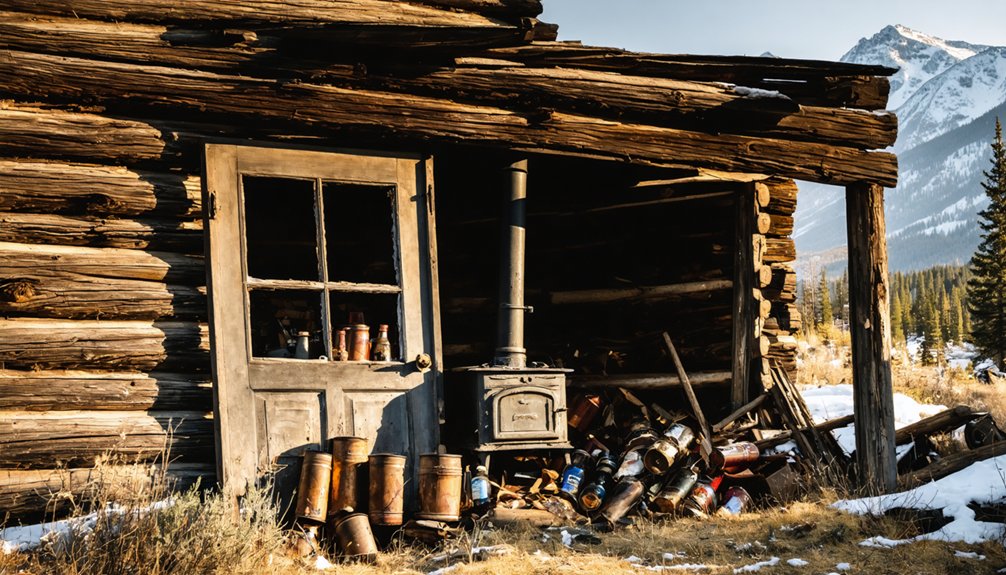
Pearl’s transformation into a ghost town began abruptly after its copper mining industry collapsed in the early 1900s. The town’s economic instability was inevitable once mine production sharply declined and the newly built smelter failed to operate due to insufficient ore output.
With no alternative industries to sustain the population, Pearl faced a rapid community dispersal. Businesses shuttered as residents departed in search of livelihood elsewhere. The town’s remote, mountainous location and harsh climate further complicated any potential revival efforts.
Social institutions – schools, churches, and community services – closed as the population dwindled. Unlike more resilient settlements, Pearl lacked the infrastructure for agriculture or tourism that might’ve provided economic alternatives.
What Remains Today: Exploring Pearl’s Historical Ruins
As you traverse Pearl’s ghost town landscape, you’ll encounter the crumbling smelter foundations that once processed ore from the surrounding mines.
Weathered mining infrastructure, including equipment remnants and collapsed shaft entrances, provides tangible evidence of the area’s industrial past.
The preserved residential quarters, with some cabins still standing amid the reclaiming forest, offer the most intimate glimpse into the daily lives of Pearl’s former inhabitants.
Crumbling Smelter Foundations
The crumbling foundations of Pearl’s copper smelter stand as the most significant remnants of this once-thriving mining community.
Constructed around 1901 to process ore from the Wolverine Mine, these stone and concrete bases reveal critical insights into early smelter technology and Colorado’s rich mining heritage.
As you explore the site, you’ll notice:
- Processing floor remnants where copper ore was refined
- Furnace base foundations that once housed intense heat operations
- Scattered mining equipment fragments among the pine forest regrowth
- The original industrial complex footprint, still discernible despite decades of abandonment
Without preservation efforts, these archaeological treasures face ongoing threats from coal seam fires, vegetation encroachment, freeze-thaw cycles, and occasional vandalism.
The foundations represent not just industrial methods but the dramatic economic shift that transformed Pearl from boomtown to ghost town by 1919.
Weathered Mining Infrastructure
Rusty ore carts and fragmented rail tracks punctuate the landscape of Pearl today, offering tangible connections to its mining heyday. As you explore the site, you’ll encounter weathered tools scattered near abandoned shaft entrances—broken drills and hand implements that once extracted the area’s mineral wealth.
The infrastructure’s skeletal remains tell a story of industrial ambition. Collapsed tunnels reveal decaying wooden supports and pulley systems that once facilitated ore extraction.
Near mine openings, you’ll find discarded buckets and winches that hauled precious cargo to the surface. Rusting machinery parts—likely from crushers and conveyors—lie exposed to the elements, slowly returning to the earth.
These artifacts stand as silent witnesses to Pearl’s boom-and-bust cycle, preserving industrial heritage while embodying the transience of extractive economies in Colorado’s mining districts.
Preserved Residential Quarters
Beyond the industrial remnants, Pearl’s most compelling features include the dozen or so weathered buildings that once housed its mining community.
Walking through the pine-reclaimed terrain, you’ll find former residences exhibiting architectural significance from the mining era, with some still serving as private summer residences for seasonal habitation.
The residential quarters reveal Pearl’s history through:
- Visible foundations that outline the original town plan and spatial organization
- Household artifacts abandoned during the town’s decline, suggesting sudden departure
- The old schoolhouse, standing as evidence of community life during Pearl’s heyday
- Weathered but intact cabins showcasing domestic architecture and living conditions
These residential ruins, though deteriorating, provide essential archaeological insight into daily life within this once-thriving mining community.
Visiting Pearl: Practical Information for History Enthusiasts
While planning a visit to Pearl, Colorado, history enthusiasts should consider the town’s remote location at 8,406 feet elevation in Jackson County. Access requires travel on unpaved forest roads, typically demanding high-clearance or four-wheel-drive vehicles, especially when combining ghost town exploration with hiking trails around Big Creek Lake.
Visitors may also encounter abandoned structures in Table Rock, remnants of a bygone era that add to the area’s historical charm. Exploring these sites offers a glimpse into the lives of early settlers who once thrived in this rugged landscape. Capturing photographs of these dilapidated buildings can evoke a sense of both nostalgia and wonder for the past.
The site offers more extensive remains than nearby Teller City, with visible original structures, platted streets, and mining infrastructure including the significant Wolverine Mine ruins.
You’ll navigate rocky, uneven terrain while examining historical artifacts scattered throughout the area.
Prepare appropriately with water, navigation aids, and seasonal clothing as amenities are nonexistent and winter conditions can be harsh.
Remember to respect the site’s heritage by leaving artifacts undisturbed, preserving Pearl’s mining history for future visitors.
Frequently Asked Questions
Are There Any Reported Paranormal Activities or Ghost Sightings in Pearl?
Unlike nearby Cripple Creek, Pearl hasn’t documented ghost encounters or haunted locations. You’ll find no specific paranormal reports in this quiet ghost town where some families still summer at small ranches.
What Happened to Pearl’s Residents After the Town Was Abandoned?
After Pearl’s collapse, you’ll find residents primarily relocated to other mining settlements. This community dispersal created a legacy impact as families gradually sought economic opportunities elsewhere, while a few maintained seasonal ranches.
Has Pearl Ever Been Considered for Historical Preservation or Restoration Efforts?
Scattered ruins stand silent while preservation hopes remain distant. You’ll find Pearl hasn’t received formal restoration efforts despite its historical significance, primarily due to preservation challenges including remote location and limited remaining structures.
Were Any Notable Inventions or Mining Techniques Pioneered at Wolverine Mine?
You won’t find any notable inventions or pioneering mining techniques at Wolverine Mine. It utilized standard steam-powered equipment of its era rather than developing innovative extraction methods.
Did Pearl Have Connections to Any Famous Historical Figures or Events?
You’ll find limited documentation of famous visitors to Pearl. Its historical significance remained primarily local within Colorado’s mining narrative rather than attracting nationally recognized figures or pivotal events.
References
- https://www.gutenberg.org/files/51678/51678-h/51678-h.htm
- https://www.youtube.com/watch?v=VSDDe1CN038
- https://coloradosghosttowns.com/wolverine colorado ghost town.html
- https://en.wikipedia.org/wiki/List_of_ghost_towns_in_Colorado
- https://sah-archipedia.org/buildings/CO-01-JC06
- https://digital.denverlibrary.org/nodes/view/1022523
- https://www.nps.gov/parkhistory/online_books/blm/cultresser/co/2/chap8.htm
- https://history.denverlibrary.org/sites/history/files/RealPioneersColorado.pdf
- https://archive.org/download/isolatedempirehi00athe/isolatedempirehi00athe.pdf
- https://pubs.usgs.gov/pp/0138/report.pdf