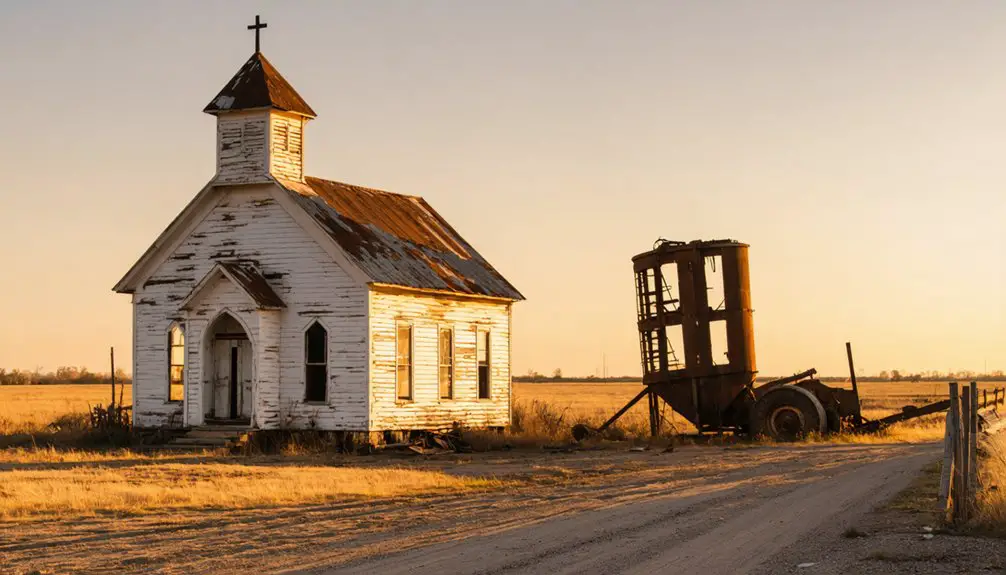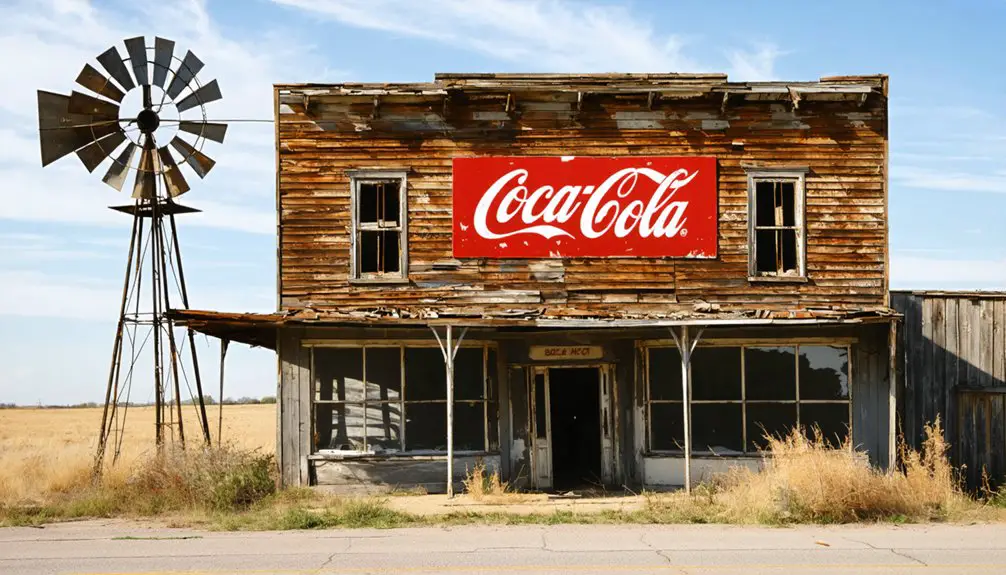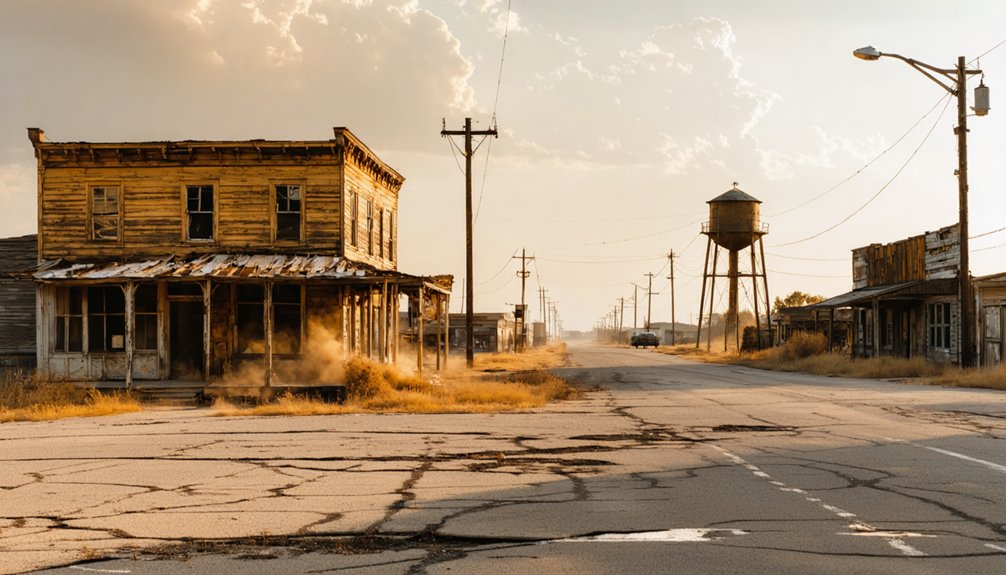
Planning a ghost town road trip to Avard, Oklahoma means heading about 7 miles south and 6 miles west of Alva, or approaching from the northeast via Waynoka. You’ll pass open prairie, grain elevators, and abandoned structures that hint at a town that once thrived as a railroad hub before the Dust Bowl and Depression left it nearly empty. With only 11 residents remaining and haunted legends still circulating, there’s far more to this forgotten place than meets the eye.
Key Takeaways
- Avard is located about 7 miles south and 6 miles west of Alva, making it an easy half-day detour through Oklahoma prairie.
- Founded in 1895, Avard declined due to the Great Depression, Dust Bowl, 1940s tornadoes, and railroad abandonment, leaving only 11 residents today.
- The abandoned gym is a paranormal hotspot linked to ghost stories, unexplained sounds, and shadowy figures worth documenting photographically.
- Pack essentials including water, a flashlight, first-aid kit, sturdy boots, and a fully charged phone with offline maps downloaded.
- Visit during golden hour for best photography, but stay cautious of collapsing structures, uneven terrain, and Oklahoma’s rapidly changing weather.
What Makes Avard, Oklahoma a Ghost Town Worth Visiting?
Tucked away in the remote plains of Woods County, Oklahoma, Avard checks every box for a ghost town worth chasing down. Founded in 1895, this former railroad junction built real momentum before the Great Depression, Dust Bowl, and 1940s tornadoes stripped it down to bare bones.
Avard was built on momentum — then the Depression, Dust Bowl, and tornadoes took almost everything.
Today, you’ll find abandoned buildings, a historic gym tied to local legends of paranormal activity, and a grain elevator standing quietly against the Oklahoma sky.
Historical anecdotes connect Avard to a hard-lived Wild West era that few towns in the region can match. With only 11 residents recorded in 2020, the silence here feels earned.
It’s the kind of place that rewards curious travelers who’d rather explore forgotten roads than stick to the tourist trail.
How to Get to Avard From Alva or Waynoka
If you’re coming from Alva, head roughly seven miles south and six miles west to reach Avard, making it an easy half-day detour through open Oklahoma prairie.
From Waynoka, you’ll approach from the southwest, following rural roads northeast until the town’s grain elevator rises into view as your first key landmark.
Either route drops you into a quiet crossroads where abandoned buildings and a historic gym quickly signal that you’ve arrived somewhere time largely left behind.
Driving From Alva
Reaching Avard from Alva takes only a short drive southwest—roughly seven miles south and six miles west—making it an easy half-day detour if you’re already exploring northwest Oklahoma. You’ll leave Alva’s modest downtown behind and head into open plains, where the landscape gradually shifts toward something quieter and more forgotten.
As you roll in, you’ll notice the historical architecture almost immediately—deteriorating buildings that once housed a bustling railroad junction community. The grain elevator still stands, and abandoned structures hint at local legends tied to the Wild West era and darker cold-case folklore.
There’s no complicated navigation here; the drive itself is part of the experience. You’re trading Alva’s familiar streets for a raw, unhurried glimpse into a place that time largely left behind.
Approaching From Waynoka
Approaching from Waynoka puts you on the northeastern end of Avard’s story, since the town sits directly northeast of Waynoka in Woods County. Head northeast out of Waynoka, and you’ll cover a short stretch of open Oklahoma plains before Avard appears on the horizon.
The drive itself sets the mood — wide skies, flat farmland, and a quiet that hints at how isolated this junction once felt. When you arrive, you’re stepping into a place where historical preservation is practically nonexistent, letting local legends fill the gaps that crumbling structures leave behind.
The abandoned gym, deteriorating railroad-era buildings, and whispered stories about unexplained sounds reward anyone willing to explore without guardrails. Waynoka makes a solid base camp if you want to extend your northwest Oklahoma road trip.
Key Landmarks En Route
Whether you’re coming from Alva or Waynoka, the landmarks along the way are sparse enough that you’ll want to fix a few mental markers before you leave. Local legends thrive out here partly because the landscape feels forgotten, which makes every structure you spot feel significant.
Watch for these key reference points:
- Grain elevator silhouette – visible from a distance, it signals you’re close
- Open farmland stretches – the flat terrain confirms you’re tracking southwest of Alva correctly
- Deteriorating roadside structures – early signs of historical preservation challenges facing the area
- Railroad-era remnants – scattered infrastructure hinting at Avard’s junction past
Trust your mileage. From Alva, count roughly seven miles south and six miles west, and Avard will quietly appear.
What You’ll See in Avard: The Gym, Grain Elevator, and Abandoned Buildings
Once you arrive in Avard, the remnants of its former life as a railroad junction town come into immediate focus. You’ll notice abandoned buildings standing quietly along the roadside, their weathered frames reflecting decades of historic architecture left largely untouched.
The grain elevator rises prominently against the flat Oklahoma skyline, a symbol of the town’s agricultural past. Don’t miss the old gym, which draws visitors not just for its structural character but also for the local folklore surrounding it — paranormal enthusiasts frequently report unexplained sounds and apparitions inside.
You’ll also spot the former Avard Tribune office among the deteriorating structures. Each building tells a fragment of the town’s story, making Avard an authentic, unpolished destination for anyone craving genuine ghost-town exploration.
How Avard Went From Railroad Hub to Ghost Town
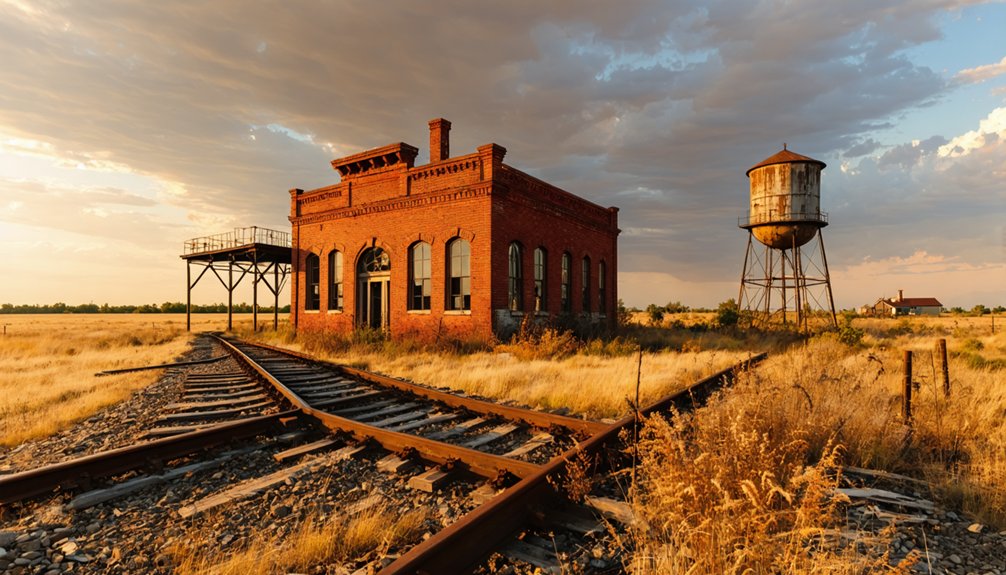
Avard’s rise and fall traces a familiar frontier arc: founded in 1895 and incorporated by 1904, it quickly grew into a busy railroad junction town, drawing agricultural activity and commerce to what would otherwise have been an unremarkable stretch of northwest Oklahoma.
Founded in 1895, Avard transformed an unremarkable Oklahoma stretch into a thriving railroad junction almost overnight.
Then the hits came fast:
- The Great Depression gutted the local economy
- The Dust Bowl destroyed the agricultural base
- Tornadoes in the 1940s leveled key historical landmarks
- Railroad decline stripped away Avard’s entire regional purpose
What you see today reflects that collapse — abandoned structures, local legends about restless spirits, and a community of roughly 11 residents holding on.
Avard didn’t disappear overnight; it unraveled slowly, leaving behind just enough to make you feel the weight of everything that once was.
The Haunted Gym and Paranormal History of Avard
Among Avard’s crumbling remnants, the old gym stands out — not just for its deteriorating walls, but for the stories that cling to it. Locals and visitors alike report unexplained footsteps, knocking sounds, and shadowy apparitions moving through its hollow interior. These local legends have transformed the structure into one of northwest Oklahoma’s most talked-about paranormal destinations.
If you’re drawn to historical legends and the eerie atmosphere that ghost towns carry, the gym delivers both. You’ll find no tour guides or velvet ropes here — just open road, abandoned architecture, and a building that seems to hold something unresolved.
Avard’s paranormal reputation also connects to a local cold-case story, deepening the town’s darker character. Come curious, but don’t expect to leave without questions.
How to Photograph Avard’s Abandoned Buildings Like a Pro
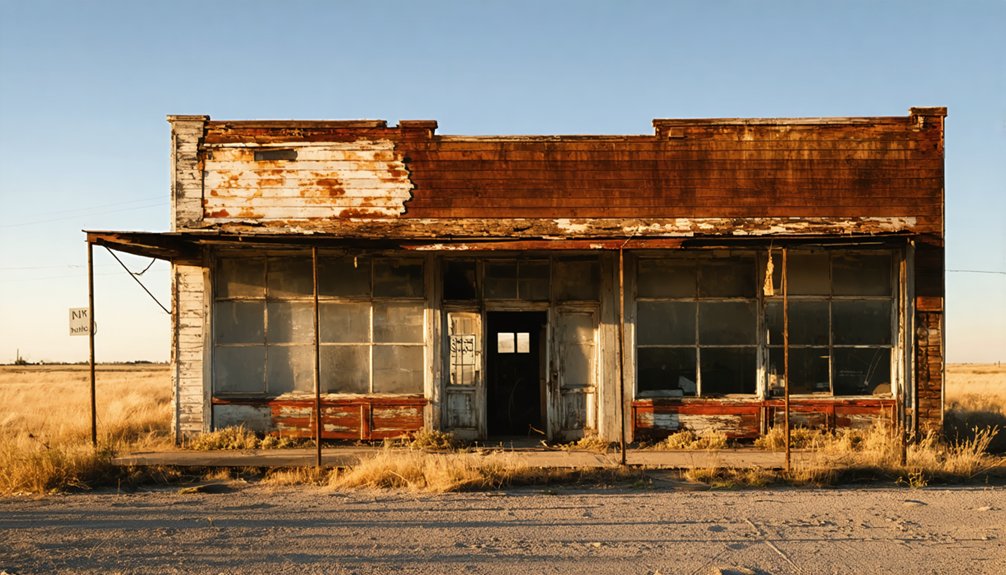
Photographing Avard rewards patience and preparation. You’re stepping into a place where historical artifacts and local legends collide, so respect the atmosphere and shoot with intention.
- Arrive during golden hour — soft morning or late-afternoon light transforms deteriorating wood and rusted metal into striking compositions.
- Frame the grain elevator against open sky — its scale communicates Avard’s former agricultural identity better than any caption could.
- Capture texture up close — peeling paint, broken windows, and weathered signage tell the town’s story without words.
- Document the abandoned gym carefully — it carries the heaviest local legends, so wide-angle shots preserve its full eerie context.
Bring a tripod, shoot in RAW, and move slowly. Avard’s details reveal themselves to photographers who actually look.
What to Pack for a Day Trip to Avard, Oklahoma
Before you head out to this semi-abandoned railroad town, pack a sturdy backpack loaded with water, snacks, a flashlight, and a fully charged phone for orientation.
Wear layered clothing and broken-in boots, since you’ll be steering through uneven terrain around deteriorating structures and open fields.
Toss in a basic first-aid kit, an emergency whistle, and a paper map, because cell service in remote Woods County can be unreliable.
Essential Gear And Supplies
Packing smart makes the difference between a memorable ghost-town outing and a frustrating one, especially for a remote stop like Avard. You’re heading into a semi-abandoned settlement where local legends run deep and historical preservation matters, so come prepared.
- Camera and extra batteries – Avard’s abandoned buildings and deteriorating railroad-era structures demand serious documentation.
- Sturdy walking shoes – Uneven terrain around the grain elevator and abandoned gym will test soft footwear quickly.
- Water and snacks – Services are nearly nonexistent, so carry everything you’ll need for several hours.
- Portable flashlight – Dim interiors and shadowy corners appear frequently when exploring structures tied to Avard’s darker folklore.
Respect the site, stay aware of your surroundings, and you’ll leave with incredible stories and photographs.
Clothing For Outdoor Exploration
Gear fills your bag, but what you wear matters just as much when you’re wandering a semi-abandoned railroad town in northwest Oklahoma. Avard’s terrain mixes cracked pavement, overgrown lots, and deteriorating structures, so wear sturdy closed-toe boots with ankle support.
Oklahoma weather shifts fast, so layer a moisture-wicking base under a lightweight jacket you can shed easily. Long pants protect your legs from brush and debris when you’re tracing historical legends around the old gym or grain elevator.
A wide-brim hat and UV-blocking sunglasses handle the open plains sun relentlessly. Pack a bandana for dust.
After exploring, you’ll want clean clothes ready before stopping for local cuisine in nearby Alva, so toss a spare shirt in your bag.
Safety And Emergency Items
A remote ghost town like Avard demands that you treat safety as seriously as your curiosity. Abandoned structures tied to historical preservation efforts can shift or collapse without warning. Local folklore won’t help you if you’re injured miles from town.
Pack these essentials:
- First aid kit — bandages, antiseptic wipes, and pain relievers handle minor injuries fast.
- Fully charged phone and portable power bank — cell coverage is unreliable; download offline maps beforehand.
- Flashlight with extra batteries — dark interiors hide hazards quickly.
- Emergency contact plan — tell someone your exact route and expected return time.
Freedom means exploring on your own terms, but preparation keeps that freedom intact. Don’t let Avard’s isolation turn your adventure into an emergency.
Frequently Asked Questions
Is There an Entry Fee or Permit Required to Visit Avard?
You don’t need an entry fee or permit to explore Avard’s ghost town history. Just respect private property, stay aware of your visitor safety, and you’re free to roam this hauntingly abandoned Oklahoma treasure.
Are There Any Nearby Towns With Hotels or Accommodations?
You’ll find hotels in both Alva and Waynoka, two nearby towns offering local dining options and outdoor activities. They’re perfect bases for exploring Avard’s haunted streets while enjoying the freedom of wide-open Oklahoma adventure!
What Is the Cold-Case Story Associated With Avard’s Dark History?
The cold-case story’s details aren’t fully documented, but you’ll find urban legends surrounding mysterious disappearances that haunt Avard’s shadowy past. These chilling tales deepen the town’s eerie reputation, making your ghost-town exploration feel thrillingly unpredictable and boldly adventurous.
Can Visitors Legally Enter Avard’s Abandoned Buildings and Structures?
You can’t freely enter Avard’s abandoned structures without permission — trespassing laws apply here. Always respect property boundaries, seek owner consent, and stay on public areas to enjoy this hauntingly beautiful ghost town without legal trouble.
What Is the Best Time of Year to Visit Avard?
When the dust settles, fall is your ideal visiting time. Seasonal weather in September and October brings mild temperatures, letting you freely explore Avard’s haunting remnants and abandoned structures without battling brutal Oklahoma summer heat.
References
- https://www.youtube.com/watch?v=WKmqMwOawgE
- https://en.wikipedia.org/wiki/Avard
- https://nwokbuzz.com/avard-haunted-cold-case/
- https://en.wikipedia.org/wiki/List_of_ghost_towns_in_Oklahoma
- https://myfamilytravels.com/this-nearly-abandoned-oklahoma-town-looks-like-everyone-left-mid-scene-and-never-came-back/