Planning a ghost town road trip to Black Jack, Kansas puts you on the same Douglas County prairie where frontier traders, families, and craftsmen once built a thriving Santa Fe Trail community. You’ll walk preserved wagon ruts, explore a National Historic Landmark battlefield, and stand where John Brown fired the first shots of Bleeding Kansas in 1856. It’s raw, authentic Kansas history with almost nothing between you and the landscape. Stick around to uncover everything this forgotten trail town still has to tell you.
Key Takeaways
- Black Jack, Kansas, is a ghost town located three miles east of Baldwin City near U.S. Highway 56 in Douglas County.
- The site is accessible from Kansas City, Lawrence, and Topeka through open Kansas countryside along the historic Santa Fe Trail corridor.
- Visitors can explore preserved wagon ruts, Black Jack Creek, and battlefield remains within Robert Hall Pearson Memorial Park and Black Jack Park.
- The Battle of Black Jack, fought June 2, 1856, led by John Brown, earned the site National Historic Landmark designation in 2012.
- Pack water, sunscreen, and sturdy shoes, and consider visiting nearby Baldwin City, Palmyra townsite, and other Santa Fe Trail landmarks.
What Is Black Jack, Kansas?
Though little remains of it today, Black Jack was once a thriving trail town in Douglas County, Kansas, founded in the mid-1850s as a supply and repair stop along the Santa Fe Trail. You’ll find the former townsite about three miles east of Baldwin City, near U.S. Highway 56, partially preserved within Robert Hall Pearson Memorial Park.
The community grew around Black Jack Creek, named for the blackjack oaks lining its banks. Local legends tie the area to some of the most turbulent moments in American frontier history, particularly the violent clash of Bleeding Kansas.
Thanks to ongoing preservation efforts, you can still walk land that carries the physical and historical imprint of a vanished world — trail ruts, creek bottom, and battlefield all intact.
How Black Jack Grew From Trail Town to Ghost Town
Black Jack got its start in 1854 or 1855 as a supply stop and repair station along the Santa Fe Trail. Drawing early settlers who built a tavern, hotel, general store, blacksmith shops, two churches, and a school.
At its peak, the town supported a full community of residents and travelers moving goods and people west.
When railroad expansion pulled traffic away from the trail, Black Jack lost its reason to exist and eventually faded into abandonment.
Black Jack’s Trail Town Origins
Sitting alongside the historic Santa Fe Trail, Black Jack got its start in 1854 or 1855 as a supply point and repair station for westward-bound travelers making the long haul across Kansas.
The community took its name from Black Jack Creek, which earned its own name from the blackjack oak trees lining its banks.
Early settlers like William Riley, David Fearar, and E.D. Pettengill helped build a functioning town complete with a tavern, hotel, general store, blacksmiths, and a doctor’s office.
Local legends tied to this stretch of trail run deep, and historical artifacts scattered across the landscape tell the story of a place that once buzzed with frontier commerce.
You fundamentally are walking ground where westward expansion played out in real time.
Peak Growth And Community
By 1857, Black Jack had grown enough to earn formal incorporation, transforming from a dusty trail stop into a real community with lasting ambitions. A post office opened in 1858, anchoring daily life alongside a tavern, hotel, general store, blacksmiths, and a doctor’s office.
In 1859, residents built a schoolhouse and Presbyterian church, adding historic architecture that reflected genuine permanence.
You can almost picture the local legends who shaped this tight-knit settlement — traders, frontier families, and craftsmen carving out stability along one of America’s most demanding corridors.
Two churches served a growing congregation of settlers who believed Black Jack had a future. Then railroad expansion redirected traffic, Santa Fe Trail commerce dried up, and the town gradually emptied, leaving only traces behind for curious road trippers like you.
Railroad Decline And Abandonment
What the railroad giveth, the railroad taketh away — and for Black Jack, the tracks never even came close enough to matter. When rail lines bypassed the Santa Fe Trail corridor, freight wagons stopped rolling through, and Black Jack lost its reason for existing. Travelers who once needed supplies, repairs, and lodging simply had nowhere to stop anymore.
You can almost feel that silence when you visit today. The post office shuttered by the mid-1890s, businesses folded, and residents drifted toward towns with actual rail access.
Local folklore remembers Black Jack as a community that thrived on movement — and died when movement found another route. What remains now exists through historic preservation efforts, keeping the landscape honest about what was lost and why.
The Battle of Black Jack and the Bleeding Kansas Connection
Black Jack’s ghost town story can’t be separated from one of the most violent chapters in American history. On June 2, 1856, John Brown led his forces against Henry C. Pate’s encampment near Black Jack Creek, igniting what many historians call the first battle of the Civil War.
This clash was ground zero for Bleeding Kansas, the brutal territorial conflict over slavery that tore communities apart. When you visit today, interpretive signs guide you through where the fighting began and ended.
Local legends surrounding Brown’s raid still echo across the prairie. Historical artifacts and trail markers help you piece together what freedom truly cost on this land.
The battlefield earned National Historic Landmark status in 2012, cementing Black Jack’s place in America’s defining struggle.
Why Black Jack Is Called the Civil War’s First Battle
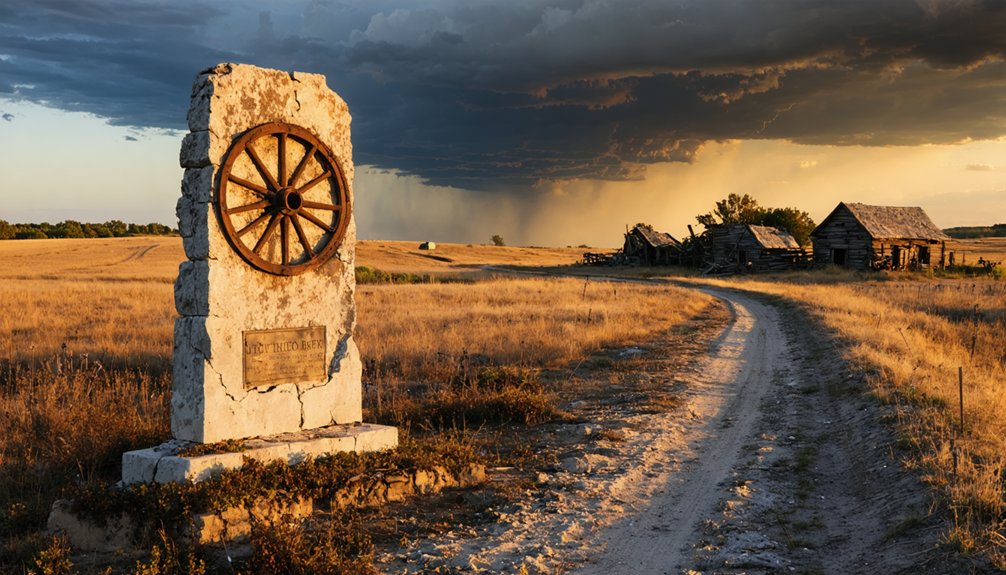
Although the Civil War’s official start is marked at Fort Sumter in April 1861, historians and scholars have long argued that the real first shot rang out five years earlier at Black Jack Creek. On June 2, 1856, John Brown’s forces attacked Henry C. Pate’s proslavery encampment here, making it the first organized armed confrontation of the Bleeding Kansas conflict.
Local legends surrounding Brown’s raid helped cement Black Jack’s place in American memory long before the National Historic Landmark designation arrived in 2012. You won’t find grand historical architecture here, but that’s precisely the point.
What you’ll discover is raw, preserved landscape where genuine political violence shaped the nation’s future. The battle’s outcome proved that freedom-minded settlers weren’t willing to surrender Kansas without a fight.
Where Is Black Jack and How Do You Get There?
Black Jack sits in Douglas County, Kansas, as an unincorporated community about three miles east of Baldwin City near U.S. Highway 56.
If you’re driving in from the Kansas City area, you’ll follow I-70 west before cutting south toward Baldwin City, where Highway 56 carries you straight toward the site.
The former townsite and battlefield rest within and around Robert Hall Pearson Memorial Park, making it an easy pull-off stop along a broader Santa Fe Trail road trip.
Black Jack’s Exact Location
Tucked into Douglas County, Kansas, Black Jack sits about three miles east of Baldwin City near U.S. Highway 56. You won’t find historical architecture lining a preserved main street here — Black Jack is unincorporated, meaning the land tells its story quietly through landscape rather than buildings.
The former townsite partially occupies Robert Hall Pearson Memorial Park, where local legends of frontier conflict and Santa Fe Trail travel still echo across the prairie. You’ll also want to locate Black Jack Park and Ivan Boyd Prairie Preserve, where Santa Fe Trail Marker #6 marks a roadside stop worth your time.
The site sits along the historic Santa Fe Trail corridor, making it a natural anchor point for exploring territorial Kansas on your own terms.
Nearest Towns And Highways
Getting to Black Jack is straightforward once you orient yourself around Baldwin City, Kansas, the nearest town of any size. From Baldwin City, drive roughly three miles east, and you’ll find the Black Jack battlefield area near U.S. Highway 56.
Highway 56 follows nearly the same corridor that Santa Fe Trail travelers once used, so you’re already tracing local legends before you arrive. The route cuts through open prairie and scattered woodland, giving you an honest preview of the landscape that shaped this vanished community.
You won’t find historic architecture standing here — Black Jack is a ghost town in the truest sense — but the natural setting preserves something equally compelling: visible trail ruts, creek bottomland, and a battlefield that changed American history long before the Civil War officially began.
Driving Routes To Consider
Whether you’re coming from Kansas City, Topeka, or Lawrence, U.S. Highway 56 is your clearest path to Black Jack. From Lawrence, head south on Kansas Highway 10 to Baldwin City, then drive roughly three miles east on Highway 56.
From Kansas City, take I-35 south and pick up Highway 56 west through Gardner.
Topeka travelers can head south on I-335 and connect through Osawatomie.
Each route carries you through open Kansas countryside, and the drive itself echoes the freedom of the original Santa Fe Trail corridor.
Black Jack began as a trail town serving westward travelers, and today’s historic preservation efforts keep that spirit alive.
Watch for signs directing you toward Black Jack Park once you’re near Baldwin City.
What’s Still Standing at the Black Jack Battlefield Today
Although the town of Black Jack has long since vanished, the battlefield preserves roughly 20 acres of authentic landscape you can still walk through today. Preservation efforts have kept this ground largely untouched, giving you a rare chance to see frontier Kansas as it once existed.
Three features anchor your visit:
- Santa Fe Trail wagon ruts cutting through the Ivan Boyd Prairie Reserve, worn deep by westward travelers
- Black Jack Creek, winding through wooded land where John Brown’s forces clashed with Henry Pate’s men
- Interpretive signs marking where the battle began and ended, providing historical context without overwhelming the space
You won’t find historical artifacts behind glass here. Instead, you’ll stand directly on ground that shaped America’s path toward civil war.
Walk the Santa Fe Trail Ruts at Ivan Boyd Prairie Reserve
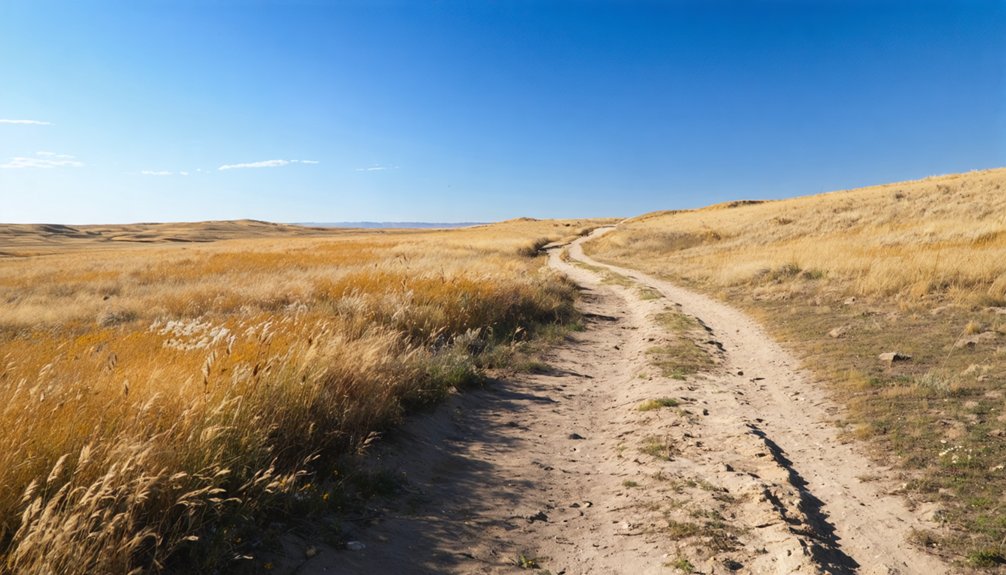
Few places let you walk directly in the footsteps of 19th-century traders, but Ivan Boyd Prairie Reserve is one of them. The reserve preserves some of the best remaining wagon ruts on the entire Santa Fe Trail, pressed deep into the earth by decades of westbound traffic.
You can trace those ruts across open grassland, surrounded by native flora that once framed the journey of thousands of travelers heading toward New Mexico. Historic markers along the route explain what life looked like for those passing through in the 1800s.
The landscape feels raw and unfiltered, no reconstructions, no crowds. You’re reading the land itself. Combined with Black Jack Creek nearby, this short walk delivers a powerful, grounded sense of what frontier movement actually looked like.
What the Battlefield Interpretive Signs Actually Tell You
Once you’ve traced the wagon ruts across the prairie, the interpretive signs scattered through the battlefield area give that physical landscape a sharper narrative edge. They don’t just restate dates — they anchor you to specific moments of the 1856 clash between John Brown and Henry C. Pate.
Each sign points you toward:
- Where the battle began — near Black Jack Creek, framed by blackjack oaks
- Where Pate’s forces surrendered — marking the final confrontation across open ground
- How historical preservation shaped the site — including its 2012 National Historic Landmark designation
You won’t find elaborate visitor centers here. Instead, you get direct, unfiltered contact with a contested landscape that helped ignite a war. That freedom to read the land yourself makes the stop genuinely worthwhile.
What to Pack for a Day at the Black Jack Battlefield
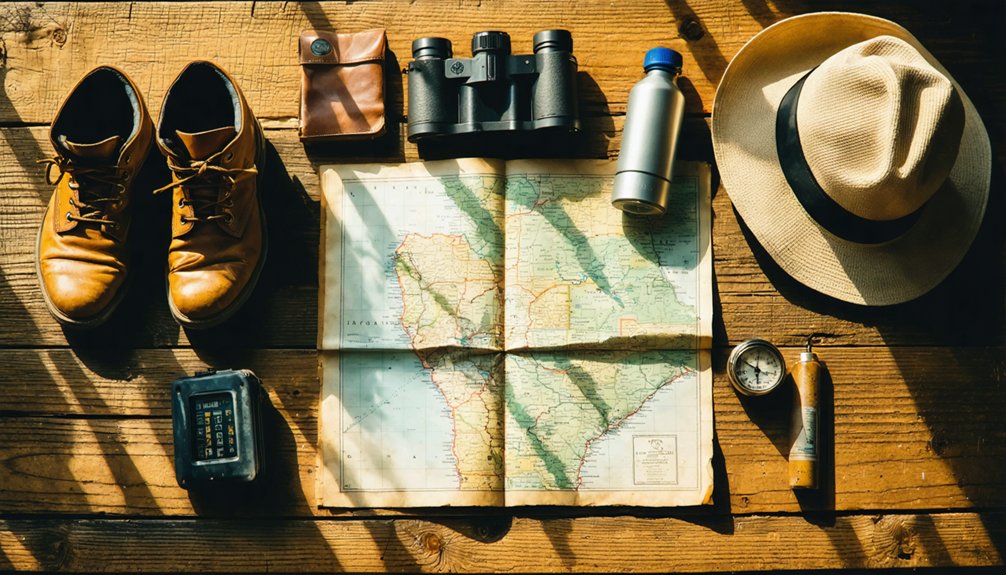
Because the Black Jack Battlefield sits on open Kansas prairie with minimal shade and no commercial amenities nearby, what you bring directly shapes how long and how comfortably you can explore the site. Pack water, sunscreen, and sturdy walking shoes since the terrain includes uneven creek banks and native prairie grass.
Bring a camera to document the interpretive signs, visible wagon ruts, and landscape tied to local legends about John Brown’s 1856 clash.
A printed trail map helps you navigate the 20-acre site independently. If you’re serious about connecting historical artifacts to their context, carry a small notebook for recording details from the markers.
Bug spray matters during warmer months. Arrive with a full tank since Baldwin City is your closest stop for fuel or food.
Nearby Kansas Ghost Towns and Santa Fe Trail Sites to Add
Black Jack sits near enough to several other worthwhile Kansas ghost towns and Santa Fe Trail landmarks that you can build a full day’s drive around the region without backtracking. The corridor along U.S. Highway 56 connects historic landmarks tied to westward expansion and local legends worth chasing.
- Baldwin City — Walk the streets where Black Jack’s surviving settlers eventually relocated, and explore the Palmyra townsite nearby.
- Ivan Boyd Prairie Reserve — Stand where wagon ruts carved by thousands of Santa Fe Trail travelers still scar the earth today.
- Wellsville area ghost sites — Discover abandoned community foundations where local legends of Bleeding Kansas violence still echo through the landscape.
String these stops together, and you’ll cover frontier history, trail heritage, and vanished communities in one focused drive.
Frequently Asked Questions
Is There an Admission Fee to Visit the Black Jack Battlefield?
You’ll find no admission fee to explore Black Jack Battlefield’s historical significance! You can freely roam the prairie, creek, and trail ruts while enjoying visitor amenities like interpretive signs that bring this legendary Bleeding Kansas story to life.
Are Pets Allowed on the Trails at Black Jack Park?
The knowledge base doesn’t confirm pet policies, so check ahead before you bring your dog. Pet safety and trail conditions vary seasonally, and you’ll want current rules to enjoy Black Jack Park’s prairie trails freely.
Is the Black Jack Site Accessible for Visitors With Mobility Limitations?
You’ll find the Black Jack site offers some wheelchair accessibility, with roadside stops and interpretive signs you can enjoy. However, handicap services are limited, so check ahead if you need specific accommodations before exploring the prairie trails.
Are Guided Tours Available at the Black Jack Battlefield Site?
You’ll find guided walking tours and historical reenactments available at the Black Jack Battlefield site. Check ahead for scheduled events, as they bring the Bleeding Kansas conflict vividly to life, letting you explore this freedom-defining landscape firsthand.
What Is the Best Time of Year to Visit Black Jack?
Spring’s your sweet spot! You’ll dodge winter’s chill while enjoying mild seasonal weather that brings the prairie alive. Watch for local events tied to Bleeding Kansas anniversaries, making your Black Jack ghost town adventure truly unforgettable.
References
- https://en.wikipedia.org/wiki/Black_Jack
- https://legendsofkansas.com/black-jack-kansas/
- https://en.wikipedia.org/wiki/Prairie_City
- https://theclio.com/entry/189284
- https://en.wikipedia.org/wiki/Battle_of_Black_Jack
- https://fox4kc.com/news/battle-of-black-jack-the-story-behind-the-first-civil-war-battle-in-kansas/
- https://www.legendsofamerica.com/ks-blackjack/
- https://npgallery.nps.gov/GetAsset/52d9978a-a835-4eeb-98dd-6508700430a4
- https://civilwaronthewesternborder.org/encyclopedia/battle-black-jack