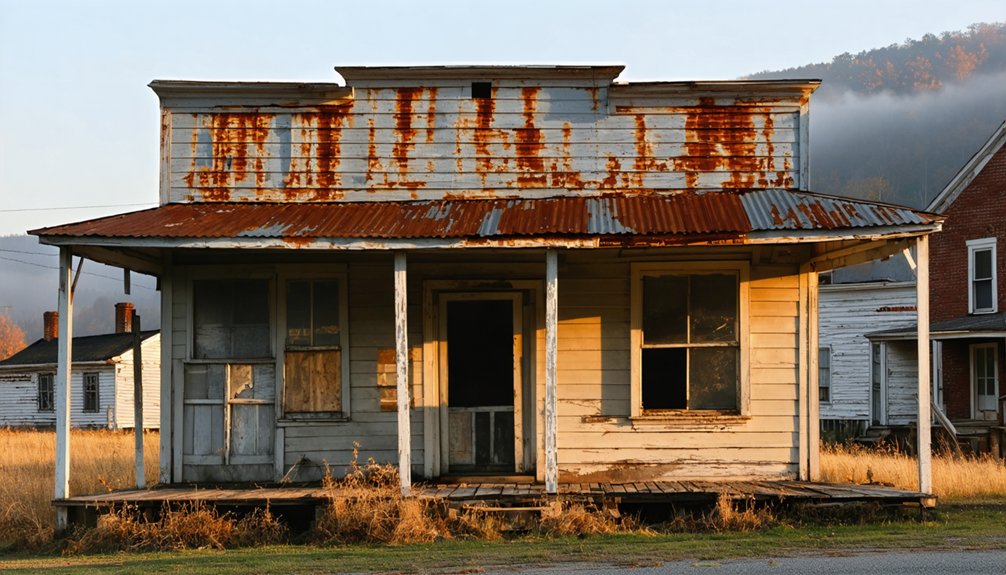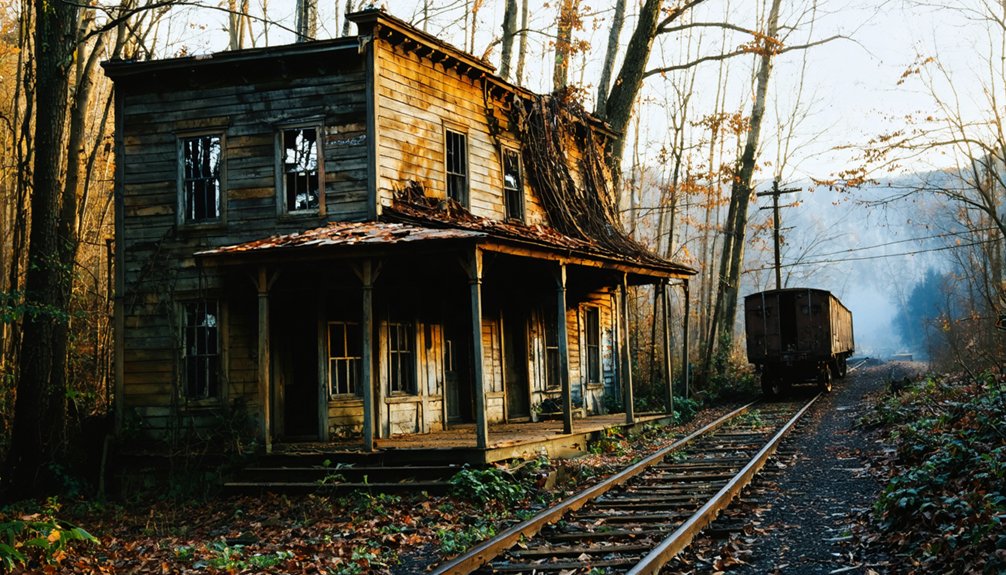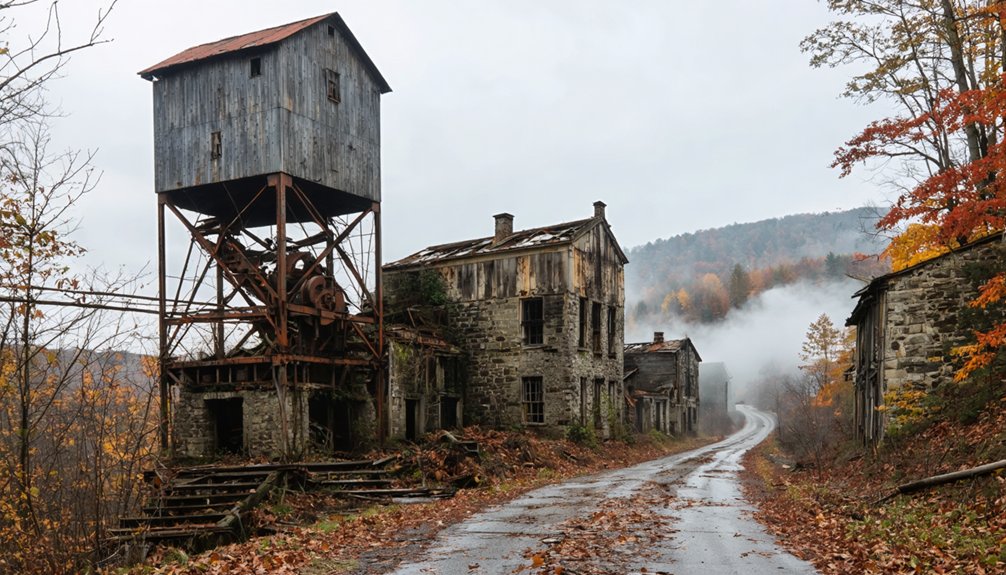
Plan your ghost town road trip to Blue Heron, Kentucky, by starting in Stearns and driving nine miles through Big South Fork’s dense forest via Highways 1651 and 742. You’ll discover an abandoned 1937 coal camp where steel ghost structures outline buildings that once housed a thriving mining community. There’s no dining on-site, so fuel up before heading out. Stick around to uncover everything this hauntingly preserved slice of American history has to offer.
Key Takeaways
- Blue Heron is an abandoned coal camp inside Big South Fork National River and Recreation Area in Strunk, Kentucky, open year-round for exploration.
- Start your trip in Stearns, Kentucky, approximately 9 miles away, then follow Highways 1651 and 742 through scenic backroads to reach the site.
- No original buildings remain; instead, open-air steel ghost structures mark former locations, with audio recordings from ex-residents enhancing the experience.
- Pack your own food since no on-site dining exists; stop in nearby communities like Stearns before heading into the park.
- Extend your visit by hiking the 6.5-mile Blue Heron Loop Trail, where wildlife like deer, wild turkey, and river birds are commonly spotted.
Why Blue Heron Is Worth the Drive
If you’ve ever wanted to stand inside a ghost town that the National Park Service preserved specifically because no one bothered to restore it, Blue Heron is your road trip. This abandoned Kentucky coal camp sits inside Big South Fork National River and Recreation Area, which means you’re getting local legends, wild scenery, and wildlife encounters all in one stop.
The mine ran from 1937 to 1962, and when it closed, everyone simply left. No restoration happened. Instead, metal ghost structures now mark where buildings once stood, letting you read the town’s outline like a map of vanished lives.
You can walk the exhibits year-round, hit a 6.5-mile loop trail, and reach the whole site via scenic backroads through McCreary County.
The Rise and Fall of Mine 18
When the Stearns Coal and Lumber Company broke ground on Mine 18 in 1937, they weren’t building just a mine—they were building an entire world. For 25 years, this coal mining community thrived deep in McCreary County’s hills.
Then, in December 1962, it all stopped.
Three things drove Blue Heron’s collapse:
- Profitability dried up – The coal seams could no longer sustain viable extraction.
- Residents walked away – Once the company pulled out, the community dissolved quickly.
- Nature reclaimed the site – By the 1980s, no original structures remained standing.
What’s left is a genuine ghost town—silent, stripped bare, and honest about its fate. That raw authenticity is exactly what makes Blue Heron worth finding on your map.
What You’ll Actually See at Blue Heron Today
Walking into Blue Heron today, you won’t find restored buildings or period furniture behind velvet ropes—you’ll find something stranger and more affecting. The National Park Service marks where structures once stood using open-air metal “ghost structures,” steel outlines that frame empty space where homes, a church, and a company store once existed.
There are no restored buildings here—only steel outlines where a community once stood.
It’s ghost town exploration in the most literal sense.
At each structure, you can listen to audio recordings of former residents describing daily life, which feeds that mining nostalgia without manufactured sentiment. The outdoor exhibits are accessible year-round, while the interpretive center and bookstore open seasonally from Memorial Day through October.
If you’re ready to stretch your legs, the Blue Heron Loop Trail offers a 6.5-mile route through surrounding Big South Fork scenery.
How To Get to Blue Heron, Kentucky?
Once you’ve decided Blue Heron is worth the detour—and it is—getting there requires a bit of backroads navigation. The address is 8249 Mine 18 Road, Strunk, Kentucky, accessible via Highways 1651 and 742.
Here’s how to make the most of your drive:
- Start from Stearns, Kentucky – It’s your closest landmark, about 9 miles and 20 minutes from Blue Heron.
- Watch for wildlife spotting opportunities – The winding backroads cut through Big South Fork’s dense forest, where deer and wild turkey appear frequently.
- Plan a stop for local cuisine – Grab a meal in Stearns or nearby communities before heading out, since no dining exists on-site.
The outdoor exhibits are accessible anytime, so your arrival time stays flexible.
Big South Fork Stops Worth Combining With Blue Heron
Blue Heron sits inside Big South Fork National River and Recreation Area, which means you’re already surrounded by worthwhile stops the moment you arrive. The park stretches across rugged terrain carved by the Big South Fork of the Cumberland River, offering scenic overlooks that reward anyone willing to explore beyond the mining community.
Pull off at elevated vantage points along the park’s backcountry roads and you’ll catch sweeping canyon views that feel genuinely remote. The Blue Heron Loop trail itself connects you to the river and surrounding forest, where local wildlife sightings are common.
White-tailed deer, wild turkey, and river birds frequent the area regularly. Pairing Blue Heron with a broader park drive turns a single heritage stop into a full day of backcountry freedom.
Frequently Asked Questions
Is There a Fee to Visit the Blue Heron Outdoor Museum?
You’ll find no admission fee to explore Blue Heron’s outdoor museum, where preservation efforts protect its historical significance year-round. Walk freely through ghost structures and immersive exhibits celebrating this fascinating abandoned coal mining community anytime you visit.
Are Pets Allowed at the Blue Heron Mining Community Site?
The provided knowledge doesn’t specify pet regulations for Blue Heron. For accurate pet safety guidelines, you’ll want to contact Big South Fork National River and Recreation Area directly before planning your visit with furry companions.
Is the Blue Heron Site Accessible for Visitors With Mobility Limitations?
The knowledge doesn’t confirm specific accessibility features or wheelchair ramps at Blue Heron, but you’ll find the outdoor exhibits are open year-round, so contacting the interpretive center directly guarantees you’ll plan your visit confidently.
Can Visitors Purchase Souvenirs at the Blue Heron Bookstore?
You’ll find local shopping and unique souvenirs at the Blue Heron Interpretive Center’s bookstore, open seasonally from Memorial Day weekend through October 31, Wednesday through Sunday. It’s your perfect stop to grab meaningful mementos before hitting the open road!
Is Camping Available Near the Blue Heron Mining Community?
You’ll find camping available within Big South Fork National River and Recreation Area, surrounding Blue Heron’s rich mining history and historical significance. The park’s scenic landscapes offer you true freedom while exploring this remarkable Appalachian coal community.
References
- https://www.nps.gov/biso/learn/historyculture/blueheron.htm
- https://www.kansas.com/living/travel/article1015501.html
- https://backyardknoxville.com/blue-heron-kentucky-mining-camp/
- https://www.onlyinyourstate.com/trip-ideas/kentucky/blue-heron-ghost-town-ky
- https://www.blueridgeoutdoors.com/go-outside/southern-ghost-towns/
- https://www.nps.gov/biso/planyourvisit/visitorcenters.htm
- https://everafterinthewoods.com/abandoned-ghost-towns-in-kentucky-that-still-hold-echoes-of-the-past/
- https://www.tripadvisor.com/ShowUserReviews-g39887-d8050269-r594544431-Blue_Heron_Interpretive_Center-Stearns_Kentucky.html
- https://ghost-towns.close-to-me.com/states/kentucky/
- https://kids.kiddle.co/List_of_ghost_towns_in_Kentucky