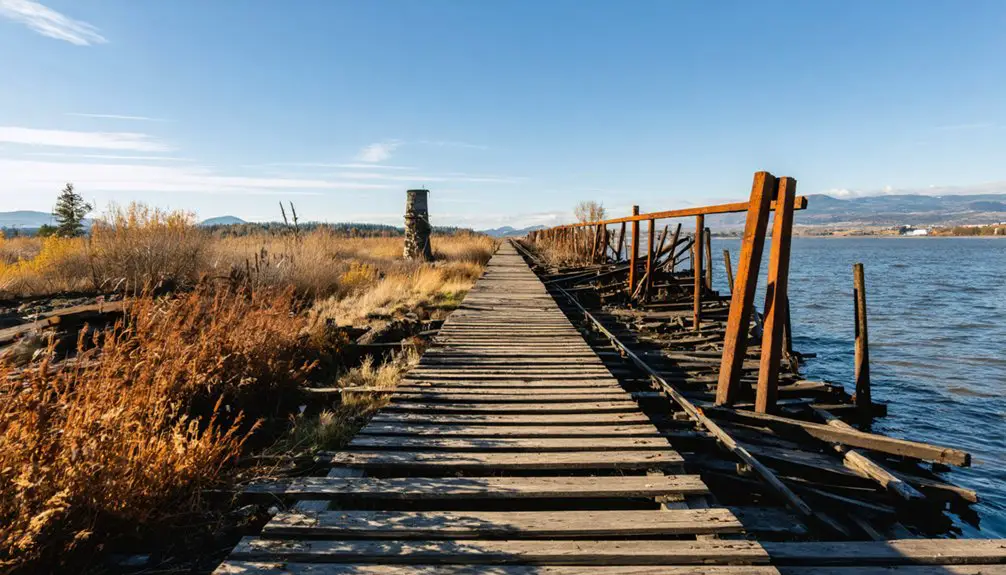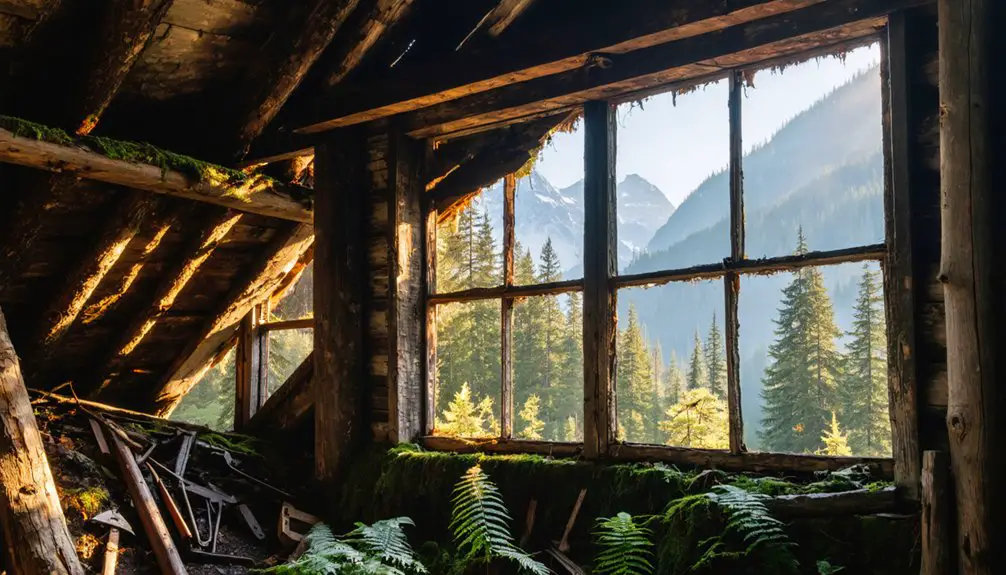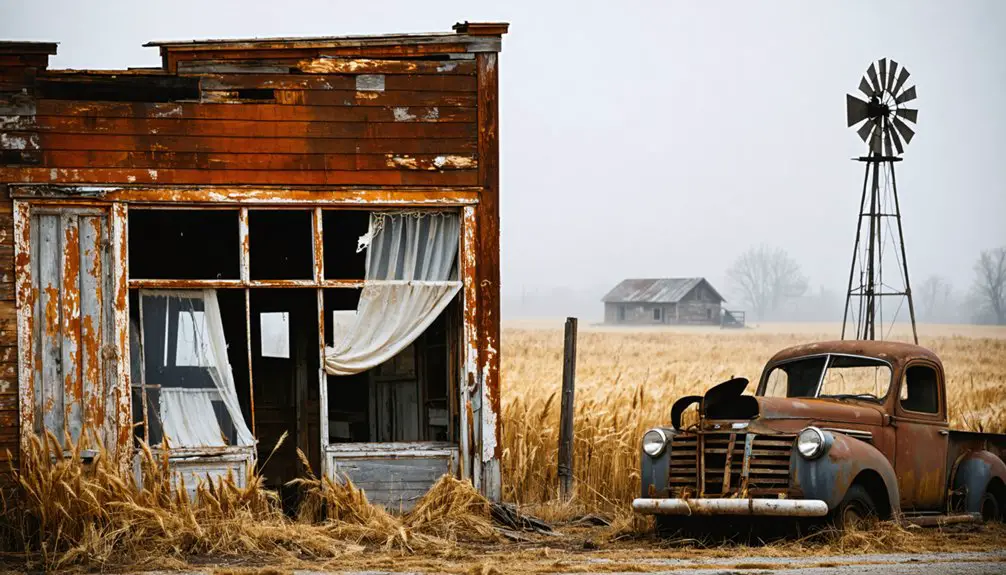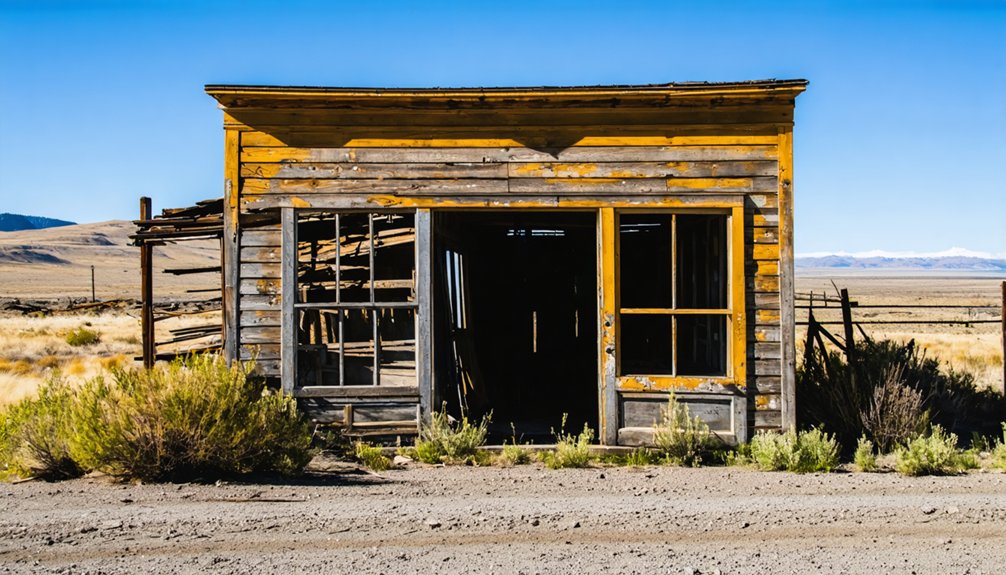
Planning a ghost town road trip to Copper City, Washington means chasing a story written in rusted machinery, crumbling foundations, and abandoned mine shafts. You won’t find it on most modern maps, so you’ll need historical society records, topographic maps, and current road conditions before you go. Visit between late June and September for the best access. There’s far more to uncover about this forgotten copper boomtown than its silenced landscape first reveals.
Key Takeaways
- Visit between late June and September for optimal road conditions, dry trails, longer daylight, and safer access to higher elevations.
- Bring topographic maps, compass, spare tire, recovery boards, two days of water, sturdy boots, and a first-aid kit.
- Copper City emerged during the Western copper boom but was abandoned when veins thinned and ore prices collapsed.
- Nearby ghost towns like Molson, Liberty, and Bodie offer additional stops with unique historical and architectural features.
- Contact local land-management offices and historical societies to confirm current access routes before departing.
What Is Copper City, Washington?
Tucked somewhere in Washington state’s mining past, Copper City is a ghost town that once hummed with the activity of extractive industry before the inevitable bust silenced it. Like countless western settlements born from copper extraction, it grew fast, served a purpose, then emptied when the ore or the economy gave out.
Its cultural significance lies in what it represents — a raw chapter of American expansion where communities rose and collapsed on the strength of a single resource. The environmental impact of that extraction likely still marks the surrounding landscape, visible in altered terrain and remnant infrastructure.
When you visit a place like this, you’re not just seeing absence — you’re reading the honest, unfiltered story of how the West was really settled.
The Copper Mining Boom That Built Copper City
When copper fever swept through the American West, it didn’t just reshape economies — it conjured entire towns from raw wilderness almost overnight. Copper City, Washington, emerged from this same restless energy, built by workers chasing a boom that seemed unstoppable.
The classic copper-town lifecycle followed a recognizable pattern:
- Prospectors identified rich ore deposits
- Mining companies funded rapid settlement infrastructure
- Populations surged, demanding schools, stores, and housing
- Resource depletion triggered sudden abandonment
That boom-and-bust rhythm defines Copper City’s bones. Today, heritage tourism breathes new purpose into these forgotten places, letting you walk ground where ambition once roared.
The boom-and-bust rhythm defines these bones — and heritage tourism lets you walk where ambition once roared.
Cultural preservation efforts keep that story alive — not as nostalgia alone, but as honest testimony to what extraction-driven settlement really cost and created across the American West.
How Copper City Became a Ghost Town
When copper brought settlers rushing into the region, you can imagine the noise, ambition, and infrastructure that followed almost overnight.
But the same extractive economy that built Copper City also sealed its fate — once the ore thinned and prices dropped, the financial logic for staying simply vanished.
What you’ll find today is the quiet aftermath of that boom-and-bust cycle, a pattern repeated across dozens of western mining towns that grew fast and emptied faster.
Mining Boom Brings Settlers
Like so many western settlements, Copper City didn’t grow from careful planning — it grew from the ground up, pulled into existence by the promise of copper ore beneath the hills. Word spread fast, and settlers followed:
- Miners arrived first, chasing wages and independence
- Merchants and tradespeople built supply networks around them
- Cultural influences shaped the town’s identity as diverse workers converged
- Environmental impacts followed quickly — hillsides cleared, streams redirected, landscapes permanently altered
You can almost feel the urgency that once defined this place. Men left stable lives elsewhere, betting everything on a boom that felt unstoppable. The mountain gave generously for a time, and Copper City swelled with ambition.
That energy still echoes through what remains today.
Resource Depletion Triggers Abandonment
The copper didn’t disappear all at once — it thinned, vein by vein, until the mountain simply had nothing left worth pulling out. Even advances in mining technology couldn’t reverse the math when ore grades dropped too low to justify the cost.
You can almost trace the population decline through what got left behind — first the single men, then the families, then the merchants who’d staked everything on a permanent town. Buildings emptied faster than anyone expected.
The company pulled its equipment, the wages stopped, and the roads back out suddenly carried more traffic than the roads in. What you’re walking into today is the physical record of that exit — not a failure exactly, but an honest ending written in weathered timber and rusted iron.
How to Get to Copper City, Washington
Reaching Copper City means committing to the kind of drive that filters out the casual traveler—you’ll want to cross-reference Washington state highway maps and contact local county archives before you go, since access conditions for remote mining ghost towns can shift with seasons, road maintenance, and land-use changes.
Copper City doesn’t reward the unprepared—cross-reference maps, call the archives, and earn the drive.
Before you leave, build your approach around four verified steps:
- Confirm the exact county location through Washington state heritage records
- Identify the nearest maintained highway using current DOT maps
- Check seasonal road closures with local land-management offices
- Contact regional historical societies for mining legends and local legends that sharpen your route context
This preparation transforms a rough coordinate into a meaningful journey—one where the road itself carries echoes of the copper boom that once pulled thousands westward.
Best Time of Year to Visit Copper City
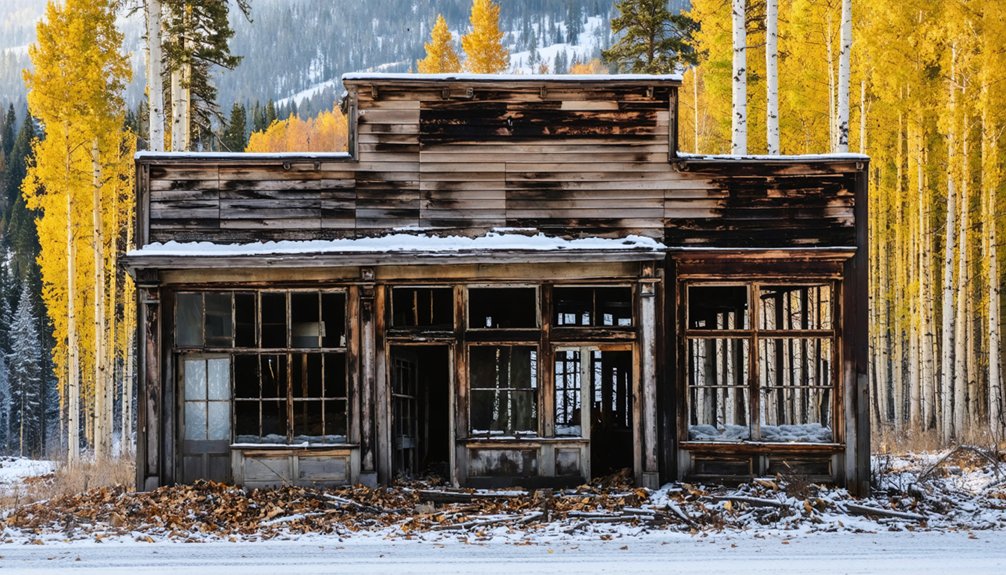
Timing your visit to Copper City matters as much as mapping the route, because remote Washington mining sites at higher elevations can become genuinely inaccessible once winter closes in. Snow arrives early and lingers long at elevation, sealing off the roads that once carried ore wagons through a settlement already hollowed by economic decline and population loss.
Late June through September gives you the widest window — trails dry out, daylight stretches generously, and the ruins speak loudest against summer’s quiet. Early autumn adds color and atmosphere without the hazards of shoulder-season mud. You’ll want clear skies for photography and firm ground for exploring foundations.
Check current road conditions through Washington state resources before you leave, because freedom here depends on preparation.
Ruins, Structures, and Mine Features Still Standing at Copper City
Whatever remains at Copper City tells a story that documents and photographs can only approximate. Walking through the site, you’ll sense the weight of mining legends embedded in every weathered timber and rusted bolt.
Preservation efforts have kept fragments of that era visible, giving you direct contact with history rather than a museum replica.
Look for these features when you explore:
- Structural foundations marking former homes and company buildings
- Mine shaft remnants where extraction once defined daily life
- Rusted equipment left behind when the economy collapsed
- Collapsed timber frames revealing construction methods of the era
Each element rewards careful observation. You’re not just seeing abandonment — you’re reading the physical record of an entire community’s rise and disappearance.
Three Historic Sites Near Copper City Worth the Detour
Once you’ve walked Copper City’s quiet ruins, the surrounding region rewards you with more ghost town layers worth chasing. Washington’s copper-mining corridors spawned clusters of short-lived settlements.
Several nearby sites preserve the historic architecture, mine infrastructure, and community remnants that tell the fuller boom-and-bust story.
You’ll find that each detour adds context, turning a single ghost town visit into a connected journey through the extractive economy that once defined this corner of the West.
Nearby Mining Heritage Sites
While Copper City draws you in with its own weathered story, the surrounding region rewards the curious traveler with additional layers of mining heritage worth pulling off the road for. Each stop carries cultural significance, reminding you that copper extraction shaped entire communities across Washington’s rugged interior.
Nearby sites worth your time:
- Abandoned mine shafts – raw evidence of boom-era ambition carved into hillsides
- Company building foundations – preservation challenges keep these fragile remnants vulnerable to time and weather
- Historic mill ruins – machinery ghosts frozen mid-operation, waiting for your camera
- Cemetery plots – where miners’ families left permanent marks on impermanent ground
These detours transform a single ghost-town visit into a fuller reckoning with the West’s extractive past.
Regional Ghost Town Clusters
Copper City doesn’t stand alone in its silence—the broader region holds a loose constellation of ghost towns, each carrying its own chapter of the boom-and-bust story that reshaped Washington’s interior. Study the settlement patterns across this corridor and you’ll notice how mining camps clustered near ore deposits, then collapsed almost in unison when prices fell.
Three sites within reasonable driving distance reward the detour: each preserves mining artifacts—rusted machinery, collapsed headframes, stone foundations—that anchor the abstract history in something you can actually see. You’re not just collecting ghost towns when you route through these clusters; you’re tracing the economic logic that built and erased entire communities within a single generation.
Plan your stops deliberately, and the landscape itself becomes the most honest history book you’ll ever read.
Historic Architecture Worth Exploring
The ghost towns nearest to Copper City didn’t dissolve without a trace—they left behind walls, foundations, and ironwork that still hold the shape of what daily life looked like when copper paid the bills. Seek out these architectural details before they’re gone:
- Company boardinghouses — stripped bare but structurally intact, revealing how miners actually lived
- Engine house foundations — massive stone bases that once anchored industrial machinery
- Assay office ruins — where ore became currency, preservation efforts have stabilized several examples regionally
- Tramway anchor points — corroded ironwork still embedded in hillsides, marking former aerial routes
You’re not visiting absence here. You’re reading a built record of ambition, labor, and eventual silence—written in timber, stone, and rust.
Road Trip Kit: Gear for Remote Washington Ghost Towns
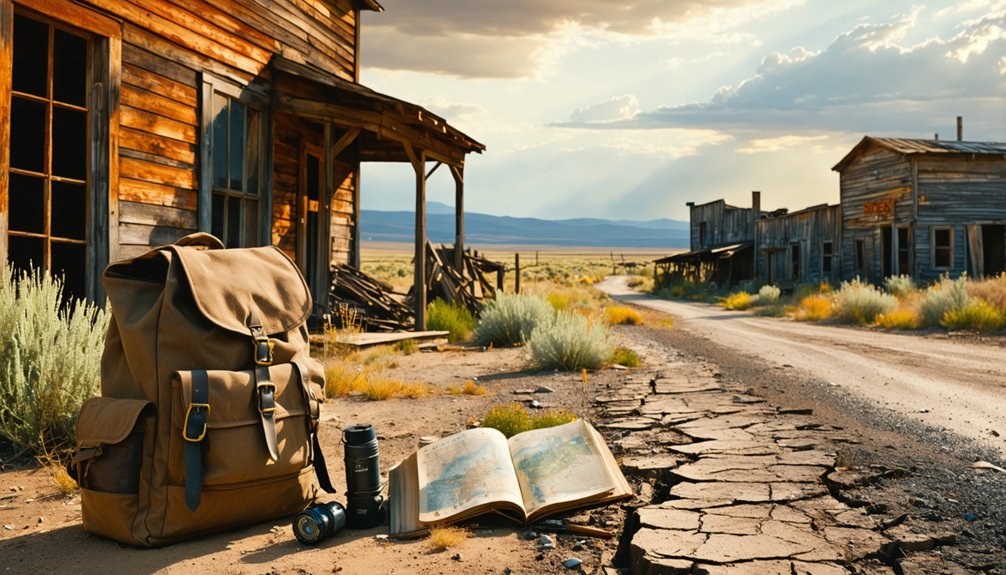
Heading out to a remote Washington ghost town means leaving the safety nets of cell service and paved roads behind, so your gear list isn’t optional—it’s your margin for error. Pack a physical topographic map, a quality compass, and a paper field journal—tools that don’t lose battery chasing local legends across rugged terrain.
Your gear list isn’t optional—it’s your margin for error when cell service and paved roads disappear behind you.
Carry enough water for two days minimum; high-elevation desert air deceives quickly. A camera with a wide-angle lens captures archaeological evidence embedded in crumbling foundations and weathered timberwork.
Bring sturdy boots, layered clothing, a first-aid kit, and a portable power bank. Your vehicle needs a spare tire, tow strap, and recovery boards.
This isn’t pessimism—it’s the freedom to explore confidently, knowing you’ve honored the wilderness’s terms before stepping onto its ground.
Other Washington Ghost Towns for Your Road Trip List
Once you’ve walked Copper City’s silence, you’ll find Washington’s ghost-town circuit runs deeper than most travelers realize. Each site carries its own cultural significance, shaped by mining booms, timber rushes, and railroad abandonment.
Preservation challenges vary wildly — some towns survive as skeletal frames, others as foundation ghosts beneath overgrowth.
Add these stops to your route:
- Molson — a northeastern Washington ghost town with intact storefronts and an outdoor museum
- Liberty — one of America’s oldest gold-rush towns, still partially inhabited
- Bodie, Washington — remote, raw, and rarely visited
- Marcus — flooded by dam construction, its story lives in salvaged artifacts
Each destination deepens your understanding of how the West built itself up, then quietly let go.
Where to Find Primary Sources Before You Visit Any Washington Ghost Town
Before you drive out to any Washington ghost town, you’ll want to ground your visit in something more reliable than legend — and that means tracking down primary sources that can verify founding dates, mine names, peak populations, and access conditions. County archives hold deed records and census data that paint surprisingly vivid portraits of vanished communities.
Primary sources beat legend every time — verify founding dates, mine names, and access conditions before the road calls you out.
The Washington State Historical Society and local heritage organizations document cultural preservation efforts, helping you understand what’s survived and why.
State environmental agencies often track environmental impact assessments tied to former mine sites, flagging access restrictions or contamination concerns before you arrive.
University library collections and the Washington State Archives round out your research toolkit. Verify before you visit — the road is always better when the facts are already in your pack.
Frequently Asked Questions
Is a Permit Required to Visit Copper City, Washington?
Permit requirements aren’t confirmed, but you’ll want to verify access before you go. Historical preservation efforts and limited visitor amenities mean conditions change—check with local Washington county authorities to protect your freedom to explore responsibly.
Are Pets Allowed at Remote Washington Ghost Town Sites?
Pet policies vary by site, so you’ll want to verify animal restrictions before heading out. Generally, you can bring leashed dogs, but prioritize pet safety on rugged, forgotten terrain where history’s echoes still linger.
Can You Camp Overnight Near Copper City, Washington?
Over 60% of remote Washington sites require permits. You’ll need to verify camping regulations before you unroll your sleeping bag. Overnight accommodations near Copper City aren’t confirmed, so contact local land managers to secure your freedom-seekers’ refuge.
Is Copper City, Washington Privately Owned or on Public Land?
Whether Copper City’s mining history rests on private or public land isn’t confirmed—you’ll need to verify ownership through local county records before visiting. Historical preservation efforts often depend on who’s protecting that nostalgic ground beneath your boots.
Are Guided Tours of Copper City, Washington Available?
Guided tour availability isn’t confirmed yet—you’ll need to verify locally. With towns like these once housing 1,300 souls, their historical significance and preservation efforts deserve your independent exploration, so contact Washington heritage societies before you chase this freedom.
References
- https://www.youtube.com/watch?v=7-vjuqiGWJU
- https://www.worldatlas.com/cities/6-old-timey-mining-towns-in-arizona.html
- https://jamessiodla.com/wp-content/uploads/2024/03/ghost_towns_big_cities-1.pdf