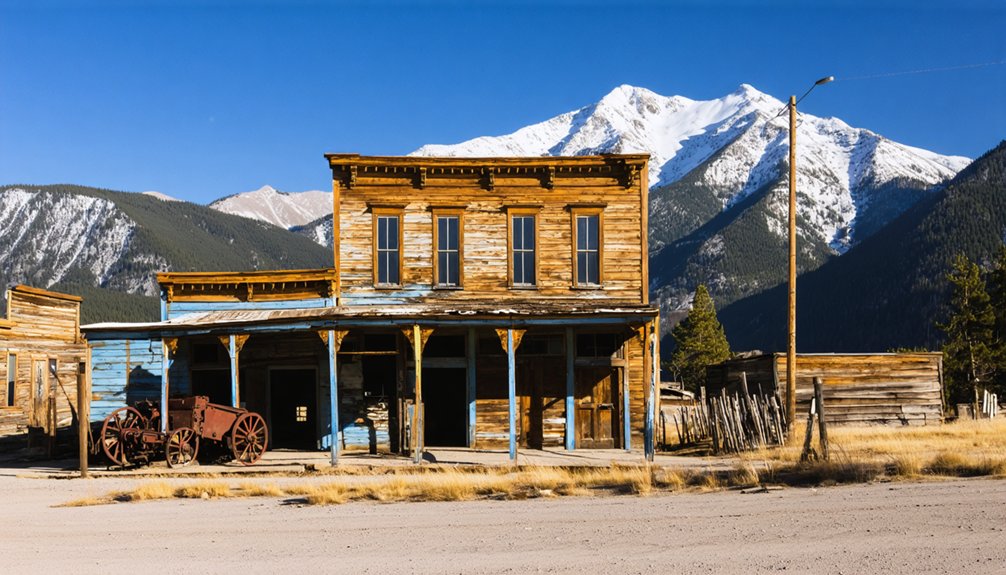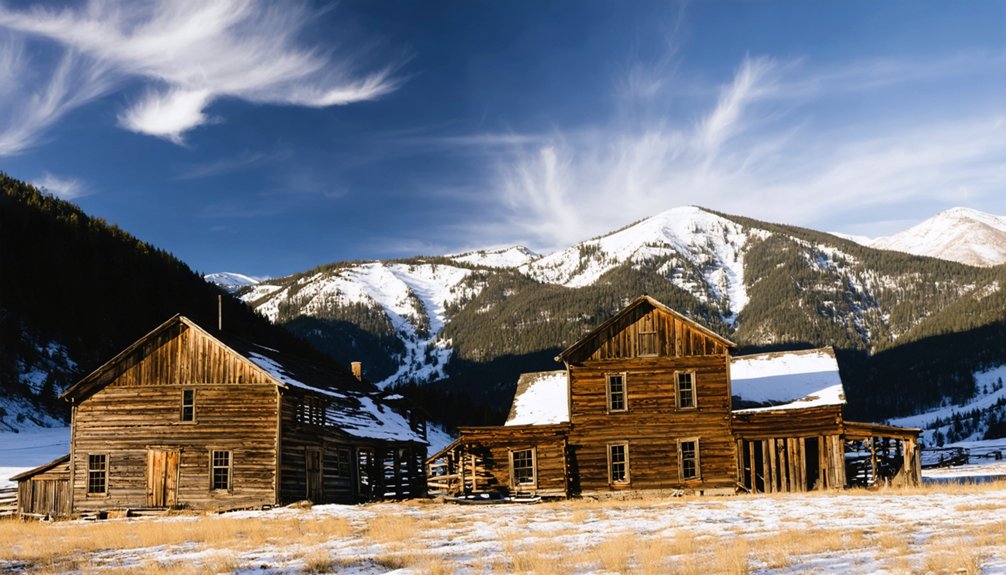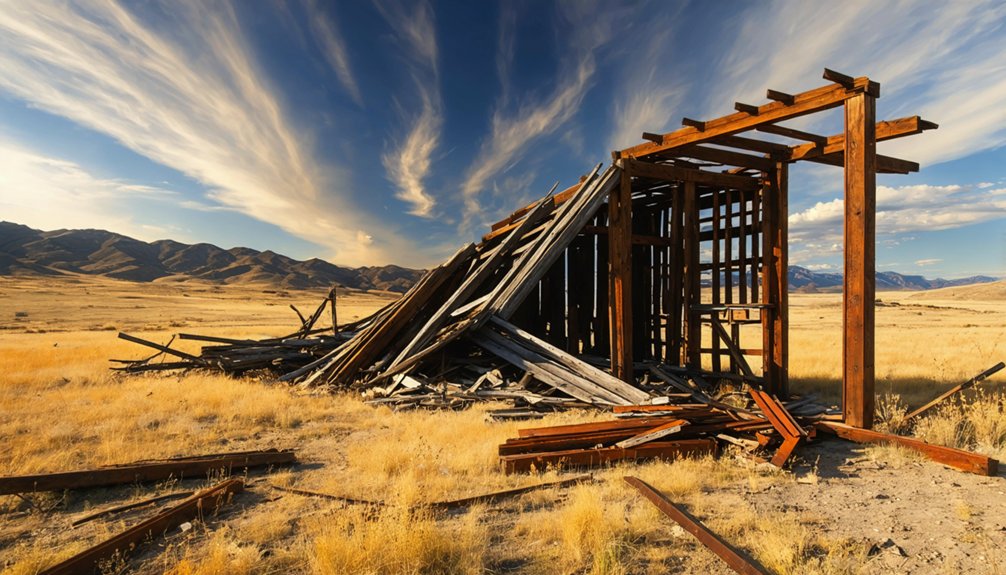
Dakan, Colorado vanished by 1898, but it’s still worth the trip. Start from Castle Rock and head southwest toward Dakan Mountain, using coordinates 39°14′15″N, 105°03′59″W as your guide. There’s nothing left standing, so bring topographic maps, plenty of water, and sturdy boots. Visit between May and October for the best conditions. Pair it with nearby ghost towns like Russellville and Greenland to build a full Front Range loop, and there’s much more to uncover about planning your route.
Key Takeaways
- Dakan sits in western Douglas County near Dakan Mountain at coordinates 39°14′15″N, 105°03′59″W, accessible from Denver or Castle Rock heading southwest.
- No structures or artifacts remain at Dakan; visitors experience open terrain and must rely on topographic maps and historical records.
- Visit between May and October, arriving early to avoid afternoon thunderstorms, and pack navigation tools, water, and layered clothing.
- Pair Dakan with nearby ghost towns like Russellville, Greenland, and West Creek to build a full-day historical loop.
- Use Castle Rock as your base and connect stops like Silver Plume and Rosita for a comprehensive Colorado mining history experience.
The Rise and Fall of Dakan, Colorado
But the mining history here tells a cautionary tale. The claims proved virtually worthless, and the boom collapsed as quickly as it began.
By August 1898, the post office closed, and Dakan vanished from the map entirely.
You won’t find ruins waiting for you — just a story worth chasing.
Who Was William Wanner and Why Did He Matter?
When you dig into Dakan’s story, one name keeps surfacing: William Wanner, the prospector who founded the town in 1896 and sparked a rush with his announcement of ore worth $35 per ton in silver and gold.
You’ll find that Wanner’s claims drew roughly 300 people to the site by Christmas of that year, transforming an empty mountain shadow into a bustling mining camp almost overnight.
His lasting impact, however, is bittersweet—when those claims proved virtually worthless, the boom he created collapsed just as fast as it had risen, leaving Wanner’s name tied forever to one of Colorado’s most short-lived settlements.
Wanner’s Origins And Background
Though history has largely forgotten his name, William Wanner was the spark that ignited Dakan’s brief but frenzied existence. You won’t find much about his origins in the record books, but his impact on Colorado’s mining history is undeniable. He arrived as a prospector armed with ambition and standard prospecting techniques of the era.
Here’s what you can piece together about Wanner:
- He founded Dakan in 1896, staking his claim in Douglas County’s Front Range terrain.
- He announced ore yields of $35 per ton in silver and gold, drawing immediate attention.
- His discovery triggered a population surge, pulling roughly 300 people to the site by Christmas 1896.
Wanner represents the classic lone prospector whose find built a town almost overnight.
Wanner’s Discovery And Claims
You’ve got to appreciate the audacity. In 1896, he walked out of the mountains with a claim that made the *Castle Rock Journal* declare Dakan’s future assured.
Three hundred people showed up by Christmas. Eight buildings rose by January.
His discovery didn’t just start a town — it proved how quickly a single strike could pull dreamers off the road and into the hills.
Wanner’s Lasting Historical Impact
William Wanner didn’t build Dakan — he conjured it. One prospector’s announcement sparked 300 settlers, eight buildings, and a functioning post office within months. That’s the power of mining legends in the American West.
When you visit Dakan, you’re standing inside Wanner’s story. Historical preservation has kept his name alive even though nothing physical remains at the site.
His impact breaks down cleanly:
- He founded Dakan in 1896, transforming raw Colorado land into a named settlement.
- His ore announcement — $35 per ton in silver and gold — triggered immediate migration.
- His failure became the lesson, proving how quickly boom-and-bust cycles could erase a community.
Wanner matters because he represents every prospector who chased freedom and found only dust.
What’s Actually Left at Dakan Today?
If you’re expecting crumbling mine shafts or weathered storefronts, Dakan will disappoint you — because nothing remains. No historical artifacts sit behind glass, no preserved structures mark where 300 people once celebrated Christmas with genuine optimism. The land has reclaimed everything.
What you’ll find instead is open Front Range terrain in the shadow of Dakan Mountain, a quiet landscape that holds its story beneath the surface rather than above it.
For road-trippers who value the freedom to imagine a place without a curated visitor experience, that absence carries its own power.
Come prepared with the history in your head, not expectations of ruins in your viewfinder. Dakan rewards curiosity, not sightseeing. The story is the destination — the ghost town itself vanished long ago.
Where Exactly Is Dakan in Douglas County?
Dakan sits in western Douglas County, Colorado, tucked into the Front Range of the Rocky Mountains in the shadow of Dakan Mountain, which anchors the site at coordinates 39°14′15″N, 105°03′59″W. You won’t find signs pointing you there or modern preservation efforts marking the spot. This is raw, open country.
Before you head out, keep these three things in mind:
- No historical artifacts survive at the surface level.
- The rural terrain demands a reliable vehicle and solid orientation.
- Public records and topographic maps are your best tools for pinpointing the site.
You’re essentially orienting yourself by history here. The mountain itself serves as your landmark, standing as the most honest marker of where Dakan once briefly, boldly existed.
Why Visit a Ghost Town Where Nothing Remains?
Knowing where Dakan stood is one thing — understanding why you’d bother going is another. Ghost towns where nothing remains actually offer something different from polished historic sites: pure imagination, unfiltered by tourist accessibility infrastructure or managed historical preservation efforts.
Ghost towns where nothing remains offer something polished historic sites never can: pure imagination, completely unfiltered.
You’re standing on ground where 300 people built lives in months, chased silver and gold, then vanished just as fast.
That rawness is the draw. No guardrails, no gift shops, no curated experience — just open Front Range land carrying a story most people never hear. You’ll leave understanding Colorado’s boom-and-bust mining culture better than any museum exhibit could teach you.
Dakan rewards the traveler who values context over spectacle, and history felt rather than simply displayed. That’s worth the drive.
How to Reach Dakan From Castle Rock and Denver
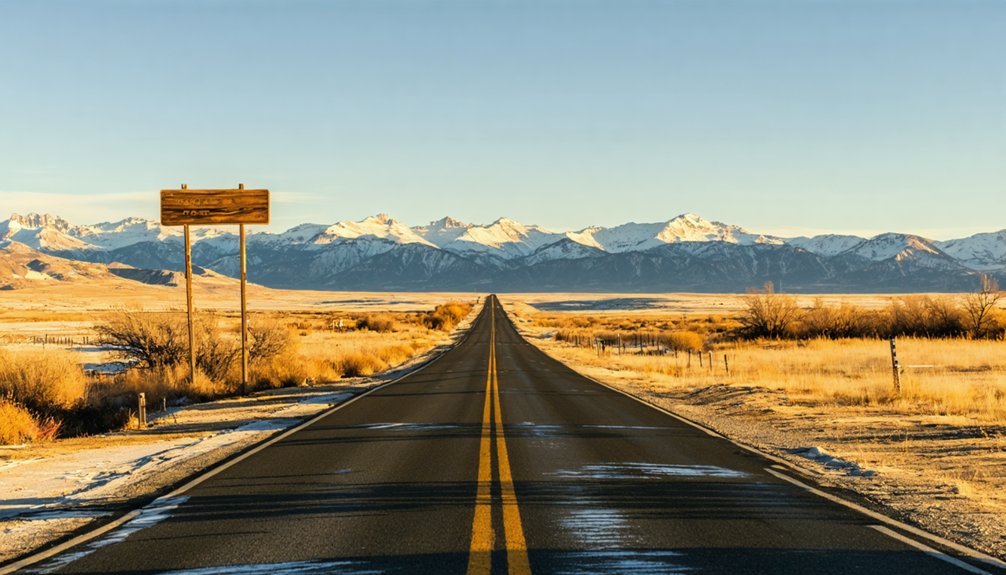
Getting to Dakan means heading into western Douglas County, where the Front Range starts to assert itself and the landscape shifts from suburban sprawl to open high-country terrain.
From Denver or Castle Rock, your route takes you southwest into quiet ranch country. No signs mark the destination, so preparation matters.
- From Denver: Head south on I-25 to Castle Rock, then drive west on CO-86 toward the foothills.
- From Castle Rock: Travel roughly 20 miles west into Douglas County’s backcountry terrain.
- Navigation tip: Use Dakan Mountain’s coordinates (39.2375°N, 105.0664°W) as your anchor point.
Ghost town preservation doesn’t apply here since nothing remains, but the mining history embedded in this landscape rewards curious travelers willing to explore on their own terms.
Best Time of Year to Visit Dakan, Colorado
Since Dakan sits in the Front Range at elevation, timing your visit around Colorado’s mountain weather patterns makes a real difference. Late spring through early fall offers your best window — snow melts by May, roads become accessible, and you can actually explore the terrain where the town once stood.
Summer mornings work especially well before afternoon thunderstorms roll in. Fall brings crisp air and stunning color without the crowds. Winter access can be rough, and deep snow buries whatever faint traces remain.
While Dakan has no historical artifacts or active preservation efforts to protect, the landscape itself tells the story. Dry ground and clear skies let you read that terrain honestly.
Plan your trip between May and October and you’ll get the most out of the experience.
Other Douglas County Ghost Towns Worth Adding to Your Route
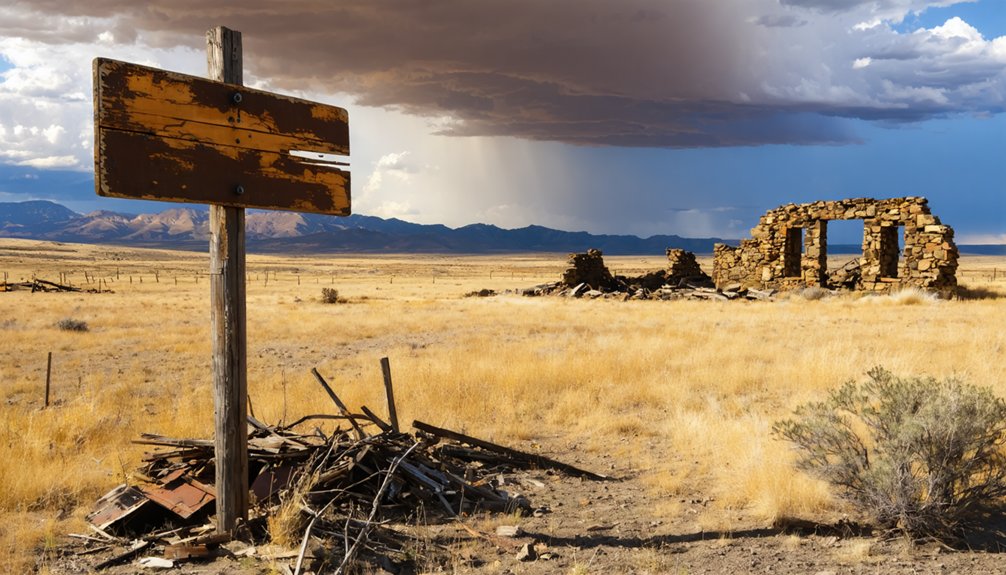
While Dakan itself leaves nothing standing to explore, Douglas County holds other ghost towns that can round out your road trip with actual visible remains. You’ll want to map your route carefully, connecting historical stops across the Front Range to maximize the story each site tells.
Pairing Dakan’s boom-and-bust narrative with nearby towns that still have standing structures gives your trip a richer, more complete picture of Colorado’s mining past.
Nearby Ghost Towns
Why stop at just one ghost town when Douglas County has more forgotten history waiting along the road? Pair your Dakan visit with other vanished settlements that share its boom-and-bust DNA.
- Russellville – An early placer gold site with strong archaeological significance, rewarding curious explorers who dig into the region’s pre-statehood rush.
- Greenland – A ranching and railroad stop where historic preservation efforts have kept scattered remnants visible and worth photographing.
- West Creek – A quiet canyon community that faded gradually, offering roadside context for how isolation killed Colorado’s smaller settlements.
Each stop adds another layer to your understanding of Douglas County’s forgotten economy.
Together, they turn a single ghost-town detour into a genuine Front Range history route worth driving.
Planning Your Route
Once you’ve mapped out Dakan’s location in western Douglas County, building a logical route around it transforms a single historical stop into a full-day Front Range drive.
Colorado’s mining legends are scattered across this region, and connecting them into one efficient loop maximizes your time without backtracking. Start early, moving through Castle Rock to gather historical context before heading into the rural terrain surrounding Dakan.
From there, branch toward other Douglas County sites carrying similar historical significance — communities that rose and collapsed under the same gold and silver pressures. Keep your route flexible since rural roads shift with conditions.
Carry a detailed map, fuel up before leaving town, and treat each stop as a chapter in a larger, wilder Colorado story you’re driving through firsthand.
What to Pack for a Remote Dakan Area Visit
Heading out to a remote site like Dakan means you’ll need to prepare for a location with no infrastructure, no preserved structures, and no services nearby. You’re chasing mining history and ghost town myths across rugged Front Range terrain, so pack smart.
- Navigation tools – Download offline maps since cell service is unreliable in western Douglas County.
- Water and food – Carry more than you think you’ll need; there are no stores nearby.
- Sturdy footwear and layers – Colorado’s mountain weather shifts fast, and the terrain isn’t groomed for casual walking.
Bring a charged phone, a first-aid kit, and a paper backup of your route notes.
Freedom tastes best when you’ve planned well enough to actually enjoy it.
How to Build a Front Range Ghost Town Loop Around Dakan
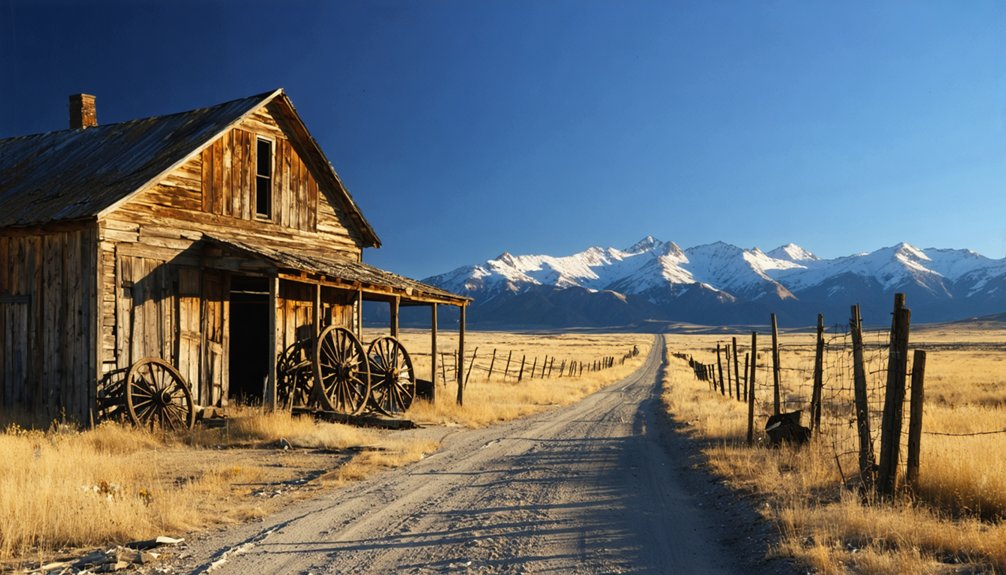
You can anchor your Front Range ghost town loop in Castle Rock, since it connects easily to Dakan’s Douglas County location and offers a logical starting point before you head into the rural terrain.
From there, you’ll want to string together nearby historic mining stops to make the drive worthwhile, since Dakan itself leaves nothing standing to explore.
Budget your drive times honestly, because the rural roads demand patience, and rushing between stops strips the trip of the history you came to absorb.
Starting Your Loop Route
Since Dakan itself leaves nothing standing to explore, the real reward comes from building a loop that connects its story to the broader sweep of Front Range ghost town history. Start your route from Castle Rock, which anchors the eastern edge of Douglas County and provides solid visitor amenities before you head into rural terrain.
Structure your loop around three priorities:
- Historical preservation sites with standing structures you can photograph
- Dakan’s coordinates as a reflective, story-driven stop
- Mountain corridor roads that reward drivers with dramatic Front Range scenery
Heading west from Castle Rock puts you on familiar ground before the landscape opens up. You’ll trade pavement comfort for gravel freedom quickly, so fuel up, download offline maps, and commit to the full arc.
Key Ghost Town Stops
Three ghost towns deserve a place on your Front Range loop, each one adding a different layer to the boom-and-bust story that Dakan represents so quietly.
Silver Plume carries deep cultural symbolism as a National Historic Landmark, where preserved Victorian structures show what survival looks like when preservation challenges get met head-on.
Rosita, tucked into the Wet Mountains, tells a rawer story — buildings half-standing, history half-lost.
Then there’s Quartzville, stripped down like Dakan, where nothing remains but scattered memory and open land.
Together, these stops build a narrative arc you can actually feel. You’re not just driving between coordinates; you’re tracing the same reckless hope that pushed William Wanner into Douglas County in 1896 and vanished just as fast.
Planning Drive Times
Building a Front Range ghost town loop around Dakan takes some honest planning, because the site itself offers no trailhead, no signage, and no preserved structures to anchor your stop.
Preservation challenges mean historical artifacts simply don’t exist here anymore, so you’re driving for context and landscape rather than discovery.
Structure your loop efficiently:
- Start in Castle Rock — roughly 20 minutes from Dakan’s general location, offering historical background at local archives.
- Allow 30–45 minutes at the Dakan area — document the terrain and mountain shadow where the town once stood.
- Extend toward nearby Douglas County sites — add 60–90 minutes for stops with visible remnants.
Keep your expectations grounded and your drive times flexible — freedom means adapting when history leaves little behind.
Frequently Asked Questions
Was Dakan Ever Featured in Any Books or Documentaries About Colorado?
We don’t have confirmed records of Dakan’s featured appearances, but you’ll find its ghost town history woven into broader Colorado exploration books celebrating the state’s 1,500+ abandoned mining settlements and boom-and-bust narratives.
Are There Any Legal Restrictions on Visiting the Dakan Site Today?
Before boldly blazing out to Dakan, you’ll want to verify land ownership, since historic preservation laws and private property rights can restrict your access — so research the area thoroughly before you venture out.
Did Any Dakan Residents Later Become Notable Figures in Colorado History?
You won’t find documented ghost town legends or historic resident stories linking Dakan’s 300 settlers to notable Colorado figures—the boom-and-bust collapse scattered residents too quickly, leaving their individual stories as lost as the town itself.
Is the Dakan Area Privately Owned or Accessible as Public Land?
The knowledge doesn’t confirm whether Dakan involves private ownership or public access. You’ll want to research Douglas County land records before visiting, since rural ghost town sites often carry restrictions that can limit your freedom to explore freely.
Were Any Photographs or Maps of Dakan Ever Published Historically?
No confirmed historical photographs or old maps of Dakan have surfaced publicly. You’re chasing a town that vanished almost as fast as it appeared, leaving behind little more than frontier newspaper mentions and faded promises.
References
- https://en.wikipedia.org/wiki/Dakan
- https://kids.kiddle.co/Dakan
- https://risingsun4x4club.org/xf/threads/abandoned-town-near-dakan-rd.21506/
- https://www.colorado.com/articles/colorado-ghost-towns
- https://en.wikipedia.org/wiki/List_of_ghost_towns_in_Colorado
- https://dbpedia.org/page/Dakan
- https://wikimili.com/en/List_of_ghost_towns_in_Colorado
- https://en.wikipedia.org/wiki/Category:Ghost_towns_in_Colorado
- https://www.castlepinesconnection.com/gove-creek-happenings-the-dakans-and-frontier-justice/