Planning a ghost town road trip to Hyder, Arizona, starts with taking Exit 87 off I-8 and heading roughly 9 miles north into the desert. You’ll want a reliable vehicle, extra water, and a paper map since cell service is spotty out here. Hyder was once part of Patton’s WWII Desert Training Center, and remnants of that history still stand today. There’s more to this remote stretch of Arizona than you’d expect.
Key Takeaways
- Hyder, Arizona, is located off Exit 87 on I-8, about 9 miles north, with fuel best purchased in Gila Bend beforehand.
- Roads transition from paved to rough dirt at Agua Caliente Road, requiring a reliable vehicle with spare tires and repair tools.
- Camp Hyder, part of Patton’s WWII Desert Training Center, features six standing structures and ruins accessible without specialized gear.
- Extend your route through Agua Caliente, Arlington, Sentinel, and Gila Bend to explore connected ghost towns and frontier history.
- Travel between fall and spring to avoid dangerous summer heat, pack extra water, and carry a paper map for navigation.
What Hyder, Arizona Actually Is and Whether It’s Worth the Stop
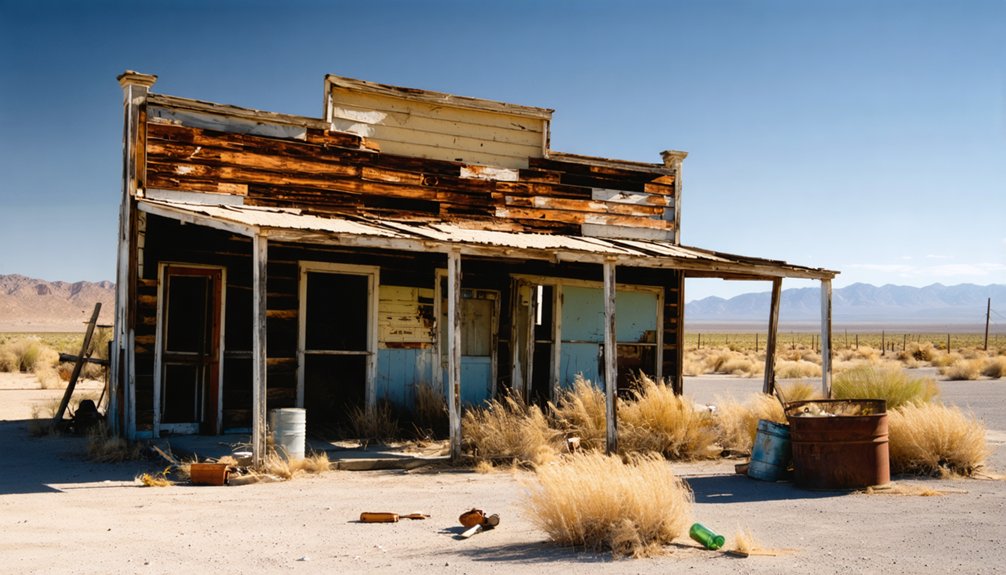
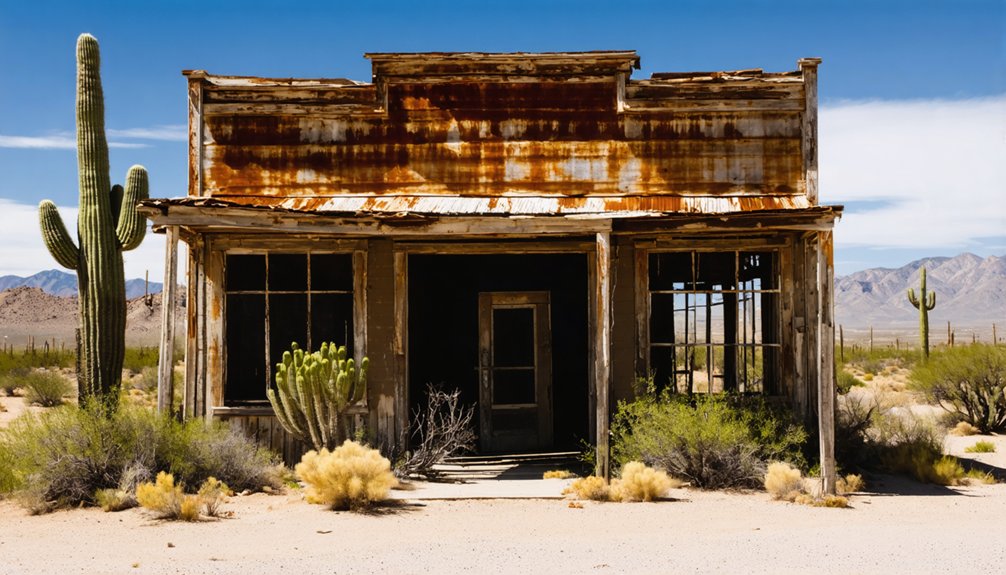
Tucked in the southwestern corner of Arizona off Exit 87 on I-8, Hyder is less a town than a memory — a sparse cluster of about six standing structures, a working well, and scattered ruins that hint at a once-active community.
Drive about 9 miles north, and you’ll find a place stripped of tourist amenities, crowds, and pretense. What remains is raw desert authenticity.
You’re not coming here for comfort — you’re coming for the quiet, the history, and the freedom of open land. Keep your eyes open for local wildlife moving through the scrub, and bring your own supplies.
If you appreciate honest, unpolished remnants of the past over manufactured experiences, Hyder earns its stop on your Arizona road trip.
How to Reach Hyder on Your Arizona Road Trip
Getting to Hyder is straightforward once you know the route. Take Exit 87 off I-8, then drive roughly 9 miles north. The landscape opens up fast, offering scenic viewpoints and chances to spot local wildlife along the way.
Before you roll out, keep these essentials in mind:
- Fuel up in Gila Bend or a nearby town—services disappear quickly once you head north.
- Agua Caliente Road shifts from pavement to dirt, so confirm your vehicle handles it.
- Bring water and a paper map—signage is sparse and cell service is unreliable.
- Watch for local wildlife crossing the road, especially during cooler morning hours.
The drive itself rewards curiosity. It’s remote, raw, and sets the tone perfectly for what Hyder delivers.
How Patton’s Desert Training Center Shaped Camp Hyder
Before the desert reclaimed it, Camp Hyder buzzed with military activity as one of 15 temporary camps built under General George S. Patton’s Desert Training Center during World War II. Soldiers trained here for brutal North African combat conditions, using Arizona’s harsh terrain as their proving ground.
Its historical significance runs deep — this land shaped some of the war’s most decisive fighting forces. Yet today, tourist accessibility remains surprisingly straightforward. You can reach the site off I-8 without specialized gear or a high-clearance vehicle.
What greets you now are scattered foundations, faint road outlines, and open desert silence. No buildings survived, but walking those sun-baked grounds connects you directly to a chapter of American military history that the official history books rarely spotlight.
Six Structures and a Well: What Remains in Hyder Today
When you reach Hyder today, you’ll find a quiet scatter of about six standing structures just off Palomas Road, each one a weathered survivor of a town that time has nearly swallowed whole.
Push beyond the railroad tracks, and you’ll come across a working well alongside a handful of crumbling ruins that hint at the community that once operated here.
It’s a sparse scene, but if you’re chasing authentic remnants of Arizona’s frontier past, these traces deliver exactly that.
Standing Structures Along Palomas
Though Hyder has largely faded into the desert, a handful of survivors still stand just off Palomas Road — roughly six structures that hint at what this town once was. You’ll want to slow down here, because historical preservation isn’t always dramatic — sometimes it’s quiet and weathered.
Look for these details as you explore:
- Aged walls that reveal original construction materials and methods
- Structural outlines showing where daily life once unfolded
- Desert vegetation reclaiming surfaces, blending historical preservation with nature’s own timeline
- Local wildlife moving through the ruins, reminding you the land stays alive
You’re not walking through a museum — you’re reading a landscape. Keep your eyes open, stay respectful, and let these six quiet survivors tell their own story.
Beyond The Railroad Tracks
Cross the railroad tracks, and Hyder reveals a different layer of itself. Out here, a working well still stands among scattered ruins, quietly marking what daily life once looked like in this vanished desert community.
You’re no longer walking past weathered facades — you’re stepping into open desert where local flora like creosote and brittlebush reclaim the ground that structures once occupied.
Move slowly through this section. Wildlife sightings aren’t uncommon, and desert birds, lizards, and the occasional jackrabbit tend to appear when you least expect them.
The ruins here feel rawer and less defined than what you passed near Palomas Road, but that’s exactly the point. This stretch rewards curiosity.
Bring water, watch your footing, and let the silence remind you why places like Hyder still pull people off the interstate.
Agua Caliente and the Ghost Towns Worth Adding to the Route
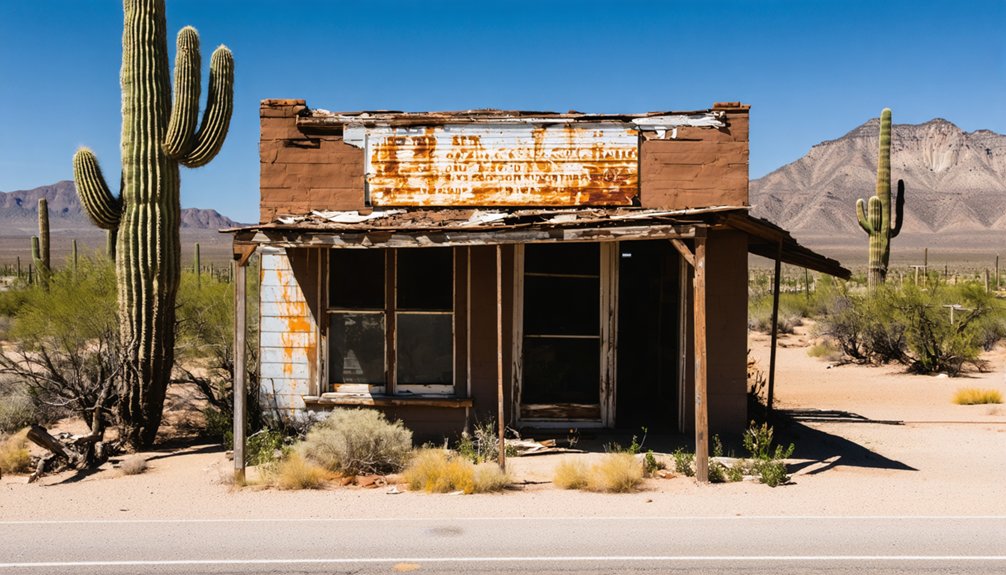
If you’re already making the drive to Hyder, it’s worth extending your route to take in Agua Caliente, where ruins of a wartime-era hotel and surrounding structures still mark the landscape.
You can link both stops into a broader ghost-town loop that connects Arlington, Sentinel, and Gila Bend, turning a single roadside detour into a full day of desert history.
Each site adds a different layer to the same story of rail, military, and resort activity that once defined this corridor before time and agriculture erased most of it.
Agua Caliente’s Historic Ruins
While Hyder itself is the anchor of this road trip, the nearby ruins of Agua Caliente add serious historical weight to the route. This forgotten corridor once supported wartime travelers and military operations, making its historical significance impossible to overlook.
Preservation challenges have left little standing, but what remains still tells a compelling story.
When you stop here, look for:
- Hotel remnants that once served wartime-era visitors and military personnel
- Road outlines tracing the original layout of this once-active desert community
- Scattered foundations revealing where service structures once supported the region
- Desert debris fields marking spots where buildings stood decades ago
You’re fundamentally reading the landscape like an open-air archive, piecing together a vanished world from fragments the desert hasn’t yet swallowed.
Linking The Ghost Town Loop
Agua Caliente doesn’t have to be your last stop. String it together with Hyder, Arlington, Sentinel, and Gila Bend, and you’ve got a full ghost-town loop worth dedicating a weekend to.
Each town carries its own local legends, and a few claim ghost stories tied to the wartime era and the rough frontier life that came before it.
Arlington offers additional ruins and roadside history, while Sentinel gives you another quiet snapshot of Arizona’s vanished past.
Gila Bend works well as your supply hub, sitting close enough to anchor the whole route.
Plan your fuel stops, pack enough water, and move between these sites at your own pace.
The freedom of the open desert road is the real reward here.
What Remains Worth Seeing
Though most of Hyder’s original structures have long since crumbled or disappeared, about six standing buildings still line Palomas Road. A working well sits beyond the railroad tracks alongside scattered ruins.
Camp Hyder adds real cultural significance, with foundation outlines and debris marking where Patton’s forces once trained across open desert.
Pair Hyder with these nearby stops to build a richer route:
- Camp Hyder – scattered foundations trace one of 15 WWII Desert Training Center camps
- Agua Caliente – ruins of a wartime-era hotel carry local legends of soldiers and travelers passing through
- Arlington – a small ghost town anchoring the western loop
- Sentinel – roadside remnants connecting desert history along I-8
Each stop adds another layer to Arizona’s forgotten frontier past.
Before You Go: Desert Road Conditions, Heat, and What to Bring
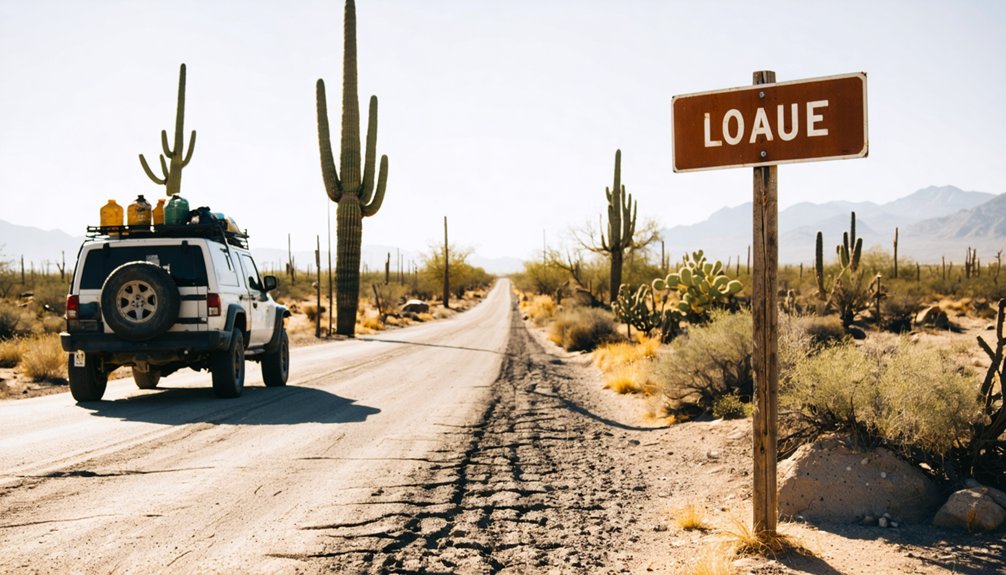
Before heading out to Hyder, you’ll want to prepare for one of Arizona’s more unforgiving desert environments. Agua Caliente Road turns to dirt and stretches roughly 43 miles before reaching the area, so a reliable vehicle matters.
Agua Caliente Road stretches 43 dirt miles into Arizona’s desert — bring a vehicle you trust completely.
Summer heat routinely becomes dangerous, making fall through spring the smarter window for exploration.
Pack more water than you think you’ll need, and fuel up before leaving any larger town. Cell service is scarce, and you won’t find supply stops along the way.
Watch for local wildlife crossing unpaved roads, especially at dawn and dusk, and stay aware of desert flora that signals fragile terrain worth protecting.
Traveling with a companion and carrying a paper map adds a practical safety layer on these remote back roads.
Frequently Asked Questions
Is There Cell Phone Service Available Near Hyder or Camp Hyder?
Don’t count on cell service availability near Hyder or Camp Hyder. You’re deep in remote desert, so plan your emergency communication ahead—carry a satellite communicator or two-way radio to stay connected where signal vanishes completely.
Are There Any Restroom Facilities Accessible at or Near Hyder?
You’ll find absolutely zero restroom facilities for miles around Hyder. Pack your own supplies, follow desert camping regulations, and come fully prepared — because out here, you’re gloriously on your own terms.
Can Visitors Legally Camp Overnight Anywhere Around the Hyder Area?
No clear campground options exist at Hyder, so you’ll want to verify local parking regulations before settling in. Check with Arizona BLM offices, as dispersed desert camping may be permitted on public lands nearby.
Is Hyder Located on Private Land or Publicly Accessible Property?
Want true freedom to explore? You’ll find Hyder’s land ownership unclear, so tread respectfully. Its historical preservation matters, and local legends thrive where access feels open — but always verify current land status before venturing out.
Are Pets Allowed When Exploring the Hyder Ghost Town Site?
The knowledge doesn’t confirm pet policies, but you can prioritize pet safety by watching for wildlife encounters in Hyder’s remote desert terrain. Bring plenty of water and keep your pet close throughout your exploration.
References
- https://www.ghosttowns.com/states/az/hyder.html
- http://www.ghosttownaz.info/hyder-ghost-town.php
- https://www.arizonan.com/ghost-towns/camp-hyder/
- http://www.ghosttownaz.info/agua-caliente-ghost-town.php
- https://prestonm.com/amtrak-sunset-limited-agua-caliente-rd/
- https://moshville.co.uk/misc/2023/07/exploring-arizonas-historic-towns/
- https://en.wikipedia.org/wiki/List_of_ghost_towns_in_Arizona
- https://www.tripadvisor.com/Attractions-g28924-Activities-c47-t14-Arizona.html
- https://www.surgent.net/highpoints/az/range/morrisbm.html
- https://www.arizonahighways.com/ghost-town-trail