Planning a ghost town road trip to Millbrook, Kansas means heading into the remote high plains to find a crumbling schoolhouse, faint foundation outlines, and a haunting silence where a farming community once thrived. You’ll want offline GPS maps, plenty of water, and a sturdy vehicle for unpaved roads. Spring and early fall offer the best weather for exploring and photography. Stick around, and you’ll discover everything you need to make this trip unforgettable.
Key Takeaways
- Millbrook’s main landmark is a crumbling schoolhouse surrounded by foundation outlines, with no roads, signage, or utilities present at the site.
- Spring and early fall offer the best visiting conditions, with mild temperatures, wildflowers, and clear skies ideal for photography.
- Download offline GPS maps and mark exact coordinates before departing, as cell service across western Kansas is extremely limited.
- Pack water, a first aid kit, sturdy boots, sun protection, and a paper map for navigating remote, unpaved terrain safely.
- Nearby ghost towns like Valley Brook, Bonita, Morse, and Viola can be combined for a comprehensive Graham County road trip.
What Makes Millbrook, Kansas Worth the Drive?
Although Millbrook, Kansas is little more than a scattering of ruins on the high plains, it carries the quiet weight of a forgotten era that few places can match. You won’t find tourist infrastructure here — no guided tours, no gift shops, no curated experience.
Millbrook, Kansas offers no guided tours, no gift shops — only ruins, open sky, and history entirely on your own terms.
What you’ll find instead is raw, unfiltered history waiting on your own terms.
The crumbling schoolhouse standing against an open Kansas sky is a rare act of unintentional historical preservation. It tells the story of a community that once thrived, then quietly disappeared after its post office closed in 1889.
For travelers who crave authentic discovery over packaged destinations, Millbrook delivers something genuinely irreplaceable — the freedom to explore a forgotten place exactly as it was left behind.
How Millbrook Went From Farming Town to Ghost Town
When you trace Millbrook’s collapse, you’ll find it started with the post office closing in 1889, cutting the town’s lifeline to commerce and communication.
Agricultural mechanization then stripped away the need for dense rural labor, pushing young residents toward cities and leaving farms without enough hands or purpose to sustain a community.
The Dust Bowl finished what decline had started, turning already-struggling western Kansas towns like Millbrook into abandoned shells that the prairie quietly reclaimed.
Post Office Closure Impact
How does a farming town disappear? Often, it starts with losing its post office. When Millbrook’s post office closed in 1889, after operating since 1878, the town lost its civic heartbeat. Mail delivery wasn’t just correspondence — it connected residents to markets, family, and opportunity.
Without that lifeline, businesses struggled to survive, and families started drifting toward more connected communities. You can almost feel the community nostalgia standing among Millbrook’s ruins today, imagining neighbors gathering for letters that no longer arrived.
Historical preservation efforts remind us that post office closures signaled economic death sentences for isolated prairie towns. Millbrook couldn’t compete once that infrastructure vanished.
What remained was silence, windswept land, and eventually, a crumbling schoolhouse — the last witness to everything the town once promised its settlers.
Agricultural Decline Factors
Farming once gave Millbrook its pulse, but the same land that sustained its settlers ultimately worked against them. Kansas agricultural history tells a familiar, unforgiving story — crops failed, markets shifted, and mechanization eliminated the labor that once kept small communities alive.
You’ll notice that rural decline rarely happens overnight. Instead, it creeps in quietly as younger residents leave seeking opportunity elsewhere.
The Dust Bowl accelerated everything. Those brutal 1930s storms stripped topsoil and crushed any remaining economic hope. What machinery didn’t eliminate, drought finished.
Millbrook couldn’t survive without people, and people couldn’t survive without reliable income. When you visit today, that empty landscape reflects more than abandonment — it reflects the brutal reality that agricultural vulnerability can erase an entire community from existence.
Dust Bowl Era Effects
The Dust Bowl didn’t just accelerate Millbrook’s decline — it delivered the final blow. When the 1930s brought relentless drought and choking dust storms across western Kansas, already-struggling towns like Millbrook couldn’t survive. Crops failed, soil eroded, and families packed what little they’d and left seeking better lives elsewhere.
What remained carried deep cultural significance — a schoolhouse standing as silent testimony to the community that once thrived here. Today, that ruin represents more than abandonment; it’s a reminder of resilience and human ambition against unforgiving land.
Historical preservation efforts across Graham County help keep these stories alive, ensuring you understand exactly what you’re walking through when you visit. Millbrook isn’t just a forgotten place — it’s a powerful chapter in America’s agricultural history that you can experience firsthand.
What You’ll Actually Find at the Millbrook Ghost Town Site?
When you arrive at Millbrook, you’ll find the crumbling ruins of a schoolhouse standing as the site’s most recognizable landmark. Don’t expect paved roads, signage, or any modern infrastructure — the land has reclaimed most of what once existed here.
Beyond the schoolhouse, only sparse fragments of the original settlement remain, so bring your curiosity and a good map.
Schoolhouse Ruins Remain
Arriving at Millbrook, you’ll find the ghost town has little left to offer beyond the haunting ruins of an old schoolhouse. Yet these crumbling walls carry real cultural significance, connecting you directly to 19th-century prairie life.
Historic preservation efforts remain minimal here, so explore responsibly.
Here’s what the schoolhouse ruins reveal:
- Architectural fragments — collapsed walls showing original construction materials and techniques
- Educational history — proof that families once built community infrastructure in this remote landscape
- Natural reclamation — vegetation slowly consuming the structure over decades
- Photographic opportunity — striking visual contrasts between decay and open Kansas sky
You’re fundamentally reading history without a guidebook. No fences, no tours — just raw, unfiltered remnants of a community that once believed this land held permanent promise.
No Modern Infrastructure
Beyond the schoolhouse ruins, you’ll find virtually nothing else at Millbrook — no roads, no signage, no utilities, and no developed facilities of any kind. The land has reclaimed most of what once stood here, leaving behind a raw, unfiltered example of urban decay on the open plains.
There’s a certain freedom in that emptiness. No crowds, no ticket booths, no guided tours telling you where to look or what to think.
Historical preservation here isn’t institutional — it’s purely natural, shaped by wind, weather, and time alone.
You’ll need to bring everything yourself: water, navigation tools, and a reliable vehicle suited for unpaved terrain.
The site rewards self-sufficient explorers who appreciate authenticity over convenience, offering a genuinely unscripted connection to Kansas’s forgotten past.
Sparse Historical Remnants
What you’ll actually find at Millbrook is sparse, but that scarcity is the point. Urban decay has quietly reclaimed this land, leaving only fragments that reward those paying close attention.
Historical preservation never touched Millbrook, so what remains is raw and unfiltered.
Here’s what you can expect on-site:
- Schoolhouse ruins — the most recognizable structure still standing
- Scattered foundation remnants — outlines of where buildings once stood
- Overgrown terrain — nature aggressively reclaiming every corner
- Complete silence — no crowds, no guides, no distractions
You’re walking through a place history forgot, which makes discovery feel deeply personal.
Bring your camera, your curiosity, and respect for what little remains.
Millbrook doesn’t perform for visitors — it simply exists, honestly and without pretense.
Best Time of Year to Visit Millbrook
Since Millbrook sits on the high plains of western Kansas, the season you choose for your visit can make or break the experience. Weather patterns here shift dramatically between seasons, so timing matters.
Spring and early fall offer the most rewarding conditions — mild temperatures, manageable winds, and local flora like prairie wildflowers that add unexpected color to the landscape.
Summer heat can be brutal, often pushing past 100°F, making extended outdoor exploration genuinely uncomfortable.
Winter brings harsh winds and potential snow that can make rural roads impassable.
September and October strike the best balance, offering cooler air, golden grasslands, and clear skies that make photography worthwhile.
Whatever season you choose, check forecasts carefully before heading out on those remote roads.
How to Get to Millbrook Without Getting Lost

Once you’ve locked in your travel window, getting to Millbrook without wandering aimlessly down dead-end dirt roads becomes your next challenge. Graham County’s rural grid offers little mercy without preparation.
Graham County’s rural grid offers little mercy — arrive unprepared and the dirt roads will humble you fast.
Before you head out, lock these steps down:
- Download offline GPS maps — cell service disappears fast across western Kansas’s high plains.
- Mark exact coordinates — Millbrook has zero signage, so precision matters.
- Study vegetation patterns — shifted tree lines and overgrown fields signal old settlement boundaries.
- Watch for local wildlife — deer and hawks near abandoned structures often indicate you’re close to forgotten ruins.
Rural roads shift seasonally, so confirm conditions before you roll out. Pack water, fuel up early, and treat every unmarked fork as a decision point worth double-checking.
What to Pack for a Remote Ghost Town Visit in Kansas
Packing right transforms a frustrating remote excursion into a smooth, rewarding one. Millbrook offers no services, no shade structures, and no emergency support nearby, so you’re entirely self-reliant out there. Bring essential safety gear including a first aid kit, emergency whistle, and a fully charged portable power bank.
Pack enough water for several hours minimum, since dehydration hits fast across Kansas high plains.
Wildlife encounters are genuinely possible here — rattlesnakes and coyotes roam western Kansas freely, so wear sturdy boots and stay alert around collapsed foundations and tall grass. Carry a paper map alongside your GPS in case signal drops.
Sun protection, including sunscreen, a hat, and sunglasses, isn’t optional in open terrain. Pack light, pack smart, and you’ll move freely through this forgotten landscape.
Other Graham County Ghost Towns Worth Stopping At
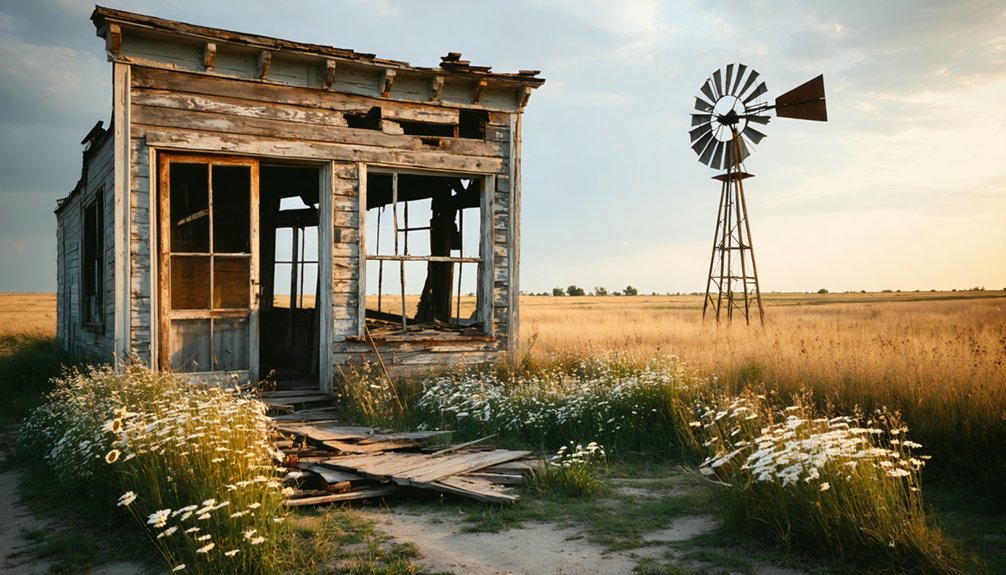
While Millbrook deserves its place on your itinerary, Graham County holds several other ghost towns that’ll reward the extra miles. Each stop adds depth to your journey through Kansas’s forgotten past.
- Valley Brook – Wander through remnants where historical artifacts hint at a thriving agricultural community.
- Bonita – Local legends surrounding this quiet settlement make it a compelling detour for curious explorers.
- Morse – Disappeared gradually alongside Millbrook, leaving scattered foundations worth photographing.
- Viola – A near-ghost town still breathing its last, offering a rare glimpse at a community mid-fade.
String these stops together on a single route, and you’ll experience the full boom-and-bust story written across Graham County’s wide-open landscape.
Freedom looks like an open road with history at every turn.
How to Plan a Kansas Ghost Town Road Trip Around Millbrook
With those Graham County stops mapped out, piecing together your full road trip itinerary is where the real planning begins. Start by downloading offline maps since cell service gets unreliable across western Kansas’s high plains.
Cluster your ghost town visits geographically to minimize backtracking between sites like Valley Brook, Bonita, and Morse.
Weather preparedness isn’t optional out here. Plains storms develop fast, so check forecasts daily and keep emergency supplies in your vehicle. Spring and fall offer the most comfortable temperatures for exploring on foot.
Watch for local wildlife along rural roads, particularly deer and pheasants at dawn and dusk, which can create genuine hazards. Carry water, fuel up whenever you can, and embrace the unpredictability. That freedom to roam is exactly what makes this road trip worth taking.
How to Photograph the Ruins and Flat Light of Western Kansas Ghost Towns
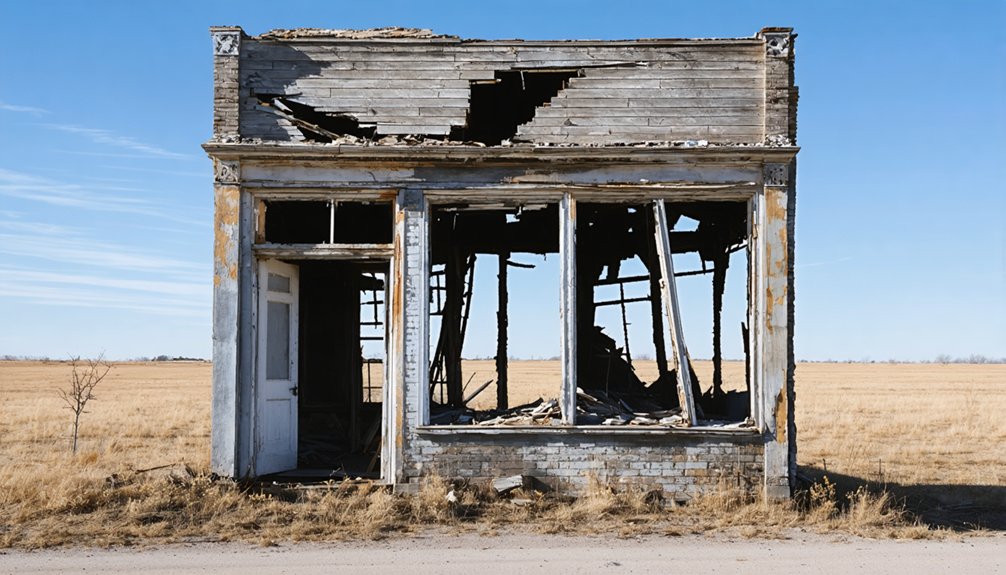
Capturing the ruins at Millbrook and other western Kansas ghost towns means learning to work with the region’s notorious flat light rather than fight it. Overcast skies actually enhance historical preservation details in aging wood and crumbling foundations.
Use these photography techniques to maximize your shots:
- Shoot during golden hour when low sun rakes across textures
- Use a polarizing filter to cut haze and deepen sky contrast
- Frame ruins against vast open horizons for dramatic scale
- Expose for shadows to retain detail in weathered surfaces
You’re working without crowds, fences, or restrictions here, which gives you complete creative freedom. Move around structures deliberately, crouch low, and let the emptiness tell the story that words can’t fully capture.
Frequently Asked Questions
Is There an Entrance Fee to Visit Millbrook Ghost Town?
You’ll find no entrance fee at Millbrook! It’s a freely accessible ghost town with no visitor regulations or historical preservation barriers — just drive out, explore the ruins, and experience this untamed slice of Kansas history yourself.
Are Pets Allowed When Visiting the Millbrook Ghost Town Site?
No official pet-friendly policies exist for Millbrook, but you’re free to bring your furry companion! Keep them leashed, though — wildlife encounters in the open Kansas plains can surprise both you and your pet.
Can You Legally Take Artifacts or Souvenirs From Millbrook?
Like raiders stripping a shipwreck bare, taking pieces destroys the whole story. You shouldn’t remove anything — artifact preservation laws and souvenir regulations protect Millbrook’s fragile remains, keeping history intact for every future explorer who follows your path.
Is the Millbrook Schoolhouse Ruin Safe to Physically Enter?
You shouldn’t enter the Millbrook schoolhouse ruin—it’s structurally unstable and dangerous. Beyond physical risks, haunted legends and ghostly sightings surround the crumbling walls, making your adventurous spirit better served by exploring safely from the outside.
Who Owns the Land Where Millbrook Ghost Town Currently Sits?
Pinpointing precise land ownership isn’t publicly documented, but you’ll likely find it’s privately held. Historical preservation efforts and land ownership records can be tracked through Graham County’s local government offices for accurate details.
References
- https://en.wikipedia.org/wiki/Millbrook
- https://kids.kiddle.co/Millbrook
- https://www.youtube.com/watch?v=dy7nLwjHkbY
- https://legendsofkansas.com/kansas-ghost-town-list/
- https://en.wikipedia.org/wiki/Millbrook_Township
- https://en.wikipedia.org/wiki/List_of_ghost_towns_in_Kansas