Planning a ghost town road trip to Mount Idaho puts you on gravel routes that miners and settlers carved out over a century ago. You’ll want to arrive between late spring and early fall, when roads are dry and wildflowers frame weathered cabins and forgotten cemeteries. Pack paper maps, sturdy boots, and extra fuel—cell service disappears fast out here. Nearby Silver City and Atlanta are worth every rutted mile, and there’s much more to uncover ahead.
Key Takeaways
- Visit late spring through early fall for optimal road conditions, with September offering scenic light, fewer crowds, and accessible routes.
- Pack paper maps, water, layered clothing, sturdy boots, and a camera, as cell coverage is limited in remote areas.
- Prepare your vehicle with a full-size spare tire, adequate clearance, full fuel tank, and checked fluids before departing Grangeville.
- Respect preserved sites by staying on established paths, avoiding climbing ruins, and leaving all artifacts undisturbed for future visitors.
- Use scenic byways like the Salmon River or Ponderosa Pine routes to connect historic ghost towns and enhance exploration.
Why Mount Idaho Belongs on an Idaho Ghost Town Road Trip
When you’re tracing Idaho’s ghost-town history across rugged back roads and wind-worn valleys, Mount Idaho earns its place on the itinerary as more than just a curiosity — it’s a genuine relic of Idaho County’s frontier past. The echoes of the Nez Perce War and the old mining boom still linger in the landscape around it.
Pair it with comparable stops like Silver City or Atlanta, and you’ve built a road trip that rewards patience and curiosity equally.
Wildlife sightings — deer, raptors, the occasional elk — add unexpected life to abandoned terrain. Keep your camera ready; early morning light hits weathered wood and crumbling foundations in ways that make photography tips about golden-hour shooting feel almost unnecessary. The place speaks for itself.
The Best Time of Year for Mount Idaho Road Conditions
Timing your Mount Idaho road trip right can mean the difference between a smooth gravel cruise through sun-dappled ponderosa pine and a white-knuckle crawl through late-season mud or unexpected snow. Late spring through early fall is your sweet spot.
By late May, wildflower blooms paint Idaho County’s roadsides in bursts of yellow and violet, and wildlife sightings — deer, elk, maybe a distant hawk riding thermals — become daily rewards rather than lucky accidents.
Summer keeps roads dry and accessible, letting you move freely between remote stops without second-guessing your tires.
September softens the light and thins the crowds.
Avoid winter entirely unless you’re prepared for closures and deteriorating conditions.
The land doesn’t wait for you — you’ll need to meet it on its terms.
Best Routes Into Mount Idaho and Idaho County Ghost Town Country
Your gateway into Mount Idaho and Idaho County ghost town country runs along scenic byways that trade interstate speed for gravel-road authenticity and mining-era atmosphere. You’ll find the Salmon River Scenic Byway among the most rewarding connectors, linking historic sites across roughly 161 miles of central Idaho terrain.
While towns like Stanley and Challis keep your tank full between stops, from there, Idaho County’s back roads thread you through former boomtowns—Dewey, DeLamar, and beyond. Building a loop where each stop deepens the story of the one before it.
Scenic Byway Route Options
Whether you’re tracing the old mining corridors of central Idaho or simply chasing a slower, more storied kind of road trip, the scenic byways threading through Idaho County ghost-town country reward the deliberate traveler.
The Ponderosa Pine Scenic Byway runs 131 miles from Boise to Stanley, delivering historical architecture and scenic viewpoints across former mining territory.
The Salmon River Scenic Byway stretches roughly 163 miles through central Idaho’s canyon country, best traveled April through November.
The Peaks to Craters Scenic Byway covers 143 miles, blending ghost-town history with raw geology.
Rather than driving interstates, use these byways as connectors, threading Mount Idaho into a broader Idaho County loop.
Each route trades speed for depth, offering the kind of unhurried discovery that makes ghost-town travel genuinely worthwhile.
Idaho County Access Roads
Getting into Mount Idaho and Idaho County’s ghost-town back country means trading smooth asphalt for gravel, open skies, and roads that haven’t changed much in a century. You’ll navigate forest-service routes where potholes and washboards demand patience, but the payoff arrives quickly.
Scenic viewpoints open across canyon walls and timbered ridgelines, framing landscapes that feel genuinely untouched. Slow down, and wildlife encounters become routine — deer moving through meadow edges, hawks circling overhead, elk crossing at dusk.
Check current road conditions before leaving Grangeville, your last reliable fuel stop heading into the county’s remote stretches. Carry a paper map because cell coverage disappears fast.
These roads reward preparation and punish assumptions, but they’ll deliver you somewhere most travelers never reach.
Connecting Ghost Town Stops
Stringing ghost-town stops together across Idaho County rewards planning, because the best routes here aren’t obvious ones. Linking Mount Idaho to neighboring sites means reading the landscape, watching for wildlife encounters along creek corridors, and knowing when to slow down for photography tips that golden-hour light practically hands you.
Three connectors make the difference:
- Salmon River Scenic Byway — 161 miles of river-carved country threading past mining-era remnants and rugged pullouts.
- Ponderosa Pine Scenic Byway — 131 miles linking Boise to Stanley through historic ghost-town territory.
- Idaho County forest-service loops — unpaved connectors reaching Grangeville-area sites where pavement surrenders to gravel and silence.
Top off your tank before leaving any service town. Freedom out here is earned, not assumed.
Ghost Towns Worth Adding Near Mount Idaho
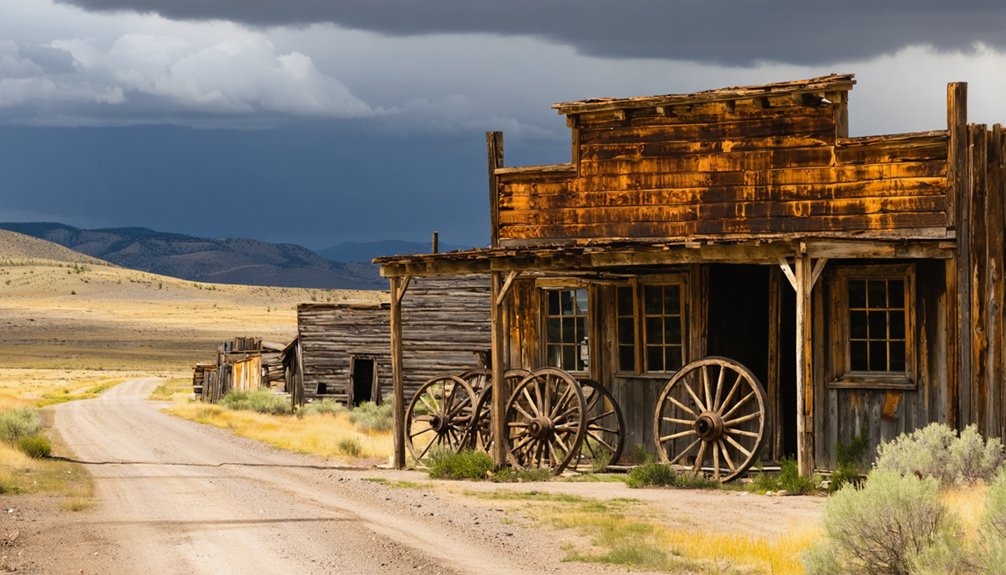
While you’re exploring Idaho County’s ghost-town country, you’d be doing yourself a disservice to skip Silver City, one of Idaho’s best-preserved historic towns.
Where more than 2,500 residents once crowded streets built on $60 million worth of silver dreams.
Stops like Dewey, DeLamar, and Atlanta round out the picture of the late-19th-century mining boom.
Each offers crumbling cabins, old cemeteries, and foundations that speak louder than any museum exhibit.
You’ll find that pairing these nearby towns with your Mount Idaho visit transforms a single stop into a full sweep of Idaho’s mining past.
Silver City’s Preserved History
Few ghost towns in Idaho match the haunting, time-capsule quality of Silver City, and it’s worth building your route around a visit. At its peak, over 2,500 residents lived here, and mines pulled more than $60 million in silver from the earth. That history still breathes through the standing buildings.
Make the most of your stop:
- Photograph at golden hour — Photography tips: soft morning or evening light transforms weathered facades into something extraordinary.
- Watch for wildlife encounters — mule deer and raptors move freely through abandoned lots and open hillsides.
- Read every remaining structure — each cabin, storefront, and foundation tells a story of boom, ambition, and quiet collapse.
You’ll leave Silver City feeling like you touched something irreplaceable.
Nearby Mining Ghost Towns
Silver City earns its place on any Idaho ghost-town itinerary, but the surrounding region rewards those willing to push further down the gravel. Dewey, DeLamar, and Atlanta each tell their own chapter of Idaho’s late-19th-century mining boom — rusted mining relics scattered across hillsides, collapsed cabins slowly surrendering to sage, cemeteries holding names the history books forgot.
Placerville offers a quieter ruin, while Wickahoney preserves faint traces of stagecoach-era life. You’ll find scenic overlooks along these routes that frame the whole broken, beautiful story — ridgelines cutting against open sky, valleys once loud with pick and drill now deeply silent.
Each stop compounds the feeling of the last. The further you wander from the pavement, the more Idaho gives you back.
Buildings, Ruins, and Cemeteries at Idaho Ghost Town Stops
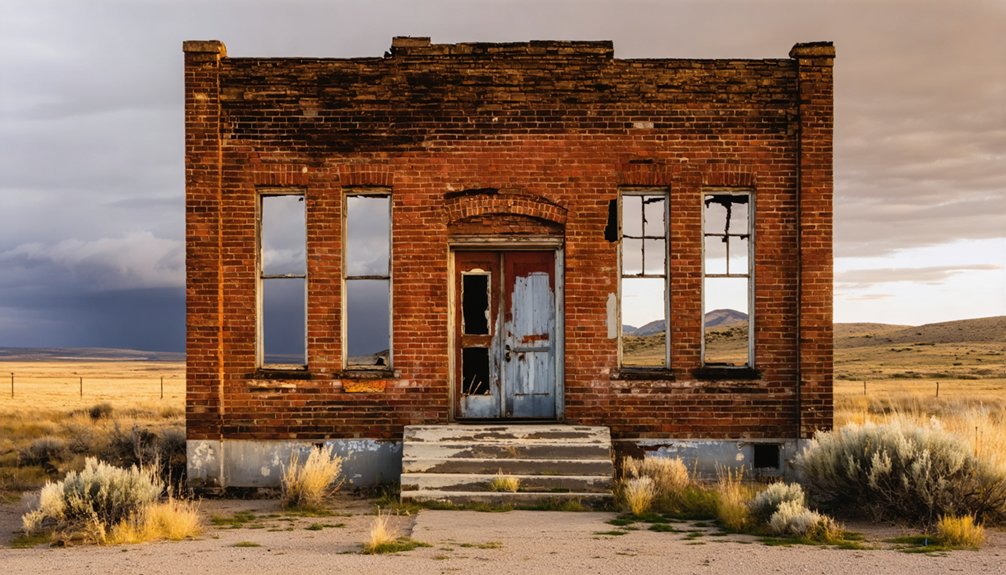
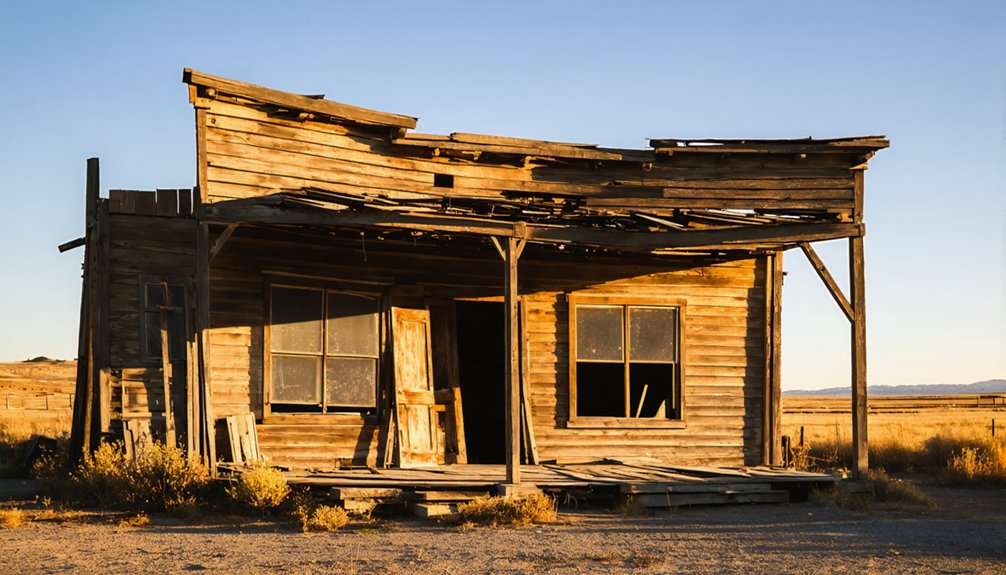
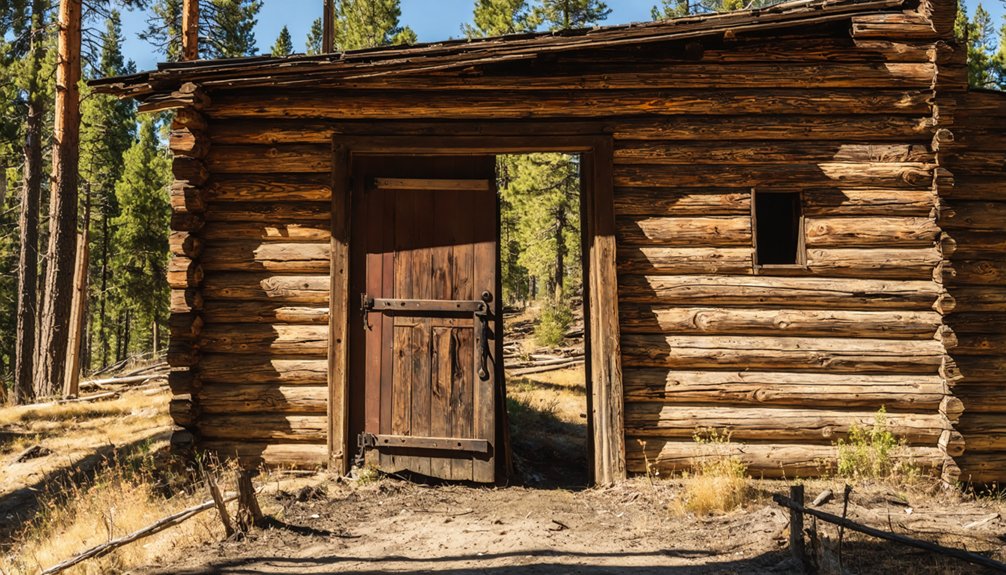
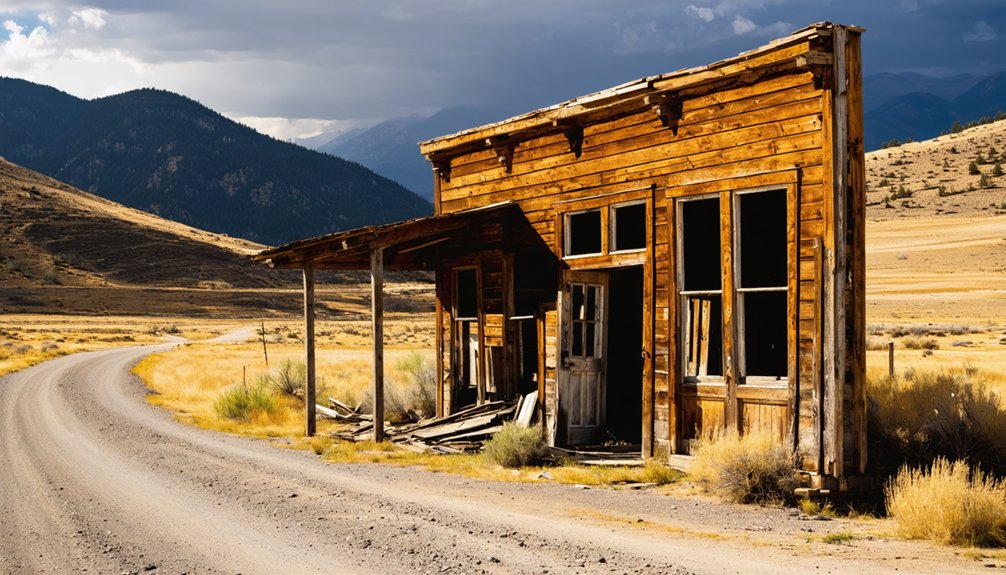
When you pull up to an Idaho ghost town, the buildings, ruins, and cemeteries do the talking. Abandoned cabins lean against decades of wind, and rusted machinery sits frozen mid-task, telling stories no museum could replicate.
Three things you’ll consistently encounter:
- Standing structures — Silver City’s preserved buildings offer rare glimpses into boom-era life, with original facades still intact.
- Foundations and ruins — Crumbled walls and scattered timbers mark where ambition once thrived, then quietly surrendered.
- Cemeteries — Headstones reveal names, ages, and heartbreaking dates that ground the history in real human lives.
Walk carefully here. These sites are irreplaceable, and every artifact left undisturbed keeps the story alive for the next person chasing that same feeling of open-road discovery.
How to Visit Mount Idaho Without Damaging What’s Left
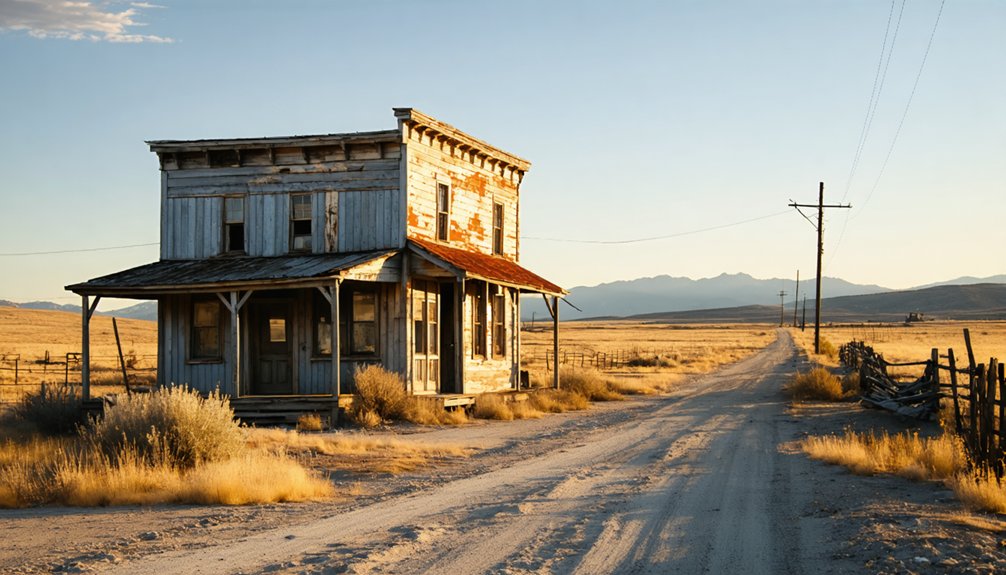
When you walk through what’s left of Mount Idaho, you’re stepping into a fragile world that can’t be rebuilt once it’s gone. Respect any posted boundaries and stay on established paths, since wandering off-trail breaks down foundations and disturbs the ground that holds a century of history together.
Whatever you carry in, you carry out — trash left behind degrades a site that already has so little left to give.
Respect Historic Site Boundaries
Though Mount Idaho’s remaining structures and foundations may look sturdy enough to climb on or poke around freely, they’re fragile echoes of a vanished world — and every careless footstep chips away at what little is left.
Respecting boundaries here means preserving the freedom for others to experience the same raw history you’re discovering.
- Stay on established paths — especially near active wildlife encounters, where disturbing the ground disrupts both animals and fragile soil layers.
- Follow posted signs — some land carries active mining claims with enforceable access rules.
- Apply smart photography tips — shoot from established vantage points rather than climbing ruins for a better angle.
These aren’t arbitrary restrictions. They’re the difference between a living historical landscape and a pile of forgotten rubble.
Pack Out All Trash
Every candy wrapper, bottle cap, and crushed aluminum can you leave behind becomes part of Mount Idaho’s story — and not the chapter anyone wants to read.
Whether you’re deep in urban exploration mode or pausing for wildlife photography among the weathered timbers, your trash doesn’t belong here. Pack a small bag specifically for waste — yours and anything careless visitors left before you.
These remote roads already challenge you with gravel, distance, and thin services. Don’t let litter add insult to that landscape’s quiet dignity.
The same freedom that pulls you toward forgotten places carries a responsibility: leave them exactly as raw and honest as you found them. Future wanderers deserve the same unmarked silence you came searching for.
Is Your Vehicle Ready for These Gravel Roads?
Gravel roads have a way of sorting out the prepared traveler from the unprepared one, and Idaho’s ghost-town routes will do exactly that. Before you roll toward Mount Idaho, honest vehicle prep separates a great adventure from a roadside nightmare.
Check these three essentials before departure:
- Tires – Carry a full-size spare; sharp gravel ends trips fast.
- Clearance – Low-riding vehicles struggle where ruts deepen after rain.
- Fluids and fuel – Remote stretches offer no rescue, only scenic viewpoints and silence.
Slow down near wildlife encounters, especially on blind gravel curves where deer appear without warning. These roads carry the memory of miners and settlers who traveled them by mule. Respect that history by arriving ready.
What to Pack for a Safe Idaho Ghost Town Trip
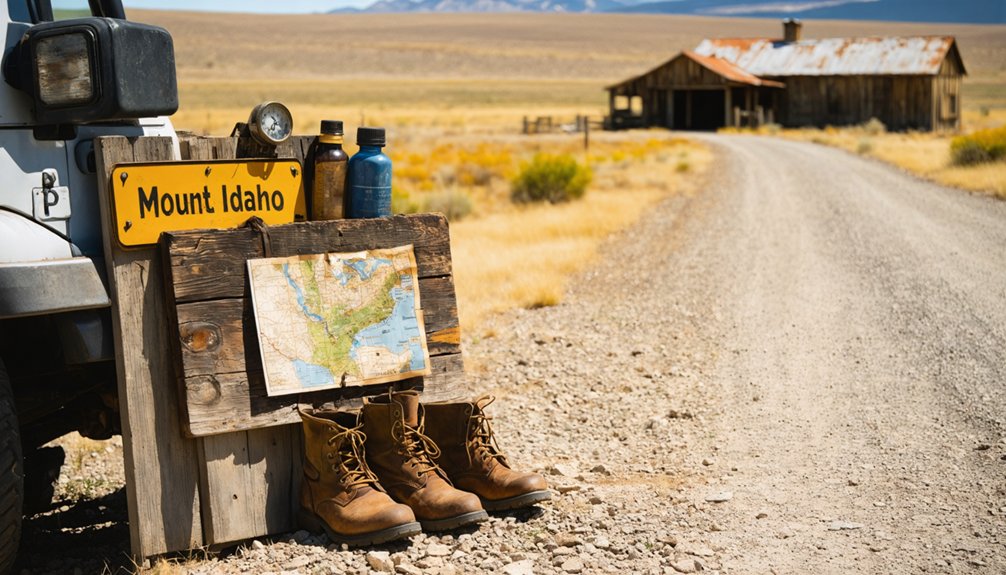
Packing for an Idaho ghost town trip isn’t complicated, but what you leave behind can define the whole experience. Carry detailed paper maps — cell signals vanish fast out here.
Bring sturdy boots for uneven terrain and overgrown foundations blanketed in local flora. Pack enough water for the full day, plus extra snacks for stretches where services disappear entirely.
A camera earns its weight at every crumbling cabin and sun-bleached cemetery. Keep binoculars handy, since wildlife encounters with deer, hawks, or elk happen without warning along remote corridors.
Sunscreen and layers matter equally — Idaho’s high-elevation weather shifts without apology.
Leave collecting instincts at home. These artifacts belong to the silence that surrounds them. Pack out everything you brought in, and the landscape stays exactly as you found it.
Where to Fuel Up Before the Remote Stretches
Once you leave Boise, the gas stations thin out faster than you’d expect. Freedom on Idaho’s backroads comes with responsibility — an empty tank kills the adventure before it starts.
Before heading into ghost-town country, lock in your fuel and supplies at these essential stops:
- Idaho City — Fill up here, grab local dining at one of the historic storefronts, and soak in scenic viewpoints before the road narrows.
- Lowman — Your last reliable stop before remote stretches swallow the highway.
- Stanley — If you’re riding the Salmon River corridor, Stanley offers full services before isolation takes over.
Each town carries its own worn character. Don’t rush through them — they’re part of the story you came to find.
How to Plan Your Mount Idaho Ghost Town Itinerary
Building your Mount Idaho itinerary means thinking less like a tourist and more like someone chasing fragments of a vanished world. Anchor your days around Idaho County’s mining corridors, letting scenic byways connect the ghost towns rather than rushing between them. Plan for gravel roads, shifting weather, and limited services beyond the larger towns.
Seek out local dining in the small service communities before you push deeper into remote stretches — these meals ground you in the living culture surrounding all that history.
Choose camping spots near trailheads or byway pullouts so mornings begin with silence rather than checkout clocks. Keep your schedule loose enough to linger where something unexpected pulls you in, because the best ghost-town moments rarely appear on any map.
Frequently Asked Questions
Are There Guided Ghost Town Tours Available in Idaho County?
You’ll find guided tours occasionally offered through local historical societies, connecting you to historical preservation efforts and local legends that breathe life into Idaho County’s forgotten mining camps, ghost towns, and the untamed spirit they’ve left behind.
Can You Camp Overnight Near Mount Idaho or Surrounding Ghost Towns?
You can camp near Mount Idaho, where starlit skies become your lantern into the past. Secure camping permits beforehand, respect wildlife encounters roaming these forgotten hills, and you’ll find freedom echoing through Idaho County’s rugged, ghost-haunted wilderness.
Do Any Idaho Ghost Towns Charge an Entrance or Access Fee?
Most Idaho ghost towns don’t charge you entry fees — you’ll roam freely through historical preservation sites at your own pace. Visitor amenities are minimal, so embrace that raw, untamed freedom as you wander these beautifully forgotten, nostalgic landscapes.
Are Pets Allowed on Trails at Idaho Ghost Town Historic Sites?
Pets are often welcome, but you’ll want to verify trail regulations site by site. Keep pet safety in mind — leash your companion, respect posted rules, and let history’s quiet echo surround you both freely.
Is Cell Service Available Along Remote Idaho County Ghost Town Roads?
Don’t count on cell connectivity along Idaho County’s remote ghost town roads. You’ll want to embrace emergency preparedness—download offline maps, tell someone your route, and relish that liberating silence where forgotten miners once roamed.
References
- https://www.onlyinyourstate.com/trip-ideas/idaho/haunting-road-trip-id
- https://visitidaho.org/things-to-do/ghost-towns-mining-history/
- https://www.youtube.com/watch?v=RNCaxrY62ZI
- https://gearjunkie.com/adventure/ghost-town-silver-city-idaho
- https://visitidaho.org/things-to-do/ghost-towns-mining-history/salmon-river-scenic-byway/
- https://www.youtube.com/watch?v=84TgcOoREK8
- https://www.youtube.com/watch?v=Ki0CftIjAAE
- https://visitidaho.org/things-to-do/ghost-towns-mining-history/peaks-to-craters-scenic-byway/
- https://www.youtube.com/watch?v=1h_dPZVXdVo