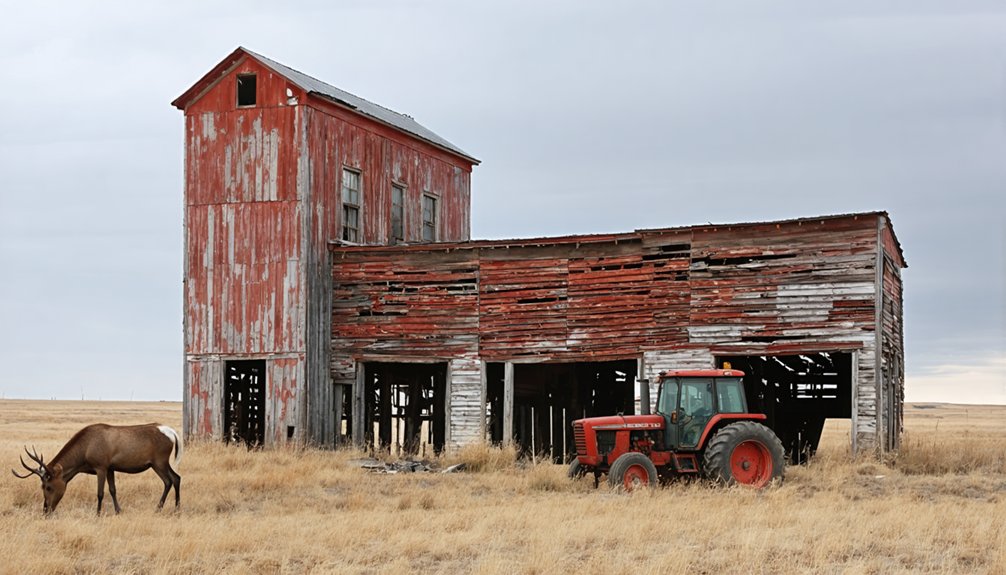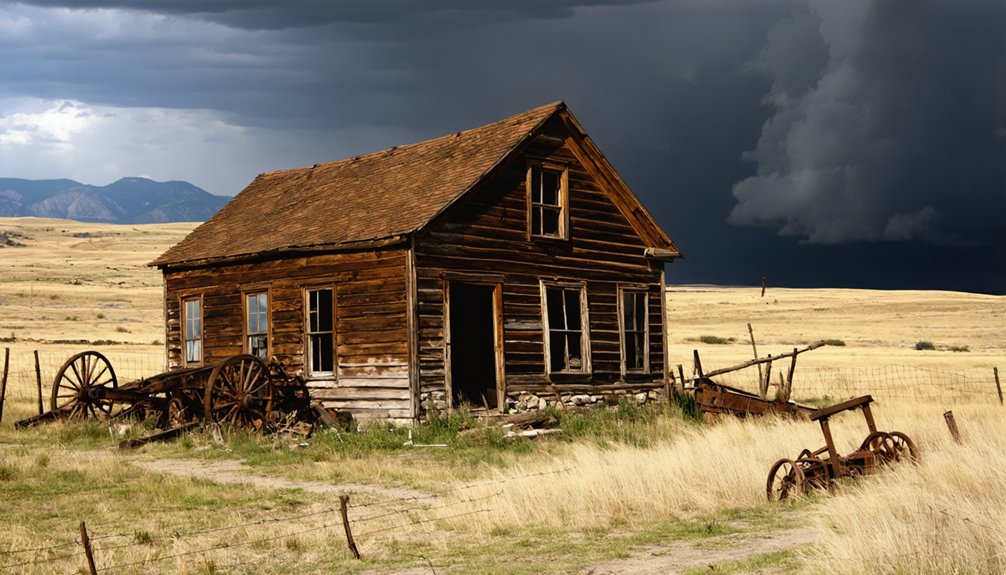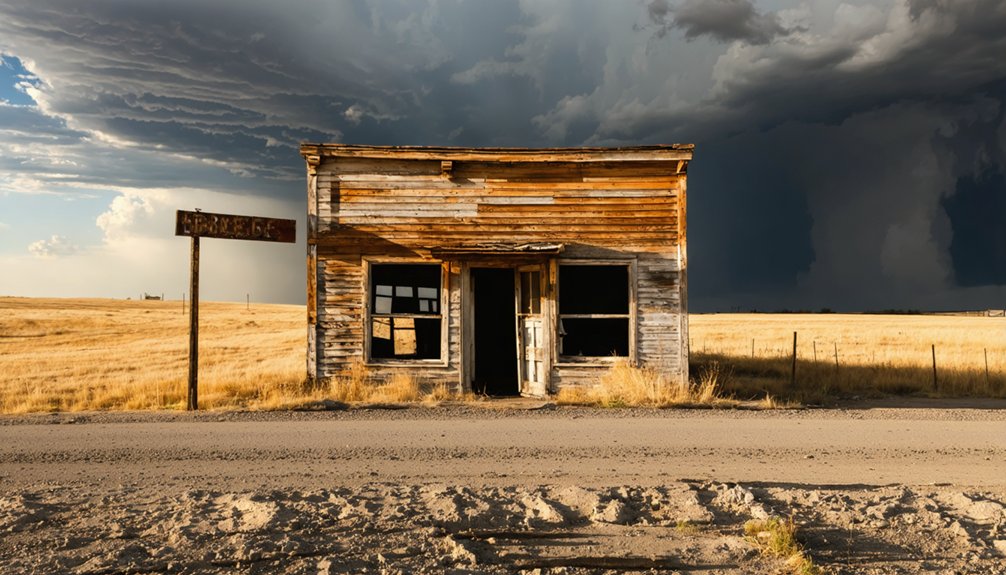
Planning a ghost town road trip to Pearl City, South Dakota means chasing a settlement that’s vanished into open fields in Beadle County. You’ll navigate using century-old maps, county records, and satellite imagery since no signage, buildings, or paved roads remain. Pearl City once held a population of just 23 before boom-and-bust forces erased it entirely. Pack sturdy boots, water, and a compass — and stick around to uncover everything this forgotten frontier town still has to tell.
Key Takeaways
- Pearl City is a ghost town in Beadle County, South Dakota, with no standing structures, signage, or paved roads remaining today.
- Use the 1893 Rand McNally map, satellite imagery, and GPS with offline maps to locate and navigate the unmarked site.
- Cross-reference county records, old newspapers, and historical land surveys to triangulate Pearl City’s exact former location accurately.
- Visit between May and September for mild weather; pack water, sunscreen, sturdy boots, and a basic first aid kit.
- Nearby Black Hills ghost towns like Rockerville and Spokane offer visible remnants, complementing Pearl City’s historically significant but barren landscape.
What Is Pearl City, South Dakota?
Pearl City is a ghost town tucked away in Beadle County, South Dakota, with roots stretching back to at least 1893, when it appeared on Rand McNally maps. Once a living, breathing settlement, it now stands as a tribute to urban decay, where time and neglect have erased every structure from the landscape.
You won’t find buildings, signage, or paved roads — just open fields reclaiming what settlers once built. Preservation challenges have made documenting Pearl City’s full story difficult, leaving historians piecing together clues from old maps and aerial surveys.
With a recorded population of just 23, it fits squarely into South Dakota’s long list of boom-and-bust settlements. If you crave raw, unfiltered history, Pearl City delivers exactly that kind of freedom.
Where Exactly Is Pearl City Located in Beadle County?
Nestled within Beadle County, South Dakota, Pearl City sits at coordinates that you’ll need to research through historical maps and county records before making the drive out.
Local folklore suggests the settlement thrived briefly before economic forces emptied it entirely. Preservation efforts remain minimal, leaving the land open and raw.
Before you head out, picture what you’re driving toward:
- Open fields have replaced every structure that once defined Pearl City’s streets.
- No paved roads or modern infrastructure mark the original settlement’s footprint.
- Historical records, including the 1893 Rand McNally map, remain your clearest navigational guide to pinpointing the exact site.
You’re fundamentally chasing a ghost across South Dakota’s plains — and that’s exactly what makes this adventure worth taking.
How Do You Find Pearl City Using Old Maps and Records?
Tracking down Pearl City‘s exact location means trading modern GPS convenience for the detective work of historical research. Your best starting point is the 1893 Rand McNally map, where Pearl City appears under its original name.
Dig into county records, old newspapers, and library archives to separate fact from urban legends that often surround forgotten settlements.
An aerial map drawn in 1913 gives you another reference point, helping you triangulate the site within Beadle County.
Preservation efforts remain minimal here, so don’t expect marked trails or signage guiding your way.
Instead, cross-reference coordinates, study land surveys, and compare historical plats against current satellite imagery.
This research process transforms your road trip into genuine exploration, connecting you directly to Pearl City’s vanished world through the documents it left behind.
Why Did Pearl City Become a Ghost Town?
When you research Pearl City’s fate, you’ll quickly recognize the classic boom-and-bust pattern that swallowed hundreds of South Dakota settlements.
The town likely thrived on mining or rail activity, and once that economic engine stopped, residents had no reason to stay.
You’re fundamentally looking at what happens when a community’s single lifeline disappears — the people vanish, and the land reclaims everything.
Economic Decline Factors
Like so many South Dakota settlements, Pearl City didn’t fade quietly — it collapsed under the weight of economic forces it couldn’t outlast. Understanding these economic factors helps you appreciate exactly what you’re standing on when you visit.
Three industry collapse triggers drove Pearl City into silence:
- Mining exhaustion — Once ore deposits dried up, the primary wage source vanished overnight.
- Railroad abandonment — Without active rail lines, transporting goods became impossible, strangling commerce completely.
- Population flight — Residents chased opportunity elsewhere, leaving buildings empty until nature reclaimed them.
You’re not just visiting an empty field — you’re reading a cautionary tale written in disappearing foundations. These boom-and-bust cycles shaped South Dakota’s identity, and Pearl City represents that story in its most stripped-down, honest form.
Boom And Bust Cycle
Those economic pressures didn’t appear from nowhere — they’re the direct result of a boom-and-bust cycle that played Pearl City like every other frontier settlement across South Dakota. When the economic engine driving the town — whether mining, railroads, or agriculture — stalled, residents packed up and chased opportunity elsewhere. Nobody stayed to fight the inevitable urban decay creeping across abandoned structures. Buildings weathered, collapsed, and vanished entirely.
That cycle is exactly what makes preservation challenges so brutal in places like Pearl City. There’s no community left to advocate for historical protection, no funding, no infrastructure. The land simply reclaimed itself.
What you’ll find today is open field where a mapped town once stood. That raw erasure is precisely what makes visiting so quietly powerful for freedom-seeking explorers like you.
What Will You Actually Find at the Pearl City Site Today?
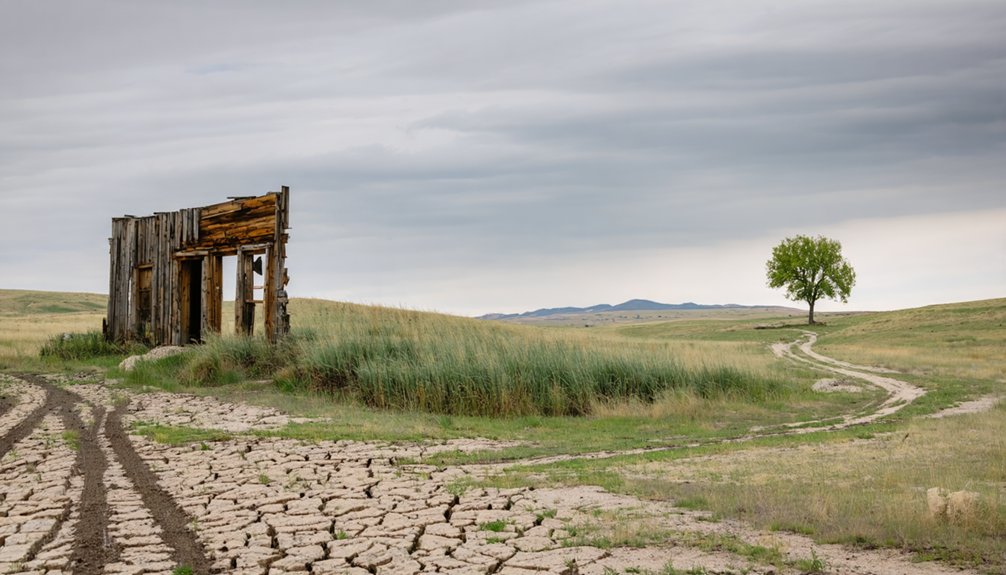
If you make the trek out to Pearl City’s former site in Beadle County, you’ll find absolutely nothing standing — no buildings, no signage, no remnants of a once-mapped settlement. Urban decay didn’t slowly consume this place; the land simply reclaimed it entirely. Any archaeological evidence remaining lies buried beneath open fields and pasture grass.
Here’s what you can realistically expect:
- Open grassland stretching across what 1893 Rand McNally maps once identified as a functioning town.
- No infrastructure — no roads, foundations, or visible footings marking former structures.
- Complete silence — just wind, sky, and the freedom of standing somewhere history forgot.
Bring those old maps. They’ll be your only guide to imagining Pearl City as it once existed.
When Is the Best Time of Year to Visit Pearl City?
South Dakota’s climate makes timing everything when you’re planning a visit to Pearl City’s remote Beadle County site. Late spring through early fall offers your best window, when roads are passable and daylight hours stretch long enough for thorough exploration.
Timing is everything in South Dakota — visit Pearl City between late spring and early fall for the best experience.
May and September hit the sweet spot — mild temperatures, lower rainfall, and manageable terrain make documenting urban decay remnants far easier than winter’s brutal conditions allow.
Avoid January through March entirely. Frozen ground and snowdrifts make traversing open pastureland genuinely dangerous.
Summer heat peaks in July and August, though those months remain workable if you start early.
Preservation challenges at sites like Pearl City mean nature continuously reclaims the land, so visiting sooner rather than later gives you the best chance of spotting any remaining historical traces before they disappear completely.
What Should You Pack for a Nothing-Left Ghost Town Visit?

When you head out to Pearl City, you’ll want to pack reliable GPS and a printed copy of the 1893 Rand McNally map to help you pinpoint where the town once stood.
Bring sturdy boots, sunscreen, and plenty of water since no modern amenities exist at the site.
Tuck in any historical research you’ve gathered beforehand, because context transforms an empty field into a vivid window into South Dakota’s boom-and-bust past.
Essential Navigation Tools
Exploring a “nothing left” ghost town like Pearl City demands the right tools, since you’re fundamentally steering toward an empty field with no signage, landmarks, or standing structures to guide you. Urban decay has erased every reference point, and preservation challenges mean no historical markers exist on-site.
Pack smart:
- 1893 Rand McNally Map (digital or printed) – Cross-reference the original town layout against modern satellite imagery to pinpoint foundations hiding beneath overgrown fields.
- GPS Device with Offline Maps – Cell service disappears in rural Beadle County, so download your coordinates before leaving civilization behind.
- Compass – When technology fails across open South Dakota prairie, a reliable compass keeps your orientation sharp and your adventure moving forward.
Comfort and Safety Gear
Packing for Pearl City means preparing for a site that offers nothing — no shade, no water, no shelter, and no one nearby if something goes wrong. You’re venturing into open South Dakota terrain where self-sufficiency isn’t optional. Bring plenty of water, sunscreen, sturdy boots, and a first aid kit. A wide-brim hat handles the prairie sun better than anything else.
Carry a printed copy of that 1893 Rand McNally map — it deepens your understanding of Pearl City’s historical significance and keeps your phone battery free for emergencies.
Pack light, but don’t cut corners on safety essentials.
Respect preservation efforts by leaving everything untouched. If you spot old foundations, photograph them — don’t disturb them. Your goal is exploration, not excavation.
Freedom means responsibility out here.
Historical Research Materials
Safety gear gets you to the site in one piece — historical research materials are what make the site mean something once you’re there. Pearl City’s historical significance won’t reveal itself without context.
You’re standing in an open field, but with the right documents, you’ll see a vanished town.
- 1893 Rand McNally Map — pinpoints Pearl City’s original layout, helping you identify where architectural remnants once stood.
- 1913 Aerial Drawing — reveals the town’s structure at its most documented moment, giving spatial context to empty land.
- South Dakota Ghost Town Records — confirms Pearl City’s “nothing left” classification, so you arrive with accurate expectations rather than disappointment.
Pack these digitally or printed. Knowledge transforms an empty field into a powerful story worth chasing.
Which Ghost Towns Near Pearl City Are Worth Visiting?
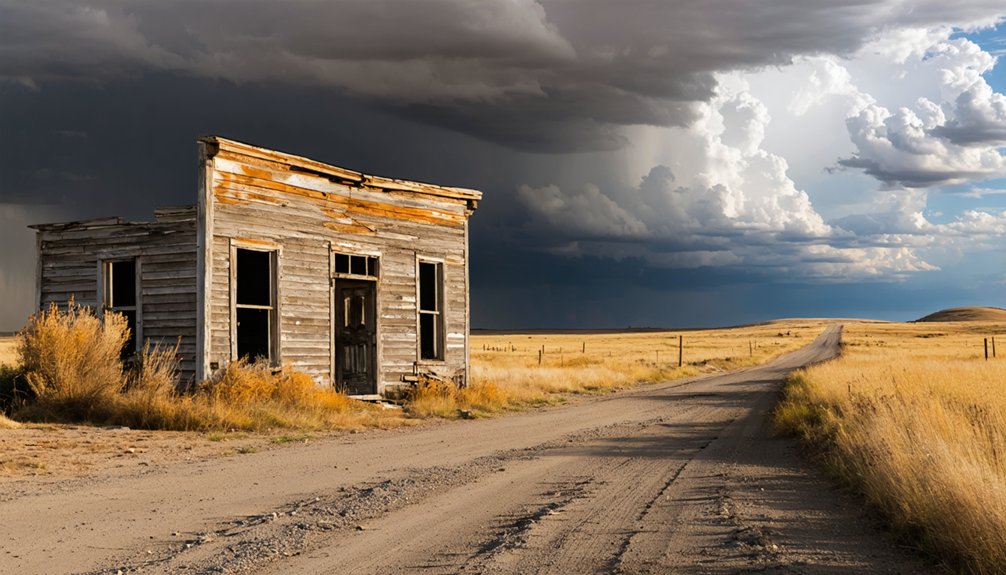
While Pearl City itself offers little more than open fields and historical intrigue, Beadle County and the broader South Dakota landscape are dotted with ghost towns worth adding to your itinerary. The Black Hills region alone holds over six hundred abandoned settlements, many featuring crumbling abandoned structures that whisper local legends of booming mines and vanished railroads.
Towns like Rockerville, Spokane, and Sheridan offer far more visible remnants than Pearl City, giving you tangible connections to South Dakota’s boom-and-bust past. Each stop tells a distinct story of ambition, failure, and survival.
Pack your maps, charge your camera, and treat the entire region as one expansive open-air museum. The freedom of the open road makes exploring these forgotten places genuinely rewarding.
How Did Pearl City Fit South Dakota’s Boom and Bust Pattern?
How perfectly did Pearl City mirror the restless ambition that shaped South Dakota’s frontier identity? You can trace its historical significance through a classic boom-and-bust arc that consumed hundreds of settlements across this state.
The urban decay you’ll find today tells the whole story:
- Rise – Pearl City appeared on 1893 Rand McNally maps, signaling real economic momentum and settler confidence.
- Decline – Once mining or rail transport lost importance, residents abandoned the town, chasing opportunities elsewhere.
- Disappearance – By 1913, an aerial map existed; today, nothing stands.
You’re not just visiting an empty field when you travel here. You’re standing inside a pattern that repeated itself across six hundred Black Hills towns. Pearl City’s silence speaks louder than any remaining structure ever could.
How Do You Document a Ghost Town That’s Already Gone?
Documenting a ghost town that’s left nothing behind is its own kind of adventure — one that trades physical exploration for archival detective work. You’ll dig through old Rand McNally maps, like the 1893 edition that confirmed Pearl City’s existence, and cross-reference aerial images from 1913 to reconstruct what once stood there.
Urban decay doesn’t always leave dramatic ruins — sometimes it erases everything entirely, making your research the only surviving monument. Photograph the empty fields, GPS the coordinates, and compare current street views against historical records.
You’re practicing historical preservation in its rawest form, rescuing a forgotten place from complete obscurity. Every document you find, every note you take, keeps Pearl City’s story alive long after the land reclaimed it.
Frequently Asked Questions
Is Pearl City Accessible to Visitors With Physical Disabilities or Mobility Limitations?
Pearl City isn’t wheelchair friendly facilities or accessible pathways exist there. You’ll find only open, undeveloped fields with no infrastructure. It’s a rugged, untamed site that’s challenging for visitors with mobility limitations to explore freely.
Are There Any Legal Restrictions on Digging or Collecting Artifacts at Pearl City?
You’ll need to respect artifact laws before digging at Pearl City! Don’t collect anything without proper collection permits. South Dakota protects historical sites, so research local regulations first — breaking these rules can result in serious legal consequences.
Can Children Safely Participate in a Ghost Town Road Trip to Pearl City?
Yes, you can safely bring children to Pearl City! They’ll love exploring open fields, discovering historical preservation stories, and enjoying photography opportunities. It’s an adventurous, wide-open experience that’ll ignite their curiosity about South Dakota’s fascinating boom-and-bust past.
Is There Nearby Camping Available for Overnight Stays Near Pearl City?
With 600+ ghost towns nearby, you’ll find camping options worth exploring! Accessibility features vary across Beadle County campgrounds, so research sites beforehand. Pack your gear, embrace the freedom, and make your Pearl City adventure an unforgettable overnight experience!
Are Guided Tours of Pearl City or Surrounding Ghost Towns Available Locally?
You won’t find formal guided tour options at Pearl City, but local historical guides in Beadle County can help you uncover hidden stories. Seek them out through county historical societies for an adventurous, freedom-filled exploration!
References
- https://en.wikipedia.org/wiki/List_of_ghost_towns_in_South_Dakota
- https://www.sdpb.org/rural-life-and-history/2023-08-21/some-black-hills-ghost-towns-and-their-origins
- https://kids.kiddle.co/List_of_ghost_towns_in_South_Dakota