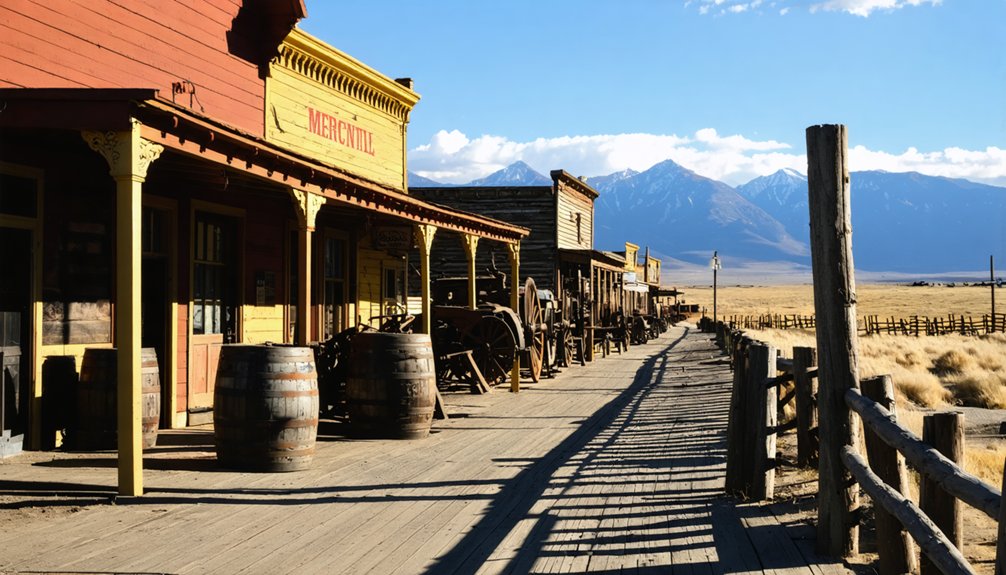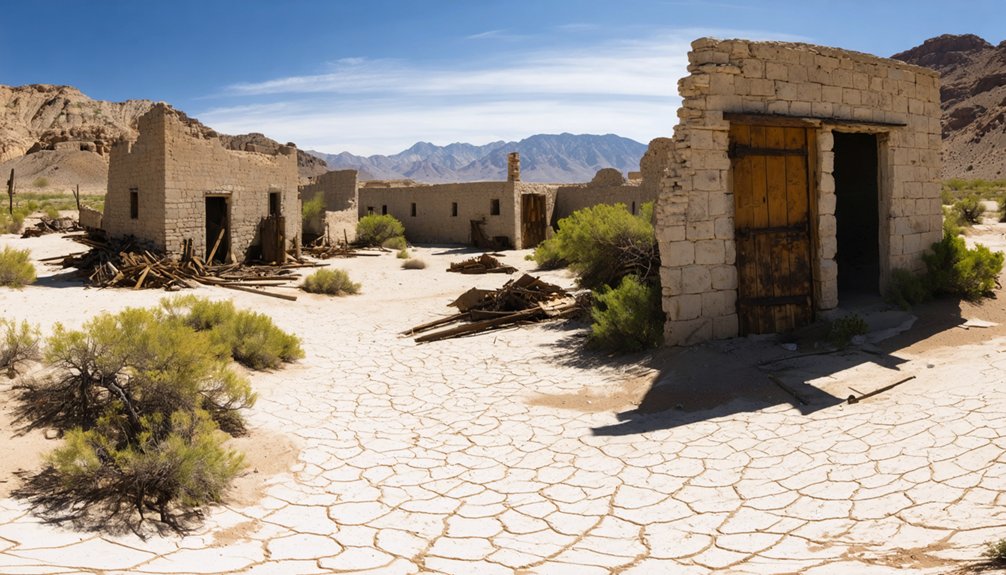
Planning a road trip to Skidoo ghost town means preparing for a rugged 9-mile unpaved route through Death Valley’s Panamint Mountains, so you’ll need a 4WD high-clearance vehicle and reliable navigation tools. Founded in 1907, this remote boomtown once housed over 500 residents and produced $1.5 million in gold. Visit between November and March to avoid dangerous summer heat. Keep reading to uncover everything you need to make your Skidoo adventure safe and unforgettable.
Key Takeaways
- Skidoo Ghost Town sits at 5,689 feet in the Panamint Mountains, offering stunning Death Valley views and rich gold rush history from 1907.
- Access requires a 9-mile unpaved road, demanding a high-clearance 4WD vehicle, sufficient fuel, and reliable navigation tools.
- Winter months (November to March) provide the safest visiting conditions, as summer temperatures dangerously exceed 120°F.
- Key remnants include the stabilized Skidoo Stamp Mill, miners’ cabins, graves, and over 1,000 abandoned mine openings nearby.
- Never enter abandoned mine shafts, watch for hidden drop-offs, and keep children and pets on established paths at all times.
Why Is Skidoo Ghost Town Worth the Drive?
Tucked away in the Panamint Mountains above Death Valley, Skidoo ghost town rewards adventurous travelers with a rare glimpse into California’s gold rush past. Its historical significance runs deep — founded in 1907, this remote settlement once housed over 500 residents and produced $1.5 million in gold before disappearing almost entirely from the landscape.
You’ll find the journey itself equally compelling. Perched at 5,689 feet, the scenic views stretching across Death Valley are breathtaking and worth every bump along the unpaved road.
The surviving stamp mill, stabilized against a dramatic 3,000-foot hillside slope, tells a powerful story that no museum can replicate. If you crave authentic exploration far from crowded tourist trails, Skidoo delivers exactly the kind of raw, unfiltered freedom that’s increasingly hard to find.
How Do You Get to Skidoo Ghost Town?
Getting to Skidoo requires serious preparation, because the only route in is a 9-mile unpaved road that’ll defeat any standard 2WD vehicle. Head 7 miles north of Emigrant Canyon’s entrance into the Panamint Mountains, and you’ll reach one of Death Valley‘s most rewarding scenic viewpoints and historical artifacts.
Here’s what you’ll need:
- 4WD vehicle with high clearance — non-negotiable on this rugged terrain
- Mountain bike if you prefer pedaling the 9-mile unpaved stretch
- Navigation tools since the road isn’t maintained or clearly marked
- Sufficient fuel — no services exist anywhere near Skidoo
- Winter timing — desert heat makes warmer months genuinely dangerous
Prepare thoroughly, and that rough road transforms from an obstacle into the gateway to complete freedom.
What Can You Still See at Skidoo Today?
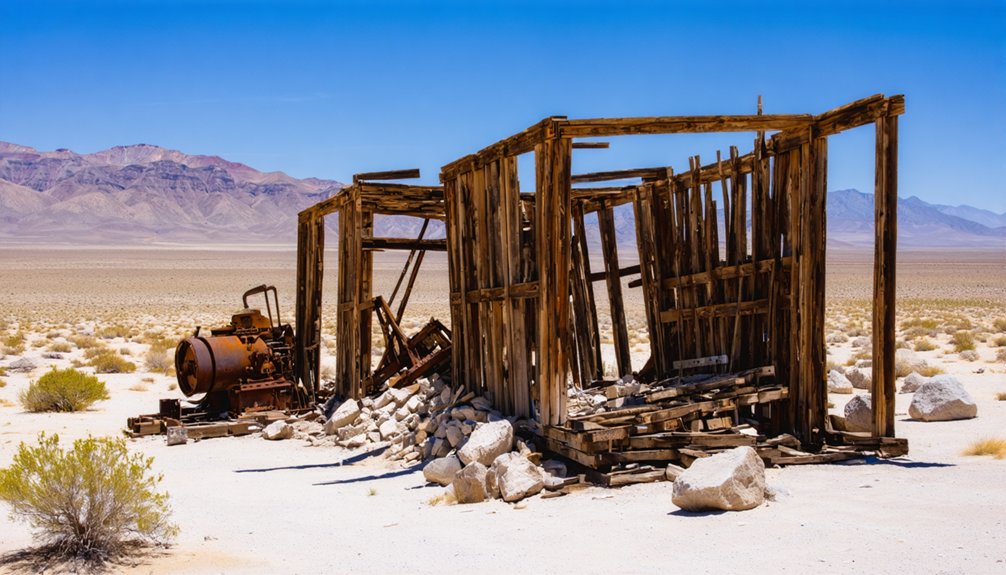
Once you’ve made it up that rough 9-mile road, you’ll want to know what’s actually waiting for you — and the honest answer is: less than you’d expect, but more than you’d think.
The town itself has nearly vanished. No standing buildings greet you, just fallen remnants scattered across the desert floor. The standout historical artifact is the Skidoo Stamp Mill, a massive structure clinging to a steep hillside, stabilized by cables and maintained by the National Park Service.
A few graves and 1950s-era miners’ cabins also remain.
Watch your step — over 1,000 abandoned mine openings dot the surrounding hills, many unmarked and dangerous. But the scenic views stretching toward Telephone Canyon make the journey worthwhile, reminding you exactly why people once chased gold in this remote wilderness.
Is It Safe to Explore Skidoo’s Abandoned Mines?
While the abandoned mines of Skidoo might tempt you to explore, they’re genuinely dangerous — and not in a thrilling, adventurous way. Mine safety here isn’t optional — it’s survival. Over 1,000 abandoned mines dot these hills, many unmarked and structurally unstable.
Stick to exploration precautions that keep you alive and free to roam another day:
- Never enter any mine shaft, regardless of how accessible it appears
- Watch your footing — openings can be hidden beneath loose terrain
- Keep children and pets close at all times
- Stay on established paths to avoid sudden drop-offs
- Treat every shaft as an active hazard, not a photo opportunity
Skidoo rewards the curious — just keep your curiosity above ground.
When Should You Visit Skidoo Ghost Town?
Timing your visit to Skidoo can mean the difference between an unforgettable desert adventure and a dangerous ordeal. Winter months offer the ideal window — temperatures stay manageable, letting you explore freely without heat exhaustion threatening your safety.
Death Valley’s summers are brutal, routinely exceeding 120°F, making any outdoor activity genuinely life-threatening.
Beyond personal safety, seasonal timing also matters for historical preservation and environmental impact. Heavy foot traffic during peak seasons accelerates erosion around fragile ruins, degrading what little remains of Skidoo’s legacy.
Visiting during quieter winter months reduces your environmental footprint and helps protect the site’s integrity.
Plan your trip between November and March, pack sufficient water, and arrive early. The desert rewards prepared travelers with stunning solitude and raw, unfiltered history worth every mile of rough road.
Frequently Asked Questions
Who Founded Skidoo and What Business Did They Operate There?
Like a pioneer planting a flag, James Arnold staked his claim — he founded Skidoo and operated the Skidoo Trading Company there. His historical significance shaped the town, while preservation efforts now keep his legacy alive for you.
How Much Gold Did Skidoo’s Most Productive Mine Actually Yield?
You’ll be amazed that Skidoo’s gold production peaked at $1.5 million by 1917! This rich mining history proves the town’s most productive mine delivered incredible wealth before shutting down in September 1917, fueling your adventurous spirit.
Can You Access Skidoo Ghost Town by Mountain Bike Instead?
Ready for an adventure? You can access Skidoo by mountain biking the same rugged 9-mile unpaved route! Trail conditions are challenging and demanding, so you’ll need strong endurance and a reliable bike to conquer it.
Are There Any Facilities or Services Available at Skidoo Today?
You won’t find any local amenities or visitor services at Skidoo today. It’s a raw, untamed ghost town where you’re completely on your own, so pack everything you’ll need before venturing out!
What National Register Recognition Has Skidoo Ghost Town Officially Received?
You’ll be thrilled to know Skidoo’s earned a spot on the National Register of Historic Places, cementing its historic preservation legacy. As you explore, you’re bound by Death Valley National Park’s visitor regulations protecting this remarkable site.
References
- https://lasvegasareatrails.com/skidoo-ghost-town-death-valley-california/
- https://en.wikipedia.org/wiki/Skidoo
- https://www.youtube.com/watch?v=pu6wqDxuEDw
- https://www.destination4x4.com/skidoo-ghost-town-inyo-county-death-valley-california/
- https://www.ghosttowns.com/states/ca/skidoo.html
- https://www.abandonedspaces.com/towns/skidoo-and-the-lucky-find.html