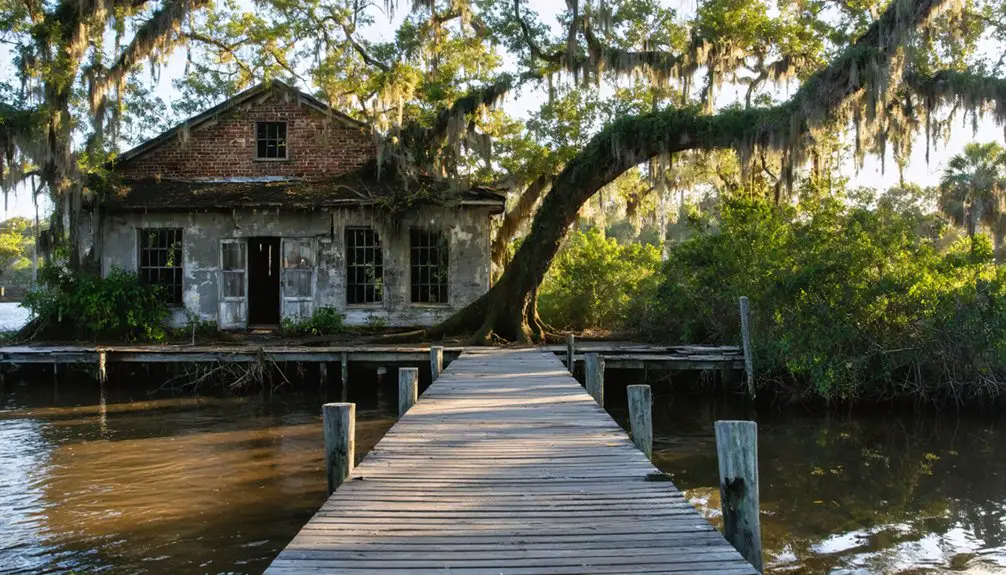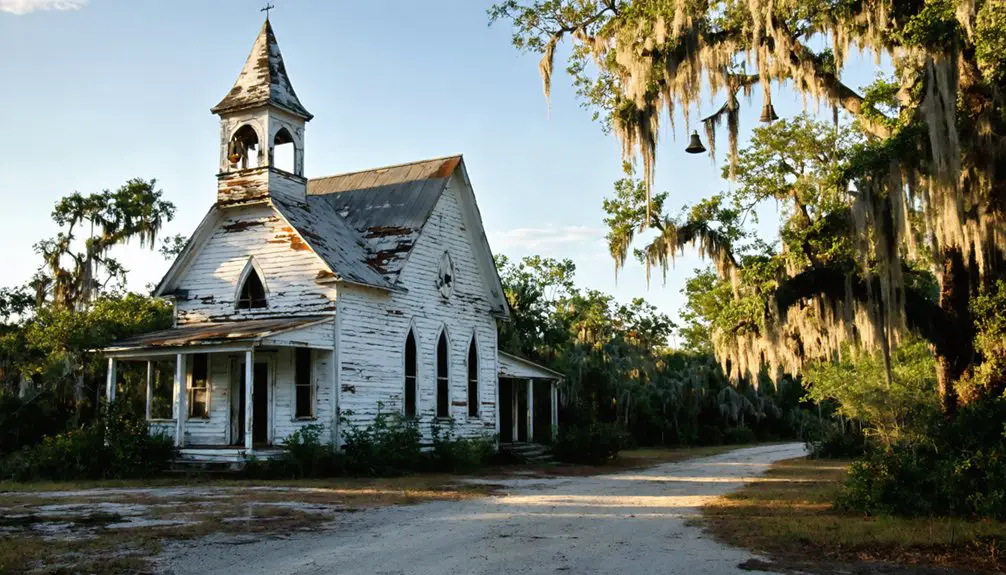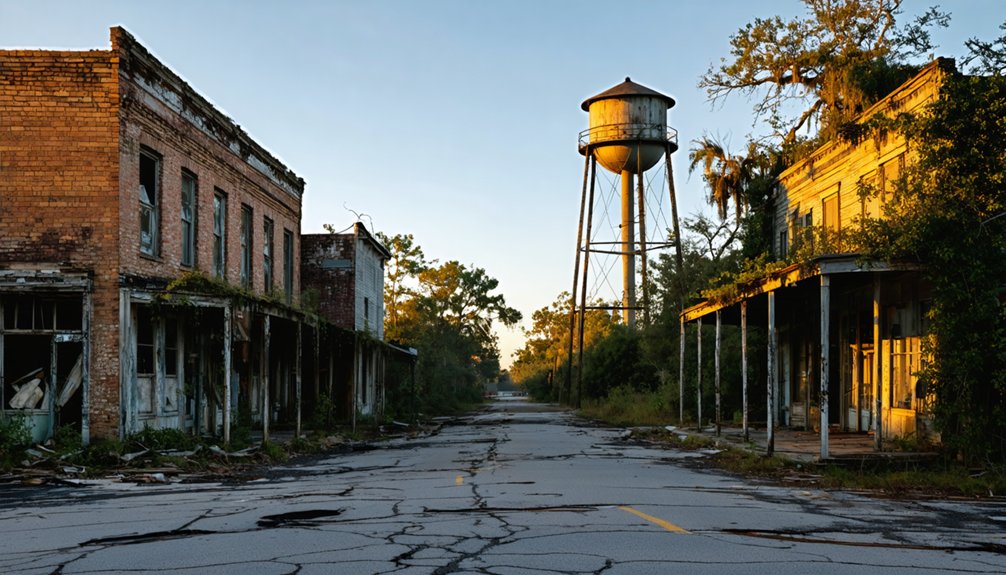
Planning a ghost town road trip to Spruce Bluff, Florida, means heading to 611 Dar Lane in Port St. Lucie, where a pioneer settlement that thrived and collapsed between 1889 and 1905 still lingers in the landscape. You’ll find a weathered pioneer cemetery, an ancient Ais Indian mound, and two self-guided trails winding through wild Florida scrub. Arrive early, pack water and insect repellent, and bring your curiosity—there’s far more to this forgotten place than meets the eye.
Key Takeaways
- Spruce Bluff, Florida’s first non-Native settlement, was abandoned by 1905 after the Great Freeze of 1894–95 destroyed all crops.
- Located at 611 Dar Lane, Port St. Lucie, accessible via SR 716 and the Florida Turnpike with limited parking available.
- Two self-guided trails—Pioneer Trail (~1 mile) and Ais Trail (~1.3 miles)—explore the ghost town’s history and natural ecosystems.
- The site is free to visit, open sunrise to sunset, with no concession stands or elaborate visitor facilities.
- Pack water, sunscreen, insect repellent, and wear closed-toe shoes; arrive early to secure limited parking spots.
What Was Spruce Bluff and Why Does It Matter?
Before Port St. Lucie existed, Spruce Bluff was already alive. John Enos Fultz, Jr. founded this small pioneer community in 1889, making it the first organized non-Native settlement in what’s now Port St. Lucie. Settlers grew pineapples and citrus, ran a sawmill, and built a school and post office.
Before Port St. Lucie existed, Spruce Bluff was already thriving — founded in 1889 by John Enos Fultz, Jr.
They used native plants for medicines and seasonings, leaving behind a layered story of survival and ingenuity.
But Spruce Bluff isn’t just a pioneer tale. The site also carries deep Native history — an Ais Indian mound dating back to roughly 100–300 B.C. still stands here. Historical artifacts and cemetery markers give you direct, tangible connections to both eras.
If you’re chasing authentic history off the beaten path, this place delivers exactly that.
Why Spruce Bluff Was Abandoned by 1905
Spruce Bluff’s story doesn’t end with settlers thriving — it ends with two brutal back-to-back events that wiped out everything they’d built.
Henry Flagler’s railroad arrived in 1894, promising regional growth. Then the Great Freeze of 1894–95 hit, and it destroyed nearly every crop in the settlement. Here’s how the collapse unfolded:
- The freeze obliterated pineapple and citrus harvests overnight
- Families lost their only income with no recovery plan
- By 1905, every original settler had permanently left
What remained were local legends, scattered historical artifacts, and silence. The freedom these pioneers chased — self-sufficient land, independent farming, community built from scratch — vanished under frost. You’re now visiting a place where ambition met nature’s indifference, and nature won decisively.
The Cemetery, Monument, and Ruins Still Standing at Spruce Bluff
When you walk the Pioneer Trail, the most striking remnant you’ll find is the small pioneer cemetery, where six of the seven buried residents are identified on a memorial monument.
You’ll also spot a stone obelisk rising from the ground alongside broken gravestones, quiet markers of the families who once built their lives on this scrubby ridge.
These physical traces are all that’s left standing of Spruce Bluff‘s brief but determined existence as a community.
The Pioneer Cemetery Remains
Though little survives of the original settlement, Spruce Bluff’s pioneer cemetery stands as the most tangible remnant of the community that once thrived here. Among the historical artifacts you’ll encounter:
- A stone obelisk marking the heart of the pioneer burial ground
- A monument identifying six of the seven settlers buried on the site
- Broken gravestones scattered across the scrubby ridge, whispering stories of frontier life
You won’t find elaborate visitor facilities here — just raw, unfiltered history waiting for you to explore on your own terms. The preserve keeps things simple and honest, letting the landscape speak for itself.
Walking through the cemetery connects you directly to the people who carved out a life in this remote Florida wilderness before the freeze took everything away.
The Memorial Monument Details
Standing at the center of the cemetery, you’ll find a memorial monument that identifies six of the seven pioneers buried at Spruce Bluff. A small stone obelisk rises beside broken gravestones, quietly marking the lives of settlers who carved a community from raw Florida wilderness.
The monument grounds you in the reality that real families lived, farmed, and died here before the freeze wiped everything away.
As you read each name etched into the stone, take a moment to look around. The surrounding local flora, including native scrub and flatwoods vegetation, presses close, reclaiming what civilization left behind.
Wildlife spotting is common here, so stay alert for birds and reptiles threading through the underbrush. This small, forgotten corner of Port St. Lucie carries extraordinary historical weight.
Broken Gravestones And Obelisk
Beyond the monument, broken gravestones jut from the earth at uneven angles, weathered by more than a century of Florida heat and humidity. A small stone obelisk rises nearby, marking the heart of this forgotten pioneer settlement.
You’ll notice:
- Fragmented grave markers half-consumed by local flora, including wild palmettos and scrub oak roots
- A weathered obelisk standing as the cemetery’s most recognizable vertical landmark
- Scattered Native artifacts embedded within the surrounding landscape, connecting Indigenous and pioneer histories
Walking among these remnants feels genuinely raw and unfiltered. Nothing’s been overly restored or sanitized for tourism.
The crumbling stones tell an honest story of lives built, lost, and ultimately reclaimed by nature, making this cemetery unlike any traditional historic site you’ve visited.
The Ais Indian Mound at Spruce Bluff Preserve
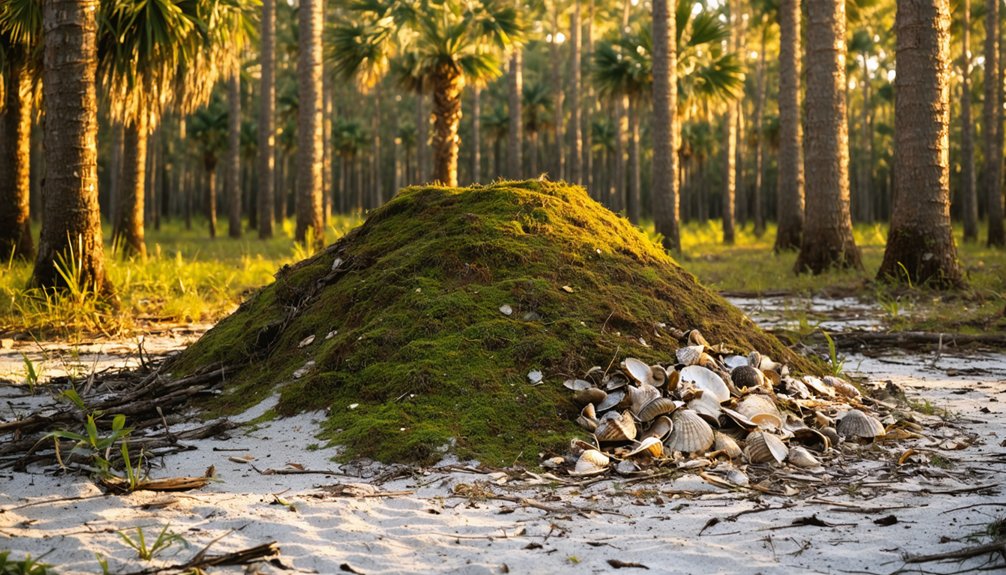
Tucked within the preserve’s scrubby flatwoods, the Ais Indian mound predates the Spruce Bluff settlers by roughly two thousand years, with historians dating it to somewhere between 100 and 300 B.C.
Standing approximately 18 feet tall and stretching 190 feet in diameter, this earthwork represents centuries of Ais culture long before European contact reshaped Florida’s landscape.
As you walk the Ais Trail, you’ll gain a real sense of how deeply human history runs through this land.
The mound stands as a reminder that cultural artifacts and natural preservation often share the same ground.
St. Lucie County’s management of this 97-acre preserve keeps both the pioneer story and this ancient site accessible, giving you two compelling layers of history within a single, unhurried visit.
Spruce Bluff’s Pioneer Trail and Ais Trail
Once you’re ready to explore, you’ll find two self-guided interpretive trails waiting for you — the Pioneer Trail and the Ais Trail — covering about 2.3 miles total.
You can choose a roughly 1-mile northern loop or a 1.3-mile southern loop, depending on how much ground you want to cover.
Each trail guides you through the preserve’s distinct habitats while connecting you to the layered history of both the pioneer settlement and the ancient Ais people.
Trail Lengths and Loops
When you’re ready to explore Spruce Bluff Preserve, you’ll find two self-guided interpretive trails waiting: the Pioneer Trail and the Ais Trail.
Together, they cover about 2.3 miles, giving you room to roam at your own pace.
Here’s how the trails break down:
- Total combined length: roughly 2.3 miles of accessible, well-marked paths
- North loop (Pioneer Trail): approximately 1 mile, ideal for spotting local flora and early settlement remnants
- South loop (Ais Trail): approximately 1.3 miles, where wildlife sightings are common among wetlands and scrubby flatwoods
You can tackle both loops in a single visit or choose one based on your time.
The preserve stays open from sunrise to sunset, so you’ve got flexibility to explore freely.
Self-Guided Interpretive Experience
Both trails at Spruce Bluff Preserve double as open-air classrooms, weaving interpretive signage through habitats and history that most Florida parks can’t match. As you walk the Pioneer Trail, posted signs connect you to the settlers who farmed this scrubby ridge, explaining how they used local flora for food, medicine, and seasoning.
The Ais Trail shifts focus toward the ancient, guiding you past distinct wildlife habitats — wetlands, scrubby flatwoods, and mesic flatwoods — while interpreting the indigenous mound rising nearly 18 feet above the landscape. You don’t need a guide or a group tour.
The signage does the work, letting you move at your own pace, absorb what interests you, and skip what doesn’t. It’s self-directed exploration with real historical and ecological substance behind every marker.
How to Get to Spruce Bluff in Port St. Lucie
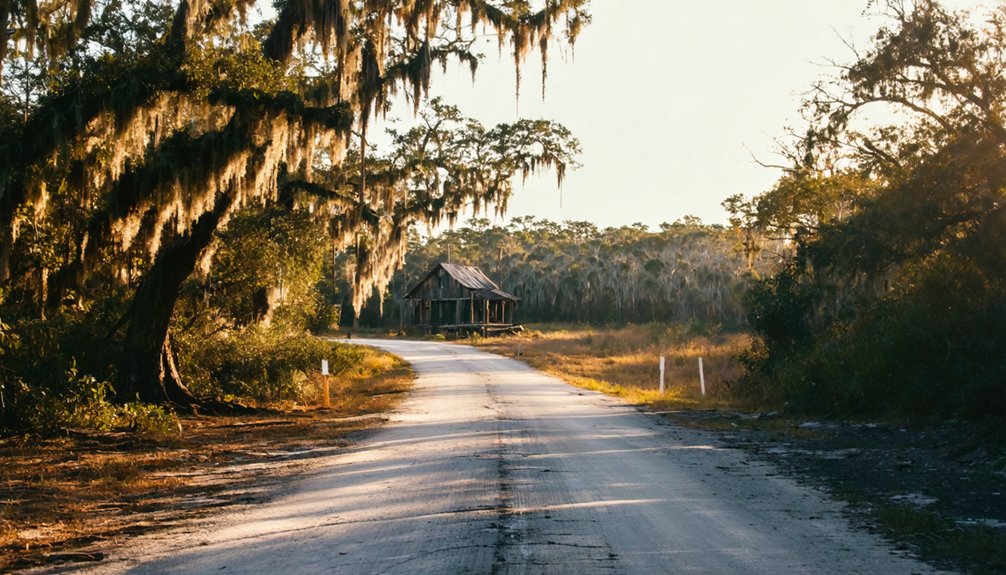
Finding Spruce Bluff is straightforward once you know the route. The preserve sits at 611 Dar Lane, Port St. Lucie, surrounded by native plants and corridors where local wildlife roams freely. Parking is limited, so arrive early.
Choose your approach:
- From SR 716 – Head east to Bayshore Blvd, south to Oakridge Blvd, east to Southbend Blvd, south to Peru Street, then Dar Lane.
- From the Florida Turnpike – Drive east to Port St. Lucie Blvd, then head south via Floresta Dr, Southbend, Peru Street, and Dar Lane.
- On foot inside – A walking trail connects everything; no roads cut through the preserve.
The preserve opens at sunrise and closes at sunset, and admission is completely free.
Parking, Hours, and What to Bring to Spruce Bluff
Spruce Bluff doesn’t have a sprawling parking lot, so you’ll want to arrive early before the limited spaces fill up. The preserve opens at sunrise and closes at sunset, giving you a full day to explore on your own schedule.
Visitor amenities are minimal, which honestly adds to the off-the-beaten-path appeal. Pack water, sunscreen, and insect repellent since there’s no concession stand or shade structure waiting for you. Wear closed-toe shoes for the uneven terrain along the trails.
You’re free to bring your leashed dog, so don’t leave your trail companion behind. Keep your eyes open for local wildlife moving through the wetlands and scrubby flatwoods.
Admission is free, making this ghost town stop one of Florida’s most rewarding no-cost adventures.
Frequently Asked Questions
Is Spruce Bluff Suitable for Young Children or Elderly Visitors?
You’ll find Spruce Bluff suitable for young children and elderly visitors! Its flat, easy trails let you explore rich historical background and enjoy wildlife sightings while roaming freely through this fascinating 97-acre preserved pioneer landscape.
Are Restrooms Available Anywhere Inside Spruce Bluff Preserve?
Spanning 97 acres, restroom facilities aren’t available inside Spruce Bluff Preserve, so plan ahead before you arrive. You’ll spend your visit focused on wildlife viewing and exploring trails freely, so stop somewhere nearby first.
Can Visitors Take Guided Tours of Spruce Bluff With a Ranger?
No confirmed guided ranger tours or historical interpretive programs are available at Spruce Bluff, but you can freely explore two self-guided trails that’ll take you through the pioneer cemetery and ancient Ais Indian mound independently.
Is Spruce Bluff Preserve Wheelchair Accessible for Mobility-Impaired Visitors?
The trails offer freedom, but accessibility features and wheelchair paths aren’t confirmed in available details. You’ll want to contact St. Lucie County Parks directly before visiting to verify the preserve meets your mobility needs.
Are There Any Nearby Restaurants or Amenities Close to Spruce Bluff?
You won’t find local dining options or nearby convenience stores directly at Spruce Bluff, but Port St. Lucie’s main corridors along Port St. Lucie Blvd offer plenty of restaurants and shops just minutes away.
References
- https://www.ghosttowns.com/states/fl/sprucebluff.html
- https://en.wikipedia.org/wiki/List_of_ghost_towns_in_Florida
- https://www.ghosttowns.com/states/fl/fl.html
- https://www.tcpalm.com/story/entertainment/whattodoin772/2018/04/18/historic-hikes-hidden-spruce-bluff-preserve-port-st-lucie-lauries-stories/528041002/
- https://pslhistory.org/psl-tales
- https://casago.com/treasurecoast/things-to-do/spruce-bluff-preserve/
- https://www.tripadvisor.com/Attraction_Review-g34580-d2647159-Reviews-Spruce_Bluff_Preserve-Port_Saint_Lucie_Florida.html
- https://floridahikes.com/spruce-bluff-natural-area/
- https://www.slideshare.net/slideshow/spruce-bluff/23867826
- https://www.scribd.com/document/474711961/Lake-County-Ghost-Towns-Map