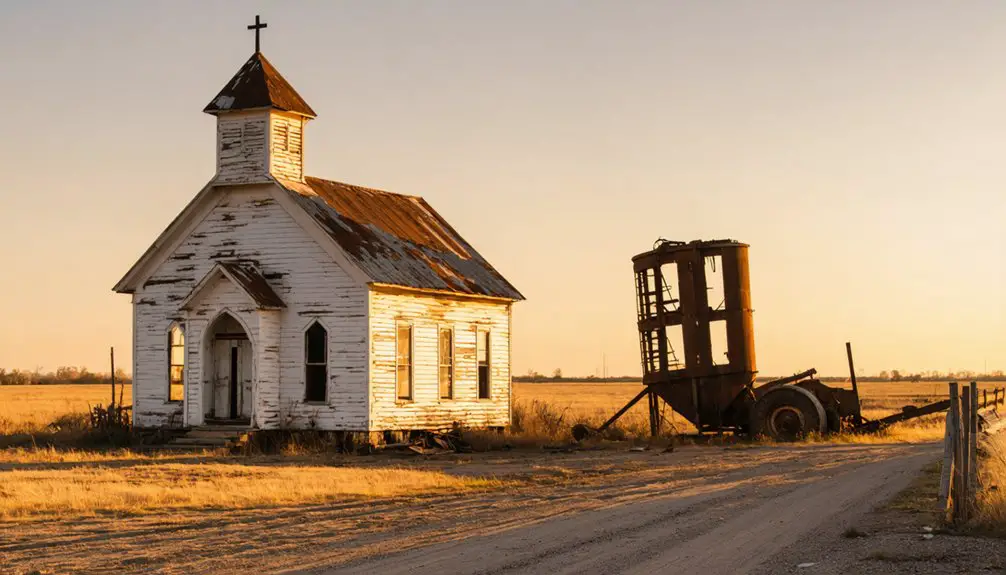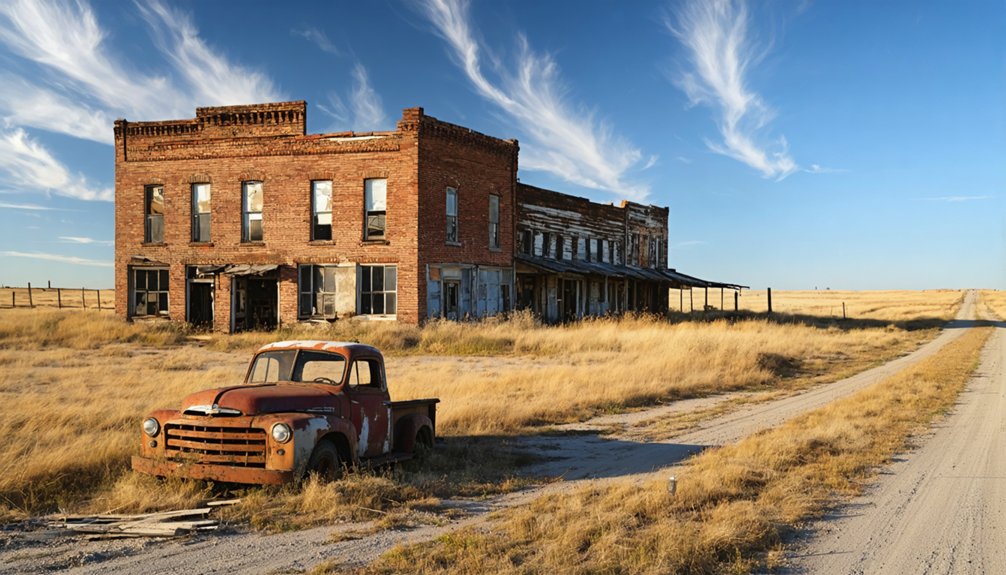
If you’re planning a ghost town road trip to Aaron, Oklahoma, you’ll want to base yourself in Altus and head into Jackson County’s open prairie. Aaron thrived briefly after its 1899 post office opened, but it vanished just six years later. Today, Prairie Hill Cemetery and faint traces of an old schoolhouse are all that remain. Pair it with nearby Navajoe and Yeldell, and you’ve got a full day of forgotten history waiting to unfold.
Key Takeaways
- Aaron, Oklahoma, is a ghost town in Jackson County named after settler Calvin Aaron, with its post office closing in 1905.
- Prairie Hill Cemetery, located at 34°34’46″N, 99°27’55″W, is the most intact remnant worth visiting at the Aaron townsite.
- An old schoolhouse serves as a key landmark, though most structures have been reclaimed by the surrounding landscape.
- Nearby ghost towns Navajoe, Yeldell, and Olustee can be added to enrich your Jackson County road trip itinerary.
- Altus, Oklahoma, serves as an ideal base camp for exploring Aaron and surrounding forgotten communities in the region.
What Makes Aaron, Oklahoma Worth the Drive?
Though little remains of Aaron, Oklahoma, that’s precisely what makes it a compelling detour for ghost town enthusiasts exploring Jackson County’s forgotten history. Named after early settler Calvin Aaron, this once-active community thrived for roughly six years before its post office shuttered in 1905, leaving behind silence and scattered abandoned structures reclaimed by the Oklahoma landscape.
You’ll find more than emptiness here. Local folklore surrounds the settlement’s brief but vivid existence, giving curious travelers something to piece together beyond what’s physically visible.
The stories here outlast the structures — local folklore fills the gaps where buildings once stood.
The nearby Prairie Hill Cemetery stands as a tangible connection to those who built this community from nothing.
Aaron rewards those willing to navigate dirt roads and embrace raw, unfiltered history. If you crave destinations untouched by tourism, this ghost town delivers exactly that kind of freedom.
How Aaron Got Its Name: and Why It Disappeared
Calvin Aaron, an early settler who staked his claim in what would become Jackson County, Oklahoma, lent his name to this small but once-thriving community. He arrived with vision, and for a time, Aaron delivered on its promise.
The post office opened in January 1899, giving the settlement an official heartbeat and connecting its residents to the wider world.
But town decline came swiftly. By January 14, 1905, the post office had shuttered, and mail rerouted to nearby Olustee. That closure signaled the end.
Without that anchor, residents drifted away, leaving little more than scattered memories behind.
Today, you’ll find almost nothing standing where Calvin Aaron‘s namesake community once buzzed with life — just open land, a ghost, and a story worth chasing.
What’s Still Standing at the Aaron Townsite Today
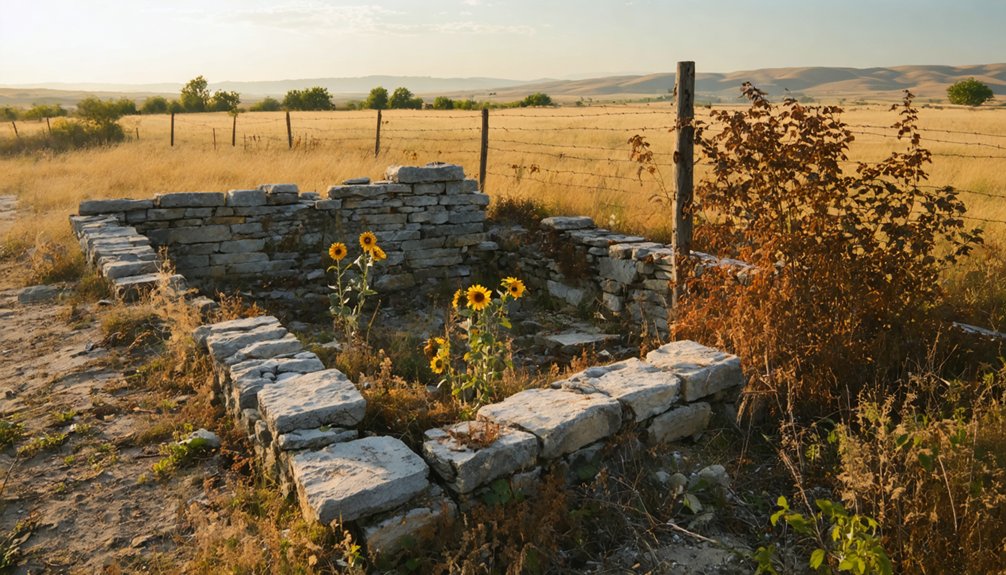
When you arrive at the Aaron townsite, you won’t find much — the settlement has surrendered almost entirely to time, leaving behind little more than open land.
Your best landmark is an old schoolhouse that marks the area, guiding you down a dirt road toward what remains of this once-busy community.
Follow that road south, and you’ll spot Prairie Hill Cemetery on your right, serving as the most tangible reminder that Aaron was once a living, breathing town.
Physical Remains Today
After more than a century of abandonment, you won’t find much standing at the Aaron townsite. The land has reclaimed nearly everything, leaving only scattered traces of the community that once thrived here for six years.
No abandoned structures remain intact, and local legends suggest the settlement disappeared almost as quietly as it arrived.
What you’ll discover is the Prairie Hill Cemetery, tucked along the south side of the final dirt road. Weathered headstones mark the lives of early settlers who built this community from nothing.
The surrounding landscape stretches wide and raw, giving you a powerful sense of isolation. Standing here, you’ll feel the weight of history beneath your boots, connecting you to a forgotten chapter of Oklahoma’s pioneering past.
Prairie Hill Cemetery
Standing quietly at coordinates 34°34’46″N, 99°27’55″W, Prairie Hill Cemetery is the most tangible piece of Aaron’s story you’ll find today.
This sacred ground preserves cemetery history that the vanished townsite simply can’t. Burial practices of early settlers reveal how tightly-knit this community once was.
When you arrive, here’s what you’ll discover:
- Headstones marking pioneers who shaped Aaron’s brief existence
- Section 12 placement within Olustee Township, Jackson County
- Burial practices reflecting late 19th-century frontier traditions
- Cemetery history spanning the town’s entire six-year operational period
You’re standing where Aaron’s residents laid their own to rest.
The cemetery sits on the south side of the final dirt road, waiting patiently for curious travelers like you.
Historic Schoolhouse Location
Before you reach the cemetery, an old schoolhouse serves as your critical landmark for guiding the final stretch to Aaron’s townsite. Spot it along Prairie Hill Road, then turn left onto the dirt road running south of it.
This weathered structure represents Aaron’s historic education roots — a community legacy from a time when settlers built institutions meant to last generations.
The schoolhouse still stands as one of the few tangible connections to Aaron’s six-year run as a functioning settlement. Once you’ve identified it, you’re close.
Continue one mile south on that dirt road, turn left onto the next dirt road heading north, and the Prairie Hill Cemetery appears on your right.
The schoolhouse doesn’t just mark your route — it marks what Aaron once meant to the people who built it.
How to Get to Aaron From Altus
Getting to Aaron takes just a few simple turns from Altus. This scenic route puts you right in the heart of Oklahoma’s forgotten history.
Follow these travel tips to navigate efficiently:
- Take Highway 62 West from Altus for 8 miles.
- Turn south on State Highway 6 and drive 4 miles.
- Turn west onto Prairie Hill Road and continue approximately 2 miles.
- Spot the old schoolhouse, turn left on the dirt road south of it, drive 1 mile, then turn left again heading north.
The cemetery appears on your right. You’re now standing where a thriving community once buzzed with life.
The open road delivered you here — raw Oklahoma landscape stretching endlessly around a town time quietly swallowed whole.
Prairie Hill Cemetery: The Most Intact Remnant Near the Townsite
Prairie Hill Cemetery waits at the end of that final dirt road, sitting quietly on the south side as the most tangible evidence that Aaron ever existed.
You’ll find it in Olustee Township, Section 12, at coordinates 34°34’46″N, 99°27’55″W. This cemetery history connects directly to the ghost town significance of Aaron, preserving names and stories that the vanished buildings can no longer tell.
The headstones represent the families who built this community, worked the land, and established a post office that served the region from 1899 to 1905.
Walk among the markers and you’re standing inside Aaron’s truest surviving record. No reconstructed storefront or museum exhibit delivers that kind of raw, unfiltered connection to a forgotten Oklahoma settlement.
Ghost Towns Near Aaron Worth Adding to the Drive
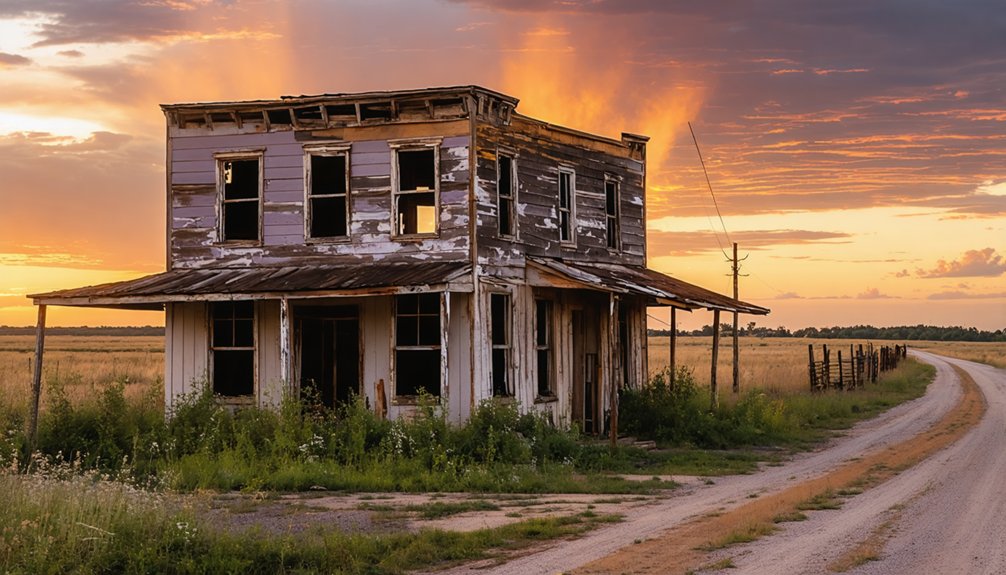
Aaron doesn’t have to be your only stop in Jackson County. The region holds more forgotten communities worth exploring if you’re already making the drive.
Here are four ghost towns near Aaron to add to your route:
- Navajoe – Dig into Navajoe history, where a once-thriving settlement left behind stories of frontier life in southwestern Oklahoma.
- Yeldell – Scout the Yeldell remains for traces of another vanished community within Jackson County.
- Olustee – Visit the town that absorbed Aaron’s mail route and population after 1905.
- Altus – Use it as your base camp before heading into the surrounding ghost town territory.
Each stop adds another layer to Jackson County’s forgotten past, making your road trip richer and more rewarding.
Frequently Asked Questions
What Is the Best Time of Year to Visit Aaron, Oklahoma?
You’ll find the best weather for exploring Aaron, Oklahoma in spring or fall. You’ll dodge harsh summers, enjoy mild temps, and time local events perfectly for an adventurous ghost town road trip you won’t forget!
Are There Any Fees or Permits Required to Access the Aaron Townsite?
Like a door swung wide open, Aaron’s townsite history welcomes you freely! You don’t need fees or permits. Visitor guidelines are simple — respect the land, leave no trace, and let your adventurous spirit roam!
Is the Dirt Road to Aaron Suitable for Standard Passenger Vehicles?
You’ll want a high-clearance vehicle for the dirt road conditions leading to Aaron. Standard passenger cars aren’t ideal — vehicle recommendations lean toward trucks or SUVs to handle the rugged, adventurous terrain confidently!
Are There Any Nearby Restaurants or Accommodations Close to Aaron?
Like a weary pioneer seeking shelter after a long trail, you’ll find local dining and nearby lodging back in Altus—your modern-day frontier town just miles away, offering you full freedom to recharge before exploring Aaron’s mysteries.
Can Visitors Legally Explore and Photograph the Prairie Hill Cemetery Grounds?
You’ll generally find that cemetery regulations allow respectful visits and photography etiquette encourages capturing history mindfully. Explore Prairie Hill Cemetery’s weathered stones freely, photograph the forgotten past, and honor those who built Aaron’s pioneering legacy.
References
- https://en.wikipedia.org/wiki/Aaron
- https://kids.kiddle.co/Aaron
- http://sites.rootsweb.com/~oktttp/ghost_towns/ghost_towns.htm
- https://www.wikidata.org/wiki/Q4661773
- https://en.wikipedia.org/wiki/Category:United_States_ghost_town_stubs
- https://en.wikipedia.org/wiki/List_of_ghost_towns_in_Oklahoma
- https://www.interment.net/data/us/ok/jackson/aaron/index.htm
- https://en.wikipedia.org/wiki/Template:Jackson_County
- https://www.youtube.com/watch?v=WJF6vDJUuBI
- https://www.ghosttowns.com/states/ok/ok.html