Planning a ghost town road trip to Acres, Kansas means heading off the beaten path to a privately owned townsite where grain elevators and a crumbling schoolhouse are all that remain of a once-thriving frontier community. You’ll want offline maps, a reliable vehicle, and permission from landowner Frantz Betschart before you arrive. Late September through early October gives you the best conditions for exploring. Everything you need to make this trip worthwhile is just ahead.
Key Takeaways
- Acres, Kansas, is a privately owned ghost town; contact landowner Frantz Betschart for permission before visiting abandoned buildings and historical sites.
- Visit in late September to early October for firm roads, mild temperatures, and golden light ideal for photography.
- Bring offline maps, as cell service is unreliable; also pack water, snacks, a first aid kit, and tow straps.
- Use grain elevators and the old schoolhouse as landmarks to navigate the remote, off-the-beaten-path townsite.
- Photograph respectfully by capturing the site as found, using natural light without moving or disturbing any historical artifacts.
What’s Left to See in Acres, Kansas Today?
What remains of Acres, Kansas tells a quiet but compelling story of prairie life interrupted. You’ll find the old schoolhouse still standing, one of the few abandoned buildings that survived decades of wind, neglect, and time. It closed in 1935, and today it anchors the landscape as a striking historical artifact of frontier education on the Kansas plains.
Beyond the schoolhouse, scattered remnants hint at what once thrived here — grain elevators, a blacksmith shop, a general store.
Grain elevators, a blacksmith shop, a general store — each crumbling remnant a whisper of commerce once alive here.
The entire townsite is privately owned by Frantz Betschart, so you’ll want to respect boundaries while soaking in the atmosphere. Zero residents call Acres home now, but the structures speak freely.
Come ready to read the silence, because this place rewards those who pay attention.
The Unlikely Story Behind Acres, Kansas and Its Odd Name
Few Kansas towns can claim a name born from a moment of accidental comedy, but Acres can. Originally called Manning Station in 1887, the settlement honored a train conductor with a forgettable name.
Then came the passenger who mistakenly stepped off the train, looked around at the flat, empty expanse, and muttered, “Nothing but acres.” That offhand remark stuck, and by 1889, the town had officially rebranded itself.
The Acres naming carries genuine historical significance beyond its humor. It captures something honest about frontier Kansas — the vast, unadorned landscape that both challenged and defined settlers who chose to build lives here.
You’re now traveling through a place whose very identity reflects that raw, wide-open spirit of the plains. That’s worth knowing before you arrive.
What the Town Looked Like at Its Peak
At its peak, you’d have found Acres buzzing with a surprising range of businesses — a hotel, general store, lumberyard, blacksmith shop, and at least two grain elevators all operating within this small Clark County settlement.
The schoolhouse anchored community life, serving as both an educational facility and a civic gathering place, while the post office kept residents connected to the wider world after its establishment in 1909.
Fueling it all was the railroad, which carried cattle, grain, coal, and passengers along the Great Bend to Scott City line, transforming what had once been an accidental stop into a genuinely functional frontier town.
Thriving Commercial Hub
Though it’s hard to imagine today, Acres once buzzed with the kind of commercial energy that made it a genuine hub for the surrounding Kansas plains.
You’d have found a hotel welcoming weary travelers, a general store stocked with essentials, a lumberyard fueling construction, a blacksmith shop keeping tools sharp, and at least two grain elevators anchoring agricultural trade.
Freight trains rolled through carrying cattle, grain, coal, and feed, while passenger trains delivered groceries and mail.
This commercial growth didn’t happen by accident — the railroad line connecting Great Bend to Scott City gave Acres its economic heartbeat.
That historical significance is easy to overlook now, but walking the site, you can almost feel the energy that once defined this forgotten corner of Clark County.
Community Institutions Standing
Beyond the commercial bustle, Acres had a civic backbone that gave the town its sense of permanence. Two institutions anchored daily life and gave residents their identity — the post office and the schoolhouse.
- The post office, established in 1909, connected Acres to the outside world, delivering mail and keeping communication flowing freely.
- The schoolhouse became the heart of community gatherings, hosting events that brought neighbors together beyond classroom hours.
Both structures carried historical significance, representing a community’s determination to build something lasting on the open Kansas plains.
The schoolhouse stood operational until 1935, outlasting many of the town’s other buildings.
When you visit today, it’s one of the few remaining structures still standing — a quiet monument to what once thrived here.
Transportation Fueling Growth
What truly set Acres apart from isolated prairie settlements was the railroad threading through its heart. Connecting Great Bend to Scott City, this line gave you access to markets and movement that most frontier communities only dreamed about.
Freight trains hauled cattle, grain, feed, and coal through town, while passenger trains delivered groceries, mail, and people seeking opportunity. That transportation legacy transformed a simple flag station into a functioning commercial hub.
You could feel the economic impact in every business that took root here — the hotel, the general store, the lumberyard, the blacksmith shop, the grain elevators.
The railroad didn’t just pass through Acres; it built it. Without those tracks, this patch of Kansas prairie would’ve remained exactly what that passenger once called it — nothing but acres.
Who Owns Acres, Kansas Now: and Can You Visit?
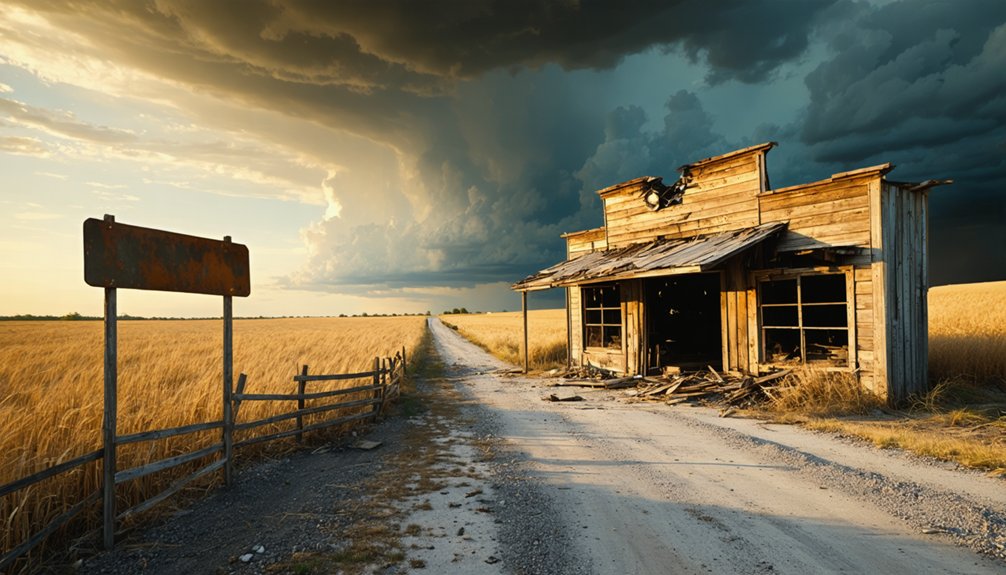
Today, Acres, Kansas sits entirely in private hands — Frantz Betschart owns the whole townsite.
Before you load up the car and head out, understand what that means for your Acres ownership and visitor access situation:
- You can’t simply wander onto the property without permission — it’s privately held land.
- The schoolhouse still stands, making it a compelling reason to seek access.
- Reaching out respectfully to the landowner beforehand could open doors.
Don’t let private ownership discourage you.
Don’t let private ownership stop your ghost town dreams — a respectful ask can unlock hidden history.
Many ghost town enthusiasts successfully connect with landowners who share a genuine pride in preserving these forgotten places.
Approach Betschart’s land with respect, curiosity, and a willingness to ask first.
That simple courtesy might earn you a rare, up-close look at one of Kansas’s most quietly haunting abandoned settlements.
How to Get to Acres, Kansas
To reach Acres, Kansas, you’ll want to orient yourself along the historic railroad corridor connecting Great Bend to Scott City in Clark County.
From either town, you can navigate toward the ghost town’s general location using county roads that cut through the surrounding rural farmland.
Once you’re close, the surviving schoolhouse serves as your most reliable landmark for pinpointing the townsite itself.
Driving Route Overview
Finding Acres, Kansas requires traversing the sparse, wind-swept plains of Clark County, where the roads stretch endlessly between small towns and forgotten histories.
Your driving tips start with plotting a course along the railroad corridor connecting Great Bend to Scott City, the same line that once gave Acres its purpose.
Route highlights worth noting:
- Highway 283 serves as your primary north-south artery through Clark County
- Minimal signage means you’ll want downloaded offline maps before leaving civilization
- Fuel up early — gas stations thin out dramatically once you leave Dodge City
You’re maneuvering through terrain that doesn’t forgive unpreparedness.
The open Kansas landscape rewards those who come equipped, offering an unfiltered sense of the freedom and isolation that defined frontier settlement.
Nearest Landmark Navigation
Traversing to Acres requires a few key landmarks to keep you oriented across Clark County’s featureless expanse. From Dodge City, head south on US-283, then cut west along county roads toward the old Great Bend–Scott City railroad corridor. That former rail line fundamentally serves as your compass needle.
Watch for grain elevators piercing the horizon — they’re your clearest signal that you’re approaching the townsite. Once you spot the abandoned structures breaking the prairie skyline, you’re close.
The schoolhouse, carrying deep historical significance as one of Clark County’s last standing frontier educational buildings, anchors the site visually.
Keep your coordinates logged: cell service vanishes quickly out here. Download offline maps before departure, and confirm you’re respecting private property boundaries before stepping onto Frantz Betschart’s land.
Other Kansas Ghost Towns Near Acres Worth the Drive
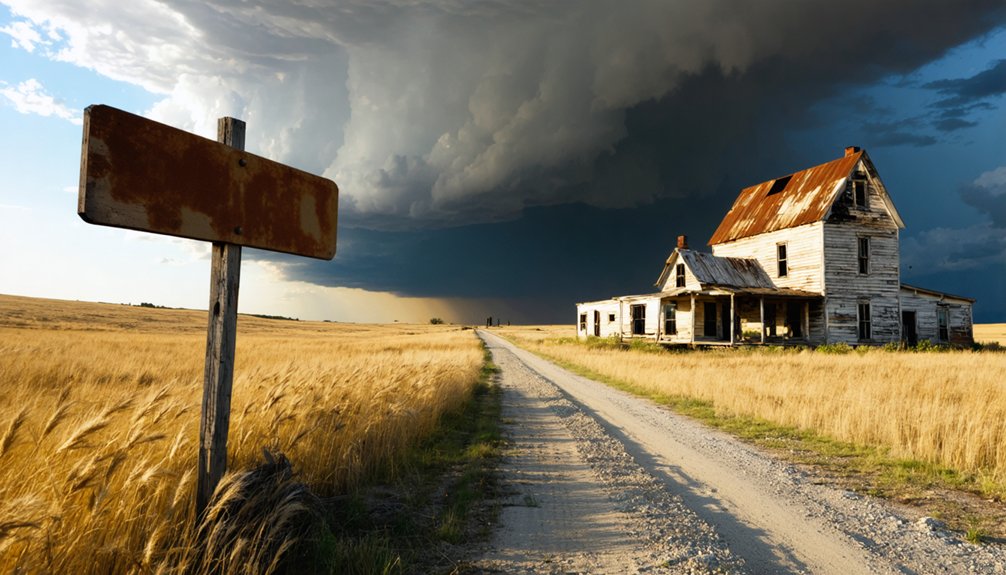
While Acres makes for a compelling destination on its own, the surrounding region of southwest Kansas holds several other ghost towns that’ll reward curious explorers willing to add miles to their route.
Clark County and its neighbors are scattered with forgotten landmarks carrying rich historical anecdotes that’ll deepen your appreciation for frontier life.
Consider adding these stops to your itinerary:
- Englewood, Kansas – A former cattle town with surviving structures that whisper stories of frontier commerce.
- Ashland vicinity settlements – Small abandoned communities dotting Clark County’s open landscape.
- Sitka, Kansas – A quietly vanished town whose remnants reward patient investigators.
Each destination layers your road trip with texture, transforming a single-site visit into an immersive journey through Kansas’s remarkable, largely unwitnessed past.
The Best Season to Visit Kansas Ghost Towns Without Getting Stranded
You’ll want to plan your ghost town road trip during spring or fall, when Kansas temperatures stay mild and unpaved county roads remain passable after seasonal rains have settled.
Summer heat bakes the plains into triple-digit misery while winter ice and snow can leave you stranded miles from help on an isolated rural track.
April through early June and September through October offer your best windows for comfortable exploration without gambling on weather that turns dangerous fast.
Ideal Visiting Weather Windows
Timing your visit to Acres and other Kansas ghost towns can mean the difference between a rewarding adventure and a weather-stranded ordeal. Understanding weather patterns and climate considerations keeps your wheels moving and your plans intact.
Kansas rewards travelers who choose their window wisely:
- Spring (April–May): Wildflowers frame abandoned structures beautifully, though storm season demands you monitor forecasts closely.
- Fall (September–October): Crisp air, golden light, and minimal crowds create perfect conditions for exploration and photography.
- Winter (December–February): Frozen roads and blizzards can strand you on Clark County’s remote stretches — proceed with serious caution.
Summer heat routinely pushes past 100°F, turning rural roads into exhausting slogs. Your best bet? Target late September through early October, when you’ll find dry roads, comfortable temperatures, and genuinely stunning prairie light.
Avoiding Seasonal Road Hazards
Kansas ghost town roads don’t forgive careless planning — a wrong-season visit can strand you on a Clark County dirt stretch with no cell signal and no help in sight.
Spring thaws turn unpaved routes into axle-deep mud traps. Summer thunderstorms flash-flood low-water crossings without warning. Winter ice glazes every rural backroad into a sliding hazard.
Your best window for road safety falls between late September and early November — the ground stays firm, temperatures remain manageable, and visibility stretches wide across the High Plains.
Pack seasonal precautions regardless: tow straps, extra water, a paper map, and a charged backup battery. Tell someone your exact route before you leave.
Acres rewards the prepared traveler, but it punishes the overconfident one every single time.
Spring Versus Fall Timing
Choosing the right season separates a successful ghost town run from a miserable recovery call on a Clark County backroad.
Spring blooms bring renewed energy to the Kansas plains, but late-season mud traps unprepared vehicles on dirt access routes.
Fall foliage transforms the surrounding landscape into something worth photographing, and hardened ground makes navigation considerably more reliable.
Your best windows:
- Late April through May — wildflowers peak, temperatures stay manageable, but watch for lingering wet soil
- September through October — firm ground, cooler air, golden light that makes abandoned structures look extraordinary
- Avoid June through August — brutal heat and violent afternoon thunderstorms punish exposed backcountry travelers
Time your visit right, and Acres rewards you with solitude, history, and open Kansas sky.
What to Pack for a Kansas Ghost Town Visit
Before you head out to explore a ghost town like Acres, packing the right gear can make the difference between a frustrating trip and a genuinely rewarding one.
Your packing essentials should include a reliable camera gear setup for capturing architectural remnants and wide Kansas skies. Toss in safety supplies—first aid kit, flashlight, sturdy boots.
Study historical context beforehand; knowing Acres began as Manning Station in 1887 adds depth to everything you’ll see. Download offline navigation tools since cell service disappears fast on rural Clark County roads.
Pack weather preparedness layers because Kansas swings between brutal heat and sudden storms. Bring your own food options since nothing’s open out there.
Knowing local legends about the town’s quirky name change makes wandering those empty grounds genuinely memorable.
How to Photograph Ghost Towns Without Damaging What’s Left
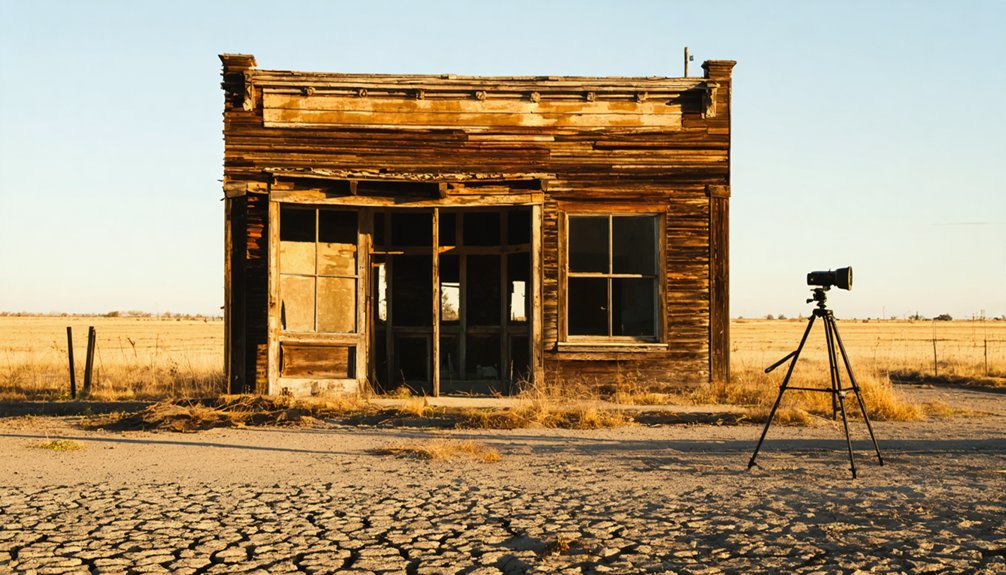
Photographing a ghost town like Acres demands discipline—your presence should leave no trace beyond footprints. Photography ethics aren’t just guidelines; they’re your commitment to ghost town preservation for every explorer who follows.
- Don’t move or reposition objects to improve your composition—capture the schoolhouse and remnants exactly as they stand.
- Use natural light creatively rather than flash equipment that can startle wildlife sheltering inside fragile structures.
- Shoot from multiple angles without leaning against weathered walls or climbing deteriorating surfaces.
You’re documenting history, not collecting it. Every crumbling beam and rusted hinge tells Acres’ story—from its 1887 origins as Manning Station to its quiet abandonment.
Respect the silence, frame your shots thoughtfully, and let your camera honor what time has preserved.
Kansas Ghost Town Road Trips Worth Planning Around Acres
Acres sits in Clark County along the old railroad corridor between Great Bend and Scott City, which makes it a natural anchor for a broader Kansas ghost town circuit.
You’re already moving through wide-open country where forgotten settlements dot the plains, so build your route deliberately. Head east toward Ness City or west into Scott County, where abandoned farmsteads reward ghost town photography at every turn.
Slow your pace through Scott County’s open plains — every abandoned farmstead holds a frame worth capturing.
Kansas offers dozens of collapsed communities within a half-day’s drive, each one layered with stories worth uncovering. Prioritize stops where historical preservation efforts have kept structures standing — you’ll find more to document and learn.
Pack water, fuel up in larger towns, and leave yourself flexibility. The best discoveries happen when you slow down and let the landscape lead you.
Frequently Asked Questions
Was Acres, Kansas Ever Featured in Any Books or Documentaries?
Acres, Kansas hasn’t claimed confirmed literary significance yet, but historical accounts of Kansas ghost towns — like those in “Lost Kansas” documentaries — often feature forgotten settlements like Acres, so you’d likely uncover fascinating references exploring regional archives.
Are There Any Annual Events or Gatherings Held at Acres?
You won’t find any official annual events or gatherings at Acres. The privately owned ghost town history lives in silence and local folklore, but you’re free to explore its haunting remnants independently for personal discovery.
Did Acres Ever Have a Church or Religious Meeting Place?
The records don’t mention a church in Acres, but you can picture community gatherings filling the schoolhouse with historical significance — it served as the town’s spiritual and social heart, uniting residents beyond its educational purpose.
What Caused Residents to Permanently Abandon Acres, Kansas?
The records don’t confirm exactly what drove residents away, but you’d likely find that economic decline slowly strangled Acres, as railroads shifted, businesses dried up, and possibly natural disasters battered this once-vibrant Kansas frontier community into silence.
Is Metal Detecting or Artifact Collecting Permitted at Acres?
You’ll need permission from Frantz Betschart, the private owner, before pursuing metal detecting regulations or artifact preservation practices at Acres. Respect this hallowed ground — don’t pocket history without explicit authorization from those who protect it.
References
- http://kansasghosttowns.blogspot.com/2013/02/on-rare-warm-day-in-january-i-ventured.html
- https://www.hhhistory.com/2019/05/ghost-towns-of-kansas.html
- https://www.youtube.com/watch?v=rG2SaSBM60s
- https://dianastaresinicdeane.wordpress.com/2012/01/29/columbia-a-kansas-ghost-town-story/
- https://www.youtube.com/watch?v=8dtIPX7pIqI
- https://www.visitoldmeadecounty.com/newpage815e5c49
- https://legendsofkansas.com/wilson-county-extinct-towns/
- https://esirc.emporia.edu/bitstreams/b4b4cde4-15d4-4284-a3b5-8430fb9e324e/download