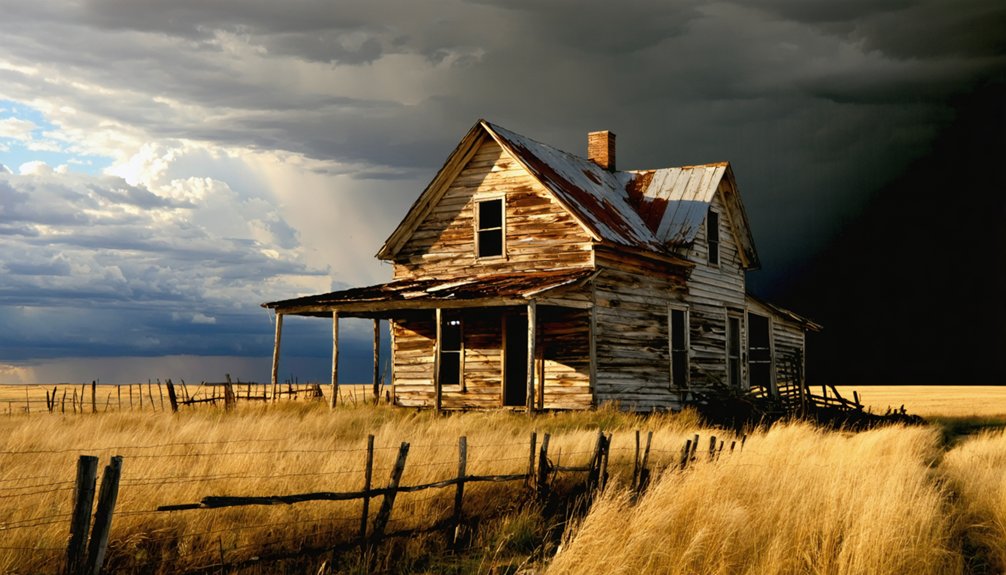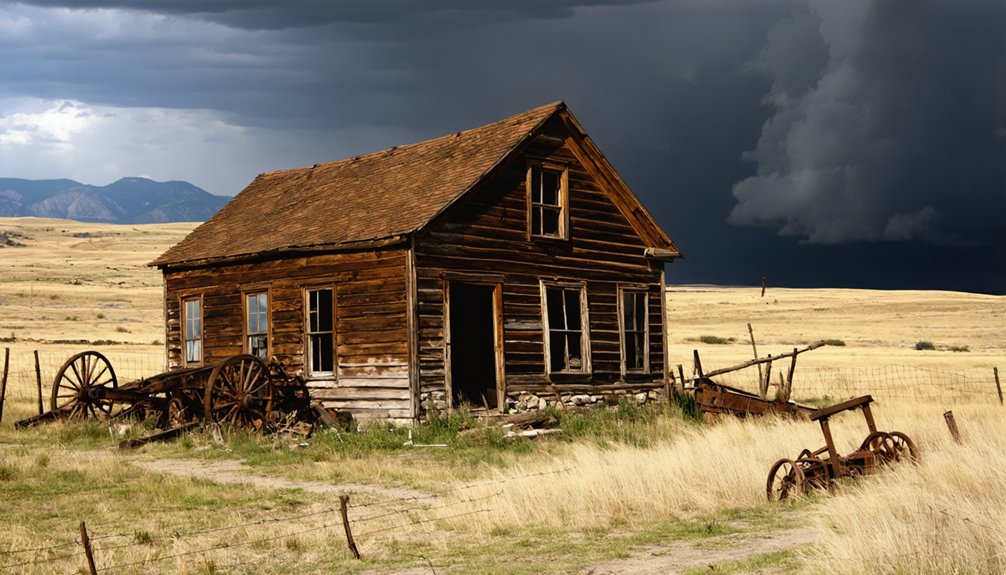
To plan your ghost town road trip to Allerton, South Dakota, start by steering to roadside marker #270, located half a mile west of the site near Elk Creek in Lawrence County. You’ll find no structures or streets — just raw Black Hills terrain where Hood & Scott’s lumber mill once stood. Allerton’s story centers on an 1883 boarding house fire that killed eleven men. There’s far more to this forgotten tragedy than first meets the eye.
Key Takeaways
- Allerton, South Dakota, established in 1883 as a lumber mill town, now has no standing structures, making it a true ghost town experience.
- Use roadside marker #270, erected in 1959, as your reference point, located half a mile west of Allerton’s site near Elk Creek.
- Allerton is defined by a tragic 1883 boarding house fire that killed 11 men, now commemorated at Mt. Moriah Cemetery in Deadwood.
- High-clearance vehicles are recommended; bring water, download offline maps, and visit during summer for the best road and weather conditions.
- Extend your road trip by continuing to Tinton, another Lawrence County ghost town that adds rich mining history to your exploration.
Allerton, South Dakota: The Black Hills Lumber Town That Disappeared
Tucked half a mile east of roadside marker #270 along Elk Creek in Lawrence County, Allerton, South Dakota, is a ghost town with almost nothing left to show for its brief but tragic existence.
Once known as Brownsville, this Black Hills settlement grew around Hood & Scott’s lumber mill in 1883, serving as a rail endpoint deep in the wilderness.
Today, you won’t find standing structures or bustling streets — just open land, whispering trees, and the weight of forgotten history.
There are no structures, no streets — only open land, restless trees, and history too heavy to ignore.
The ghost stories here aren’t legend; they’re documented tragedy. On March 10-11, 1883, a boarding house fire killed 11 men, cementing Allerton’s grim legacy.
If you crave authentic, unfiltered history, this barren site delivers raw, unpolished truth that no museum ever could.
The 1883 Boarding House Fire That Killed 11 Men
On the bitterly cold nights of March 10-11, 1883, fire tore through the boarding house at Hood & Scott’s lumber mill, killing 11 men in one of the Black Hills’ darkest recorded disasters.
The fire victims included Albert Tunnicliff, Raisha C. Rice, James Chalmers, Samuel Haines, Fred D. Peters, Thomas Finless, Charles Hammontree, Peter Hanson, Louis Hanson, Harvey Wood, and W.H. Andrews.
The historical impact of this tragedy runs deep. Authorities buried all 11 men together in a common grave at Mt. Moriah Cemetery in Deadwood.
When you visit the roadside marker erected in 1959, you’ll stand near the exact ground where these workers lost their lives.
That marker remains the most powerful reminder that Allerton’s story didn’t end quietly — it ended in flame.
Allerton’s Location Along Elk Creek in Lawrence County
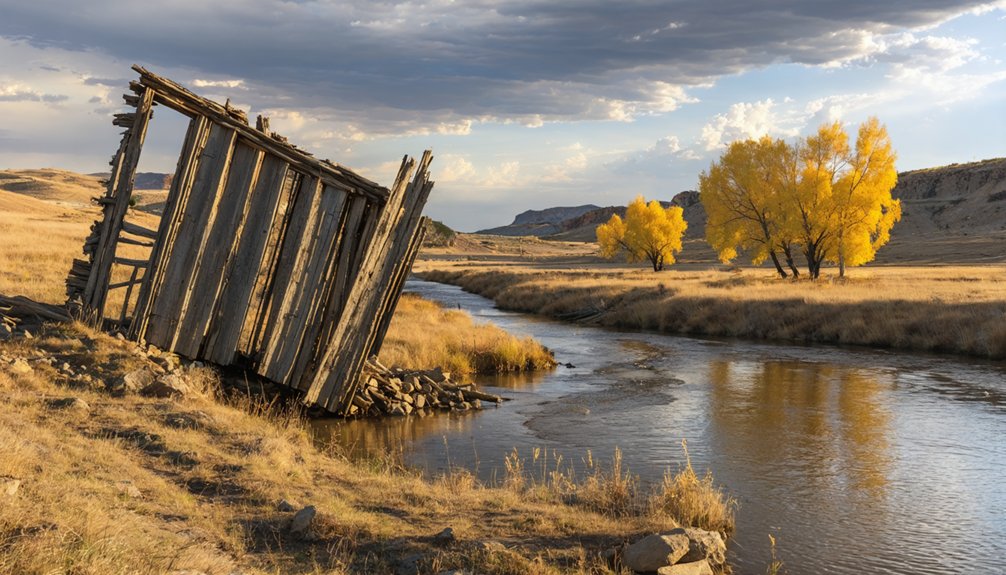
If you’re plotting your route, you’ll find Allerton at latitude 44.2874849 and longitude -103.6785285 in Lawrence County, tucked within the rugged Black Hills landscape.
The site sits roughly half a mile east down Elk Creek from historic roadside marker #270, which serves as your most reliable landmark for locating this long-vanished settlement.
Once you arrive, you’re standing near what was the rail’s end at the historic Brownsville site, where Hood & Scott’s lumber mill once hummed with activity along the creek’s edge.
Elk Creek Proximity Details
Half a mile east of historic roadside marker #270, Elk Creek quietly winds through Lawrence County’s rugged Black Hills terrain, guiding you straight to where Allerton once stood.
Following Elk Creek downstream puts you in direct contact with the historical context that shaped this forgotten settlement. The creek didn’t just provide a scenic backdrop — it helped define the mill town’s practical geography, positioning Hood & Scott’s lumber operation near essential water and natural resources.
As you trace the creek’s path today, you’re walking through land that once hummed with industrial activity, rail movement, and the daily lives of workers who never imagined their story would end so tragically.
Elk Creek remains your most reliable natural landmark for locating Allerton’s ghost town footprint.
Lawrence County Coordinates
Two precise coordinates — latitude 44.2874849 and longitude -103.6785285 — pin Allerton’s ghost town location within Lawrence County‘s Black Hills landscape, giving you an exact starting point before you even leave your driveway.
Plug these into your GPS, and you’re already ahead of most explorers who stumble through ghost towns blindly.
Coordinates history matters here because Allerton doesn’t announce itself. No welcome signs, no standing structures, no crowds.
You’re steering toward a barren site where a lumber mill once hummed with activity in 1883.
Lawrence County holds dozens of forgotten places, but ghost towns like Allerton reward the intentional traveler — someone who arrives prepared, curious, and ready to read the landscape for clues that a devastating fire and vanished community left behind.
Roadside Marker #270 and the “Black Hills Tragedy” Plaque
Marking the spot where Allerton once stood, roadside marker #270 serves as the lone memorial to a community that vanished long ago.
This plaque details one of the darkest chapters in Black Hills roadside history, making it essential for serious ghost town exploration.
Here’s what you’ll discover when you stop:
- The marker was erected in 1959, commemorating the devastating March 10-11, 1883 boarding house fire.
- Eleven men perished in the blaze, earning it the grim title “Black Hills Tragedy.”
- The victims share a common grave at Mt. Moriah Cemetery in Deadwood, connecting your road trip to another iconic destination.
Pull over, read every word on that plaque, and let the weight of this forgotten story sink in.
What’s Left To See at the Allerton Ghost Town Site?
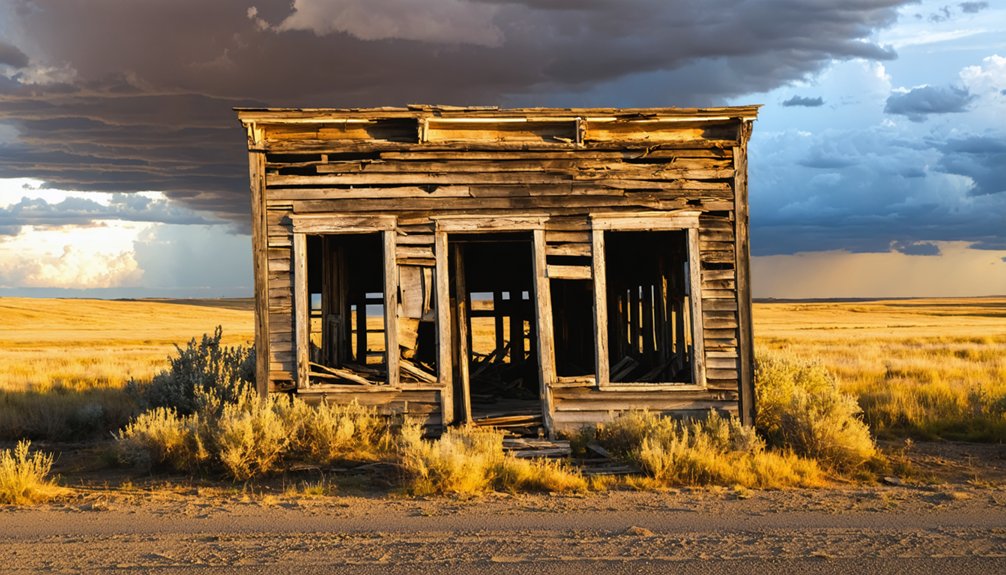
After reading that sobering plaque, you’ll naturally wonder what physical traces of Allerton remain — and the honest answer is almost nothing.
The site is fundamentally barren, with no standing abandoned structures surviving the decades since the mill’s collapse. Nature has fully reclaimed what was once a bustling lumber operation and rail endpoint.
What you *will* find is atmosphere. Walk toward Elk Creek, breathe in the Black Hills air, and let local folklore do the heavy lifting — stories of those eleven men still linger here.
The surrounding landscape quietly hints at where buildings once stood.
Pair this stop with a visit to Mt. Moriah Cemetery in Deadwood, where the victims share a common grave, giving the whole experience a deeply meaningful historical closure.
The Victims’ Common Grave at Mt. Moriah Cemetery in Deadwood
If you want to pay your respects to the 11 men who perished in the Allerton boarding house fire, head to Mt. Moriah Cemetery in Deadwood, where they’re buried together in a common grave.
Mt. Moriah is one of the Black Hills’ most historically significant cemeteries, famously home to the graves of Wild Bill Hickok and Calamity Jane.
Tracking down the victims’ shared resting place connects you directly to the human cost of the 1883 tragedy and adds a somber but meaningful stop to your ghost town road trip.
Finding The Common Grave
The 11 men who perished in the Allerton boarding house fire on March 10–11, 1883, don’t rest at the site of the tragedy — you’ll find their common grave at Mt. Moriah Cemetery in Deadwood.
This shared burial site adds powerful historical context to your visit. Here’s how to make the most of it:
- Locate the cemetery on Mt. Moriah’s hillside overlooking Deadwood — it’s well-marked and walkable.
- Find the common grave by asking staff or consulting the cemetery’s historical records on-site.
- Reflect on the names — Albert Tunnicliff, James Chalmers, Peter Hanson, and eight others — etched into Black Hills history.
Standing there connects you to Allerton’s story in a way no roadside marker ever could.
Mt. Moriah’s Historical Significance
Mt. Moriah Cemetery in Deadwood carries enormous historical significance far beyond its famous residents like Wild Bill Hickok and Calamity Jane.
When you walk its grounds, you’ll discover cemetery memorials that tell darker, lesser-known stories — including the common grave holding the eleven men who perished in Allerton’s devastating 1883 boarding house fire.
That shared burial site represents the raw reality of frontier life, where disasters struck hard and fast, leaving communities scrambling to honor their dead.
Standing at that grave, you’re confronting genuine history — unpolished and sobering.
Mt. Moriah gives these forgotten lumber workers a permanent place in Black Hills memory.
Don’t rush this stop. Read the markers, absorb the atmosphere, and let the weight of what happened at Allerton truly settle in.
Other Lawrence County Ghost Towns Worth Adding to Your Route
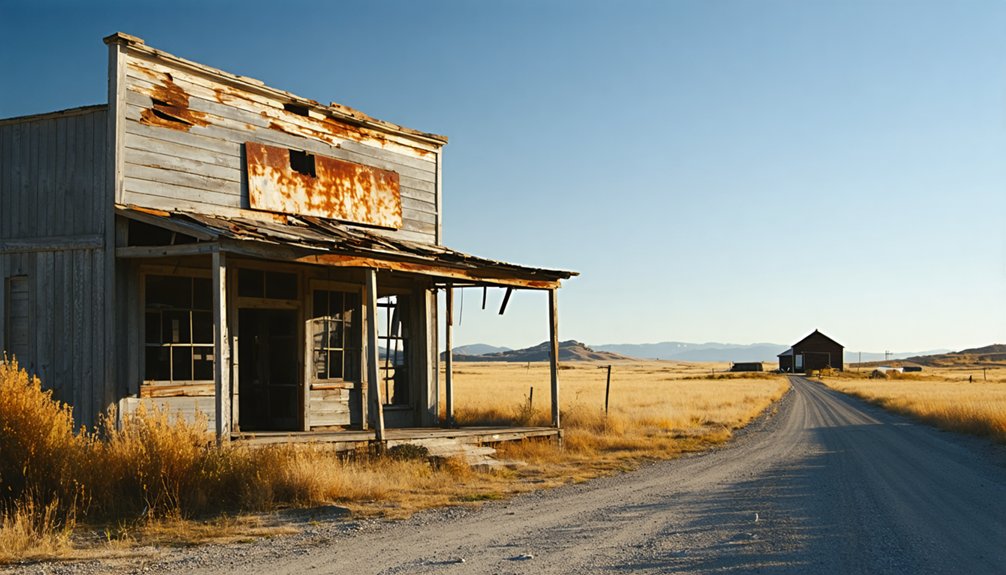
Allerton isn’t the only ghost town Lawrence County has to offer, and pairing it with nearby Tinton makes for a richer day of Black Hills exploration.
Each stop layers ghost town legends onto the landscape, rewarding curious travelers who push beyond the obvious tourist trail.
Here’s how to build your Lawrence County ghost town route:
- Start at Allerton — Read marker #270, photograph the site, and absorb the weight of the 1883 tragedy.
- Head to Tinton — This former tin-mining settlement adds mining history and crumbling structures to your experience.
- Prioritize historical preservation — Document what you find through photos and notes, contributing to community awareness of these disappearing places.
Summer offers the most accessible roads, but any season rewards the adventurous explorer.
Best Time of Year To Visit Allerton
When you’re planning a ghost town road trip through the Black Hills, timing your visit to Allerton can make the difference between an easy, rewarding excursion and a frustrating slog through mud or snow.
Summer offers the ideal weather conditions for exploring this remote Lawrence County site, with dry roads, long daylight hours, and comfortable temperatures that let you roam Elk Creek freely.
Spring and fall carry unpredictable weather that can turn rural roads treacherous quickly. Winter visits are strongly discouraged.
Among the best travel methods, a high-clearance vehicle gives you the flexibility to navigate rough terrain without worry.
Arriving midweek keeps crowds minimal, leaving you space to read marker #270 and soak in the haunting silence that defines Allerton today.
What To Know Before Driving Out to Allerton
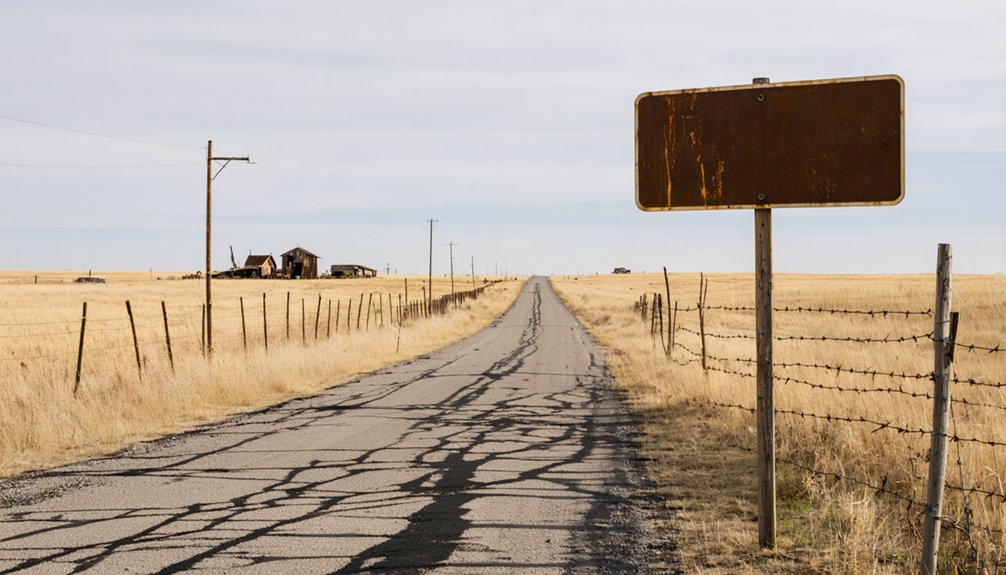
Before you load up the car and point it toward Lawrence County, there are a few practical realities about Allerton that’ll save you headaches on arrival.
Allerton’s ghost town exploration experience is stripped down and raw — no visitor center, no paved paths, no signage beyond marker #270. That’s actually the beauty of it.
No visitor center. No paved paths. Just marker #270 and the raw, unfiltered history of Allerton waiting to be found.
Here’s what to keep in mind:
- No structures remain — you’re visiting a historical preservation site, not a walkable townscape.
- Roads are rural — watch for wildlife, unpredictable weather, and limited cell service.
- Marker #270 is your anchor — everything meaningful starts half a mile east down Elk Creek from there.
Bring water, download offline maps, and respect the land. Freedom tastes better when you’re prepared for it.
Frequently Asked Questions
Was Hood & Scott Lumber Mill the Only Business Operating in Allerton?
Think about it—the knowledge only highlights Hood & Scott’s lumber mill in Allerton history. You can’t confirm it was the only local business, as historical records about other Allerton businesses remain unclear.
How Deep Is Elk Creek Near the Allerton Ghost Town Site?
The available knowledge doesn’t specify Elk Creek depth near Allerton. You’ll find the creek’s Allerton geology fascinating to explore firsthand, but check local resources or rangers before wading — creek depths vary seasonally and can surprise you!
Are There Any Artifacts or Relics Found at Allerton Today?
Walking through Allerton’s barren, windswept grounds, you won’t find confirmed historic discoveries or documented relics today. The ghost town’s stripped earth holds only local legends, leaving you to imagine the 1883 lumber mill’s ghostly past beneath your feet.
Is the Allerton Site Located on Private or Public Land?
The knowledge doesn’t specify whether Allerton’s Ghost Town History site is on private or public land. You’ll want to research Allerton Attractions access details locally before visiting, ensuring you’re exploring freely and legally.
How Far Is Allerton From the Nearest Town With Amenities?
You’re about 13 miles from Deadwood, your nearest hub for amenities! This freedom-seeker’s paradise puts you close to local legends and hidden treasures while you explore Lawrence County’s rugged, untamed ghost town circuit.
References
- https://en.wikipedia.org/wiki/List_of_ghost_towns_in_South_Dakota
- https://www.powderhouselodge.com/black-hills-attractions/fun-attractions/ghost-towns-of-western-south-dakota/
- https://www.atlasobscura.com/places/okaton-ghost-town
- https://historynet.com/ghost-town-tinton-south-dakota/
- https://www.sdpb.org/arts-and-culture/2018-07-25/ghost-towns-of-south-dakota-tinton
- https://www.blackhillshikingbikingandmore.com/old-mining-ghost-towns
- https://www.kotatv.com/2021/06/29/ghost-town-man-who-keeps-its-past-alive-chance-learn-all-about-it/
- https://www.youtube.com/watch?v=jEZL_GLyfck
- https://www.facebook.com/SoDakPB/videos/vanished-south-dakota-tinton/2392783747615624/
- https://mad-peak.com/blog-posts-and-info/f/galena-south-dakota-adventure-into-a-wild-west-ghost-town