Planning a ghost town road trip to Bagdad, Pennsylvania means heading deep into Westmoreland County’s back roads, where a forgotten coal mining community slowly surrenders to Appalachian wilderness. You won’t find tourist signs or preserved buildings here — just overgrown ruins, eerie silence, and subtle traces of an industry that once defined this region. Pair it with nearby ghost towns like Bairdstown and Cokeville for a fuller experience. Keep going, and you’ll uncover everything you need to explore it right.
Key Takeaways
- Bagdad, Pennsylvania, is a former coal mining ghost town in Westmoreland County, now reclaimed by nature with sparse abandoned ruins remaining.
- Access Bagdad via winding back roads through Derry and Allegheny Townships, using GPS and printed maps due to unreliable cell service.
- Wear sturdy boots, bring water, a first aid kit, and a flashlight, and watch for unstable ground and open mine shafts.
- Visit in spring or early fall for the best exploration conditions, avoiding winter due to icy roads and dangerous visibility.
- Nearby ghost towns like Bairdstown, Chester, and Cokeville offer additional stops to explore Western Pennsylvania’s coal mining heritage.
What Is Bagdad, Pennsylvania: Coal Town, Ghost Town, or Both?
Bagdad, Pennsylvania, wears two identities at once — it’s a coal town frozen in time and a ghost town swallowed by abandonment.
Nestled in Allegheny Township, Westmoreland County, this forgotten settlement emerged during the late 19th and early 20th century coal mining boom that reshaped Western Pennsylvania’s mountainous landscape.
Tucked into Westmoreland County, Bagdad rose from the coal-driven ambitions of a rapidly industrializing Western Pennsylvania.
Like dozens of similar ghost towns across the Rust Belt, Bagdad thrived as long as coal did — and vanished when the industry collapsed.
You won’t find preserved museums or marked streets here. What you’ll discover instead is raw Appalachian silence, where the echoes of a working community linger beneath overgrown terrain.
Bagdad answers to both labels honestly: it was born a coal town, and it survives history only as a ghost town.
How Do You Get to Bagdad in Westmoreland County?
Getting to Bagdad means traversing the winding back roads of Westmoreland County, where Allegheny Township’s rugged terrain doesn’t exactly roll out a welcome mat for casual visitors.
Bagdad accessibility requires some planning — you’ll navigate routes through Derry and Allegheny Townships, passing through Appalachian landscapes that shaped this region’s ghost town history.
Start your approach from nearby documented sites like Bairdstown or New England, using them as anchor points. A reliable GPS helps, though signal gaps in these mountainous corridors are common.
Four-wheel drive isn’t mandatory, but it’s worth considering given remote road conditions.
Time your visit during daylight hours and pack essentials — water, maps, and solid footwear.
Freedom-seekers who embrace self-reliance will find this journey rewarding, even without a defined destination waiting at the end.
Why Did Bagdad Rise, Collapse, and Disappear?
Like so many Western Pennsylvania coal towns, Bagdad didn’t grow from ambition alone — it grew from necessity, pulled into existence by the late 19th and early 20th century demand for coal that drove settlement deep into Allegheny Township’s rugged terrain.
Miners and families arrived, built lives, and shaped a community around extraction. That mining legacy defined everything — work, survival, identity.
Then the coal ran out.
When operations declined, Bagdad’s reason for existing vanished. Workers left, structures deteriorated, and the town quietly dissolved into the Appalachian landscape.
No exact dates mark its rise or fall, leaving its industrial heritage mostly undocumented.
What remains is absence — a reminder that towns built entirely around a single industry live and die by that industry’s fate.
What’s Still Standing at Bagdad Today?
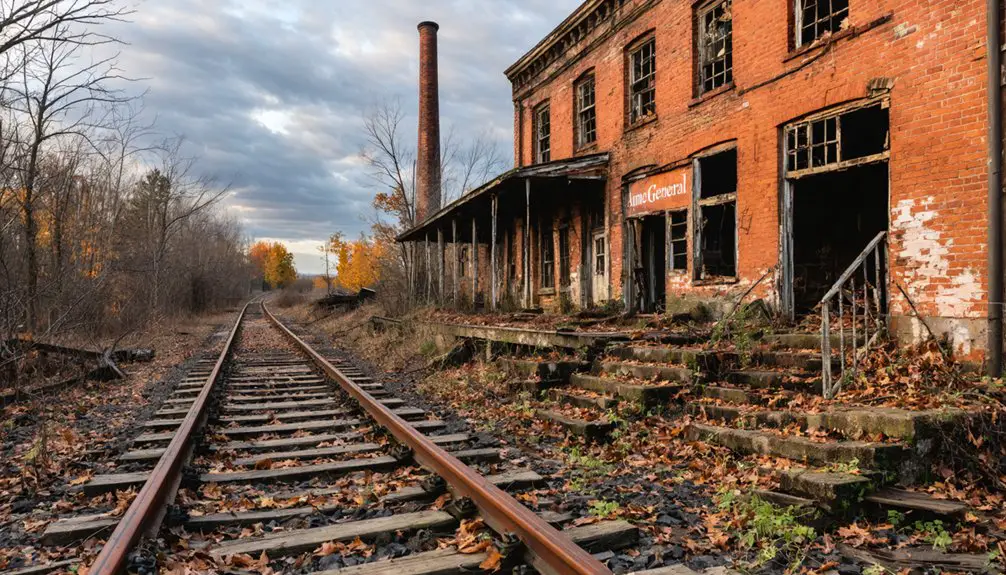
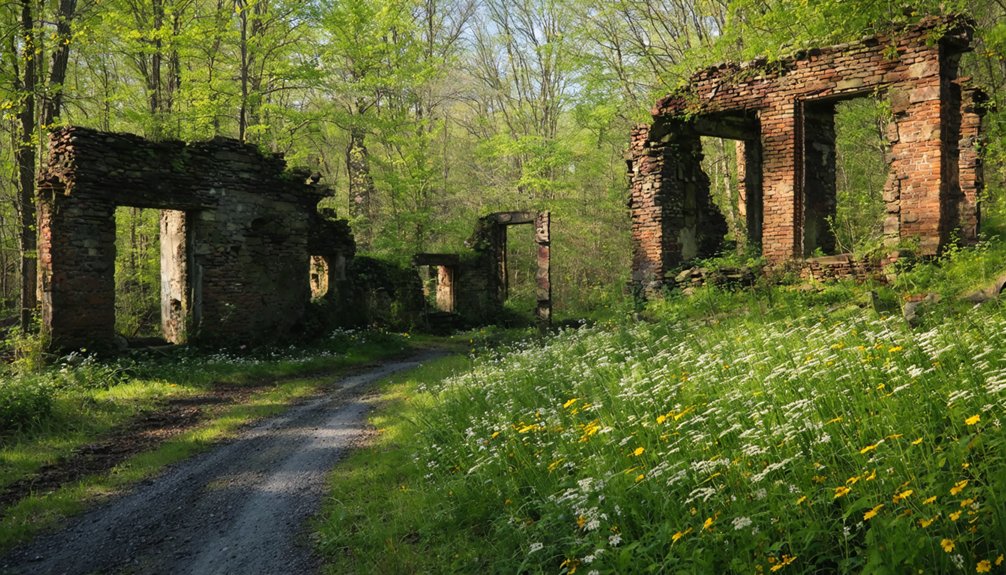
When you arrive at Bagdad today, you’ll find little more than sparse ruins quietly reclaimed by the Appalachian landscape.
Abandoned mining structures still peek through decades of overgrowth, their crumbling frameworks hinting at the industrial activity that once defined this community.
You’ll need to look carefully, as nature has aggressively swallowed most of what the coal industry left behind, blurring the line between man-made remnants and wilderness.
Sparse Ruins Remain
Bagdad’s remnants tell a quiet story of absence. When you arrive, don’t expect preserved buildings or interpretive signs — you’ll find sparse structures at best, scattered across forgotten landscapes reclaimed by Pennsylvania’s Appalachian wilderness.
Nature has quietly erased most evidence of the coal industry that once animated this community.
You’re fundamentally reading the land itself, piecing together a history through subtle clues — a flattened foundation, an unusual earthen mound, overgrown depressions where structures once stood.
That’s the raw, unfiltered experience Bagdad offers adventurous travelers who prefer discovery over curated tourism.
Bring your curiosity and a sharp eye. The absence here speaks volumes about Westmoreland County’s coal boom and bust cycle, making every faint trace you uncover feel genuinely meaningful.
Abandoned Mining Structures
Though documentation remains sparse, the most compelling remnants you’re likely to encounter at Bagdad are the skeletal traces of its coal-era infrastructure — crumbling coke oven foundations, earthen berms that once supported rail lines, and stone masonry fragments half-buried beneath decades of undergrowth.
This abandoned infrastructure tells a raw, unfiltered story of industrial heritage.
Watch for these three markers:
- Coke oven archways — collapsed stone structures where coal once transformed into fuel
- Raised earthen platforms — former rail grades cutting through dense Appalachian vegetation
- Slag deposits — dark, glassy remnants scattered across the forest floor
You won’t find plaques or guided tours here.
What you’ll find is authentic decay — an unmediated encounter with Pennsylvania’s industrial past, preserved only by neglect and wilderness.
Overgrown Industrial Remnants
Silence has a texture at Bagdad — it’s woven from snapping branches, wind threading through bare timber, and the faint crunch of slag underfoot.
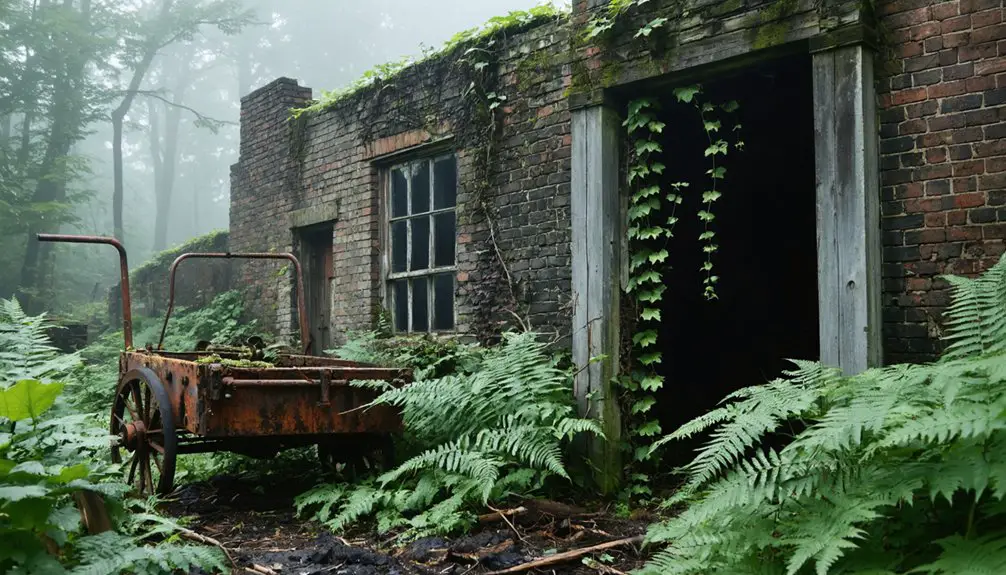
You’ll move through overgrown landscapes where nature has steadily reclaimed every surface industrial decay left behind. Vines strangle remnant stone foundations, and collapsed timber frames disappear beneath decades of dense undergrowth.
You won’t find preserved structures or interpretive signs here — Bagdad offers raw, unmediated history. Watch your footing carefully; hidden depressions and broken masonry hide beneath leaf litter and creeping brush.
The absence of documentation actually sharpens the experience — you’re reading the landscape itself, piecing together a coal community’s story from scattered physical evidence.
Bring sturdy boots, a compass, and the confidence to navigate terrain that rewards careful, independent exploration.
Which Ghost Towns Near Bagdad Are Worth the Detour?
If you’re already making the trek to Bagdad, you’ll want to extend your route to hit several nearby ghost towns scattered across Westmoreland County.
Bairdstown in Derry Township, Chester (also known as Humphries), Old Patton (Wakena), and New England all share Bagdad’s coal mining heritage and reward curious explorers with atmospheric remnants of Pennsylvania’s industrial past.
Plan your detour carefully, since Cokeville — once known as Broad Fording — now lies submerged beneath Conemaugh River Lake, making it a hauntingly unique stop that requires a different kind of exploration than the others.
Nearby Ghost Towns Worth Visiting
Why stop at just one ghost town when Westmoreland County offers a haunted cluster worth exploring together?
Pack your curiosity and hit these three stops for serious industrial archaeology:
- Bairdstown – Bairdstown history reveals a classic coal-era settlement in Derry Township, where faded foundations reward patient explorers.
- Chester (Humphries) – Chester exploration uncovers another mining remnant worth photographing, offering raw Appalachian atmosphere without tourist crowds.
- Cokeville (Broad Fording) – Cokeville legends run deep here; this site now sleeps beneath Conemaugh River Lake, making it hauntingly inaccessible yet fascinating.
Bonus: Old Patton insights connect you to Wakena’s layered coal heritage nearby.
Together, these stops build a compelling picture of Western Pennsylvania’s rise and collapse, turning your road trip into genuine discovery.
Planning Your Detour Route
Once you’ve absorbed Bagdad’s quiet ruins, stringing together a detour route through Westmoreland County transforms a single stop into a full-day industrial archaeology expedition.
Head toward Derry Township to find Bairdstown, then swing through Chester, locally known as Humphries, another coal mining casualty worth your time.
Push toward Old Patton, also called Wakena, before finishing near the Conemaugh River Lake, where Cokeville now rests submerged beneath the water’s surface.
This circuit rewards serious ghost town exploration by revealing how entire communities rose and collapsed around a single industry.
Each site layers onto the next, building a richer picture of regional historical preservation than any single location delivers alone.
Pack water, download offline maps, and give yourself flexibility — remote Appalachian terrain rarely follows a predictable schedule.
When Is the Best Time to Visit Bagdad, Pennsylvania?
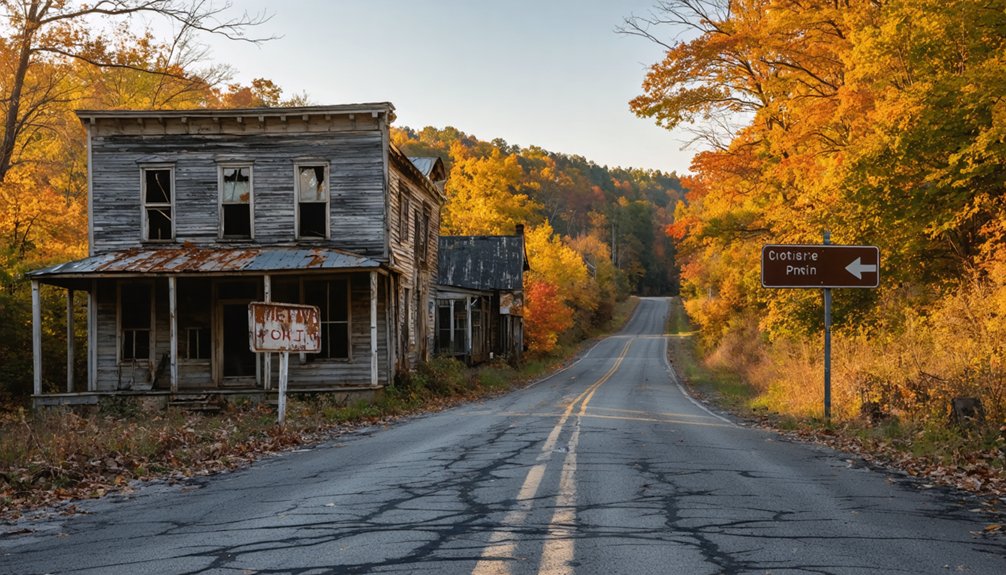
When you visit Bagdad, Pennsylvania, the season you choose can greatly shape your experience exploring this remote Appalachian ghost town. Weather considerations matter considerably when traversing undocumented, rugged terrain. Here are the best seasons to plan your trip:
- Spring (April–May): Mild temperatures and fresh foliage open trails without summer’s dense undergrowth blocking remnants.
- Early Fall (September–October): Crisp air, stunning leaf color, and dry ground create ideal conditions for roaming coal heritage landscapes freely.
- Summer (June–August): Longer daylight hours maximize exploration time, though thick vegetation can obscure site details.
Avoid winter visits — icy Appalachian roads and limited visibility make remote access genuinely dangerous.
Whatever season calls you, pack layers, sturdy boots, and embrace the raw freedom this forgotten Pennsylvania landscape offers.
What Should You Know Before Exploring Bagdad’s Terrain?
Before you set foot in Bagdad’s rugged Appalachian terrain, you’ll want to understand what you’re walking into — quite literally.
This abandoned coal town sits within remote, mountainous landscape where documentation is sparse and infrastructure is nonexistent.
Follow these terrain tips before you head out:
- Wear sturdy boots — uneven ground, overgrown paths, and hidden debris are common.
- Bring navigation tools — GPS and printed maps, since cell service is unreliable.
- Travel with a partner — exploration safety demands backup in isolated areas.
- Watch for abandoned mine hazards — unstable ground and open shafts can appear without warning.
- Pack essentials — water, first aid, and a flashlight are non-negotiable.
Bagdad rewards the prepared explorer, not the careless one.
How Do You Turn Bagdad Into a Full Westmoreland Ghost Town Road Trip?
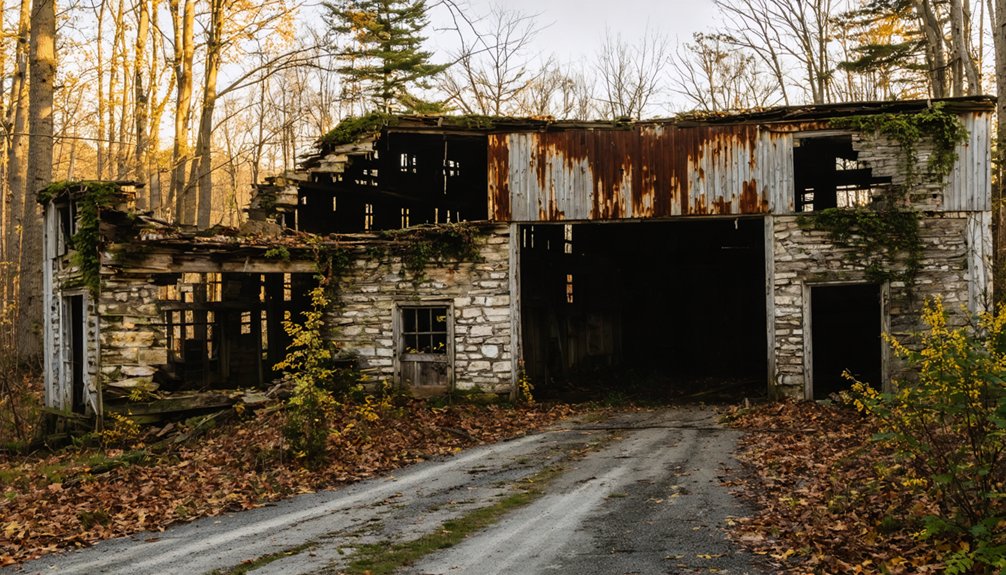
Why stop at Bagdad when Westmoreland County holds an entire network of forgotten coal towns waiting to be explored?
String these stops together for a rewarding ghost town exploration that traces the region’s coal mining history:
- Bairdstown – Head to Derry Township first and scout this quiet remnant of industrial life tucked into the Appalachian landscape.
- Chester (Humphries) – This coal mining ghost town adds another raw, unfiltered chapter to your journey through Westmoreland’s past.
- Cokeville (Broad Fording) – Now submerged beneath Conemaugh River Lake, this eerie stop reminds you how completely the land reclaims its own.
You’re not just driving roads — you’re stitching together a vanished world.
Pack light, stay curious, and let Westmoreland’s forgotten towns tell their story.
Frequently Asked Questions
Is Bagdad, Pennsylvania the Same as Bagdad in Armstrong County?
They’re not the same! You’ll find Bagdad’s geography places it in Westmoreland County’s Allegheny Township, while Bagdad history in Armstrong County marks it as a separate, distinct Pennsylvania location worth exploring independently.
Were Any Coke Ovens Ever Built Specifically in Bagdad, Pennsylvania?
Like whispers lost to time, no documented records confirm coke ovens were built specifically in Bagdad. However, you’ll find coke production held historical significance across nearby Westmoreland County mining towns, making your exploration richly rewarding.
What Timezone Applies When Planning Travel to Bagdad, Pennsylvania?
When you’re planning your adventure, Eastern Time (EST, UTC-5) governs Bagdad, Pennsylvania. Keep these Travel Tips in mind: sync your schedule accordingly, so you’ll maximize every thrilling moment exploring this hauntingly beautiful ghost town freely!
Are There Any Museums Dedicated to Westmoreland County’s Coal Mining History?
The knowledge doesn’t highlight museums dedicated to Westmoreland County’s coal mining historical significance, but you’ll discover the region’s rich coal mining heritage through ghost town exploration, abandoned coke ovens, and Appalachian landscapes that tell their own intriguing stories.
Could Bagdad, Pennsylvania Ever Be Restored or Historically Preserved?
Like embers fading in ash, Bagdad’s restoration faces steep preservation challenges. You’d need documented historical significance to attract funding, but sparse records make revival unlikely—though passionate advocates could still breathe life into forgotten coal heritage.
References
- https://en.wikipedia.org/wiki/List_of_ghost_towns_in_Pennsylvania
- https://www.youtube.com/watch?v=QV2zfF90dQo
- https://www.wikiwand.com/en/articles/List_of_ghost_towns_in_Pennsylvania
- https://forgotten-destinations.blogspot.com/2016/09/off-map-ghost-town-bagdad-story.html
- https://main.sbcounty.gov/2025/08/14/san-bernardino-county-history-bagdad/
- https://en.wikipedia.org/wiki/Centralia
- https://www.youtube.com/watch?v=J8cgAdVe5ZA
- https://www.youtube.com/watch?v=WA841bynxqU
- https://www.youtube.com/watch?v=yxFuqGq-FJ8