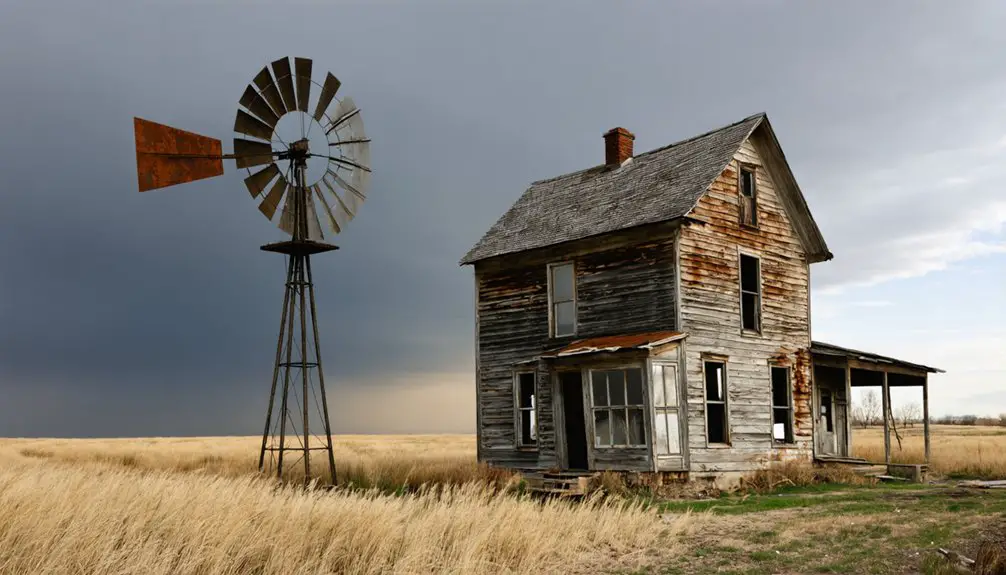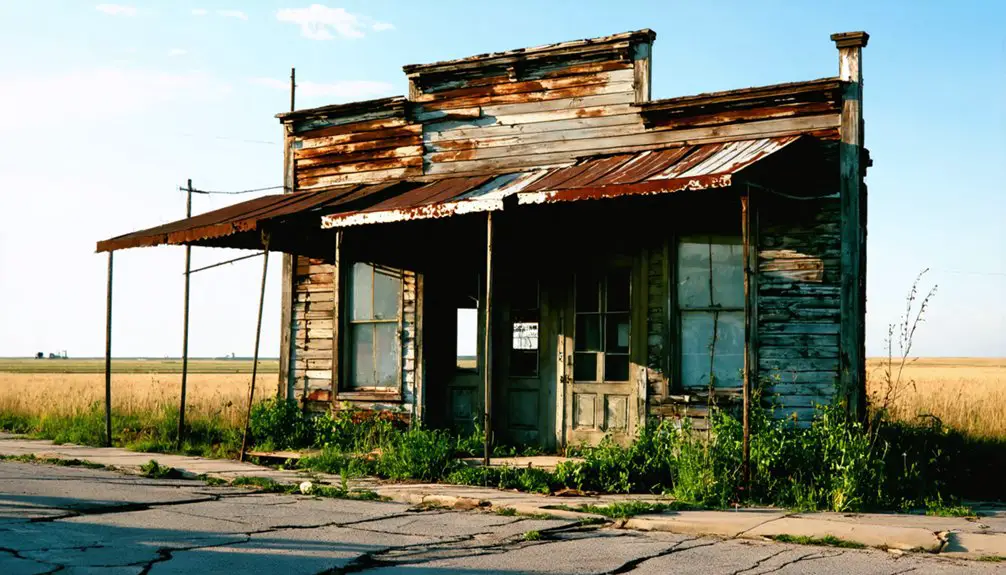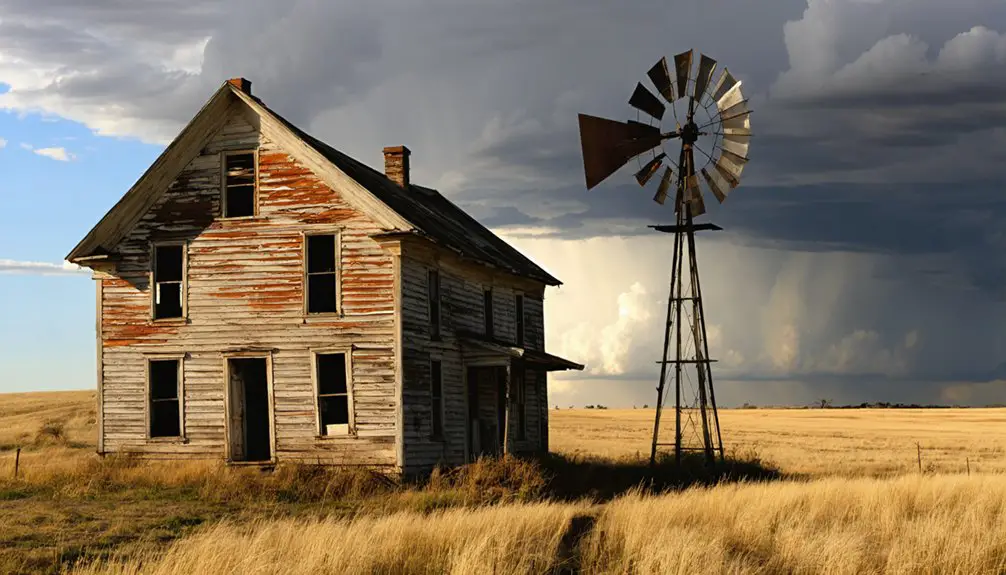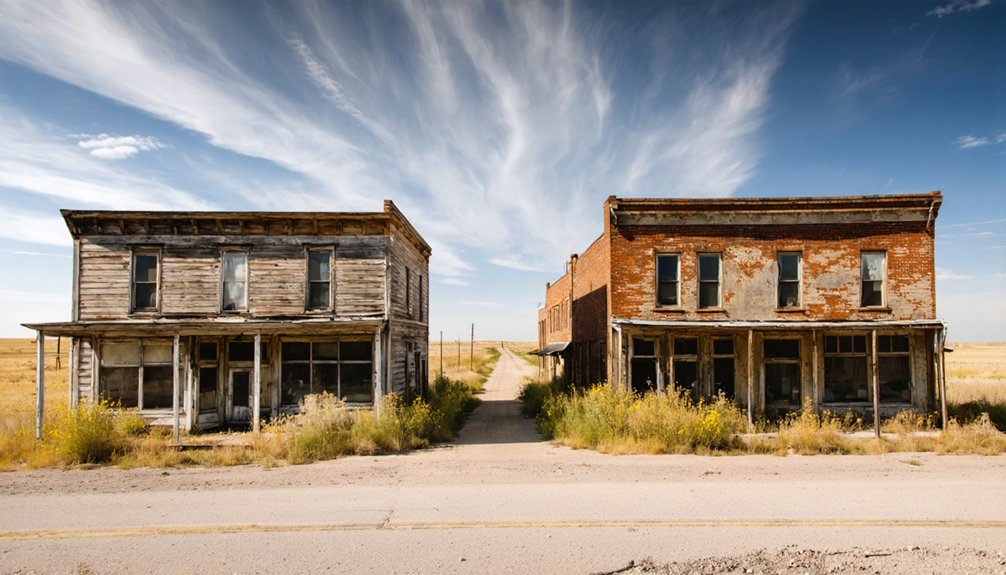
Butler County, Nebraska hides more than a dozen ghost towns along its back roads and state highways. Start your trip at the Butler County Depot Museum in David City, where historical records and maps will guide your route. From there, follow Highway 136 toward sites like Elbing, Chelsea, and Amboy, watching for subtle landscape clues like old foundations and forgotten tree lines. Grab aerial photographs and a good camera — there’s far more to uncover than you’d expect.
Key Takeaways
- Start at the Butler County Depot Museum in David City to access historical records, maps, and photographs of the county’s ghost towns.
- Key stops include Elbing, Chelsea, Worth, Garrison, and Amboy, each offering unique historical remnants and landmarks.
- Use historic railroad maps, aerial photographs, and Nebraska State Historical Society publications to navigate and identify abandoned town sites.
- Look for subtle landscape clues like old foundations, forgotten tree lines, and roadbeds to locate hidden ghost town remnants.
- Drive Highway 136 slowly toward Amboy, watching for terrain changes, the old mill site, and weathered historical structures.
Butler County’s Ghost Towns: A Quick History of What Was Lost
Butler County’s ghost towns didn’t vanish overnight — they faded across decades, victims of shifting economies, railroad closures, and the relentless churn of agricultural collapse.
Most settlements sprang up between 1870 and 1890, riding railroad expansion’s promise, only to collapse by the late 1930s when that promise evaporated.
You’ll find rich historical connections woven through each abandoned site.
Chelsea was swallowed by a lake. Worth lost its post office to Elbing in 1887. Elbing itself survived an oil boom before a devastating 1933 fire reshaped its destiny.
These aren’t just ghost stories — they’re real human chapters written in soil, timber, and fading memory.
Understanding what disappeared here sharpens your appreciation for every crumbling foundation and overgrown roadbed you’ll discover on your road trip.
The Abandoned Towns You Need to Know in Butler County
Butler County holds a surprising number of lost towns worth tracking down, each with its own story of boom and bust.
You’ll want to start with Elbing, which survived an oil boom in 1919 before a devastating fire in 1933 sealed its fate.
Then there’s Chelsea, a once-thriving 1857 settlement on the Walnut River now submerged beneath a lake.
To find these abandoned remnants, you’ll need a mix of historic maps, aerial photographs, and a sharp eye for subtle landscape clues like old foundations and overgrown roadbeds.
Butler County’s Lost Towns
Scattered across Butler County like forgotten whispers, the lost towns of this Nebraska region tell a story of ambition, boom, and inevitable decline.
You’ll discover lost settlements that once thrived before agricultural decline and railroad closures stripped them of purpose.
Elbing emerged during an 1919 oil boom, absorbed Worth’s post office in 1887, then surrendered to a devastating 1933 fire.
Chelsea, settled in 1857 along the Walnut River, now sits silently submerged beneath a lake.
Worth itself vanished quietly, its postal identity transferred before complete abandonment.
These weren’t failures — they were communities that burned brightly before circumstances extinguished them.
Each site carries layered history waiting for curious travelers willing to look beyond modern landscapes and imagine the lives once rooted there.
Ghost Towns Worth Visiting
While Butler County’s ghost towns share a common fate, each one rewards exploration in its own distinct way.
Elbing’s oil boom legacy makes it a compelling stop, where you’ll uncover layers of history spanning a post office, a petroleum rush, and a devastating fire.
Chelsea invites you to imagine a sunken world beneath the lake’s surface, perfect for ghost town photography at low water.
Worth offers quiet intrigue, its vanished post office hinting at a once-thriving community.
Garrison carries its own local folklore, preserved through historical society songs and programs that breathe life into forgotten streets.
Each site tells a different story, and you’re the one piecing them together.
Pack your camera, trust your curiosity, and let Butler County surprise you.
Finding Abandoned Town Remnants
Tracking down abandoned town remnants in Butler County takes more than a good sense of direction—it takes the right tools and a sharp eye.
Start with historic railroad maps layered against current road maps to pinpoint where towns once stood. Aerial photographs reveal foundations, roadbeds, and scattered abandoned structures hiding beneath overgrown fields.
You’ll want to cross-reference county histories, old newspapers, and oral histories before you hit the road. The Butler County Depot Museum in David City holds valuable records that orient you within these historical landscapes.
Drive state highways slowly, watching for subtle grade changes, isolated trees, or unnatural soil patterns. These quiet details often mark the footprint of communities that vanished long before anyone thought to preserve them.
What Survives at Butler County’s Abandoned Town Sites
Though most of Butler County’s abandoned towns have surrendered to time, a few tangible remnants still reward curious travelers who know where to look.
At Amboy, you’ll find surviving landmarks including a weathered schoolhouse and depot that carry genuine historical significance.
Amboy’s weathered schoolhouse and depot still stand, quiet testaments to a town that time has not entirely claimed.
Drive Highway 136 to reach the old mill site, which operated well into the 1940s.
If water levels drop at Branched Oak Lake, submerged foundations from the town of Crounse emerge from the shallows, offering an eerie glimpse into a drowned community.
Elbing’s oil boom legacy lingers in local lore even after the 1933 fire erased much of it.
Historical markers scattered across the county help you piece together each story, turning an ordinary drive into a genuine discovery.
Plan Your Ghost Town Route Through Butler County
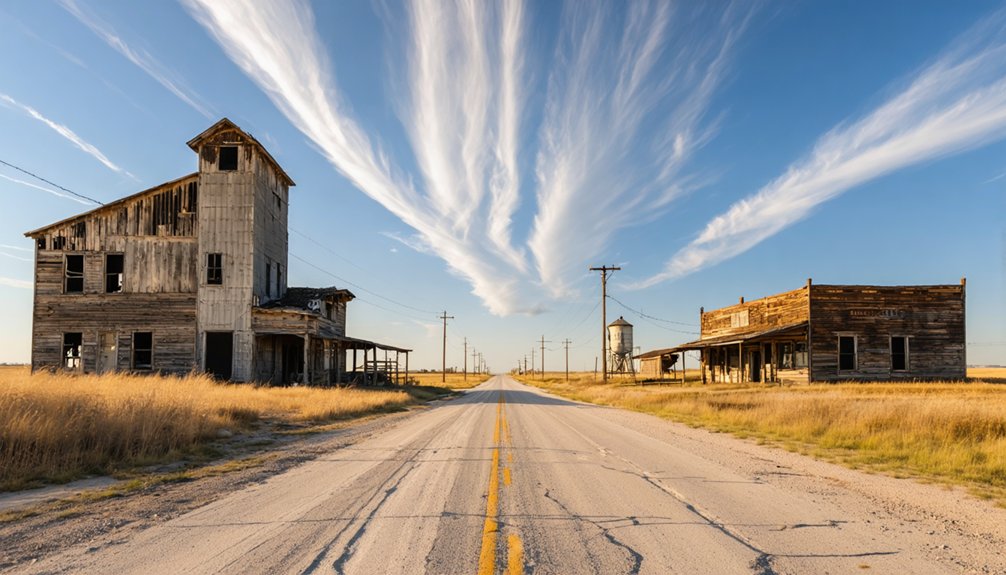
Start your Butler County ghost town adventure by pulling up historic railroad maps alongside current road maps to pinpoint where forgotten settlements once stood.
You’ll want to make David City’s Butler County Depot Museum your first essential stop, where local records and county histories can sharpen your route before you hit the backroads.
From there, follow state highways while keeping an eye out for subtle landscape clues—odd tree lines, sunken foundations, or abandoned roadbeds—that mark the ghostly footprints of places like Elbing, Worth, and Chelsea.
Mapping Your Ghost Town Route
Before you hit the road, you’ll want to pull together a few key resources to map your ghost town route through Butler County. Start with historic railroad maps layered against current road maps — this pairing is essential for accurate ghost town navigation and route optimization between sites like Elbing, Worth, and Garrison.
Aerial photographs reveal foundation outlines, old roadbeds, and structural remnants invisible at ground level. Cross-reference these with county histories and newspaper archives available through the Nebraska State Historical Society.
Download offline maps before departing, since rural cell coverage is unreliable. The Butler County Depot Museum in David City offers locally produced guides that pinpoint exact coordinates for many lost towns.
Combine these tools, and you’ll travel smarter, covering more ground with greater confidence and fewer dead ends.
Essential Stops Along The Way
With your maps in hand and your route locked in, you’ll want to prioritize the stops that deliver the richest historical payoff across Butler County’s ghost town corridor.
Start your road trip at the Butler County Depot Museum in David City, where exhibits ground you in the region’s railroad and agricultural past.
From there, track down Elbing, a ghost town that survived an oil boom before a devastating 1933 fire sealed its fate.
Head toward Chelsea’s submerged footprint near Walnut River, then swing through Worth, whose post office relocated to Elbing in 1887.
Each stop layers your understanding of how communities rose and vanished.
Keep your aerial photos handy — foundations hide in plain sight when you know exactly what you’re searching for.
Trip Logistics for Exploring Butler County Ghost Towns
Planning a ghost town road trip through Butler County takes just a few key resources to get right. Start with historic railroad maps layered against current road maps to pinpoint where lost towns once stood.
The Butler County Depot Museum in David City is your best first stop for local folklore and orientation.
Begin your ghost town journey at the Butler County Depot Museum in David City for essential local folklore and orientation.
Pack these essentials before you hit the road:
- Aerial photographs to spot foundations and old roadbeds
- A quality camera for ghost town photography at sites like Elbing and Chelsea
- Nebraska State Historical Society publications for documented town histories
Drive Highway 136 toward Amboy and watch the landscape carefully.
Subtle depressions and forgotten tree lines often reveal exactly where communities once thrived.
Historic Maps, Archives, and Museums for Your Research

Research is the backbone of any successful ghost town road trip, and Butler County rewards diggers who know where to look.
Start your archival research at the Butler County Depot Museum in David City, where local historians preserve documents, photographs, and railroad records tied to vanished communities like Elbing and Worth.
The Nebraska State Historical Society holds historic maps, aerial photographs, and county histories that pinpoint foundations and former roadbeds invisible from modern roads.
Cross-reference old railroad survey maps against current satellite imagery to identify subtle landscape shifts.
Historic preservation efforts also mean oral histories and newspaper archives are increasingly digitized and accessible online.
YouTube presentations from the Butler County Historical Society offer surprising depth.
Layer these sources together, and you’ll arrive at each site with purpose and confidence.
Historic Sites Near Butler County’s Ghost Towns
Once you’ve mapped your ghost town circuit through Butler County, the surrounding region opens up a broader canvas of historic sites that deepen your understanding of why these communities rose and fell.
These historic landmarks reveal forgotten stories that connect directly to the towns you’re chasing.
- Butler County Depot Museum in David City preserves railroad artifacts that explain why ghost towns died when rail lines shifted.
- Branched Oak State Recreation Area lets you scan low-water foundations of Crounse, submerged during the 1960s.
- Fort Kearny’s Highway 50A marker anchors the story of Dobytown, which collapsed after the fort’s 1871 abandonment.
Each stop adds context, transforming scattered ruins into a coherent regional narrative you can actually feel standing in the landscape.
Frequently Asked Questions
Is Butler County Named After a Military or Political Figure?
Butler County’s named after William Orlando Butler — he’s both! You’ll find his military influence as a major general and political legacy as a U.S. congressman woven into this freedom-rich county’s proud identity.
When Was Butler County Officially Created and Its Government Organized?
You’ll find Butler County’s County History dates to 1856, when it was officially created. Its Government Structure wasn’t organized until 1868, giving you over a decade of fascinating, unstructured frontier freedom to imagine!
What Is the Current Population of David City, the County Seat?
You’ll find David City’s demographics show a population of 8,369 as of 2020. This charming county seat doesn’t just offer numbers—it’s packed with local attractions, including the fascinating Butler County Depot Museum awaiting your exploration!
Did Butler County Ever Have an Economy Beyond Agriculture?
Yes, you’ll find Butler County’s history includes industrial developments beyond farming! An oil boom hit Elbing in 1919, proving the region’s economic diversification. It’s a fascinating layer you shouldn’t overlook when exploring this storied landscape.
How Early Did the First Settlements Appear in Butler County?
You’ll find Butler County’s earliest settlement patterns took root by 1859, when ranches and trading posts first emerged. These historic landmarks reflect the freedom-seeking pioneers who carved out lives on Nebraska’s untamed frontier.
References
- https://history.nebraska.gov/finding-nebraskas-ghost-towns/
- https://www.youtube.com/watch?v=RODvVi84tLk
- https://www.youtube.com/watch?v=xCbFN_yLFrk
- http://www.kancoll.org/books/andreas_ne/butler/butler-p4.html
- https://www.butlernemuseum.com/history
- https://www.youtube.com/watch?v=XiP8ia7LVQw
- https://kids.kiddle.co/Butler_County
- https://visitnebraska.com/trip-idea/explore-7-authentic-ghost-towns-nebraska