Planning a ghost town road trip to Castle Dome Landing means heading 30-40 miles north of Yuma via US-95, then west on Martinez Lake Road. You’ll want a high-clearance vehicle for the unpaved final stretch. Once there, you’ll explore 50+ restored buildings and Arizona’s longest-worked mining district, active from 1863 to the 1970s. Visit between October and April for the best experience. Stick around, and you’ll discover everything you need to make this trip unforgettable.
Key Takeaways
- Castle Dome Landing sits 30-40 miles north of Yuma, Arizona, accessible via US-95 north, then west on Martinez Lake Road.
- A high-clearance vehicle is recommended for the unpaved final stretch, especially after rain; stock fuel and water beforehand.
- Visit between October and April for mild temperatures ranging from the 50s to 80s°F, ideal for walking tours.
- A $20 admission covers the 1.8-mile walking tour of 50+ restored buildings, including a stamp mill and cemetery markers.
- The separate Hull Mine underground tour costs $75, requires advance reservations, and uses UV light to reveal fluorescent minerals.
Why Castle Dome Landing Is Worth the Trip From Yuma
If you’re searching for a ghost town road trip that delivers more than just crumbling walls and a weathered sign, Castle Dome Landing is worth the 30-to-40-mile drive from Yuma.
Tucked into the Castle Dome Mountains of Yuma County, this desert site blends ghost town charm with a mining legacy stretching back to 1863.
You’ll walk through a district that once operated more than 300 mines and kept running well into the 1970s.
The Castle Dome Mine Museum transforms that history into something tangible, with over 50 restored buildings, original artifacts, and a Hull Mine tour featuring fluorescent mineral walls lit by UV light.
This isn’t a passive roadside stop. It’s an open-air experience built for people who want real history on their own terms.
Getting to Castle Dome From Yuma
Castle Dome Landing sits roughly 30 to 40 miles north of Yuma, depending on the route you choose, so you’re looking at under an hour of driving through open desert.
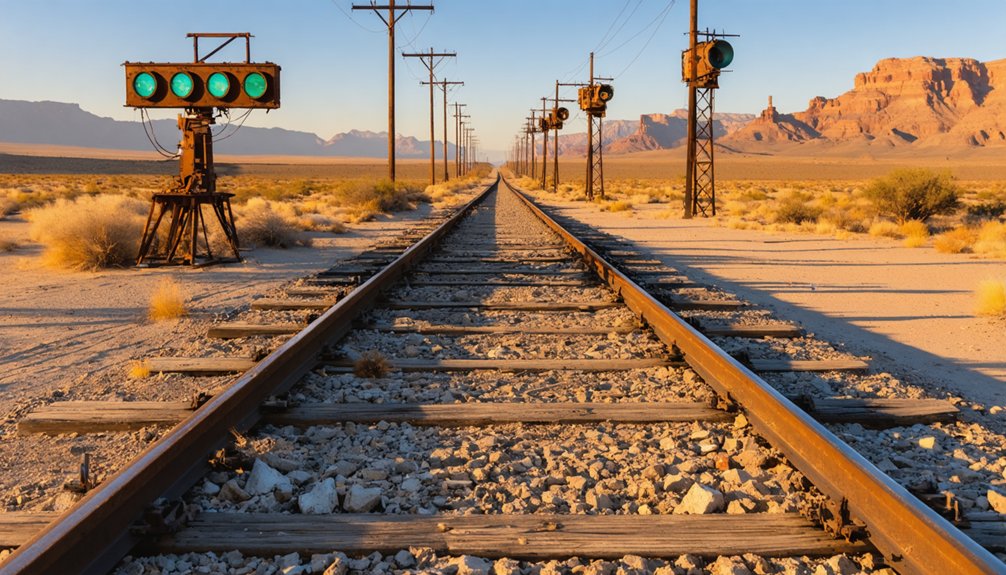
You’ll want to head north on US-95, then cut west toward Martinez Lake Road, which takes you into increasingly rugged terrain as the Castle Dome Mountains come into view.
The final stretch is unpaved, so a high-clearance vehicle is strongly recommended, especially after rain when the dirt roads can get rough.
Distance From Yuma
About 30 to 40 miles north of Yuma, depending on your route, Castle Dome Landing sits deep in the remote Sonoran Desert terrain of Yuma County.
The drive takes you through open stretches where desert wildlife roams freely, and the landscape shifts from highway sprawl into rugged, untamed country.
You’ll feel the distance from modern life grow with every mile.
Once you arrive, the reward is immediate — historical artifacts, restored buildings, and a genuine sense of stepping into Arizona’s mining past.
The isolation that once made Castle Dome a self-sufficient boomtown is the same quality that makes it compelling today.
Getting there requires intention, but that’s exactly the kind of road trip worth taking.
Recommended Route Options
Getting there’s half the adventure, and the route you choose shapes the experience before you ever set foot on the ghost town grounds.
From Yuma, you’ll head north on US-95, a straightforward drive that cuts through open desert and delivers raw Sonoran scenery without detours.
For those craving scenic routes, the roads skirting Martinez Lake offer water views and wildlife that break up the arid landscape beautifully.
You can also approach through Kofa National Wildlife Refuge if you’re extending your trip and want to stack local attractions along the way.
Each path rewards differently. The direct route saves time, while the longer alternatives build anticipation mile by mile.
Factor in fuel and water before leaving Yuma, because services disappear fast once you head into the backcountry.
Road Conditions And Access
Once you leave Yuma heading north on US-95, the pavement stays solid for the bulk of the drive, but conditions shift as you peel off toward the Castle Dome Mountains.
The final stretch runs unpaved, cutting through raw desert terrain that demands your full attention. Road safety becomes a real concern here — washboard surfaces, loose gravel, and sand patches can catch you off guard, especially after recent rains.
Access challenges increase during summer heat, when high temperatures punish breakdowns hard and fast. A high-clearance vehicle handles the terrain far more comfortably than a standard sedan.
Carry extra water, check your tire pressure before leaving Yuma, and let someone know your plans. This road rewards the prepared traveler and quietly punishes anyone who underestimates it.
Best Time of Year to Visit Castle Dome Landing
When you visit Castle Dome Landing matters almost as much as whether you visit at all. Summer temperatures routinely exceed 110°F, making exploration dangerous. Plan your trip between October and April for the best experience.
Peak season advantages include:
- Mild temperatures (50s–80s°F) perfect for extended walking tours
- Ghost town photography benefits from softer winter light and dramatic shadows
- Desert wildlife activity increases during cooler months, adding unexpected life to your shots
- Museum accessibility improves since extreme heat triggers seasonal closures
- Clear skies create ideal conditions for capturing the remote landscape
Spring and fall offer the sweet spot — comfortable enough to explore all 1.8 miles without exhaustion, yet warm enough to enjoy the open desert atmosphere fully.
A Brief History of the Castle Dome Mining District
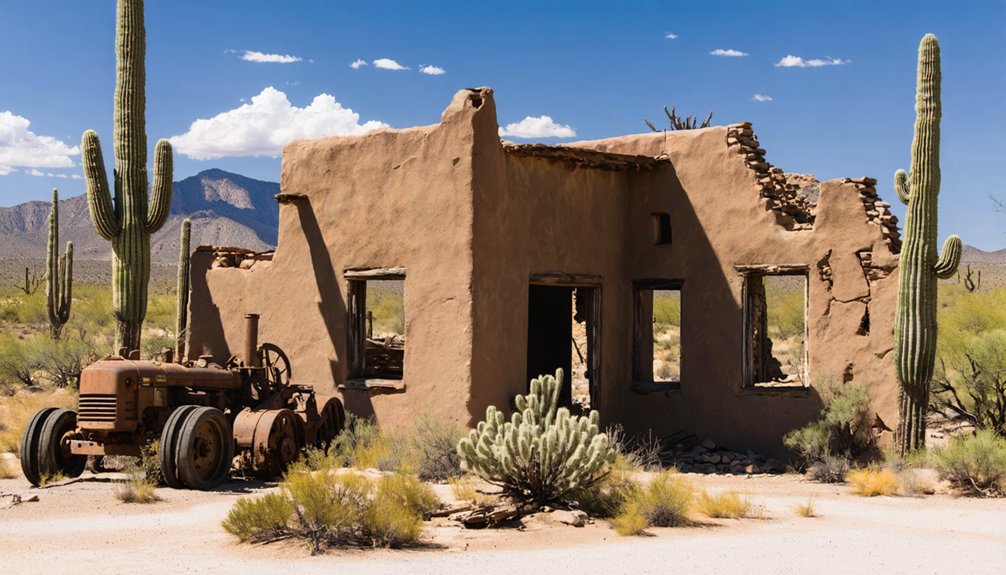
When you trace Castle Dome’s roots back to 1863, you’ll find a scrappy Arizona Territory camp that sprang up after the discovery of galena and other rich mineral deposits in the foothills.
Jacob Snively’s early explorations helped put the district on the map, drawing prospectors hungry for lead, silver, and related ores that would fuel more than a century of intermittent mining across 300-plus claims.
What started as a rough riverside landing eventually grew into one of Arizona’s longest-worked mining districts, keeping miners busy well into the 1970s.
Origins of Castle Dome
Although the Sonoran Desert doesn’t exactly scream “gold rush,” Castle Dome‘s story begins in 1863, when prospectors discovered galena and other mineral deposits tucked into the rugged foothills of the Castle Dome Mountains.
Jacob Snively’s early explorations helped ignite a mining rush that would shape Arizona Territory for over a century. Ghost town legends still surround the district’s wild boom years, when mining techniques evolved alongside the growing demand for lead and silver.
Key facts worth knowing:
- Settlement began during Arizona’s territorial period
- Galena and silver drove early economic activity
- Jacob Snively is linked to the district’s discovery
- The region became a major lead and ore hub
- Mining techniques advanced across more than 100 active years
Mining and Economic Growth
Castle Dome didn’t just produce ore—it built an economy. At its peak, the district supported hundreds of workers, local businesses, and supply chains stretching to the Colorado River.
Miners extracted lead, silver, and galena using evolving mining techniques that kept operations running across more than a century of intermittent activity.
The economic impact reached far beyond the desert. During World War II, wartime demand for lead ammunition revived the district entirely, proving how deeply Castle Dome was woven into broader American industry.
More than 300 mines operated throughout the district’s lifespan, making it Arizona’s longest-worked mining area.
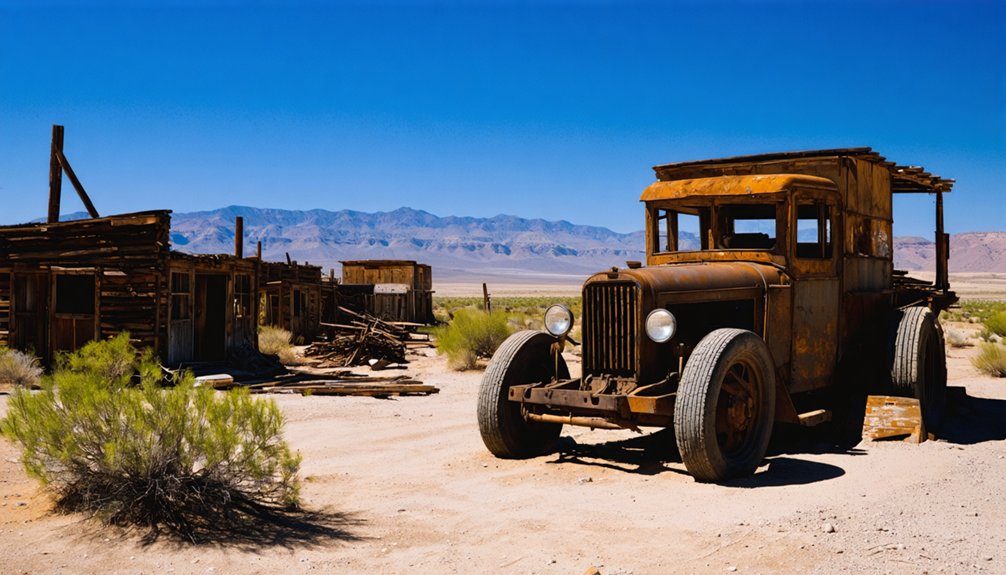
When you visit today, you’re walking through the physical remains of that economic engine—stamp mills, mine shafts, and rusted equipment that once kept a regional economy alive.
A Century of Mining
Stretching across more than a century of boom, bust, and revival, the Castle Dome Mining District has one of the most resilient histories in the American Southwest.
Its economic impact shaped Yuma County for generations, and evolving mining techniques kept production alive long after other districts faded.
Here’s what defined the district’s remarkable run:
- Operations began around 1863, targeting galena, lead, and silver deposits
- More than 300 mines operated throughout the district’s lifespan
- Mining techniques advanced steadily, supporting deeper extraction over time
- World War II revived lead production, fueling wartime ammunition demands
- Active mining continued into the 1970s, cementing its legacy
You’re looking at Arizona’s longest-worked mining district, a place where generations of prospectors refused to quit.
Castle Dome Ghost Town Walking Tour: What You’ll See
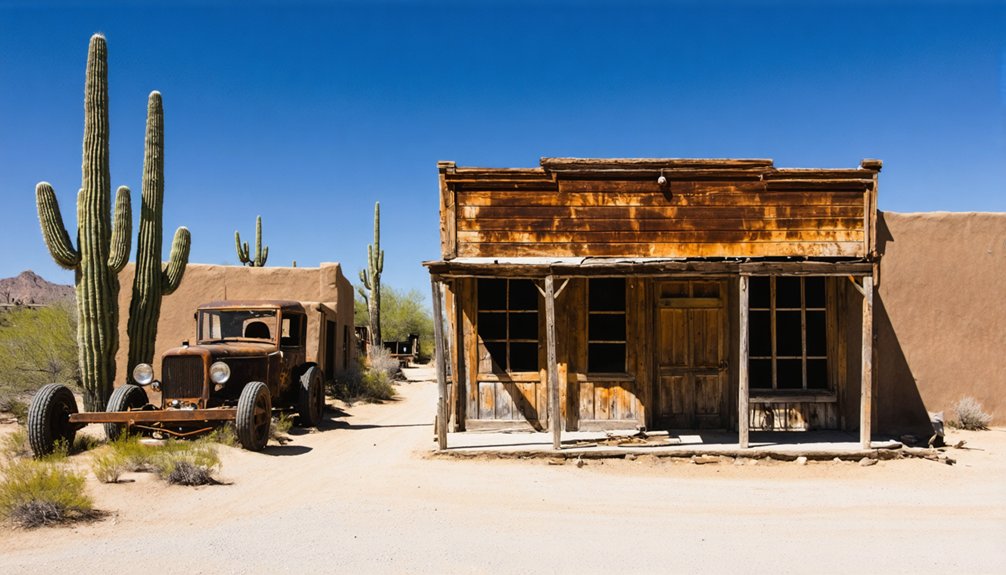
The 1.8-mile walking tour through Castle Dome Ghost Town packs a remarkable amount of history into a single stroll.
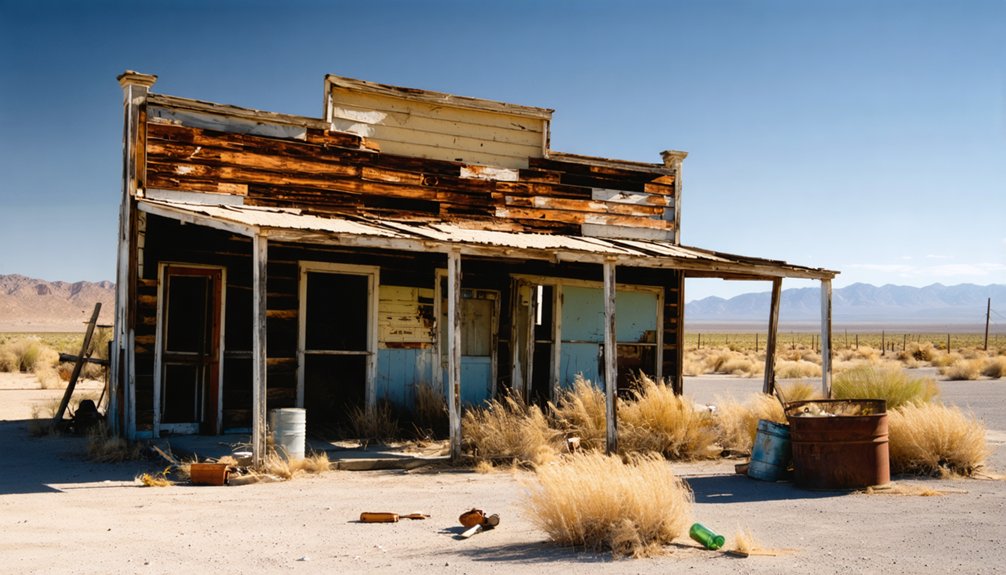
You’ll explore ghost town architecture spanning over 50 restored and recreated buildings, including seven original structures that survived the decades. Wander through a mercantile, blacksmith shop, sheriff’s office, church, saloons, and a barber shop frozen in time.
Mining artifacts are scattered throughout, giving you an unfiltered look at the tools and machinery that drove over a century of ore extraction.
Don’t miss the stamp mill, the desperado hideout, or the cemetery markers telling quiet stories of the people who built this place.
The $20 admission covers the walking tour, making it one of the most rewarding and affordable ghost town experiences in the Southwest.
Castle Dome Hull Mine Tour: UV Minerals and Underground History
Beyond the walking tour, you can add the Hull Mine Tour for a completely different dimension of the Castle Dome experience. This underground mineral exploration journey reveals a hidden world beneath the desert floor, where UV light transforms rock walls into glowing displays of fluorescent and phosphorescent minerals.
The Hull Mine tour runs separately from the walking tour, priced at $75, and requires advance reservations.
Here’s what you’ll encounter underground:
- Fluorescent mineral walls illuminated under UV light
- Phosphorescent rock formations that glow after light exposure
- Original mine tunnels and working history
- Hands-on mineral exploration opportunities
- Rare geological features unique to the Castle Dome District
Book this tour early, especially during cooler months when availability fills quickly. It’s an experience that connects you directly to Arizona’s raw mining heritage.
Hours, Prices, and How to Book Your Visit
Planning your visit around the Hull Mine Tour or the walking tour—or both—means you’ll want to nail down the logistics before you head out into the desert.
Ticket options break down simply: the ghost town walking tour runs $20 and covers roughly 1.8 miles of restored history, while the Hull Mine Tour runs $75 and adds the underground UV mineral experience.
Tour availability shifts with the seasons, and the desert heat forces periodic closures, so checking ahead isn’t optional—it’s essential.
The site operates by reservation or appointment, meaning you can’t just roll up and expect access.
Contact the Castle Dome Museum directly through their website to confirm current hours, secure your spot, and avoid a long drive into the Yuma County desert for nothing.
What to Pack for Castle Dome
Packing for Castle Dome isn’t complicated, but the desert will punish you fast if you cut corners. Weather considerations matter here — summer temperatures routinely exceed 110°F, and shade is scarce across the open terrain. Your packing essentials should cover survival basics and comfort for a full walking tour.
- Water — bring more than you think you need, at least one liter per hour
- Sun protection — hat, sunscreen, and UV-blocking sunglasses
- Sturdy closed-toe shoes — rocky paths and mine areas demand solid footwear
- Light, breathable layers — mornings can be cool before the heat hits hard
- Cash — the remote location means no guarantees on card readers
Pack smart, and Castle Dome rewards you completely.
Where to Stay Near Castle Dome
Yuma gives you the most lodging options within reasonable striking distance of Castle Dome, sitting roughly 30 to 40 miles from the site depending on your route.
Hotels, motels, and chains line the main corridors, giving you a comfortable base after a dusty day exploring the ghost town. Book ahead during winter months, when snowbirds flood the region.
Yuma’s hotels and motels offer a welcome retreat after a long, dusty day at Castle Dome Mine.
If you’d rather sleep closer to the desert, camping options exist near Martinez Lake, where dispersed sites put you in the heart of the lower Colorado River landscape.
Imperial Dam and the surrounding BLM land also offer nearby accommodations for self-sufficient travelers who prefer waking up with the sunrise over open terrain.
Either way, arriving rested makes the remote drive and walking tour far more rewarding.
Frequently Asked Questions
How Many Original Buildings Still Stand at the Castle Dome Museum Today?
You’ll find seven original buildings still standing at Castle Dome Museum, showcasing remarkable historic preservation and architectural significance. They’re authentic remnants of a free-spirited frontier era, giving you a genuine connection to Arizona’s untamed, adventurous past.
Who First Discovered the Mineral Deposits That Started Castle Dome’s Mining Boom?
You’ll find Jacob Snively credited with discovering the mineral deposits that ignited Castle Dome’s mining boom. His find held immense historical significance, shaping the mining techniques and economic drive that fueled over a century of relentless, freedom-seeking frontier exploration.
Why Did World War II Cause a Revival of Mining Activity at Castle Dome?
Wartime demand for lead ammunition fueled a mining resurgence at Castle Dome. You’ll find that WWII’s urgent need for bullets breathed new life into the district, pulling miners back to extract the essential lead deposits once again.
How Was Water Sourced by Residents During Castle Dome’s Early Settlement Years?
You’d have hauled your water from the Colorado River, roughly 20 miles away—a demanding historical method that tested early settlers’ resilience and made water conservation absolutely essential for survival in Castle Dome’s unforgiving desert environment.
How Many Total Mines Are Associated With the Entire Castle Dome Mining District?
Imagine tracing every tunnel — you’d explore over 300 mines tied to this ghost town’s rich mining history. The Castle Dome District holds that record, making it Arizona’s longest-worked mining district, a tribute to unstoppable human ambition.
References
- https://en.wikipedia.org/wiki/Castle_Dome_Landing
- https://www.youtube.com/watch?v=poSUm1oMz08
- https://gregdisch.com/2022/03/08/castle-dome-city-ghost-town/
- https://www.islands.com/1897773/longest-working-mining-town-arizona-abandoned-mountain-ghost-castle-dome-landing/
- https://southernarizonaguide.com/castle-dome-city-mini-road-trip-yuma-az/
- https://www.youtube.com/watch?v=cSFecYPVa2Y&vl=fr
- https://www.visityuma.com/things-to-do/museums/castle-dome/
- https://www.castledomemuseum.org
- https://www.tripadvisor.com/Attraction_Review-g31418-d2651085-Reviews-Castle_Dome_Mines_Museum_Ghost_Town-Yuma_Arizona.html
- https://www.reddit.com/r/arizona/comments/1pybsnm/castle_dome_ghost_town_and_mining_musuem_outside/