Start your ghost town road trip in Alma, then head east on County Road 7 toward Cooney, deep in the Mogollon Mountains of Catron County. You’ll need a high-clearance vehicle for the rough dirt roads. Explore the haunting cemetery, scattered mine ruins, and rusted equipment before looping through Mogollon and Glenwood. Plan for two days and pack emergency supplies, water, and offline maps. There’s far more to this isolated corridor than first meets the eye.
Key Takeaways
- Cooney is located in Catron County, seven miles east of Alma, accessible via rough County Road 7 requiring a high-clearance vehicle.
- Key historical sites include the Cooney Cemetery, James Cooney’s tomb, rusted mine artifacts, and remnants scattered throughout the scenic slot canyon.
- An optimal loop route starts in Alma, heads east to Cooney, continues to Mogollon, then returns through Glenwood back to Alma.
- Nearby ghost towns Mogollon, Alma, and Glenwood offer additional frontier history, making Cooney an ideal base for extended regional exploration.
- Essential preparations include offline GPS maps, emergency supplies, a full-size spare tire, and a full fuel tank before departing Alma or Glenwood.
Where Is Cooney, New Mexico, and How Do You Get There?
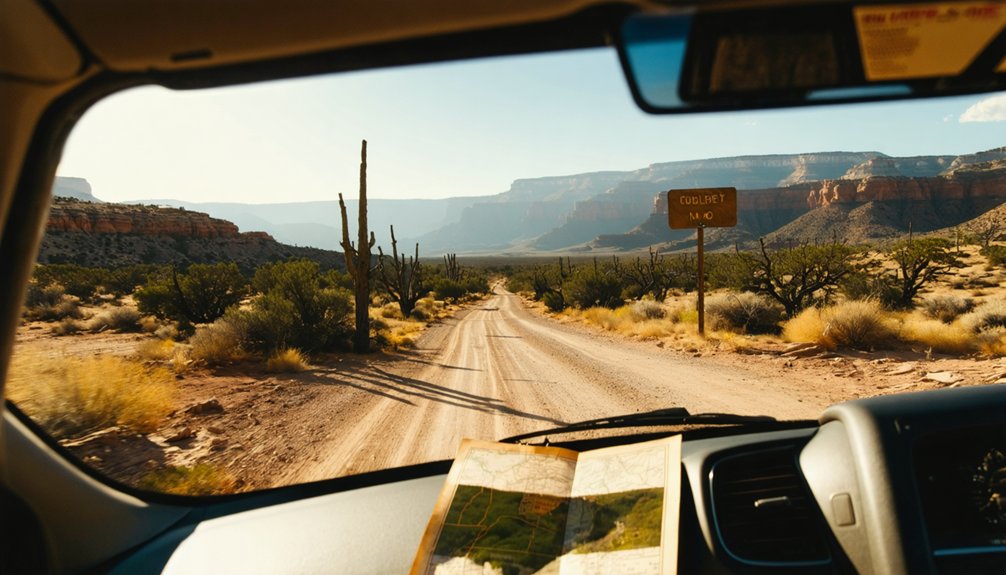
Tucked deep in the rugged terrain of Catron County, Cooney sits about seven miles east of Alma along County Road 7, winding through the Mogollon Mountains near Mineral Creek in Cooney Canyon.
You’ll need a high-clearance vehicle to navigate the rough dirt roads leading there, so leave the sedan at home. The scenic routes through Gila National Forest reward your effort with dramatic canyon views and raw, untamed wilderness.
GPS is your best friend here since the isolated location offers few road markers. You’re not just driving to a destination — you’re chasing hidden history through backcountry terrain most travelers never see.
In the backcountry, GPS replaces road signs — and the reward is history most travelers never find.
Combine the trip with nearby ghost towns like Mogollon, Alma, and Glenwood to build a full Catron County loop worth every mile.
The Gold Rush Discovery That Built a Town in Cooney Canyon
When you trace Cooney’s origins, you’ll find a single soldier’s discovery sparked an entire town’s existence.
Sergeant James C. Cooney first spotted a promising gold vein in the Gila Mountains during the 1870s while scouting from Fort Bayard, and by 1879, miners had staked claims throughout the canyon that now bears his name.
You can almost picture the rush of activity as prospectors flooded in, quickly erecting a mining settlement at the head of Cooney Canyon to capitalize on the newfound wealth beneath their boots.
Cooney’s Canyon Gold Find
Few gold discoveries in the American Southwest carry as much drama and consequence as the one Sergeant James C. Cooney made while scouting the Gila Mountains during the 1870s.
Stationed at Fort Bayard, he stumbled upon a promising gold vein that would reshape the region’s destiny. By 1879, prospectors had staked claims throughout Cooney Canyon, and a thriving town emerged at the canyon’s head, bearing the sergeant’s name.
Miners imported mining techniques suited to the rugged terrain, extracting ore from the canyon walls with relentless determination.
You’re fundamentally walking ground where ambition carved a community from pure wilderness. That raw entrepreneurial spirit transformed an isolated mountain canyon into a bustling settlement practically overnight, fueled entirely by the promise of wealth hidden within the rock.
Staking The First Claims
By 1879, prospectors had descended on Cooney Canyon with picks, shovels, and boundless ambition, staking claims across every promising outcropping Sergeant Cooney had scouted years earlier from Fort Bayard.
Claim staking moved fast here, with miners driving boundary stakes and filing paperwork before rivals could muscle in on prime ground.
You’d have witnessed hardrock mining techniques taking shape almost immediately — crews drilling into quartz veins, blasting tunnels, and hauling ore down Mineral Creek.
A rough town rose at the canyon’s head, named directly after the man who first spotted that glittering vein.
Within months, Cooney transformed from untouched wilderness into a bustling operation.
That independent, wide-open spirit drove everything here — men betting their futures on whatever the mountains were willing to surrender.
Building A Mining Town
Cooney Canyon erupted into something resembling civilization almost overnight once those first claims got staked. By 1879, miners had transformed raw wilderness into a functioning settlement using rugged mining techniques and basic town infrastructure.
You’re looking at a community built purely on determination and gold fever.
Here’s what shaped Cooney into a real town:
- Miners established permanent camps near Mineral Creek’s richest ore deposits.
- Supply routes connected Cooney Canyon to nearby Alma and Frisco Valley settlers.
- Town infrastructure included essential structures supporting daily mining operations.
- Hard rock mining techniques extracted silver-bearing ore directly from canyon veins.
Every building, every trail, every structure existed because someone believed enough gold justified the effort. That raw frontier energy still haunts Cooney Canyon today.
How the 1880 Apache Raid Ended Cooney’s Mining Days
Late afternoon on April 28, 1880, Victorio’s Apache band swept down on miners wrapping up their shift at the Mineral Creek Cooney Mine, killing three men on the spot and sending the rest scrambling into the mountains.
One survivor, Mr. Taylor, hid in a cave despite a broken leg. Sergeant Cooney and Jack Chick rode hard to warn Frisco Valley settlers, who fortified themselves at Roberts Ranch. Cooney’s horses returned bloodied and riderless, confirming his death.
This brutal act of Apache Warfare effectively shattered Cooney’s mining legacy, scattering the workforce and darkening the settlement’s future.
You’re walking ground where desperate men fled through these same canyon shadows. The mine never fully recovered, accelerating the town’s eventual abandonment by 1910.
The Decline: Why Cooney Was Abandoned and Dismantled by 1911
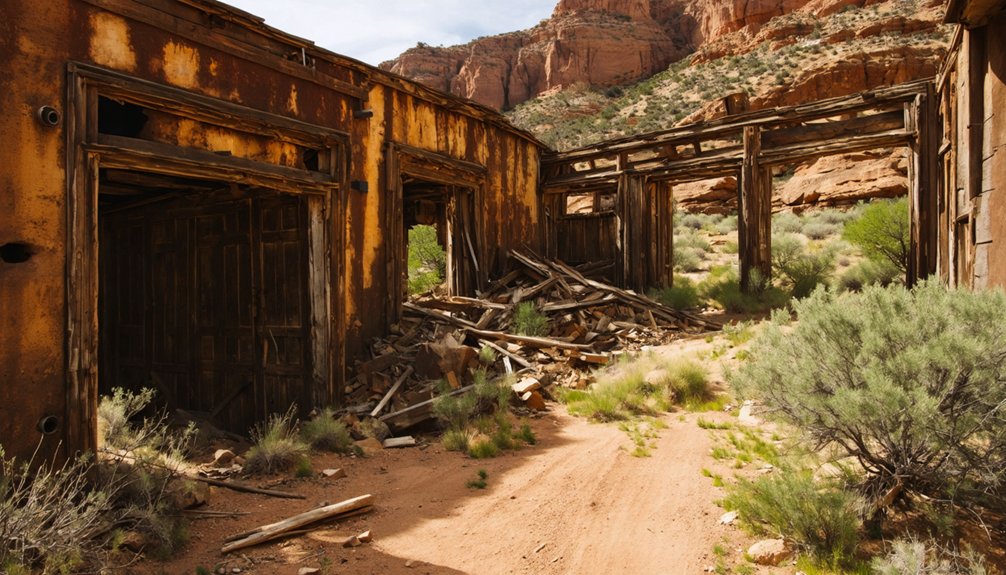
As the Mogollon mining district hit its full stride around 1910, Cooney’s days were numbered. Mining Decline and Abandonment Reasons converged fast, stripping the camp bare before nature finished the job.
Here’s what sealed Cooney’s fate:
- Mogollon’s growth pulled miners, equipment, and ambition toward bigger, more productive operations.
- Buildings were dismantled and physically relocated to Mogollon, Alma, and Glenwood.
- Mining equipment vanished — hauled out piece by piece, leaving only silence.
- The 1911 flood roared through the canyon, washing away whatever remained.
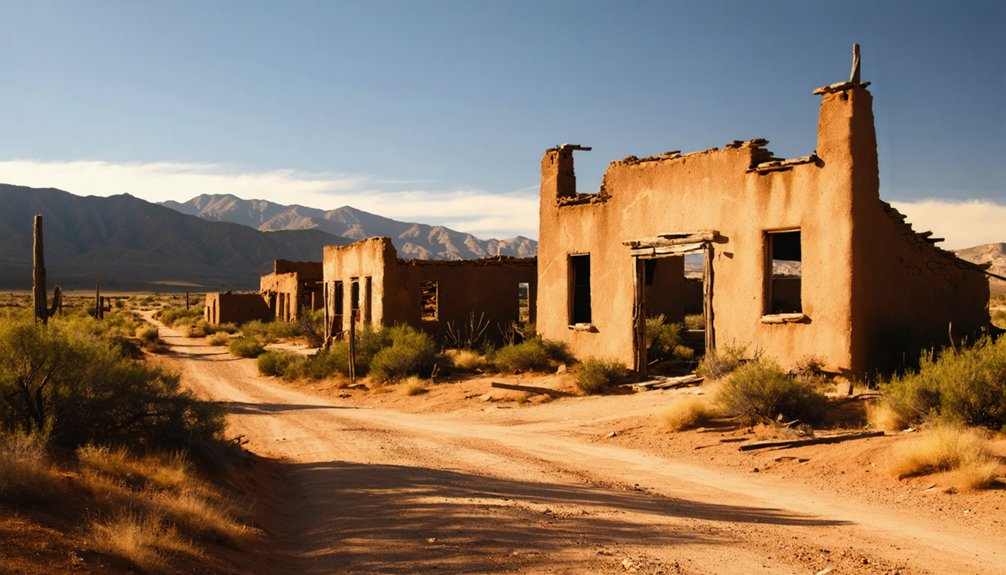
Today, you won’t find standing structures here.
What you’ll discover instead is raw, untouched wilderness — a canyon holding ghost town secrets beneath your boots.
That kind of freedom is worth every mile of rough road.
The Cooney Cemetery, Mine Ruins, and What Survives on the Ground
While the flood and dismantlers stripped Cooney down to bare canyon walls, they couldn’t take everything. The cemetery’s significance outlasted every pickaxe and moving crew.
James Cooney’s tomb, hand-carved directly into solid rock and sealed with silver-bearing ore, still stands as the canyon’s most striking survivor. Seven additional graves rest quietly behind it, marking men who gambled their lives on these mountains.
Hike up Mineral Creek and you’ll encounter mine artifacts scattered among the ruins — rusted equipment, collapsed shafts, and stone foundations reclaimed by brush.
The slot canyon frames these remnants dramatically, rewarding anyone willing to push deeper. Bring GPS because this isolated ground won’t announce itself.
What survives here isn’t polished — it’s raw, honest, and completely yours to discover.
Using Cooney as Your Base for a Catron County Ghost Town Loop
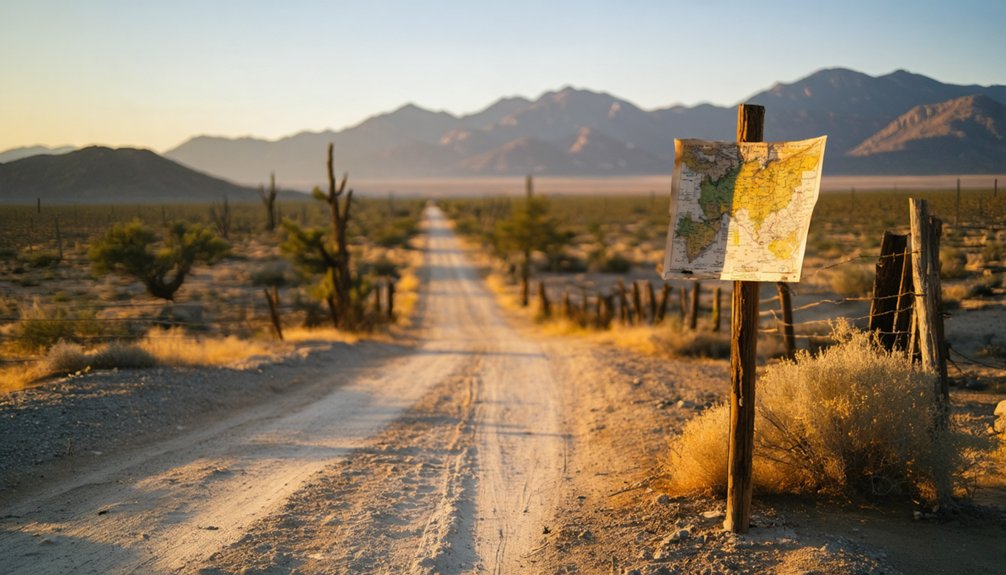
Once you’ve explored Cooney’s cemetery and mine ruins, you’re perfectly positioned to tackle a rugged Catron County ghost town loop connecting Alma, Mogollon, and Glenwood along backcountry roads.
Pack water, load GPS coordinates, and bring a high-clearance vehicle, because County Road 7 and the surrounding dirt routes demand serious preparation.
You’ll thread through landscapes where mining history collides with Apache raid sites, making every mile between ghost towns feel like a page ripped straight from the 1880s.
Nearby Ghost Towns Explored
Cooney makes a natural anchor point for a Catron County ghost town loop, putting you within striking distance of Mogollon, Alma, and Glenwood — each carrying its own layered mining history.
Ghost town legends run deep through this canyon country, rewarding curious travelers who push beyond paved roads.
Here’s what you’ll find nearby:
- Mogollon — The district’s powerhouse mining town, where Cooney’s buildings were relocated after 1910.
- Alma — Your gateway seven miles west, rich with frontier-era character and ranch history.
- Glenwood — A scenic stop anchoring the southern end of your loop.
- Gila Wilderness — Backcountry driving and hiking extending your adventure well beyond any single townsite.
Pack your maps, fuel up, and let this rugged loop unfold on its own terms.
Optimal Loop Route Planning
How you string together this Catron County loop matters as much as the destinations themselves. Start in Alma, grab supplies, then head east on County Road 7 toward Cooney.
You’ll anchor your ghost town history exploration here before pushing into the Mogollon Mountains. From Cooney, work north through Mogollon, where mining heritage runs deep in every crumbling storefront and collapsed shaft.
Then swing back through Glenwood before returning to Alma, completing a natural circuit through landscapes that rewarded and punished prospectors alike.
Keep your route flexible. Road conditions change, especially after rain hits those backcountry dirt tracks. A high-clearance vehicle isn’t optional here—it’s essential.
Plan two days minimum. Rushing this loop means missing the quiet, weathered details that make Catron County’s forgotten corners worth finding in the first place.
Essential Road Trip Preparations
Before you turn a single wheel toward Catron County, preparation separates a memorable ghost town loop from a frustrating breakdown on an unmaintained dirt track.
These road trip essentials keep your adventure moving:
- High-clearance vehicle — County Road 7’s rough terrain demands serious ground clearance, especially after rain.
- Navigation tools — Download offline GPS maps; cell service disappears fast in Gila National Forest’s backcountry.
- Emergency supplies — Pack extra water, food, a first-aid kit, and a full-size spare tire before departing Alma.
- Fuel strategy — Fill your tank in Glenwood or Alma; remote stretches offer zero roadside assistance.
Following these safety tips guarantees you’re chasing history instead of waiting for rescue in one of New Mexico’s most isolated corridors.
Frequently Asked Questions
What Wildlife Might You Encounter While Hiking Mineral Creek to Cooney Camp?
While hiking Mineral Creek, you’ll encounter deer, black bears, and rattlesnakes amid Gila National Forest’s rugged terrain. Prioritize hiking safety by staying alert, and embrace wildlife spotting as part of your thrilling, untamed backcountry adventure to Cooney Camp.
Are There Any Guided Tours Available for the Cooney Ghost Town Area?
“The world is your oyster!” No formal guided tour options exist, but you’ll uncover Cooney’s rich local history independently — hiking Mineral Creek, exploring mine ruins, and discovering the legendary cemetery sealed with silver-bearing ore awaits your adventurous spirit!
What Is the Best Time of Year to Visit Cooney, New Mexico?
Spring and fall offer you the best weather for exploring Cooney’s rugged terrain and mining relics. You’ll dodge summer monsoons and winter snow, while catching seasonal events in nearby Alma and Glenwood during your adventure!
Is Camping Permitted Near the Cooney Cemetery or Mineral Creek Trail?
With 3.3 million acres of freedom, Gila National Forest lets you camp near Mineral Creek Trail! You’ll want to check current camping regulations, but the area’s historical significance makes every night under the stars unforgettable.
Are There Any Entrance Fees for Accessing Cooney Canyon in Gila National Forest?
You’ll find no entrance fees for accessing Cooney Canyon in Gila National Forest! Entrance regulations here offer fee exemptions, so you’re free to explore its rugged trails, mining ruins, and wild backcountry without spending a dime.
References
- https://casitasdegila.com/blog/a-time-travel-hike-up-mineral-creek-to-cooney-camp-mine-2/
- https://www.ghosttowns.com/states/nm/cooney.html
- https://kids.kiddle.co/Cooney
- https://trackingnana.com/wp-content/uploads/2015/12/cooneys-tomb-1.pdf
- https://www.newmexico.org/places-to-visit/ghost-towns/
- https://www.youtube.com/shorts/NuquA78G7bY
- https://www.youtube.com/watch?v=wryDZHbHna0