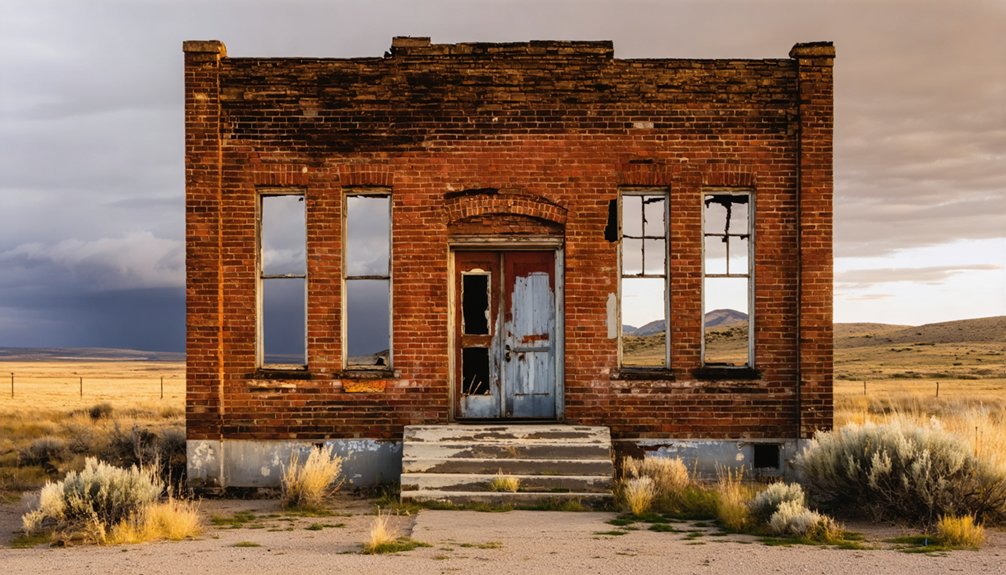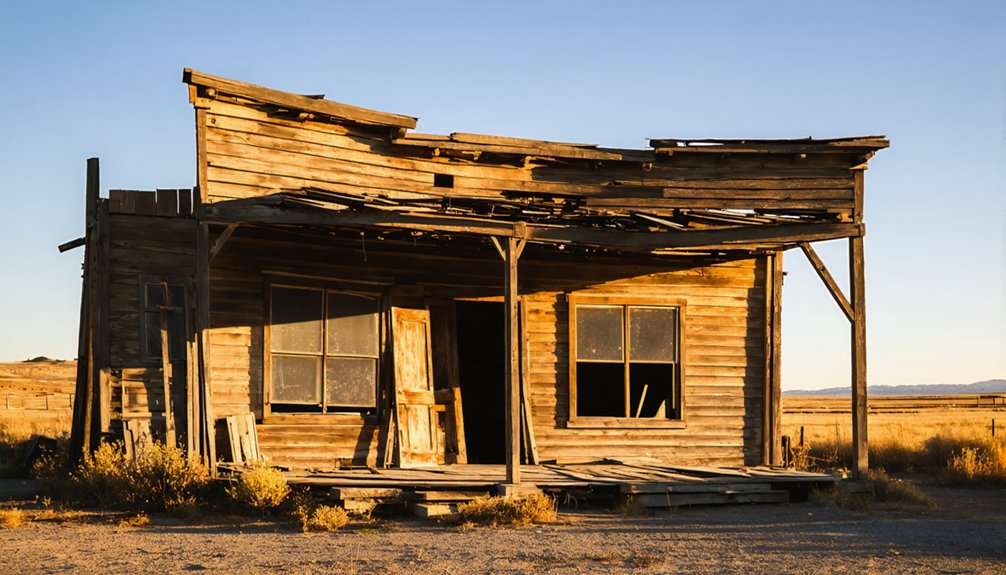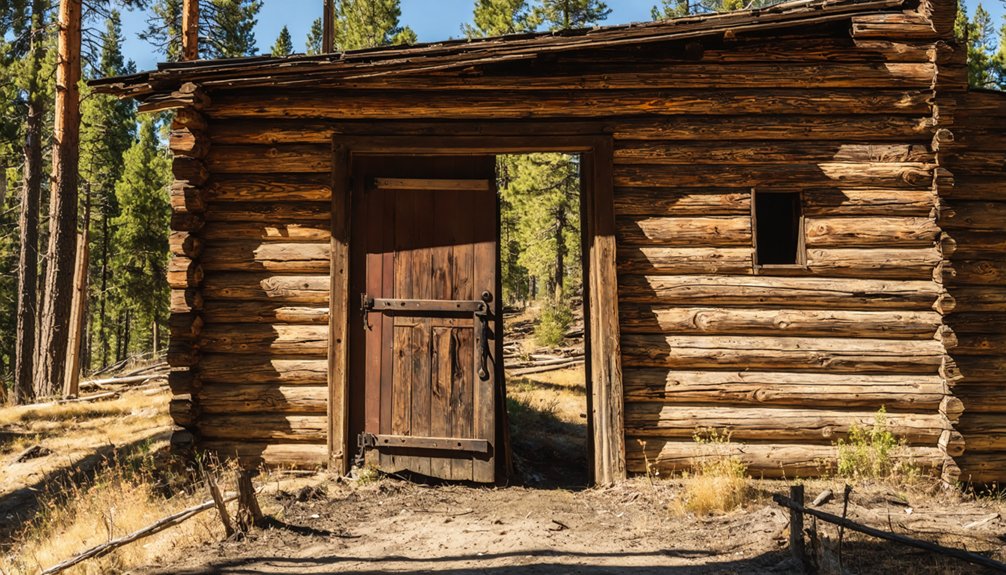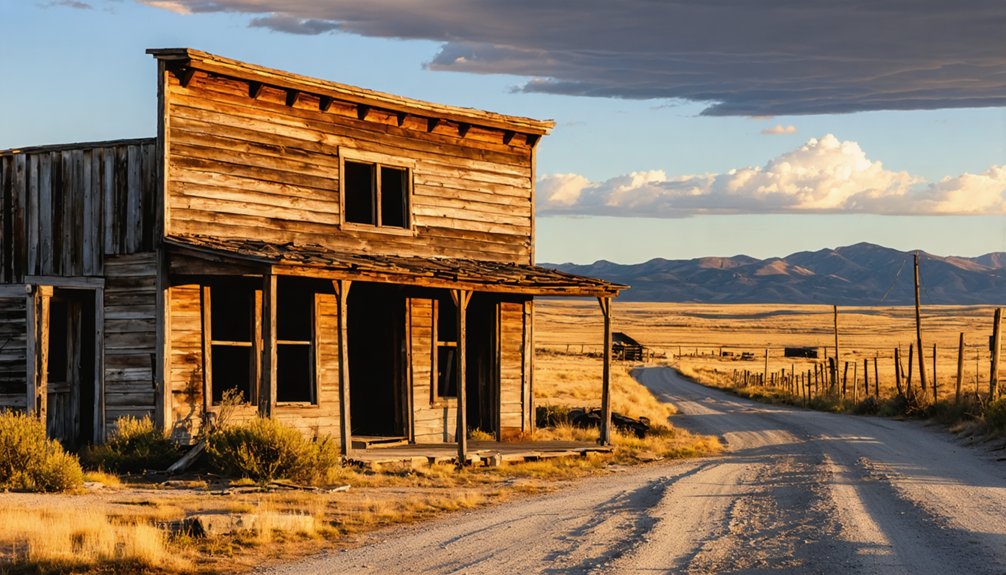
Planning a ghost town road trip to Fairview, Idaho means heading deep into the Owyhee Mountains on rugged 4WD roads with no services, no cell signal, and no crowds. You’ll find abandoned mine shafts, crumbling structures, and a miners’ union cemetery where most of the 37 burials go unmarked. Fairview collapsed fast — a labor revolt, a devastating 1875 fire, and a bank failure finished it almost overnight. There’s far more to this forgotten boomtown’s story than its ruins first reveal.
Key Takeaways
- Fairview, Idaho, a ghost town in the Owyhee Mountains, was founded in 1864 and collapsed after a devastating 1875 fire and bank failure.
- Access Fairview via rugged 4WD roads from Silver City, best traveled between July and September when snow has cleared.
- Bring extra fuel, recovery gear, two days of supplies, layered clothing, and a paper map, as no services or cell service exist.
- Explore remnants including abandoned mine shafts, crumbling structures, and a miners’ union cemetery with only 2–3 marked graves among 37 burials.
- Combine your visit with nearby Silver City, one of Idaho’s best-preserved ghost towns, for a complete Owyhee Mountain mining history experience.
Fairview, Idaho: A Ghost Town That Fire and Finance Finished
When gold fever swept through the Owyhee Mountains in 1864, Fairview, Idaho burst to life almost overnight, drawing miners enthusiastic to cash in on the rich Oro Fino mine discovery.
Perched on War Eagle Mountain’s northeast slope, the town quickly grew into a bustling hub, eventually boasting over 100 buildings fueled by California investment money.
Clinging to War Eagle Mountain’s northeast slope, Fairview swelled into a thriving frontier hub of over 100 California-funded buildings.
But Fairview’s mining history reads like a cautionary tale. A devastating 1875 fire left 400 residents homeless, and the Bank of California’s collapse simultaneously shuttered the mines financing the town’s survival.
Fairview never recovered.
Today, ghost town legends surround this rugged, remote site. You’ll find scattered abandoned shafts, crumbling structures, and a miners’ union cemetery with stories etched into its stones — powerful reminders of a community that burned bright, then vanished.
How a Mining Strike and a Bank Failure Ended Fairview’s Boomtown Era
Fairview’s collapse wasn’t just bad luck — it was a perfect storm of labor unrest and financial ruin hitting at nearly the same moment.
In October 1875, a Mining Revolt shook the town when fed-up miners captured superintendent M.A. Baldwin, demanding their overdue wages. That same month, a devastating fire leveled most of Fairview, leaving 400 residents homeless.
Then the Bank of California’s collapse delivered the killing blow — that Bank Collapse choked off funding to War Eagle Mountain’s mines, shutting operations completely.
What had been a thriving community of over 100 buildings couldn’t survive the triple hit.
When you visit today, you’re walking ground where ambition and crisis collided violently, stripping a boomtown down to silence in a single brutal year.
What the 1875 Fire Left Behind at the Fairview Townsite
After the October 1875 fire tore through Fairview and left 400 residents homeless, remarkably little survived for modern visitors to find. The fire aftermath stripped this ghost town down to almost nothing, and the Bank of California’s collapse guaranteed nobody had reason to rebuild.
Today, you’ll discover only a handful of abandoned shafts and crumbling structures near the Afterthought Mine site. The miners union cemetery near the Orofino Mine offers perhaps the most haunting reminder of who once lived here — 37 souls rest there, though only two or three graves remain marked.
Started in 1873 and used until 1886, it stands as Fairview’s most tangible connection to its turbulent past. Bring your curiosity, because there’s genuine history waiting beneath the silence.
The Miners Union Cemetery: 37 Burials, Only 2 or 3 Marked
Thirty-seven miners, laborers, and residents lie buried in the union cemetery near the Orofino Mine, yet only 2 or 3 of those graves still carry a marked headstone. This site carries deep cemetery significance, quietly honoring the forgotten men who built Fairview from raw wilderness.
Walk through and you’ll notice:
- Marked graves standing as rare survivors against decades of harsh mountain weather
- Unmarked plots stretching across the ground, each representing a life the mountain claimed
- Active use from 1873 to 1886, spanning Fairview’s most turbulent years
- Remote isolation that keeps the cemetery raw, undisturbed, and authentically preserved
You’re walking ground most people never find. That freedom to discover what history left behind makes this cemetery one of Fairview’s most powerful stops.
Getting to Fairview on War Eagle Mountain’s 4WD Roads
To reach Fairview, you’ll follow the same rugged 4WD roads that lead to nearby Silver City, winding up the slopes of War Eagle Mountain in Owyhee County.
The terrain is unforgiving, so you’ll need a capable four-wheel-drive vehicle and solid off-road experience before attempting the route.
Plan your visit between July and September, since heavy snow closes these roads from November through late June, cutting off access entirely.
Route From Silver City
Reaching Fairview from Silver City means tackling just a few miles of rugged 4WD road along War Eagle Mountain’s northeastern slope, but don’t let the short distance fool you — the terrain demands a capable vehicle and a cautious driver.
Follow these essentials before you roll out:
- Check conditions — snow lingers from November through late June, so plan your visit between July and September.
- Lock in 4WD — loose rock and steep grades make low-range necessary.
- Study your map — trails branch unpredictably across the mountain.
- Fuel up beforehand — no services exist anywhere nearby.
Once you arrive, Fairview’s mining legacy speaks through abandoned shafts and weathered structures.
Walking these grounds connects you directly to the Fairview heritage that shaped Owyhee County’s bold, independent frontier spirit.
4WD Road Conditions
War Eagle Mountain’s 4WD roads test both your vehicle and your nerve long before Fairview comes into view. You’ll navigate steep, rocky switchbacks where loose shale shifts unpredictably beneath your tires. These wd road conditions demand high clearance, strong brakes, and a low gear mindset.
Ghost town navigation here isn’t passive — you’re reading the terrain constantly, watching for washed-out sections and hidden drop-offs that seasonal snowmelt carves fresh each year.
The same access routes serving Silver City reach Fairview, so you’ll share identical challenges along both stretches.
Avoid these roads before July or after September. Snow lingers stubbornly at this elevation well past what lowland calendars suggest.
Carry recovery gear, extra fuel, and a paper map. Cell service disappears fast on this mountain.
The Best Months to Visit Fairview Without Snow Blocking Access
Because Fairview sits at high elevation on War Eagle Mountain, snow blankets the access roads from November through late June, effectively cutting off the ghost town for more than half the year.
Perched high on War Eagle Mountain, Fairview vanishes beneath snow for more than half the year.
The best times to explore this remote ghost town fall between July and September, when the roads dry out and the mountain becomes yours to roam.
Plan your visit around these seasonal advantages:
- July brings melted snowpack and passable 4WD terrain
- August offers peak dry conditions and long daylight hours
- September delivers cooler temperatures and fewer visitors
- Avoid October, when early snowfall can strand unprepared travelers
Hitting that narrow weather window means trading locked gates and buried roads for open trails and unobstructed views of Idaho’s wild Owyhee backcountry.
What to Bring for Fairview’s High-Elevation, No-Services Terrain
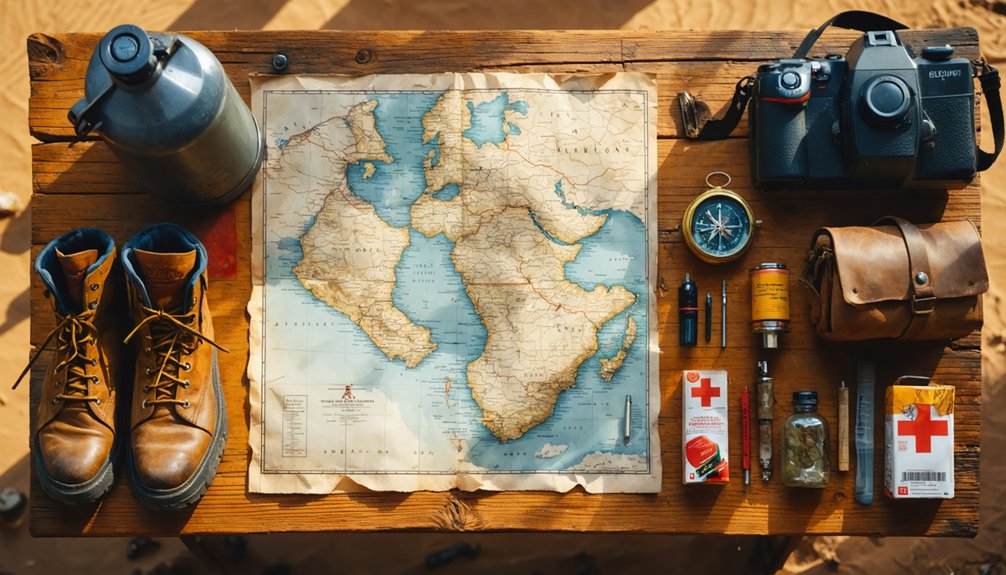
Fairview offers no gas stations, no ranger stations, and no cell service—so you’ll need to arrive fully self-sufficient. Your ghost town preparations should include extra fuel, a high-lift jack, recovery gear, and two spare tires for the brutal 4WD terrain.
Pack enough water, food, and a first-aid kit for at least two days—emergencies happen far from help here.
High altitude essentials matter just as much. Fairview sits at elevation on War Eagle Mountain, where afternoon thunderstorms roll in fast and temperatures drop sharply even in summer.
Bring layered clothing, rain gear, and sun protection. A paper map of Owyhee County replaces the GPS signal you won’t have.
Preparation isn’t optional out here—it’s the price of admission for this kind of freedom.
Silver City and the Owyhee County Ghost Towns Worth Combining With Fairview
If you’re already making the trek to Fairview, you’d be shortchanging yourself by not swinging through nearby Silver City, one of Idaho’s best-preserved ghost towns with original 19th-century buildings still standing.
The broader Owyhee County mining district holds remnants of the same boom-and-bust economy that shaped Fairview, giving you a richer picture of the region’s turbulent past.
Pairing both sites turns a single-destination road trip into a full immersion in Idaho’s silver and gold mining history.
Silver City’s Preserved Buildings
Silver City sits just a few miles from Fairview on War Eagle Mountain, and unlike its neighbor, it never fully disappeared.
Thanks to historic preservation efforts, you’ll walk streets lined with original 19th-century structures still standing after more than 150 years.
When you explore Silver City, don’t miss:
- Idaho Hotel – a fully restored 1860s lodging with period furnishings
- Our Lady of Tears Catholic Church – one of Idaho’s oldest standing churches
- Masonic Hall – a rare surviving frontier fraternal building
- Mining office ruins – scattered evidence of the district’s booming silver economy
You’re free to roam the townsite during summer months.
The contrast between Silver City’s preserved buildings and Fairview’s sparse remains makes visiting both locations a genuinely rewarding experience.
Nearby Mining District Sites
Beyond Silver City’s preserved streetscapes, the broader Owyhee County mining district rewards explorers who plan a longer loop through the region.
War Eagle Mountain’s mine remnants sit within easy reach, letting you piece together the area’s rich mining history firsthand.
If you’ve got extra days, push northeast toward the Boise Basin and walk Idaho City’s storied streets, where the gold rush left its mark on every corner.
Custer and Bonanza ghost towns offer another compelling extension, deepening your ghost town explorations across central Idaho’s rugged backcountry.
Each site connects to a larger story of boom, bust, and abandonment.
Stack these destinations strategically, and you’ll build a road trip that covers serious ground without backtracking unnecessarily through the same remote terrain.
Who Should and Shouldn’t Put Fairview on Their Idaho Ghost Town List
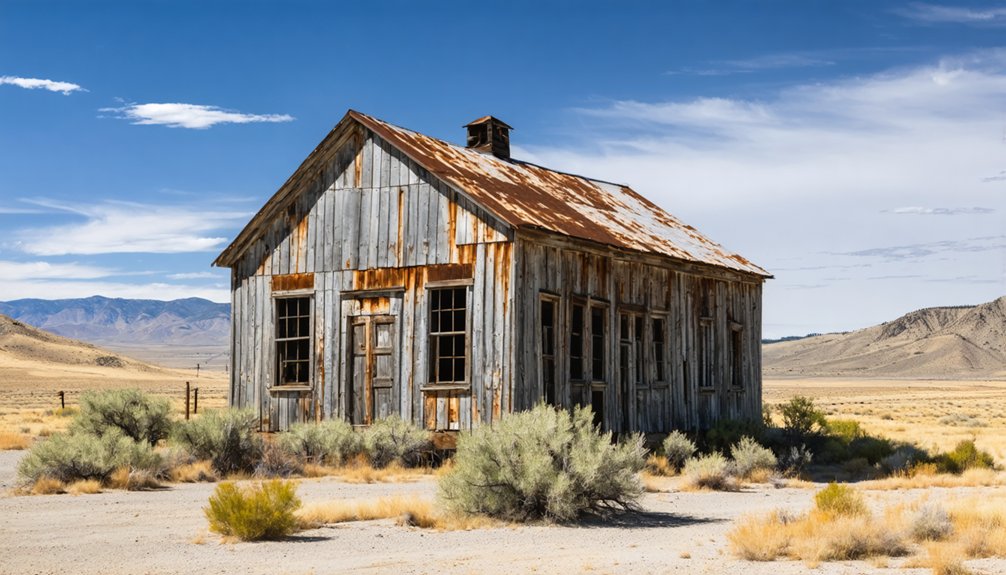
Whether Fairview deserves a spot on your Idaho ghost town list depends almost entirely on what you’re hoping to find when you get there. Visitor expectations shape everything here.
Fairview rewards history seekers who appreciate raw, unpolished historical significance over curated experiences.
You’ll love Fairview if you:
- Enjoy piecing together a town’s story from scattered remnants and abandoned shafts
- Appreciate remote, off-grid exploration without crowds or guardrails
- Want to combine it with Silver City for a fuller War Eagle Mountain experience
- Love reading landscapes where dramatic events like the 1875 fire and miners’ revolt actually happened
Skip Fairview if you need paved roads, preserved buildings, or interpretive signs.
This site demands curiosity, a capable 4WD vehicle, and genuine appreciation for Idaho’s rougher, forgotten corners.
Why Fairview Completes the War Eagle Mountain Story Silver City Starts
When you tour Silver City, you get a polished ghost town experience, but the mountain’s full mining saga doesn’t end there.
Fairview’s forgotten mines—the Ida Elmore, the Golden Chariot, and the Orofino—fed the same frenzied rush that built Silver City, yet they’ve slipped almost entirely from the historical record.
Visit both towns and you’ll finally see War Eagle Mountain as it actually was: not one story, but two settlements grinding through boom, fire, and collapse on the same rugged slope.
Silver City’s Unfinished Story
Silver City tells a compelling story, but it doesn’t tell the whole one. Its preserved buildings and crowded history draw ghost town seekers from across the region, yet the full War Eagle Mountain narrative extends beyond its borders.
Fairview holds the chapters Silver City leaves unwritten.
When you explore both towns together, you’ll uncover:
- The labor uprising that captured a mine superintendent over unpaid wages
- The 1875 fire that erased over 100 buildings overnight
- The miners’ cemetery where 37 souls rest beneath War Eagle Mountain
- The economic collapse that silenced an entire mining district
Silver City shows you what survived. Fairview shows you what didn’t.
Together, these two ghost towns deliver the complete, unfiltered truth about life and loss on War Eagle Mountain.
Fairview’s Forgotten Mines
The mines tell Fairview’s story better than anything standing above ground. You’ll find the Oro Fino, Golden Chariot, and Ida Elmore mines scattered across War Eagle Mountain’s northeast slope, each one a chapter in a larger story Silver City only begins to tell.
These operations once financed through California stock sales, drove an entire economy until the Bank of California’s 1875 failure silenced them. Your ghost town exploration here connects you directly to that collapse. Abandoned shafts still mark where fortunes changed hands and where miners revolted for unpaid wages.
Fairview’s mining heritage isn’t polished or preserved like Silver City’s streetscapes. It’s raw, honest, and unfiltered. That roughness makes it the more powerful destination for anyone serious about understanding what War Eagle Mountain actually meant.
Two Towns, One Mountain
Most visitors leave War Eagle Mountain thinking Silver City tells the whole story, but Fairview proves they’ve only read half the book. Together, these two ghost town legends reveal the mountain’s complete mining heritage — triumph, tragedy, and everything between.
Exploring both sites gives you the full picture:
- Silver City preserves standing buildings and a functioning historic district.
- Fairview exposes the raw aftermath of fire, labor revolt, and economic collapse.
- War Eagle Mountain’s mines connected both towns through shared veins and violent fortunes.
- The contrast itself teaches what no museum can — boom feels different standing beside bust.
You’re not just passing through history here. You’re reading it from both sides of the mountain.
Frequently Asked Questions
Can You Camp Overnight Near the Fairview Townsite or Cemetery?
You’ll find no designated campgrounds directly at Fairview’s townsite or cemetery, but you can explore nearby attractions and check Owyhee County’s camping regulations for dispersed camping options on surrounding public lands.
Are There Guided Tours Available for the Fairview Ghost Town Area?
Want to uncover ghost town history on your own terms? No formal guided tours exist for Fairview, but you’ll freely explore local folklore and ruins independently, combining your visit with nearby Silver City’s available historical tours.
Is Metal Detecting or Artifact Collecting Permitted at the Fairview Site?
You’ll want to check local metal detecting regulations before visiting, as Fairview’s part of a historic district. Respecting artifact preservation methods keeps this treasure intact for future explorers who share your passion for freedom and discovery.
Were Any Fairview Buildings Ever Relocated or Preserved Elsewhere in Idaho?
The records don’t confirm any historic preservation efforts or building relocation from Fairview. You’re exploring a site where structures have either crumbled naturally or vanished—leaving you free to discover raw, untouched remnants of Idaho’s mining past.
Does the Afterthought Mine Pose Any Active Safety Hazards for Visitors?
Yes, the Afterthought Mine’s abandoned structures can be dangerous! You’ll want to take visitor precautions seriously—stay clear of unstable shafts, crumbling walls, and weakened ground. It’s your adventure, but don’t let curiosity override your safety instincts out there.
References
- https://westernmininghistory.com/towns/idaho/fairview/
- https://en.wikipedia.org/wiki/Fairview
- https://nvtami.com/2025/05/19/fariview-ghost-town/
- https://www.ghosttowns.com/states/id/fairview.html
- https://www.youtube.com/watch?v=bijPI1s7ilI
- http://www.franklincountyhist.org/fairview.html
- https://www.youtube.com/watch?v=aT4UkpCnATg
- https://idaho-forged.com/idahos-ghost-towns-eerie-yet-approachable/