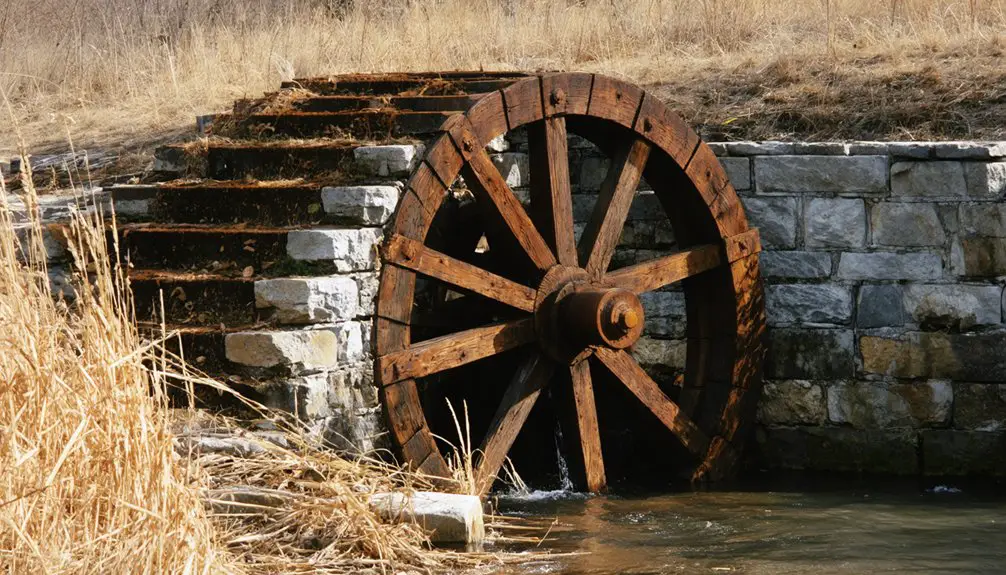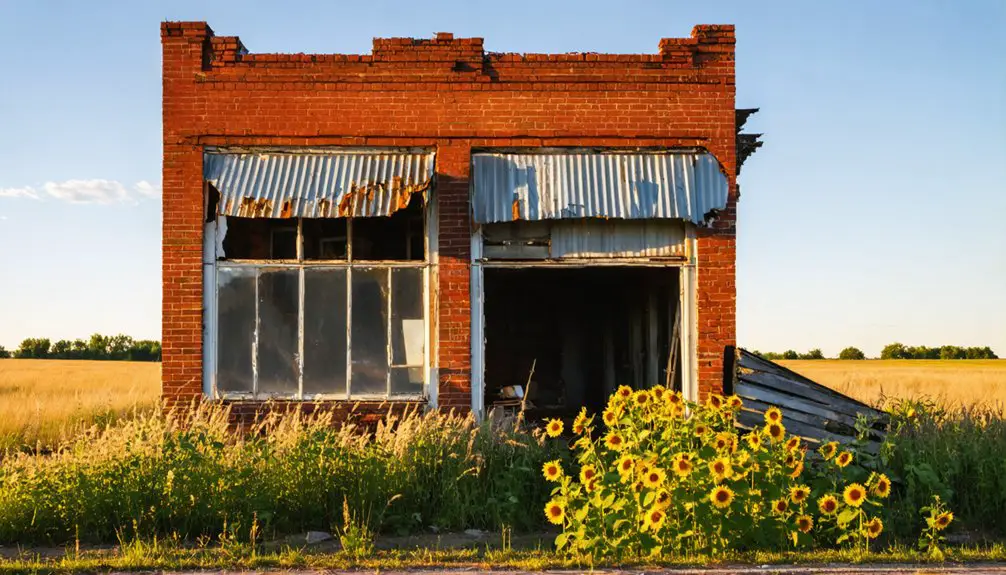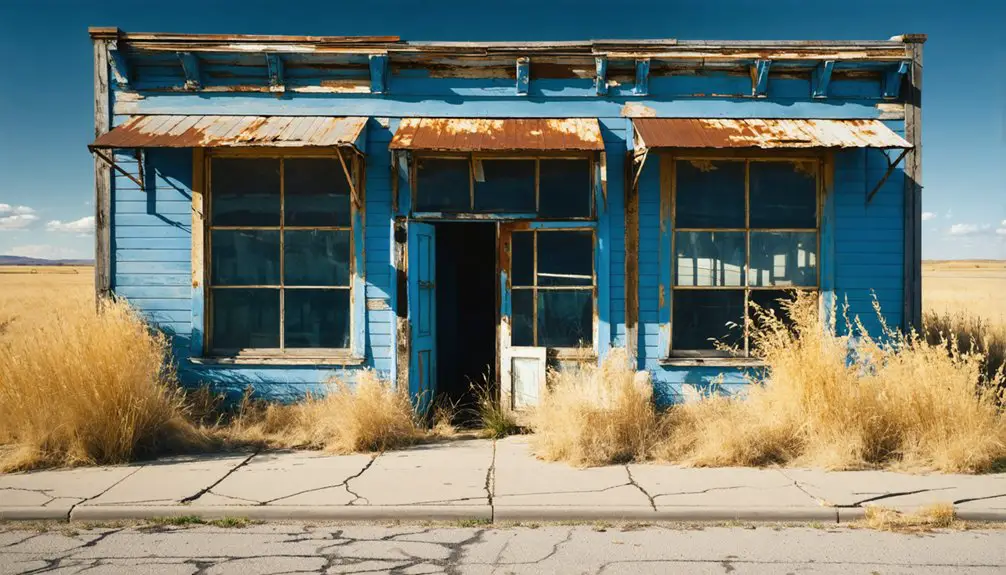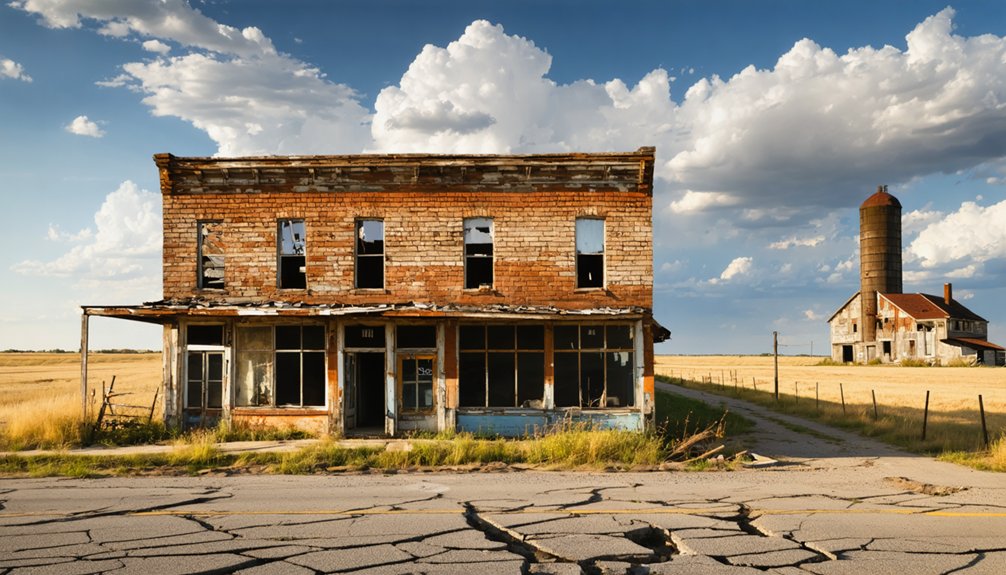
Planning a ghost town road trip to Farnsworth, Kansas means stepping into a quiet slice of prairie history. You’ll find an overgrown church, a weathered house, and a historic cemetery marking where a community once thrived. Railroads bypassed the town, the Dust Bowl hit hard, and eventually everyone left. Visit in April, May, September, or October for the best road conditions. Pack water, sturdy boots, and offline maps — and there’s plenty more to know before you go.
Key Takeaways
- Farnsworth’s remnants include an overgrown church, a weathered house, a former hotel, a cemetery, and crumbling foundations of historic storefronts.
- Visit during late spring (April–May) or early fall (September–October) for mild weather and optimal road conditions.
- Use a reliable mapping app and cross-reference county road records, watching for grain elevators and cemetery signs for navigation.
- Pack water, snacks, sturdy footwear, offline maps, a spare tire, and traction boards, as rural amenities are scarce.
- Nearby ghost towns like Columbia, Laredo, and Fairmount can be incorporated into a single optimized road trip route.
Is Farnsworth Really a Kansas Ghost Town?
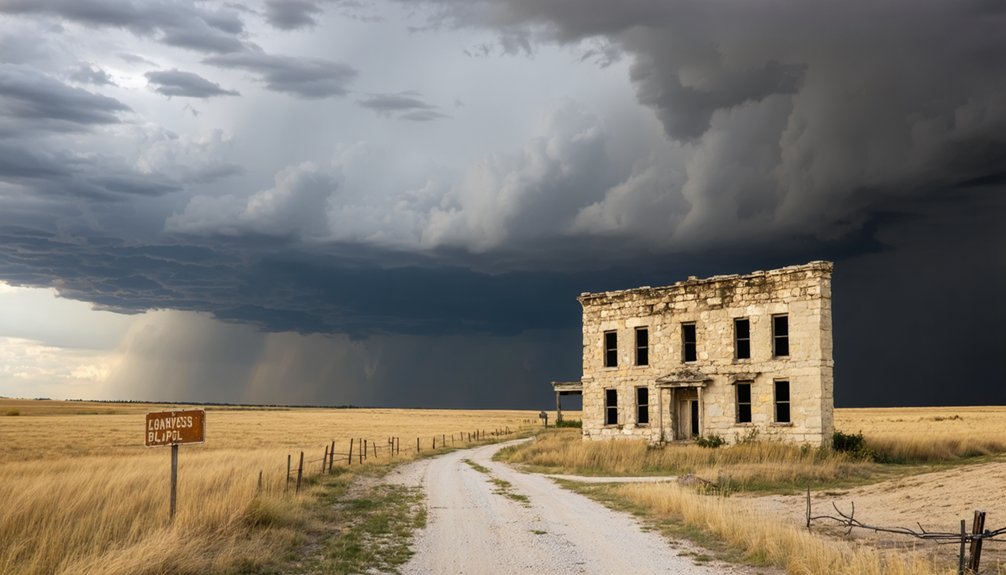
When you picture a Kansas ghost town, you might imagine crumbling storefronts swallowed by prairie grass, a forgotten cemetery, or a rusted water tower leaning against the wind — but Farnsworth doesn’t quite fit that mold.
Here’s the twist: Farnsworth history actually traces back to Gettysburg, Pennsylvania, not Kansas. The famous Farnsworth House Inn, built around 1810, served as a Confederate headquarters and hospital during the Battle of Gettysburg.
It’s not a dusty plains relic — it’s a bullet-riddled landmark with 135 holes still visible in its walls. Ghost sightings here are legendary, with reports of 16 spirits roaming its rooms.
How Farnsworth Went From Boom Town to Ghost Town
Though the name Farnsworth may now conjure images of a haunted Pennsylvania inn, Kansas ghost towns followed a strikingly similar arc of rise and ruin. Farnsworth history mirrors countless prairie settlements that burst onto the scene between 1854 and 1879, drawing settlers hungry for land and opportunity.
Town demographics shifted dramatically once railroads bypassed these communities. Businesses shuttered, families packed their wagons, and populations collapsed almost overnight.
When railroads bypassed a town, collapse followed swiftly — businesses gone, families scattered, populations vanished almost overnight.
Political fractures from the Civil War era accelerated abandonment, while the Dust Bowl later erased what little remained of struggling agricultural towns. Flood control projects after 1951 wiped out others entirely.
You’re fundamentally tracing the bones of ambition when you visit these sites today — sidewalks cutting through wheat fields, forgotten cemeteries standing where thousands once built their dreams.
What Survived: The Remnants Still Standing at Farnsworth
Scattered across the Kansas prairie, Farnsworth’s remnants tell a quiet story of what time couldn’t quite erase.
As you walk the area, you’ll discover an overgrown church, a weathered house swallowed by trees, and a former hotel that once welcomed travelers during the town’s peak years. The Farnsworth Cemetery stands as the most enduring landmark, its headstones marking lives lived during a brief but vibrant era.
Your remnants exploration reveals crumbling foundations hidden beneath wheat stubble fields, hinting at storefronts and homes that once lined active streets.
Each detail carries historical significance, connecting you to the political tensions and economic dreams that shaped this forgotten community.
Bring your curiosity, sturdy shoes, and a camera — Farnsworth rewards those willing to look closely.
How to Get to Farnsworth, Kansas
To reach Farnsworth, Kansas, you’ll want to start by pulling up a reliable mapping app and cross-referencing it with historical county road records, since many ghost town sites don’t appear as named destinations.
You can typically navigate using nearby highways that cut through the rolling prairie, watching for rural exits and gravel turnoffs that lead toward the site’s general location.
Look for landmark cues like grain elevators, cemetery signs, or farmstead clusters, which often mark the edges of where small Kansas towns once stood.
Starting Your Route Planning
Before hitting the road to Farnsworth, Kansas, you’ll want to map out a route that accounts for the remote, rural terrain typical of the state’s ghost town corridors. Understanding the ghost town history here helps you optimize your route effectively.
Use these route optimization strategies:
- Cross-reference county road maps with historical railroad and trail documentation to identify access points.
- Check current road conditions since unpaved rural roads become impassable after heavy rain.
- Identify nearby towns for fuel and supplies before entering isolated corridors.
- Mark multiple ghost town stops along a single corridor to maximize your drive’s historical value.
Planning deliberately keeps you from backtracking across Kansas’s expansive wheat fields and guarantees you’re spending time exploring rather than guiding blindly.
Key Highways And Roads
With your route mapped out, knowing which highways actually get you to Farnsworth’s remote stretch of Kansas becomes your next practical focus.
Kansas highway routes weave through open prairie, connecting larger corridors like US-56 and K-10 to the smaller county roads leading toward abandoned settlements. You’ll want a reliable map app alongside a physical backup, since cell coverage thins considerably in rural Lyon and Leavenworth counties.
Scenic byways like the Flint Hills National Scenic Byway add genuine character to your drive, threading through tallgrass prairie that frames ghost town remnants beautifully.
Watch for county road signs, which often mark the final miles toward former townsite locations. Gravel stretches are common, so check road conditions before you leave your last paved stop behind.
Nearby Landmarks And Exits
Once you’ve cleared the busier stretch of US-56, the landscape opens up and landmark navigation becomes your best friend. Understanding exit strategies early keeps your route clean and your stops intentional.
Watch for these landmarks with real significance along the way:
- Cottonwood River crossings — signal you’re entering Lyon County’s historic corridor
- Wheat stubble fields — mark former settlement zones where towns like Columbia once thrived
- Rural cemeteries visible from the road — often the last standing proof of vanished communities
- Grain elevators on the horizon — indicate nearby county road intersections worth noting
Each landmark carries its own landmark significance, pointing you toward Farnsworth’s forgotten footprint.
Stay alert, trust the terrain, and let the open prairie guide your turns naturally.
When to Visit Farnsworth for the Best Access and Conditions
You’ll find Farnsworth most accessible during late spring and early fall, when mild temperatures make exploring the remnants of this Kansas ghost town far more comfortable than the brutal summer heat or icy winter roads.
If you’re planning a visit, avoid the region’s wet seasons — spring rains and late-winter thaws can turn rural dirt roads into impassable muddy tracks.
Summer thunderstorms roll through Kansas wheat country fast and hard, so always check local weather forecasts before you head out.
Optimal Visiting Seasons
When should you plan your visit to Farnsworth, Kansas? Timing matters when exploring remnants of this forgotten prairie settlement. Ideal weather and seasonal events shape your experience considerably.
Consider these four visiting windows:
- Spring (April–May) – Mild temperatures make walking overgrown sites comfortable before vegetation becomes dense.
- Early Summer (June) – Long daylight hours maximize exploration time across surrounding farmland and cemetery grounds.
- Fall (September–October) – Cooler air returns, foliage highlights structural remnants, and harvest seasonal events animate nearby communities.
- Avoid Winter (December–February) – Frozen ground, limited access roads, and harsh Plains winds create genuinely dangerous conditions.
You’ll find the most rewarding visits happen during shoulder seasons when you can move freely through the landscape without battling extreme Kansas heat or bitter cold.
Road And Weather Conditions
Three distinct road types govern access to Farnsworth’s remaining sites, and knowing which you’ll encounter saves you from getting stranded on the Kansas plains.
You’ll navigate paved county roads, gravel farm paths, and dirt tracks that turn treacherous after rain. Road safety demands you carry a spare tire and traction boards.
Weather preparation is equally critical. Kansas spring storms arrive fast, dropping visibility to near zero within minutes.
Summer heat bakes dirt roads into cracked, dusty surfaces that kick up blinding clouds. Fall offers your best window — dry roads, mild temperatures, and stable skies.
Winter freezes gravel roads solid, but sudden ice patches catch drivers completely off guard.
Always check the National Weather Service forecast before departing, and tell someone your planned route.
Kansas Ghost Towns Near Farnsworth to Visit on the Same Trip
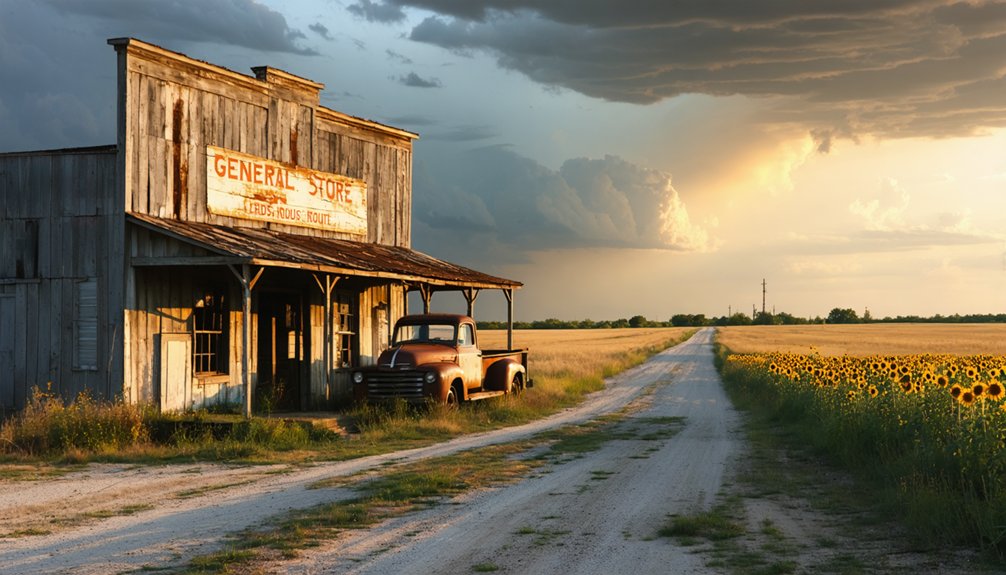
While you’re making the trek out to Farnsworth, Kansas, you’d be doing yourself a disservice to skip the other ghost towns scattered across the surrounding region.
Each site carries its own ghost tales and spirit sightings worth investigating.
Each ghost town whispers its own eerie legends, mysterious encounters, and spine-chilling spirit sightings waiting to be uncovered.
- Columbia (Lyon County) – Once thriving by the Cottonwood River, it’s now reduced to farmland remnants dating to 1857.
- Laredo – Explore an overgrown house, an 1889 hotel-turned-event-center, a church, and its famous cemetery.
- Fairmount (Leavenworth County) – A 1910 railroad stop featuring ruins of four stores and a factory.
- Edgerton’s Pro-Slavery Settlement – A politically charged ghost town that vanished after Kansas achieved free-state status post-Civil War.
Pack your map and chase Kansas history across these forgotten landscapes.
What to Pack for a Kansas Ghost Town Road Trip
Preparing for a Kansas ghost town road trip means thinking beyond just a full tank of gas and a curious spirit.
Pack these packing essentials to stay comfortable and capture every detail:
- Navigation tools – Download offline maps since cell service disappears in rural areas.
- Camera or smartphone – Document crumbling foundations, overgrown churches, and forgotten cemeteries.
- Sturdy footwear – Uneven terrain hides beneath tall wheat stubble and broken sidewalks.
- Water and snacks – Remote locations offer zero convenience stores.
- Weather layers – Kansas weather shifts fast, so prepare for both heat and wind.
- Notebook – Jot down historical markers and road trip tips for future visits.
Travel light, stay prepared, and you’ll move freely between each haunting, history-rich stop.
Frequently Asked Questions
Are There Any Guided Ghost Town Tours Available Near Farnsworth, Kansas?
You’ll find ghost town tours with historical guides near the Farnsworth, Kansas area by connecting with local historical societies. They’ll lead you through fascinating remnants, uncovering stories of abandoned communities that once thrived across Kansas’s open, freedom-filled landscapes.
Can Visitors Legally Access and Explore the Farnsworth Ghost Town Site?
You’ll want to research ghost town regulations before visiting, as site accessibility varies. Check local land ownership, respect posted signs, and you’re free to explore public areas like cemeteries, remnants, and historical markers responsibly.
Is the Farnsworth Ghost Town Location on Private or Public Land?
Like a secret buried in wheat fields, Farnsworth history remains elusive—the ghost town preservation details aren’t fully documented, so you’ll want to verify whether the land is privately owned before you visit.
Are There Any Local Historians or Contacts Specializing in Farnsworth History?
You’ll want to connect with local archives and historical societies near Farnsworth, Kansas. They’re your best resources for uncovering specialists who’ve dedicated themselves to preserving the town’s fascinating, freedom-filled frontier history and connecting curious explorers like you.
Does Farnsworth Have Any Documented Paranormal Activity or Ghost Sightings?
You won’t find documented paranormal activity in Farnsworth, Kansas. For thrilling ghost stories and spectral sightings, you’d want to explore Farnsworth House Inn in Gettysburg, Pennsylvania, where 16 spirits reportedly roam its historic, bullet-riddled walls.
References
- https://usghostadventures.com/americas-most-haunted-hotels-and-inns/the-farnsworth-house-inn/
- https://johnsoncoks.cottonhills.net/historic-records/old-towns.html
- https://dianastaresinicdeane.wordpress.com/2012/01/29/columbia-a-kansas-ghost-town-story/
- https://www.youtube.com/watch?v=8dtIPX7pIqI
- https://en.wikipedia.org/wiki/List_of_ghost_towns_in_Kansas
- https://www.youtube.com/watch?v=t_XDy-_i-5s
- https://esirc.emporia.edu/bitstreams/b4b4cde4-15d4-4284-a3b5-8430fb9e324e/download
- https://legendsofkansas.com/fairmount-kansas/