Frankfort, Washington isn’t your typical road trip destination—you’ll need a boat to reach this remote ghost town at the mouth of the Columbia River. Founded in 1890 by two men named Frank, the town was built on railroad promises that never came true. By 1960, only two residents remained. Plan your visit between late spring and early fall, pack navigation tools and supplies, and keep reading to uncover everything this hauntingly beautiful place has to offer.
Key Takeaways
- Frankfort, Washington, is a remote ghost town accessible only by boat near the mouth of the Columbia River at Portuguese Point.
- Plan your visit between late spring and early fall to avoid harsh winter weather and dangerous navigation conditions.
- Essential supplies include navigation tools, life jackets, waterproof layers, food, water, and a first aid kit for this remote trip.
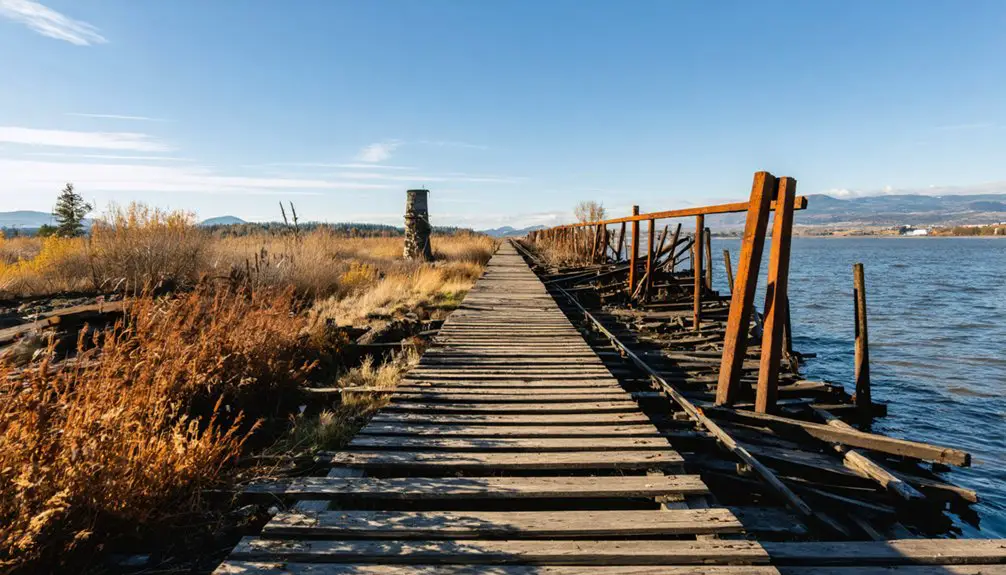
- Expect overgrown terrain and scattered remnants of a hotel, general store, and sawmill reclaimed by nature over decades.
- Check local tide charts and weather conditions carefully before departing, as unpredictable currents make navigation potentially hazardous.
What Is Frankfort, Washington’s Ghost Town?
Tucked away on the mouth of the Columbia River in Pacific County, Washington, Frankfort is a ghost town that never quite lived up to its ambitions — a settlement born from speculation, rumor, and a railroad that never came.
Frankfort history traces back to 1890, when promoters Frank Bourn and Frank Scott filed a plat boasting 1,226 lots, streets, and alleys that would never be built. They sold property on the promise of an incoming railroad line, used the profits to construct a hotel, general store, and sawmill, then watched the dream collapse when the railroad never arrived.
Among Washington’s ghost towns, Frankfort stands out — not for mining or conflict, but for sheer ambition outpacing reality. By 1960, only two people remained.
How Two Men Named Frank Sold 1,226 Lots That Never Became a Town
Behind the collapse of Frankfort lies one of the more audacious real estate schemes in Pacific Northwest history — two men named Frank who turned a rumor into a 1,226-lot plat and sold the future of a town that never had one.
Frank Bourn’s influence and Frank Scott’s vision combined into a calculated gamble built on whispered promises of an incoming railroad. They filed the plat in 1890, complete with streets and alleys that existed only on paper. Buyers purchased lots expecting a thriving port town to materialize around them.
Instead, Bourn and Scott used the proceeds to build a hotel, general store, and sawmill — infrastructure designed to attract more buyers, not build a real community. The railroad never came, and neither did the town.
Why the Railroad Rumor Killed Frankfort Before It Could Grow
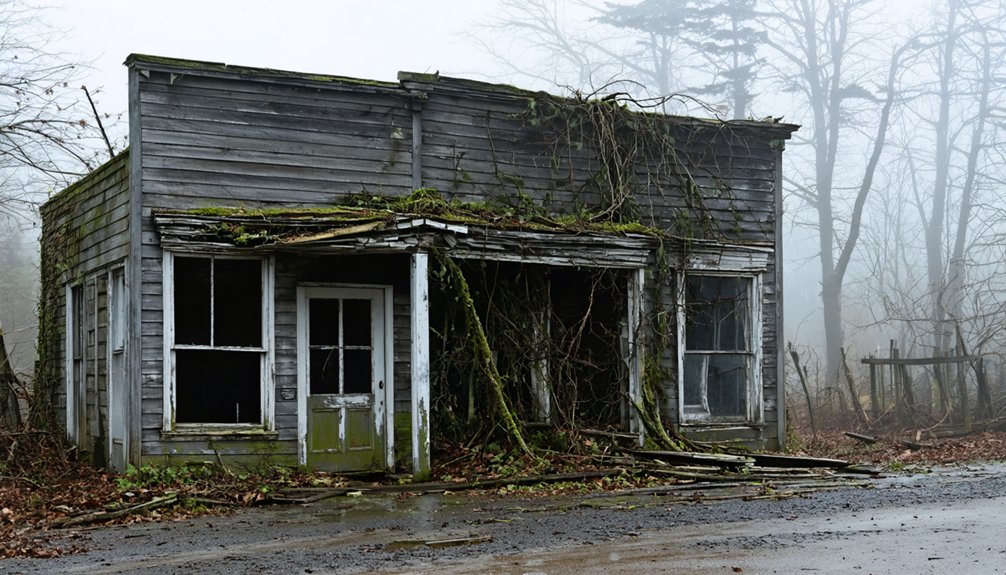
When Frank Bourn and Frank Scott started whispering about an incoming railroad line, buyers rushed in, snapping up lots from a plat that promised 1,226 parcels complete with streets and alleys that existed only on paper.
The founders pocketed that lot-sale money and built a hotel, general store, and sawmill — enough infrastructure to look legitimate, but not enough to sustain a real town.
When the railroad never came, you’d have found yourself stuck with worthless land accessible only by a brutal boat trip, and Frankfort’s fate was sealed before it ever had a chance.
Railroad Rumors Attract Buyers
Railroad rumors were the lifeblood of Frankfort’s brief boom—and ultimately, its death sentence. In the 1890s, railroad speculation drove land sales across the Pacific Northwest, and Frank Bourn and Frank Scott knew exactly how to exploit that fever.
They spread word that a major railroad line would soon connect Frankfort to regional markets, transforming this remote Columbia River outpost into a thriving hub.
Buyers believed them. Lots sold fast across a plat featuring 1,226 properties, complete with planned streets and alleys that would never be built.
The founders pocketed those proceeds, constructing a hotel, general store, and sawmill to reinforce the illusion of progress.
That ghost town allure you feel today traces directly back to this calculated deception—promises made, money taken, and a railroad that never arrived.
Founders Profit, Town Fails
The moment that railroad never arrived, Frankfort’s fate was sealed—and Frank Bourn and Frank Scott had already cashed out.
The founders’ ambitions were never truly about building a thriving community—they were about selling 1,226 platted lots before anyone noticed the infrastructure didn’t exist.
They used your lot-sale money to build a hotel, general store, and sawmill, creating just enough activity to keep buyers interested.
But without rail access, those economic pitfalls became unavoidable. Boats remained the only way in or out, strangling any real commerce before it started.
Streets and alleys existed only on paper. The railroad never came.
By 1947, only 11 people remained. By 1960, just two.
Frankfort didn’t collapse—it simply never had a real foundation to stand on.
Isolation Seals Frankfort’s Fate
Isolation didn’t just slow Frankfort’s growth—it guaranteed there’d be nothing left to grow. When the railroad never arrived, boat travel remained the only way in or out. That single isolation effect strangled any realistic chance of commerce or community.
Think about what that means for you as an explorer today—you’re still reaching this place the same difficult way settlers once did. The environmental challenges compounded everything. The mouth of the Columbia River isn’t forgiving terrain. Rough waters, remote positioning near Portuguese Point, and dense Pacific Northwest conditions made daily life genuinely brutal.
Without the railroad connecting Frankfort to opportunity, residents couldn’t sustain businesses or families there. The hotel, store, and sawmill couldn’t survive geographic reality.
People left because staying simply made no sense.
What Happened to Frankfort Between 1890 and Its Last Two Residents
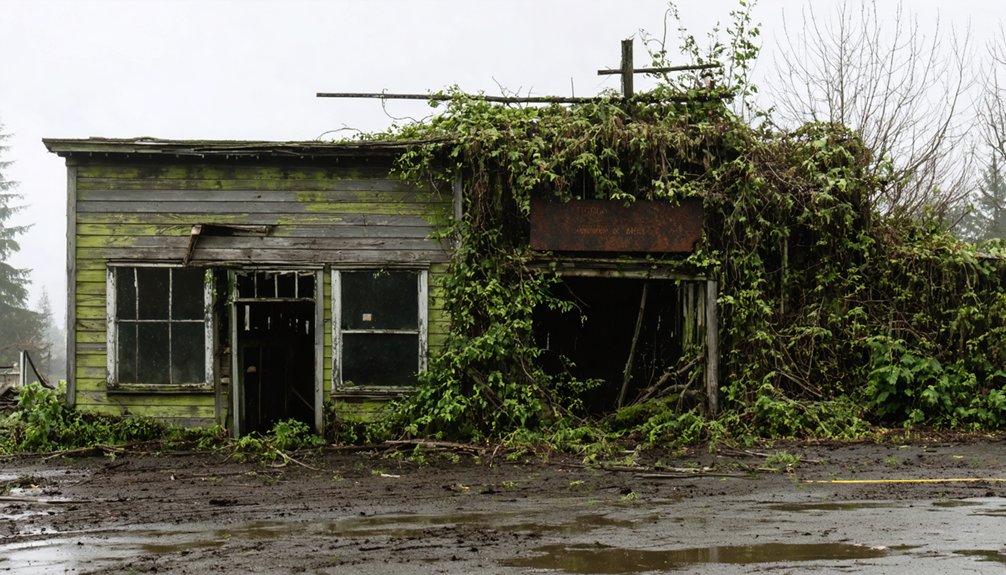
Once the railroad never came, Frankfort’s fate was sealed, and the population steadily drained away over the following decades.
By 1947, only 11 residents still called the settlement home, and by 1960, that number had shrunk to just two — a German man living at one end of town and a Swede at the other.
You can picture those final two holdouts, separated by empty lots and crumbling dreams, clinging to a place that never became what its founders promised.
Failed Railroad Dooms Growth
When Frank Bourn and Frank Scott filed that 1,226-lot plat in 1890, they’d banked everything on a railroad that never came. They’d sold lots using rumors of an incoming rail line, then funneled that money into a hotel, general store, and sawmill. It seemed like momentum.
But failed infrastructure killed any real chance of growth. Without rail access, Frankfort stayed isolated, reachable only by difficult boat travel. That economic limitation strangled commerce before it could breathe.
Nobody’s building a thriving town when getting there requires traversing water routes that most settlers simply wouldn’t bother with.
The streets and alleys mapped out in that ambitious 1890 plat were never built. What looked like a bold vision on paper became a slow, quiet surrender to geography and broken promises.
Population Steadily Declines
By 1947, Frankfort had dwindled to just 11 residents — a number that tells you everything about what isolation and broken promises do to a settlement over decades.
Population trends like these define ghost town dynamics: without a railroad, without roads, without opportunity, people simply leave.
By 1960, only two people remained. One was a German man living at one end of town, the other a Swede at the opposite end.
Think about that — two strangers anchoring the ruins of a settlement that once platted 1,226 lots. They weren’t building community; they were outlasting one.
Frankfort never truly became a town. It existed as an idea that reality refused to support, and its population decline reflects exactly what happens when infrastructure never arrives.
Two Residents Remain
The story of Frankfort’s collapse didn’t happen overnight — it unfolded across seven decades of slow abandonment. From its ambitious 1890 plat of 1,226 lots, Frankfort hemorrhaged residents year after year.
By 1947, only 11 people still called it home, clinging to a settlement that never fulfilled its promises.
Then came 1960. You’d have found just two men left standing among the ghostly remnants — a German at one end of town and a Swede at the other.
They occupied opposite edges of a place that existed more on paper than in reality. No railroad ever arrived, no streets were ever built, and no real town ever emerged.
Just two stubborn souls holding the line until even they were gone.
How to Reach Frankfort by Boat From the Columbia River
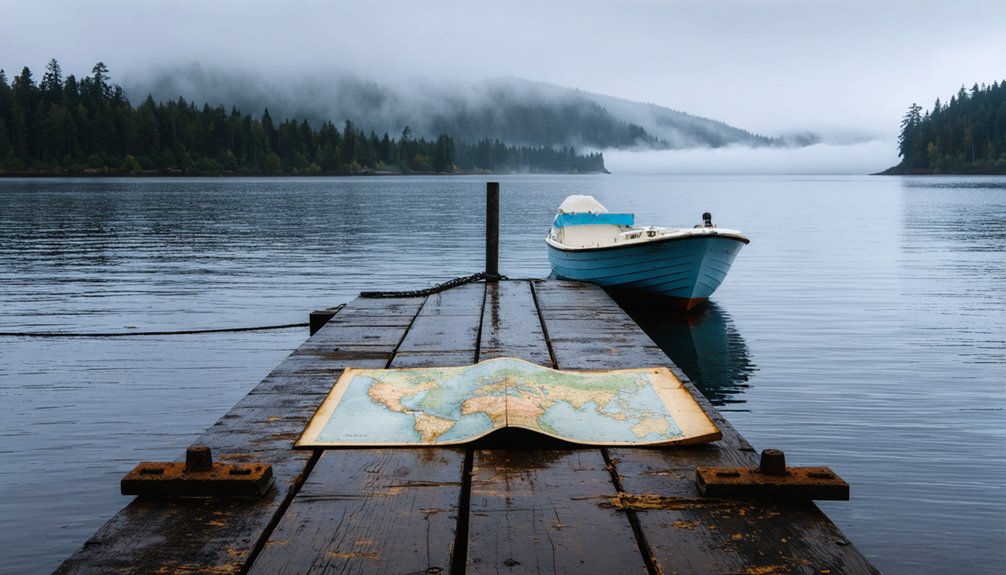
Reaching Frankfort requires a boat, as there’s no road access to this remote ghost town nestled at the mouth of the Columbia River near Portuguese Point in Pacific County, Washington.
You’ll navigate the river’s expansive waters, keeping your eyes on the shoreline as Portuguese Point comes into view. Boat navigation demands respect here — the Columbia’s currents can be unpredictable, so plan your approach carefully and check weather conditions before departing.
The Columbia’s currents demand respect — check conditions, navigate carefully, and keep your eyes fixed on the shoreline.
Once you arrive, you’re stepping onto ground that carries deep historical significance, where two determined promoters once envisioned a thriving city of 1,226 lots.
The freedom of arriving by water actually mirrors the isolation that ultimately doomed Frankfort. Bring your own supplies, stay alert on the water, and embrace the adventure this forgotten settlement demands.
What You’ll Actually Find When You Get to Frankfort
When you finally arrive at Frankfort after your boat journey, you’ll find very little to show for what was once an ambitiously platted town of 1,226 lots.
The site offers no standing structures or paved streets — just a quiet, overgrown stretch of land near Portuguese Point that whispers of failed promises and faded ambitions.
Still, if you appreciate history, you’ll find the location worth the effort as a fascinating curiosity on the mouth of the Columbia River.
Minimal Physical Remains
After making the journey to Frankfort by boat, you’ll quickly discover that very little remains of what Frank Bourn and Frank Scott once envisioned as a thriving town.
The ghost town significance lies not in grand ruins but in the story the landscape quietly tells.
During your historical exploration, here’s what you can expect to find:
- Scattered remnants where the hotel, general store, and sawmill once stood
- Overgrown terrain where 1,226 platted lots and streets never materialized
- A quiet shoreline near Portuguese Point that nature has largely reclaimed
The absence itself becomes the experience.
You’re standing where ambitious promoters sold dreams backed by railroad rumors that never delivered.
That raw, honest emptiness is exactly what makes Frankfort worth the boat ride.
Boat Access Only
Getting to Frankfort is half the adventure, and the rules are simple: you’re coming by boat, or you’re not coming at all. The site sits at the mouth of the Columbia River near Portuguese Point, and there’s no road connecting you to this forgotten settlement.
Before you launch, review your navigation tips carefully. The Columbia River’s mouth is notorious for unpredictable currents, shifting sandbars, and rapidly changing weather conditions.
Boat safety isn’t optional here — it’s survival. File a float plan, carry proper safety gear, and check tide charts before departure.
The isolation that killed Frankfort’s population actually works in your favor today. You’ll arrive somewhere few people bother reaching, standing on ground where ambition once outpaced reality, surrounded by nothing but river, wind, and history.
Historical Curiosity Site
Once you step ashore at Frankfort, don’t expect much — and that’s precisely what makes it compelling. The historical significance here isn’t found in grand ruins but in the quiet story of ambition that simply collapsed.
Among Washington’s ghost towns, Frankfort stands out as a cautionary tale built on railroad rumors and broken promises.
What you’ll actually discover:
- Sparse remains — very few physical structures survived the decades since the town’s population dwindled to just two residents by 1960
- Raw landscape — the Columbia River mouth and Portuguese Point provide the real spectacle
- Tangible silence — the overgrown lots from that ambitious 1,226-parcel plat filed in 1890 tell the story words can’t
You’re walking through ambition’s graveyard — and it’s worth every step.
When to Visit Frankfort for the Best Conditions on the Water
Since Frankfort is only accessible by boat, timing your trip around favorable water conditions on the Columbia River makes a real difference in both safety and enjoyment.
The best seasons to make your approach are late spring through early fall, when calmer currents and longer daylight hours give you the most control on the water. Summer offers the most predictable water conditions, with reduced wind and manageable swells near the river’s mouth.
Avoid winter months, when the Columbia becomes unpredictable and rough weather can strand you or create dangerous crossings. Always check local tide charts and wind forecasts before launching.
Winter on the Columbia is no place for the unprepared — rough weather, dangerous crossings, and no easy way out.
The mouth of the Columbia demands respect, so arrive prepared with proper gear, a reliable vessel, and a flexible schedule that lets you wait out changing conditions.
What to Bring for a Frankfort Day Trip by Boat

Packing smart for a Frankfort day trip means treating this outing more like a maritime expedition than a casual hike. Since access requires boat travel, your Boat Essentials determine whether this adventure succeeds or fails.
Prioritize these items before launching:
- Navigation tools and life jackets — the Columbia River mouth demands respect, not assumptions
- Weather protection — waterproof layers, sunscreen, and dry bags keep you comfortable and your gear functional
- Camera and field notes — documenting the Historical Significance of this 1890 platted ghost town connects you to its fascinating, failed ambitions
You’ll find minimal infrastructure once you arrive, so carry your own water and snacks.
Frankfort rewards self-sufficient explorers who arrive prepared, letting you focus entirely on absorbing what remains of this remarkable, nearly forgotten settlement.
Other Pacific County Ghost Towns Worth Pairing With Frankfort
While you’re already making the effort to reach Frankfort by boat, Pacific County rewards explorers willing to extend their trip—it holds a surprising collection of ghost towns that pair well with Frankfort’s story of failed ambition and faded promise.
These forgotten settlements carry their own Pacific Mysteries, each one shaped by broken railroad dreams, collapsed industries, and restless optimism that simply ran out of road.
You’ll find Coastal Legends woven into every weathered plank and overgrown lot, offering context that makes Frankfort feel less like an isolated curiosity and more like part of a larger, deeply human pattern.
Researching neighboring Pacific County ghost towns before you launch your boat means you’re building a richer itinerary rather than chasing a single crumbling destination.
Why Frankfort Stands Out Among Washington State Ghost Towns
Among Washington’s ghost towns, Frankfort earns a distinct place because it never truly lived before it died. Most ghost towns collapse after thriving — Frankfort’s significance lies in the opposite story. It represents economic aspirations that crumbled before a single street was ever built.
What sets it apart:
- Scale of ambition: 1,226 platted lots, a hotel, store, and sawmill — all built on rumor
- Isolation: You can only reach it by boat, making your visit feel genuinely remote and raw
- A human punchline: By 1960, two men — a German and a Swede — lived at opposite ends of a town that never existed
You’re not just visiting ruins. You’re standing inside someone’s broken dream.
Frequently Asked Questions
Is Camping Overnight Permitted Near the Frankfort Ghost Town Site?
Heads up, explorer — the knowledge base doesn’t cover camping regulations for Frankfort’s ghost town site. You’ll want to research nearby campsites independently, as access itself requires boat travel to this remote Columbia River location.
Are Guided Boat Tours Available Specifically for Visiting Frankfort?
No confirmed guided boat tour options exist specifically for Frankfort, but you can arrange your own boat journey to explore its historical significance. You’ll discover this hauntingly remote ghost town your way, embracing true freedom on the Columbia River.
Does Pacific County Charge Any Access Fees to Visit Frankfort?
No documented access fees await you at Frankfort’s misty, forgotten shores. The available knowledge on Frankfort history and access regulations doesn’t confirm any charges—you’re free to explore this hauntingly quiet ghost town as your adventurous spirit demands.
Are There Any Preservation Efforts Currently Protecting the Frankfort Site?
You won’t find any known preservation efforts currently protecting Frankfort’s site. It’s a raw, untamed piece of history where you’ll explore its historical significance and local legends freely, with very few physical remains left standing.
Can Children Safely Visit the Frankfort Ghost Town by Boat?
Like medieval explorers charting unknown seas, you can bring children, but prioritize ghost town safety carefully. Family activities here demand cautious boat navigation, limited remains to explore, and constant supervision — it’s an adventure that’s rewarding yet unpredictable.
References
- https://en.wikipedia.org/wiki/Frankfort
- http://www.ghosttowns.com/states/wa/frankfort.html
- https://en.wikipedia.org/wiki/List_of_ghost_towns_in_Washington
- https://hu.wikipedia.org/wiki/Frankfort_(Washington)
- https://www.ghosttowns.com/states/wa/waalpha.html
- https://en.wikipedia.org/wiki/Category:Ghost_towns_in_Pacific_County
- https://pnwphotoblog.com/ghost-towns-washington/
- https://en.wikipedia.org/wiki/Category:Washington_(state)_ghost_town_stubs
- https://q1065.fm/hometown-of-the-week-frankfort-photos/
- https://authorbloodymaria.wordpress.com/2021/01/02/franklin-ghost-town/