To plan your ghost town road trip to Harlan, Kansas, start on US-36 into Smith County, then follow county roads to the ruins. You’ll find crumbling storefronts, weathered foundations, and a surviving gymnasium that once anchored a frontier community. Pair Harlan with nearby Pony Express stops like Guittard Station and Civil War-era Padonia for a richer journey. Visit in late spring or early fall for the best roads and light — and there’s much more to discover ahead.
Key Takeaways
- Harlan, Kansas, a ghost town in Smith County, features ruins of Main Street, a standing high school gymnasium, and rich frontier history.
- Travel via US-36 east-west or US-281 north-south, fueling up in Smith Center before venturing onto unpaved county roads.
- Pair Harlan with nearby sites like Guittard Station, Kennekuk, and Padonia to experience Pony Express and Civil War history.
- Pack sturdy boots, a first-aid kit, printed maps, offline GPS, water, snacks, flashlight, and an emergency whistle for safety.
- Visit during late spring or early fall, particularly April–June or September–October, for mild weather and ideal photography conditions.
A Brief History of Harlan, Kansas: From Settlement to Ghost Town
When settlers first staked their claim on the rolling plains of Smith County, Kansas, they called their small community Thompson — a modest name for a modest beginning.
By 1877, Harlan’s founding marked a fresh identity, and the renamed town began carving its own legacy across the prairie.
In 1877, Harlan shed its former name and stepped into its own story on the Kansas prairie.
You’d be surprised by what flourished here. Harlan’s educational heritage took shape through Gould College, which operated from 1881 to 1891, giving frontier families something rare — access to learning on the open plains.
The post office ran faithfully from 1873 to 1995, anchoring community life for generations.
But like countless Kansas towns shaped by railroad shifts and economic tides, Harlan gradually emptied.
What remains today isn’t failure — it’s history standing still, waiting for you to find it.
What Makes Harlan Worth Visiting Among Kansas Ghost Towns?
Among Kansas ghost towns, Harlan stands apart for what it’s kept — not just ruins, but a rare combination of frontier education, enduring community infrastructure, and visible history you can actually walk through.
The standing high school gymnasium alone tells you this town fought to survive longer than most. You’ll find Harlan’s folklore woven into crumbling Main Street storefronts and the memory of Gould College, an institution that briefly made this prairie settlement something remarkable.
Local legends still circulate about the community’s stubborn persistence through economic collapse and depopulation. Unlike towns that vanished without a trace, Harlan left enough behind to reward the curious traveler.
You’re not just observing decay here — you’re reading a layered frontier story written directly into the Kansas landscape.
The Ruins, Gymnasium, and Landmarks Still Standing in Harlan
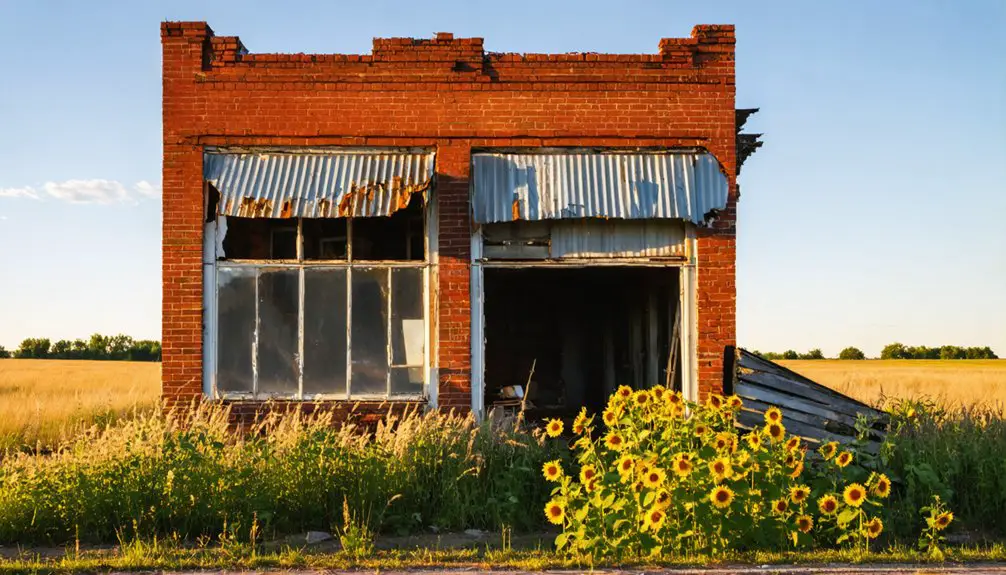
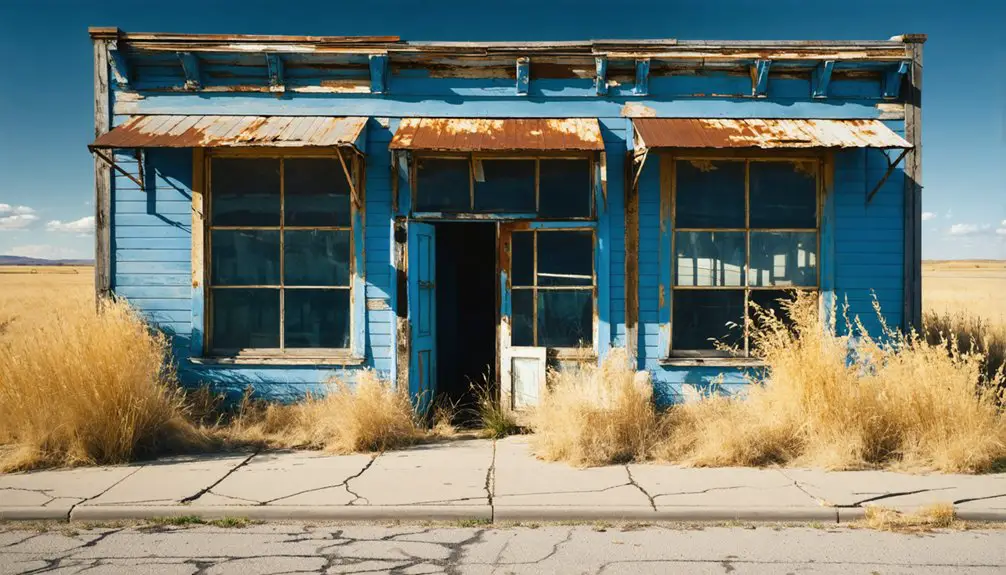
Walking into Harlan today, you’ll feel that stubborn persistence shift from folklore into something you can actually touch. Main Street’s ruins break through the Kansas soil like fractured memories, giving you a tangible connection to the 1870s settlement that once hummed with commerce and ambition.
Among Harlan landmarks, the high school gymnasium stands as the most striking survivor. Its gymnasium history stretches back decades, outlasting businesses, families, and even the post office that kept this community breathing until 1995.
That structure doesn’t just stand — it declares that something real happened here.
Walk the grounds deliberately. Read the landscape like a document. Every crumbling foundation and weathered timber tells you exactly how a prairie town fights time, loses slowly, and somehow refuses complete erasure.
Pony Express and Civil War Sites Near Harlan Worth the Detour
Once you’ve explored Harlan’s quiet ruins, the surrounding region pulls you deeper into American history.
Guittard Station in Marshall County once served as a critical Pony Express stop, where riders changed horses and pushed westward across dangerous terrain. You’ll find Kennekuk carrying that same trail legacy, its past tied directly to the riders who stitched the frontier together before the telegraph made them obsolete.
Swing south toward Padonia, and you’re walking ground shaped by Civil War tensions that fractured Kansas communities long before the ghost towns arrived.
Guittard Station Pony Express Stop
Few stops on a Kansas ghost town road trip carry the layered history of Guittard Station, a Marshall County Pony Express relay point where riders once swapped exhausted horses and thundered west toward the frontier.
Operating from 1861 to 1900, this station witnessed some of America’s most daring communication efforts, connecting a divided nation across open plains.
When you roll through Marshall County, you’re tracing the same ground those riders crossed at full gallop, carrying mail through weather, danger, and uncertainty.
The Pony Express route here anchors your journey in something larger than abandoned buildings. It reminds you what westward freedom actually cost.
Pair Guittard Station with your Harlan visit, and you’ll leave with a road trip that genuinely earned its miles.
Kennekuk’s Historic Pony Express Trail
Kennekuk carries a name most road-trippers drive past without a second glance, but that’s exactly where they go wrong.
Dig into Kennekuk history and you’ll find a town once buzzing with Pony Express riders pushing hard across open Kansas terrain. Those riders didn’t stop here for comfort — they stopped because the route demanded it.
You’re retracing those same corridors when you roll through this stretch. The land hasn’t forgotten what it witnessed, and neither should you.
Pair this stop with your Harlan visit and you’ve built something worth the drive — a connected trail linking frontier communication, raw ambition, and the kind of American movement that shaped everything north-central Kansas became.
Don’t just pass through. Slow down and let Kennekuk’s Pony Express legacy actually hit you.
Padonia’s Civil War Legacy
Shift your focus south from Kennekuk and Padonia pulls you into an entirely different chapter of American conflict. This small Kansas community carries deep Civil War significance, standing as a reminder of how violently the nation’s struggle for freedom cut through the plains.
Padonia history reflects the raw tension of a border state caught between opposing forces, where everyday settlers faced impossible choices. You’ll feel that weight walking through what remains today.
Unlike Kennekuk’s Pony Express energy, Padonia offers something quieter and darker — a town shaped by war rather than commerce.
Add it to your route deliberately, not as an afterthought. When you’re driving through north-central Kansas chasing ghost towns, these Civil War echoes deserve your full attention and respect.
The Best Ghost Towns to Pair With Harlan on Your Road Trip
Because Harlan sits in the heart of north-central Kansas, you can easily string together a road trip that connects several forgotten communities into one compelling journey through the state’s vanishing past.
Each stop adds abandoned structures and local folklore that deepen the experience beyond any single destination.
Here are the best ghost towns to pair with Harlan:
- Guittard Station – A Marshall County Pony Express stop with history stretching back to 1861
- Arrington – A quiet 1850s hamlet frozen in rural solitude
- Kennekuk – Another Pony Express landmark worth exploring
- Padonia – A Civil War-era town carrying remarkable historical weight
- White Cloud – A preserved community offering striking contrast to full abandonment
Follow the county roads freely, and let Kansas reveal itself mile by mile.
Using Harlan as the Base for Your Smith County Ghost Town Route
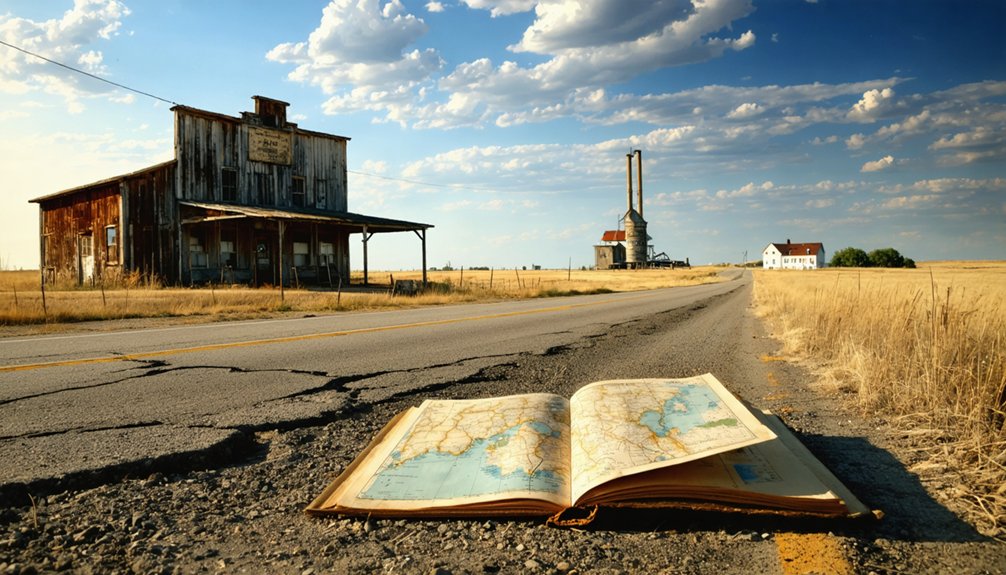
Harlan makes a natural anchor for any Smith County ghost town route, letting you fan outward across the county’s empty roads without doubling back unnecessarily.
Start by walking Harlan’s remnants — the gymnasium, the crumbling Main Street Harlan architecture — to ground yourself in what these plains once promised settlers. Then push outward along county roads toward neighboring settlements that share Harlan’s ghost town legends of railroad abandonment and fading ambition.
You’ll move efficiently between sites, carrying context from one ruin to the next rather than approaching each in isolation. Keep your tank full, your map downloaded, and your schedule loose.
Smith County rewards unhurried exploration. When the light drops low across the grassland, Harlan pulls you back — a reliable, quiet center point for everything you’ve just witnessed.
Getting to Harlan: Routes and Roads Through Smith County
Few roads in Kansas announce themselves — they simply appear, straight and purposeful, cutting across the same grassland that absorbed settlers’ ambitions a century ago.
Reaching Harlan demands comfort with rural navigation and respect for Smith County’s open terrain. No interstate delivers you here — that’s precisely the point.
Pack your route with intention:
- US-36 runs east-west as your primary corridor into Smith County
- US-281 connects north-south through Smith Center, your nearest hub
- County roads branch unpaved toward Harlan — check conditions seasonally
- Legends of Kansas maps offer reliable rural navigation guidance
- Fuel up in Smith Center — services disappear quickly beyond town limits
You’re not lost out here.
You’re exactly where the map stops telling you what to do.
What to Pack for a Rural Kansas Ghost Town Road Trip
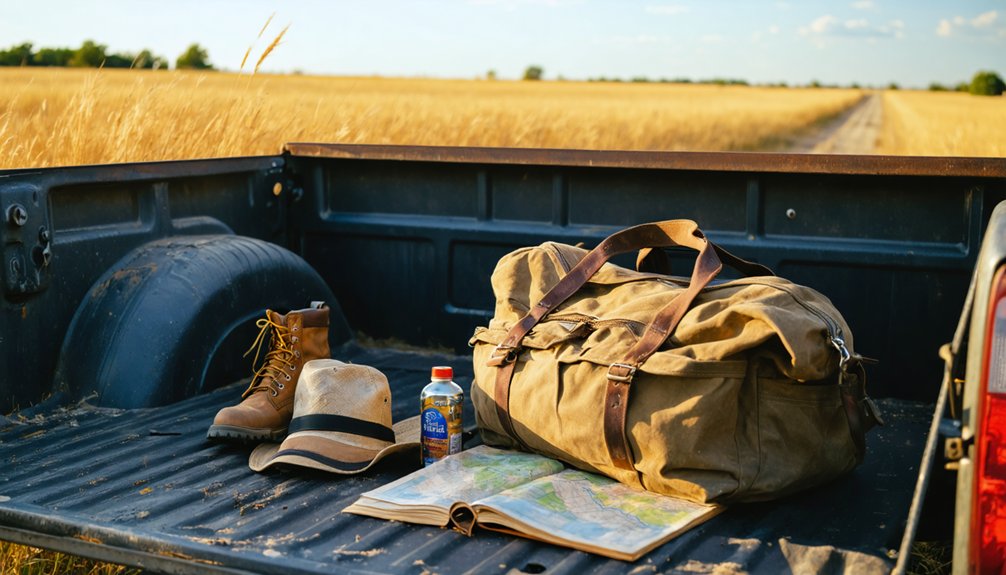
Before you set out across Smith County’s windswept plains toward Harlan’s crumbling Main Street, pack like the frontier settlers who built this town depended on self-sufficiency.
You’ll want sturdy boots, a printed county map backed up by an offline GPS app, and a first-aid kit for traversing unstable ruins where old timber and concrete don’t forgive careless steps.
Toss in water, a flashlight, and a charged phone, because out here, the nearest help is miles of empty highway away.
Essential Gear To Bring
Wandering through the ruins of a Kansas ghost town like Harlan means you’re stepping into landscapes that haven’t changed much since the post office shuttered in 1995 — remote, windswept, and unforgiving of the unprepared.
Smart rural exploration tips start with your pack, not your itinerary. For ghost town photography and safe exploration, bring:
- Water and snacks — county roads offer zero services
- Sturdy boots — broken foundations and debris demand ankle support
- Camera with extra batteries — golden-hour light transforms ruins beautifully
- Paper maps or downloaded offline GPS — cell signals vanish in Smith County
- First aid kit — distances between towns make self-reliance non-negotiable
Pack light, pack smart, and you’ll move freely through Harlan’s remnants like the open plains demand.
Smith County’s grid of rural roads looks deceptively simple on screen but confuses newcomers constantly. Carry a printed DeLorme Kansas Atlas alongside your phone.
Legends of Kansas publishes updated ghost town coordinates worth printing.
A compass still earns its keep when technology fails across open prairie. GPS coordinates for Harlan itself sit in north-central Kansas, making it a natural anchor point for looping northeast toward Arrington, Kennekuk, and Guittard Station.
Know your route before dust swallows the signal.
Safety Supplies For Ruins
Crumbling structures like Harlan’s high school gymnasium don’t forgive careless visitors, so pack smart before you leave pavement behind. Kansas ghost towns reward bold explorers, but weathered floors and collapsed walls demand respect. Your safety gear and emergency supplies determine whether adventure becomes misfortune.
Before stepping onto Harlan’s forgotten Main Street, load your vehicle with these essentials:
- Sturdy boots with ankle support for uneven debris
- First aid kit stocked with bandages and antiseptic
- Flashlight and extra batteries for shadowed interiors
- Water and high-energy snacks for remote stretches
- Emergency whistle and charged phone for unexpected situations
Freedom tastes sweeter when you’ve prepared for the unexpected. Harlan’s ruins carry 150 years of history—explore them fully, but arrive ready.
The Best Time of Year to Visit Harlan, Kansas
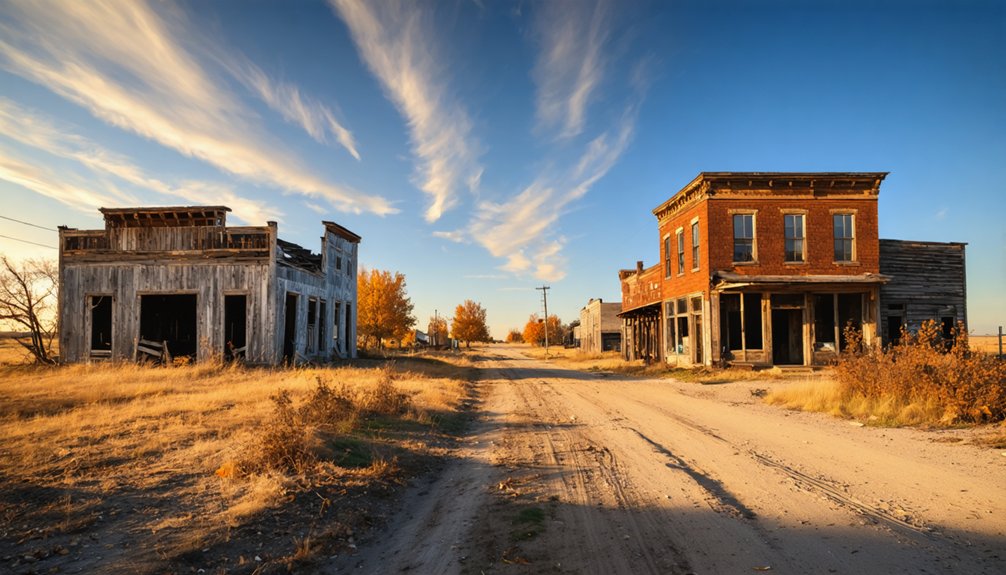
When you plan your visit to Harlan, Kansas, timing matters more than you’d think for a ghost town sitting exposed on the north-central plains.
Late spring and early fall deliver the best seasonal activities, giving you mild temperatures, manageable roads, and golden light that makes ruins photograph beautifully. Summer heat bakes the plains mercilessly, while winter closes county roads without warning.
April through June offers wildflower blooms across abandoned lots and rewarding local wildlife observations, with meadowlarks and white-tailed deer moving freely through the settlement’s quiet edges.
September and October cool things down, sharpening the landscape’s haunted atmosphere just as harvest season reminds you what once drove communities like Harlan to life.
Avoid muddy March roads and unpredictable November storms.
Maps and Local Resources for Planning Your Harlan Visit
Before you head out to Harlan, arm yourself with the right maps and local resources so you’re not guessing on unmarked county roads.
Kansas ghost town travel guides and maps resources will keep your route sharp and your adventure focused.
Use these essential tools before you roll out:
- Legends of Kansas – detailed maps resources covering Smith County roads and ghost town locations
- Kansas Department of Transportation maps – reliable highway and county road navigation
- Smith County historical society – local travel guides with firsthand knowledge
- Google Earth satellite view – scout ruins and access points before arriving
- Kansas Geological Survey – historical settlement records for deeper context
These resources transform a vague drive into a deliberate expedition through genuinely forgotten American history.
Frequently Asked Questions
Is Overnight Camping Permitted Near Harlan’s Ruins or Surrounding Land?
The knowledge doesn’t confirm overnight camping permissions near Harlan’s ruins. You’ll want to check local camping regulations before pitching your tent. Explore nearby attractions like Guittard Station, where Kansas’s wild, open spirit truly awaits your adventurous soul!
Are There Any Guided Tours Available Specifically for Harlan Ghost Town?
Harlan’s post office ran 122 years—yet no formal guided tours exist. You’ll chart your own ghost town history through self-directed guided exploration, walking Main Street’s ruins freely, answering only to your curiosity and the Kansas wind.
Does Harlan Have Any Documented Paranormal Activity Reported by Visitors?
No documented paranormal reports exist, but you’ll find Harlan’s haunted legends alive in its crumbling ruins and silent streets. Ghost sightings aren’t recorded, yet its abandoned history sparks your imagination as you freely explore this forgotten Kansas settlement.
Were Any Famous Historical Figures Ever Associated With Gould College?
The records don’t tie any famous figures to Gould College, but its Historical Significance still fuels your adventurous spirit. You’re uncovering a bold frontier institution that dared to educate Kansas’s free-thinking settlers before fading into history.
Are There Any Local Preservation Efforts Actively Protecting Harlan’s Remaining Structures?
No formal preservation initiatives are documented, but you’ll find local history written in every crumbling brick and standing gymnasium wall — Harlan’s surviving structures are practically screaming their stories across centuries for adventurous souls like you to discover.
References
- https://www.youtube.com/watch?v=0wTaBKVg3dk
- https://www.youtube.com/watch?v=Td_gmiDMfI4
- https://legendsofkansas.com/kansas-ghost-town-list/
- https://www.youtube.com/watch?v=YQHVP21sYC8
- https://www.saturdayeveningpost.com/2025/10/haunted-kansas-an-unexpected-road-trip-through-americas-heartland/
- https://globaldebauchery.com/weird-towns-in-kansas/
- https://www.travelks.com/blog/stories/post/supernatural-road-trip-in-kansas/