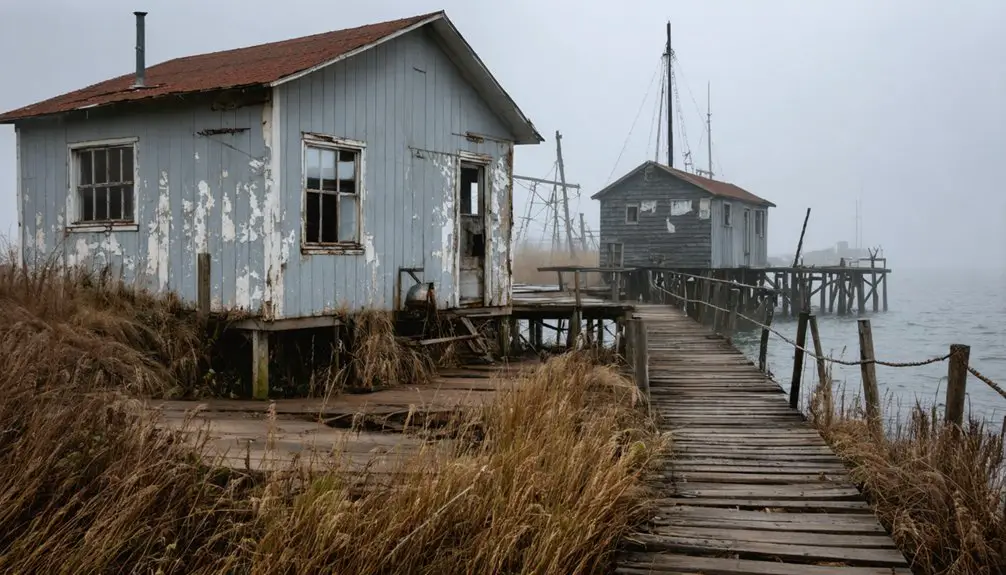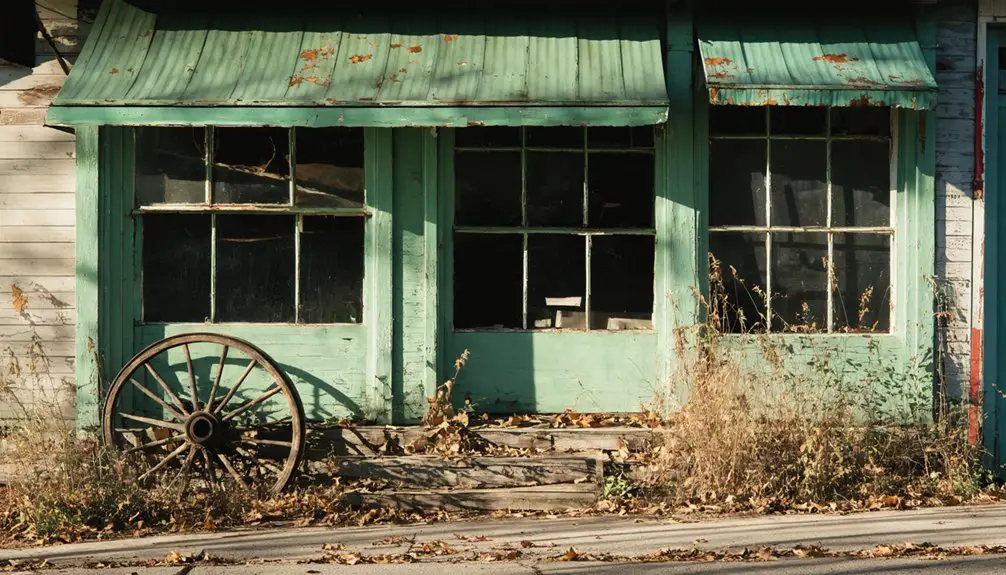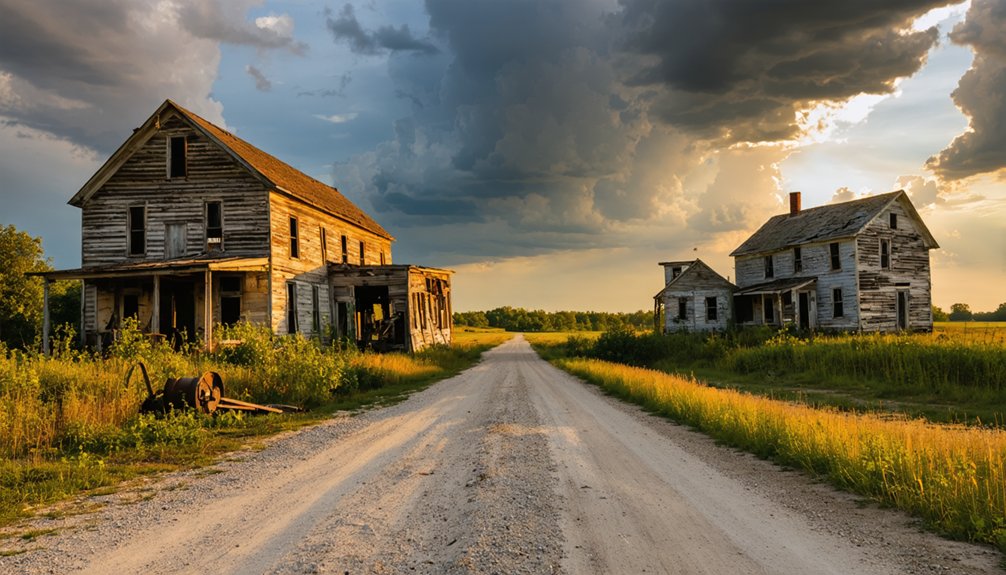
Planning a ghost town road trip to Henrietta, Wisconsin means heading northwest from Richland County along Route 15 for 36 scenic miles. You’ll find weathered 19th-century structures, working farms, and over 12 miles of hiking trails winding through this quietly abandoned rural community of 435 residents. From the preserved 1875 town hall to remnants of early settler life, Henrietta rewards curious explorers. Stick around to uncover everything this overlooked Midwest gem has waiting for you.
Key Takeaways
- Henrietta, Wisconsin, is accessible via Route 15 northwest from Richland County, covering 36 scenic miles through rural landscapes with no congestion.
- Begin your visit at the 1875 town hall, a well-preserved landmark central to Henrietta’s agricultural heritage and historical significance.
- Explore 12 miles of hiking trails connecting key landmarks, including settler residences and Agricultural School remnants along the Southern Heritage Path.
- Abandoned structures and ghost town remnants across 36 square miles offer insights into Henrietta’s agricultural decline and frontier history.
- Seasonal events like fall harvest celebrations and spring planting festivals provide authentic cultural experiences rooted in Henrietta’s 1800s farming traditions.
What Makes Henrietta, Wisconsin a Ghost Town Worth Visiting?
Though it may not appear on most traveler’s radar, Henrietta, Wisconsin packs a surprising punch for ghost town enthusiasts. Nestled in Richland County, this small town of just 435 residents carries centuries of agricultural heritage within its quiet borders.
You’ll find authentic ghost town experiences around every corner — from the preserved 1875 town hall to the remnants of 1890 settler residences. The town’s decline from a thriving rural hub makes it a fascinating study in American agricultural history.
With only 12 residents per square mile, you’ll explore wide-open spaces without the crowds.
Historic markers, abandoned structures, and 12 miles of hiking trails through rural landscapes give you direct access to a past that most travelers never discover.
How to Get to Henrietta From Richland County
Getting to Henrietta is straightforward — just take Route 15 northwest from Richland County for 36 miles of scenic rural and agricultural landscapes that set the tone for the ghost town experience ahead.
Take Route 15 northwest from Richland County — 36 miles of rural landscape leading straight to Henrietta’s quiet, forgotten past.
You’ll pass rolling farmland and quiet countryside that quietly narrates the region’s rural heritage before you even arrive.
As you drive, you’re fundamentally tracing the same routes early settlers once traveled, making the journey itself a living introduction to Henrietta history.
The low population density and open terrain remind you why this town thrived as an agricultural hub and later faded into near obscurity.
There’s no congestion, no rush — just open road and honest landscape.
Pack your curiosity, because Henrietta rewards those willing to seek it out.
Historic Sites You Can’t Miss in Henrietta
Once you arrive in Henrietta, you’ll want to make the 1875 Town Hall your first stop, as it stands as one of the most well-preserved reminders of the town’s early community life.
You can walk its historic grounds and picture the rural gatherings that once shaped life here.
From there, scattered ghost town remnants pull you deeper into Henrietta’s past, offering a striking look at how agricultural decline reshaped this once-thriving settlement.
The 1875 Town Hall
Standing since 1875, Henrietta’s town hall is one of those rare structures that makes you stop and actually feel the weight of local history. Its town hall architecture reflects the practical craftsmanship of 19th-century rural Wisconsin — sturdy, unpretentious, and built to last.
You’ll notice the careful woodwork and simple lines that defined frontier construction during that era.
Beyond aesthetics, the community significance of this building runs deep. Residents gathered here to debate livestock ordinances, organize rural education, and shape the town’s future.
It wasn’t just a building — it was democracy happening in real time.
Today, preservation groups actively protect the structure, keeping it accessible for visitors like you who want more than a scenic drive — you want a genuine connection to the past.
Ghost Town Remnants
Beyond the town hall’s weathered walls, Henrietta’s ghost town remnants tell a quieter, more unsettling story. You’ll find abandoned structures scattered across the landscape, their hollow frames hinting at lives once fully lived.
These decaying buildings aren’t just ruins — they’re physical evidence of a community that thrived, then quietly disappeared.
As you explore, you’ll encounter ghost town artifacts that local preservation groups have carefully documented. Former settler residences from the 1890s stand partially intact, letting you piece together what daily rural life once looked like.
The Agricultural School’s remnants carry a particularly haunting weight, given its 74-year run before closing in 1964.
Walking through these spaces gives you something guidebooks can’t — a raw, unfiltered connection to a community that agriculture built and time slowly reclaimed.
Working Farms and Heritage Sites Still Active in Henrietta
Although Henrietta carries the quiet weight of a ghost town, it hasn’t entirely surrendered to the past — working farms still dot its 36 square miles, keeping the land’s agricultural roots alive.
You’ll find active operations where seasonal crops still shape the rhythm of daily life, much as they did for early settlers.
Several properties welcome visitors through farm tours, giving you a firsthand look at traditional agricultural practices that have endured for generations.
Step onto working land where farm tours offer a rare glimpse into agricultural traditions passed down through generations.
Heritage workshops offered locally connect you directly to the skills and traditions tied to the 1890 Agricultural School era.
You can also explore the preserved 1875 town hall and historic settler residences still standing nearby.
These living landmarks remind you that Henrietta isn’t entirely frozen in time — it’s quietly, stubbornly still breathing.
The Crumbling Remnants That Show What Henrietta Lost
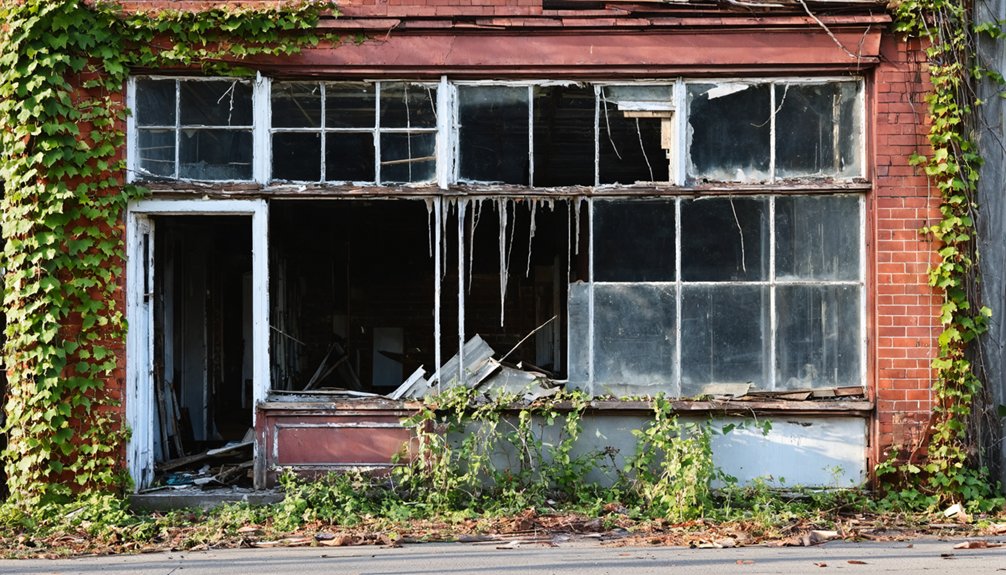
Yet step beyond those active farmsteads and the story shifts sharply. Henrietta’s crumbling remnants carry ghost stories etched into weathered wood and collapsed foundations.
These forgotten memories demand your attention if you’re chasing authentic history.
Three sites reveal what Henrietta truly lost:
- The 1890 Agricultural School ruins — once shaping rural education, now standing silent amid overgrown fields.
- Abandoned settler residences — original 1890 structures where families built entire lives before agricultural decline hollowed the community out.
- Ghost town foundation remnants — scattered across the landscape, marking where businesses and homes once thrived.
Walking these grounds connects you directly to a vanished world.
You’ll feel the weight of choices made generations ago, understanding exactly how a thriving rural hub quietly surrendered to time.
Henrietta’s Hiking Trails Through Historic Rural Land
Once you’ve explored Henrietta’s crumbling remnants, you can hit the 12 miles of hiking trails that wind through the town’s historic rural landscape.
You’ll follow routes that pass key landmarks like the 1875 town hall and 1890 settler residences, connecting you directly to the town’s agricultural past.
Access the trails via Route 15 northwest from Richland County, where the scenic terrain makes every step a lesson in Henrietta’s forgotten history.
Trail Routes And Access
Henrietta’s 12 miles of hiking trails wind through some of the most historically rich rural land in Richland County, putting you directly in the footsteps of 19th-century settlers.
Trail accessibility is straightforward — reach the trailheads via Route 15 northwest from Richland County. Once there, you’ll navigate scenic routes past ghost town remnants, settler residences, and working farmland.
Here’s what you can expect across the trail system:
- Northern Loop – Passes the 1875 town hall and surrounding historic structures
- Eastern Ridge Route – Offers sweeping agricultural landscape views and open terrain
- Southern Heritage Path – Winds through remnants of the 1890 Agricultural School grounds
Each route delivers unfiltered rural history without crowds, giving you the freedom to explore at your own pace.
Historic Landmarks Along Trails
Walking Henrietta’s trails means stepping past landmarks that document over a century of rural life.
You’ll pass the iconic 1875 town hall, a structure that anchored community decisions and rural education for generations. Its weathered walls carry genuine historical significance, reflecting the determination of early settlers who shaped this landscape.
Further along, you’ll encounter the 1890 settler residences, standing as quiet symbols of Henrietta’s agricultural roots.
These buildings connect you directly to the town’s rural heritage, offering a tangible sense of lives lived close to the land.
Historic markers commemorating the 1856 livestock ordinance appear throughout the trail system, grounding each step in documented history.
Ghost town remnants scattered across the terrain remind you that freedom once meant carving meaning from an unforgiving rural frontier.
Plan Your Visit Around Henrietta’s Seasonal Events
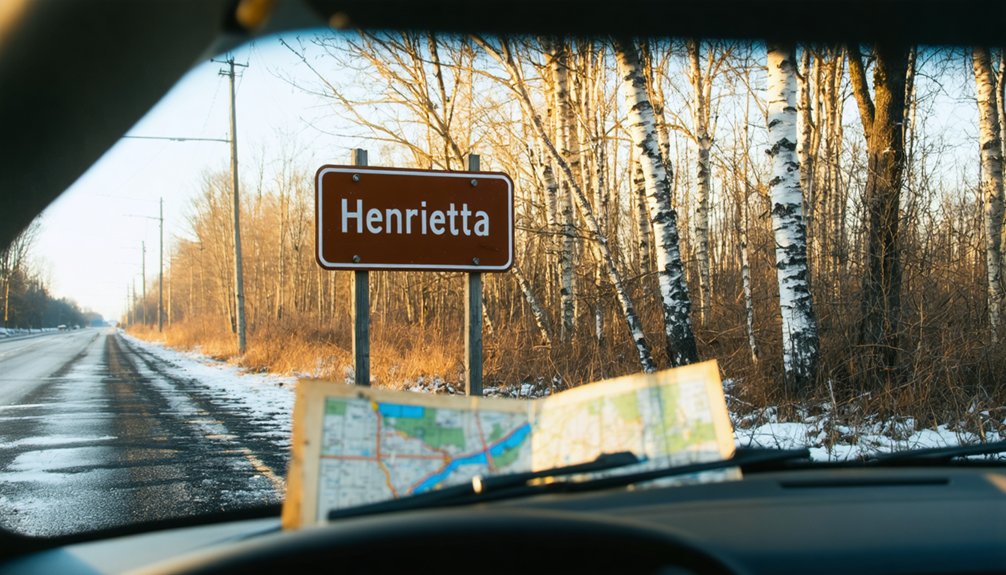
Timing your visit to Henrietta around its seasonal events transforms a simple road trip into a rich cultural experience. The town’s seasonal festivals and community traditions connect you directly to its agricultural heritage and living history.
Plan your trip around these standout opportunities:
- Spring planting festivals – Celebrate the region’s farming roots with local demonstrations and heritage displays.
- Summer community gatherings – Explore the 1875 town hall during organized tours and outdoor events.
- Fall harvest celebrations – Experience the agricultural traditions that shaped Henrietta’s identity since the 1800s.
Each event deepens your understanding of the town beyond its ghost town remnants.
Check local listings before departure to confirm dates, since schedules shift annually. Your flexibility rewards you with authentic experiences you won’t find anywhere else.
The Best Stops, Routes, and Timing for Your Henrietta Road Trip
Once you’re ready to hit the road, Route 15 northwest from Richland County delivers 36 miles of rolling agricultural scenery straight to Henrietta’s doorstep.
Start at the 1875 town hall, where agricultural heritage shaped early community life, then explore the 1890 settler residences nearby.
The 1875 town hall stands as Henrietta’s agricultural cornerstone, with historic 1890 settler residences waiting just steps away.
Lace up your boots and tackle the 12 miles of hiking trails winding through historic rural settings.
Time your visit around annual community events and festivals that bring Henrietta’s past alive each season.
Spring and fall offer the most rewarding experiences, combining comfortable weather with active local gatherings.
Local museums displaying artifacts from the Agricultural School era round out your itinerary perfectly.
Keep your schedule flexible — Henrietta rewards explorers who slow down and absorb every weathered landmark along the way.
Frequently Asked Questions
What Is the Current Population of Henrietta, Wisconsin?
Like a quiet whisper from the past, Henrietta’s ghost towns tell its story — you’ll find its current population sits at just 435 residents, a small but vibrant community rich in local history.
How Many Square Miles Does Henrietta Cover in Total?
You’ll find Henrietta covers a total of 36 square miles of mixed rural and agricultural terrain. As you explore its ghost town history and local attractions, you’re embracing wide-open spaces that define true freedom.
When Was Richland County Officially Established as a County?
Like a seed planted in history’s soil, Richland County’s roots took hold in 1854! You’ll discover this cornerstone of County History and Richland Heritage emerged during Wisconsin’s territorial expansion, shaping the free, open landscapes you’re about to explore.
Who Was Henrietta, Wisconsin Originally Named After?
You’ll love discovering the Town name origin: Henrietta history traces back to a prominent local settler’s daughter from the 1800s. She inspired the town’s charming name, giving this Wisconsin gem a personal, heartfelt identity you can’t ignore!
How Many Miles of Hiking Trails Does Henrietta Offer Visitors?
You’ll find 12 miles of hiking trails waiting to be explored in Henrietta! Grab your trail maps, lace up your boots, and follow these hiking tips to freely roam through breathtaking historic rural settings and landscapes.
References
- https://en.wikipedia.org/wiki/Henrietta
- https://www.youtube.com/watch?v=pmIaryYovSk
- https://mcnygenealogy.com/book/henrietta-sesquicentennial.pdf
- https://www.foresthistoryassociationwi.com/publications/ghostoftf/
- https://www.wisconsinhistory.org/record/clipping/BA12628/redirect
- https://99wfmk.com/abandoned-henrietta-agricultural-school/
- https://www.youtube.com/watch?v=kG-k_9O1OTE
- http://www.usgenweb.info/wirichland/books/chap25.htm
- https://en.wikipedia.org/wiki/List_of_ghost_towns_in_Wisconsin
- http://shunpikingtoheaven.blogspot.com/2016/05/a-wisconsin-ghost-town.html