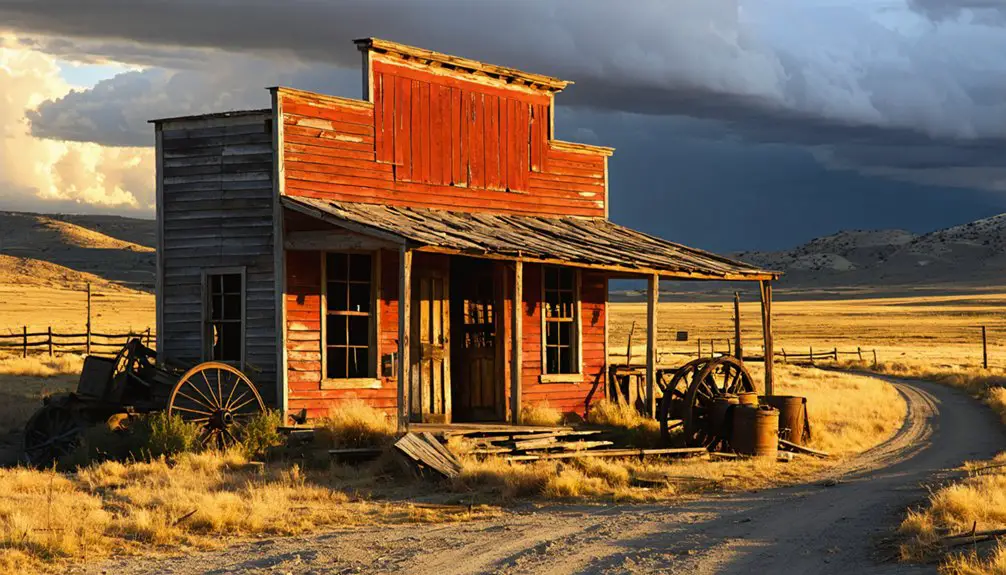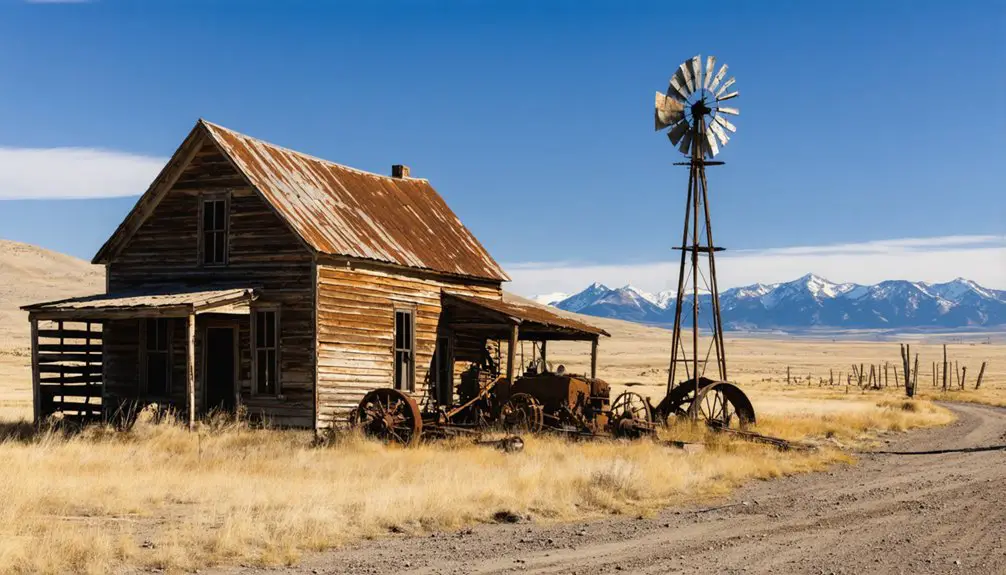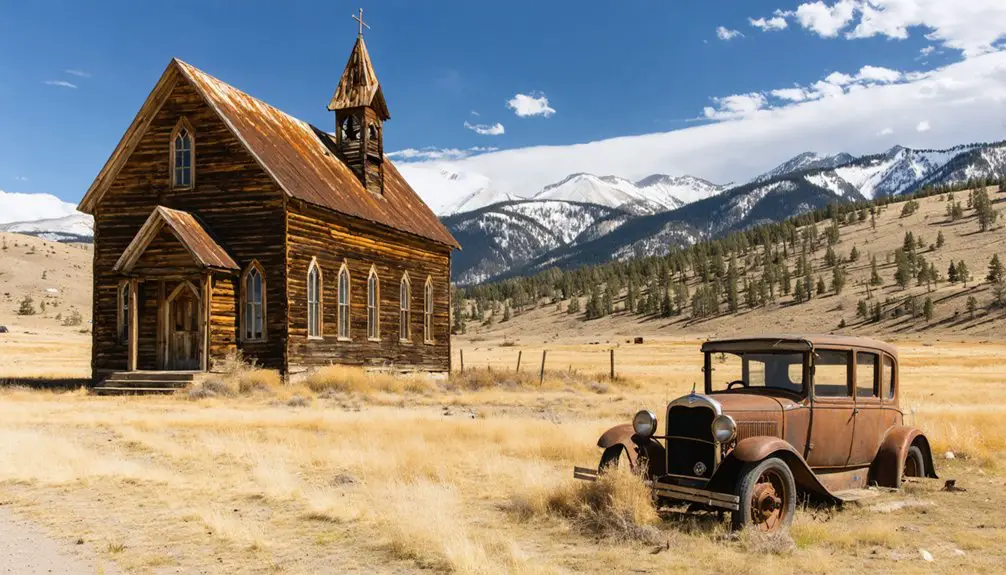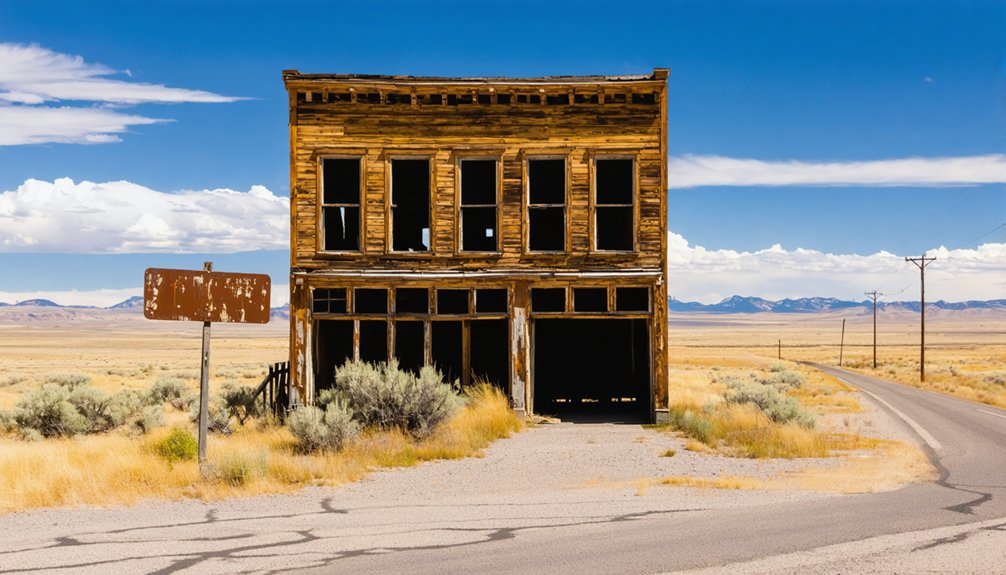
Planning a ghost town road trip to Jeffrey City, Wyoming means traveling US Route 287 into Wyoming’s high desert, where a uranium boomtown that once housed nearly 4,500 residents now stands nearly empty. You’ll find crumbling streets, abandoned worker quarters, and silent mobile homes alongside a handful of surviving businesses like the Split Rock Café and Green Mountain Motel. Pronghorn now graze where neighborhoods once thrived. Pack water, download offline maps, and keep your fuel tank full—there’s much more to uncover along this unforgettable route.
Key Takeaways
- Jeffrey City, Wyoming, a uranium ghost town along US Route 287, retains a small population of 30–42 residents among abandoned infrastructure.
- Pack at least two liters of water, snacks, sun protection, and offline maps, as services and cell coverage are extremely limited.
- The Split Rock Café and Bar and Green Mountain Motel are among the only active establishments still operating in town.
- Pronghorn antelope now graze through former residential streets, and prairie grass reclaims old parking lots and abandoned structures.
- Nearby South Pass City, Atlantic City, and Fort Washakie make ideal additions to a multi-stop Wyoming ghost town road trip.
What Is Jeffrey City, Wyoming?
Nestled along US Route 287 in southeastern Fremont County, Wyoming, Jeffrey City is a ghost town that once thrived as a uranium mining hub before an economic collapse gutted its population and left behind a haunting grid of empty streets and boarded-up buildings.
Founded in 1957 to support Western Nuclear mine workers, the town’s uranium history fueled explosive growth, pushing its population to nearly 4,500 residents during the 1970s boom.
But when the uranium market crashed and the primary mine closed in the late 1970s, the economic impact was devastating. Within three years, 95% of residents had vanished.
Today, between 30 and 42 people call it home. If you crave wide-open spaces and raw, unfiltered American history, Jeffrey City delivers an unforgettable glimpse into boom-and-bust reality.
What You Can Still See in Jeffrey City Today
When you roll into Jeffrey City today, you’ll find a handful of survivors still holding on — the Green Mountain Motel, the Split Rock Café and Bar, and the First Baptist Church quietly serve the town’s 30-odd permanent residents.
Beyond those working establishments, you’ll see crumbling asphalt streets, boarded-up worker quarters, and empty lots where bars, banks, and a bowling alley once buzzed with 4,500 people.
Look past the abandoned infrastructure, and you’ll notice nature has moved back in — pronghorn antelope now roam the overgrown park lots where children once played.
Surviving Businesses Still Operating
Despite its dramatic population loss, Jeffrey City still has a handful of surviving businesses that’ll surprise you.
These establishments anchor the local economy and represent genuine community resilience against the odds.
Stop in and discover what’s kept this ghost town breathing:
- Green Mountain Motel – Your only lodging option, offering a true off-grid overnight experience
- Split Rock Café and Bar – Grab a meal and mingle with locals who’ve chosen to stay
- First Baptist Church – Still active, drawing ranchers from surrounding areas every week
- Monk King Bird Pottery – A working craft studio where you can browse handmade ceramics
- US Route 287 – The lifeline connecting travelers to these remaining outposts
These aren’t tourist traps.
They’re authentic survivors worth your time and dollar.
Abandoned Infrastructure Remains
What’s left of Jeffrey City’s boom years isn’t buried — it’s right there in plain sight, frozen in time along the cracked asphalt grid that once connected a thriving community of 4,500 people.
You’ll find abandoned buildings at nearly every turn — boarded-up worker quarters, silent mobile homes, and empty lots reclaimed by prairie grass. Street lights that once guided residents home stand dark and useless.
Where three bars, two banks, and a bowling alley once buzzed with life, you’ll now hear only wind. Pronghorn antelope wander what were once parking lots.
This ghost town doesn’t hide its past — it displays it openly. Every crumbling structure tells the story of a uranium boom that rose fast and collapsed even faster, leaving the landscape as its most honest historian.
Wildlife Reclaiming The Town
Nature hasn’t waited for permission to move back in. As you walk Jeffrey City’s cracked streets, you’ll witness wildlife sightings that remind you who truly owns this land now.
Prairie grass swallows old parking lots whole, and the silence feels ancient. This isn’t decay — it’s a natural habitat asserting itself.
Watch for these signs of reclamation during your visit:
- Pronghorn antelope grazing across former residential lots
- Prairie grass pushing through fractured asphalt grids
- Dark, silent streetlights framing open sky instead of crowds
- Abandoned worker quarters slowly consumed by surrounding landscape
- Old park spaces transformed into untamed grassland corridors
You’re not just touring ruins — you’re witnessing a landscape breaking free, reclaiming territory on its own unapologetic terms.
The Uranium Boom That Built Jeffrey City
When uranium fever swept across the American West in the mid-20th century, it transformed a stretch of Wyoming scrubland into a thriving company town almost overnight.
Western Nuclear founded Jeffrey City in 1957, and the uranium history here moved fast. As demand surged through the 1970s, the population exploded to roughly 4,500 residents — a remarkable figure for this remote stretch of Fremont County.
You can still sense the mining heritage walking these empty streets. The town once supported three bars, two banks, three gas stations, a bowling alley, a movie theater, and even an Olympic-sized swimming pool.
It was self-contained, ambitious, and alive. Then the uranium market crashed in the late 1970s, and everything these settlers built here suddenly became expendable.
How the Market Crash Emptied Jeffrey City
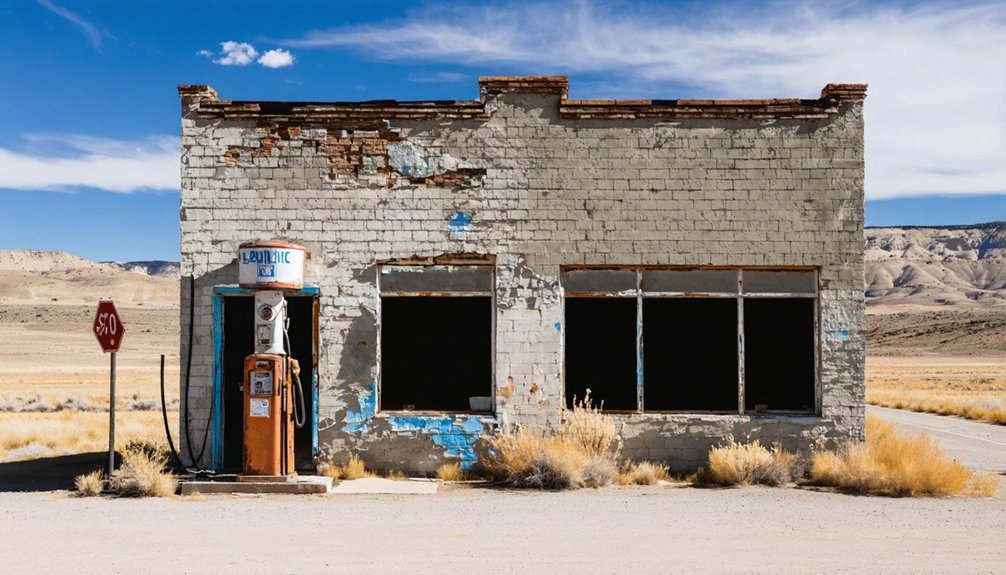
The uranium market’s collapse hit Jeffrey City like a trapdoor opening beneath it. The economic impact was swift and brutal, stripping away community resilience almost overnight. Within three years, 95% of residents had packed up and left.
The uranium market’s collapse hit Jeffrey City like a trapdoor — swift, brutal, and absolute.
Here’s what the collapse looked like on the ground:
- The primary Western Nuclear mine shuttered in the late 1970s
- Population plummeted from 4,500 to under 1,000 by 1980
- Three bars, two banks, and three gas stations closed permanently
- The bowling alley, movie theater, and roller-skating rink all went dark
- By 1986, nearly every original resident had departed
You’ll see this exodus written across the landscape today — boarded worker quarters, cracked asphalt, and prairie grass reclaiming empty parking lots where families once gathered.
How to Get to Jeffrey City, Wyoming
If you’re heading to Jeffrey City, Wyoming, you’ll find it sitting along US Route 287, roughly 67 miles northwest of Rawlins and Interstate 80.
Coming from the north, you can reach it 58 miles southeast of Lander, the Fremont County seat.
Either approach cuts through open Wyoming rangeland, making the drive itself a preview of the isolation that defines this forgotten uranium town.
Driving Routes and Highways
Reaching Jeffrey City means taking a long, lonely drive through the wide-open Wyoming high desert, and US Route 287 is your lifeline to get there. This two-lane highway cuts through raw, untamed landscape, connecting you to local legends and scenic viewpoints that’ll make every mile worthwhile.
Your key navigational reference points:
- From Rawlins: Head 67 miles northwest via US-287 from Interstate 80
- From Lander: Drive 58 miles southeast along US-287 from the county seat
- From Casper: Take Wyoming Highway 220 west before connecting to US-287
- Scenic viewpoints: Watch for sweeping Wind River Range vistas along the route
- Road conditions: Check Wyoming DOT updates before departing, especially in winter months
You’ll know you’ve arrived when civilization simply fades away.
Nearby Landmarks and Distances
Beyond the highways that lead you here, a handful of iconic Wyoming landmarks serve as your guideposts for the journey to Jeffrey City.
You’ll find this uranium history treasure sitting 67 miles northwest of Rawlins and Interstate 80, making it an easy detour from the main corridor. Head 58 miles southeast from Lander, the Fremont County seat, and you’re practically on its doorstep.
Positioned along US Route 287, Jeffrey City connects naturally to Wyoming’s wide-open basin country.
Split Rock, a distinctive granite landmark visible for miles, stands nearby as a celebrated Oregon Trail waypoint.
Ghost town legends draw curious travelers who recognize these geographic markers as more than mere distances — they’re invitations to explore a place where boom, bust, and silence tell Wyoming’s most compelling uranium history story.
Where to Eat and Sleep Near Jeffrey City
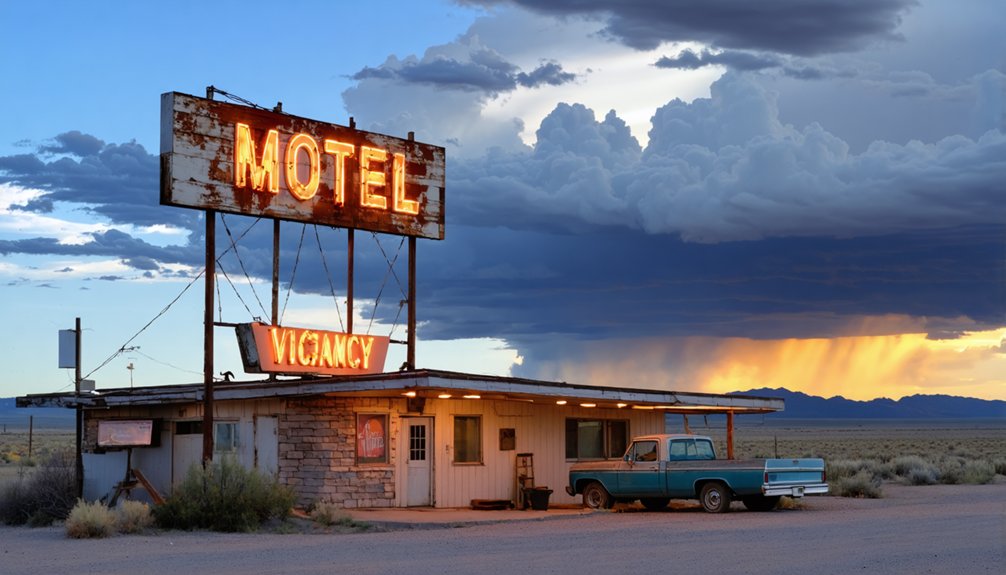
Travelers passing through Jeffrey City won’t find many options, but the ones that exist get the job done.
You’ll discover just enough lodging options and local cuisine to fuel your adventure through this fascinating ghost town.
Here’s what you can count on:
- Green Mountain Motel – Your only overnight shelter in town, simple and straightforward
- Split Rock Café and Bar – The go-to spot for local cuisine, serving residents and road-trippers alike
- First Baptist Church – Active community gathering point, primarily serving local ranchers
- Monk King Bird Pottery – Browse handcrafted local artistry while stretching your legs
- US Route 287 – Connects you quickly to additional services in Lander or Rawlins if needed
Pack supplies before arriving, because Jeffrey City rewards self-sufficient explorers.
What to Bring for a Day Trip to Jeffrey City
Since Jeffrey City sits 67 miles from the nearest interstate with minimal services, you’ll want to pack water, snacks, a first-aid kit, and a full tank of gas before you head out.
Bring a paper map or download offline navigation, because cell service along US Route 287 can drop without warning.
The high desert climate swings fast, so layer your clothing and toss sunscreen and wind protection into your bag alongside your camera.
Essential Supplies To Pack
Packing a few key essentials can make the difference between a smooth ghost town adventure and an uncomfortable one.
Jeffrey City’s remote stretch of US Route 287 offers little modern convenience, so solid adventure planning keeps your ghost town history exploration stress-free.
Bring these supplies before heading out:
- Water – Carry at least two liters per person; no reliable public water sources exist
- Snacks and food – Split Rock Café is your only dining option, and hours vary
- Sun protection – Wyoming’s high desert sun hits hard with minimal shade
- Camera and extra batteries – You’ll want to document the abandoned infrastructure
- Paper maps or downloaded offline GPS – Cell service remains spotty throughout the area
Pack smart and you’ll spend more time exploring, less time scrambling.
Navigating Remote Wyoming Roads
Once your gear’s loaded and you’re ready to roll, knowing how to navigate Wyoming’s remote highway system becomes your next priority.
US Route 287 is your lifeline, stretching northwest from Rawlins through open sagebrush flats and sweeping high desert terrain. Jeffrey City sits 67 miles from Interstate 80, so you’ll cover serious ground before civilization reappears.
Remote navigation here means trusting your preparation over your phone signal. Cell service drops fast once you leave Rawlins, so download offline maps before departing.
These scenic routes reward attentive drivers with pronghorn sightings, dramatic sky views, and total solitude.
Keep your fuel tank full, your spare tire checked, and your mileage tracked. Wyoming’s wide-open roads don’t forgive careless planning, but they absolutely reward the traveler who respects them.
Pronghorn, Prairie, and Open Sky Along Route 287
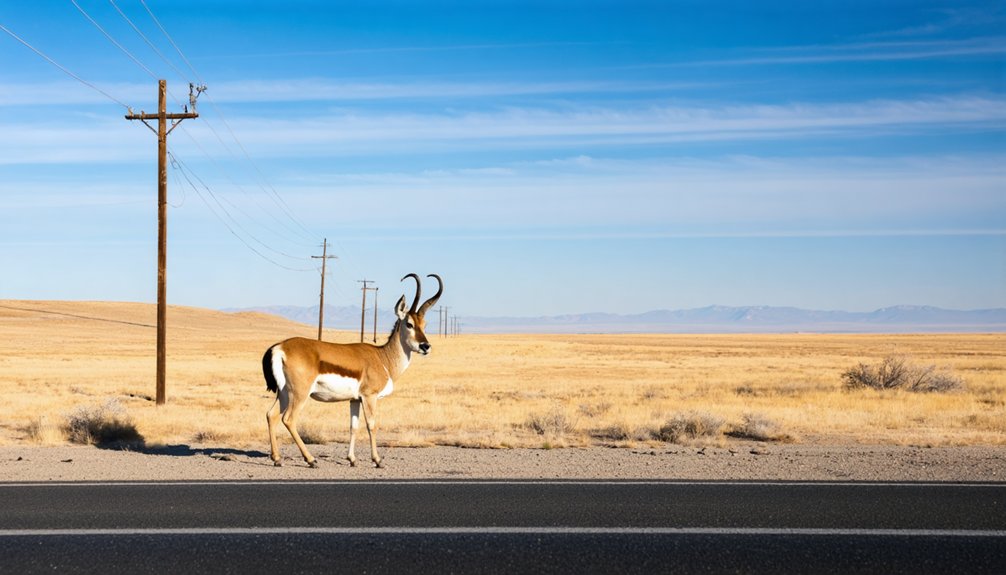
As you cruise along US Route 287 toward Jeffrey City, the Wyoming prairie stretches endlessly in every direction, broken only by the occasional silhouette of pronghorn antelope grazing against an open sky.
These wide-open prairie landscapes remind you that nature reclaims everything eventually.
Watch for these highlights along the drive:
- Pronghorn sightings appear frequently near roadside grasslands, especially at dawn and dusk
- Unobstructed horizon views stretch across rolling sagebrush flats
- Minimal traffic lets you slow down and absorb the solitude
- Prairie grass now covers Jeffrey City’s former parking lots and abandoned spaces
- Dark, non-functional street lights signal your arrival into forgotten territory
This corridor delivers raw Wyoming freedom before you’ve even reached the ghost town itself.
Nearby Ghost Towns and Historic Sites on Your Route
Jeffrey City doesn’t stand alone in its silence—the surrounding region holds several other ghost towns and historic landmarks worth weaving into your route.
Head northwest toward Lander and you’ll pass through South Pass City, a preserved gold rush settlement with genuine historical significance dating back to the 1860s.
Atlantic City sits nearby, another mining remnant where weathered structures still tell stories of frontier ambition.
Atlantic City endures as a mining remnant, its weathered structures quietly preserving the bold ambitions of frontier life.
Driving southeast toward Rawlins opens up ghost town exploration along the old Lincoln Highway corridor, where abandoned ranches and forgotten stops punctuate the high desert.
Fort Washakie, just north of Lander, adds cultural and military history to your journey.
This stretch of Wyoming rewards travelers who move slowly, read roadside markers, and let curiosity guide each turn.
Is Jeffrey City Worth the Drive?
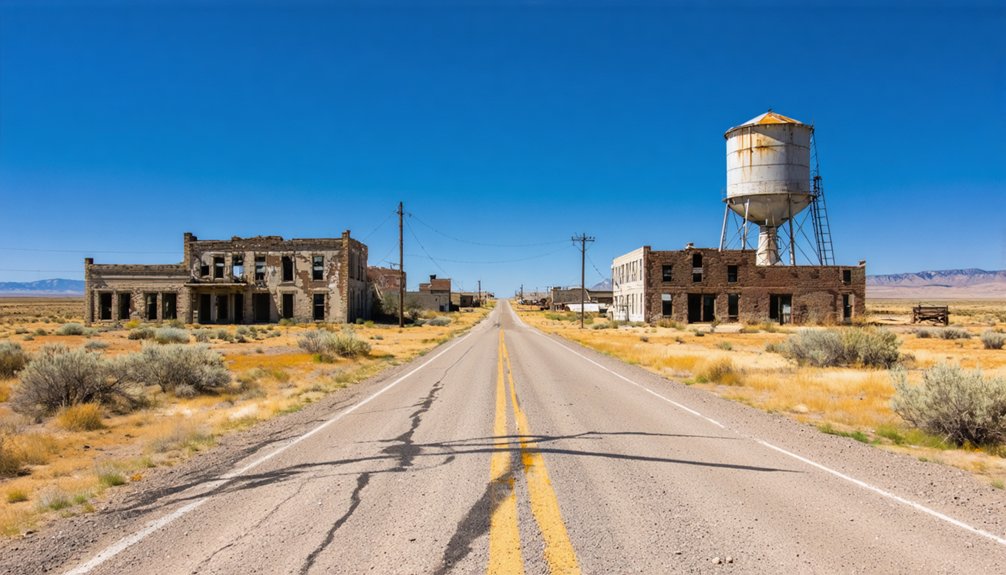
Whether a ghost town visit justifies a detour depends entirely on what you’re chasing, and Jeffrey City delivers something most roadside stops can’t—an unscripted, unpolished portrait of collapse still in progress. Forgotten stories surface everywhere here, embedded in cracked asphalt and boarded worker quarters.
You’ll find:
- Prairie grass reclaiming parking lots where families once gathered
- Pronghorn antelope roaming streets that once held 4,500 residents
- Local legends passed through the Split Rock Café by those who stayed
- Abandoned infrastructure revealing uranium boom ambitions gone silent
- A rawness no curated tourist destination can manufacture
Jeffrey City rewards travelers who embrace discomfort and curiosity over convenience. If you’re driving US Route 287 anyway, this detour costs you nothing but time—and returns something genuinely unforgettable.
Frequently Asked Questions
Does Jeffrey City Have Any Cell Phone Coverage or Reliable Signal?
You’ll find Jeffrey City’s cell signal situation “digitally liberated” — meaning you’re beautifully off the grid! Coverage issues are common in this remote Wyoming ghost town, so you’d better download your maps and embrace true frontier freedom beforehand.
Are There Any Guided Tours Available for Visiting Jeffrey City?
You won’t find formal guided tours in Jeffrey City, but you’re free to explore it independently. Wander its cracked streets for guided exploration of local history, and chat with the Split Rock Café’s friendly locals for insider stories.
Is It Legal to Enter the Abandoned Buildings in Jeffrey City?
Once home to 4,500 souls, Jeffrey City’s abandoned structures aren’t legally yours to enter without permission. Urban exploration here carries real safety concerns—crumbling structures threaten your freedom to roam, so always respect posted boundaries and private property laws.
What Is the Best Time of Year to Visit Jeffrey City?
You’ll find the best weather from late spring through early fall, making it ideal for seasonal activities like exploring the eerie abandoned streets and watching pronghorn antelope roam freely across the reclaimed prairie landscape.
Does Jeffrey City Host Any Annual Events or Community Gatherings?
Jeffrey City doesn’t host major community festivals, but you’ll find local traditions alive through the First Baptist Church gatherings, where free-spirited ranchers and curious visitors connect authentically amid the hauntingly beautiful, wide-open Wyoming landscape.
References
- https://cowboystatedaily.com/2025/05/25/jeffrey-citys-not-dead-the-voices-of-a-modern-wyoming-ghost-town/
- https://www.youtube.com/watch?v=L-mAeuKxfoI
- https://magazine.catapult.co/column/stories/loneliness-wyoming-jeffrey-city-ghost-town-jenny-tinghui-zhang
- https://www.youtube.com/watch?v=kJNNZImlapc
- https://www.youtube.com/watch?v=lzOnLAD2zB8
- https://www.youtube.com/watch?v=-8XXyvDLjsY
- https://emergefilmsolutions.com/ghost-town-film-location-jeffrey-city-wyoming/
- https://cowboystatedaily.com/2022/05/27/we-are-the-sheriff-residents-of-jeffrey-city-wyoming-pop-35-take-care-of-each-other/
- https://www.atlasobscura.com/places/jeffrey-city-ghost-town
- https://www.youtube.com/watch?v=5XZl5-drOQk