Planning a Logan ghost town road trip puts you in the heart of Lincoln County, Nevada, where silver fever once drew 300 settlers to the Mount Irish Range before collapsing just as fast. You’ll explore stone foundations, the historic Scofield cabin, and ancient petroglyphs scattered across the high desert. Fall offers the most stable road conditions, but any season rewards careful preparation. There’s far more to this forgotten boomtown than first meets the eye.
Key Takeaways
- Logan, Nevada, a silver mining ghost town founded in 1865, is located in Lincoln County’s Mount Irish Range, roughly 9.5 miles west of Hiko.
- Access Logan via a well-maintained dirt road through the Mt. Irish Archaeological District; visit in spring or fall for optimal road conditions.
- Explore remnants including the Scofield cabin, rock foundations, mining artifacts, and evidence of Native American wickiup structures and ancient rock art.
- Plan your itinerary around morning exploration of Logan’s ruins, midday petroglyphs at Mt. Irish, and an afternoon drive along the Extraterrestrial Highway.
- Pack water, sturdy boots, and a detailed map, as Logan sits in high desert terrain with limited services and unpredictable seasonal conditions.
What Is Logan, Nevada’s Ghost Town?
Deep in the Mount Irish Range of Lincoln County, Nevada, lies Logan City — a silver mining boomtown that blazed to life in 1865 and burned out just as fast.
Understanding Logan history means tracing a familiar frontier arc: rich promise, frenzied activity, then silence.
Prospector John H. Ely’s party struck silver near Mount Irish, and within months, over 100 miners flooded the eastern slopes. They filed claims, built stone structures, and deployed five-stamp mill mining techniques to crush ore pulled from the earth.
But the veins ran shallow. By 1869, Pioche’s richer deposits pulled everyone away.
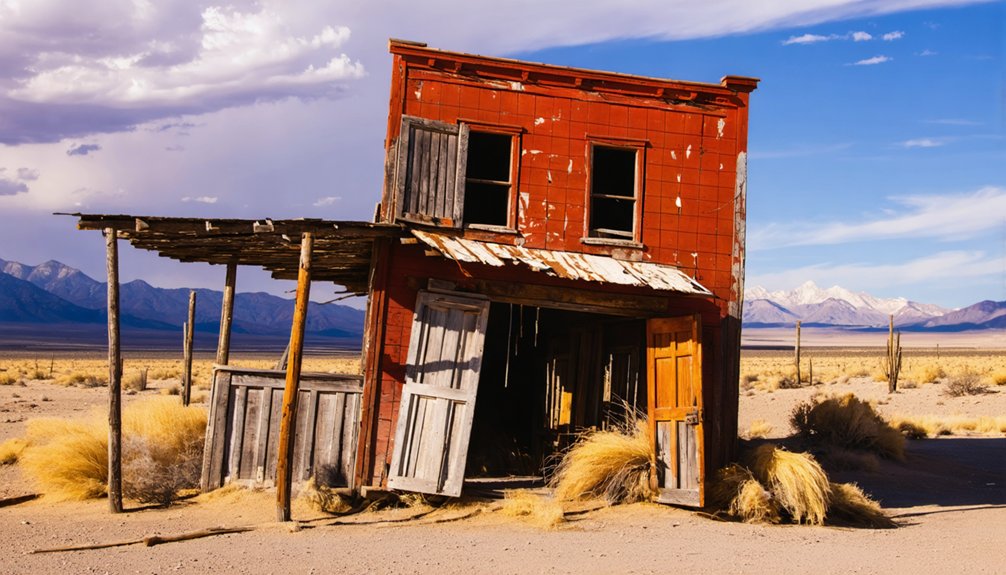
Today, crumbling rock foundations and scattered debris mark where ambition once roared. You’re not just visiting ruins — you’re standing inside a story that moved too fast to last.
How Did Logan Ghost Town Rise and Fall?
Logan’s story begins in 1863 when a Southern Paiute tribesman showed Mormon missionary William Hamblin glittering “panagari” rocks, igniting a silver rush that transformed a remote Nevada valley into a boomtown of over 300 residents by 1868, complete with stone buildings, a hotel, a stable, and a five-stamp mill.
But the dream cracked fast — by 1867, prospectors had already proven the silver veins too shallow to sustain long-term operations. When richer deposits surfaced in Pioche in 1869, miners abandoned Logan almost overnight.
You’ll walk into a place that went from wilderness to thriving settlement to ghost town in less than a decade, its silence now broken only by wind through the junipers.
Silver Discovery Sparks Growth
Silver’s discovery in the Pahranagat Valley reads like a classic tale of frontier ambition gone sideways. It started in 1863 when Mormon missionary William Hamblin learned about glittering “panagari” rocks from a Southern Paiute tribesman.
Two years later, prospector John H. Ely’s party confirmed rich silver deposits near Mount Irish, igniting a silver mining rush that transformed wilderness into a bustling settlement almost overnight.
Town development accelerated fast. Logan Springs — named for the camp’s only water source — swelled past 100 residents within months, hitting 300 by 1868.
Stone buildings, a hotel, a store, a stable, and a five-stamp mill rose from the desert floor. Miners flooded the Pahranagat Mining District, filing over 100 claims, convinced they’d struck the frontier’s next great fortune.
Boom Town Takes Shape
By 1868, Logan City had transformed from a makeshift camp into a functioning frontier town, complete with a post office that made it official. You’d have found fine stone buildings lining the settlement — a store, hotel, stable, and a five-stamp mill driving the town’s heartbeat.
That mill, constructed in nearby Hiko, processed silver ore extracted through hard-rock mining techniques that defined the era’s industrial ambition.
The town’s historical significance runs deep. Over 100 mining claims flooded the Pahranagat Mining District, and the population swelled to 300 hungry prospectors chasing fortune.
But freedom came with consequences — silver veins proved too shallow by 1867. When richer deposits beckoned from Pioche in 1869, miners vanished almost overnight, leaving Logan’s promising streets silent and slowly reclaimed by desert wilderness.
Decline And Abandonment
The silver veins that built Logan City ultimately betrayed it. By 1867, miners confirmed the deposits lacked depth, sealing the town’s fate in mining history.
Three brutal blows finished Logan City:
- 1867 – Assays proved silver veins too shallow for profitable extraction
- 1869 – Richer Pioche strikes triggered a mass exodus overnight
- August 1, 1871 – The post office closed, officially ending Logan City’s existence
You’re walking ground where dreams collapsed fast. Miners who’d staked everything abandoned fine stone buildings, a five-stamp mill, and their ghost town legends without looking back.
Nature reclaimed what ambition built. Today, crumbling foundations and scattered trash dumps tell the story better than any history book.
Logan City’s rise and fall happened in under a decade.
Where Is Logan Ghost Town Located?
Nestled on the eastern slope of Mount Irish in Lincoln County, Nevada, Logan Ghost Town sits roughly 9.5 miles west of Hiko and 2.5 miles south of Mount Irish Peak, deep within the Pahranagat Valley.
You’ll reach it via a well-maintained dirt road cutting through the Mt. Irish Archaeological District, though spring snowmelt can wash out sections, so plan accordingly.
Dense juniper and pinyon pine forests surround you as granite boulder fields and dramatic cliffs frame the landscape.
Dense juniper and pinyon pine forests give way to dramatic granite cliffs, creating a landscape both rugged and striking.
The area’s historical significance extends beyond its mining techniques and silver rush origins — ancient Native American rock art sites dot the surrounding terrain.
Positioned between Hiko and Rachel near the Extraterrestrial Highway, Logan fits perfectly into a broader Nevada road trip built for true exploration.
How Do You Get to Logan Ghost Town?

Getting to Logan Ghost Town is half the adventure, and knowing your route before you leave pavement behind makes all the difference.
You’ll head roughly 9.5 miles west of Hiko into the Mount Irish Range, traversing a well-maintained dirt road through the Mt. Irish Archaeological District. Ghost town accessibility improves in summer, but spring snowmelt can wash out sections unexpectedly.
Before you roll out, lock in these essentials:
- Check road conditions — spring runoff creates unpredictable washouts along the dirt access road
- Fill your tank — services between Hiko and Rachel are sparse
- Plan your hiking routes — the surrounding juniper and pinyon pine terrain rewards explorers who venture beyond the main ruins
You’re chasing something raw and real out here.
What Ruins and Structures Can You Still See?
Once you arrive at Logan Ghost Town, you’ll find the site stripped down to its bones — but those bones tell a compelling story.
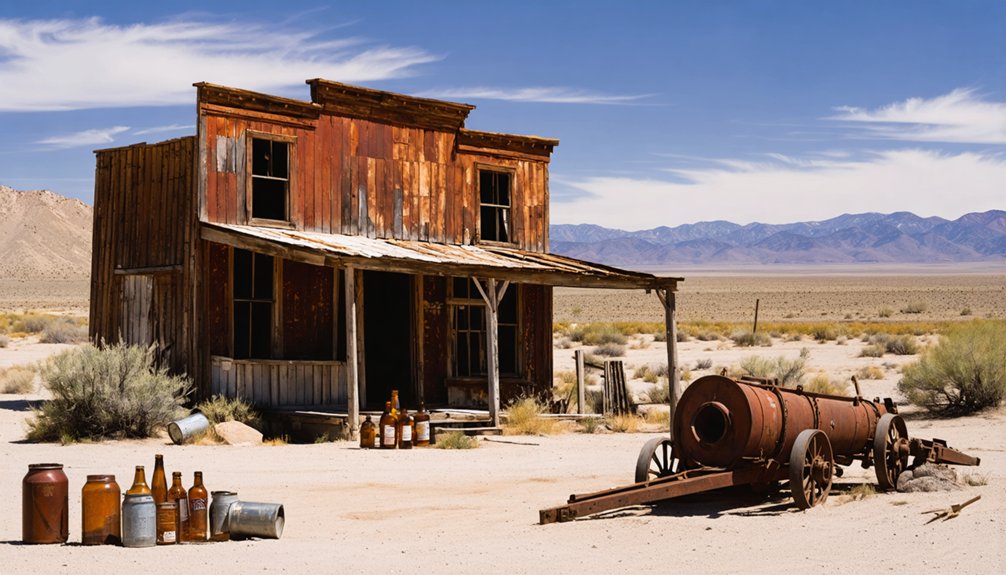
Your ruins exploration begins with the Scofield cabin, the most prominent standing structure, built from materials salvaged directly from the original townsite. It’s a tangible link to Logan’s layered past.
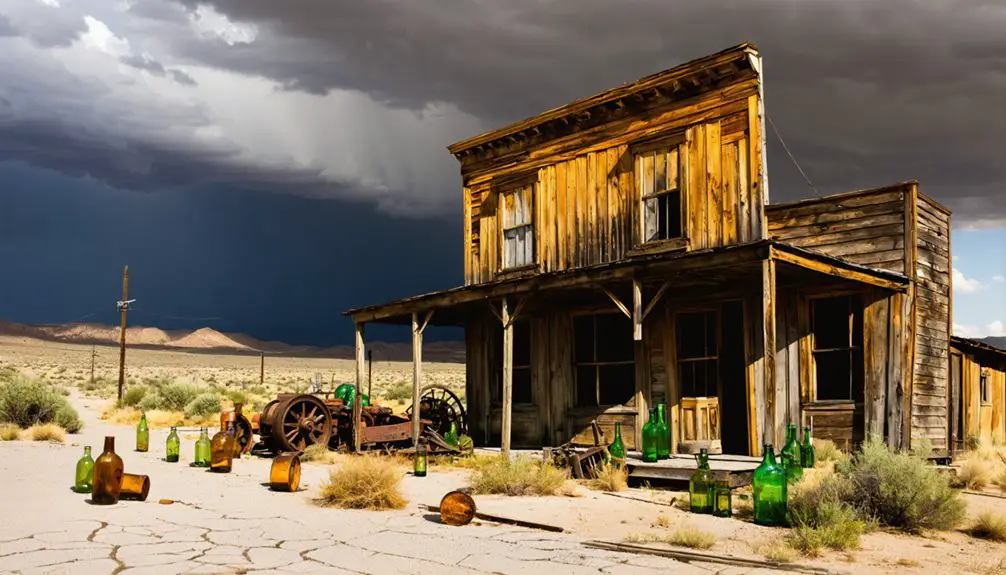
Scattered across the terrain, you’ll spot several rock foundations and trash dumps — quiet markers of the historical significance this silver boomtown once carried.
Look closely, and you might even detect traces of Native American wickiup structures alongside Euro-American remnants, hinting at a more complex human story than most ghost towns offer.
The surrounding juniper and pinyon pine forests frame everything beautifully, rewarding explorers who take their time reading the land.
What Role Did Native Americans Play in Logan’s History?
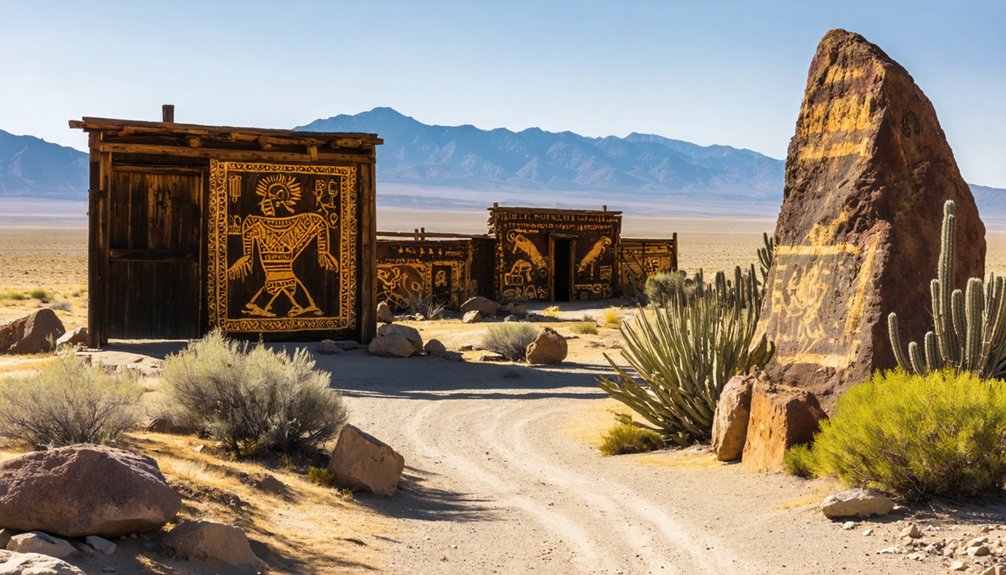
When you explore Logan’s history, you can’t ignore the Southern Paiute‘s pivotal role in its very creation — it was a tribesman who first showed Mormon missionary William Hamblin the silver-bearing “panagari” rocks back in 1863.
Yet that generosity quickly soured when returning prospectors damaged land the Paiute held sacred, prompting them to drive the miners out in 1865.
Initial Silver Discovery Role
Before a single prospector drove a pickaxe into the Mount Irish hillside, a Southern Paiute tribesman held out a handful of rocks—”panagari” or “panacker,” as the locals called them—and changed the trajectory of the entire Pahranagat Valley.
In 1863, Mormon missionary William Hamblin witnessed this silver discovery, igniting a prospecting history that would reshape the region.
Three pivotal facts shape this origin story:
- The Paiute deliberately shared knowledge of silver-bearing rocks with outsiders.
- Hamblin’s encounter preceded John H. Ely’s official 1865 claims by two years.
- That single interaction triggered over 100 mining claims in the Pahranagat Mining District.
You’re literally walking ground where indigenous knowledge revealed an entire frontier mining era—a detail most visitors never fully appreciate.
Sacred Land Conflicts
That generous act of sharing sacred knowledge came with a cost neither side fully anticipated. The Southern Paiute had called this sacred land home long before silver fever swept through, and sharing their knowledge of “panagari” rocks triggered devastating mining impacts on their cultural heritage.
By 1865, returning prospectors violated indigenous rights, using violence to permanently displace the very people who’d revealed the valley’s wealth.
You’re walking ground where two worlds violently collided. Archaeological surveys from 2013-2014 suggest some Native Americans may have briefly coexisted alongside miners, leaving wickiup structures near Euro-American buildings.
That tension-filled history layers every boulder and foundation you’ll encounter here. Exploring Logan means confronting both its adventurous frontier spirit and the painful erasure of an ancient civilization that made it all possible.
When Is the Best Time to Visit Logan Ghost Town?
Timing your visit to Logan Ghost Town can make the difference between a magical desert adventure and a frustrating, road-blocked ordeal. Understanding the best seasons keeps you moving freely through this remote Lincoln County landscape.
- Spring (March–May): Wildflowers bloom, but snowmelt can wash out the dirt access road. Check conditions before departing.
- Fall (September–November): Crisp temperatures, stable roads, and golden juniper foliage create ideal exploration conditions — the strongest visitor tips point here.
- Summer (June–August): Brutal desert heat makes hiking punishing; carry extra water if you’re committed to summer wandering.
Winter visits risk road closures entirely.
Whatever season calls you out, arrive early, pack provisions, and embrace the unpredictability that makes ghost town road-tripping genuinely rewarding.
What Other Sites Are Near Logan Ghost Town?
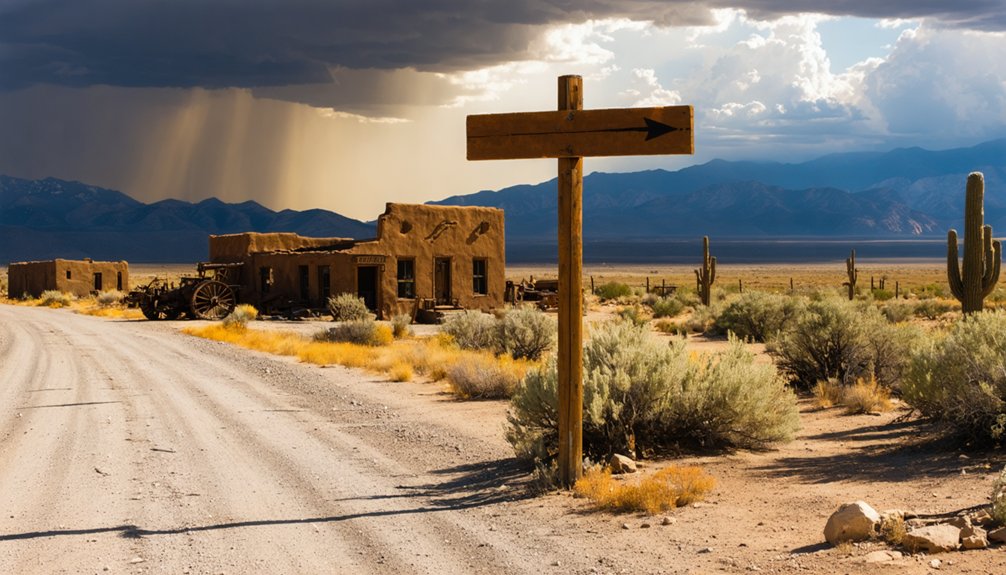
Once you’ve mapped out your ideal season for hitting Logan Ghost Town, you’ll want to stretch that road trip further — and the surrounding Lincoln County landscape rewards exactly that kind of ambition.
The Mt. Irish Archaeological District sits practically next door, where ancient petroglyphs carved into volcanic rock carry historical significance that predates Logan’s silver rush by centuries. Archaeological findings from ongoing surveys connect Native American presence directly to the region’s layered human story.
Roll further down the Extraterrestrial Highway toward Rachel, or swing through Hiko, where Logan’s silver ore once fed the processing mill. Every stop adds another chapter.
This corridor isn’t just a ghost town detour — it’s a full immersion into desert history, from prehistoric rock art to abandoned boomtowns chasing vanished silver veins.
How Do You Build a Logan Ghost Town Day Trip?
Building a Logan Ghost Town day trip means anchoring your itinerary around two core stops — the townsite itself and the Mt. Irish Archaeological District. Together, they deliver ghost town legends, ancient rock art, and raw desert solitude in one sweeping loop.
Anchor your Logan Ghost Town day trip around two stops: the townsite and Mt. Irish — ghost town legends meet ancient rock art.
Structure your visit like this:
- Morning — Arrive early at Logan’s rock foundations, scanning mining artifacts scattered across the eastern slope before midday heat arrives.
- Midday — Trek through juniper and pinyon pine forests toward Mt. Irish’s petroglyphs, where centuries of human stories cover canyon walls.
- Afternoon — Drive the Extraterrestrial Highway toward Rachel or Hiko, extending your adventure beyond the ghost town itself.
Pack water, wear sturdy boots, and expect washouts after spring snowmelt on the access road.
What Should You Bring to Logan Ghost Town?

Packing smart separates a rewarding Logan Ghost Town adventure from a miserable one. These ghost town essentials will keep you moving confidently through rugged terrain: bring at least two liters of water per person, since no reliable water source exists on-site.
Wear sturdy boots for traversing granite boulder fields and rocky foundations. Pack a detailed map, as cell service disappears quickly in the Mount Irish Range.
Follow these exploration tips to maximize your experience: carry a camera for capturing crumbling stone structures and ancient rock art, and bring sun protection for Nevada’s relentless high-desert exposure.
A light jacket handles sudden temperature drops at elevation. Toss granola bars and a first-aid kit into your pack, and you’re ready to roam freely across this forgotten frontier.
Frequently Asked Questions
Is Camping Overnight Permitted at the Logan Ghost Town Site?
Like a true frontier spirit, you can camp overnight at Logan! Embrace your freedom, but follow camping regulations and ghost town etiquette — respect the ruins, leave no trace, and honor this sacred, storied land.
Are There Any Guided Tours Available for Logan Ghost Town?
No formal guided tour options exist for Logan’s ghost town history. You’ll explore it independently, charting your own adventure through crumbling foundations, ancient rock art, and whispering juniper forests — true freedom awaits the self-directed wanderer.
Is the Logan Ghost Town Site Wheelchair Accessible?
Unfortunately, Logan Ghost Town lacks wheelchair ramps and formal accessibility options. You’ll navigate rugged dirt roads, rocky terrain, and boulder fields — wild, untamed landscapes that’ll thrill your adventurous spirit, though they’re challenging for mobility-impaired explorers craving freedom.
Can You Legally Collect Artifacts or Rocks Found at Logan Ghost Town?
You can’t legally collect artifacts or rocks at Logan Ghost Town. Federal laws protect items of artifact preservation and historical significance, keeping the site’s adventurous spirit intact for every free-spirited explorer who ventures there after you.
Is There Cell Phone Service or Emergency Assistance Near Logan Ghost Town?
You’re a million miles from civilization out here! Don’t count on cell service at Logan Ghost Town. Before venturing in, share your emergency contacts with someone trustworthy and carry a satellite communicator for true off-grid safety.
References
- https://www.destination4x4.com/logan-city-nevada-lincoln-county-ghost-town/
- https://www.talesfromthedesert.com/portfolio/logan-ghost-town/
- https://www.legendsofamerica.com/logan-city-nevada/
- https://nvtami.com/2024/08/16/logan-city-a-governors-heroic-ride/
- https://www.nvexpeditions.com/lincoln/logan.php
- https://kids.kiddle.co/Logan
- https://www.birdandhike.com/Hike/BasinRange/Poi/LoganTown/_LoganTown.htm