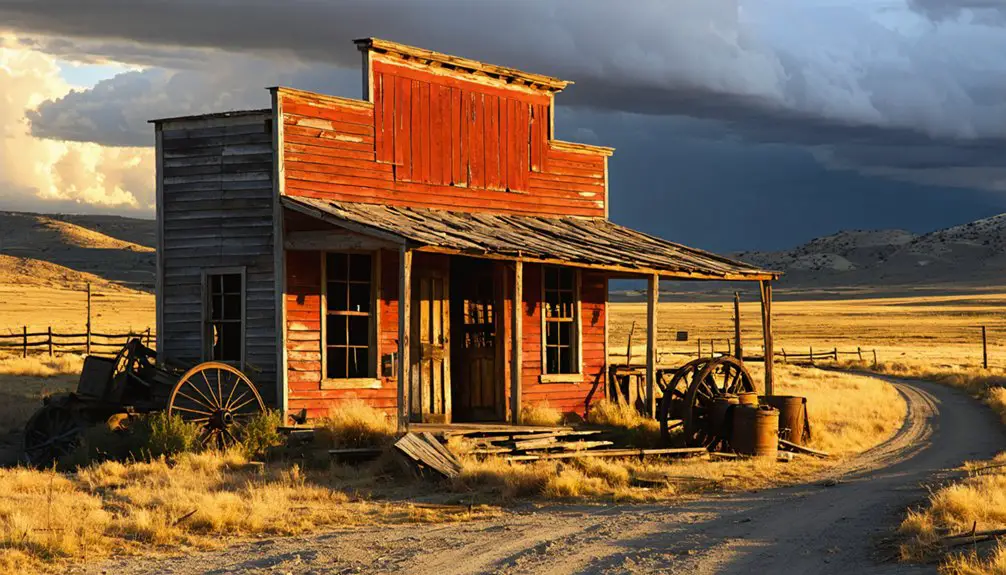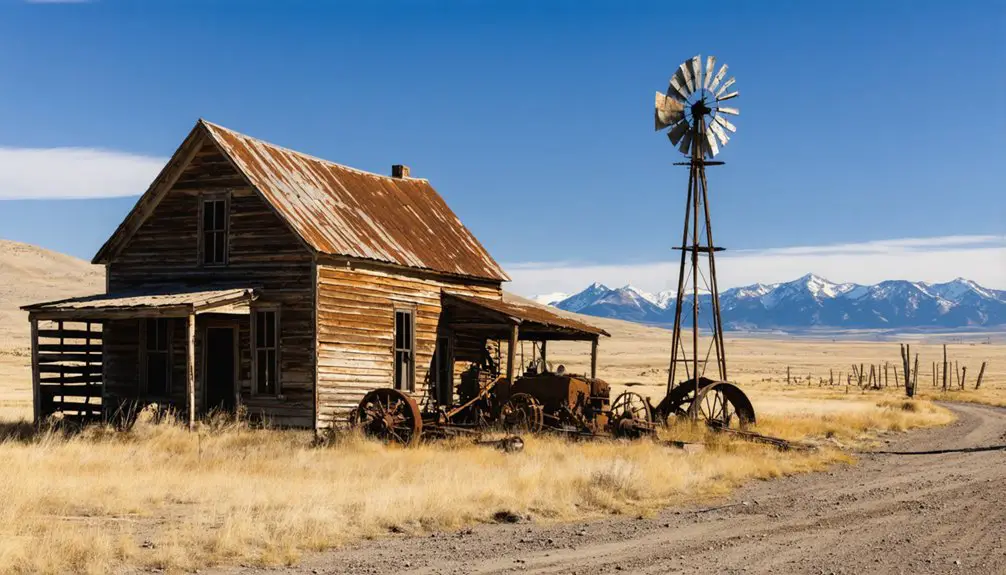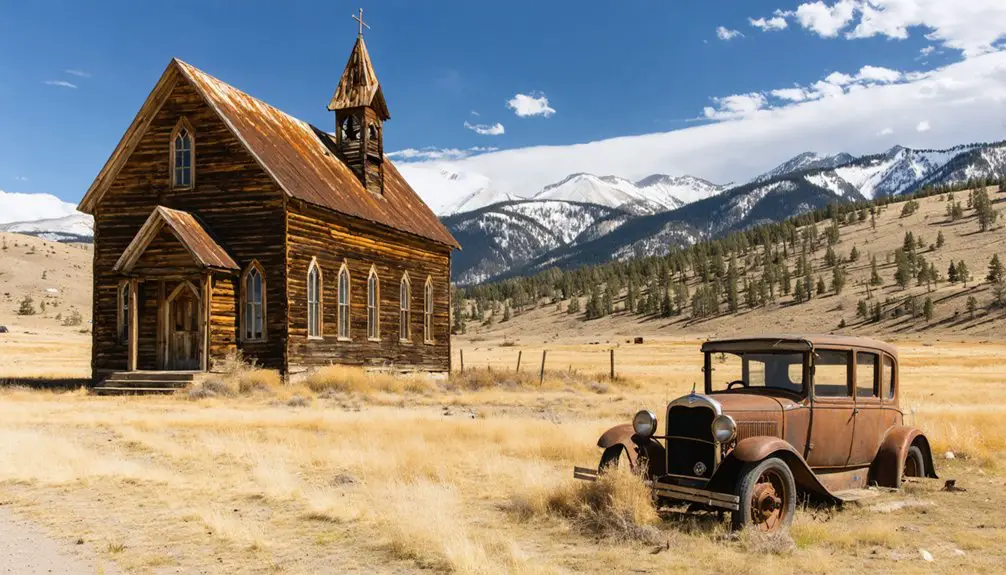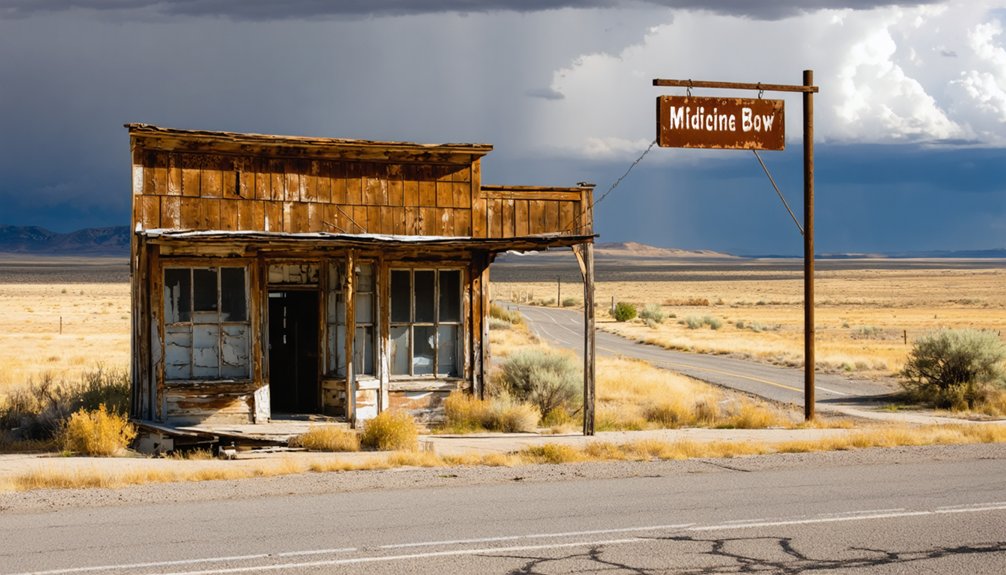
Planning a ghost town road trip to Medicine Bow, Wyoming means stepping into a living time capsule frozen in the railroad era of 1868. You’ll walk past weathered storefronts, a historic hotel, and an old Union Pacific depot that once drove a booming frontier economy. The town’s boom-and-bust story — shaped by cattle, wool, timber, and Owen Wister’s iconic novel — left behind an eerily preserved townscape that rewards every curious traveler who ventures deeper into its history.
Key Takeaways
- Medicine Bow, Wyoming, founded in 1868 alongside the transcontinental railroad, is a semi-ghost town with original-era buildings still standing.
- Key historic sites include the 1911 Virginian Hotel, Medicine Bow Museum, Owen Wister Cabin, and the Old Union Pacific Depot.
- The town’s decline stemmed from railroad modernization and reduced freight traffic, leaving preserved but largely empty storefronts and streets.
- The entire town is walkable after parking, making it easy to explore all major historical attractions within a half or full day.
- Visitors should arrive early for optimal lighting, bring a camera, wear comfortable shoes, and check local event calendars beforehand.
What Makes Medicine Bow a Ghost Town Worth Visiting?
Medicine Bow isn’t a full ghost town — a small community still lives there — but it carries the bones of one, and that’s what makes it worth the detour.
You’ll find original-era buildings still standing, including a historic hotel, a railroad depot, and a museum rooted in frontier life. The ghost town allure here comes from atmosphere, not total abandonment.
Founded in 1868 alongside the first transcontinental railroad, Medicine Bow has a historical significance that most roadside stops can’t match. It’s a place shaped by boom-and-bust cycles — rail commerce, ranching, wool, and timber.
Born beside the first transcontinental railroad in 1868, Medicine Bow was built by boom-and-bust — rail, ranching, wool, timber.
You can walk the compact historic core in a few hours and leave with a genuine sense of the raw, working West that once defined this corner of Wyoming.
Medicine Bow’s Railroad Boom and Why It Faded
When you walk Medicine Bow’s quiet streets today, it’s hard to imagine the energy that exploded here in 1868 when Union Pacific Railroad construction crews pushed through the area, transforming a sparse stretch of Wyoming land into a bustling commercial hub for ranchers, traders, and railroad workers.
The town grew its identity around that rail connection, shipping cattle, wool, and timber while the depot anchored daily life for decades.
But once rail traffic declined and the railroad’s economic grip loosened, Medicine Bow lost its engine, leaving behind a preserved but hollowed-out townscape that draws curious travelers rather than freight cars.
Railroad Roots And Growth
Back in 1868, Union Pacific Railroad crews drove their tracks straight through what would become Medicine Bow, and that single act of industrial ambition turned a dusty Wyoming plain into a living, breathing railroad town almost overnight.
Railroad expansion reshaped everything, and the economic impact hit fast and hard.
You’ll find the town’s identity still rooted in that original momentum:
- Union Pacific’s route made Medicine Bow a critical supply and shipping stop
- Ranchers moved cattle, wool, and timber through the depot regularly
- The 1869 post office opening confirmed the settlement’s staying power
- Commerce attracted workers, merchants, and settlers seeking opportunity
- A post office, hotel, and depot formed the town’s early backbone
That infrastructure gave Medicine Bow its pulse and its purpose.
Decline After Rail Departure
As railroads modernized and freight priorities shifted, Medicine Bow lost the economic engine that had built it.
Economic shifts hit hard when rail traffic declined, pulling commerce and workers away from town. Businesses that once thrived on railroad contracts shuttered, and families followed the jobs elsewhere.
Population changes reshaped the community dramatically, leaving behind empty storefronts and quieter streets where cattle drives and freight wagons once created daily bustle.
You can still feel that absence when you walk through town today. The buildings remain, but the crowds never came back.
What survives is a snapshot of a Western settlement frozen at its peak, preserved not by planning but by circumstance. That eerie stillness is exactly what makes Medicine Bow worth adding to your road trip route.
The Novel That Turned Medicine Bow Into a Western Landmark
Few novels have done more to shape the mythology of the American West than Owen Wister‘s *The Virginian*, and Medicine Bow sits at the heart of that story.
Wister’s 1885 visit left a lasting literary legacy that transformed this small Wyoming town into sacred ground for Western fiction lovers.
Here’s what connects Medicine Bow to Wister’s world:
- Owen Wister stayed in the local general store, drawing direct inspiration for his iconic novel
- The Virginian published in 1902, became a foundational American Western
- The Virginian Hotel was built and named in honor of that literary legacy
- Wister’s monument and cabin remain open for visitors to explore
- The Medicine Bow Museum highlights the town’s deep fictional and cultural roots
You’re walking through living literary history here.
Top Historic Sites to See in Medicine Bow, Wyoming
When you arrive in Medicine Bow, two stops anchor the entire visit: the Virginian Hotel and the Medicine Bow Museum.
Built in 1911 by August Grimm, the Virginian Hotel still stands as the town’s most iconic landmark, its name a direct nod to Owen Wister’s celebrated novel.
The museum complements the hotel perfectly, pulling together railroad-era artifacts and pioneer history that put the town’s boom-and-bust past into sharp focus.
The Virginian Hotel
The Virginian Hotel stands as Medicine Bow’s most recognizable landmark, built in 1911 by August Grimm and named after Owen Wister’s celebrated Western novel. Its literary legacy draws visitors enthusiastic to connect with the roots of American Western fiction.
Step inside and you’ll feel the frontier era come alive through preserved architecture and rich history.
What you’ll discover at the Virginian Hotel:
- A well-preserved 1911 facade reflecting classic frontier-era construction
- Direct ties to Owen Wister’s foundational Western novel
- A living piece of Medicine Bow’s boom-era railroad history
- An iconic photography subject on the town’s historic main street
- A tangible reminder of how literature shaped a small Wyoming town’s identity
Don’t miss stopping here — it anchors everything Medicine Bow represents.
Medicine Bow Museum
Anchoring Medicine Bow’s preserved historic core, the Medicine Bow Museum gives you a hands-on look at the town’s pioneer roots, railroad heritage, and ranching culture.
You’ll find museum exhibits covering the full sweep of Carbon County history, from early Union Pacific construction through the livestock and wool-shipping eras that shaped everyday life here. Local artifacts on display include tools, photographs, and documents that bring the settlement period to life without filtering it through nostalgia.
The museum also incorporates the 1913 historic train depot, giving you an authentic railroad-era structure to explore alongside the collections inside.
It’s a compact but rewarding stop that fills in the context behind every weathered building you’ve already passed on the street.
Saloons, Shootouts, and Frontier Justice in Medicine Bow’s Past
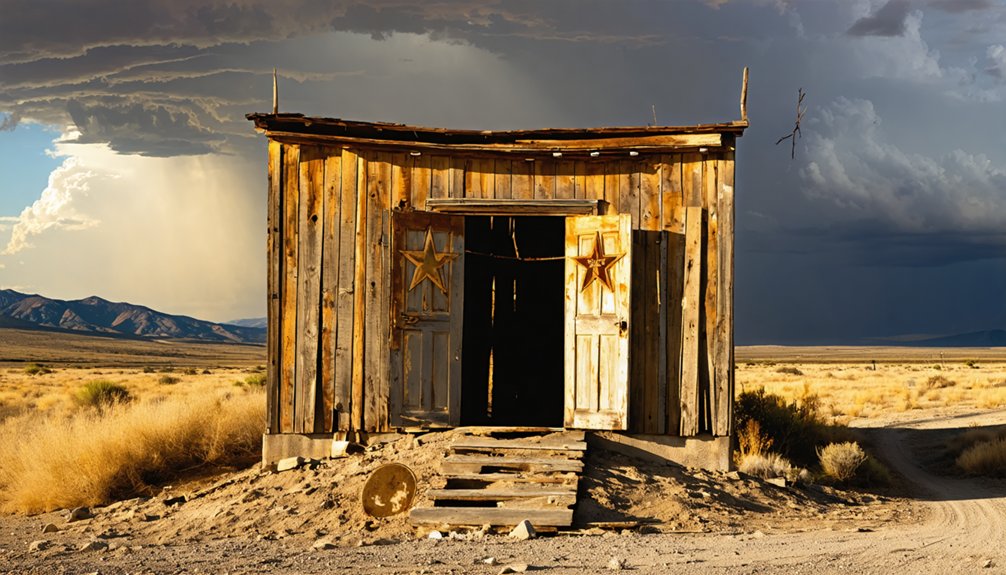
Few railroad towns in the American West cultivated a rougher reputation than Medicine Bow did in its early years.
Saloons’ legacy runs deep here, where railroad workers, cowboys, and cattlemen settled disputes outside the law. Frontier justice meant survival instincts ruled the streets.
You’ll feel that gritty history walking through town today. Consider what early residents navigated daily:
- Saloon brawls erupting between railroad crews and cattlemen
- Stray bullets making streets genuinely dangerous after dark
- Informal dispute resolution replacing formal legal systems
- Gambling and drinking fueling volatile social tensions
- Cowboys asserting dominance through intimidation and force
Medicine Bow wasn’t romanticized without reason. Its raw, unfiltered frontier character shaped everything Owen Wister later captured so vividly in The Virginian.
How to Spend a Half Day or Full Day in Medicine Bow
Whether you’ve got a few hours or a full afternoon to spare, Medicine Bow rewards every minute you invest in it.
Start at the Virginian Hotel, where history practically breathes through the walls. Then walk over to the Medicine Bow Museum and Owen Wister Cabin to absorb the town’s literary roots and pioneer past. The Old Union Pacific Depot rounds out your railroad-era exploration beautifully.
History breathes through the Virginian Hotel, the Medicine Bow Museum, and the Old Union Pacific Depot.
For a half day, hit these core stops and you’ll leave satisfied.
For a full day, check local events beforehand since seasonal gatherings occasionally bring the town to life in unexpected ways. Among the best visitor tips: arrive early for good light on those historic facades and bring a camera.
This compact town is entirely walkable once you park.
Frequently Asked Questions
Is Medicine Bow Suitable for Children or Family-Friendly Visitors?
Right up your alley, Medicine Bow offers family activities and kid-friendly attractions! You’ll explore the historic depot, museum, and Owen Wister Cabin, giving your kids an engaging, hands-on taste of authentic Wild West history.
What Is the Best Time of Year to Visit Medicine Bow?
You’ll find late spring through early fall offers the best seasonal activities and weather considerations for your visit. Wyoming’s summers are warm and clear, giving you ideal conditions to freely explore Medicine Bow’s historic streets and landmarks.
Are There Any Restaurants or Places to Eat in Medicine Bow?
You’ll find limited dining options in Medicine Bow, but the Virginian Hotel offers a taste of local cuisine in a historic setting. Pack snacks and embrace the freedom of this remote, off-the-beaten-path Wyoming adventure!
How Far Is Medicine Bow From Cheyenne or Laramie, Wyoming?
Shockingly close for such a remote gem, Medicine Bow sits just 85 miles from Cheyenne and 57 miles from Laramie. You’ll cruise scenic routes, discovering local attractions that’ll make every freedom-loving mile worthwhile!
Can Visitors Stay Overnight at the Historic Virginian Hotel Today?
Yes, you can stay overnight at the Virginian Hotel! It’s one of Medicine Bow’s finest historic accommodations, letting you immerse yourself in Wild West charm while exploring local attractions at your own adventurous pace.
References
- https://cobbwebb.media/2022/07/12/wy-most-haunted-the-virginian-hotel-in-medicine-bow/
- https://www.youtube.com/watch?v=nscp-FV_Xzg
- https://wakeupwyo.com/medicine-bow-history/
- https://historicwyoming.org/profiles/medicine-bow/
- https://www.medbowmuseum.org/visit
- https://www.medicinebow.org/history
- https://travelwyoming.com/blog/stories/post/wy-hidden-histories-pioneers-ghost-towns/
- https://www.facebook.com/MyCountry955/posts/medicine-bows-wild-west-historylearn-more-httpsmycountry955comixp961pmedicine-bo/1527341866060868/
- https://www.fs.usda.gov/r02/mbrtb/about-area/history-culture