Planning a ghost town road trip to Placer, Oregon means trading pavement for rugged backcountry northeast of Grants Pass, where gold fever shaped an entire community back in 1885. You’ll need a four-wheel-drive vehicle, printed maps, recovery gear, and plenty of water before heading four miles east of I-5. Pair your visit with nearby Golden Ghost Town for a full day of history. Everything you need to plan your adventure is waiting ahead.
Key Takeaways
- Placer, Oregon, a historic gold rush ghost town, sits four miles east of I-5 and requires a four-wheel-drive vehicle for access.
- Combine visits to both Placer and Golden ghost towns in one day, using a campground off Coyote Creek Road as your base.
- Pack recovery gear, printed maps, extra water, a first aid kit, and bear spray, as cell service and amenities are extremely limited.
- Watch for wildlife including deer, black bears, and rattlesnakes while navigating rugged switchbacks and remote canyon roads near Josephine County.
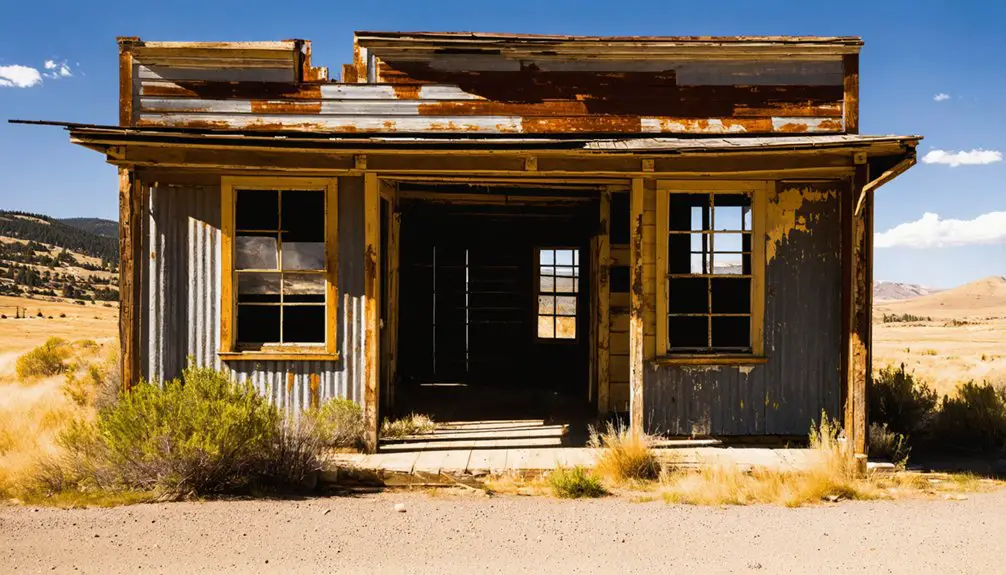
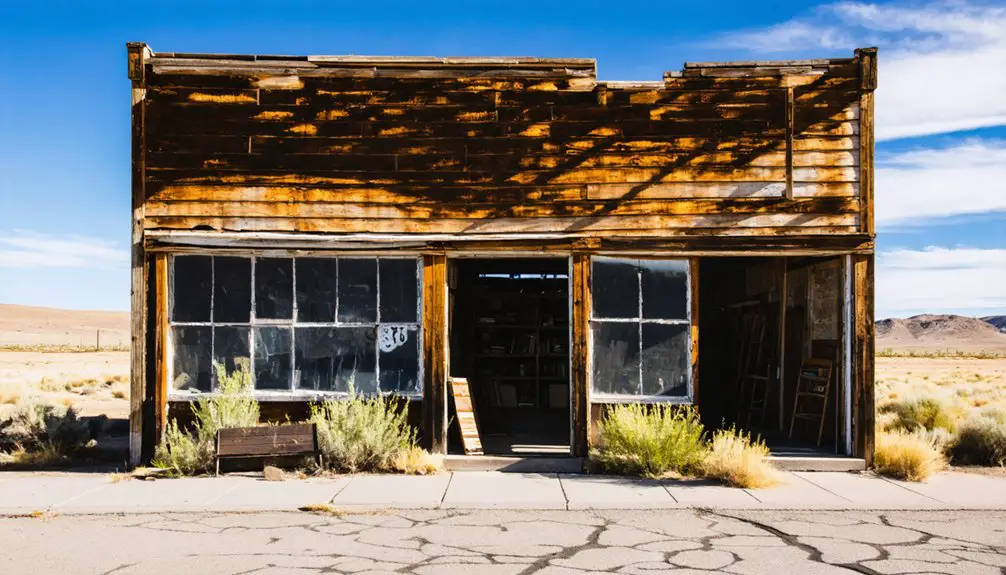
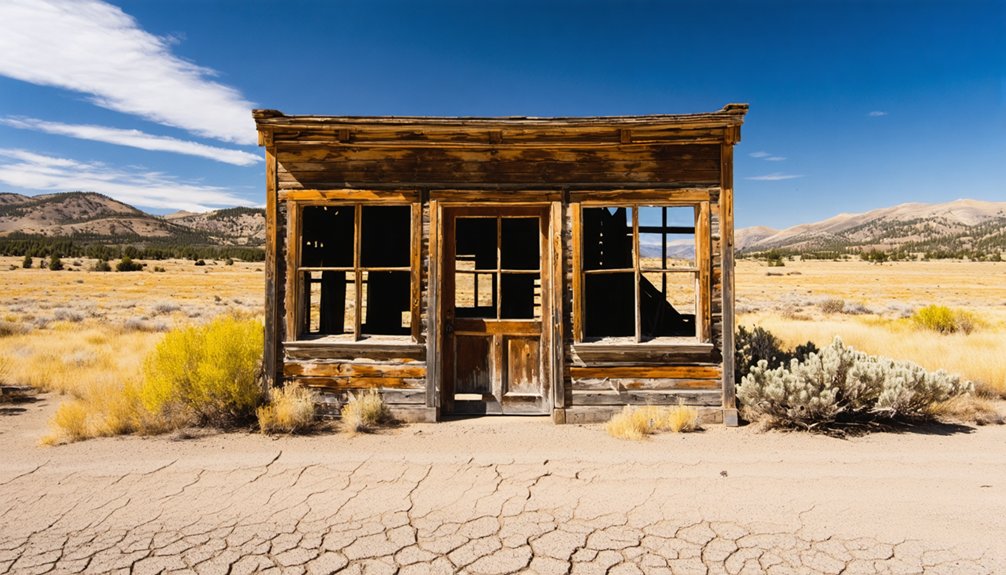
- Explore Placer’s scattered ruins, collapsed foundations, and stone chimney stacks, which offer a raw, unmanicured glimpse into southwestern Oregon’s mining history.
What Makes Placer, Oregon Worth the Drive?
Though it demands a rugged four-wheel-drive approach four miles east of I-5, Placer rewards you with a rare glimpse into one of southwestern Oregon’s most unapologetically rowdy gold rush settlements. Founded in 1885 northeast of Grants Pass, it thrived as a mining legacy hub where saloons and sin kept hard-working prospectors entertained between shifts along Graves Creek.
Unlike sanitized ghost towns preserved behind velvet ropes, Placer pulls you into raw, unfiltered history. It’s the kind of place ghost towns enthusiasts dream about — remote, honest, and largely forgotten by mainstream tourism.
Combine it with a stop at nearby Golden, and you’ve got yourself a genuinely rewarding road trip through southwestern Oregon’s goldfields, one that trades comfort for authenticity every mile of the way.
Placer’s Gold Rush Roots and Rise From Miner’s Camp to Boomtown
Before Placer earned its reputation for saloons and sin, it started as “Tom East” in 1885 — a scrappy miner’s camp named after a local prospector working the banks of the Rogue River.
That mining heritage runs deep, rooted in southwestern Oregon’s gold rush stretching back to the early 1850s. When Idaho strikes reignited Coyote Creek’s placer diggings post-1860s, Placer evolved from rough camp to boomtown fast.
The mining roots run deep — stretching back to Oregon’s 1850s gold rush, when fortune-seekers first broke ground.
Here’s what shaped this ghost town’s rise:
- Gold resurgence after the 1860s Idaho strikes drew new waves of miners
- Josephine County’s goldfields fueled sustained regional growth
- Surrounding camps depended on Placer as a central supply hub
- Exhausted deposits eventually triggered the inevitable population collapse
Freedom-seekers chased fortune here — and some actually found it.
What’s Left to See in Placer Today
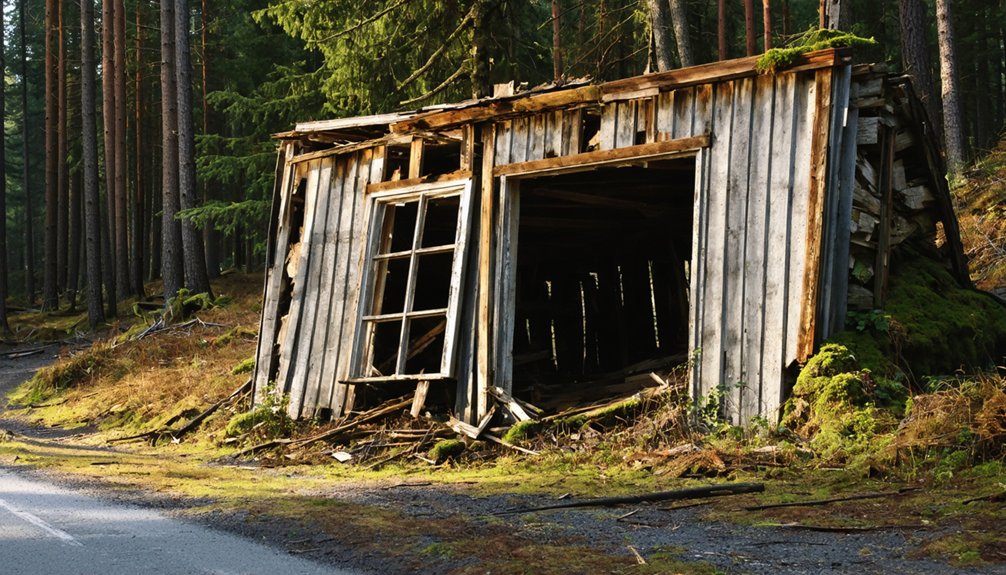
When you finally reach Placer via its rugged four-wheel-drive road, you’ll find the remnants of a town that once roared with saloons and the ambitions of gold-hungry miners.
Scattered ruins and weathered structures still mark the landscape, offering tangible evidence of the boomtown that thrived here in the late 1800s and early 1900s.
Walk the site carefully, and you’ll piece together the bones of a community that lived fast and faded quietly once the gold ran out.
Remaining Ruins and Structures
Unlike its better-preserved neighbor Golden, Placer doesn’t greet you with tidy, park-maintained structures — what’s left here are raw remnants that the forest has been slowly reclaiming for over a century.
Your ruins exploration rewards patience; structural remnants emerge through overgrowth if you know where to look.
Watch for:
- Collapsed building foundations half-buried beneath decades of pine duff
- Rotting timber frames from former mining-era structures
- Stone chimney stacks standing defiant against surrounding decay
- Earthwork depressions marking old placer diggings along Graves Creek
Nobody manicures this site for you.
That’s exactly the point. Placer hands you unfiltered history — chaotic, weathered, and honest.
Bring your four-wheel-drive, your curiosity, and respect for what time and wilderness have quietly consumed.
Exploring the Historic Site
Stepping into Placer today means accepting the town on its own terms — a scatter of evidence rather than a curated exhibit. You won’t find interpretive signs or guided paths.
Instead, you’ll read the land itself — depressions where foundations settled, overgrown clearings that once held saloons, and creek-side remnants whispering of the mining heritage that drove men here. The historical significance isn’t announced; it’s discovered.
Run your hand along weathered timber, scan the hillsides for tailings, and let the silence do the storytelling. Placer rewards the curious traveler willing to look past surface-level absence.
Bring your own knowledge, keep your eyes sharp, and you’ll find a rawer, more honest ghost town experience than any preserved heritage site could manufacture.
How Does Placer Compare to Nearby Ghost Town Golden?
Both ghost towns share southwestern Oregon’s gold rush roots, yet they couldn’t be more different in character. Placer history reveals a rowdy mining hub built on saloons and vice, while Golden Attractions lean toward preserved respectability—churches, a general store, and heritage designation.
Here’s how they contrast:
one preserved with pride, the other wild and waiting to be found.
- Golden sits on the National Register of Historic Places; Placer remains a rugged, lesser-known discovery.
- Golden banned saloons; miners rode to Placer specifically for the ones it offered.
- Golden’s 1892 church and 1904 general store still stand; Placer rewards explorers willing to navigate rough roads.
- Oregon State Parks maintains Golden; Placer stays raw and unpolished.
You’ll feel the difference immediately—Golden invites reflection, while Placer demands adventure.
Pair Your Visit With a Stop at Golden Ghost Town
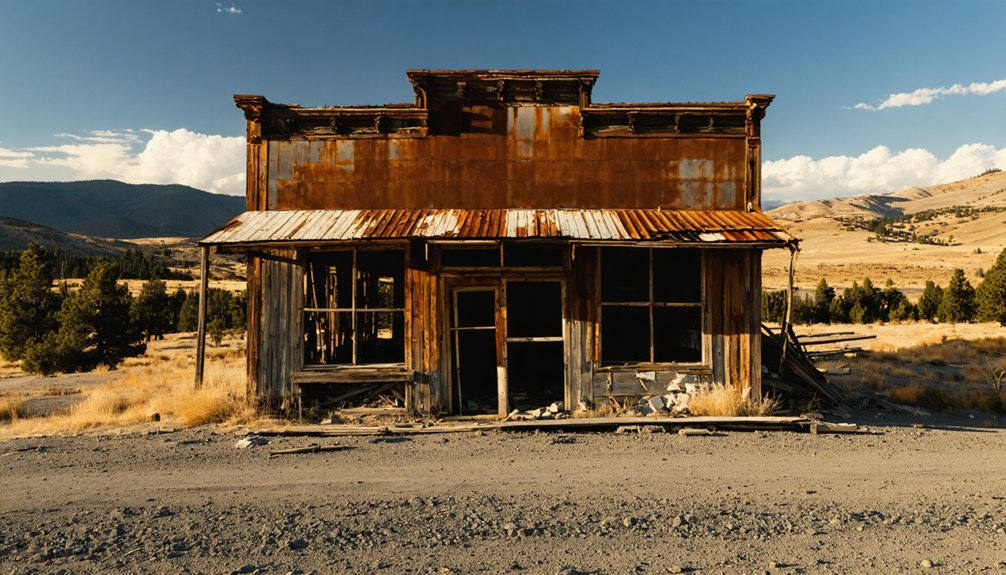
Just a few minutes from Placer, Golden’s preserved structures bring the 1890s mining era vividly to life — you’ll find an 1892 church, an 1892 house, and an 1904 general store still standing on land maintained by Oregon State Parks as a National Register Heritage Site.
Unlike Placer’s rugged, four-wheel-drive approach, Golden’s easy access off Coyote Creek Road makes it a natural first stop before you tackle the backcountry.
Pair both visits on the same day, and you’ll capture the full sweep of Josephine County’s gold rush story — from Golden’s sober, church-going community to Placer’s rowdier, saloon-driven frontier life.
Golden’s Preserved Historic Structures
A few miles from Placer, Golden stands as one of Oregon’s most remarkably preserved ghost towns, maintained by Oregon State Parks as a State Heritage Site and listed on the National Register of Historic Places.
Golden’s architecture tells a vivid story of frontier life frozen in time. You’ll walk among structures carrying profound historical significance:
- 1892 church, still standing as a symbol of community faith
- 1892 pioneer house, offering a glimpse into settler daily life
- 1904 general store, where miners once traded gold for supplies
- Historic outbuildings, completing this authentic frontier landscape
Golden even doubled as a filming location for *Bonanza* and various 1950s-1970s movies.
You’re not just visiting ruins — you’re stepping onto hallowed ground where Oregon’s gold rush legacy breathes.
Combining Both Town Visits
Since Placer sits just a few miles from Golden, combining both visits into a single day trip makes perfect sense.
Start at Golden, where Oregon State Parks preserves the 1892 church, general store, and homestead, giving you a vivid window into frontier life without saloons or sin.
Then head south toward Placer, where the raw, unfiltered side of gold mining history unfolds along Graves Creek.
Placer history reflects the rougher edge of southwestern Oregon’s goldfields, a place where miners chased fortune and spent it freely.
Together, these two towns tell a complete story, one town praying, the other playing.
Pack your high-clearance vehicle, bring water, and carve out a full day.
You won’t regret exploring both chapters of this remarkable gold mining legacy.
What Kind of Vehicle You Need to Reach Placer
Reaching Placer demands a four-wheel-drive vehicle or at minimum a high-clearance rig — the approach road doesn’t forgive ordinary passenger cars. This rugged terrain rewards the prepared traveler with genuine isolation and raw gold-rush history.
Before you roll out, confirm you’ve got:
- Four-wheel drive engaged before hitting the deteriorating road northeast of Grants Pass
- High ground clearance to navigate ruts and exposed rock sections
- Recovery gear — a shovel, tow strap, and traction boards earn their keep here
- A full tank since services disappear once you leave I-5 behind
Treat the drive itself as part of the adventure. Miners once carved these routes by hand. You’re tracing their determination through the same unforgiving Josephine County hills they called home.
Where to Camp Near Placer and Golden
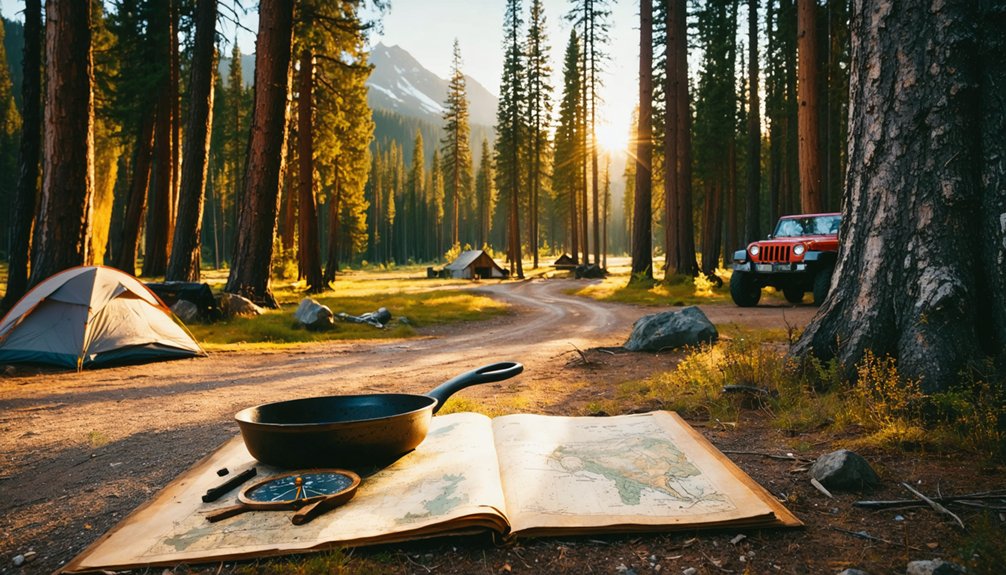
Once you’ve wrestled your rig into Placer country, you’ll want a solid base camp — and the campground off Coyote Creek Road delivers exactly that.
It’s minutes from both Placer and Golden, putting you squarely in the heart of Josephine County‘s old goldfields.
Your camping options here keep things simple and uncluttered, the way road trippers prefer it.
Nearby facilities are modest, so pack accordingly — water, provisions, and whatever gear suits your style of roughing it.
You’re not here for resort amenities; you’re here because miners once worked these creeks and left their stories behind.
Use the campground as your launching pad.
Explore Golden’s preserved buildings by day, push toward Placer’s rugged approach at dawn, and sleep beneath the same dark skies those old prospectors knew.
What to Bring and Watch For When Visiting Placer’s Remote Roads
Packing right makes or breaks a run at Placer’s approach road. You’re heading into rugged Josephine County terrain where self-sufficiency isn’t optional. Stock your rig with road trip essentials before you leave pavement behind.
- High-clearance spare tire and recovery gear
- Printed maps—cell service drops fast out here
- Extra water and a first aid kit
- Bear spray for unexpected wildlife encounters
The old miners who carved these trails carried everything they needed on their backs. You’ve got no excuse rolling in unprepared.
Watch your clearance on exposed switchbacks, and keep your eyes open—deer, black bears, and rattlesnakes claim this canyon as theirs. Move respectfully, drive deliberately, and you’ll reach what remains of Placer like you earned it.
Frequently Asked Questions
Is There an Entrance Fee to Visit Placer or Golden Ghost Towns?
You won’t pay a single dime in entrance fees to explore these ghost towns! Both Placer and Golden welcome your adventurous spirit freely, though Golden’s Oregon State Parks heritage site may have specific access guidelines.
Are Pets Allowed on the Trails and Roads Leading to Placer?
The knowledge doesn’t specify pet friendly policies or trail restrictions for Placer’s rugged approach road. You’d want to contact Oregon State Parks directly to confirm any rules before releasing your adventurous spirit on these historic trails.
What Is the Best Time of Year to Visit Placer, Oregon?
Spring and fall offer the best weather for your rugged trek to Placer’s sun-dappled, ghost-filled trails. You’ll enjoy seasonal activities like exploring abandoned mining relics beneath golden canopies without summer’s scorching heat or winter’s icy, impassable roads.
Can Children Safely Explore the Placer Ghost Town Site?
Children can explore Placer’s ghost town safety permitting, but you’ll need a high-clearance 4WD vehicle to reach it. Plan kid-friendly activities carefully, as rugged terrain demands supervision while history whispers tales of gold rush adventure.
Is Cell Phone Service Available Near Placer and Golden Ghost Towns?
Cell coverage fades like a ghost’s whisper in these remote hills. You’ll likely face reception issues near Placer and Golden, so download maps beforehand and embrace the freedom of disconnecting from the modern world entirely.
References
- https://oregonoutdoorfamily.com/golden-oregon-a-ghost-town/
- https://www.youtube.com/watch?v=abvJF1b5nNg
- https://traveloregon.com/things-to-do/culture-history/ghost-towns/placer/
- https://historynet.com/golden-oregon-ghost-town/
- https://www.ijpr.org/show/as-it-was/2015-09-14/town-of-placer-serves-as-mining-center-in-josephine-county