Planning a ghost town road trip to Postville, South Dakota means driving about 40 miles east of Rapid City along quiet rural roads to find 15 to 25 abandoned buildings, a stunning intact brick bank, and a surprisingly active grain elevator still humming away. The post office opened in 1906, but the Great Depression and a school closure in the 1950s sealed the town’s fate. Stick around, and there’s plenty more to uncover before you hit the road.
Key Takeaways
- Postville is located about 40 miles east of Rapid City via rural roads; fill your gas tank before departing due to limited rural stations.
- Visit between May and September for the best road conditions, with spring offering mild temperatures and summer providing long daylight hours for exploration.
- Notable intact structures include a brick bank building, old schoolhouse, town hall, and an operational grain elevator reflecting the town’s working history.
- Wear sturdy boots, carry water, explore only during daylight, and avoid structurally compromised buildings to ensure a safe visit.
- Combine Postville with nearby ghost towns like Rockerville, Ardmore, Pactola, and Mystique for a comprehensive full-day Black Hills road trip.
What’s Left to See in Postville Today?
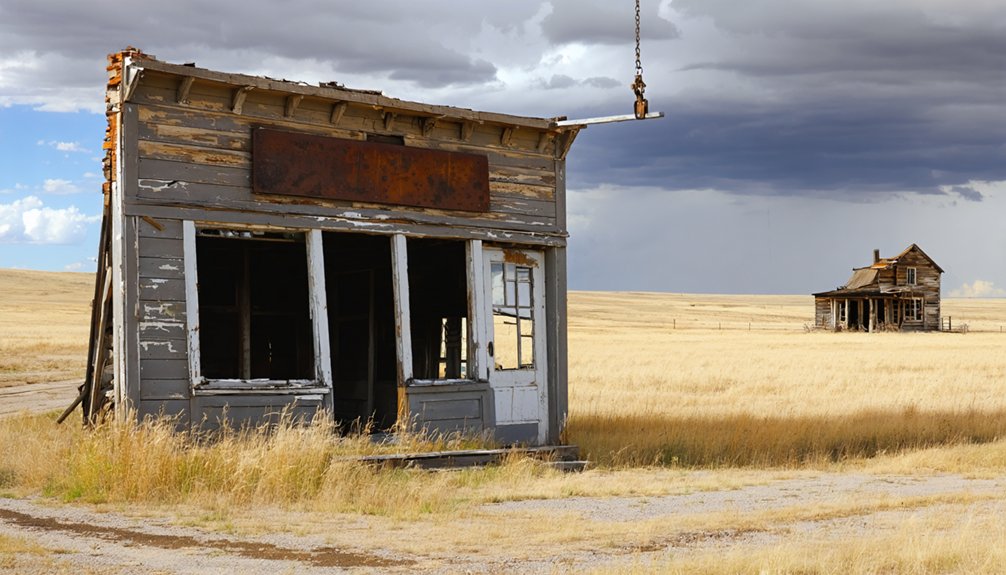
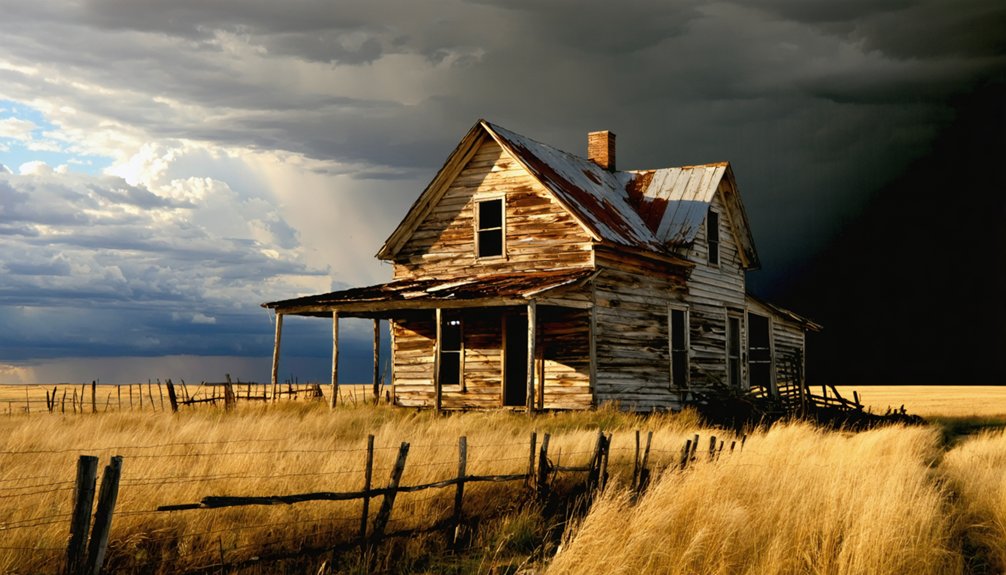
Despite decades of abandonment, Postville still holds a surprising amount of history within its crumbling walls.
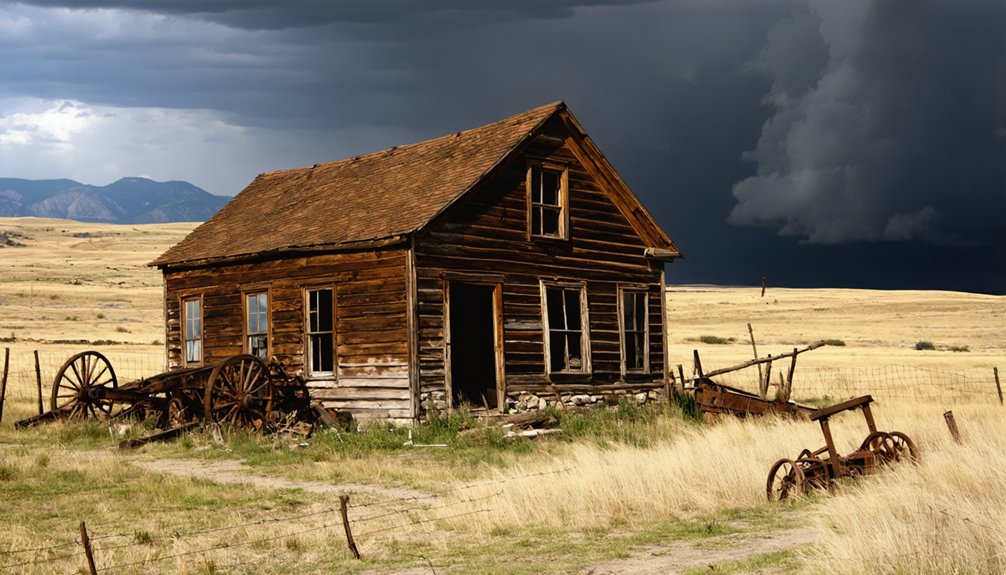
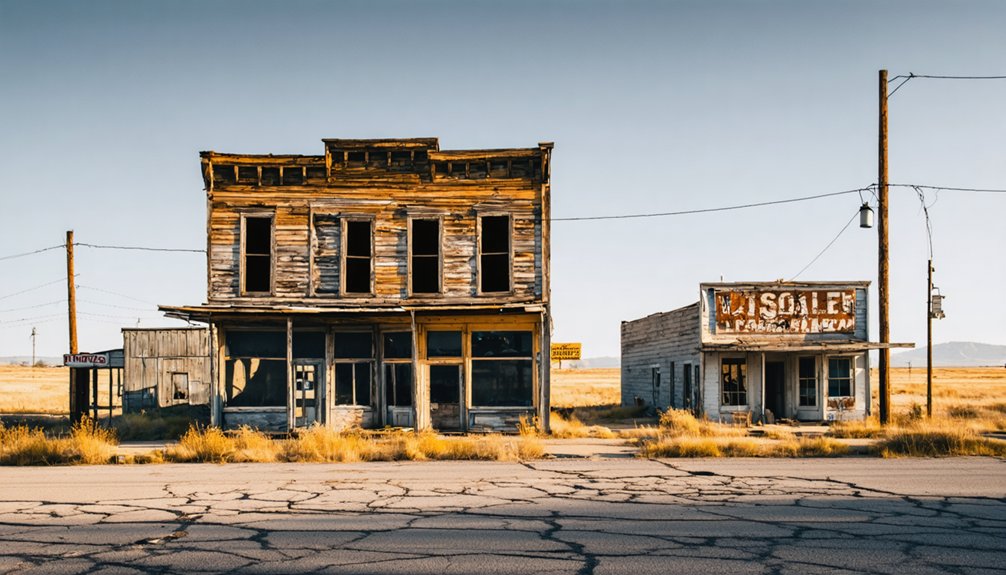
You’ll find 15 to 25 abandoned buildings scattered across the site, each carrying its own historical significance. The standout structure is the brick bank building, which remains impressively intact compared to the surrounding ruins.
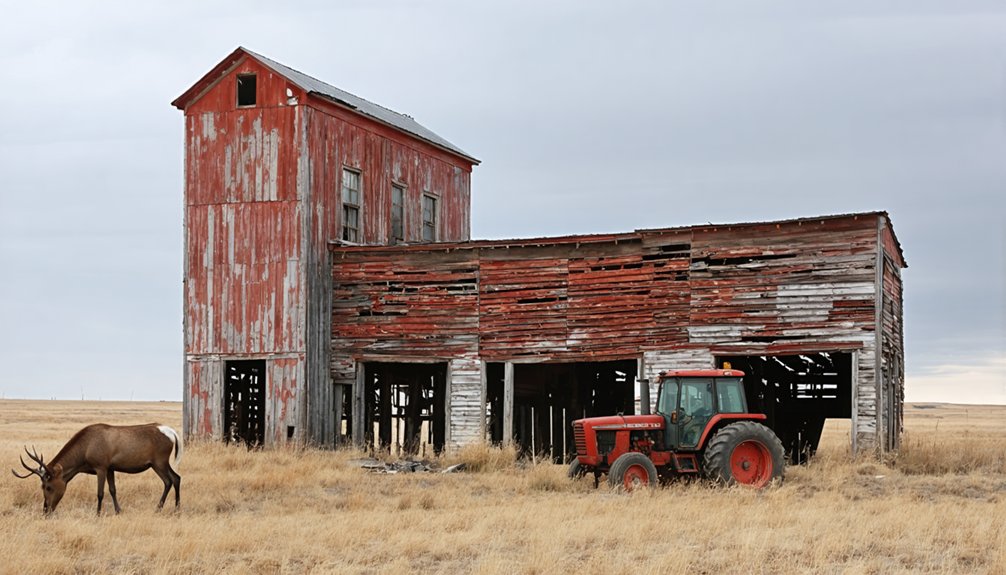
You can also spot the old schoolhouse, a town hall, and a still-operational grain elevator that adds an unexpected layer of life to this otherwise quiet settlement. An active railroad line cuts through the area, grounding you in the town’s working past.
Why Postville Boomed, Then Disappeared
Those crumbling walls and silent streets tell only half the story — to truly understand Postville, you’ve got to look at what drove it to life in the first place. Economic factors like railroad access and agricultural demand pulled settlers westward, sparking rapid growth after the post office opened in 1906.
A bank, schoolhouse, and thriving businesses reflected strong community dynamics — neighbors building something real together.
Then the Great Depression hit, and those same economic factors reversed course brutally. Markets collapsed, families left, and the community dynamics that once held Postville together simply unraveled.
The school closed in the 1950s, sealing the town’s fate. What you’re walking through today isn’t just abandonment — it’s the physical record of boom-and-bust cycles that shaped the entire region.
How to Get to Postville From Rapid City
If you’re starting your ghost town adventure in Rapid City, you’ll head east for about 40 miles along rural roads that cut through the wide-open South Dakota landscape.
You’ll want to plan your route carefully, since the roads leading to Postville are less traveled and can catch unprepared drivers off guard.
Keep your navigation tools handy, because the remote terrain surrounding this forgotten town doesn’t offer many landmarks to guide you in.
Rapid City Starting Point
Reaching Postville from Rapid City takes roughly 40 miles of eastward driving, making it an easy half-day detour from one of South Dakota’s most visited hubs.
Rapid City serves as your ideal launchpad for exploring ghost towns scattered across this historically rich landscape.
Keep these travel tips in mind before you head out:
- Fill your tank in Rapid City since rural stations are sparse
- Download offline maps because cell coverage drops noticeably eastward
- Start early to maximize daylight at sites with historical significance
- Respect posted signs since private property surrounds remaining structures
The open road stretching east carries you through raw, unfiltered South Dakota terrain, connecting modern comfort with the quiet, forgotten stories that ghost towns like Postville preserve remarkably well.
Traversing rural South Dakota roads to Postville demands a bit of patience, but the route itself is straightforward once you’ve left Rapid City heading east.
You’ll cover roughly 40 miles through open plains, following rural roads that cut across quiet agricultural land.
Keep your rural wayfinding tips simple: download offline maps before departing, since cell service thins considerably outside the city.
Watch for unmarked intersections and gravel stretches that don’t always appear on standard GPS systems.
If you’re feeling adventurous, scenic detours through surrounding Black Hills terrain reward curious travelers with dramatic landscape views.
Remember that Postville sits on private property, so approach respectfully and stick to accessible areas.
Travel during daylight hours — visibility matters when you’re maneuvering unfamiliar, remote South Dakota roads independently.
Best Time of Year to Drive Out to Postville
You’ll get the most out of your Postville trip by visiting between late spring and early fall, when South Dakota’s roads are clear and the weather stays cooperative.
Summer days stretch long enough to give you plenty of daylight for exploring the 15–25 abandoned structures safely, since the site demands careful navigation on foot.
Avoid winter months, when icy rural roads and short daylight windows can turn a straightforward 40-mile drive east of Rapid City into a genuine hazard.
Ideal Visiting Seasons
Although Postville sits just 40 miles east of Rapid City, the rural roads leading to it can shift dramatically with the seasons. This makes late spring through early fall your safest and most rewarding window for a visit.
You’ll find the best viewing conditions and most enjoyable seasonal activities between May and September.
- Spring (May–June): Mild temps, green landscapes framing the abandoned structures beautifully.
- Summer (July–August): Long daylight hours maximize exploration time across the 15–25 remaining buildings.
- Early Fall (September): Crisp air and golden tones create stunning photographic backdrops.
- Winter: Unpredictable snowstorms and icy rural roads make access genuinely dangerous.
Arrive during daylight regardless of season—surrounding structures sit on private property, and good visibility keeps your exploration both respectful and safe.
Weather Considerations For Travel
Knowing when to visit Postville sets the stage, but understanding *why* certain months work better comes down to South Dakota’s unpredictable and often punishing weather patterns.
Winter slams the region with blizzards, icy rural roads, and brutal wind chills that’ll make exploration dangerous and miserable.
Spring brings muddy, impassable dirt roads from snowmelt.
Summer offers your clearest window — long daylight hours, stable conditions, and comfortable temperatures ideal for photographing abandoned structures. However, afternoon thunderstorms can appear without warning, so you’ll want an early start.
Fall delivers stunning landscapes and cooler air, though seasonal variations shift quickly toward freezing nights by October.
Pack layers, monitor forecasts obsessively, and always tell someone your route before heading into these remote South Dakota backroads.
Daylight Hours Matter
Daylight is your most valuable asset when exploring Postville, so timing your visit around peak sunlight hours can mean the difference between a rewarding road trip and a frustrating, potentially dangerous one.
Daylight safety isn’t negotiable when traversing rural South Dakota roads and private property boundaries. Visibility importance becomes obvious the moment you’re picking through 15-25 abandoned structures.
Plan your visit around these daylight guidelines:
- Arrive mid-morning to maximize your exploration window
- Summer months offer the longest daylight stretches for thorough exploration
- Avoid late afternoon arrivals — shadows obscure hazards quickly
- Check sunrise and sunset times before leaving Rapid City
You’re 40 miles from civilization, so give yourself enough light to explore freely and drive back safely.
How to Explore Postville Without Getting in Trouble
Exploring Postville safely means respecting a few key boundaries before you set foot near those crumbling structures. Most land surrounding the remaining buildings is private property, so you’ll want to ask permission before wandering beyond obvious access points.
Follow basic safety guidelines — don’t enter structurally compromised buildings, watch your footing on debris-covered ground, and bring a companion whenever possible.
Local wildlife also shares this territory, so stay alert for rattlesnakes, particularly during warmer months when they’re most active near old foundations and tall grass.
Carry water, wear sturdy boots, and skip the headphones so you’re fully aware of your surroundings.
Stick to daylight hours, leave nothing behind, and take nothing with you. Responsible exploration keeps Postville accessible for everyone who comes after you.
What to Know Before You Visit Postville
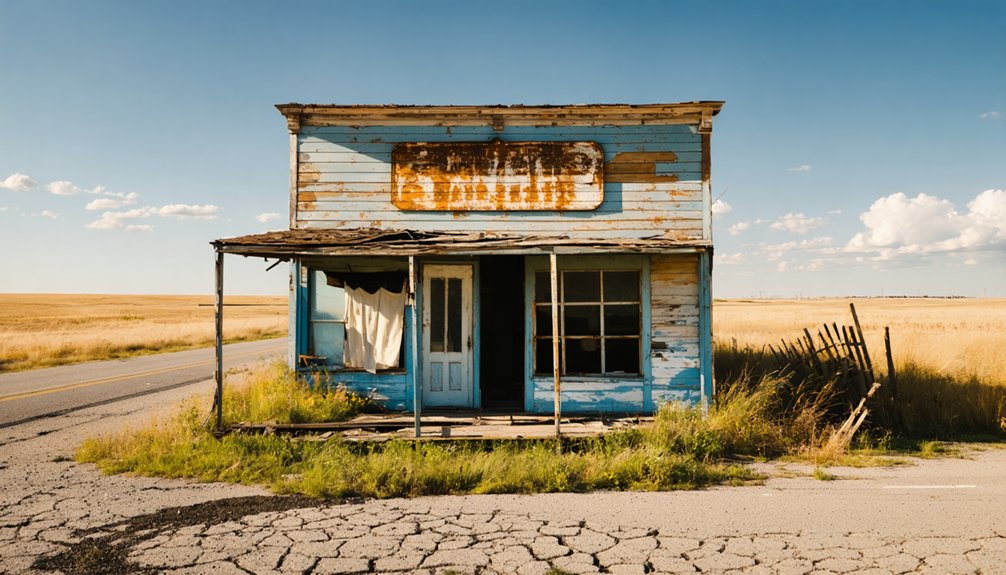
Before you make the drive out to Postville, there are a few practical details that’ll shape your experience. The town sits 40 miles east of Rapid City, and surrounding structures are on private property, so respect those boundaries.
- Arrive during daylight hours for the best visibility among the 15-25 abandoned buildings.
- Bring water, a map, and a camera — cell service is unreliable on rural South Dakota roads.
- Research local legends and historical anecdotes beforehand, including Philip O’Conor’s firsthand accounts, to deepen your appreciation.
- Wear sturdy footwear since uneven terrain surrounds the remaining structures.
You’re exploring a place where history stopped moving. That brick bank building and operational grain elevator tell a story that rewards prepared, respectful visitors who take time to truly look around.
Nearby Ghost Towns Worth Adding to Your Route
Postville is worth the trip on its own, but South Dakota’s Black Hills region holds over 600 ghost towns, and several sit close enough to fold into a single day’s route.
Rockerville, founded in 1876 as a mining camp, revived itself through 1950s tourism and offers rich ghost town history just a short drive away.
Rockerville’s roots stretch back to 1876, when gold fever built a mining camp that time never quite let go.
Ardmore, with only 16 residents recorded in 1980, still hosts reunions where former locals share memories.
Pactola delivers a haunting twist among nearby attractions — the entire town now sits submerged under 150 feet of water.
Mystique peaked at 100 residents before its sawmill closed in 1952, leaving quiet ruins worth exploring.
String these stops together, and you’ve built a full Black Hills ghost town itinerary worth remembering.
Frequently Asked Questions
Was Postville Ever Connected to the Black Hills Gold Rush?
Postville’s historical significance ties it to the Black Hills Gold Rush era. You’ll find mining impact shaped the region’s boom-and-bust cycles, and local legends echo that gold rush energy throughout South Dakota’s 600+ abandoned ghost towns.
Who Was Philip O’conor and How Long Did He Live There?
Philip O’Conor was Postville’s last resident, and his O’Conor’s Legacy carries real Historical Significance — he’d share the town’s fascinating stories with curious visitors who’d stop by, making him your living connection to this forgotten South Dakota ghost town.
Are Any of Postville’s Original Buildings Privately Owned Today?
Yes, private property surrounds Postville’s remaining structures, so you’ll want to respect boundaries during your visit. Original ownership still influences building preservation today, meaning some of those fascinating abandoned gems aren’t freely accessible to exploring adventurers like you.
Has Postville Ever Been Featured in Documentaries or Television Shows?
Like a forgotten chapter in a dusty book, Postville’s Ghost town history hasn’t claimed documented screen time. You won’t find Postville legends in confirmed documentaries, but its compelling ruins quietly invite your own personal discovery story.
Can You Camp Overnight Near the Postville Ghost Town Site?
You’ll want to check local camping regulations before setting up near Postville, as private property surrounds the site. Stay alert to local wildlife roaming the rural South Dakota landscape for a safe, adventurous overnight experience!
References
- https://en.wikipedia.org/wiki/List_of_ghost_towns_in_South_Dakota
- https://www.youtube.com/watch?v=ixU9RtyCThg&vl=ar
- https://www.sdhspress.com/journal/south-dakota-history-2-2/some-black-hills-ghost-towns-and-their-origins/vol-02-no-2-some-black-hills-ghost-towns-and-their-origins.pdf
- https://www.powderhouselodge.com/black-hills-attractions/fun-attractions/ghost-towns-of-western-south-dakota/
- https://www.blackhillshikingbikingandmore.com/old-mining-ghost-towns
- https://www.youtube.com/watch?v=_0WNYsFLSLA
- https://www.southdakotamagazine.com/watson-parker-ghost-town-friends
- https://www.blackhillsbadlands.com/blog/post/old-west-legends-mines-ghost-towns-route-reimagined/