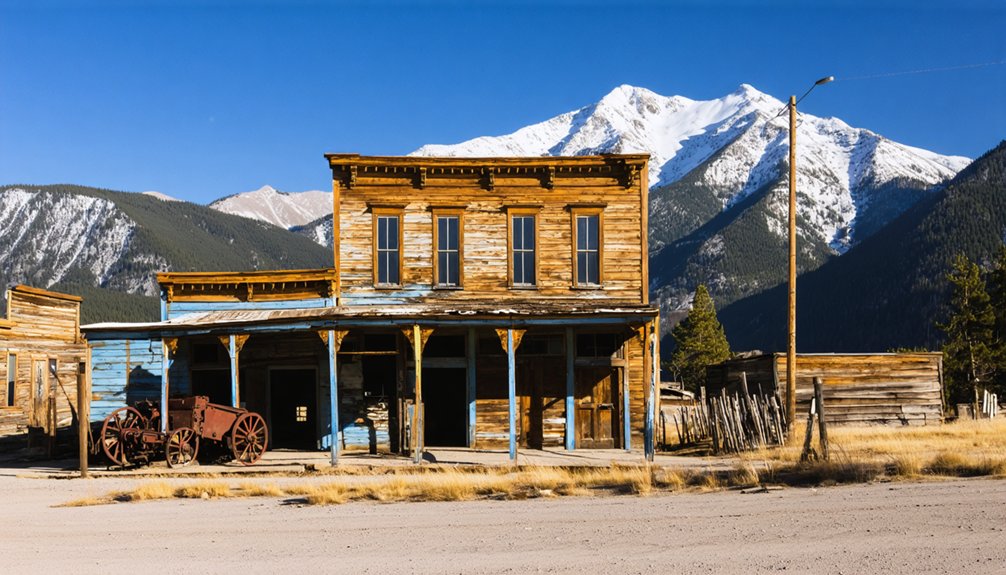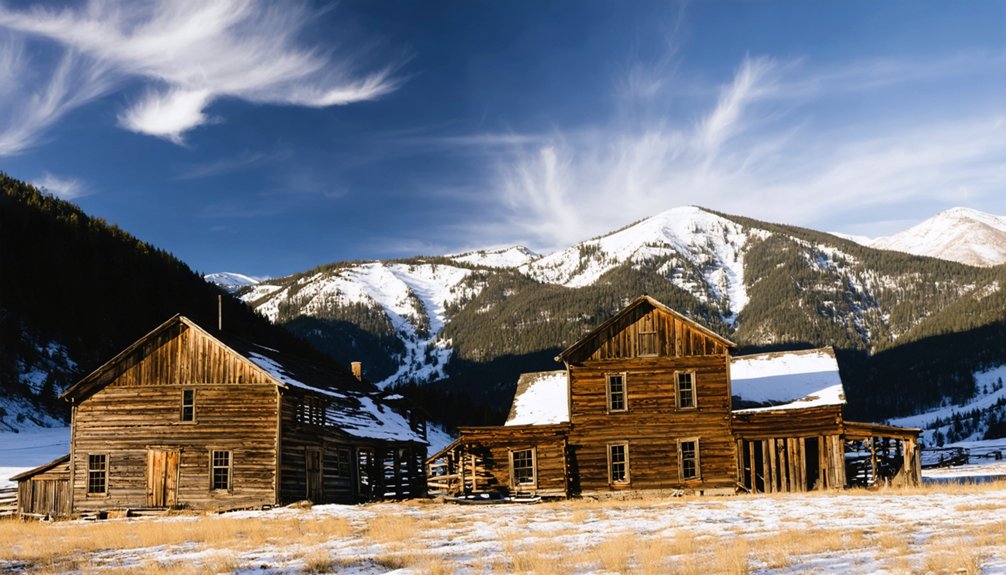
You’ll trace the same rugged canyon route that gold-hungry prospectors followed in the 1880s when you drive Highway 14 through Poudre Canyon to reach Poudre City, Colorado. Founded by John Zimmerman in 1890, this ambitious mining settlement met a dramatic end when a dam burst in 1891, leaving only a lone stone chimney standing. Visit in summer or fall for the best conditions — and there’s far more to this haunting story than first meets the eye.
Key Takeaways
- Poudre City, a historic Colorado ghost town, is accessible via Highway 14 through scenic Poudre Canyon, west of Fort Collins.
- The town was destroyed in 1891 when the Chambers Lake dam burst, leaving only a lone stone chimney standing.
- A Colorado State Historical Society plaque at the chimney’s base commemorates the site’s significant mining heritage.
- Summer months offer the best road trip conditions, with clear roads, ample daylight, and potential wildlife sightings along the route.
- Travelers should avoid winter visits due to treacherous road conditions, with fall offering golden aspens and peaceful solitude instead.
The History Behind Poudre City’s Gold Rush Origins
When gold fever swept through the Rocky Mountains in the late 1800s, it didn’t take long for prospectors to set their sights on the hills of Poudre Canyon. By 1886, Larimer County was already buzzing with metal searches, and a year later, Manhattan had sprung up with 300 hopeful residents chasing their fortunes.
John Zimmerman arrived with his brother, prospecting around Cameron Pass and fueling the region’s gold prospecting ambitions. By 1890, he’d founded Poudre City, establishing a five-stamp mill to crush gold ore from local mines.
This mining heritage runs deep here — tucked in northwestern Larimer County near the Poudre River, the settlement represented the raw, unfiltered spirit of frontier ambition. You’re literally walking ground where men gambled everything on a glittering promise.
How the 1891 Dam Disaster Destroyed Poudre City
On June 10, 1891, the Chambers Lake dam burst, and everything Zimmerman had built vanished in hours. The Larimer County Ditch Company had ignored his dam safety warnings, leaving engineer William Rist’s unrepaired structure to give way under pressure.
When you imagine that moment, picture Zimmerman hearing the roar from 3.5 miles upstream. Rather than fleeing alone, he mounted his horse and rode hard toward town, driving every flood response effort himself. He evacuated all 13 residents before the wall of water arrived.
The flood tore through Poudre Canyon, ripping away bridges, cabins, and resorts. It lifted the stamp mill off its foundation and collapsed its walls.
Only the stone chimney survived — the single landmark you’ll find standing there today.
What’s Left of Poudre City Today
After the floodwaters receded, Poudre City never came back — and today, a lone stone chimney is all that remains of Zimmerman’s stamp mill.
These Poudre City remnants carry real historical significance for those willing to seek them out.
When you visit, here’s what you’ll encounter:
- A towering stone chimney rising from the canyon floor, the only structure that survived the 1891 flood
- A 1973 Colorado State Historical Society plaque mounted at the chimney’s base, telling the town’s story
- The rushing Cache la Poudre River beside you, the same force that erased everything else
You’ll reach the site via Highway 14 through Poudre Canyon.
Stand there long enough, and the silence tells you everything the flood didn’t.
How to Get to Poudre City on Highway 14
Getting to that lone chimney means driving one of Colorado’s most dramatic mountain corridors — Highway 14 through Poudre Canyon.
Head west from Fort Collins, and the road immediately pulls you into rugged Rocky Mountain terrain, tracing the Cache la Poudre River through tight canyon walls.
Your road trip rewards you with scenic views at every turn — forested ridgelines, rushing whitewater, and rocky outcroppings that defined frontier life here since the 1850s.
Stay alert as you travel downstream from Chambers Lake, watching the river that once carried a catastrophic wall of water through this same canyon in 1891.
You’ll spot the old stamp mill chimney standing near the riverbank, a quiet sentinel marking where Poudre City briefly existed — and was just as quickly erased.
What the Drive to Poudre City Looks Like on Highway 14
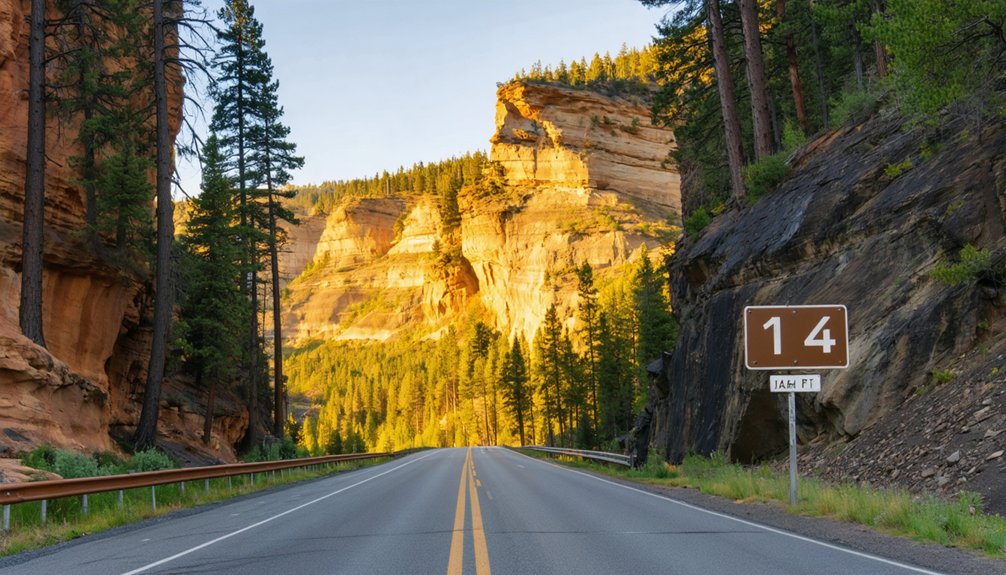
The moment you leave Fort Collins behind, Highway 14 transforms into something wilder — narrow canyon walls close in, the Cache la Poudre River rushes alongside the pavement, and the Rockies make clear you’re no longer in flatland territory.
Expect the drive to deliver:
- Dramatic scenic views of sheer granite faces and river-carved corridors that tighten as elevation climbs.
- Unexpected wildlife sightings — mule deer, bighorn sheep, and eagles claim this canyon as their own.
- Echoes of history — the same rugged corridor where 1800s prospectors hauled equipment toward dreams of gold.
You’re retracing a route that once carried real ambition and ended in real tragedy. The canyon doesn’t soften that story — it amplifies it.
Other Ghost Towns and Historic Sites Along the Poudre Canyon
Poudre City isn’t the only ghost haunting this canyon. As you drive Highway 14, you’ll pass through layers of forgotten history etched into these Rocky Mountain walls.
Manhattan once bustled with 300 residents chasing gold dreams before fading into silence — another abandoned settlement swallowed by time. The McNabb family’s 1889 log cabin still connects you to the prospectors who worked alongside John Zimmerman, building the Elkhorn Mine with their own hands.
Human presence here stretches back thousands of years, from early trappers maneuvering French and U.S. territorial boundaries to settlers along the Cache la Poudre since 1858.
These historic landmarks aren’t museum pieces — they’re scattered freely across the landscape, waiting for curious travelers willing to pull over and let the canyon tell its story.
Best Time of Year to Visit Poudre City Ghost Town
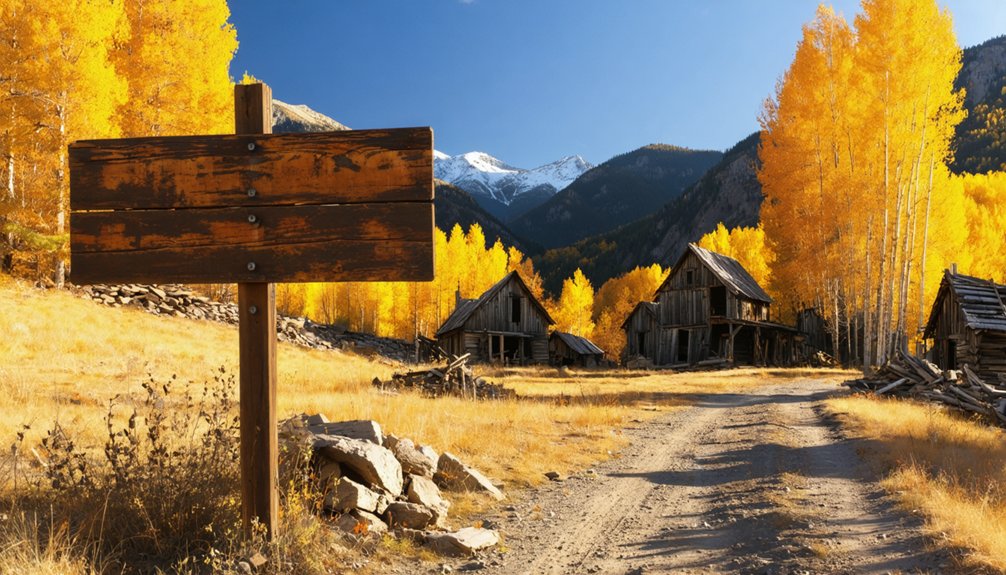
Timing your visit to Poudre City’s ghost town can make the difference between a rewarding adventure and a frustrating slog through snow or mud.
Highway 14 through Poudre Canyon offers dramatically different experiences across seasons. Follow these visitor tips for planning around seasonal events:
- Late Spring (May–June): Snowmelt swells the Poudre River, echoing the 1891 flood that erased this town overnight — raw, powerful, unforgettable.
- Summer (July–August): Clear roads and long daylight hours let you explore the stone chimney without weather interruptions.
- Fall (September–October): Golden aspens frame the canyon walls, rewarding those who crave solitude and striking scenery.
Avoid winter visits entirely — Highway 14 becomes treacherous, and the chimney’s haunting presence deserves your full, unhurried attention.
Frequently Asked Questions
Did Anyone Die When the Chambers Lake Dam Burst in 1891?
Remarkably, no one died in this dam failure. Zimmerman’s heroic ride — like a frontier alarm bell — evacuated all 13 residents, minimizing the historical impact of the 1891 flood that erased Poudre City entirely.
Can You Hike or Camp Near the Poudre City Chimney Remnant?
You’ll find hiking trails and camping spots near the Poudre City chimney remnant! Access the site via Highway 14, explore the rugged Poudre Canyon, and you’re camping where gold rush history once echoed through these wild Rocky Mountain corridors.
Are There Guided Tours Available of the Poudre City Ghost Town Site?
No formal ghost town tours exist, but don’t let that stop you! You’ll independently explore Poudre City’s historical significance — standing before that lone chimney, you’re living the adventure that no guided tour could ever replicate.
Who Owns the Land Where Poudre City’s Stamp Mill Chimney Stands Today?
The knowledge doesn’t confirm who owns the land, but you’ll find the chimney’s historical significance recognized by a 1973 Colorado State Historical Society plaque — your adventurous spirit can explore this land ownership-uncertain remnant freely via Highway 14.
Was John Zimmerman Ever Compensated for His Losses After the Flood?
Ever wonder who paid the price? The records don’t show Zimmerman winning any compensation claims in the flood aftermath — he lost everything yet history only remembers his heroism, not his justice.
References
- https://kids.kiddle.co/Poudre_City
- https://www.poudreriverresort.com/human-history
- https://history.weld.gov/County-150/Weld-County-Towns/Ghost-Towns-in-Weld-County
- https://www.youtube.com/watch?v=SRlOXkrg2pw
- https://poudreheritage.org/history/early-settlements/
- https://historiclarimercounty.org/category/poudre-canyon/