Planning a ghost town road trip to Rodden, Illinois means heading into Jo Daviess County’s quiet, rolling hills, where an abandoned 19th-century community sits in eerie silence. You’ll travel U.S. Route 20 from Chicago, passing through Galena before reaching Rodden’s overgrown foundations and weathered remnants. Visit in late spring or early fall for the best experience. Pack sturdy boots, a paper map, and a camera — there’s far more to this forgotten corner of Illinois than you’d expect.
Key Takeaways
- Rodden is a ghost town in Jo Daviess County, Illinois, featuring overgrown foundations and weathered remnants of 19th-century rural life.
- Access Rodden via U.S. Route 20 from Chicago, passing through Galena’s historic district before taking local roads toward the site.
- Visit in late spring or early fall to enjoy comfortable temperatures, stunning foliage, and longer daylight hours for exploration.
- Pack sturdy hiking boots, a paper map, water, snacks, and a quality camera to navigate and document the terrain effectively.
- Respect private property boundaries, stay on public paths, and avoid removing artifacts to preserve Rodden’s historical and cultural significance.
Why Rodden Is Jo Daviess County’s Most Overlooked Ghost Town
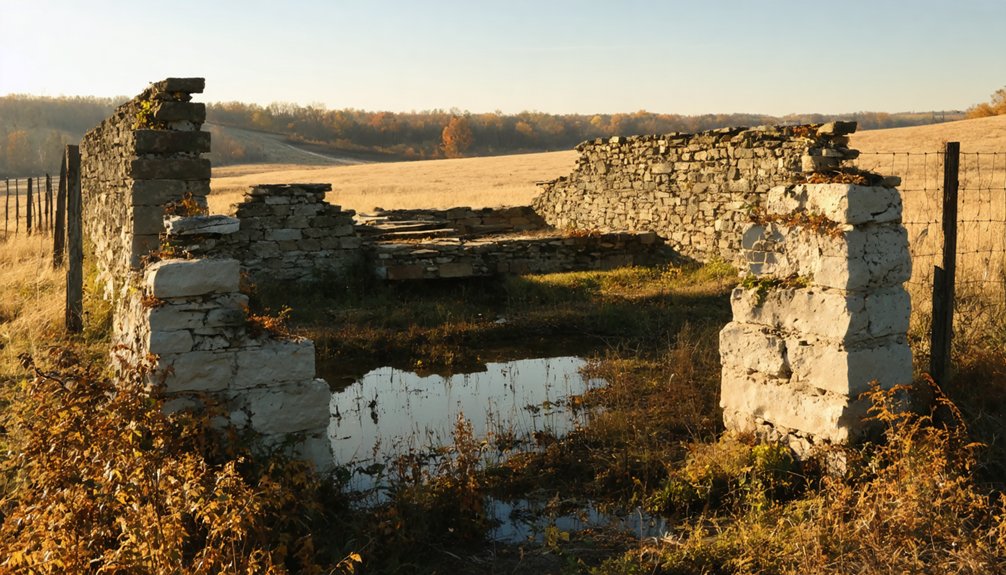
While Jo Daviess County draws ghost town enthusiasts to well-known sites like Brush Point and Schoper, Rodden quietly slips through the cracks of most road trip itineraries.
That’s exactly what makes it one of northern Illinois’s most compelling hidden gems.
Rodden’s significance lies in what it represents — a raw, unfiltered snapshot of 19th-century rural life that hasn’t been polished for tourism.
You won’t find guided tours or interpretive signs here. Instead, you’ll discover a place that rewards curiosity and self-directed exploration on your own terms.
Sitting within reach of the Mississippi River bluffs, Rodden offers you the kind of solitude that more popular destinations can’t deliver.
If you crave genuine discovery over curated experiences, Rodden deserves a spot on your itinerary.
The History Behind Rodden’s Rise and Abandonment
When you trace Rodden’s roots, you find a 19th-century settlement shaped by the same agricultural and economic forces that built dozens of rural Illinois communities.
Over time, shifting markets and shrinking opportunities drained the town of its residents, leaving behind little more than scattered traces of what once existed.
Today, Rodden stands as a quiet reminder of northern Illinois’s cycle of boom, decline, and abandonment — a legacy it shares with neighboring ghost towns across Jo Daviess County.
Rodden’s 19th-Century Origins
Like many forgotten corners of rural Illinois, Rodden didn’t spring up by accident — it grew out of the restless 19th-century push to settle Jo Daviess County’s rugged northwest terrain.
Pioneers drawn by 19th century settlement opportunities carved out communities wherever resources promised a future. Jo Daviess County offered exactly that, with regional mining activity and rich agricultural land fueling ambitious growth across its rolling hills and river bluffs.
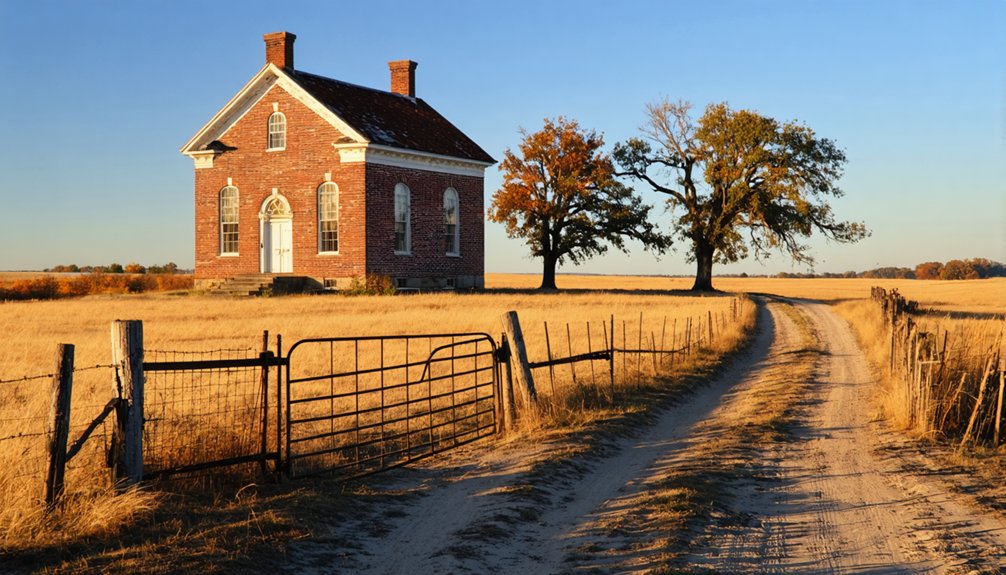
Rodden emerged as part of this broader wave, a small but deliberate community staking its claim in northern Illinois. You can almost picture the optimism that built it — settlers believing permanence was guaranteed.
But economic tides shifted, opportunities dried up, and Rodden slowly surrendered to silence. What remains today is a quiet reminder of bold ambitions that the land ultimately outlasted.
Economic Decline And Abandonment
Rodden’s story didn’t end with a single dramatic collapse — it unraveled gradually, pulled apart by the same economic forces that hollowed out dozens of northern Illinois communities during the late 19th and early 20th centuries.
Economic shifts drained the lifeblood from small settlements like Rodden, leaving behind silence where commerce once thrived. Rural decline crept in quietly, and residents simply moved toward opportunity elsewhere.
Picture what that looked like:
- Farmsteads sitting empty, fields returning to wild grass
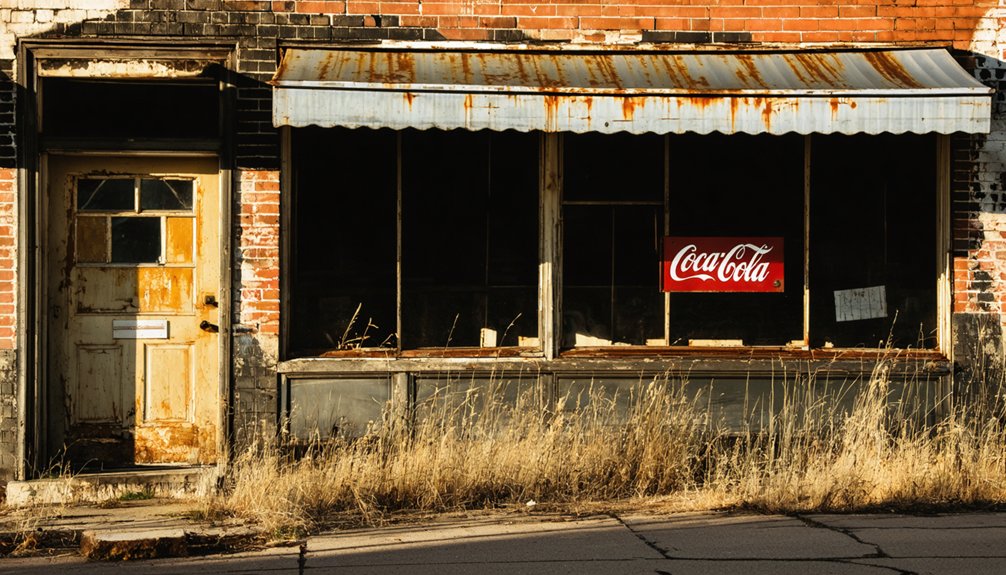
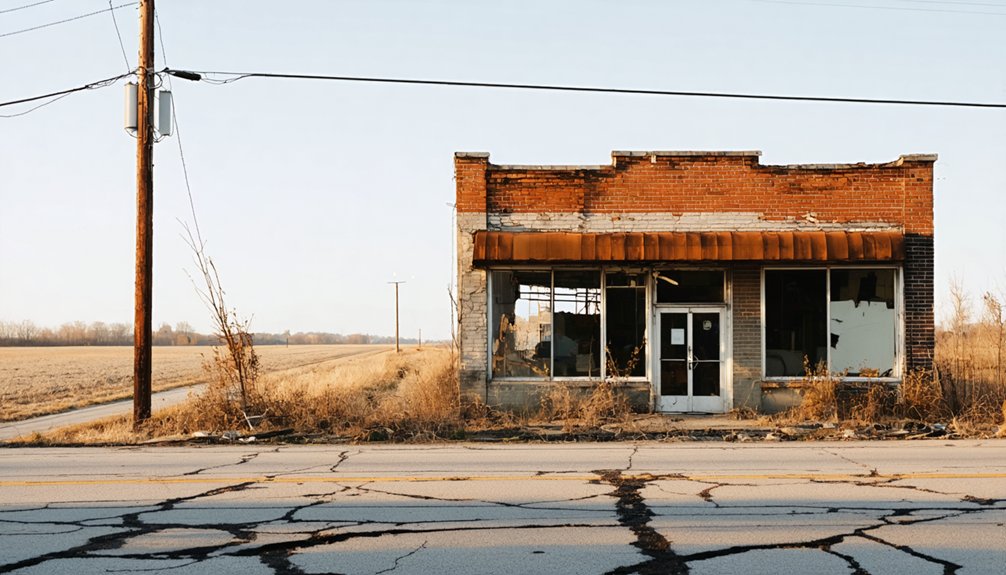
- Storefronts darkening one by one as trade dried up
- Families loading wagons, disappearing down dusty roads toward bigger towns
You’re not visiting a place that burned out — you’re walking through one that slowly exhaled its last breath and never recovered.
Legacy Among Illinois Ghost Towns
That slow exhale you feel walking through Rodden connects it to a larger story — one that echoes across Jo Daviess County and the broader northern Illinois landscape.
Rodden’s significance isn’t measured in monuments but in what it represents: a community that once thrived and quietly surrendered to time.
You’ll find similar echoes at Brush Point, Schoper, and Reader — each settlement carrying its own quiet testimony.
Ghost town preservation efforts across Illinois keep these places alive in cultural memory, even when physical remnants barely whisper their history.
Rodden earns its place among them honestly.
No dramatic collapse, just gradual fading.
And that honesty is exactly why exploring it matters.
You’re not just visiting ruins — you’re reading a chapter of Illinois history that most people never discover.
How To Get to Rodden From Chicago
You’ll kick off your ghost town adventure by heading west out of Chicago on U.S. Route 20, a corridor that cuts straight through the rolling farmland of northern Illinois.
As the city fades in your rearview mirror, the landscape opens up into quiet stretches of countryside that set the mood perfectly for a journey into forgotten history.
Stay on Route 20 all the way through Galena, where you’ll then navigate local roads southwest into Jo Daviess County to reach Rodden.
Leaving Chicago Behind
Leaving Chicago behind is as simple as pointing your car northwest and letting the city skyline shrink in your rearview mirror. Take U.S. Route 20 toward Galena, and watch the urban sprawl dissolve into rolling farmland and river bluffs.
- Mile 1-50: Concrete and traffic fade, replaced by open highways cutting through quiet Illinois countryside.
- Mile 51-120: Galena’s historic district appears, offering a brief stop for historical preservation enthusiasts before pushing deeper into Jo Daviess County.
- Mile 121-160: Rural roads narrow, signage disappears, and Rodden’s ghost town silence beckons urban exploration seekers craving something forgotten.
The three-hour drive isn’t just transit — it’s a shift.
You’re trading noise for stillness, trading familiarity for discovery, and trading the ordinary for something genuinely untamed.
Following Route 20
From Chicago, Route 20 is your spine for this journey — a straight shot northwest that trades the city’s gridlock for open road within the first thirty miles.
You’ll pass through Elgin, Rockford, and Galena, each mile pulling you deeper into Illinois’s quieter, wilder side.
Galena’s preserved 19th-century streets signal you’re entering ghost town legends territory, where forgotten communities dot the countryside.
From Galena, local roads carry you into Jo Daviess County’s rolling terrain, where rural exploration becomes the real reward.
Watch for signs near Hanover, then navigate toward Rodden using downloaded maps — cell service thins out fast.
The Mississippi River bluffs frame your final stretch, making the drive itself feel like discovery before you’ve even arrived at your destination.
What Actually Remains in Rodden Today
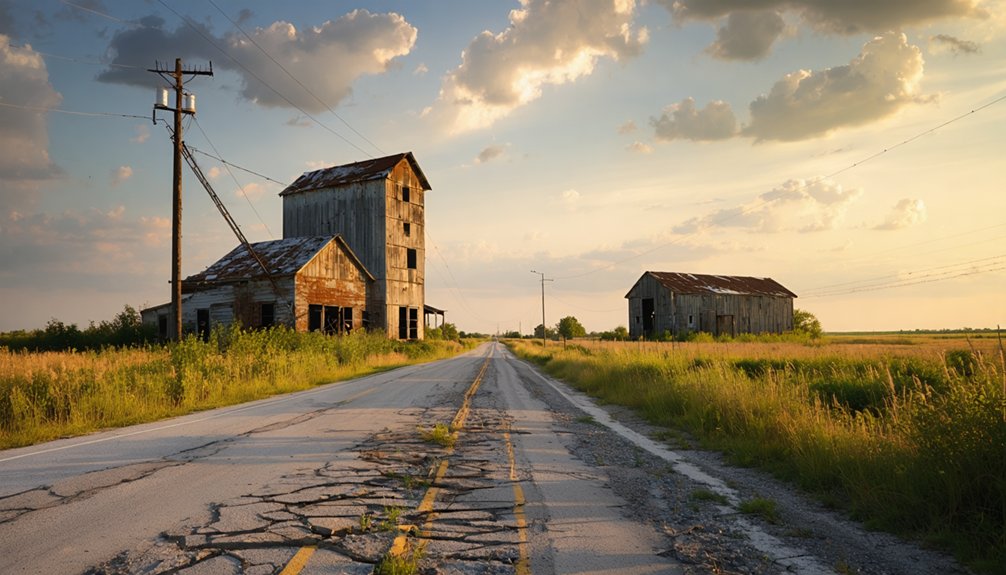
When you roll into Rodden, don’t expect much fanfare—what’s left here is quiet, understated, and almost entirely reclaimed by the surrounding rural landscape.
The Rodden remnants offer raw, unpolished glimpses into a forgotten past, with no ghost town preservation effort tidying things up for visitors.
Here’s what you’ll likely encounter:
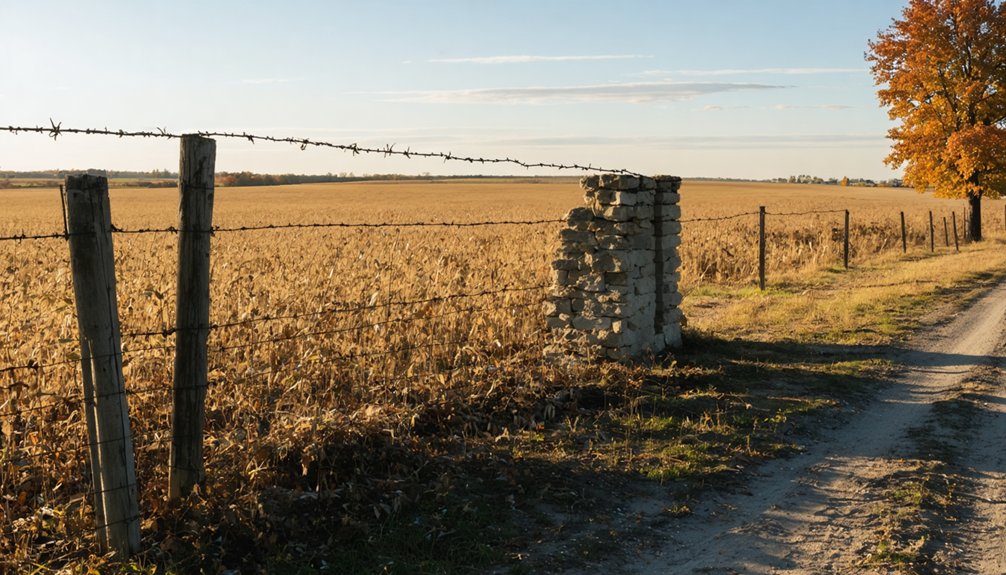
- Overgrown foundations — stone and broken concrete slowly swallowed by tall grass and creeping vegetation
- Weathered fence lines — rusted wire and rotting posts marking boundaries nobody enforces anymore
- Empty agricultural land — flat, windswept fields where structures once stood, now hauntingly silent
You’re free to wander, breathe it in, and let your imagination reconstruct what once existed.
There’s no tour guide here—just open land, honest decay, and genuine solitude.
Winston Tunnel: Rodden’s Abandoned Railroad Neighbor
Just a few miles west of Rodden, Winston Tunnel cuts through the bluffs like a dark scar left behind by the railroad era—a forgotten industrial relic that’s earned its place on any serious ghost town road trip.
Winston Tunnel history stretches back to freight trains hauling goods through northern Illinois, carving commerce into the landscape before progress moved elsewhere. Its railroad significance can’t be overstated—this tunnel once connected communities, fueled economies, and represented engineering ambition that defined an era.
Now it stands abandoned, swallowed by silence. You’ll want to walk near the entrance, feel the cool air drifting out, and let the scale of it sink in.
Pair it with Rodden, and you’ve got a genuinely compelling afternoon exploring Illinois’s forgotten industrial and rural past.
Other Jo Daviess County Ghost Towns Worth Adding to Your Route
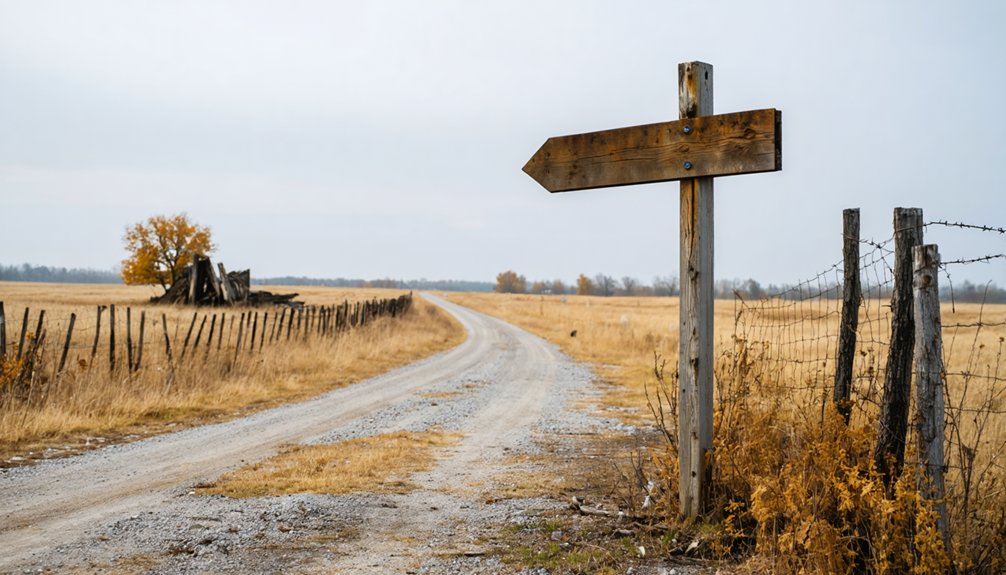
Why stop at Rodden when Jo Daviess County has an entire roster of ghost towns waiting to extend your route?
You’ll find forgotten landmarks scattered across this rural landscape, each rewarding genuine rural exploration with stories etched into crumbling foundations and overgrown lots.
Add these stops to your itinerary:
Add these stops to your itinerary — each forgotten corner of Jo Daviess County rewards the curious traveler.
- Schoper – A hushed settlement where farmland has slowly swallowed what commerce once built, leaving eerily quiet remnants.
- Reader – A faded crossroads community where you can almost hear the echoes of a busier past beneath the silence.
- Brush Point – A weathered spot where Mississippi River history meets abandoned ambition, offering striking visual contrast against open sky.
Each detour deepens your journey without demanding much extra mileage.
When To Visit Rodden for the Best Experience
Planning your route through Schoper, Reader, and Brush Point sets you up perfectly, but knowing *when* to make the trip matters just as much as knowing *where* to go.
Among the best seasons, late spring and early fall deliver the sharpest experience. You’ll dodge summer’s oppressive humidity while still enjoying long daylight hours for exploring Winston Tunnel and Rodden’s quiet rural remnants on foot.
Fall foliage along the Mississippi River bluffs transforms the drive into something genuinely memorable. Avoid winter entirely — remote Jo Daviess County roads become treacherous, and limited signage makes navigation frustrating.
Watch for local events in nearby Galena, which occasionally draw crowds that clog the regional routes. Timing your visit mid-week keeps traffic minimal and preserves that open-road freedom you’re chasing.
What To Bring for a Day Trip to Rodden
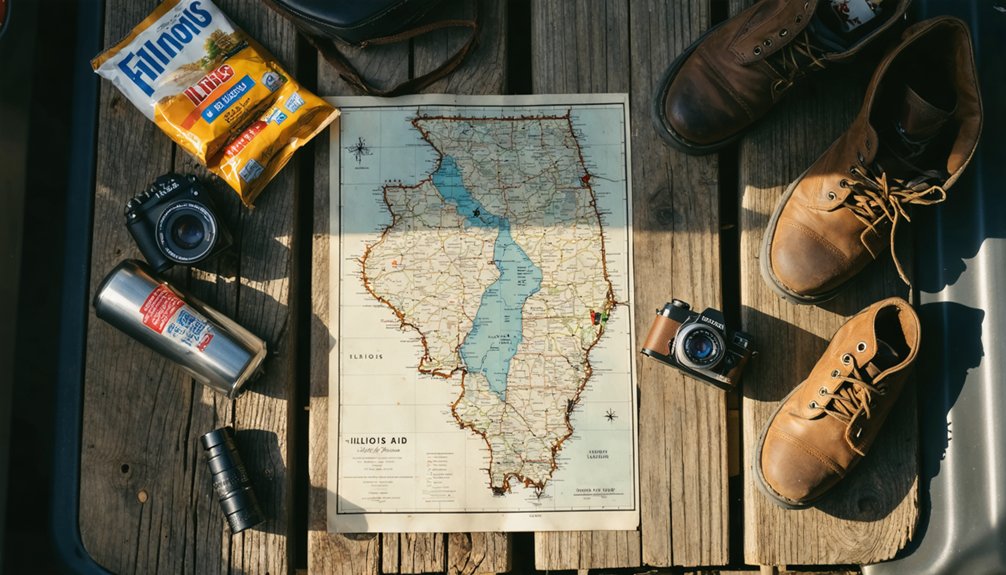
Packing 5 essential items before you leave the house makes the difference between a smooth Rodden excursion and a frustrating one.
Packing the right five items before heading out separates a memorable Rodden adventure from a miserable one.
Rural exploration demands preparation since remote Jo Daviess County offers no convenience stores nearby.
Grab these three must-haves:
- A detailed paper map — GPS signals fade along Mississippi River bluffs, leaving you stranded on unmarked county roads.
- A quality camera — ghost town photography captures Rodden’s decaying textures and forgotten atmosphere in ways your phone simply can’t match.
- Sturdy hiking boots — uneven terrain near Winston Tunnel will punish casual footwear quickly.
Beyond those, pack water, snacks, and a fully charged battery pack.
You’re trading comfort for freedom out here, so own that choice completely and come ready.
How To Explore Rodden’s Ruins Without Getting Into Trouble
Exploring Rodden’s ruins without incident starts with one non-negotiable rule: respect private property boundaries. Many structures you’ll encounter sit on privately owned land, so research ownership before wandering.
Ghost town etiquette demands you stay on public roads and paths unless you’ve secured explicit permission.
Don’t touch or remove artifacts — it’s illegal and destroys history for future explorers. Trespassing citations follow quickly in rural Jo Daviess County, where locals notice strangers.
For photography tips, shoot from public vantage points using a zoom lens to capture architectural details without crossing property lines. Golden-hour lighting transforms decaying structures into striking images worth the careful positioning.
Stay visible, travel with a companion, and carry your ID. Freedom to explore comes from operating within boundaries that preserve access for everyone.
Frequently Asked Questions
Are There Guided Ghost Town Tours Available in Jo Daviess County?
You’ll find limited formal guided tours, but you can explore ghost town legends independently in Jo Daviess County. Embrace the historical significance of sites like Rodden by venturing freely through scenic, forgotten landscapes at your own pace.
Can Rodden Be Combined With a Mississippi River Boat Excursion?
Yes, you can! Don’t let ghost town logistics intimidate you—combine Rodden’s eerie charm with river excursion planning along the Mississippi. You’ll cruise scenic bluffs, then explore forgotten ruins, crafting an adventurous, freedom-filled Illinois escape.
Is There Cell Phone Reception Near Rodden’s Remote Rural Location?
You’ll likely face rural connectivity challenges near Rodden, as cell service availability is spotty in Jo Daviess County’s remote terrain. Download offline maps beforehand, embrace the disconnection, and savor that liberating, untethered freedom exploring Illinois’s forgotten wilderness!
Are Pets Allowed When Exploring Rodden and Winston Tunnel Areas?
You can bring pets, but follow ghost town etiquette by keeping them leashed. Pet friendly policies aren’t officially posted, so you’re responsible for controlling your animals near Winston Tunnel’s rugged, potentially hazardous terrain.
Does Jo Daviess County Have Any Ghost Town Historical Societies?
You’ll want to check with Jo Daviess County historical groups, as dedicated ghost town preservation societies aren’t confirmed, but local folklore enthusiasts actively celebrate the region’s abandoned communities through county historical organizations and heritage events.
References
- https://en.wikipedia.org/wiki/List_of_ghost_towns_in_Illinois
- https://www.youtube.com/watch?v=m2sQqT-Cl1k
- https://www.youtube.com/watch?v=gM3ZIgtFzBk
- https://kids.kiddle.co/Rodden
- https://commons.wikimedia.org/wiki/Category:Ghost_towns_in_Illinois