To plan your ghost town road trip to South Franklin, Vermont, head off Route 9 into Franklin County, where copper-era smelter ruins, crumbling stone foundations, and reclaimed cellar holes await. Pack sturdy boots, gloves, and navigation tools since cell service is unreliable. Visit in fall for stunning foliage and clearer sightlines through the overgrowth. Remember, it’s an EPA Superfund Site, so stay alert to environmental hazards. There’s far more to this forgotten copper town than first meets the eye.
Key Takeaways
- South Franklin, Vermont, is an abandoned copper mining ghost town in Franklin County, featuring smelter ruins, mine shafts, and stone foundations reclaimed by forest.
- The town is an EPA Superfund Site, so visitors must avoid old mine shafts, smelter ruins, and environmentally hazardous areas during exploration.
- Access South Franklin via Route 9, bringing sturdy boots, gloves, navigation maps, food, water, and first aid supplies due to unreliable cell service.
- Fall is the best time to visit, offering vibrant foliage, cooler temperatures, reduced vegetation density, and improved visibility for photography.
- Combine your trip with nearby attractions like the Long Trail, Appalachian Trail, covered bridges, Glastenbury, and Ricker Basin for a multi-day itinerary.
What Was South Franklin, Vermont?
Once a thriving copper mining settlement in Franklin County, northern Vermont, South Franklin — originally called South Verse — built its entire identity around the extraction and smelting of copper ore.
At its peak, the settlement buzzed with industrial energy, drawing workers and families who shaped its unique mining heritage.
But when copper markets collapsed, the exodus was swift and unforgiving. Residents abandoned homes, smelters, and shafts almost overnight, leaving behind stone foundations slowly swallowed by forest.
Today, you’re walking through layered history — a place where economic ambition, human labor, and environmental consequence converged.
South Franklin’s cultural significance lies precisely in that tension: a community that rose hard and fell harder, now reclaimed by Vermont’s wilderness, waiting for curious travelers willing to read its ruins.
How Did South Verse Become South Franklin’s Ghost Town?
When you trace South Franklin’s ghostly origins, you’ll find it began as South Verse, a settlement that once roared with copper mining ambitions and the promise of industrial wealth.
The copper market’s collapse struck like a death blow, stripping away the economic foundation that had held the community together and triggering a swift, irreversible population exodus.
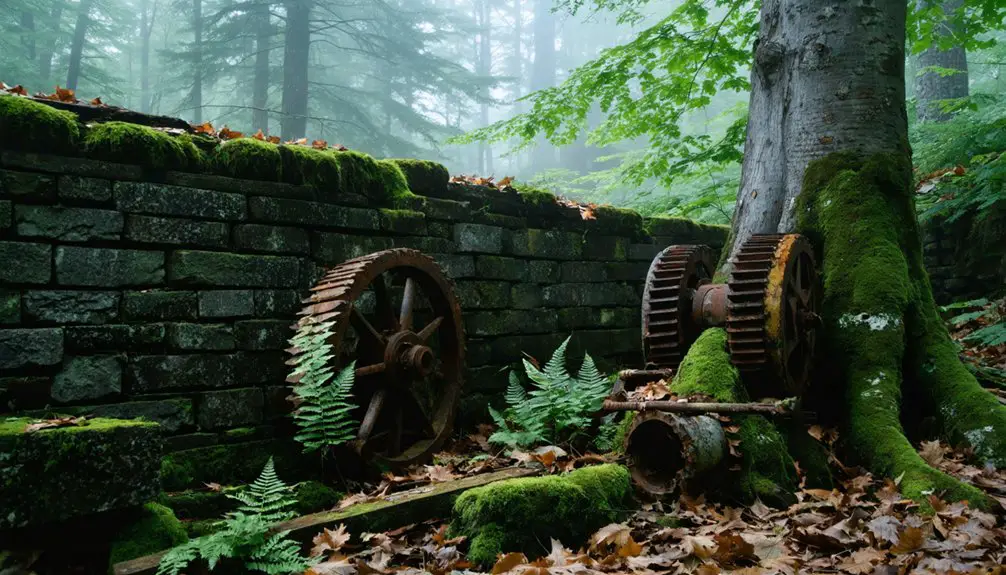
Today, you can walk through what remains — crumbling smelter ruins, overgrown mine shafts, and moss-covered foundations that quietly bear witness to a town’s sudden unraveling.
Copper Mining Boom Origins
Before it earned the name South Franklin, this remote corner of Vermont’s Franklin County hummed with the kind of industrial ambition that transformed quiet wilderness into a working copper town.
South Verse, as settlers originally called it, drew workers who understood copper mining techniques and weren’t afraid to carve economic opportunity from unforgiving mountain terrain.
You’d have recognized the place immediately by its energy. Smelting fires burned, ore carts rolled, and mining community dynamics shaped every social interaction — from how families organized their days to how merchants positioned their storefronts.
The copper beneath the soil promised lasting prosperity, and for a time, it delivered. Workers arrived, structures rose, and South Verse genuinely thrived.
That ambition, however, remained entirely dependent on copper’s market value staying strong.
Market Collapse Forced Abandonment
Copper’s promise, it turned out, had an expiration date. When copper markets collapsed, South Verse didn’t decline gradually — it emptied almost overnight.
The economic impact was total and unforgiving. Families who’d built lives around the mines packed what they could carry and left behind everything else: homes, tools, ambitions.
What had once hummed with industrial purpose fell silent beneath encroaching forest. The cultural significance of South Verse didn’t disappear with its residents, though. It shifted form, becoming a quiet record of how completely a community’s fate can hinge on a single commodity.
You’re not just walking through abandoned ruins when you visit — you’re reading a cautionary story written in stone foundations and overgrown smelter debris, a story of freedom pursued and ultimately surrendered to forces beyond anyone’s control.
Ghost Town Remains Today
Nothing about the name “South Franklin” hints at what came before it, but the ghost town beneath that designation has a longer, more complicated story.
Once called South Verse, this copper-driven settlement collapsed when the market did, leaving its ghost town legends permanently etched into Franklin County’s landscape.
Today, you’ll find layered mining history written across the terrain in three distinct forms:
- Abandoned smelter ruins and mine shaft remnants emerging through dense forest overgrowth
- Stone foundations and cellar holes marking where families once built their lives
- EPA Superfund Site designations signaling contamination that still shapes the land
The wilderness has reclaimed most of it, but the bones remain.
Walk carefully — the ground here holds more history than it appears.
How Do You Get to South Franklin, Vermont?
Tucked away in Franklin County in northern Vermont, South Franklin sits off Route 9 heading east toward the Woodford area, where the Long Trail and Appalachian Trail carve through the surrounding mountainous terrain.
You’ll find parking available nearby, giving you a natural starting point before venturing into the wilderness. The remote landscape demands respect — bring navigation tools and plan your arrival during daylight hours, as the terrain doesn’t forgive careless wandering.
This isn’t a polished tourist destination with signage guiding your every step; it’s raw, reclaimed wilderness layered with historical significance and mining heritage. The forest has quietly swallowed what copper once built here, and reaching it requires the same self-reliant spirit that originally drew settlers into these Vermont hills.
What’s Left to See at South Franklin Today?
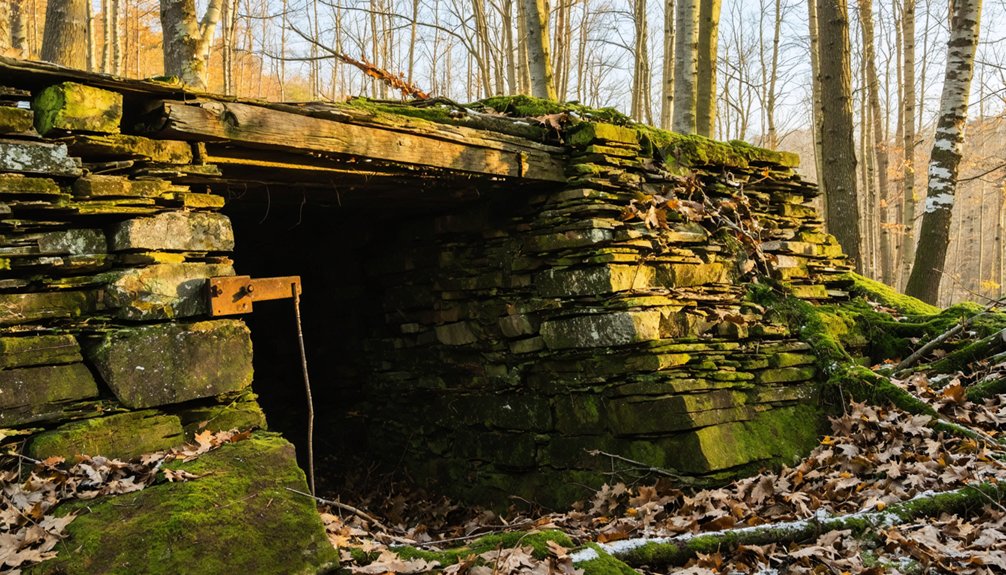
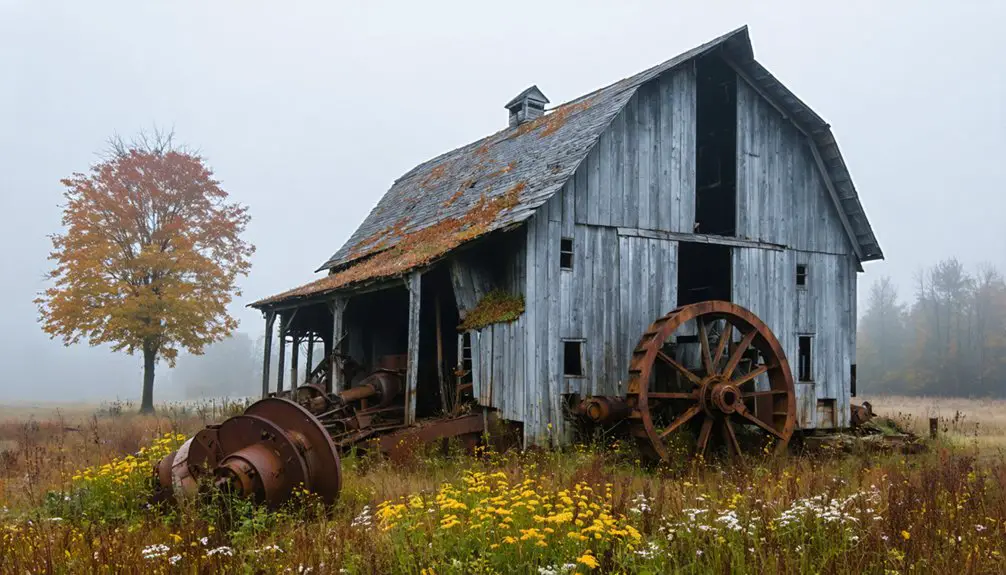
Walking through South Franklin today, you’ll find scattered remnants of the copper mining operation that once defined this community — abandoned smelter ruins, mine shaft remnants half-consumed by encroaching vegetation, and stone foundations marking where families once built their lives around the industry.
These abandoned structures carry deep historical significance, silently narrating South Franklin’s dramatic rise and collapse.
Three features define the experience:
- Smelter ruins — crumbling industrial architecture reclaimed by forest growth
- Mine shaft remnants — partially visible excavations surrounded by overgrown terrain
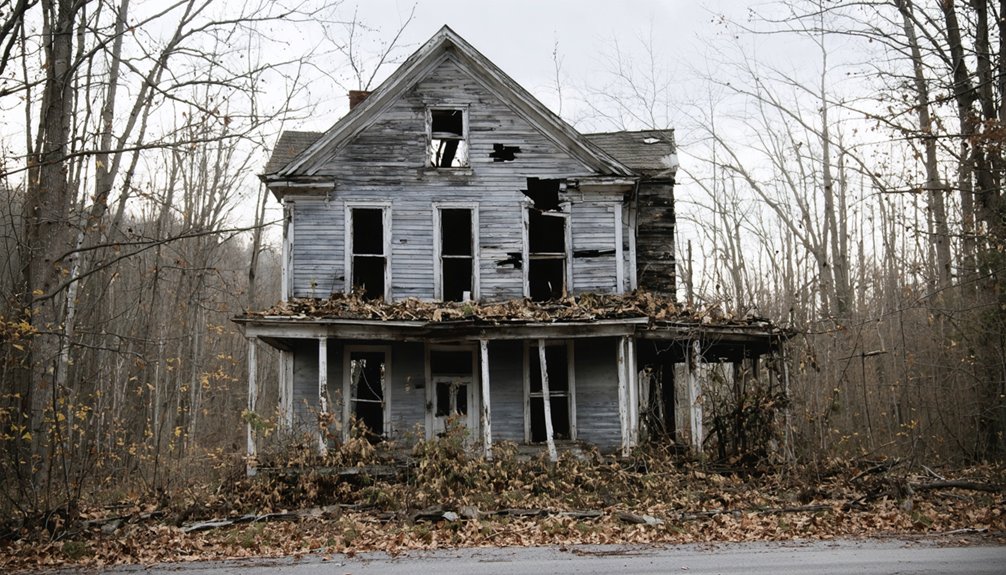
- Cellar holes and foundations — ghostly outlines of former residences beneath woodland canopy
Is South Franklin Safe to Explore?
Before you set foot in South Franklin, you need to know that the EPA has designated it a Superfund site, meaning the copper mining legacy left behind serious soil and water contamination that poses real health risks.
You’ll want to respect any posted restrictions, wear sturdy protective footwear, and keep to established paths rather than wandering near old mine shafts or smelter ruins.
Stick to daylight hours, carry reliable navigation tools, and consider consulting local sources beforehand, because this remote, overgrown terrain doesn’t forgive careless exploration.
Environmental Contamination Risks
South Franklin’s haunted beauty comes with a serious caveat: the site carries an EPA Superfund designation, meaning the land bears a toxic legacy from decades of copper extraction and smelting operations.
Before you roam freely through these ruins, contamination awareness isn’t optional — it’s essential.
Here’s what you’re dealing with:
- Soil contamination from heavy metals leached through years of smelting activity
- Restricted zones enforced by EPA environmental restoration protocols limiting access near processing sites
- Hazardous infrastructure including unstable mine shafts and deteriorating industrial remnants
Respect these boundaries.
Wear protective footwear, avoid disturbing soil or vegetation near former processing areas, and never enter cordoned sections.
Freedom to explore this forgotten landscape depends entirely on your willingness to move through it responsibly.
Safe Exploration Practices
Exploring South Franklin safely means accepting that curiosity and caution aren’t opposites — they’re travel partners. This former copper settlement carries real hazards: unstable mine shafts, contaminated soil, and crumbling foundations hidden beneath decades of forest reclamation.
Your exploration gear matters here — sturdy boots, navigation tools, and awareness of EPA Superfund restrictions aren’t optional extras; they’re essentials.
Ghost town etiquette demands you respect posted boundaries and resist the urge to enter deteriorating structures. Daylight exploration isn’t merely recommended — it’s your smartest strategic choice in terrain this remote and unforgiving.
South Franklin rewards the prepared traveler. You’re walking through industrial archaeology, through collapse and quiet reclamation.
Approach it honestly: informed, equipped, and ready to read the landscape on its own terms rather than forcing it to conform to yours.
Why Fall Is the Best Time to Visit South Franklin
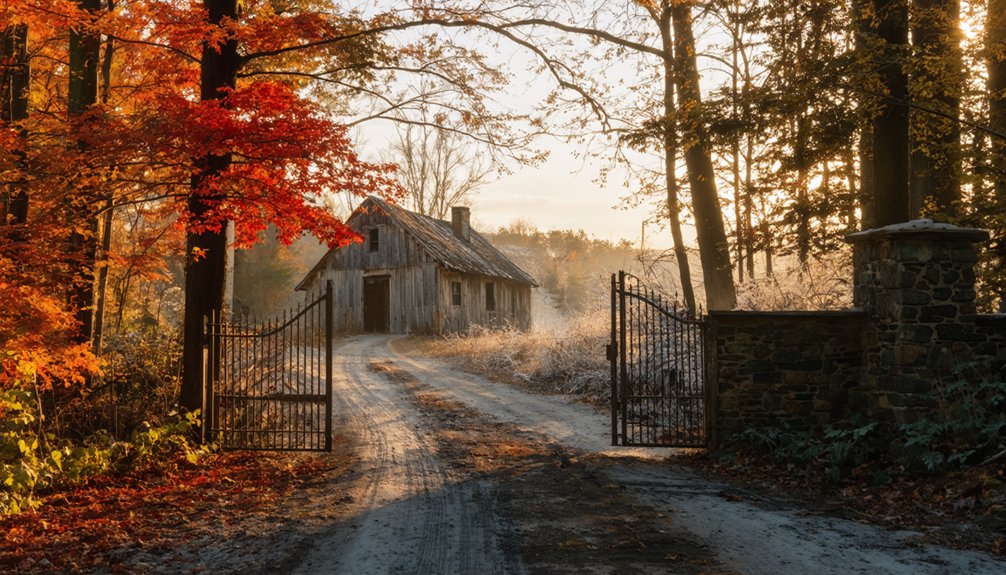
When the leaves turn in northern Vermont, South Franklin transforms into something almost cinematic—burnt oranges and deep crimsons draping the overgrown ruins of what was once a copper-mining settlement known as South Verse.
Fall strips away summer’s dense canopy, revealing stone foundations and smelter remnants that warmer months conceal.
For autumn colors and photography tips, consider these advantages:
- Reduced foliage density exposes structural ruins more clearly for dramatic composition
- Cooler temperatures make traversing uneven, hazardous terrain far more manageable
- Golden-hour light arrives earlier, extending your prime shooting window
You’ll find the landscape quietly haunting in autumn—history surfacing through thinning trees.
Come prepared with a wide-angle lens, sturdy boots, and enough daylight to explore freely without rushing.
What Should You Bring to a Superfund Ghost Town?
Packing for South Franklin isn’t like loading up for a standard hike—you’re stepping into a former copper-mining site that carries an EPA Superfund designation, which means the ground itself can be hazardous.
Respect superfund regulations by wearing heavy-duty boots and gloves, and avoid touching exposed soil or crumbling industrial remnants.
Bring a detailed map, since cell service is unreliable in Franklin County’s remote terrain. A quality camera lets you document the area responsibly, supporting historical preservation without disturbing fragile structures.
Pack enough water, as you won’t find amenities nearby.
Daylight hours are your most valuable resource—arrive early and leave before dark.
Treating South Franklin’s ruins with care guarantees these haunting copper-era remnants remain accessible for every curious traveler who follows your tire tracks.
Trails, Covered Bridges, and State Parks Near South Franklin
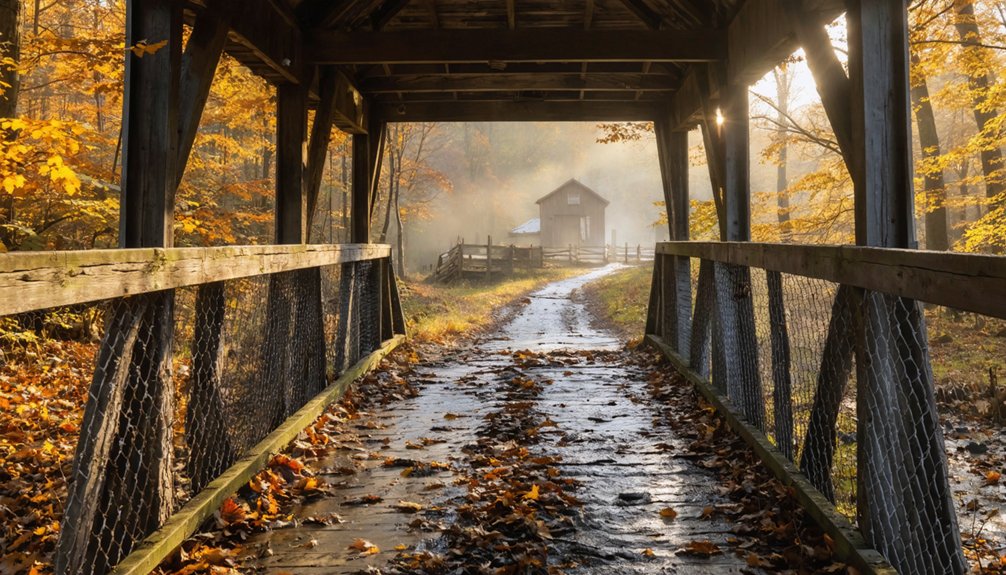
South Franklin’s ghost town allure doesn’t have to be your only destination—Franklin County rewards curious travelers with covered bridges, forested trail systems, and state parks that turn a single-site detour into a full regional adventure.
Expand your itinerary with these nearby draws:
- Long Trail and Appalachian Trail — Intersecting routes near South Franklin offer serious trails exploration through Vermont’s northern wilderness.
- Historic Covered Bridges — Franklin County’s covered bridges connect you to 19th-century craftsmanship still standing against time and weather.
- Regional State Parks — Surrounding parks provide camping, picnic areas, and seasonal fall foliage that transform the landscape into vivid color.
You’re not just visiting ruins—you’re moving through living history across an entire Vermont region worth discovering on your own terms.
Which Other Vermont Ghost Towns Should You Visit?
Beyond South Franklin, Vermont’s forgotten settlements pull you deeper into a compelling story of boom, abandonment, and reclamation. Each ghost town carries its own Vermont folklore, shaped by ambition, hardship, and nature’s quiet reclamation.
Glastenbury once housed loggers and miners before vanishing beneath dense forest, its mystery deepening with unsettling disappearances that still fuel local legend.
Ricker Basin sheltered farming families whose stone foundations now emerge through tangled undergrowth.
Smith Family Farms tells a quieter agricultural story, where cleared fields slowly surrendered to woodland.
Together, these destinations form a meaningful circuit through Vermont’s mining heritage and rural past.
Exploring them consecutively reveals patterns of rise and collapse that define the region’s forgotten chapters, rewarding curious travelers who value authentic history over polished tourist experiences.
How Do You Plan a Multi-Day Vermont Ghost Town Road Trip?
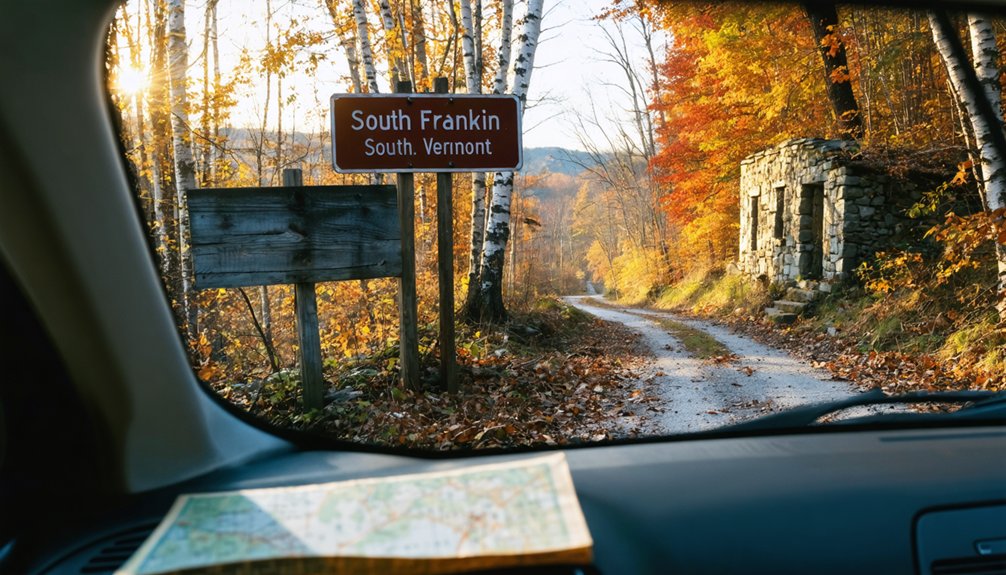
To make the most of Vermont’s ghost towns, you’ll want to map a cohesive route connecting South Franklin, Glastenbury, Ricker Basin, and Smith Family Farms, minimizing backtracking across Franklin County’s winding mountain roads.
Time your trip for autumn, when fall foliage transforms the abandoned landscapes into something genuinely haunting and beautiful.
Pack sturdy boots, navigation tools, and layers for unpredictable mountain weather, since these remote sites sit well beyond the reach of easy rescue if you’re underprepared.
Mapping Your Ghost Town Route
Planning a multi-day Vermont ghost town road trip rewards careful preparation, and anchoring your route around South Franklin—once known as South Verse, a copper-mining settlement that boomed and collapsed almost overnight—gives you a historically rich starting point from which to branch outward.
Ghost town legends and mining history breathe life into every stop, transforming a simple drive into genuine discovery. Consider sequencing your journey strategically:
- Begin at South Franklin, absorbing its abandoned smelter ruins and EPA Superfund legacy.
- Continue toward Glastenbury, where isolation and eerie quiet deepen the experience.
- Finish at Ricker Basin or Smith Family Farms, tracing Vermont’s rural collapse through stone foundations and cellar holes.
Carry detailed maps, travel during daylight, and let each site’s silence tell its own story.
Choosing Optimal Travel Dates
When you choose your travel dates shapes everything about how South Franklin and Vermont’s other ghost towns reveal themselves to you.
Fall delivers the most dramatic experience — foliage ignites the overgrown smelter ruins and forest-reclaimed foundations in amber and crimson, while ideal weather conditions keep trails passable and daylight generous. You’ll navigate remote terrain more confidently before November’s early darkness closes in.
Summer offers longer days for exploring Ricker Basin and Glastenbury without rushing, though humidity thickens the woods considerably.
Spring reveals stone foundations emerging from retreating snow, raw and unfiltered.
Check local festivals in surrounding Franklin County towns before finalizing your itinerary — they’ll connect you with residents who carry generational knowledge about these abandoned settlements that no trail map captures.
Packing for Remote Exploration
Your chosen travel dates determine more than scenery — they dictate exactly what you’ll need on your back when you step into former copper-mining territory that’s now an EPA Superfund Site with no services, no cell coverage, and terrain that punishes the underprepared.
Pack your exploration gear around three non-negotiable packing essentials:
- Navigation tools — topographic maps and a compass, because digital signals vanish among these overgrown Franklin County ridgelines.
- Protective footwear — heavy boots that guard against collapsed mine shaft debris and contaminated soil zones.
- Daylight management — a headlamp plus extra batteries, since South Verse’s forest swallows light faster than you’d expect.
Freedom here means self-sufficiency. Everything you need enters with you; everything leaves with you.
Frequently Asked Questions
Are Pets Allowed at South Franklin’s EPA Superfund Site?
The knowledge base doesn’t specify pet policies, but you’ll want to check site regulations before bringing animals. Pet safety matters here—contamination from South Franklin’s copper mining legacy poses real risks to curious, roaming companions.
Is Photography Permitted Among South Franklin’s Abandoned Mining Ruins?
You’re free to photograph South Franklin’s abandoned structures, capturing their historical significance through your lens. Explore the crumbling smelter ruins and mine shaft remnants, but you’ll want to respect EPA Superfund Site restrictions while documenting this evocative industrial heritage.
What Is the Best Parking Spot for Visiting South Franklin?
You’ll find parking facilities conveniently available near Route 9, your gateway to South Franklin’s local attractions. From there, you’re free to explore the haunting historical significance of these copper mining ruins firsthand.
Are There Restroom Facilities Available Near the South Franklin Site?
You won’t find restroom accessibility or visitor amenities at South Franklin’s untamed, historically-rich wilderness. Plan ahead by using facilities before arriving — this liberated ghost town remains beautifully raw, unbothered by modern conveniences, just as abandoned copper-era settlements should be.
Does South Franklin Have Cell Phone Coverage for Emergency Use?
Like a telegraph wire gone silent, don’t count on reliable cell service options in South Franklin’s remote wilderness. You’ll want solid emergency preparedness — carry a satellite communicator, as coverage remains unpredictable throughout this isolated, contaminated terrain.
References
- https://www.vermonter.com/ricker-basin-vermont-ghost-town/
- https://en.wikipedia.org/wiki/List_of_ghost_towns_in_Vermont
- https://www.reddit.com/r/vermont/comments/1rflulu/looking_for_a_ghost_town_or_abandoned_factories/
- https://happyvermont.com/2014/10/23/glastenbury-ghost-town/
- https://www.youtube.com/watch?v=2fvPo9iQC-w
- https://vermontcountry.com/2022/09/18/ghost-town/
- https://usghostadventures.com/montpelier-ghost-tour/
- https://myfamilytravels.com/supposedly-boring-vermont-towns-hiding-some-truly-strange-landmarks/
- https://www.facebook.com/groups/BenningtonBlotter/posts/2084150884950089/
- http://freepages.rootsweb.com/~gtusa/history/usa/vt.htm