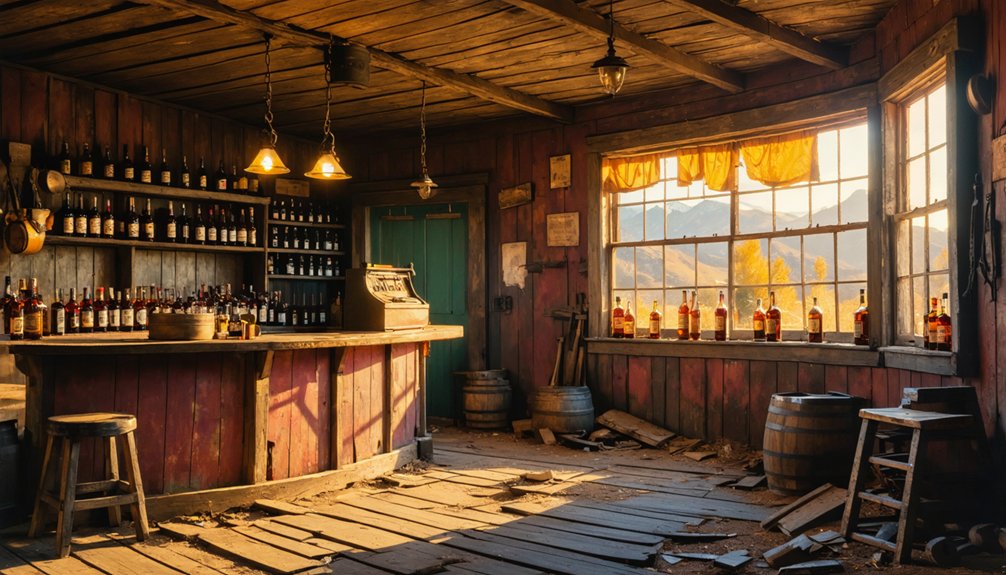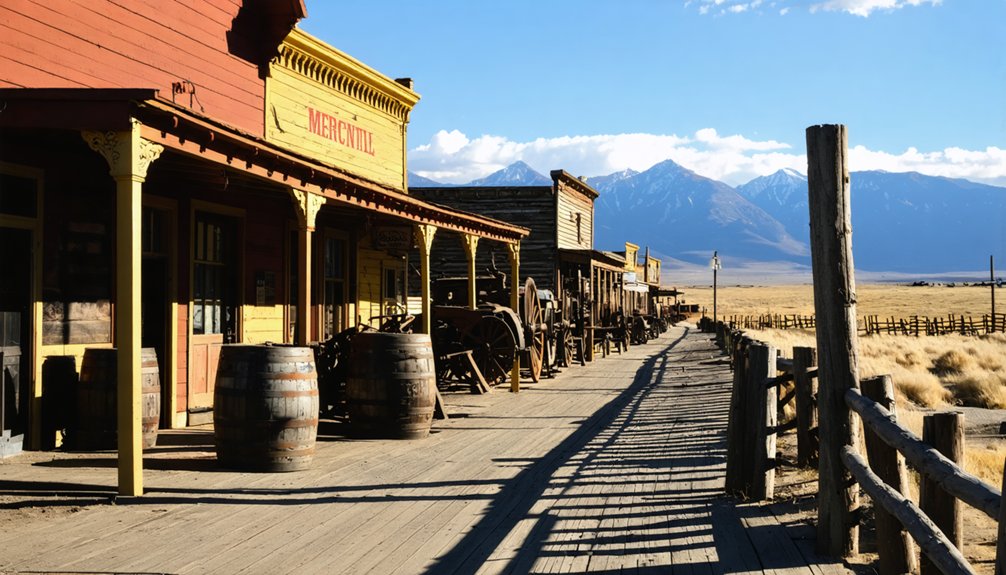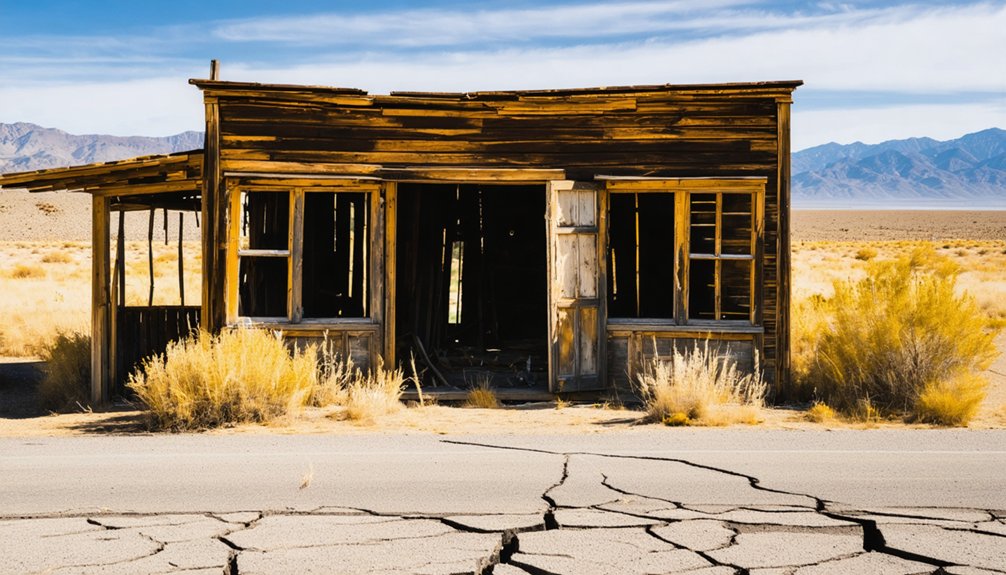
Sullivan, California isn’t a real ghost town — it has no verified history, abandoned structures, or place on any official registry. You’re likely chasing a myth. But don’t let that stop your adventure, because California’s actual ghost towns are worth every mile. Bodie’s weathered ruins, Calico’s restored 1880s buildings, and North Bloomfield’s hydraulic mining legacy all tell authentic boom-and-bust stories. Stick around, and you’ll discover everything you need to plan the real trip.
Key Takeaways
- Sullivan, California does not exist as a verified ghost town and likely stems from confusion with Sully’s Tourist Camp in Nevada.
- Instead, plan your road trip around authentic California ghost towns like Bodie, Calico, North Bloomfield, and Masonic.
- Choose a route based on region: northern routes cover Bodie and Masonic, while southern routes feature Calico and Julian.
- Prepare for remote travel by downloading offline maps, carrying water, and using high-clearance SUVs on unpaved roads.
- Verify permits and fees beforehand, as Bodie, North Bloomfield, and Calico each have distinct admission requirements.
Sullivan, California Ghost Town: Does It Actually Exist?
When you search for Sullivan, California on any ghost town registry or historical record, you’ll come up empty — because it doesn’t exist.
No verified Sullivan history places it among California’s documented abandoned settlements. It’s one of those ghost town myths that circulates through road trip forums and travel blogs without a single credible source to back it up.
The likely confusion stems from Sully’s Tourist Camp, a Nevada desert outpost planned in 1931 near Mina, roughly 10 miles south on Mt. Montgomery Highway.
That’s a different state, a different story, and an entirely different destination.
Before you chase a ghost that was never there, redirect your route toward California’s genuine abandoned towns — places with real history, standing structures, and roads that actually lead somewhere worth exploring.
The Best California Ghost Towns to Visit Near Sullivan
Since Sullivan, California doesn’t exist, you’ll need to reroute your road trip toward ghost towns that actually do — and California’s got no shortage of them.
Skip the ghost town myths and head straight for places with real Sullivan history-level intrigue. Bodie delivers lawlessness, fire, and slow decay frozen in time.
Calico offers restored 1880s silver rush architecture in San Bernardino County. North Bloomfield stands as a quiet monument to banned hydraulic mining.
Masonic, tucked in the eastern Sierra Nevada, rewards adventurous explorers with mill ruins and sweeping views. Each destination carries authentic stories of boom, bust, and abandonment.
You don’t need a fictional town when California’s actual ghost towns offer this much raw, unfiltered history waiting to be explored on your own terms.
Bodie, Calico, and North Bloomfield: What Each Stop Is Actually Like
Each of these three towns pulls you in with a completely different personality—Bodie’s frozen-in-time decay, Calico’s polished restoration, and North Bloomfield’s quiet, working preservation create experiences that feel nothing alike.
At Bodie, you’re walking through authentic ruins that rangers maintain but never restore, so the weathered saloons and collapsed homes look much as they did when the last residents left.
Calico, by contrast, hands you a curated 1880s experience with rebuilt storefronts and active park facilities, while North Bloomfield strikes a middle ground, keeping original structures standing through careful, ongoing preservation work.
Each Town’s Unique Character
Though they share a ghost town label, Bodie, Calico, and North Bloomfield couldn’t feel more different once you’re standing in them.
Bodie hits hard — weathered structures frozen mid-decay, radiating the raw lawlessness and isolation that defined its boom years. Its cultural significance comes from what’s been left untouched, not restored.
Calico swings the opposite direction, offering rebuilt 1880s architecture and an operational park where you can actually explore without restriction. It’s polished, but its unique histories of silver wealth and near-disappearance still breathe through every corner.
North Bloomfield is quieter, more intimate — a handful of preserved buildings standing as direct evidence of hydraulic mining’s violent rise and legislated fall.
Each stop rewards you differently, so arrive with curiosity and zero expectations.
Preservation Versus Restoration Differences
What separates these three stops isn’t just geography — it’s philosophy.
Bodie embraces preservation techniques that freeze decay in place — you’re walking through collapse, not reconstruction. Buildings lean, paint peels, and that’s intentional. Nobody’s prettying it up for you.
Calico takes the opposite approach. Restoration challenges shaped every decision there, and what you see today is largely rebuilt. It’s polished, accessible, and family-friendly — but it trades raw authenticity for comfort.
North Bloomfield splits the difference. Original structures still stand, and caretakers work to stabilize without sanitizing. You’ll feel history without feeling like you’ve entered a theme park.
Knowing this before you arrive changes everything. You won’t be disappointed — you’ll be informed. Each stop delivers something real, just on completely different terms.
How to Build Your California Ghost Town Road Trip Route
Planning a California ghost town road trip means deciding early whether you’re heading north, south, or through the central hills—because each corridor holds a distinct slice of abandoned history.
The northern route takes you along US-395 toward Bodie, where ghost town legends and lawlessness shaped an entire era. Swing east into the Sierra Nevada to reach Masonic’s mill ruins.
Heading south, Calico and Julian anchor the route with restored architecture and genuine historical significance.
Central travelers can detour through North Bloomfield inside Malakoff Diggins State Historic Park. If Sullivan draws you, note that records point toward a Nevada connection near Mina rather than California.
Build your loop deliberately, prioritize road conditions, and carry water—especially on remote desert stretches where cell service disappears fast.
Permits, Road Conditions, and Fees to Check Before You Go
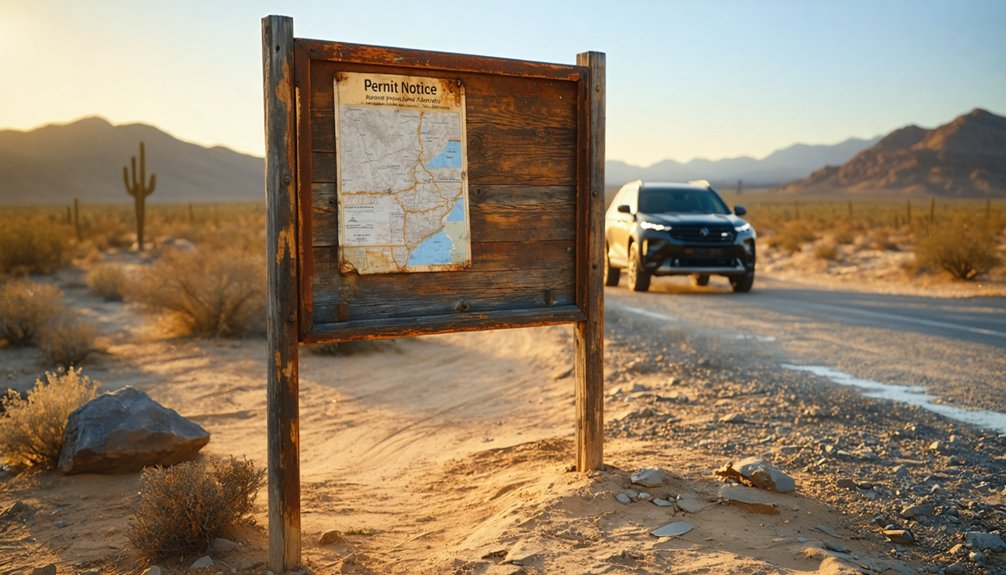
Before you load the car and hit the road, check permits, fees, and current road conditions for every site on your itinerary—skipping this step can turn an exciting detour into a wasted drive.
Bodie State Historic Park charges a day-use entry fee, and permit requirements apply for certain research or commercial activities.
North Bloomfield sits inside Malakoff Diggins State Historic Park, which also collects day-use fees.
Calico operates as a county regional park with its own admission structure.
Road condition updates matter most on eastern Sierra routes toward Bodie and Masonic, where unpaved sections become impassable after storms.
Unpaved eastern Sierra roads to Bodie and Masonic can become completely impassable following storms—always check conditions before departing.
Check Caltrans and park websites before departing.
Cell service drops fast once you’re off the highway, so download offline maps and print any required permits ahead of time.
Getting to California’s most remote ghost towns demands more than a full tank of gas—you’ll need the right vehicle, reliable navigation tools, and a clear-eyed understanding of what lies between you and those weathered ruins.
High-clearance SUVs and four-wheel-drive vehicle types handle washboard dirt roads and rocky terrain far better than sedans ever will. Roads leading to sites like Bodie or Masonic can shift from paved to punishing without warning.
Download offline maps through navigation apps like Gaia GPS or onX before you lose cell signal—and you’ll lose it. Carry a paper backup map as your failsafe.
Know your route’s elevation changes, seasonal closures, and creek crossings ahead of time. The freedom to explore forgotten history starts with arriving prepared, not stranded.
Frequently Asked Questions
What Is the Best Time of Year to Visit California Ghost Towns?
You’ll find spring and fall offer the best seasonal attractions, with mild weather considerations making exploration comfortable. Avoid summer’s scorching heat and winter’s icy roads to fully embrace your ghost town adventure freely.
Are Children Allowed to Explore Restricted Areas at Ghost Town Sites?
Those restricted areas hold secrets—but they’re off-limits for children! You must guarantee parental supervision at all times, as safety protocols exist to protect young explorers from unstable structures and hidden dangers lurking within these fascinating, crumbling ghost town sites.
Can You Camp Overnight Inside Bodie State Historic Park’s Boundaries?
You can’t camp overnight within Bodie State Historic Park’s boundaries. The camping regulations prohibit it, and park facilities don’t support overnight stays, so plan nearby accommodations to fuel your freedom-filled ghost town adventure!
Are Pets Permitted on Trails Leading to Remote Ghost Town Locations?
Like a loyal compass guiding your journey, your pet can join you on trails to remote ghost towns, but you’ll want to prioritize pet safety and trail etiquette — always leash up and check each site’s specific rules.
Do Any Ghost Towns Offer Guided Tours Led by Professional Historians?
You’ll find guided tours led by professional historians at Bodie and Calico, where ghost town history truly comes alive! Tour pricing varies, so check each site’s official website before you hit the open road.
References
- https://www.camp-california.com/california-ghost-towns/
- https://historynet.com/ghost-towns-masonic-california/
- https://nvtami.com/2021/06/15/sullys-tourist-camp-nevada/
- https://en.wikipedia.org/wiki/List_of_ghost_towns_in_California
- https://discover.hubpages.com/travel/Ghost-Towns-in-California