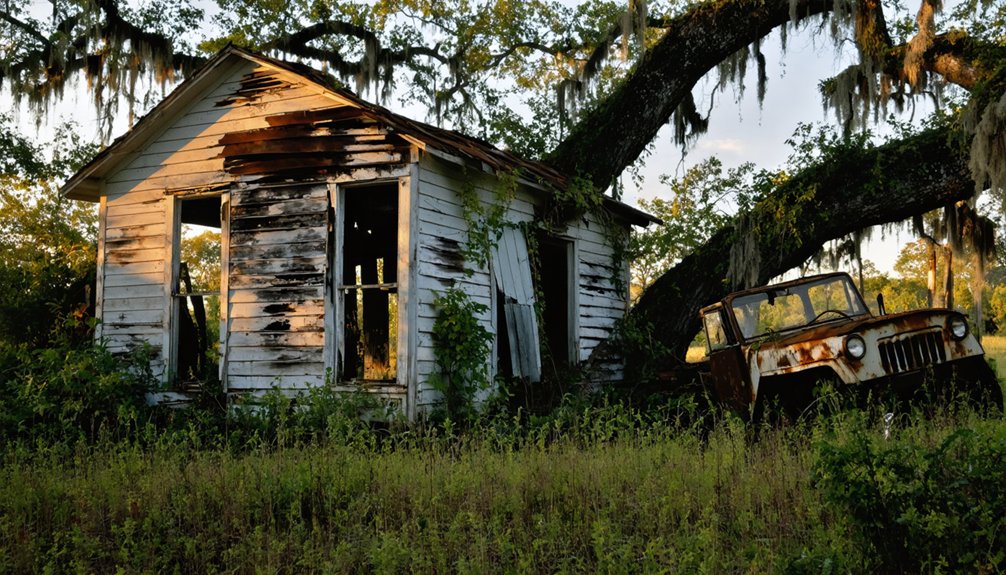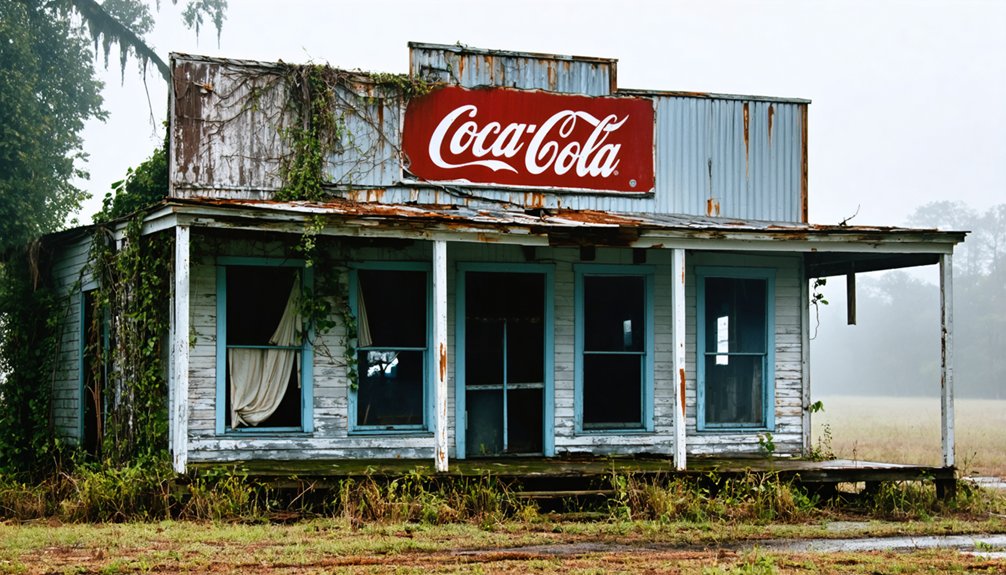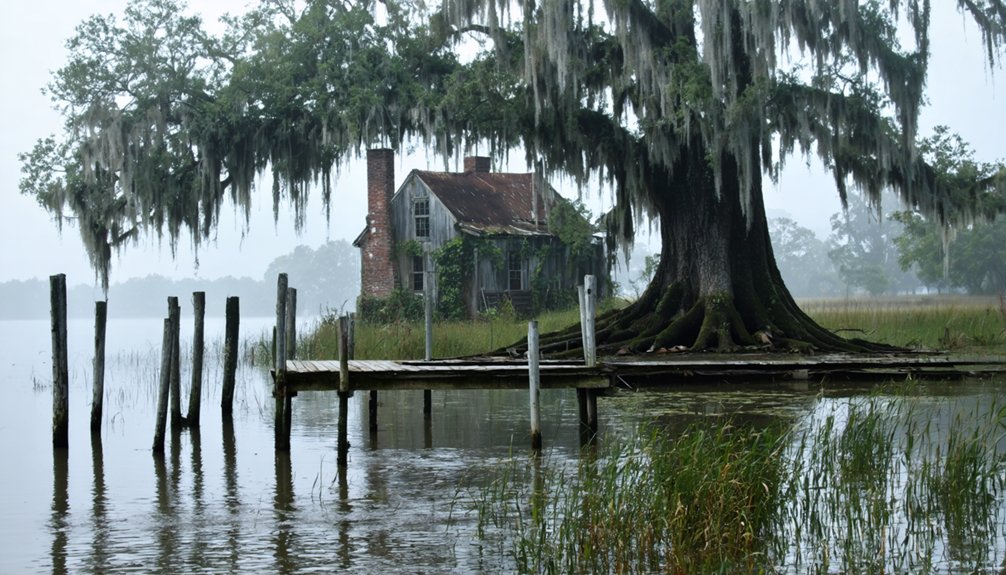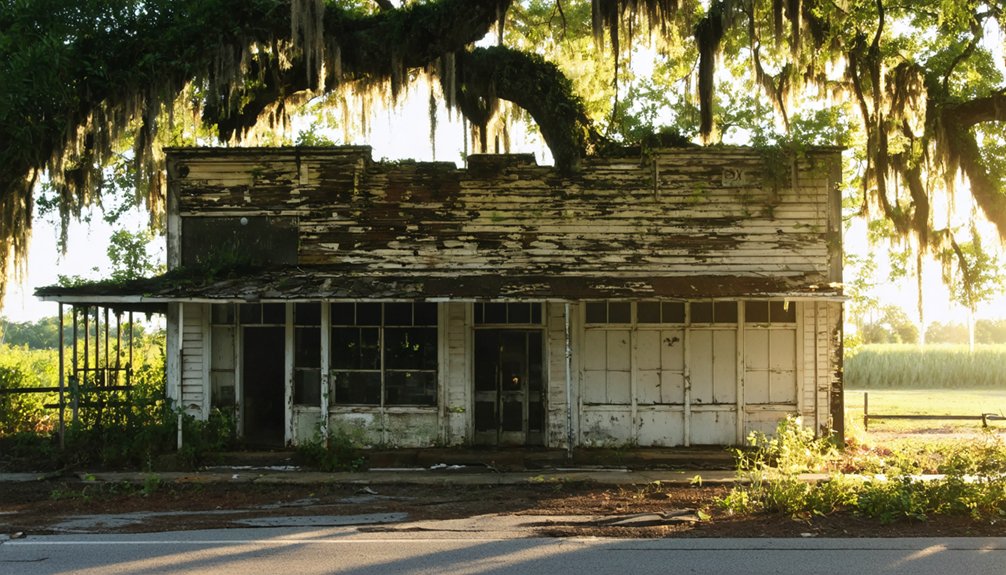
Planning a ghost town road trip to Taft, Louisiana means visiting a place that’s technically on the map but nearly invisible in person. Once home to 700 residents in 1905, Taft’s population hit zero by 2000 after industrial rezoning replaced homes with chemical plants. Today, a single active cemetery surrounded by Dow Chemical facilities is all that remains. Stick around, and you’ll uncover the full story of how an entire Louisiana community simply disappeared.
Key Takeaways
- Taft, Louisiana, once home to 700 residents in 1905, is now a ghost town with zero residents recorded in the 2000 census.
- The only remaining landmark is Our Lady of the Holy Rosary Cemetery, surrounded on three sides by Dow Chemical facilities.
- To reach Taft, take I-10 west from New Orleans, exit onto LA-18, and rely on GPS as no exit signs exist.
- Visit during daylight hours, respect posted restrictions, and prepare for an active industrial chemical corridor with no visitor facilities.
- Nearby ghost towns like Ruddock, Laurel Valley Sugar Plantation, and Alma make excellent additions to your road trip itinerary.
What Is the Ghost Town of Taft, Louisiana?
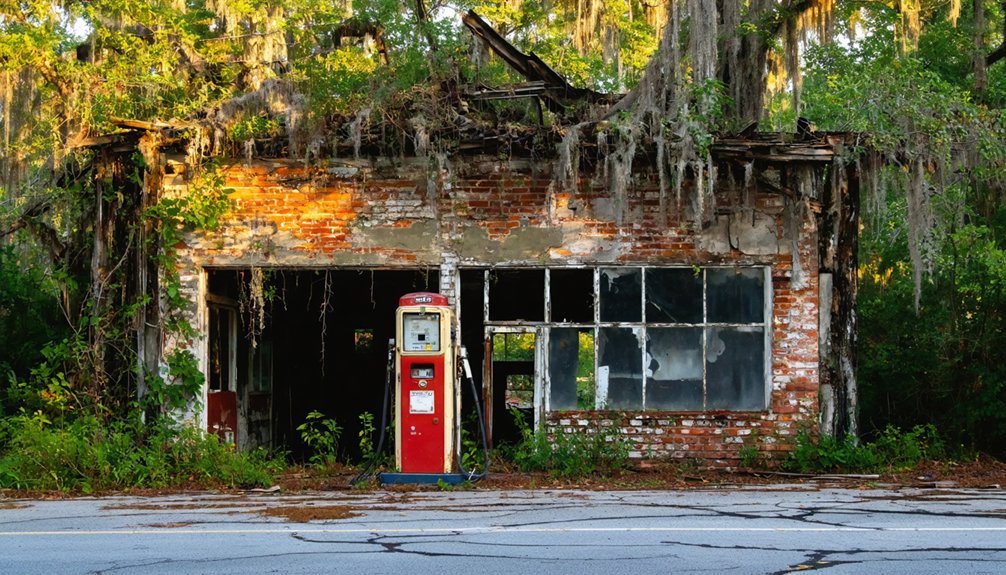
Tucked along the west bank of the Mississippi River in St. Charles Parish, Taft, Louisiana, is a ghost town where industrial sprawl swallowed an entire community.
When you explore Taft history, you’ll discover a settlement that once housed 700 residents when its post office opened in 1905. By 2000, the Census recorded zero population.
Heavy industrial zoning gradually displaced every resident, every structure, and every trace of ordinary life. The ghost town significance here isn’t just about abandonment — it’s about transformation.
Chemical plants, a nuclear generating station, and phosphate facilities now dominate land where families once lived.
Only the Our Lady of the Holy Rosary Cemetery remains active, surrounded on three sides by Dow chemical facilities, quietly marking what this community once was.
How Taft’s Population Dropped From 700 to Zero
Taft didn’t empty overnight. When the post office opened in 1905, 700 residents called this Mississippi River community home. You can trace the population trends backward from there and watch a slow, deliberate unraveling.
Heavy industry moved in, rezoned the land, and quietly pushed people out. The church relocating to Hahnville in 1963 accelerated community decline by stripping away a central gathering place.
The post office shuttered in 1967, erasing the town’s last official identity. By 1977, only 36 residents remained. By 2000, the census recorded zero.
What you’re driving through today isn’t a place that burned down or flooded out. It’s a community that got industrialized into nonexistence, acre by acre, until nothing remained except a cemetery surrounded by chemical plants.
How Industry Moved In and Wiped Out an Entire Town
When you look at what happened to Taft, the story isn’t subtle — industry didn’t just move in, it swallowed the town whole.
Chemical plants like Dow’s Union Carbide facility and the Mosaic Company’s phosphate processing operation claimed the land piece by piece, pushing zoning from residential to heavy industrial until no room remained for people to live.
Industrial Zoning Erased Community
Once a modest river community of 700 residents, Taft didn’t disappear overnight—industry swallowed it whole, one rezoning decision at a time.
Industrial expansion crept in steadily, transforming family homes and gathering places into chemical plants, phosphate facilities, and nuclear infrastructure. Each new facility pushed residents further out, accelerating community decline until nothing remained.
By 1967, the post office closed. By 2000, the census recorded zero residents.
What you’ll find today is a landscape dominated entirely by heavy industrial zoning—Dow chemical facilities flanking the cemetery on three sides, the Mosaic Company phosphate plant nearby, and Entergy’s Waterford Nuclear Station looming in the distance.
Taft’s story isn’t just about industry moving in. It’s about what happens when a community loses the legal right to exist on its own land.
Chemical Plants Displaced Residents
The rezoning didn’t happen in a vacuum—real companies with real machinery moved in, and real families moved out. Dow Chemical and Union Carbide established a major petrochemical plant producing acrolein, acrylic acid, and acetaldehyde.
The Mosaic Company built a phosphate processing facility. Entergy’s Waterford Nuclear Generating Station claimed additional land. Each expansion accelerated community erasure, pushing residents further from their roots.
The chemical legacy of Taft became undeniable in December 1982 when a Union Carbide explosion forced nearly 17,000 people to evacuate. That single event captured what daily life near these facilities actually meant—danger, displacement, and diminishing freedom.
You won’t find neighborhoods here anymore, just fencelines, pipelines, and warning signs where homes once stood. Industry didn’t just move in; it erased everything behind it.
Population Collapse Over Decades
Taft didn’t collapse overnight—it bled out slowly over seven decades. When the post office opened in 1905, 700 residents called this riverside community home. That number tells a story of population dynamics shifting beneath people’s feet before they even noticed.
By 1977, only 36 souls remained, clinging to a place already claimed by industry. The 2000 Census recorded zero residents—a complete erasure. Community decline here wasn’t accidental; it was methodical.
Industrial zoning replaced residential lots, the church relocated to Hahnville in 1963, and the post office shut its doors in 1967.
Each closure stripped away another reason to stay. You’re not visiting a town that burned or flooded—you’re standing in one that was quietly, deliberately consumed from the inside out.
Taft’s Only Surviving Landmark: A Cemetery Inside a Chemical Plant
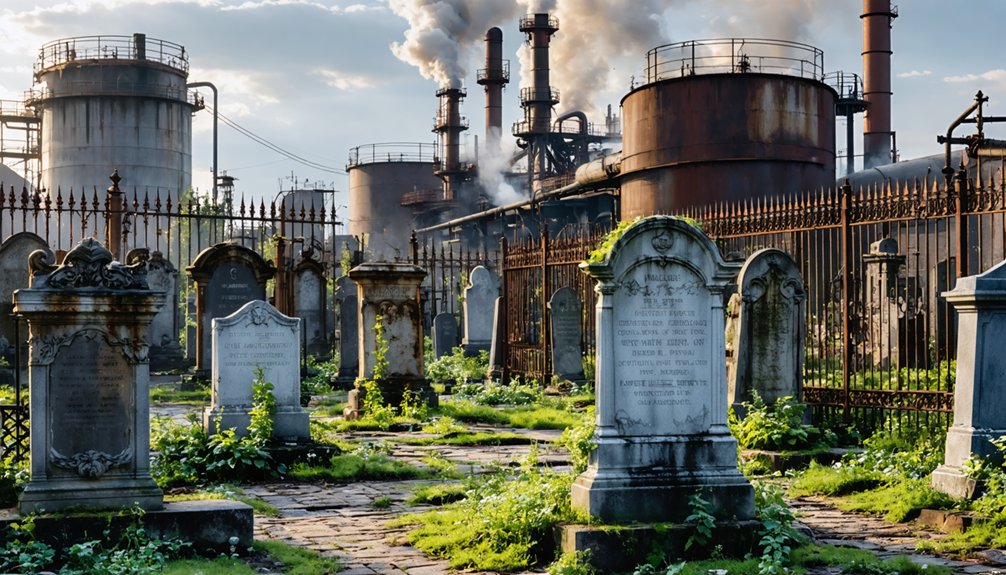
When you visit Taft, the Our Lady of the Holy Rosary Cemetery is the only landmark left standing — and it’s completely surrounded on three sides by Dow chemical facilities.
Despite the industrial encroachment, families still actively bury their loved ones here, making it one of Louisiana’s most hauntingly unique active cemeteries.
You can reach it by directing via GPS to St. Charles Parish coordinates, since no roadside signage marks the way into this vanished community.
Cemetery’s Industrial Surroundings
Although Taft has been swallowed almost entirely by heavy industry, one landmark stubbornly refuses to disappear: the Our Lady of the Holy Rosary Cemetery, an active burial ground encircled on three sides by Dow chemical facilities.
When you visit, you’ll immediately feel the tension between cemetery preservation and industrial impact — pipes, tanks, and processing units loom over headstones that predate the chemical age entirely.
It’s a striking, almost surreal scene that connects you to lives lived before corporations redrew the map. Families still bury their dead here, asserting a quiet defiance against total industrial erasure.
You won’t find fences keeping industry out; instead, you’ll find a community’s memory pressing back against the machinery that consumed everything else around it.
Active Burials Still Occurring
What makes the Our Lady of the Holy Rosary Cemetery truly remarkable isn’t just its industrial backdrop — it’s that people are still being buried here. Active burials continue despite Dow chemical facilities surrounding three sides. Cemetery visits feel surreal, almost defiant.
Picture yourself standing among the headstones and noticing:
- Freshly placed flowers beside weathered marble markers
- Chemical plant exhaust stacks rising directly behind the tree line
- The hum of industrial machinery during graveside services
- Family names repeated across generations of Louisiana Catholics
- Manicured grass contrasting sharply with surrounding industrial gravel lots
This cemetery refuses to disappear. Families maintain their ancestral plots, honoring generations who once called Taft home.
You’re witnessing a living connection to a vanished community — persisting inside one of Louisiana’s most industrialized corridors.
Accessing The Historic Cemetery
Getting to Our Lady of the Holy Rosary Cemetery requires traversing industrial infrastructure that’s swallowed nearly every trace of Taft’s former community.
You’ll navigate via LA-18 along the Mississippi River’s west bank through St. Charles Parish, where GPS coordinates become crucial since no signage marks Taft’s existence.
Dow chemical facilities border the cemetery on three sides, creating an unsettling contrast between active burial grounds and heavy industrial operations.
You’re fundamentally entering a working chemical corridor, so plan your visit during daylight hours and respect any posted access restrictions.
The cemetery’s historical significance makes these cemetery tours worthwhile despite the industrial surroundings.
You’ll witness something genuinely rare: a consecrated, actively used burial ground persisting stubbornly inside one of Louisiana’s most intensely industrialized zones.
What’s Left to See in Taft Today?
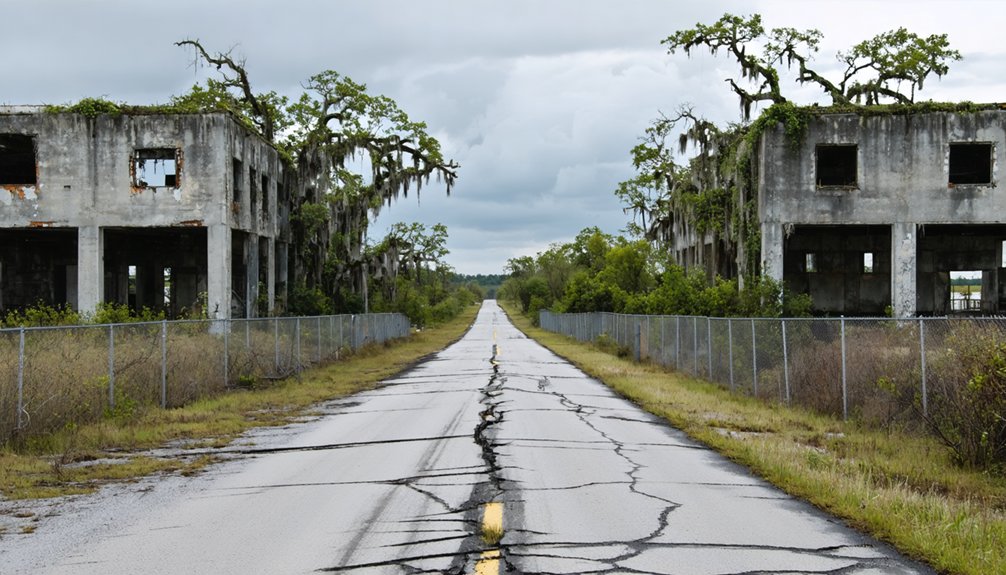
Surprisingly little remains of Taft’s residential past, but what survives tells a haunting story. The cemetery and industrial skyline create a jarring contrast that captures Taft’s cemetery history and industrial impact perfectly.
Surprisingly little remains of Taft’s residential past, but what survives tells a haunting story.
You’ll find yourself standing amid:
- Our Lady of the Holy Rosary Cemetery, an active burial ground surrounded on three sides by Dow chemical facilities
- Petrochemical towers looming over headstones, creating an eerie industrial backdrop
- Vacant land where 700 residents once built homes and community
- Dow/Union Carbide plant boundaries, marking where the Union Carbide explosion of 1982 forced mass evacuations
- The Waterford Nuclear Generating Station’s cooling structures, visible from former residential streets
No buildings. No signs. Just graves, pipelines, and silence where a community once thrived.
How to Get to Taft, Louisiana by Car
Once you’ve soaked in the silence of that cemetery, you’ll need to actually find your way there — and Taft isn’t exactly well-marked.
Take I-10 west from New Orleans, then drop south onto LA-18, hugging the Mississippi River’s west bank through St. Charles Parish.
No exit signs announce Taft’s ghost town history — industrial impact has swallowed the signage along with the community itself. GPS coordinates for the St. Charles Parish CDP are your most reliable guide.
You’ll recognize you’re close when Dow’s sprawling facilities dominate your peripheral vision on three sides.
There’s no welcome center, no visitor parking — just open road, heavy industry, and a cemetery that quietly refuses to disappear.
Pack water, keep your GPS active, and move at your own pace.
Four Nearby Ghost Towns Worth Adding to Your Route
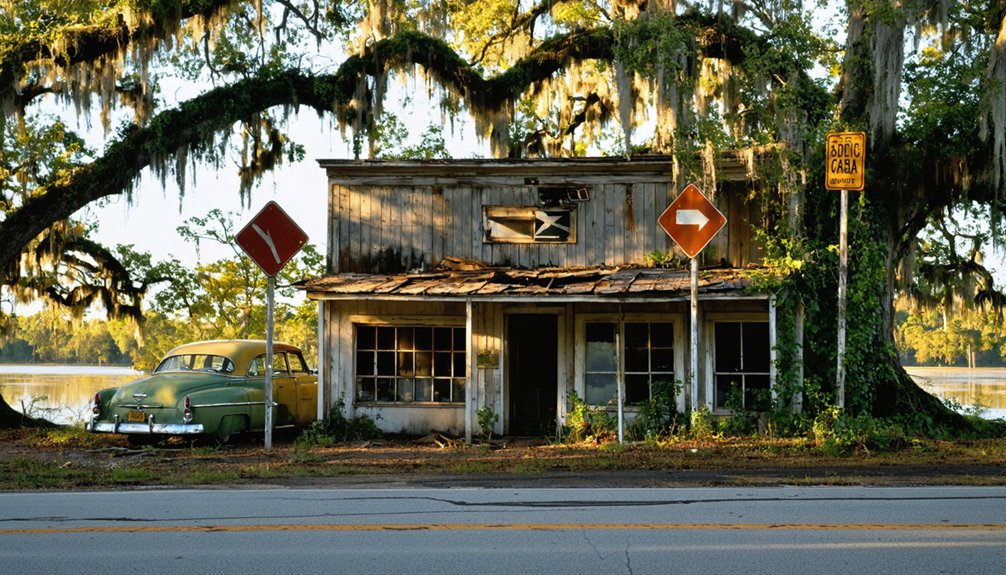
Taft doesn’t have to be your only stop — St. Charles Parish sits within striking distance of several haunting destinations tied to rural decay and industrial legacy.
Expand your route and witness Louisiana’s layered history firsthand.
- Ruddock – St. John the Baptist Parish ruins swallowed by vegetation since a devastating 1915 hurricane
- Laurel Valley Sugar Plantation – Abandoned 1926 worker housing, school, and church; recognizable as an *Angel Heart* filming location
- Alma – Pointe Coupee Parish ghost town now absorbed by one of Louisiana’s 11 remaining active sugar mills
- Sherburne – A 1930s logging camp left hollow after the surrounding timber disappeared
- Albany – A Caddo Parish settlement possibly founded by Albanian immigrants, carrying an unlikely European echo deep in Louisiana
No Signage, No Structures: What to Expect When You Arrive
When you pull off LA-18 and follow GPS coordinates into what was once Taft’s residential heart, don’t expect a welcome sign or a historic marker — there aren’t any.
The ghost town features here are industrial pipes, chemical facility fencing, and empty pavement where homes once stood. No structures survive. The land is zoned heavy industrial, and it shows.
What you’ll find is the Our Lady of the Holy Rosary Cemetery, still actively receiving burials despite being surrounded on three sides by Dow chemical facilities.
That cemetery significance can’t be overstated — it’s the last visible proof that a real community once thrived here. Bring your own research, trust your GPS, and let the contrast between active graves and dead industry tell the story.
When’s the Best Time to Visit Taft?
- Cool October mornings with mist hanging over the Mississippi
- Spring wildflowers pushing through cracked industrial fence lines
- Golden afternoon light washing across the cemetery’s weathered headstones
- Quiet weekday visits when industrial traffic stays predictable
- Clear winter skies revealing the nuclear plant’s cooling tower silhouette
Avoid summer — the humidity’s punishing, and standing near chemical facilities in 95-degree heat isn’t freedom, it’s suffering.
Check local events in nearby Hahnville before you go, since parish festivals can crowd the river roads unexpectedly.
Frequently Asked Questions
Is It Legal to Visit Our Lady of the Holy Rosary Cemetery?
Yes, you can visit Our Lady of the Holy Rosary Cemetery, as it’s an active burial ground. Follow cemetery regulations and visiting guidelines, but navigate carefully—Dow’s industrial facilities surround three sides, so you’ll need awareness of restricted zones.
Were Residents Compensated When Taft Was Rezoned Heavy Industrial?
The knowledge doesn’t confirm whether residents received compensation. You won’t find clear records of residents’ reactions or compensation details when Taft’s land was rezoned heavy industrial, slowly erasing a once-thriving community of 700 souls.
What Chemicals Are Currently Produced at the Dow Taft Facility?
You’ll find the Dow/Union Carbide facility operations producing acrolein, acrylic acid, and acetaldehyde at the Taft site. These chemical production activities have completely transformed what was once a thriving residential community into heavy industrial land.
Can Visitors Tour the Waterford Nuclear Generating Station Nearby?
You can’t tour Waterford Nuclear Generating Station — nuclear safety restrictions block public access, guided tours don’t exist, and freedom-seekers won’t find open gates here. Explore the eerie cemetery and industrial landscape instead!
Did the 1982 Union Carbide Explosion Cause Any Fatalities or Injuries?
The knowledge doesn’t confirm fatalities, but the explosion impact was massive — you’ll find nearly 17,000 people evacuated. That alarming event reshaped safety regulations, reminding you how industrial neighbors forever transformed Taft’s landscape and community.
References
- https://talkradio960.com/louisianas-most-deserted-ghost-towns/
- https://classicrock1051.com/16-ghost-towns-in-louisiana/
- https://www.traillink.com/historic-places/the-railroad-ghost-town-of-taft/
- https://en.wikipedia.org/wiki/Taft
- https://www.stcharlesparish.gov/residents/economic-development-and-tourism/parish-history/town-histories
- https://byways.explorelouisiana.com/sites/default/files/2021-01/11-Myths_Legends_Tearsheet.pdf
- https://www.youtube.com/watch?v=8PyqThDbJPM