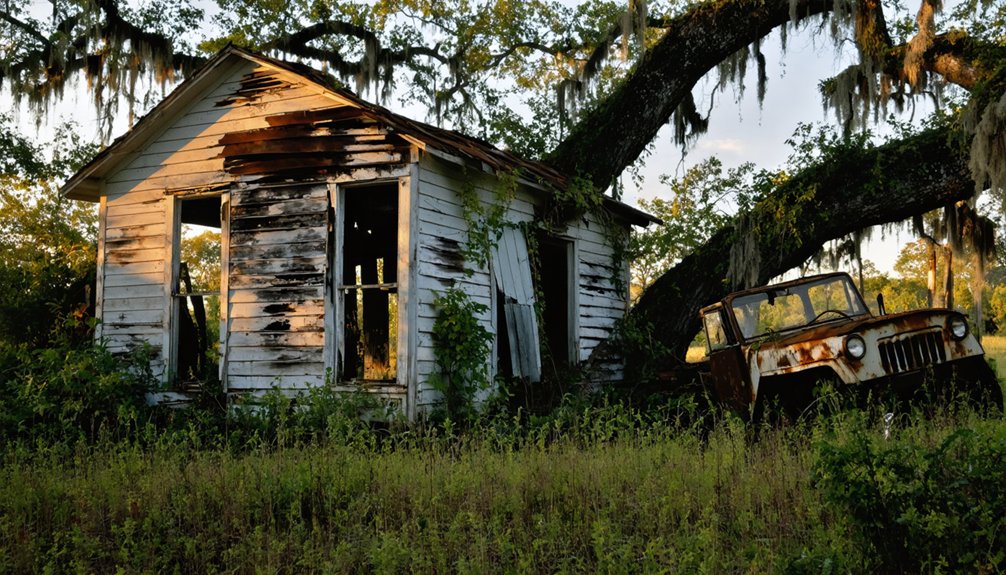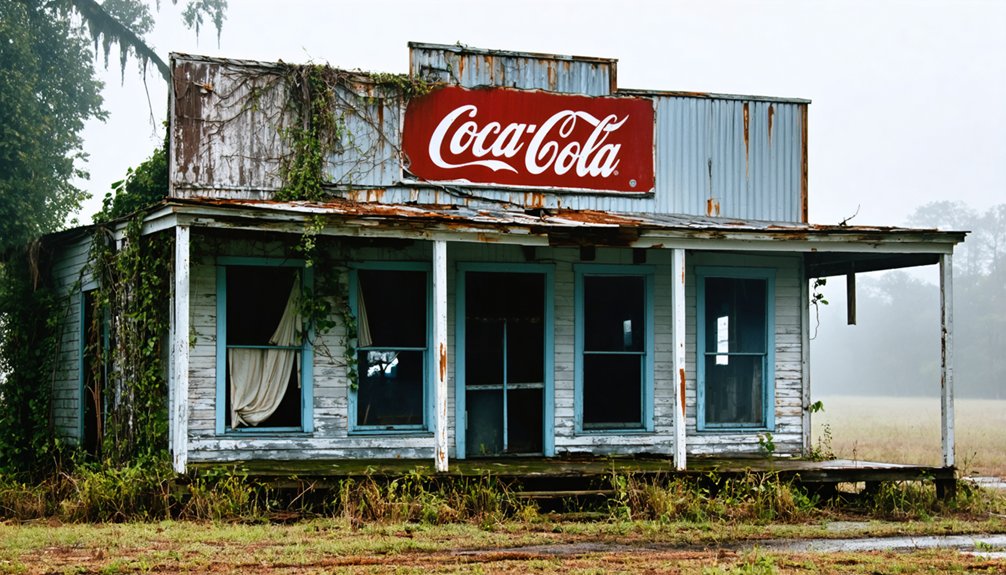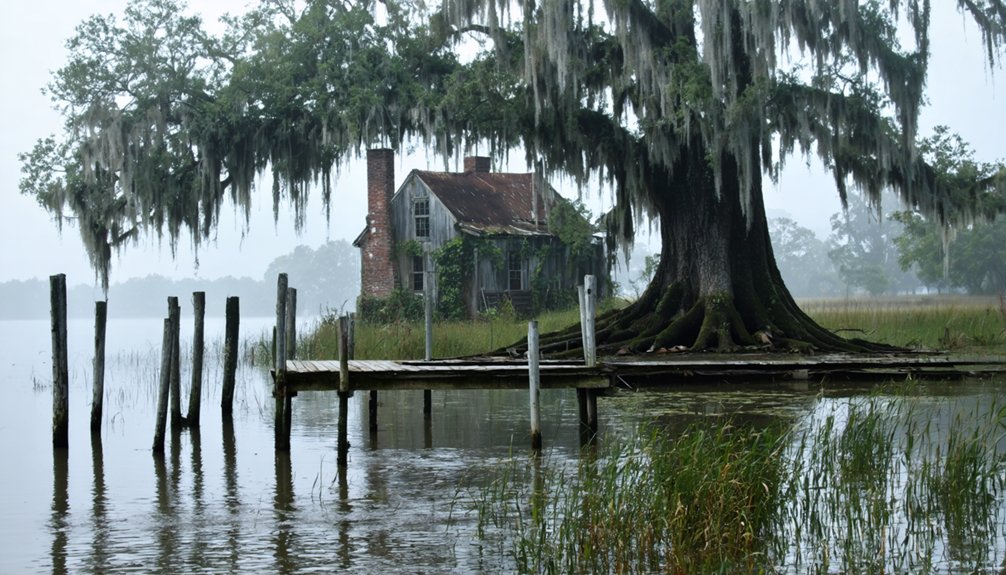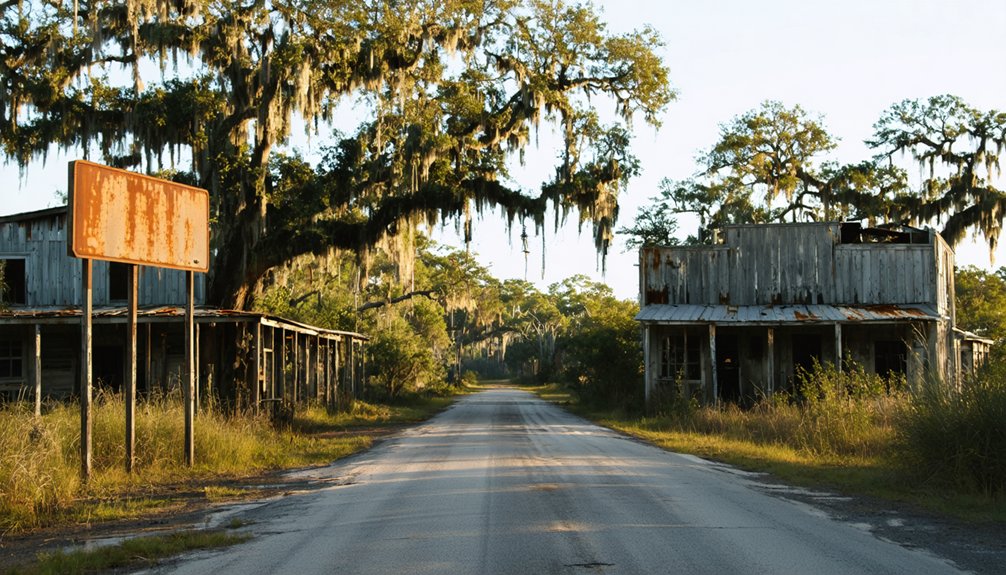
Planning a ghost town road trip to Alma, Louisiana starts with understanding what makes this Pointe Coupee Parish relic so extraordinary. Built around Julien Poydras’ 1789 sugar plantation, Alma sits quietly along False River, roughly 3.5 hours from New Orleans, Baton Rouge, and Lafayette. It’s not fully abandoned — the parish’s only operating sugar mill still runs, and a country store keeps local heritage alive. There’s far more to this hauntingly resilient community than first meets the eye.
Key Takeaways
- Alma, Louisiana, is a ghost town built around Julien Poydras’ 1789 sugar plantation, featuring an operational sugar mill and historic plantation house.
- Located in southeastern Pointe Coupee Parish along False River, Alma is approximately 3.5 hours from New Orleans, Baton Rouge, and Lafayette.
- Visit during fall (October–January) to witness active sugar and molasses production at Pointe Coupee Parish’s only operating sugar mill.
- Carry offline maps and a paper backup, as GPS is unreliable in rural areas; fuel up before entering Pointe Coupee Parish.
- The plantation house remains closed to the public, but the working sugar mill and country store are accessible for visitors.
What Makes Alma a True Louisiana Ghost Town?
Alma checks every box of what defines a true Louisiana ghost town — a once-thriving community that time and circumstance slowly drained of life.
Built around Julien Poydras’ 1789 sugar plantation, Alma flourished as a prosperous production hub before economic shifts and natural disasters quietly dismantled it.
You’ll find sugar plantation lore woven into every corner of this place, from its historic plantation house to its still-operational sugar mill.
Unlike many ghost towns swallowed entirely by history, Alma retains ghostly fragments of its former self. The country store still opens its doors, and ghost town legends draw curious travelers keen to uncover what remains.
It’s a place where Louisiana’s complicated past isn’t buried — it’s standing right in front of you.
Where Exactly Is Alma, Louisiana?
Tucked into the southeastern corner of Pointe Coupee Parish, Alma sits east of Lakeland along the storied banks of False River. The nearby Atchafalaya River shapes the surrounding landscape, adding to the region’s ghost town legends and rich historical significance.
You’re looking at roughly a 3.5-hour drive from Louisiana’s major hubs, making it a worthwhile escape for those craving off-the-beaten-path exploration. Head east from Lakeland, and you’ll find yourself stepping into a place where sugar production once thrived under Julien Poydras’s influential hand.
The location also positions you perfectly to explore neighboring ghost towns like Torras and East Krotz Springs, each just three hours away. Alma’s geography isn’t just a backdrop — it’s an essential part of its haunting, irreplaceable story.
Alma’s History: From Julien Poydras to Sugar Country
Once you understand where Alma sits on the map, its history starts to make perfect sense. Philanthropist Julien Poydras developed this land along False River, building the Alma Plantation House in 1789. He transformed the area into a thriving sugar production hub, shaping southeastern Pointe Coupee Parish for generations.
Sugar defined everything here. The community grew around the crop, and that agricultural identity never fully disappeared.
Even as Alma evolved into ghost town status, its sugar mill survived. Today, it’s the only operating sugar mill in Pointe Coupee Parish and one of just 11 still active across Louisiana.
You’re not just visiting an abandoned place — you’re walking through a working piece of Louisiana’s agricultural past, still grinding raw sugar and blackstrap molasses centuries after Poydras first cultivated this land.
Why Alma Never Fully Disappeared: The Active Sugar Mill and Country Store
Most ghost towns go quiet and stay that way — but Alma defies that pattern in two concrete ways.
First, it’s home to Pointe Coupee Parish’s only operating sugar mill, one of just 11 still running across Louisiana. That mill keeps sugar production alive here, churning out raw sugar and blackstrap molasses on land that’s been cultivating cane for centuries.
Second, a country store still opens its doors, giving you a tangible connection to local heritage that most ghost towns can’t offer. You’re not just reading a historical marker — you’re standing inside a living piece of Louisiana’s past.
Alma isn’t frozen in time; it’s quietly working, and that’s exactly what makes visiting it feel unlike any other ghost town on your road trip.
The Plantation House and What Remains on the Grounds Today
When you arrive at Alma’s grounds, you’ll spot the historic plantation house built in 1789 — but don’t expect to walk through its doors, as it remains closed to the public.
The structure still stands as a quiet reminder of Julien Poydras’ once-thriving sugar empire, anchoring a property that has witnessed centuries of Louisiana history.
You can take in the grounds themselves, where the working sugar mill and country store share space with this relic of the past, creating an unusual mix of living history and abandonment.
Plantation House Current Status
The Alma Plantation House, built in 1789, stands as one of the most striking remnants of the property’s storied past, though you won’t be able to step inside — it’s closed to the public.
Despite restricted access, the structure remains a powerful example of plantation architecture, offering a visible window into Louisiana’s complex history. You can still admire it from the grounds, appreciating how historical preservation efforts have kept it standing for over two centuries.
The surrounding property tells its own story, with the country store still operating nearby and the sugar mill continuing to produce raw sugar and blackstrap molasses.
Even without interior access, the plantation house commands your attention, making it a worthwhile stop on any Louisiana ghost town road trip.
Remaining Grounds Features
Beyond the plantation house itself, Alma’s grounds offer a few more tangible connections to its working past that are worth exploring.
The remaining grounds features include the still-operational country store, which stands as one of the most authentic historical landmarks you’ll find anywhere in Louisiana’s ghost town circuit. It’s a rare, living remnant that bridges Alma’s plantation era with its present-day identity.
The sugar mill also dominates the landscape, actively producing raw sugar and blackstrap molasses, so you’re not just observing frozen history — you’re witnessing a working operation rooted in 19th-century tradition.
Walking the property gives you a genuine sense of scale and continuity. These aren’t reconstructed attractions; they’re functional structures that survived long after Alma’s community disappeared around them.
How to Drive to Alma: The 3.5-Hour Route From Major Louisiana Hubs
If you’re heading to Alma from major Louisiana hubs like Baton Rouge or New Orleans, you’re looking at roughly a 3.5-hour drive through the heart of the state’s river country.
You’ll navigate routes near both the Mississippi and Atchafalaya Rivers, eventually heading east from Lakeland into southeastern Pointe Coupee Parish to reach the site along False River.
Planning your departure point carefully lets you combine Alma with nearby ghost towns like Torras and East Krotz Springs, each about 3 hours out, making the most of a single road trip.
Key Departure Points
Reaching Alma takes roughly 3.5 hours from most major Louisiana hubs, making it a manageable day trip when you’re planning your ghost town itinerary.
Your best departure points include cities with direct highway access toward Pointe Coupee Parish:
- New Orleans: Head northwest via I-10, crossing into River Road territory.
- Baton Rouge: Drive north along the Mississippi River corridor for the most direct route.
- Lafayette: Travel east through the Atchafalaya Basin, soaking in Louisiana’s wild wetland scenery.
These departure points position you perfectly for combining Alma with nearby ghost towns like Torras and East Krotz Springs.
A few essential travel tips: start early, carry a paper map as a backup, and fill your gas tank before entering rural Pointe Coupee Parish‘s quieter backroads.
Once you’ve locked in your departure point, the actual drive to Alma rewards careful navigation since rural Pointe Coupee Parish doesn’t always play nice with GPS signals. Download offline maps before leaving civilization behind.
Your best route options funnel through US-190, crossing near the Mississippi and Atchafalaya Rivers before heading east from Lakeland directly toward Alma. Watch for False River as your landmark confirmation you’re close.
Essential travel tips worth noting: fuel up before entering Pointe Coupee Parish’s quieter stretches, since gas stations thin out considerably.
Plan your arrival during daylight hours — rural Louisiana roads shift character after dark.
The 3.5-hour drive from major hubs like Baton Rouge or New Orleans moves quickly when you’re chasing history, but respect the route’s rural rhythm.
Combine Alma With Torras and East Krotz Springs
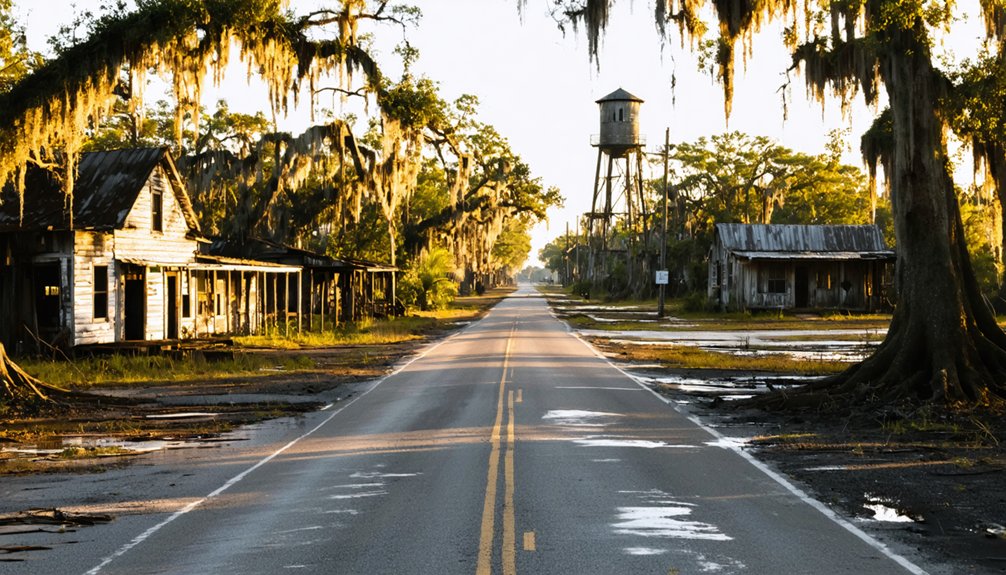
Since Alma sits in southeastern Pointe Coupee Parish, it pairs naturally with two other nearby ghost towns—Torras and East Krotz Springs—for a full day of Louisiana history.
Each stop reveals a distinct layer of ghost town significance, from sugar production decline to flood-driven abandonment.
Plan your route around these three sites:
- Alma: Still operates Louisiana’s only active sugar mill, offering rare industrial history
- Torras: Founded in 1902, wiped out by catastrophic 1912 flooding
- East Krotz Springs: A lumber town swallowed by floodwaters between 1912 and 1913
All three destinations sit within roughly three hours of major Louisiana hubs, making them easy to combine efficiently.
You’ll cover river communities, economic collapse, and resilience across one unforgettable stretch of open road.
Best Season to Visit Alma Based on Weather and Mill Activity
Timing your visit to Alma makes a real difference, both in comfort and in what you’ll actually get to see.
Fall brings the best weather for exploring — cooler temperatures replace Louisiana’s brutal summer humidity, making outdoor wandering far more enjoyable. Conveniently, fall also aligns with the sugar mill’s harvest season, typically running October through January, when you’ll witness raw sugar and blackstrap molasses production firsthand.
Fall’s cooler air makes exploring Alma a pleasure — and it’s harvest season, so the sugar mill is actually running.
That combination of comfortable conditions and active mill operations makes October your sweet spot.
Spring offers mild temperatures if you miss the fall window, though the mill won’t be running.
Avoid summer entirely — the heat and humidity are relentless.
Whatever season you choose, check the mill schedule ahead of time so you don’t arrive during a shutdown.
What to Know Before Visiting Alma’s Plantation and Mill Site
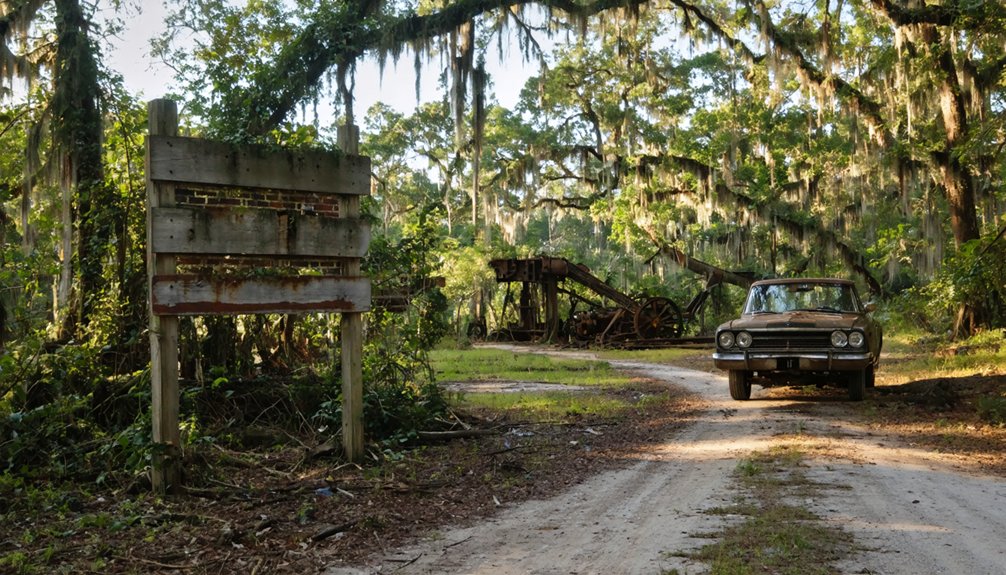
Before you make the 3.5-hour drive to Alma, a few practical realities will shape what you actually experience on the ground. The plantation house isn’t open to the public, but the working sugar mill and country store are accessible, giving you real contact with living sugar history.
Keep these essentials in mind:
- The mill produces raw sugar and blackstrap molasses, so visiting during harvest season means witnessing active operations.
- Alma folklore runs deep here, rooted in Julien Poydras’s 1789 plantation legacy.
- The country store is your best entry point for local knowledge and supplies.
You’re exploring a place that refused full abandonment. Respect the working environment, talk to locals, and let the layers of sugar history reveal themselves naturally.
Frequently Asked Questions
Can Visitors Purchase Sugar or Molasses Directly From Alma’s Country Store?
Like a treasure chest opened, Alma’s country store lets you grab local products steeped in historical significance. You can purchase raw sugar and blackstrap molasses directly, connecting you to Louisiana’s rich sugarcane heritage.
Are There Any Guided Ghost Town Tours That Include Alma, Louisiana?
You won’t find official guided tours specifically for Alma, but you can craft your own adventure! Explore ghost stories and historic preservation firsthand by combining Alma with nearby Torras and East Krotz Springs on a self-guided road trip.
Is Alma Plantation Privately Owned or Managed by a Historic Preservation Organization?
Alma Plantation’s privately owned, so you can’t tour the historic house. But you’ll appreciate its Alma history and plantation significance — the sugar mill’s still running, proving this remarkable landmark’s enduring legacy lives on!
What Other Ghost Towns Exist Along the False River Beyond Alma?
You’ll hit the nail on the head exploring False River’s ghost towns! Beyond Alma, you’ll discover abandoned structures steeped in local legends, including Torras, devastated by 1912 flooding, making your Louisiana ghost town road trip unforgettable.
Are There Any Overnight Accommodations Available Near Alma in Pointe Coupee Parish?
You’ll find nearby lodging options in Pointe Coupee Parish, letting you explore Alma’s historical significance at your own pace. Don’t miss local dining experiences that complement your freedom-filled ghost town adventure perfectly!
References
- https://k945.com/these-3-louisiana-ghost-towns-are-just-a-road-trip-away/
- https://classicrock1051.com/16-ghost-towns-in-louisiana/
- https://www.atlasobscura.com/itineraries/restless-spirits-of-louisiana
- https://kids.kiddle.co/List_of_ghost_towns_in_Louisiana
- https://www.stcharlesparish.gov/residents/economic-development-and-tourism/parish-history/town-histories
- https://www.youtube.com/watch?v=ATI3ll_Pkf4