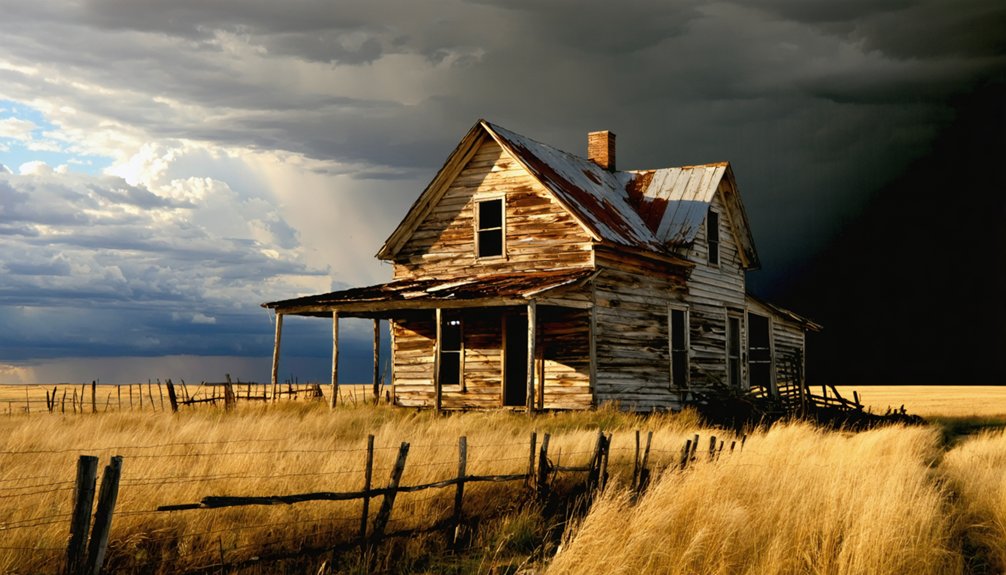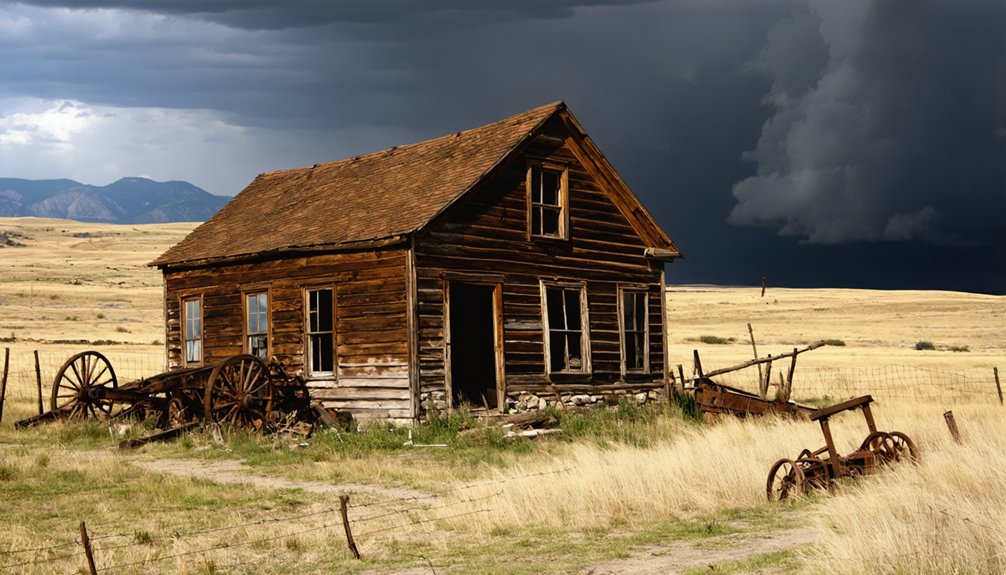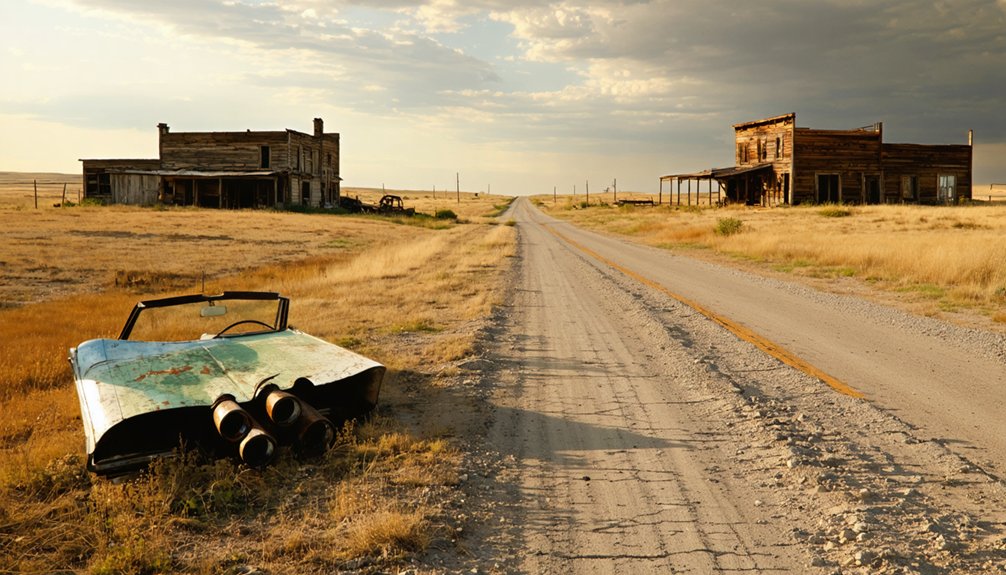
You’ll find Alta’s weathered structures 45 minutes northwest of Rapid City via US-385, where authentic gold rush ruins await your exploration without admission fees or guided tours. This abandoned mining camp from the 1875 Deadwood gold rush offers dilapidated buildings, old mill workings, and foundation sites reclaimed by prairie grass. You’ll need sturdy boots, detailed maps, and respect for unstable structures as you navigate this raw slice of Black Hills history. Nearby ghost towns like Myersville and Rochford extend your frontier adventure into a full circuit.
Key Takeaways
- Alta is a Black Hills gold rush town from 1875 with authentic mining remnants accessible year-round without admission fees.
- Drive 45 minutes northwest from Rapid City on US-385; rent a car as no bus service reaches this remote site.
- Explore weathered structures and foundation sites carefully, wearing sturdy boots and respecting unstable buildings and private property.
- Nearby ghost towns include Myersville, Rochford, Awanka, and Etta, each showcasing different aspects of mining history.
- Prioritize safety by avoiding mine shafts, packing flashlights and weather gear, and only visiting clearly abandoned, legally accessible locations.
Discovering Alta’s Gold Mining Heritage
When George Armstrong Custer‘s expedition stumbled upon gold near French Creek in the summer of 1874, they set off a chain reaction that would transform the Black Hills into one of America’s richest mining frontiers.
You’ll find Alta nestled within this storied landscape, where fortune-seekers once chased dreams through gulches and mountainsides. The town sprang up during the frenzied rush following Deadwood Gulch‘s massive placer discovery in late 1875.
Today, you can explore old mill workings that once processed gold-bearing ore, their weathered timbers standing as monuments to back-breaking labor. While nearby Lead offers underground mining tours through the legendary Homestake operations, Alta presents raw, unfiltered history. This ghost town lets you walk freely among authentic remnants without guided tours or admission fees—just you and genuine frontier legacy.
Getting to Alta From Rapid City
Though Alta lies tucked in the northern Black Hills, you’ll start your journey from Rapid City heading northwest on US-385, not the longer interstate routes that mapping apps might suggest for a different “Alta” elsewhere in South Dakota. This 45-minute drive cuts through ponderosa pine forests and granite spires, delivering you directly to ghost town territory.
Road conditions during travel remain excellent year-round thanks to consistent maintenance, though winter snowfall occasionally requires chains. You’ll find cost effective transportation options by driving yourself—rental cars at Rapid City Regional Airport run $40-60 daily, splitting fuel costs among passengers. Skip the bus routes; they don’t serve this remote mining camp. Your best bet? Load up your vehicle, grab detailed maps, and embrace the backcountry freedom this forgotten settlement demands.
What Remains at the Alta Townsite Today
After traversing those final curves on US-385, you’ll pull into what’s left of Alta—and honestly, time hasn’t been kind. The townsite offers scattered evidence of its mining-era past, though you’ll need imagination to reconstruct what once thrived here.
Dilapidated buildings dot the landscape, their weathered frames leaning against Dakota winds that’ve battered them for decades. You’ll spot remnant foundation sites where homes and businesses once stood, now just rectangular outlines of stone and concrete reclaimed by prairie grass.
The structures that remain tell stories of abandonment—collapsed roofs, vacant window frames, and splintered wood marking where prosperity briefly flourished. You’re free to explore respectfully, but watch your footing around unstable foundations. Bring sturdy boots and respect private property boundaries where posted.
Neighboring Ghost Towns Worth Exploring
While Alta anchors your ghost town expedition, you’ll find a cluster of abandoned settlements within a 20-mile radius of the Black Hills.
Head northwest toward Myersville and Rochford, where crumbling foundations dot the forested hillsides along old mining routes.
Alternatively, trace the southeastern corridor from Awanka to Etta, where prairie winds whistle through skeletal structures that once housed homesteaders chasing agricultural dreams.
Myersville and Rochford Area
Beyond Alta’s weathered foundations, Myersville beckons from just 2.5 miles southwest of Rochford, offering ghost town enthusiasts a remarkably intact window into Black Hills mining history. You’ll discover historic mining claims scattered across abundant natural scenery, where gaping shafts and waste piles mark forgotten dreams. Named for miner John Myers, this settlement once housed 150-200 residents working the Cochrane Mine and Alta Lodi’s massive 40-stamp mill.
Today, you can explore original ruins on Forest Service land via accessible 2WD roads. Unlike many ghost towns, Myersville never supported saloons or post offices—residents trekked to Rochford for mail and drinks. The site’s preservation rewards your curiosity with standing structures, silent mine workings, and tangible connections to small-scale operations that persisted until 1936.
Awanka to Etta Route
Since Alta’s isolation defines its character, you’ll find expanded exploration opportunities along the Awanka to Etta corridor, where a string of abandoned settlements traces the boom-and-bust cycles that reshaped western South Dakota.
Owanka stands as your primary stop, where cattle ranching once supported a thriving railroad community before highways redirected commerce elsewhere. The route reveals forgotten industry at every turn—sawmill towns like Mystique, where lumber operations ceased in 1952, and settlements where presidential visits couldn’t prevent inevitable decline.
You’ll discover lost riches in the stories these ghost towns tell: post offices that outlasted their populations, main streets reclaimed by prairie grass, and foundations marking where optimism met harsh reality. Each abandoned site offers tangible evidence of frontier ambition and the unforgiving economics that determined which communities survived.
Essential Tips for Visiting Abandoned Mining Sites
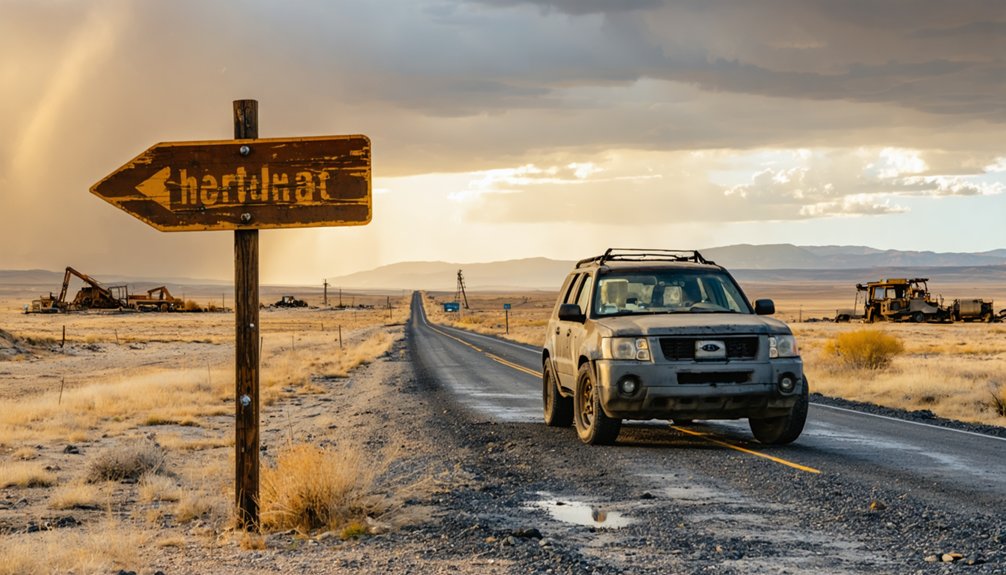
Before you set foot on Alta’s abandoned mining terrain, understand that these sites demand respect and preparation. Safety precautions aren’t optional—shafts plunge 8,000 feet at places like Homestake, while crumbling structures and flooding hazards lurk at former operations. Pack sturdy boots for muddy paths, flashlights for dark tunnels, and weather gear for Black Hills’ unpredictable conditions.
Know the legal access rules before exploring. State injunctions and postclosure bonds protect many sites, while owners actively discourage trespassers at occasionally-operating mines. Stick to sanctioned locations like Homestake’s visitor center or clearly abandoned ghost towns such as Spokane and Galena.
You’re chasing freedom, not recklessness. Bring maps, camera gear, and common sense. These ruins survived a century—respect them so others can experience that same raw authenticity.
Planning Your Black Hills Ghost Town Circuit
With your safety checklist complete, map out a multi-day loop through the Black Hills’ richest concentration of mining ruins. Start at I-90 Exit 32, diving into Vanocker Canyon toward Galena, then follow Route 385’s scenic overlooks connecting Rochford and Mystic.
Deadwood’s Mount Moriah Cemetery anchors day two—Wild Bill Hickok and Calamity Jane rest here alongside Brownsville’s 1883 fire victims. Push southwest 20 miles from Custer to Spring-On-The-Hill in Red Canyon, where local legends whisper through abandoned structures. ATV enthusiasts can branch to Apex, Argyle, and Bear Gulch II.
Don’t skip Awanka’s collapsing church and Kappa Hotel ruins, accessible via old railroad corridors. Respect private property boundaries and Forest Service regulations while exploring these 600+ ghost towns—freedom means responsible exploration.
Frequently Asked Questions
Are There Any Guided Tours Available for Alta Ghost Town?
No official guided tours haunt Alta’s abandoned streets—you’re free to roam solo. Nearby operators offer self-guided exploration options through Black Hills ghost towns, but Alta rewards independent adventurers who prefer dusty boots over scheduled group shuffles.
What Months Does Flooding Typically Occur in the Black Hills Area?
Flooding typically strikes the Black Hills during high precipitation months of May and June, when spring thaw season combines with intense thunderstorms. You’ll want to avoid visiting during these peak runoff periods for safer exploration.
Is Camping Allowed Near the Alta Townsite?
Picture yourself under star-filled skies—you’ll find primitive campsites available in the surrounding Black Hills National Forest near Alta. However, you’ll also discover nearby lodging options if you’re seeking more comfort after exploring this ghost town.
Can I Legally Take Artifacts From Abandoned Mining Sites?
You can’t legally take artifacts from abandoned mining sites. Historical preservation concerns and legal implications of artifact collection mean you’d face penalties. Federal and state laws protect these cultural resources, even on seemingly forgotten lands requiring permits.
Are There Restrooms or Facilities Along the Ghost Town Route?
No restrooms or facilities exist along Alta’s ghost town route. You’ll find minimal parking availability near the abandoned railroad grade where Route 44 cuts through. Accessibility for visitors is rough—bring supplies, respect private property, and embrace true backcountry exploration.