You’ll find American Flag about 5 miles from Oracle along the Mount Lemmon Road, accessible by standard vehicle in fair weather. Plan your visit for spring or fall when temperatures hover in the 60s-70°F, though October’s autumn colors make it exceptional. You’ll explore on your own terms—there are no scheduled tours—wandering among stone foundations, weathered graves, and remnants of the 1877 ranch house. The site blends private and public land, so respect boundaries and leave artifacts untouched while discovering what secrets this uncommercial ghost town still holds.
Key Takeaways
- Located 5 miles from Oracle town center along Oracle-Mount Lemmon Road, accessible by standard 2WD vehicles in fair weather.
- Visit during spring or fall for comfortable temperatures; October offers ideal 60s-70°F weather and vibrant autumn colors.
- Explore remnants of 1880 adobe Post Office, stone foundations, miners’ cabins, and two dozen unmarked graves on a hillside.
- No guided tours available; visitors explore independently and must ensure their own safety and navigation through the site.
- Respect private and public land boundaries; leave all artifacts and structures untouched during your self-guided exploration.
Getting to American Flag: Directions and Route Details
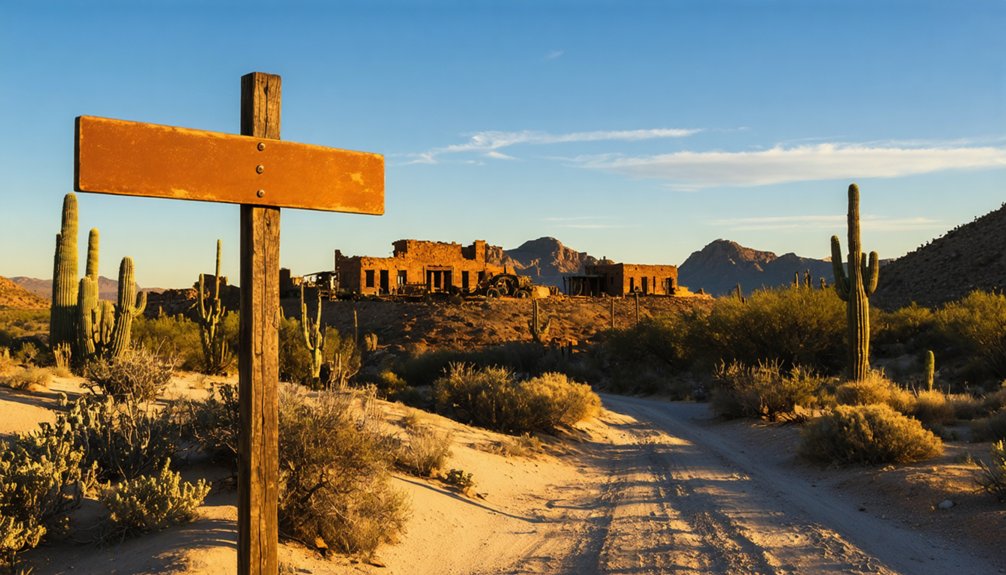
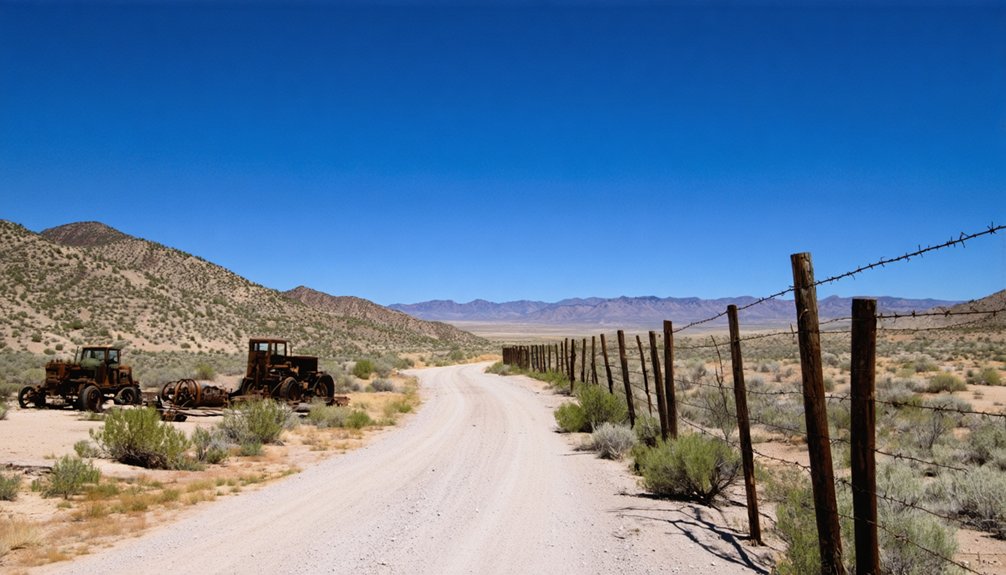
Finding American Flag requires more navigation skill than most Arizona ghost towns, as no signs mark the turnoff and the ruins blend seamlessly into the desert scrub southeast of Oracle. You’ll head southeast on Oracle-Mount Lemmon Road, counting roughly five miles from town center. Standard passenger vehicles handle this 2WD route without issue during fair weather. Watch for scattered stone foundations and weathered timbers appearing through creosote and prickly pear—your first visual confirmation you’ve arrived.
The 1880 adobe Post Office structure serves as your primary landmark once you’ve located access points near the water tank remains. Remember that visitor etiquette matters here: you’re traversing both private property and public land. Tread respectfully, leave everything untouched, and pack out whatever you’ve packed in.
Best Time to Visit This Arizona Ghost Town
You’ll find American Flag most accessible during spring and fall when mild temperatures let you explore comfortably without battling triple-digit heat or traversing snow-covered roads. October stands out as the sweet spot—crisp 60s-70s°F days allow extended hiking time while autumn colors paint the surrounding Flagstaff landscape in vibrant contrast to the ghost town’s weathered structures.
Summer’s monsoon flash floods and winter’s heavy snowfall can turn access routes treacherous, though guided tours adapt their schedules around these seasonal challenges.
Seasonal Weather Considerations
American Flag’s perched position at 7,000 feet creates four distinct personalities throughout the year, each offering wildly different experiences for ghost town explorers. Spring delivers warm 63°F-74°F days with crisp 30°F mornings—perfect for wandering ruins without crowds.
Summer’s mid-70s highs feel surprisingly comfortable at this elevation, though late July monsoons bring brief afternoon downpours that’ll chase you back to your vehicle. Fall tempts with sunny 82°F-88°F days running 8°F above average, ideal for photography sessions among weathered structures.
Winter transforms everything—100 inches of annual snowfall blankets decaying buildings in white, creating hauntingly beautiful scenes. Those elevation changes mean you’ll face temperature variations of 40°F between day and night across seasons. Pack layers regardless of when you visit, and embrace whatever personality American Flag reveals.
Avoiding Extreme Summer Heat
Unlike many Arizona ghost towns baking under triple-digit infernos, American Flag dodges the state’s notorious summer scorchers thanks to its lofty 7,000-foot throne. You’ll discover mid-70s°F daytime temperatures while lower desert destinations roast at 110°F-plus. Heat mitigation strategies become unnecessary here—just swap Phoenix’s relentless sun for invigorating mountain breezes.
That said, monsoons roll through July to mid-September with afternoon thunderstorms that’ll catch you off-guard if you’re unprepared. Pack rain gear and embrace those dramatic cloud shows. Your real consideration involves chilly evening preparations—temperatures plummet after sunset, demanding layers even during summer months. Toss a fleece or light sweater in your vehicle.
This elevation advantage means you’re not chained to winter-only visits like other ghost town explorers. American Flag welcomes you year-round without the brutal heat compromising your adventure.
Guided Tour Availability
While neighboring Arizona ghost towns like Jerome and Vulture City boast regular haunted tours and weekend programming, American Flag remains invigoratingly uncommercial—there’s no ticket booth waiting to greet you. You’ll find no scheduled ghost walks or equipment-laden paranormal activities here. Instead, you get something rarer: genuine solitude among the ruins.
Private investigations like those documented by Jeff and Pam show the ranch’s spirit-hunting potential, but you’re free to explore on your own terms, without tour group constraints or fixed itineraries. This absence of commercialization means you’ll experience American Flag authentically, wandering weathered structures whenever you choose.
The trade-off? You’re responsible for your own safety and navigation. There’s no guide to lead you—just you, the desert wind, and whatever presence lingers among these abandoned buildings.
What Remains: Exploring the Ruins and Cemetery
When you arrive at American Flag, you’ll find a landscape where stone whispers louder than wood—the partial foundation of the old post office and store stands as the site’s most enduring monument to civilization.
Earth indentations mark ghostly footprints where miners’ cabins once clustered, while approximately two dozen weathered graves rest on a gentle slope overlooking the vanished townsite. These fragmentary ruins tell a compressed story: a community that bloomed, peaked at 40 souls, and melted back into the desert within a single generation.
Stone Foundations and Structures
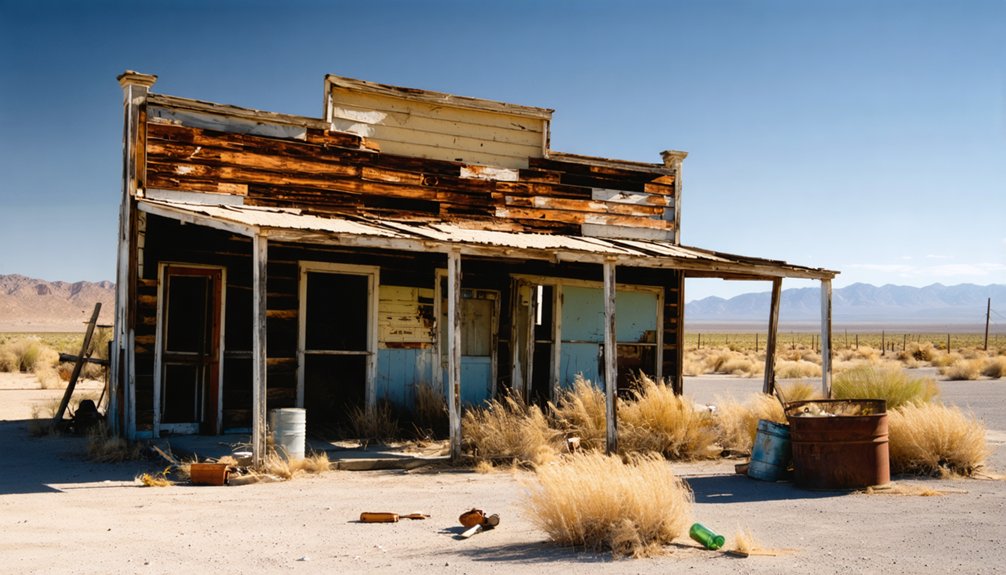
Scattered stone foundations spread across the gentle slope half a mile south of Oracle, marking what’s left of American Flag’s bustling territorial past. You’ll find the most substantial remains where the post office and store once anchored community life.
Desert vegetation—creosote and prickly pear—conceals much of the site, making remnant identification challenging without careful exploration. Weathered timbers and rusted mining implements peek through the overgrowth, while earth indentations reveal where miners’ cabins stood.
The elements claimed most structures after the town’s 1900 decline, with locals salvaging usable materials for Oracle’s construction. Protected as a historic preservation site, these weather-beaten foundations offer you tangible connections to the 1870s mining camp.
Vegetation removal would expose more remnants, but the wild desert reclamation tells its own story of abandonment.
Cemetery and Burial Sites
Beyond the crumbling stone foundations, American Flag’s story grows more elusive—no marked cemetery survives to memorialize the miners and families who called this camp home. Unlike nearby ghost towns where headstones and inscriptions tell tales of frontier hardship, American Flag offers only silence.
You’ll find no iron cribs like Charleston’s ruins, no wooden crosses emerging from crucifixion thorn thickets. The grave marker materials that typically endure—carved stone, wrought iron, weathered wood—are absent here. Perhaps the desert reclaimed them, or perhaps this camp’s brief existence left no time for permanent memorials.
While exploring, you’re walking ground that likely holds unmarked graves, their locations lost to time and erosion—a haunting reminder of lives lived without lasting record.
Ranch and Mining Remnants
Though American Flag’s mining glory faded over a century ago, tangible remnants of its brief existence still mark the desert landscape. You’ll discover the 1877 American Flag Ranch house—Arizona’s oldest standing Territorial Post Office—alongside its weathered barn, both rescued from oblivion through donations to historical societies.
The original water tank endures, attestation to the practical infrastructure supporting both mining operations and farming livelihoods that sustained this remote settlement.
Scattered depressions in the earth reveal where miners’ cabins once stood, their materials salvaged by departing residents around 1900. The residential decay here isn’t erasure—it’s transformation. These archaeological footprints let you trace the community’s original boundaries, mapping stories of frontier resilience.
The accessible Old Mt. Lemmon road delivers you straight into this preserved chapter of Arizona’s untamed past.
The Rise and Fall of a Mining Camp
During Arizona’s territorial period in the late 1870s, prospectors combing the foothills of the Santa Catalina Mountains in Pinal County struck promising mineral deposits that would spark a small rush of fortune-seekers.
The Santa Catalina foothills beckoned ambitious prospectors during territorial Arizona, their mineral discoveries igniting dreams of fortune in Pinal County’s rugged terrain.
The American Flag Mine—named after the flag used to stake the original claim—became the Maynard District‘s leading producer by 1881, boasting impressive underground operations:
- 2,000 feet of shafts and drifts carved into mountain rock
- Main veins measuring 1-4 feet wide containing antimonial silver
- Ore valued at $100 per ton during peak production
- Operations spanning from 1895 through 1917
However, economic fluctuations proved unforgiving. As silver yields declined, the community faced inevitable social change. The post office shuttered July 16, 1890, signaling the camp’s death knell.
Isaac Lorraine’s Legacy: From Mining to Ranching
Among the rough-hewn prospectors who scrambled through Arizona’s territorial hills, Isaac Lorraine stood out not just for discovering the American Flag Mine, but for recognizing when it was time to move on. His legacy of mining expertise brought him fortune in the late 1870s, but he wasn’t bound by one identity.
When he sold his mining operations to Richardson Mining Company in 1881, he’d already built his adobe headquarters around 1877 and established cattle operations alongside his claims. You’ll find his shift to ranching lifestyle wasn’t retreat—it was reinvention. While the mining camp’s population dropped from forty to fifteen by 1884, Lorraine adapted.
His adobe ranch house, relocated to serve as post office headquarters in 1880, still stands as Arizona’s oldest surviving territorial post office building.
Guided Tours and Visitor Information
Lorraine’s adobe ranch house may anchor American Flag’s past, but you’ll need to bring your own sense of adventure when visiting this isolated site today. No guided tours operate here—you’re on your own to explore the scattered foundations and weathered timbers.
American Flag offers no guided tours or marked trails—just you, the desert silence, and adobe ruins waiting to tell their stories.
Before setting out, consider these essentials:
- Research current conditions regarding accessing private property, as boundaries aren’t clearly marked
- Bring GPS coordinates, extra water, and emergency supplies given the limited cell service
- Visit during cooler months when desert temperatures won’t exceed triple digits
- Combine your trip with nearby ghost towns like Gleeson for a full day’s exploration
While formal preservation efforts remain absent, respecting what’s left means supporting local preservation through responsible exploration. Tread lightly—these ruins won’t last forever without protection.
Tips for Your Ghost Town Adventure
Before you set out for American Flag, understand that this isn’t a polished tourist destination with gift shops and safety railings—it’s raw desert history where you’re responsible for your own experience.
Primitive road conditions mean your 2WD vehicle can handle the maintained dirt route from Oracle, but rain transforms these tracks into impassable muck. Pack abundant water during scorching summers, or better yet, visit in winter when temperatures won’t sap your energy.
Safety precautions matter here—avoid stepping into those tempting foundation indentations that could collapse beneath you, and don’t disturb artifacts you’ll find scattered about. Respect the ranch boundaries surrounding the relocated post office. Leave everything exactly as you found it, letting future adventurers discover American Flag’s authentic essence themselves.
Frequently Asked Questions
Are There Any Entrance Fees to Visit American Flag Ghost Town?
You’ll find no entrance fees at American Flag Ghost Town—it’s completely free to explore! The free admission policy lets you roam at your own pace, though guided tours aren’t offered. You’re free to discover everything independently.
Can I Camp Overnight Near the American Flag Ruins?
You’ll need to check local camping rules before setting up near American Flag’s ruins. The area’s remote location means you should research nearby lodging options beforehand, ensuring you’re respecting land management regulations while exploring freely.
Is Metal Detecting Allowed at the American Flag Site?
Metal detecting at American Flag isn’t straightforward—you’ll face strict relic hunting regulations since it’s historic ground. Unauthorized digging risks hefty fines and equipment seizure. You’d need to verify land status and obtain proper permits before exploring freely.
Are There Restroom Facilities Available at American Flag?
You’re out of luck—American Flag lacks restroom facilities, potable water, and accessibility for disabled visitors. This remote ghost town offers zero modern amenities, so you’ll need to plan ahead and bring portable solutions for your off-grid adventure.
What Wildlife Might I Encounter When Visiting American Flag?
You’ll encounter diverse wildlife including Gambel’s Quail, Ladder-backed Woodpeckers, and possibly desert bighorn sheep sightings during daylight hours. Watch for nocturnal animal activity at dawn or dusk—coyotes, skunks, and ringtails emerge as shadows lengthen across the desert.