Planning your American Ranch ghost town adventure requires securing private property permissions before departure, as this 1880s silver settlement sits on restricted land. You’ll need a high-clearance vehicle for unmarked desert trails, essential navigation tools, and at least one gallon of water per person daily. Visit during spring or fall to avoid monsoon flash floods and winter road closures. The crumbling mine structures, ornate fireplaces, and absent cemetery markers await those who prepare properly—and there’s considerably more to discover about this remote frontier site.
Key Takeaways
- Visit during spring (March-May) or fall (September-October) for mild temperatures and safer road conditions before monsoons or winter storms.
- Bring capable off-road vehicle, GPS navigation, one gallon water per person daily, and recovery equipment for unmarked desert trails.
- Secure landowner permission before visiting, as American Ranch sits on private property requiring respect for posted boundaries and fencing.
- Explore mid-century foundation ruins featuring ornate fireplaces, carved initials, and separate bungalow sites south of the main road.
- Extend your trip to nearby Ruby, Vulture City, Pearce, or Harshaw for additional preserved ghost town experiences.
Getting There: Routes and Road Conditions
Tucked away in Arizona’s rugged backcountry, American Ranch exists as little more than a whisper on modern maps—a ghost town so obscure that reaching it requires equal parts determination and old-fashioned wayfinding. You won’t find detailed driving directions online or reliable GPS coordinates to guide your journey. The lack of documented routes means you’ll need to embrace traditional navigation skills and local knowledge.
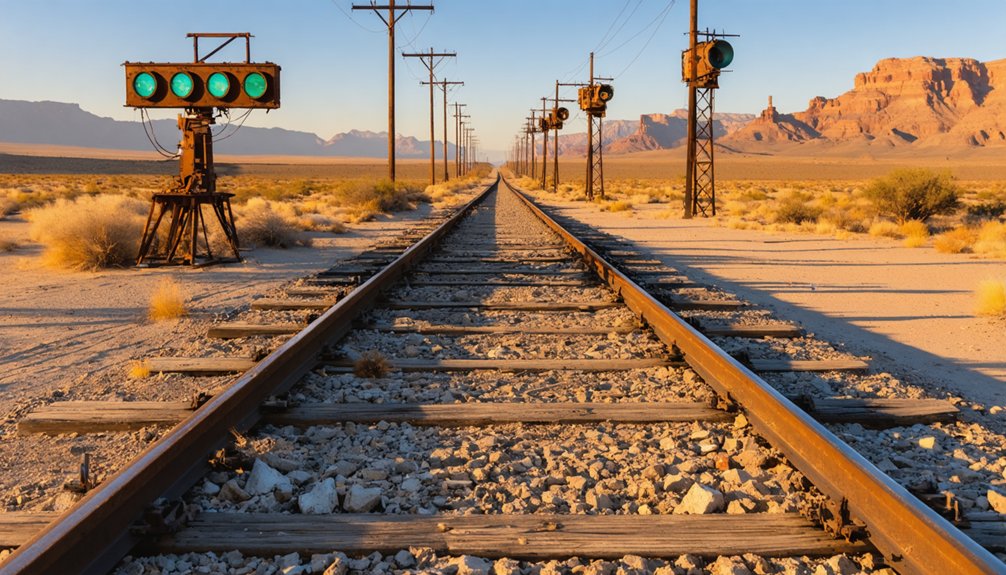
Paved road conditions give way to unmarked desert trails, demanding a capable vehicle and sharp instincts. Seasonal access challenges further complicate your expedition, as monsoon rains and winter storms can render paths impassable. This remoteness isn’t a barrier—it’s precisely what makes American Ranch worth pursuing for those who crave authentic exploration beyond tourist trails.
What Remains at American Ranch Today
You’ll find American Ranch’s past etched across the landscape in three distinct remnants. Crumbling mine structures cling to nearby hillsides where ore once flowed, while weathered cemetery markers stand as silent testimony to the ranchers and miners who called this remote outpost home.
Foundation stones scattered among the desert scrub reveal where ranch buildings once sheltered families against Arizona’s unforgiving elements.
Abandoned Mine Structures
The foundation at American Ranch stands as the primary remnant of this enigmatic desert outpost, constructed from slump block materials that mark it as a mid-century structure rather than a relic of the mining boom decades. You’ll discover an ornate fireplace design that defies expectations for simple worker housing—its spectacular craftsmanship suggests something beyond utilitarian purpose.
The nearby Max Delta Mine reveals additional structural elements: support stalls carved into rock, ore chutes descending into darkness, and collapsed sumps where extraction once occurred. Wind whistles through these abandoned spaces, carrying stories of gold, silver, and quartz operations that peaked in the 1920s. Despite occasional seasonal restoration work by preservation groups, nature reclaims more territory each year, making your visit a race against time’s erosion.
Historic Cemetery Markers
Beyond the crumbling mine structures, American Ranch’s landscape holds no cemetery markers—a curious absence that sets this ghost town apart from typical Arizona frontier settlements. While places like Prescott’s Citizens Cemetery preserve 600 markers with sandblasted iconographic symbolism depicting miners’ hobbies and occupations, American Ranch offers nothing but bare earth. You won’t find the wood crosses or artistic stone slabs that typically honor departed pioneers.
This void tells its own story—perhaps burials were relocated when the settlement dissolved, or marker materials simply disintegrated under Arizona’s brutal sun. The emptiness mirrors thousands of lost markers across the state, where 1943 surveys documented stones that have since vanished. American Ranch’s barren ground represents frontier life’s harsh reality: not everyone gets remembered.
Ranch Foundation Ruins
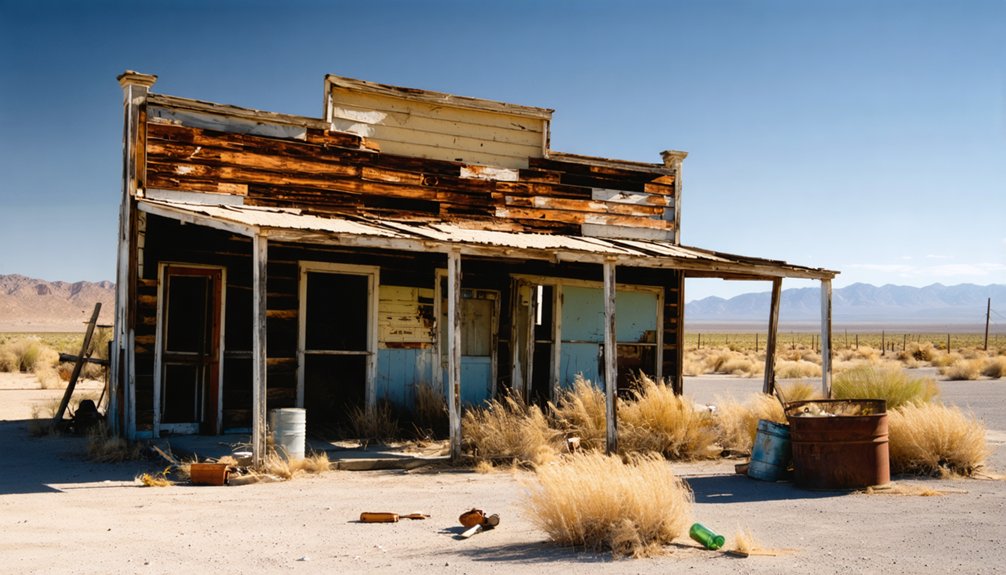
Scattered across the desert floor, concrete foundation slabs mark where American Ranch’s buildings once stood, their slump block construction revealing a 1950s-era settlement rather than the Old West outpost many visitors expect. You’ll discover interesting architectural features throughout the site, including two stone fireplaces that survived decades of weathering—one remarkably ornate structure that clearly belonged to someone of means, not a simple miner’s bunkhouse.
The foundations suggest separate bungalows positioned for privacy south and west of the main road. Carved initials “IH” in cinder blocks offer tantalizing clues about former residents, though local historians can’t connect them to anyone from the mining era. Aerial photos reveal the main house burned by the early 1950s, leaving only its spectacular fireplace and partial walls standing.
The Rise and Fall of a Mining Settlement
In the late 1800s, Isaac Laurin staked his mining claims across the Campo Bonito and American Flag areas, setting into motion a settlement that would rise and fall with Arizona’s volatile silver economy. The mining origins traced back to his establishment of the Old Hat Mining District, where the American Flag mine became the cornerstone of territorial growth.
The boom-and-bust story followed a predictable pattern:
- 1877-1880: Ranch house constructed and community forms around silver prospects
- 1880: Population reaches post office threshold, establishing Arizona’s oldest territorial postal building
- 1890: Mine closures trigger mass exodus as silver prices collapse
- 1893: Sherman Silver Purchase Act repeal delivers the final blow to Arizona’s silver industry
The settlement’s decade-long existence mirrors countless frontier dreams that disappeared into desert dust.
Exploring the Mine Ruins and Tailings
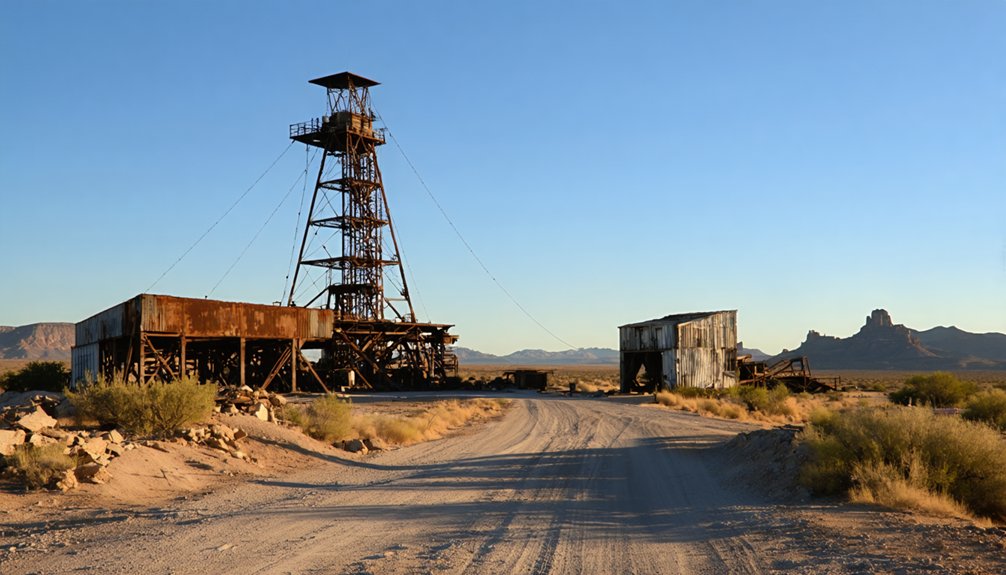
As you approach the abandoned workings of American Ranch, you’ll notice the weathered tailings piles that cascade down the hillside like frozen gray waterfalls—silent testimony to decades of ore extraction.
The sealed mine shafts demand your respect and caution, as these dark portals can conceal unstable ground, toxic gases, and sudden drops that have claimed careless explorers. Before you frame that perfect shot of rusted machinery against the desert sky, take time to understand what you’re seeing: these corroded fragments of ore chutes, stamp mills, and processing equipment tell the story of how miners wrested precious metals from unforgiving rock.
Sealed Shaft Safety Precautions
Before venturing near American Ranch’s abandoned mine workings, you’ll need to understand that sealed shafts represent some of the most deceptive hazards on the property. Even with secured shaft barriers in place, deterioration compromises structural integrity over time. Water ingress erodes sealing materials, while ground movement displaces shaft walls beneath seemingly solid caps.
Protect yourself by following this third party inspection protocol:
- Observe warning perimeters – Stay beyond fenced collapse zones where surface instability threatens
- Check ventilation pipes – Watch for methane discharge from 2-inch vent pipes extending above ground
- Assess barrier integrity – Look for cracked concrete, corroded steel plates, or settling around caps
- Maintain safe distances – Avoid standing on raised caps or testing secured openings
Your freedom to explore requires respecting these engineered safeguards protecting you from 100+ foot vertical drops.
Tailings Pile Photography Tips
The massive tailings piles at American Ranch create photographic opportunities unlike any conventional landscape—these mountains of processed ore residue rise hundreds of feet, their surfaces streaked with tarnished green mineral veins and white calcacite formations that catch light like geological abstract art. Capture tailings textures during golden hour when mineral deposits glow warmest, or choose overcast conditions to soften harsh contrasts.
Position yourself at lower elevations first to grasp the deceptive tailings scale before climbing—what appears manageable from distance often reveals itself as hundreds of feet of accumulated rock. Before exploring, verify no active shooting occurs nearby, as scattered clay pigeons indicate local target practice.
Focus your lens on environmental details rather than seeking remnants of human presence—these piles themselves narrate abandonment’s legacy.
Historic Ore Processing Remnants
Between 1955 and 1968, uranium ore processing operations transformed this northeastern Arizona landscape into an industrial complex that has since vanished into scattered geological evidence. You’ll discover remnants telling stories of mechanical upgrading and sulfuric acid leaching processes that once extracted uranium from Navajo Nation land.
Environmental remediation efforts between 1992-1994 transported contaminated materials to Mexican Hat’s disposal cell, though visible features remain:
- Old and new tailings piles marking different processing eras
- Heap leaching pads where acidic solutions percolated through crushed ore
- Batch leaching areas from the 1964-1968 sulfuric acid operations
- Evaporation pond remnants and ore storage zones
While remediation addressed radioactive exposure risks, you’re exploring freedom’s edge—understanding that over 500 abandoned uranium mines scar Navajo Nation, monuments to industrial extraction’s lasting consequences.
The Historic Cemetery and Its Stories
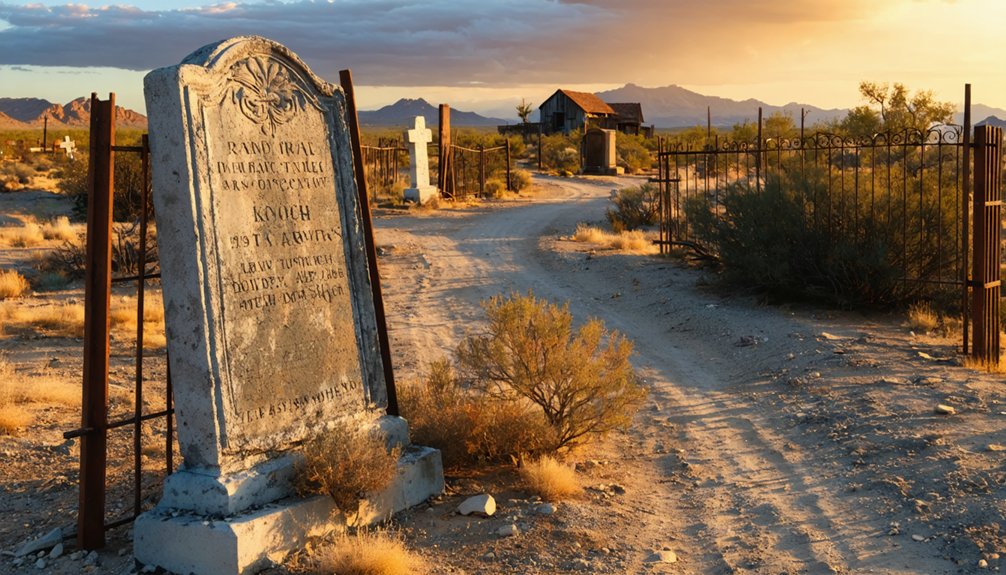
Weathered headstones emerge from the desert floor at American Ranch’s abandoned cemetery, their inscriptions telling fragmented stories of pioneers who carved out lives in this unforgiving landscape. You’ll find wooden markers bleached by decades of sun alongside stone monuments bearing names nearly erased by wind-driven sand. Many unmarked graves dot the grounds, their occupants’ identities lost to time, leaving you to wonder about the souls resting beneath your feet.
Local legends whisper of miners who died in tunnel collapses and families claimed by desert fever. The cemetery’s isolation amplifies its haunting beauty—no manicured lawns or tourist signs interrupt your connection to this raw piece of frontier history. You’re standing where survivors once mourned their dead, facing the same harsh mountains that tested everyone who dared call this place home.
Best Times to Visit and Weather Considerations
You’ll find American Ranch most accessible during spring (March-May) and fall (September-October), when daytime highs hover between 59-80°F and precipitation stays minimal—ideal for traversing unpaved roads and exploring crumbling structures.
Summer monsoons (July-September) bring dramatic afternoon thunderstorms that can transform dry washes into raging torrents within minutes, making flash flood awareness critical if you’re venturing through desert approaches.
Winter visits demand serious preparation, as freezing overnight lows (22-25°F) and potential snowfall can leave you stranded on remote routes without proper tires and emergency supplies.
Optimal Seasonal Windows
Your exploration windows likely depend on these factors:
- Spring (March-May): Mild temperatures and wildflower blooms create ideal hiking conditions
- Fall (September-November): Cooler weather returns after monsoon season subsides
- Summer (June-August): Intense heat and flash flood risks from afternoon thunderstorms
- Winter (December-February): Unpredictable snow may block primitive roads at higher elevations
Without confirmed coordinates, research surrounding ghost towns in your target region to gauge microclimates and prepare accordingly for off-grid adventures.
Daily Temperature Extremes
Arizona’s high desert climate delivers punishing extremes that’ll test even seasoned adventurers. You’ll face triple-digit mercury during summer months, with nearby Cottonwood scorching past 111°F in July while Phantom Ranch has blistered to 120°F. The diurnal temperature range works in your favor—those same sweltering afternoons surrender to comfortable overnight lows thanks to bone-dry air and cloudless skies. Summer evenings routinely plummet 30°F below daytime peaks.
Seasonal temperature changes demand respect. Winter transforms the landscape, dropping Cottonwood to the 20s°F and occasionally flirting with zero. You’ll find January’s 31°F average lows manageable, though North Rim elevations have bottomed at -22°F.
Spring and fall offer liberation from these extremes, delivering moderate days perfect for exploring abandoned settlements without nature’s brutal interference.
Flash Flood Risks
Though the parched desert floor beneath your boots might crack with drought, flash floods remain Arizona’s deadliest weather phenomenon—claiming lives with terrifying speed and zero mercy. Water transforms normally dry washes into death traps within sixty seconds, rising five to seven feet before you’d realize danger exists.
Distant storms trigger floods under clear skies, leaving no local warning signs. Remote flood warning systems don’t exist in backcountry canyons, and debris removal concerns persist for years after major events.
Protect yourself by understanding these critical realities:
- Post-wildfire terrain generates floods from minimal rainfall
- Canyon topography funnels water with devastating force
- Monsoon thunderstorms dump several inches per hour
- Winter storms create year-round flash flood potential
Monitor weather patterns obsessively. Your freedom depends on respecting nature’s raw power.
Essential Gear and Safety Precautions
Before you set out on the dusty trail to American Ranch, you’ll need to pack more than just a sense of adventure. Proper footwear with ankle support is non-negotiable—rugged terrain demands boots that can handle loose rock and desert hardpan.
Bring plenty of water, at least one gallon per person daily, plus extra for emergencies. A GPS device or detailed topographic maps guarantees you won’t vanish into Arizona’s backcountry. Your vehicle should carry recovery equipment: jack, spare tire, and tow straps.
Pack a first-aid kit, sun protection, and emergency signaling devices. While you won’t need rock climbing gear for most exploration, a sturdy hiking stick helps navigate unstable structures. Tell someone your itinerary before departing—these ghost towns earned their name honestly.
Nearby Ghost Towns Worth Adding to Your Route
Once your vehicle’s loaded and your emergency contacts notified, you’ll want to maximize the journey by plotting a route through Arizona’s constellation of abandoned settlements.
Strategic Ghost Town Additions:
- Ruby – Southern Arizona’s most preserved site in Coronado National Forest, featuring historic mining equipment from the Montana Mine era and structures four miles from Mexico’s border.
- Vulture City – Near Wickenburg, this 1863 gold camp offers guided access to intact buildings, including Rita’s Brothel and authentic frontier lifestyle artifacts.
- Pearce – Explore gold workings, Our Lady of Victory Catholic Church, and occupied dwellings that preserve 1896 settlement character.
- Harshaw – Navigate sycamore-oak forests to discover remnants of this mile-long main street town south of Patagonia.
Each location presents distinct archaeological features without tourist crowds restricting your exploration timeline.
Photography Opportunities Across the Site
American Ranch’s weathered landscape presents photographers with a rare convergence of Old West iconography and untouched desert vastness. You’ll discover varied industrial compositions among scattered antique vehicles and mine structures, where rusted metal creates striking color contrasts against Arizona’s stark terrain.
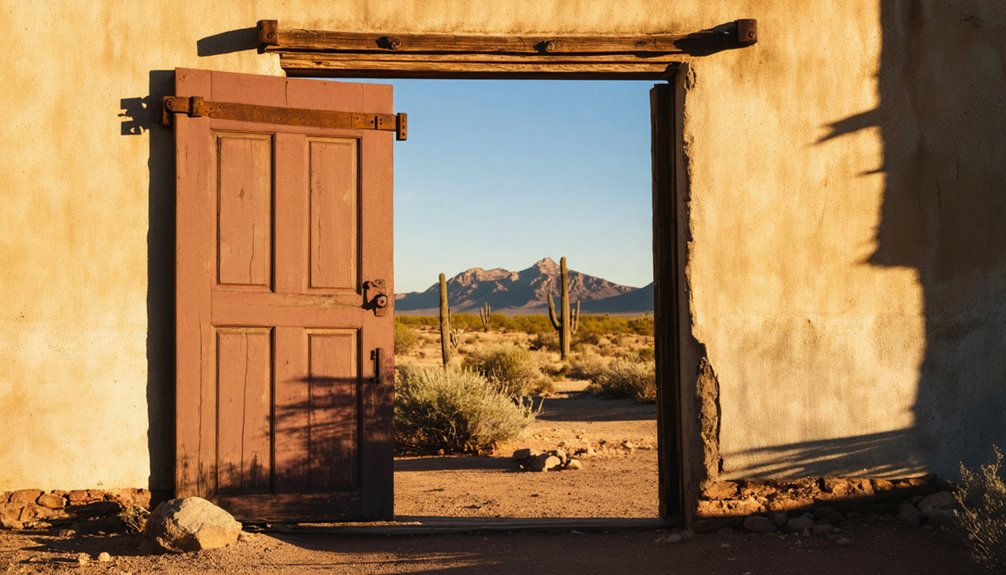
The site’s preserved buildings—from adobe homesteads to ranch outbuildings—frame perfectly against distant mountain ranges, offering dramatic isolation shots that capture true frontier solitude.
Plan half-day sessions to maximize changing light conditions. Sunrise illuminates textured surfaces on machinery relics, while golden hour enhances environmental portraits against rustic backdrops. Telephoto lenses let you capture distant structural clusters without trespassing, and wide angles emphasize the expansive desert setting. The sparse vegetation provides high-contrast opportunities for black-and-white work, transforming weathered remnants into timeless compositions that echo the West’s untamed spirit.
Permits, Permissions, and Legal Requirements
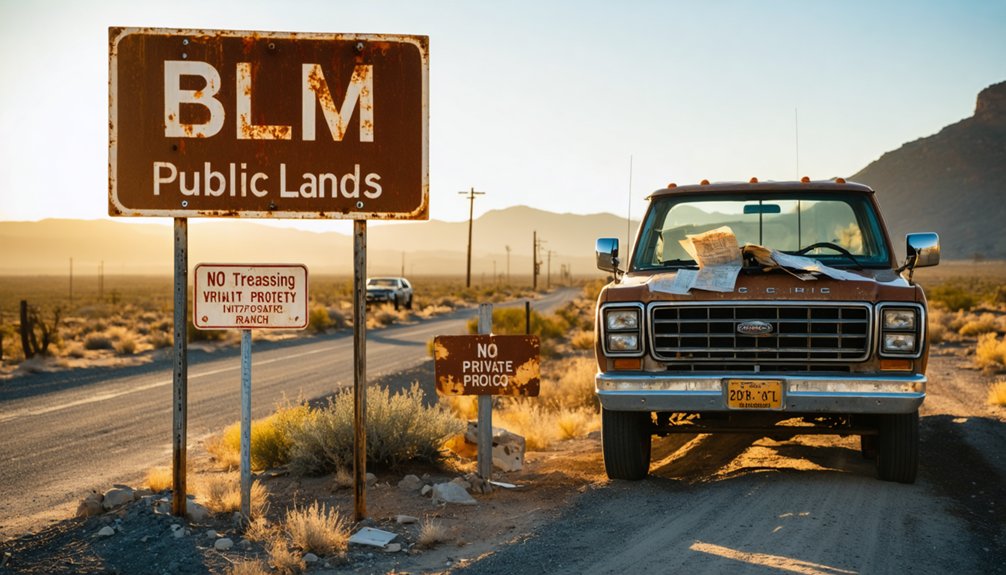
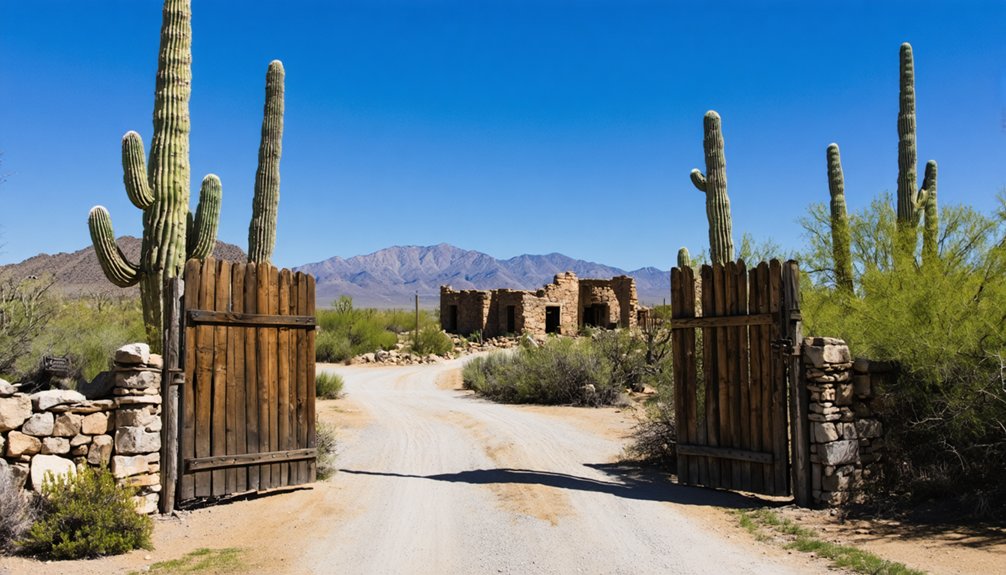
Traversing the legal landscape around American Ranch requires understanding that you’re approaching private property where access isn’t assured. Current landowners typically don’t welcome uninvited explorers, making landlord permissions essential before venturing onto these historic grounds. Unlike government owned sites with established regulations, private ghost towns demand respect for posted boundaries and barbed wire fencing.
Essential Legal Considerations:
- Access Rights: Arizona law may imply easements for landlocked properties, though court orders might be necessary to compel access
- Trespassing Warnings: No trespassing signs carry legal weight—ignoring them invites prosecution
- Alternative Routes: Forest Road 573 offers potential access, but locked gates may block passage
- Safety Compliance: USFS-marked hazards and mine shafts require adherence to posted warnings
Your 2WD vehicle can handle the roads, but permission determines everything.
Frequently Asked Questions
Are There Any Accommodations or Camping Facilities Near American Ranch?
You’ll find excellent nearby lodging options in Prescott, just minutes away. Choose from full-service RV parks like Point of Rocks and Willow Lake, offering available amenities including hookups, Wi-Fi, and restrooms for your adventure base.
Can I Bring My Dog or Other Pets to the Site?
Better safe than sorry—you’ll want to call ahead about pet friendly policies at American Ranch. Most Arizona ghost towns welcome leashed dogs outdoors, though animal safety considerations like gunfight reenactments and restricted buildings merit verification before visiting.
Is Cell Phone Service Available at or Near American Ranch?
Cell phone reception quality at American Ranch varies noticeably. While T-Mobile and AT&T operate nearby cellular tower locations in Prescott, you’ll likely experience limited or no service in this remote ghost town. Check coverage maps before visiting.
Are Guided Tours Available for American Ranch and Surrounding Ghost Towns?
No guided tours exist for American Ranch itself, leaving you free to roam dusty trails independently. However, you’ll discover guided tours for surrounding ghost towns like Vulture City and Tombstone, plus excellent self-guided exploration options at nearby Fairbank.
Among the unique sites worth exploring are the ghost towns of Colorado history, where remnants of past lives tell stories of boom and bust. As you navigate through the crumbling structures and dusty streets, you can imagine the hustle and bustle that once defined these places. Each ghost town offers a glimpse into the lives of those who sought fortune in the rugged landscapes of the American West.
What Wildlife Besides Rattlesnakes Might I Encounter at the Site?
You’ll likely spot javelinas rooting through desert brush, coyotes prowling at dawn, and various lizard species basking on sun-warmed rocks. Desert tortoise populations inhabit the area, while hawks circle overhead and jackrabbits bound across the wild, open terrain.