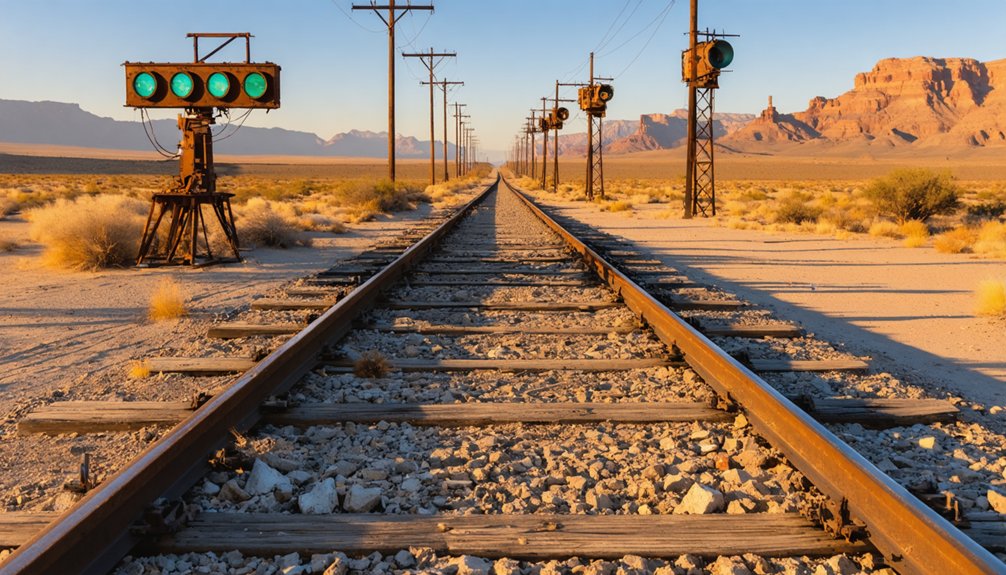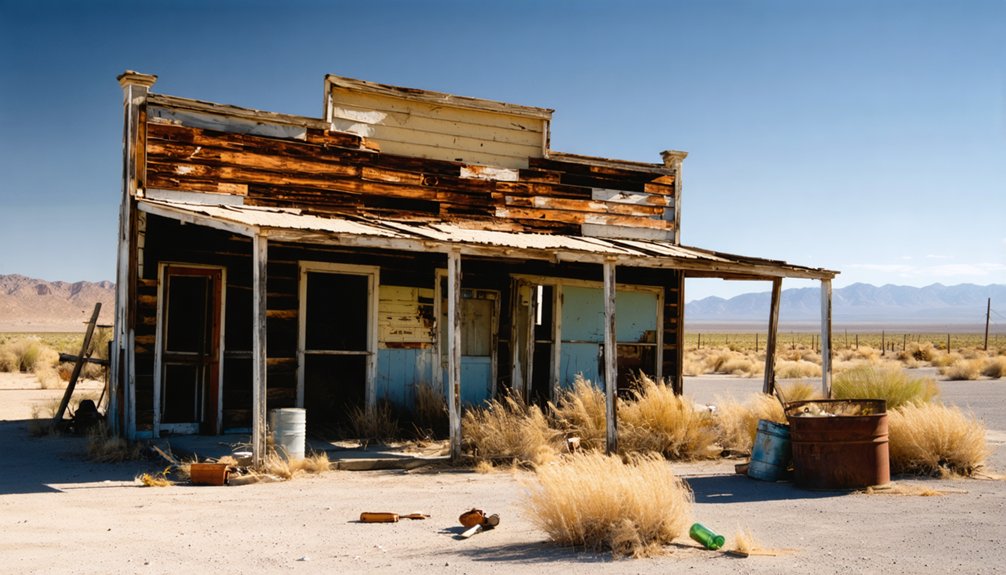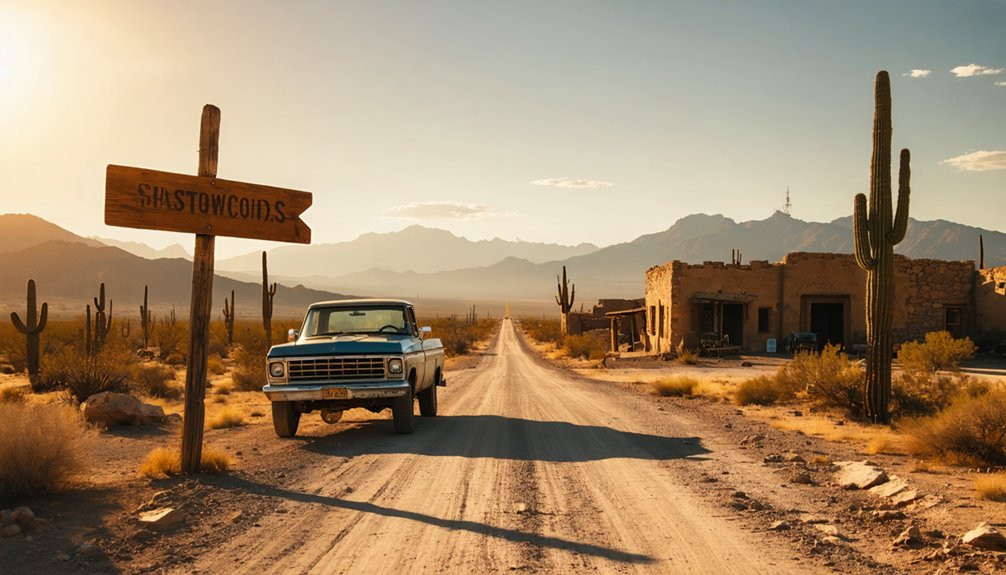
You’ll find George Sanders’ 1901 mining scheme two miles west of Vulture Mine Road, though little remains except barren ground where a small city once rose with steam hoists and mining shafts. The “leevaright” ore proved worthless, and investors watched their fortunes evaporate into Arizona’s dry air. Visit late fall through early spring when mild temperatures make exploring comfortable, and any 2WD vehicle can handle the accessible route year-round. The coordinates, historical context, and nearby ghost towns like Vulture City and Charleston will help you piece together this vanished frontier outpost.
Key Takeaways
- Angel Camp is located in California’s Calaveras County at coordinates 38.06833°N, -120.53972°W, accessible via Highway 49.
- The site offers no preserved structures, only barren ground requiring GPS and history books to reconstruct the past.
- Visit during late fall through early spring for mild winter temperatures and comfortable daytime exploration conditions.
- From Stockton, drive 60 miles northeast on CA-4; from Sacramento, take I-5 south to CA-4 eastbound, approximately 90 miles.
- Nearby ghost towns include Vulture City (six miles south of US 60) and Charleston (near San Pedro River).
Where to Find Angel Camp in the Arizona Desert
Navigate to 38.06833°N, -120.53972°W, and you’ll discover abandoned mining infrastructure dotting the surrounding hills—silent witnesses to fortune-seekers who carved their dreams into these slopes. The untold stories of settlers echo through every ravine and gulch radiating from this genuine frontier outpost.
Unlike Arizona’s ghost towns, Angels Camp remains California’s only incorporated city in Calaveras County, offering you authentic exploration without complete isolation. You’ll access it via Highway 49, that legendary ribbon connecting Mother Lode communities.
The Rise and Fall of George Sanders’ Mining Scheme
The year 1901 brought George Sanders to these Arizona hills with two freshly incorporated companies and a vision that would prove more mirage than reality. He targeted deep-pocketed Eastern investors, painting Angel Camp‘s potential in golden hues.
George Sanders arrived in 1901 with grand companies and grander promises—a golden vision destined to dissolve like desert heat.
A small city rose from the desert floor, complete with steam hoists and mining shafts. The operation sat two miles west of Vulture Mine road, accessible enough to lure curious money.
Then reality struck hard. The shafts revealed only “leevaright”—worthless rock masquerading as ore. Those unfulfilled dreams collapsed faster than they’d risen. Fooled investors watched their fortunes evaporate into Arizona’s dry air.
The money stopped flowing, operations ceased, and the town vanished completely. Today, nothing remains but a single photograph and the cautionary tale of Sanders’ spectacular failure.
What Went Wrong: The “Leevaright” Discovery
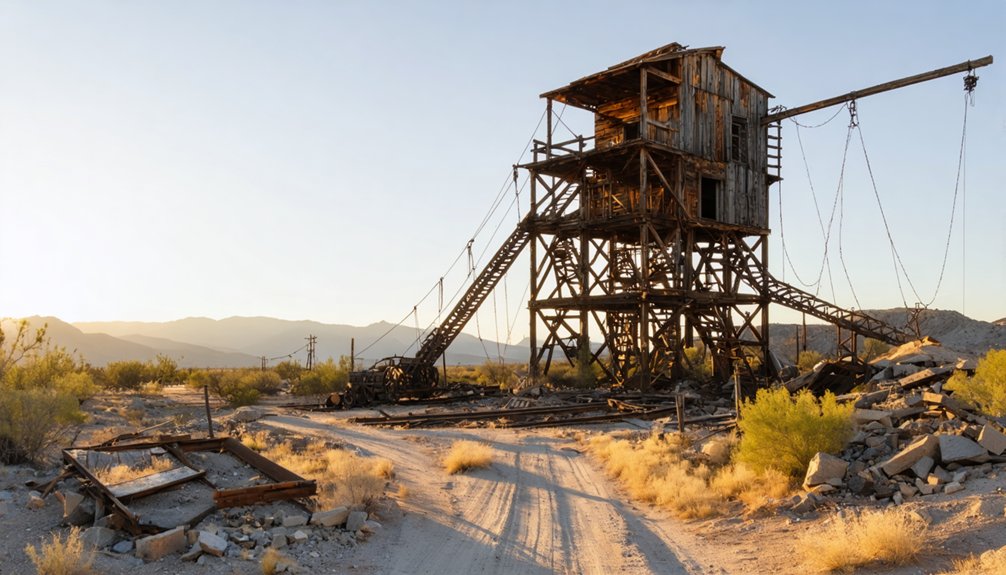
When Sanders’ miners struck what they believed to be promising ore, excitement rippled through the camp like desert heat lightning. You can almost picture the grizzled prospectors hunched over rock samples, squinting at glittering seams they called “Leevaright”—a term that’s vanished from historical records like morning mist in the canyon.
This non existent mining discovery proved worthless once assayed. The canyon’s unforgiving geology—two billion years of layered rock carved by relentless river erosion—concealed no treasure worth extracting. Freezing nights and scorching days cracked the canyon walls while tributary streams undercut any stability needed for operations.
Sanders’ unsuccessful claims exploitation became apparent quickly. The ore wouldn’t pay transport costs up those brutal switchbacks. His grand scheme crumbled, leaving only cottonwood trees and tourist aspirations.
How Long Did Angel Camp Actually Last?
You’ll find most ghost town enthusiasts assume Angel Camp flickered out within a few years, but the evidence tells a different story. When I first traced the timeline from Henry Angel’s 1848 trading post through the final mill closure in 1942, I realized this settlement survived nearly a century of booms and busts.
The camp’s longevity becomes clear when you’re standing among the weathered foundations—these aren’t remnants of a flash-in-the-pan strike, but rather a record, proof, or documentation of persistent hard-rock mining that outlasted two world wars.
Formation and Quick Collapse
After Henry Pinkney Angell led his band of 92 fortune-seekers from Monterey in May 1848, the camp that would bear his name sprang up faster than most miners could stake their claims. By spring 1849, you’d have found 300 prospectors working the creek beds.
The rapid growth continued through the 1850s as veins yielded rich surface ores, eventually producing over $100 million in gold. You’ll notice the boom peaked during the 1880s-1900s hard rock mining era.
But freedom-seekers should understand this wasn’t sustainable—World War I shuttered the major operations. Despite a brief 1930s revival, World War II triggered the final economic collapse. What took 90 years to build crumbled within decades, leaving behind the ghost town you’re planning to explore today.
Evidence of Brief Existence
How long did Angels Camp actually survive as a functioning mining town? You’ll find its story defies the brief existence typical of most gold rush settlements. Unlike camps lacking permanence that vanished within months, Angels Camp demonstrated remarkable staying power through distinct phases:
- Initial boom (1848-1860s): Over 300 miners established permanent infrastructure, including California’s first post office and stone buildings replacing fire-destroyed structures.
- Second gold rush (1880s-WWI): Deep mining operations with 320 stamp mills generated massive wealth, prompting railroad service and formal incorporation in 1912.
- Revival period (1930s-1942): Mines reopened, producing $30 million before WWII closure.
You’re visiting a camp that lasted nearly a century as an active mining operation—far exceeding its supposed “ghost town” status.
What You’ll See at the Site Today
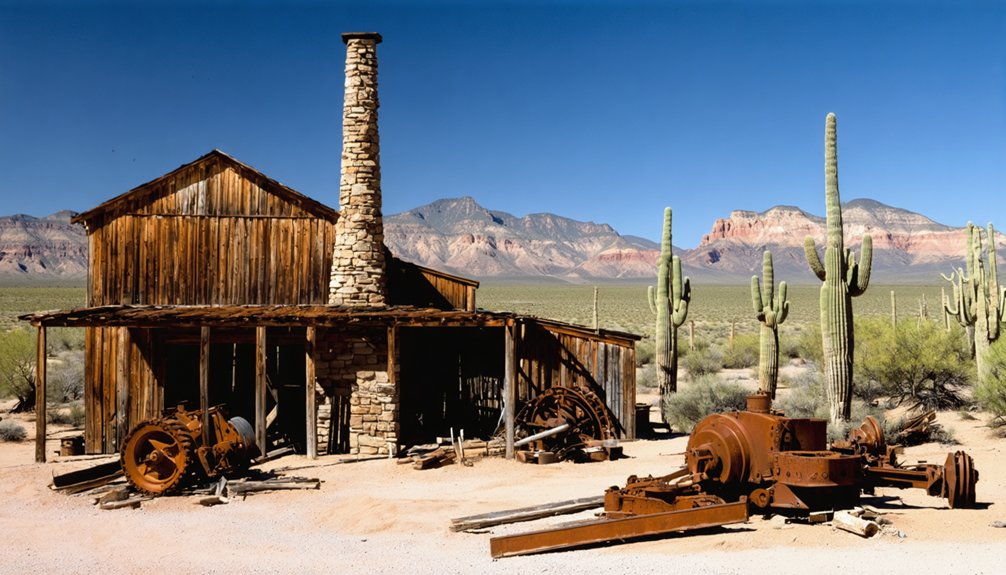
Despite the grand ambitions that once drew eastern investors to this remote desert location, Angel Camp today offers visitors nothing more than empty stretches of barren ground where a would-be boomtown briefly flickered to life.
You’ll find no weathered buildings, no collapsed mine shafts, no rusted equipment—just the barren landscape reclaiming what was briefly disturbed in 1901. The lack of preserved structures means you’re fundamentally standing in an empty field, using only your imagination and old photographs to reconstruct George Sanders’ fraudulent dream.
It’s a humbling reminder that desert freedom comes with consequences—nature erases mistakes completely. Bring your history books and a GPS, because without them, you’d never know this windswept patch of Maricopa County dirt once promised fortunes.
Best Time of Year to Visit Angel Camp
Your best window for exploring Angel Camp’s weathered ruins spans from late fall through early spring, when daytime temperatures hover in that sweet spot between 60°F and 70°F. I learned this the hard way during an August visit—trudging through crumbling foundations in 104°F heat turned my afternoon into a survival march rather than an adventure.
Winter months bring occasional morning chill at 32°F, but by midday you’ll shed layers as the sun warms the desert air to a comfortable 64°F, perfect for photographing sun-bleached timber frames and collapsed mine shafts.
Winter Offers Mild Temperatures
When I first stepped out of my car at Angels Camp on a January morning, the thermometer read 64°F—a far cry from the snow-dusted peaks visible in northern Arizona’s high country. You’ll find winter here strikes the perfect balance between chilly nighttime temperatures hovering around 49°F and pleasant daytime warmth that lets you explore without bundling up like you’re summiting Everest.
Here’s what makes winter exploration ideal:
- No snow events disrupt your adventures—while northern Arizona battles whiteouts, Angels Camp remains clear
- Light winds keep conditions comfortable for hiking ghost town ruins and photographing abandoned structures
- Low UV index means less worry about sun exposure during extended photography sessions
Pack layers for morning chill, but you’ll shed them quickly as the day warms. This mild climate gives you freedom to roam unrestricted.
Fall Provides Comfortable Conditions
As summer’s relentless heat finally breaks in September, Angels Camp transforms into an explorer’s paradise. You’ll find temperatures hovering between 70-90°F—perfect for comfortable outdoor activities without that oppressive desert sun beating down on you.
October brings particularly favorable fall hiking conditions, with highs around 77°F and crisp 45°F mornings that’ll energize your trail adventures.
Pack layers for those cool dawn starts that warm into shirt-sleeve afternoons. You won’t need snow gear—that’s reserved for higher elevations—but bring a light jacket for evening explorations when temperatures dip into the 60s.
The ghost town’s abandoned structures look especially haunting under fall’s golden light, and you can wander freely without summer’s scorching 100°F+ canyon temperatures driving you back to air-conditioned refuge.
As you explore these ghost town attractions in Arizona, the rich history of each site unfolds before you, offering a glimpse into the lives of people who once called these places home. The eerie silence, punctuated only by the whispering wind, adds to the otherworldly atmosphere, making every corner feel like a step back in time. Don’t forget to capture the stunning contrasts between the ruins and the vibrant desert landscape, as the colors shift dramatically with the setting sun.
Avoid Scorching Summer Heat
While fall offers ideal conditions, winter truly deserves its reputation as the premium season for exploring Angel Camp’s scattered remnants. Summer transforms this Maricopa County desert into a furnace exceeding 110°F—temperatures that’ll cut your exploration short and turn your adventure into survival mode.
Protect your freedom to roam by avoiding intense midday heat entirely:
- Schedule visits between October and April when temperatures stay below 85°F
- Target early morning visits if you’re determined to explore during warmer months
- Skip June through September entirely unless you’re seeking early morning visits before 7 AM
Late summer monsoons provide brief cooling, but those afternoon thunderstorms create flash flood risks. The two-mile accessible route west of Vulture Mine Road welcomes your 2WD vehicle year-round—just not when the sun’s trying to kill you.
Getting There: Directions and Road Conditions
Finding Angels Camp proves straightforward whether you’re heading from the Central Valley or winding down from the high Sierra. You’ll navigate State Routes 4 and 49 through rolling foothill terrain, climbing to 1,381 feet where Angels Creek cuts through town. From Stockton, it’s a scenic 60-mile run northeast on CA-4. Sacramento travelers take I-5 south before connecting to CA-4 eastbound—about 90 miles total.
The paved highways stay accessible year-round, though winter storms occasionally demand chains on higher passes. Seasonal traffic patterns surge during Gold Rush festivals and county fair weekends. You’ll find local services availability concentrated along Main Street, where independent shops outnumber chains.
Mountain curves require attention, but the reward is independence from interstate monotony and genuine Gold Country character carved into every switchback.
Other Ghost Towns to Explore Nearby
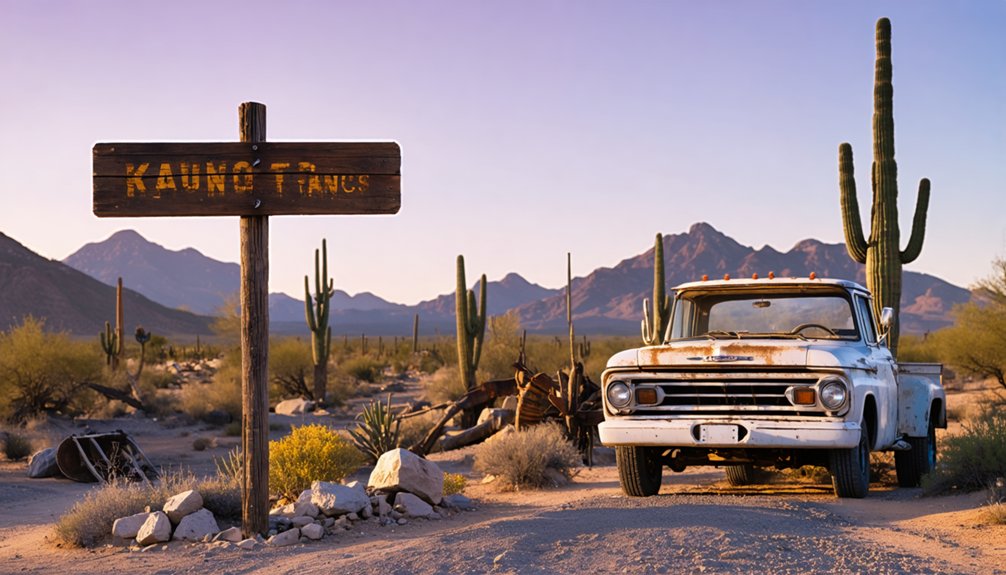
Within a two-hour radius of Angels Camp, California’s Gold Country unfolds like a tattered map of ambition and abandonment. You’ll discover authentic preserved historical structures and mining machinery remnants scattered across landscapes where fortune-seekers once staked everything.
Weathered timbers and rusted equipment mark where dreamers once clawed fortunes from unforgiving earth, leaving only echoes of their desperation.
Essential stops for your expedition:
- Vulture City – Six miles south of US 60, this privately-owned attraction operated until 1942. You’ll find accessible 2WD roads leading to what remains of this gold mining operation that once lured Eastern investors.
- Charleston – Less than 10 miles from the San Pedro River, this 1878 mill town processed Tombstone’s silver while harboring outlaws like Frank Stilwell in its lawless streets.
- Harshaw – South of San Rafael Valley, 200 buildings once housed 2,000 souls chasing silver through the Hermosa Mine in these Patagonia hills.
Frequently Asked Questions
Are There Any Fees Required to Visit Angel Camp Ghost Town?
I can’t confirm specific fees for Angel Camp Ghost Town since reliable information isn’t available in my sources. You’ll want to research current parking fees and site maintenance costs directly before visiting to avoid surprises on your adventure.
Is Camping Allowed at the Angel Camp Site Overnight?
Picture tumbleweeds rolling past weathered mining ruins at dusk. You can’t camp overnight at Angel Camp ghost town itself—no designated camping locations exist there. However, you’ll find overnight accommodations and proper backcountry sites nearby requiring permits.
What Supplies Should I Bring for a Desert Ghost Town Visit?
You’ll need plenty of water with purification tablets, sunscreen and hat for scorching desert sun, plus layered clothing for temperature swings. Don’t forget navigation tools, first-aid supplies, and sturdy boots for exploring those crumbling ruins freely.
Are Guided Tours Available for Angel Camp and Surrounding Areas?
Angel Camp doesn’t offer guided tours—you’ll discover freedom through self-guided tours instead. Navigate crumbling miners’ cabins at your own pace, pause at scenic overlooks whenever inspiration strikes, and forge your own authentic adventure through Arizona’s haunting desert wilderness.
Can I Use Metal Detectors at the Angel Camp Location?
You shouldn’t use metal detectors at Angel Camp without proper permits, as Arizona’s metal detector regulations prohibit unauthorized digging on public lands. Besides, this barren site has no ghost town relics remaining—promoter George Sanders’ scheme left nothing behind worth finding.