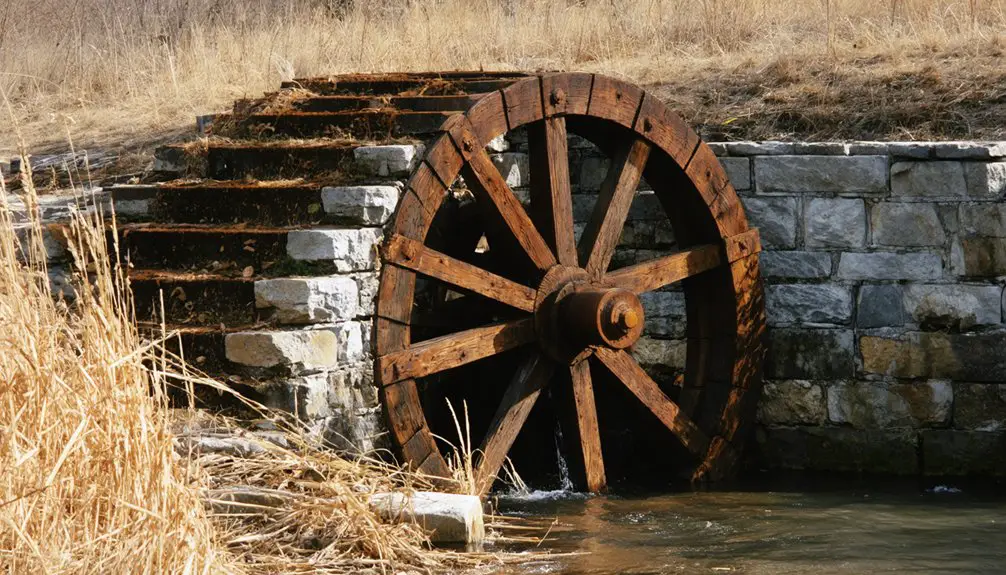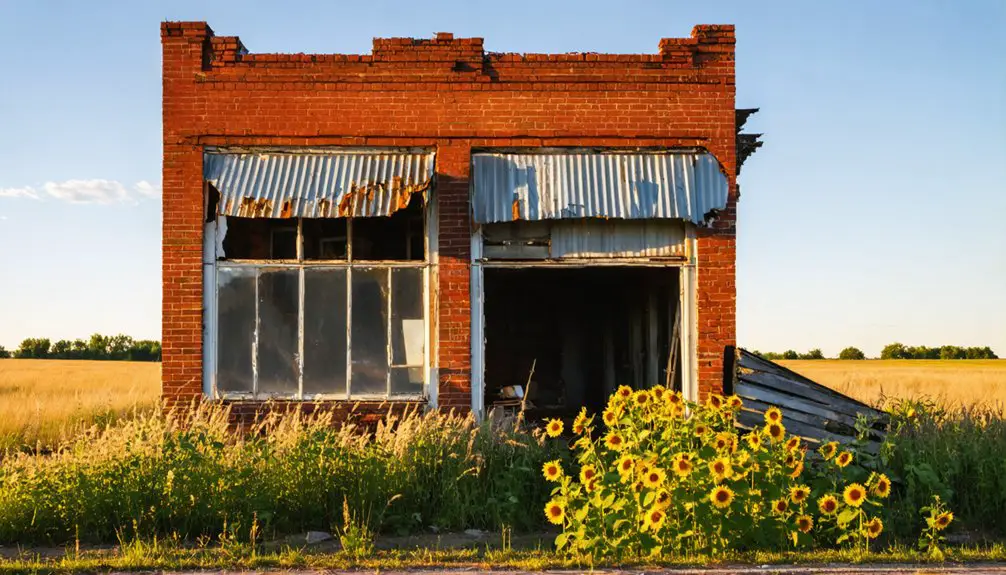
You’ll find Arrington’s scattered remnants in Crawford County’s rolling Flint Hills, where mineral springs once drew hundreds seeking healing waters before an 1902 hotel fire and 1903 flood erased the grand resort. Navigate county roads with GPS coordinates since cellular service fades and no highway signs mark the way. Today, weathered street signs and scattered homes stand among overgrown landscapes where bathhouses and cottages vanished. Pack detailed maps, fuel up before departure, and discover what traces remain of this vanished prairie sanctuary.
Key Takeaways
- Arrington is in Crawford County, Kansas, with no highway signs; GPS coordinates and detailed maps are essential.
- The ghost town features scattered homes and street signs near the Delaware River; resort structures have vanished.
- Visit spring through fall for ideal conditions; winter terrain becomes challenging for navigation.
- Use US-73 as your main route, branching onto county roads; fuel up in Atchison beforehand.
- Respect private property boundaries and allow 1.5-2 hours for exploration; cellular service is limited.
Discovering Arrington’s Location and How to Get There
The rolling Flint Hills of south-central Kansas conceal Arrington among their sweeping grasslands, a ghost town that time nearly erased from the map. You’ll find this forgotten settlement in Crawford County, where regional accessibility requires determination rather than convenience. No highway signs point the way—you’ll navigate using county roads that cut through open prairie, where nearby landmarks become your guideposts.
The closest surviving towns serve as launching points for your exploration, though Arrington itself exists now as scattered foundations and weathered remnants. You’ll want reliable GPS coordinates and detailed county maps, as cellular service fades among these hills. The journey demands self-reliance and preparation, but that’s precisely what makes discovering this abandoned place rewarding for those who crave authentic, unfiltered exploration.
The Rise and Fall of Arrington Springs Tourism
How does a dusty Kansas prairie town transform into a thriving health resort that draws nearly a thousand souls? You’ll find the answer in Arrington’s remarkable mineral springs infrastructure that began with David S. Heneks’s 1881 discovery near the Delaware River.
The resort’s boom years featured:
- 40-acre complex with bathhouse, twelve guest cottages, and hotel accommodations
- Steam-powered water delivery piping mineral water directly from riverside springs
- Weekly visitors by the hundreds seeking healing waters throughout the late 1800s
- Complete town services including churches, stores, and physicians supporting the influx
This economic reliance on tourism proved disastrous when the 1902 hotel fire struck, followed by the devastating 1903 flood. The resort closed permanently, and Arrington’s population plummeted from nearly 1,000 to just 210 residents.
What Remains at the Extinct Town Site Today
Very little greets visitors who venture to Arrington’s townsite today. You’ll find scattered homes still standing among dusty roads marked by weathered street signs—silent witnesses to a community that thrived for nearly a century. Without the identifying marker along Highway 116, you’d struggle to recognize this 40-acre property ever hosted a bustling town. The post office, grain elevator, hotel, bathhouse, and twelve resort cottages have vanished completely. No bank, school, or commercial buildings remain visible.
The beautiful grove near the Delaware River endures, though stripped of its resort amenities. Local preservation efforts remain minimal, leaving Arrington’s memory primarily to overgrown landscapes and fading road markers.
Exploring Other Ghost Towns Near Arrington in Atchison County
Scattered across Atchison County’s rolling prairie, several ghost towns share Arrington’s fate of abandonment and decay. You’ll discover these forgotten settlements if you’re willing to venture beyond marked roads.
Notable Ghost Towns Worth Exploring:
- Sumner – Once the county’s most important settlement, this extinct town near Atchison collapsed when railroads bypassed it. Citizens dismantled their houses completely, leaving only briers and brambles where streets once thrived.
- Abandoned farm structures – Dotting the landscape between settlements, these weathered barns and homesteads tell stories of failed dreams.
- Overgrown wagon trails – Follow faint traces where 1,600 wagons daily rolled toward California’s goldfields in the 1850s.
- Inaccessible sites – Many locations rest on private property, reachable only by boat or determined hiking.
Each stop offers glimpses into Kansas’s untamed past.
Best Routes and Tips for Your Northeast Kansas Ghost Town Circuit
Planning your route through northeast Kansas‘s forgotten settlements requires strategy and flexibility. Start your circuit from Arrington using US-73 as your backbone, then branch onto county roads toward Geary and Doniphan County’s haunting lore.
As you venture deeper into this captivating region, be sure to explore the ghost town attractions in Centerview, where remnants of history whisper tales of the past. Fascinating structures and eerie landscapes await, offering a glimpse into lives once lived. Each stop provides a unique perspective on the area’s rich yet forgotten heritage, making your journey all the more rewarding.
K-7 provides scenic access along the Missouri River to Atchison and Leavenworth’s Victorian-era sites.
You’ll cover 50-70 miles through four counties, discovering architectural artifacts at Belvoir, Franklin, and Media. Spring through fall offers ideal conditions—winter transforms gravel surfaces into challenging terrain. Pack detailed maps since GPS falters near remote locations, and fuel up in Atchison before venturing into sparse countryside.
Respect property boundaries surrounding these remnants. Allow 1.5-2 hours for the core circuit, plus extra time for Douglas County detours. The freedom lies in spontaneous exploration between documented stops.
Frequently Asked Questions
What Caused the Fire That Destroyed Most of Arrington?
A lantern ignited chaff inside the mill, causing an explosion that triggered the fire’s cause. Flames consumed the mill, Cain’s block, and warehouse, marking a devastating chapter in the town’s decline toward its eventual ghost town status.
Can Visitors Still Access the Original Spring Site Today?
No, you can’t access the hidden springs today—they’ve vanished beneath time and overgrowth. The abandoned structures crumbled long ago, leaving only scattered homes and a roadside sign marking where Arrington’s healing waters once flowed freely.
What Facilities Are Available for Tourists Visiting Arrington Now?
You’ll find basic picnic areas for cookouts near the historic bridge, but no camping facilities exist here. This quiet ghost town offers roadside access, historical markers, and spring sites—perfect for independent explorers seeking unstructured adventure.
Is Private Property Permission Needed to Explore the Site?
You’ll find Arrington’s few remaining structures scattered across private farmland, so access permissions aren’t needed for highway viewing. However, private landowner considerations become essential if you’re tempted to explore beyond the public road’s edge.
What Was the Peak Population of Arrington During Its Tourism Era?
Arrington never had a tourism era—its abandoned buildings mark a railroad-driven peak of likely under 300 residents in the 1880s. The ghost town economy collapsed with the rail decline, leaving no tourist population to measure.