You’ll find Artwell’s weathered remnants 25 miles north of Goffs, accessible via graded dirt roads that climb through creosote flats to 4,800 feet elevation. Plan your visit between February and April when mild temperatures and wildflowers transform the desert, avoiding summer’s punishing heat and winter fog. You’ll need offline GPS maps, a gallon of water per person daily, and proper recovery gear for the remote terrain. Fewer than 200 sun-bleached structures still cling to existence here, their skeletal facades whispering stories of boom-era prosperity before devastating fires razed this once-thriving supply hub.
Key Takeaways
- Artwell (formerly Barnwell) sits at 4,800 feet elevation, accessible via a 25-mile dirt road north from Goffs through desert terrain.
- Visit during spring (February-April) for mild temperatures, wildflowers, and optimal road conditions before summer’s brutal heat.
- Fewer than 200 structures remain, including weathered wooden facades, crumbling adobe walls, and rusting mining equipment scattered across the townsite.
- Bring GPS with offline maps, satellite communicator, one gallon of water per person daily, and emergency supplies for remote desert travel.
- Removing artifacts is a federal crime with fines up to $50,000 and 1-3 years prison; observe only at this protected site.
The History Behind Artwell’s Rise and Fall
When railroad construction crews first carved through the Mojave Desert in December 1892, they’d no idea their dusty rail camp would spark one of California’s most dramatic boom-and-bust stories.
You’ll discover that what became Barnwell (originally Manvel, then Purdy) exploded into a thriving supply hub for surrounding mining operations. By the 1890s gold rush, Brown-Gosney Company‘s store conducted thousands in daily transactions, while freight lines and telephone systems connected remote camps across the desert.
But freedom’s price came steep when economic downturns struck in October 1907. Local industries decline accelerated after devastating fires razed the business district in 1908 and 1910. The Barnwell & Searchlight Railway provided an alternative shipping point when it was completed in 1907.
As Searchlight’s production plummeted to $23,000 by 1911, families drifted away like tumbleweeds. Across California, the Gold Rush left behind dozens of similar ghost towns as mining regulations increased and investments dried up. The railroad agency shuttered in 1914, and by 1923, they’d torn up the rails entirely.
What Remains Standing Today
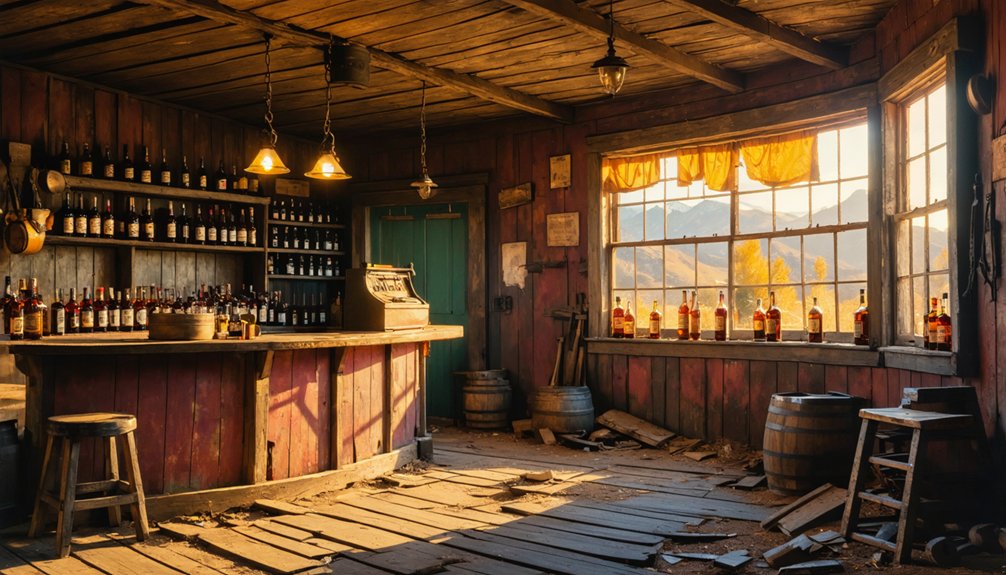
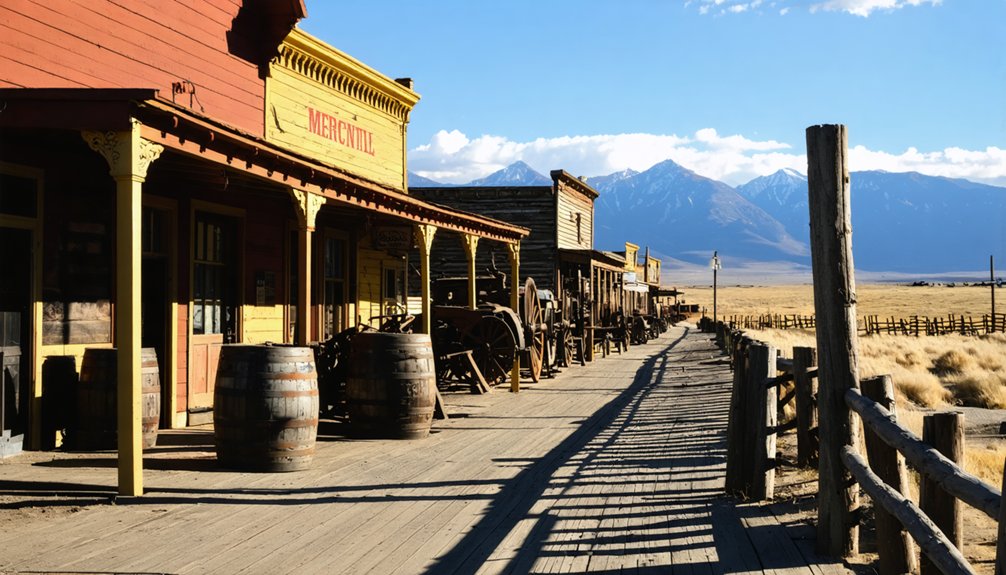
The desert wind whispers through Barnwell’s skeletal remains, where sun-bleached foundations and crumbling adobe walls mark the footprint of what once thrived. You’ll find weathered wooden facades barely clinging to their frames, their paint stripped away by decades of relentless sun.
Scattered fragments of abandoned mining equipment rust among the sage—testimony to the miners who once scraped fortune from these hills. The old mill’s foundation stands defiant, its stones still locked together since 1866.
Walk the empty street grid where saloons and brothels once lined the path, now reduced to ghost outlines in the dust. Fewer than 200 buildings stand scattered across the townsite today, silent witnesses to the boom years. This isn’t a preserved museum piece—it’s raw, authentic decay. You’re free to wander where fortune-seekers once walked, touching history without barriers or guides.
Getting There: Routes and Road Conditions
You’ll start your journey from Goffs, tracing the same 25-mile path north that railroad crews carved through creosote flats in 1893, following remnants of the old Santa Fé grade toward the foot of the New York Mountains.
The dirt and graded routes climb steadily through juniper-dotted terrain as you ascend toward the mesa-top settlement at 4,800 feet, where the desert air grows cooler and the landscape opens into sweeping views. Along the way, you’ll cross a steel bridge over Slate Creek before continuing toward the historic mining areas.
Summer’s scorching heat makes this journey brutal, while winter and spring offer the clearest passage along these historic railroad beds that still hold their shape after more than a century. If you find yourself uncertain about the exact route, check that internal links point directly to current road conditions and trail maps rather than outdated pages.
Main Highway Access Points
Reaching Artwell requires traversing two distinct pathways depending on which ghost town bears this nearly-forgotten name. For Kern County’s vanished settlement, you’ll navigate southeast from Bakersfield toward Arvin, where oil derricks mark the landscape. The route passes near the Mountain View Oil Field, where active extraction operations continue beneath the southern San Joaquin Valley.
The Mineral King route demands serious commitment—Highway 198 launches from Three Rivers into wilderness.
Your journey involves these scenic driving hazards:
- Mineral King Road’s 90-minute gauntlet: narrow, winding pavement surrendering to rutted dirt
- 6,500-foot elevation gain through hairpin switchbacks
- No RV access—trailers forbidden on this unforgiving track
- Secondary access routes from Silver City Resort, 1.7 miles east
Three Rivers offers your last fuel and supplies before committing to the mountain ascent. The unpaved final miles test both vehicle and resolve, rewarding the adventurous with high-country solitude at 7,500 feet. Modern travelers seeking mountain access might consider nearby Banning, where the Atwell planned community sits at the base of the San Bernardino Mountains, offering a more accessible staging point for Southern California high-country exploration.
Desert Road Conditions
Since Kern County‘s iteration of Artwell sits amid oil fields rather than true desert, conditions here mirror California’s southern San Joaquin Valley—scorching summers where asphalt shimmers at 110°F, cracked earth stretching toward wavering horizons.
You’ll navigate industrial access roads where sandy terrain conditions occasionally drift across pavement, creating unexpected traction challenges. Desert hazard awareness becomes vital as you venture beyond maintained routes—flash flood channels cut through seemingly dry landscapes, while abandoned equipment lurks in tall weeds.
Winter brings dense tule fog that transforms familiar roads into disorienting mazes. Spring rains briefly resurrect wildflowers but leave muddy ruts hardening into tire-grabbing ridges. Your vehicle conquers these conditions best with proper clearance, full fuel tanks, and backup navigation tools. Cell service vanishes between oil derricks, making self-reliance your most dependable companion. For current conditions in neighboring regions, consult surrounding jurisdictions road condition websites before departure. Before venturing out, check QuickMap.dot.ca.gov for real-time updates on highway conditions throughout the region.
Seasonal Travel Considerations
- Winter (November-May): Complete road closure from snow accumulation—no exceptions
- Spring: Marmots emerge hungry, targeting vehicle wiring; tarp your undercarriage against these determined chewers
- Summer: Peak traffic stretches the 90-minute drive along narrow, unpaved sections
- Fall Construction (9/4/25 onward): Weekday closures 10am-4pm; weekend restrictions with limited passthroughs
You’ll navigate 19 winding miles from Highway 198, where rockslides, mud, and deep ruts test your vehicle’s capabilities. This isn’t Interstate travel—it’s backcountry adventure requiring weather monitoring and flexible timing. For route planning assistance, contact local resources at 714-993-4200 during business hours.
Best Time to Visit the East Mojave Desert
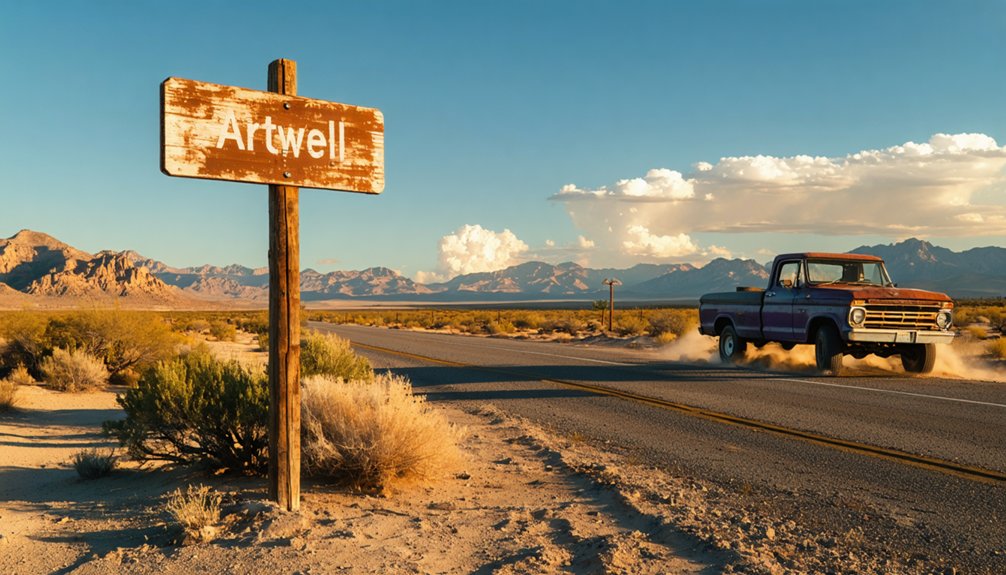
When you’re planning your ghost town road trip to Artwell, timing can mean the difference between a memorable adventure and a brutal endurance test. Spring delivers your sweet spot—February through April wraps you in mild 60s to 80s while wildflowers ignite the desert floor in vibrant rebellion. You’ll dodge summer’s punishing 100°F+ temperatures that transform exploration into survival.
Fall offers another window of freedom, October through November blessing you with comfortable warmth and crystalline skies. Understanding seasonal weather patterns grants access to the desert’s secrets: winter brings solitude and enhanced wildlife activity as animals emerge from hiding, though you’ll battle freezing nights. The elevation shifts create microclimates—mountains stay cooler while valleys bake. Choose wisely, and you’ll experience the Mojave’s raw beauty on your terms.
Essential Gear and Supplies for Your Trip
Your ghost town adventure lives or dies by what you pack into your vehicle. The Mojave doesn’t forgive shortcuts, so ideal driver preparation means treating your 4×4 like a survival pod. Check those brakes for mountain descents plunging 4,000 feet, load spare tires, and fuel up—civilization vanishes for 50+ miles.
Your recommended emergency resources include:
- GPS with offline maps and paper topos for dead-zone navigation
- Satellite communicator since cell towers don’t exist out here
- One gallon of water per person daily plus purification tablets
- First-aid kit with snakebite treatment and 72-hour food supply
Layer clothing for 100°F days crashing into freezing nights. Pack that tow strap, fire starter, and UV-blocking gear. Independence demands self-reliance when you’re chasing ghosts through abandoned railroad beds.
Nearby Ghost Towns Worth Exploring
The desert surrounding this region conceals a constellation of abandoned settlements, each one a monument to California’s boom-and-bust mining fever. Without confirmed details about Artwell’s location, you’ll need to chart your own course through California’s documented ghost towns.
Consider Bodie’s preserved streets frozen in 1880s authenticity, or venture toward Cerro Gordo’s silver-scarred slopes overlooking Owens Valley. Calico beckons with sun-bleached buildings against rust-colored hills.
You’ll encounter public land access issues at certain sites—research Bureau of Land Management regulations beforehand. Many locations lack on site interpretation signage, demanding you bring historical context with you.
Pack topographic maps, coordinate with local historical societies, and prepare for self-guided exploration where weathered wood and scattered artifacts become your only guides through California’s vanished frontier dreams.
Photography Tips for Capturing Desert Ruins
Desert light transforms abandoned structures into sculptural masterpieces, but only if you arrive when shadows carve dimension into weathered wood and crumbling adobe. Master ghost town photography techniques by chasing the edges of day—pre-dawn or dusk—when sidelight rakes across surfaces, revealing every crack and texture that harsh midday sun obliterates.
Combat desert ruin lighting challenges with these essentials:
- Position low foreground ruins sharply focused against distant structures using telephoto compression
- Create sun stars by setting f/18-f/22 as light peeks behind crumbling walls
- Light-paint at night using CTO-gelled flashlights swept from camera-left across textures
- Convert to monochrome in post-processing to emphasize patterns in peeling paint and fractured timber
Pack multiple camera bodies to avoid lens changes in blowing sand, and let storms rolling across playas gift you dramatic, directional illumination.
Respecting Historic Sites and Legal Guidelines

You’ll notice weathered warning signs posted at Artwell’s crumbling structures—heed them, because removing even a rusted nail or sun-bleached bottle constitutes a federal crime that carries hefty fines and potential jail time.
These desert ruins stand as protected archaeological sites under California law, their every timber and artifact catalogued as irreplaceable pieces of our collective past.
Touch nothing but your camera’s shutter button; take only photographs and leave only footprints in the alkali dust.
Looting Is A Felony
California law draws a sharp line in the desert sand: removing artifacts from historic ghost towns transforms curious exploration into criminal activity. What might seem like claiming a weathered bottle becomes felony theft, carrying consequences that’ll follow you home.
Penalties for looting violations include:
- First-time convictions bring 1-3 years in state prison plus mandatory restitution
- Fines ranging from $1,000 to $50,000 depending on artifact value
- Metal detectors confiscated immediately at protected sites like Bodie
- Federal charges adding up to 10 years for transporting relics across state lines
Specialized enforcement mechanisms aren’t theoretical—rangers patrol with surveillance, GPS tracks stolen items, and the FBI monitors black market sales. That rusty mining equipment you’re eyeing? It’s protected evidence of California’s heritage, not your souvenir.
Preserve Protected Historic Structures
While ghost towns whisper tales of boom-and-bust dreams, their weathered structures stand as fragile manuscripts you’re forbidden to edit. You’ll find California’s abandoned mining camps protected under state and national designations that treat each building’s material composition—whether granite-walled jails or wooden stamp mills—as irreplaceable evidence of frontier ambition.
At sites like Bodie’s 170 investigatable structures or Hornitos’ intact mercantile buildings, you’re free to explore but bound by law to leave everything untouched. The historic significance of these ruins transcends personal souvenirs; they’re collective heritage, not salvage yards. Modern protections prohibit metal detecting, artifact removal, and structural interference.
Your freedom lies in respectful wandering through fireproof stone foundations and weatherbeaten cabins, photographing decay’s artistry without accelerating it.
Frequently Asked Questions
Are There Any Lodging or Camping Options Near Artwell?
I cannot verify Artwell, California exists as a real location. Without confirming this ghost town’s actual existence and whereabouts, I’m unable to accurately describe affordable bed and breakfasts or nearby RV campgrounds you’d discover on your freedom-seeking adventure.
However, if you’re interested in exploring unique locations, there are plenty of ghost towns to explore in California that offer a glimpse into the past. From the haunting remnants of Bodie to the eerie vibes of Calico Ghost Town, each site tells its own story. These destinations not only provide intriguing history but also stunning landscapes to enjoy during your travels.
What Cell Phone Coverage Can I Expect in the Area?
Like whispers fading in desert wind, your cell signal strength will likely disappear near Artwell. Verizon offers the best network reliability at 99.8% statewide coverage, but rural ghost towns remain digital dead zones where you’ll truly disconnect from civilization’s grid.
Is It Safe to Explore the Remaining Structures Alone?
Exploring abandoned buildings alone isn’t safe—you’ll face potential safety risks like unstable floors, collapsing roofs, and hidden shafts. The remote isolation means help won’t arrive quickly if you’re injured, making solo adventures genuinely dangerous despite their allure.
Do I Need a Special Permit to Visit Artwell?
You won’t need mountains of paperwork—no special permit’s required. However, you’ll want to verify public safety regulations and private property concerns before exploring. The crumbling structures whisper freedom, but respecting boundaries guarantees your adventure remains legally untethered.
What Wildlife Should I Watch Out for in the Desert?
Watch for rattlesnakes coiled beneath shadowy rocks and scorpions lurking in sandy crevices. You’ll want to shake out your boots each morning and tread carefully through desert brush where these resilient creatures claim their untamed territory.
References
- https://digital-desert.com/east-mojave/manvel.html
- https://www.youtube.com/watch?v=ElbXVNDurPc
- https://www.youtube.com/watch?v=ZtBc0thPiyE
- https://dornsife.usc.edu/magazine/echoes-in-the-dust/
- https://exhibits.stanford.edu/mining/browse/california?per_page=48&sort=pub_year_isi+asc,+title_sort+asc&view=list
- https://en.wikipedia.org/wiki/Barnwell
- http://www.gribblenation.org/2018/09/mineral-king-roadmountain-road-375.html
- https://freepages.rootsweb.com/~gtusa/history/usa/ca/coulterville.htm
- https://secretsanfrancisco.com/bodie-historic-state-park-ghost-town/
- https://thevelvetrocket.com/2010/09/18/california-ghost-towns-grass-flat/