Planning a ghost town road trip to Asherville, Kansas means heading into the heart of Solomon Valley, where Mitchell County’s quiet rural roads lead you to a community of just 19 residents. You’ll find abandoned structures, a historic grain elevator, and a cemetery tied to Indian raid victims. From Wichita, it’s roughly 200 miles north. Bring fuel, water, and paper maps before you go. There’s far more to this forgotten frontier town than you’d expect.
Key Takeaways
- Asherville is an unincorporated ghost town in Mitchell County, north-central Kansas, with only 19 residents and no commercial infrastructure or municipal services.
- From Wichita, take I-135 North to Salina, then US-24 West, covering roughly 200 miles to reach Asherville in Mitchell County.
- Fuel up in Beloit before arriving, as services are scarce; carry water, snacks, paper maps, and a first aid kit.
- Key attractions include abandoned structures, a historic grain elevator, and a cemetery dedicated to victims of Indian raids.
- Nearby Mitchell County attractions like Glen Elder State Park and the Mitchell County Historical Museum can enrich your overall road trip experience.
Where Is Asherville, Kansas?
Tucked into the Solomon Valley region of north-central Kansas, Asherville sits within Mitchell County as a census-designated place that’s technically still alive — but just barely. With only 19 residents recorded in the 2020 census, this unincorporated community offers a rare kind of freedom: wide-open space, minimal crowds, and a raw connection to frontier history.
You won’t find a municipal government or formal services here, but that’s precisely the appeal.
Asherville’s historical significance stretches back to the late 1860s, when settlers carved an agricultural community out of the Kansas plains. The surrounding landscape and local attractions, including an Indian raid victims’ cemetery, make it a compelling destination for road-trippers who’d rather explore authentic, forgotten places than tourist traps.
Why Asherville Qualifies as a Living Ghost Town
Despite its 19 living residents, Asherville earns its ghost town label through sheer emptiness and economic exhaustion. You’ll find no active businesses, no municipal government, and no formal services waiting for you here. That absence tells the whole story.
Asherville has residents but no reason — no businesses, no government, no services. Just 19 people and a hollow.
Asherville’s population dynamics reveal a community that once thrived on agricultural promise before the Great Depression, railroad isolation, and post-WWII mechanization stripped it down to almost nothing.
What remains is a skeleton of frontier ambition.
Yet its historical significance keeps it relevant. The post office ran from 1869 to 1980, and a grain elevator operated well into the 2000s.
Those details matter because they show a place that fought to survive longer than most.
Asherville didn’t die completely — it just quietly ran out of reasons to grow.
How Asherville Went From Farm Town to Ghost Town
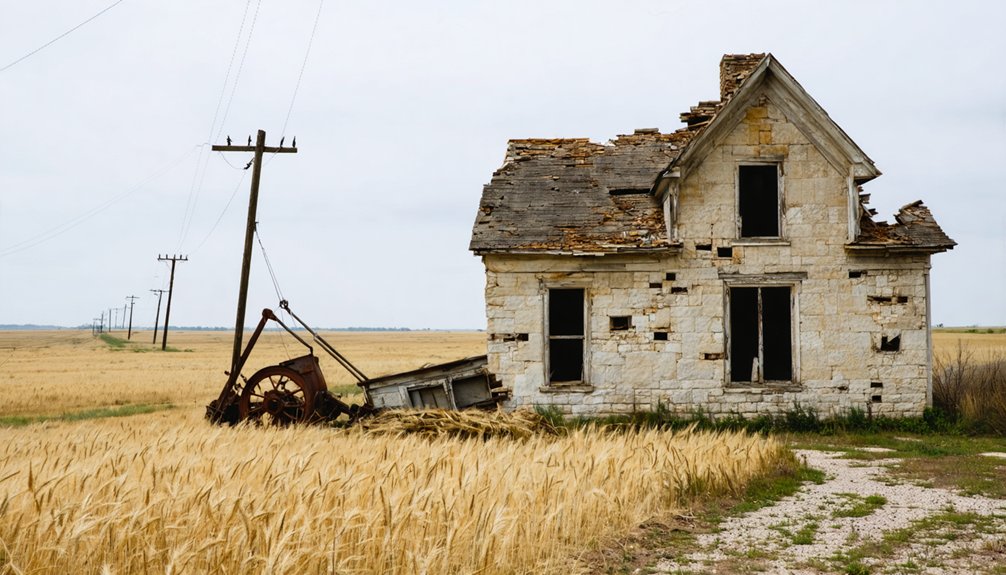
When you trace Asherville’s story back to its roots, you’ll find a community that launched with genuine agricultural ambition in the late 1860s, building a schoolhouse, a grocery store, and a post office on the promise of fertile Kansas farmland.
What it never secured, though, was railroad access — and that isolation quietly strangled the town’s growth potential before the real blows even arrived.
The Great Depression gutted the population, and post-World War II farm mechanization finished the job, eliminating the labor-intensive farming jobs that had kept families rooted there in the first place.
Agricultural Roots and Ambitions
Asherville’s story begins like so many other Kansas settlements—full of agricultural promise and frontier ambition. When settlers arrived in the late 1860s, they brought with them a hunger for land and a belief that hard work could transform the Solomon Valley into something lasting.
They built a two-story schoolhouse, opened a grocery store, and established a post office in 1869—clear signs of agricultural innovation taking root on the Kansas plains.
You can almost picture it: families staking claims, crops stretching toward open skies, and a community resilience that made survival feel possible. The land rewarded early efforts, drawing enough settlers to justify permanent structures and civic investment.
Asherville wasn’t just surviving—it was genuinely building toward a future it believed was inevitable.
Railroad Isolation Stunted Growth
What the settlers of Asherville couldn’t control was the railroad—and that single absence quietly doomed the town’s future. Without rail access, farmers couldn’t efficiently move crops to larger markets, and merchants couldn’t attract outside investment.
The railroad impact on small Kansas towns was decisive—those bypassed simply withered.
You can see this pattern clearly when you study Asherville’s trajectory. Economic challenges arrived first during the Great Depression, squeezing already-thin margins. Then post-World War II mechanization eliminated the farming jobs that had kept families rooted.
Each decade peeled away another layer of viability.
When a town can’t connect to broader commerce, it can’t compete. Asherville never got that connection. What remained was resilience without momentum—a community holding on, but never truly growing forward.
Depression and Mechanization Devastated Population
The Great Depression hit Asherville like it hit every small farming community in Kansas—hard, fast, and without mercy. Economic hardships drained families from the land, and many simply never returned.
You’d have watched neighbors pack wagons and disappear, leaving fields silent and storefronts dark.
Then came the machines. After World War II, agricultural mechanization reshaped everything. Tractors and combines replaced the hands that once filled Asherville’s homes and schoolhouses.
Fewer workers meant fewer residents, and rural depopulation accelerated relentlessly. Jobs vanished. Young people left seeking opportunity elsewhere.
What the Depression started, mechanization finished. The town that once buzzed with frontier ambition quietly surrendered its population, one family at a time.
Today, only 19 residents remain—living proof of how thoroughly those twin forces reshaped this Kansas community.
What Still Stands in Asherville Today
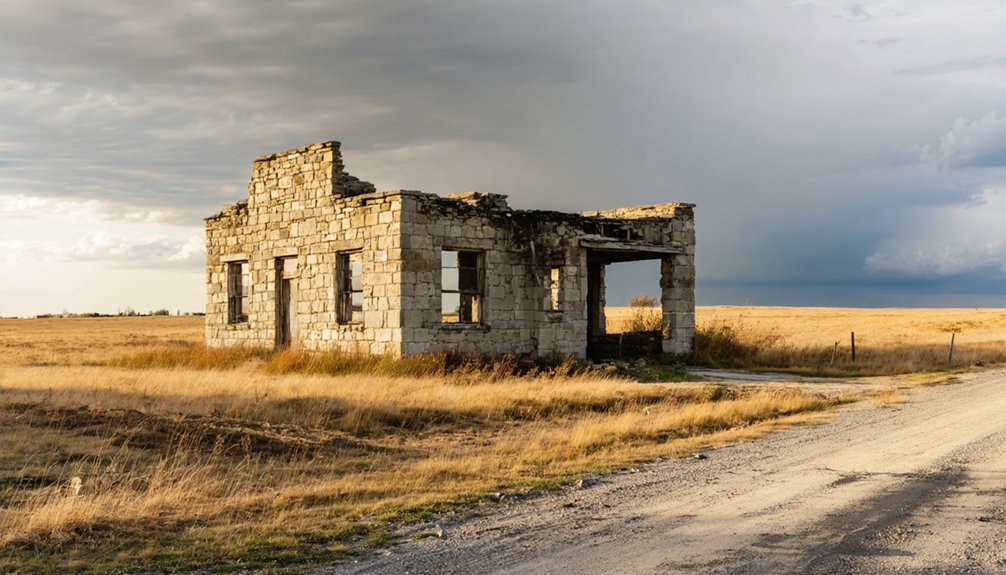
Though much of Asherville has faded into the Kansas prairie, a handful of remnants still anchor the town’s story to the landscape.
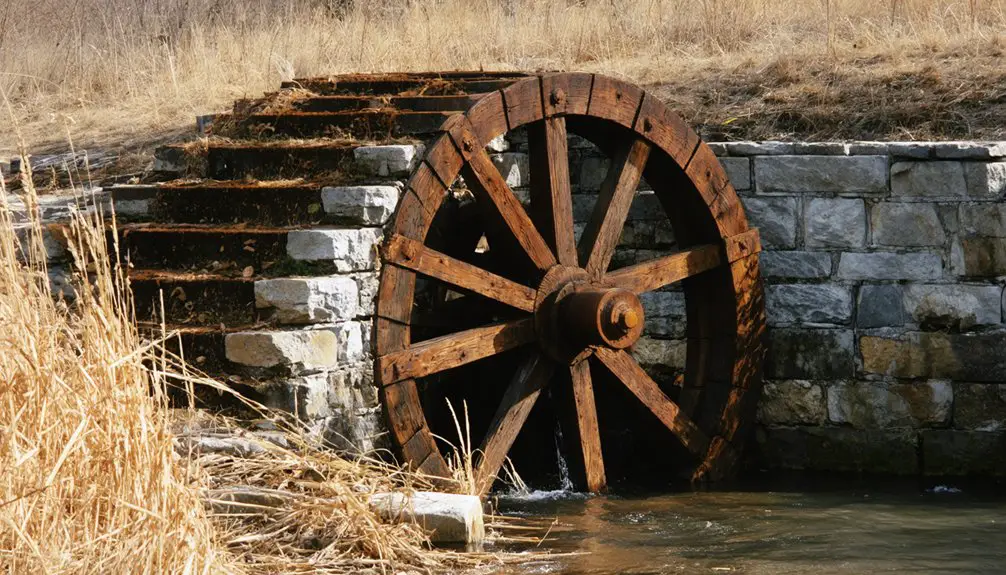
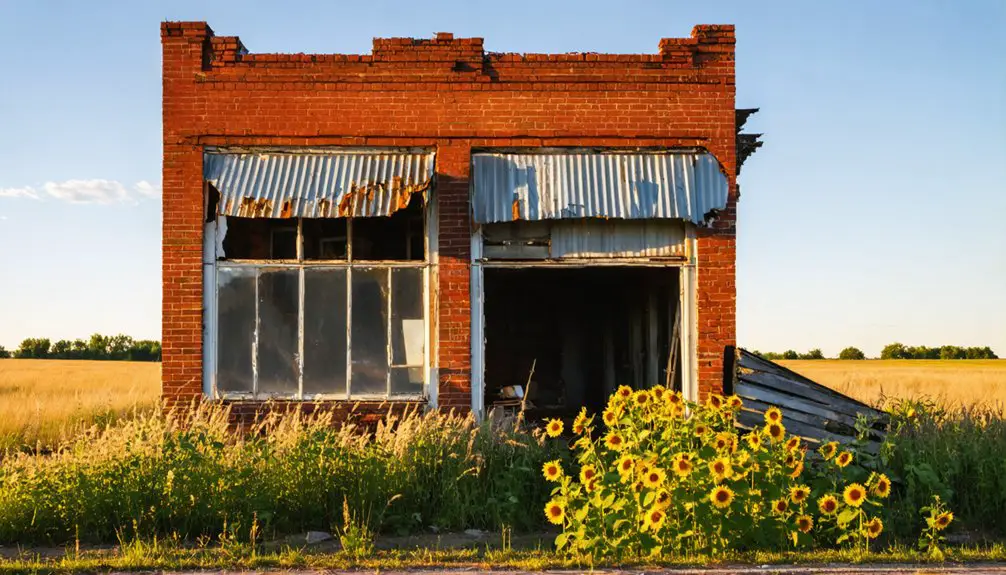
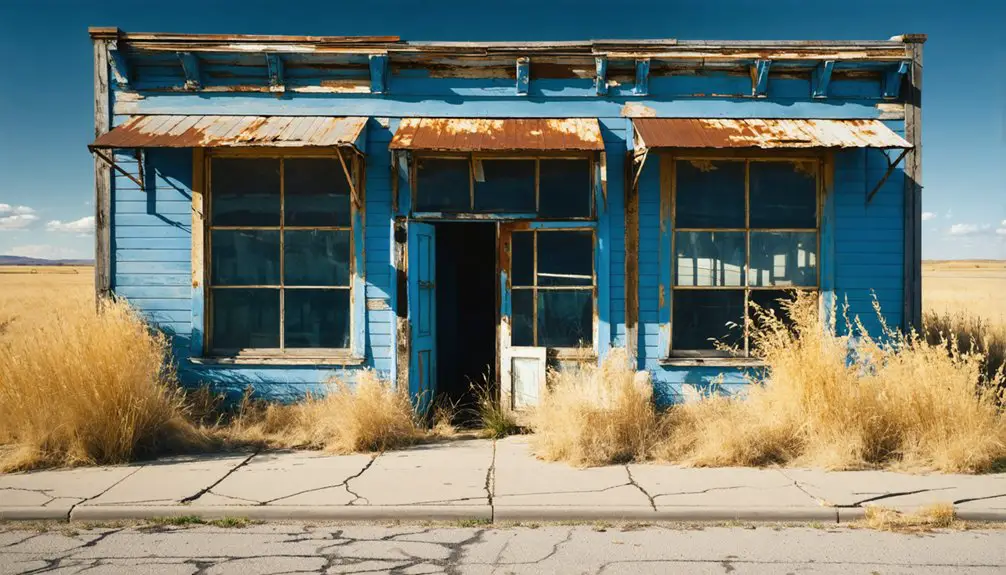
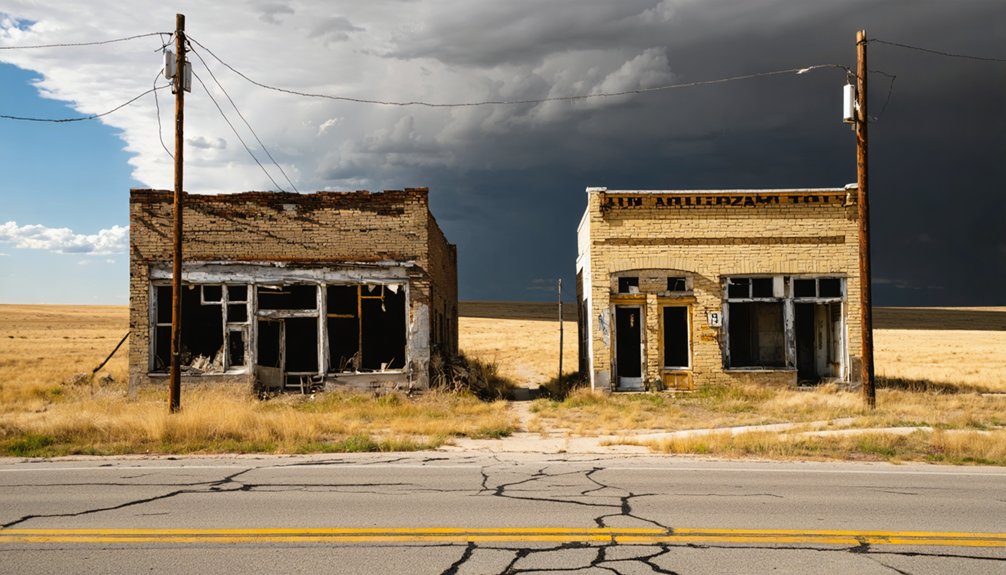
You’ll find abandoned structures standing as quiet symbols of frontier ambition, their weathered frames carrying real historical significance without needing haunting legends to make them compelling.
The grain elevator, which operated into the 2000s, represents one of the last functional pieces of Asherville’s working past.
Nearby, a cemetery honoring victims of Indian raids offers a sobering, tangible connection to the violence that shaped early settlement life.
You won’t encounter gift shops or guided tours here — just open land, crumbling buildings, and honest history.
That rawness is exactly what makes Asherville worth the detour through Mitchell County.
Asherville’s Indian Raid Cemetery and Its Untold Stories
Among those remnants anchoring Asherville to its past, one site carries a weight that no crumbling storefront can match — a cemetery dedicated to victims of Indian raids.
You’ll find it quietly positioned within the community boundaries, a raw reminder that frontier freedom came at a brutal cost.
The cemetery tales surrounding this site remain frustratingly sparse. Historical documentation hasn’t preserved the individual names, circumstances, or exact dates connected to those buried here.
That silence is itself telling — these were people living on contested land during a volatile era of westward expansion.
When you visit, you’re standing on ground that absorbed genuine tragedy.
No dramatic markers elaborate the stories. Instead, the site demands that you imagine the lives, the fear, and the resilience that defined early Asherville’s survival.
How to Get to Asherville From Major Kansas Cities

If you’re heading to Asherville from Wichita, you’ll take I-135 North toward Salina, then follow US-24 West through Beloit into Mitchell County, covering roughly 200 miles.
From Topeka, you’ll drive west on I-70 before cutting north on US-81 toward Beloit, then navigate the final stretch of rural roads into the Solomon Valley.
Either route drops you into a quiet, unhurried landscape that primes you perfectly for the ghost town experience waiting at your destination.
Routes From Wichita
Making the roughly 190-mile drive north from Wichita to Asherville is a straightforward journey through the heart of Kansas. You’ll head north on I-135, then shift onto US-81 toward Beloit before traversing local roads into Mitchell County.
Keep these road trip tips in mind:
- Fill your tank in Beloit — commercial services disappear as you approach Asherville.
- Take US-24 west from Beloit to explore local attractions along the Solomon Valley corridor.
- Download offline maps before leaving Wichita, as rural connectivity gets unreliable.
The drive itself rewards you with sweeping prairie landscapes and wide-open skies that define north-central Kansas.
You’re not just reaching a destination — you’re experiencing the freedom of genuine frontier country before arriving at one of Kansas’s most quietly haunting living ghost towns.
Driving From Topeka
Driving from Topeka to Asherville covers roughly 160 miles northwest, and you’ll want to start by taking I-70 west toward Salina before heading north on US-81 up through Beloit.
From Beloit, continue west into Mitchell County, where the Solomon Valley landscape opens up around you — wide skies, rolling plains, and scattered farmsteads feeding that sense of rural nostalgia you’re chasing.
The drive itself sets the mood perfectly before you arrive. Asherville sits quietly in this forgotten corner of north-central Kansas, its abandoned structures and storied past offering genuine ghost town history without the tourist crowds.
You’ll pass through small communities that share similar decline stories, making the journey feel like a living timeline of frontier promise slowly surrendering to time.
Budget around two and a half hours.
Three Mitchell County Sites Worth Adding to Your Route
While you’re making the trek out to Asherville, Mitchell County offers a handful of nearby stops that’ll reward the extra miles.
Ghost town tourism thrives when you connect multiple sites, and this region delivers real historical significance at every turn.
Ghost town tourism thrives on connection — and Mitchell County’s layered history rewards every detour you’re willing to take.
- Beloit’s Mitchell County Historical Museum — Unpack the settler stories and agricultural heritage that shaped every small community in the valley.
- Glen Elder State Park — Trade abandoned streets for reservoir views and campgrounds sitting right along the Solomon River corridor.
- Waconda Lake — A federally managed reservoir built where a sacred mineral spring once drew Native Americans and early settlers alike.
String these stops together and you’ll leave Mitchell County with a fuller picture of why places like Asherville rose, struggled, and survived.
What to Bring Before You Drive Out to Asherville
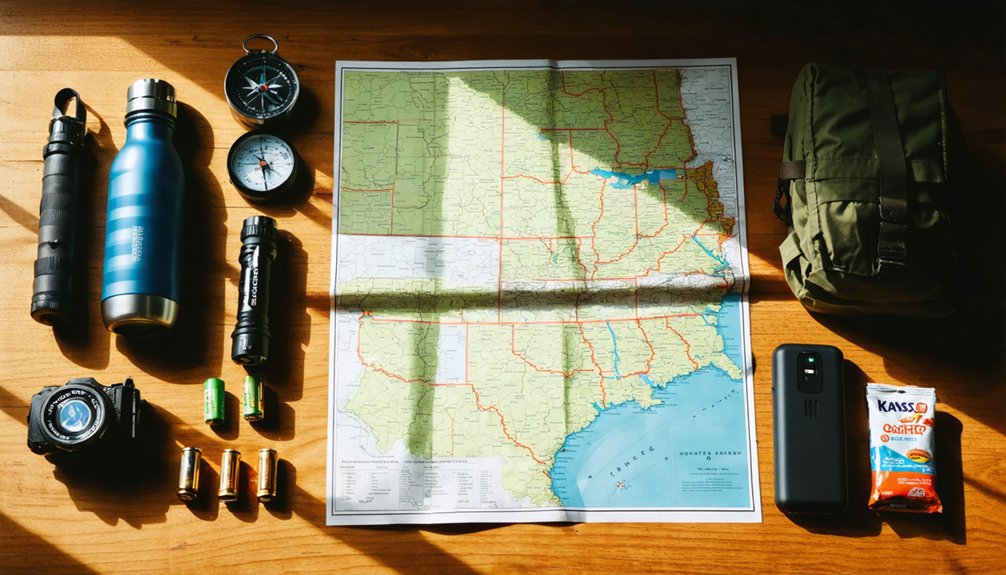
Asherville won’t coddle you with gas stations, convenience stores, or any commercial infrastructure worth mentioning, so pack before you leave. This unincorporated settlement offers zero commercial services, meaning your travel essentials determine whether your visit feels adventurous or frustrating.
Know what to pack: full fuel tank, paper maps, charged devices, and portable power banks. Cell coverage in Mitchell County’s Solomon Valley region runs thin, so don’t depend on navigation apps. Bring your own water, snacks, and a basic first aid kit.
Weather shifts quickly across North Central Kansas, so layer your clothing appropriately. A camera earns its weight here — abandoned structures and that frontier cemetery reward documentation. Sturdy footwear handles uneven terrain around old buildings.
Prepare thoroughly, and Asherville rewards you with authentic, unfiltered Kansas history.
Frequently Asked Questions
Does Asherville Have Any Overnight Camping or Lodging Options Nearby?
Like a true frontier explorer, you’ll need to seek nearby accommodations elsewhere — Asherville offers no camping amenities itself. You’ll find lodging options in Mitchell County’s larger towns, so plan your overnight stays before venturing out.
Are There Any Annual Events or Gatherings Held in Asherville?
You won’t find any documented annual events in Asherville, but you’re free to explore its ghost town history and local folklore independently, wandering abandoned structures and discovering this quietly resilient Kansas community on your own terms.
Is There Cell Phone Reception Available When Visiting Asherville?
Like a fading whisper, cell service in Asherville’s remote Mitchell County setting can’t be guaranteed. You’ll likely find reception quality unreliable, so download offline maps beforehand and embrace the liberating disconnect from modern connectivity.
What Is the Best Time of Year to Visit Asherville?
Spring and fall are your best seasons to explore Asherville. You’ll enjoy mild weather considerations like comfortable temperatures perfect for roaming abandoned structures and soaking in the raw, open freedom of Kansas ghost town history.
Are Visitors Legally Allowed to Enter Asherville’s Abandoned Structures?
You’ll want to research legal considerations carefully before urban exploration in Asherville. Private property laws apply to abandoned structures, so always seek owner permission first — trespassing charges can quickly derail your freedom-seeking adventure.
References
- https://michael-hankins.com/2025/11/22/bess-blanche-baker/
- https://legendsofkansas.com/kansas-ghost-town-list/
- https://www.mitchellcountykansas.com/asherville.html
- https://en.wikipedia.org/wiki/List_of_ghost_towns_in_Kansas
- https://legendsofkansas.com/kansas-towns/
- https://en.wikipedia.org/wiki/Asherville
- https://en.wikipedia.org/wiki/Asherville_Township
- https://books.google.com/books/about/Ghost_towns_of_Kansas.html?id=UwslAAAAMAAJ
- https://krex.k-state.edu/server/api/core/bitstreams/c160e6b6-918d-4c3d-b31d-836fe571c72e/content
- https://www.reddit.com/r/kansas/comments/102hrmy/looking_for_ghost_towns_to_document/