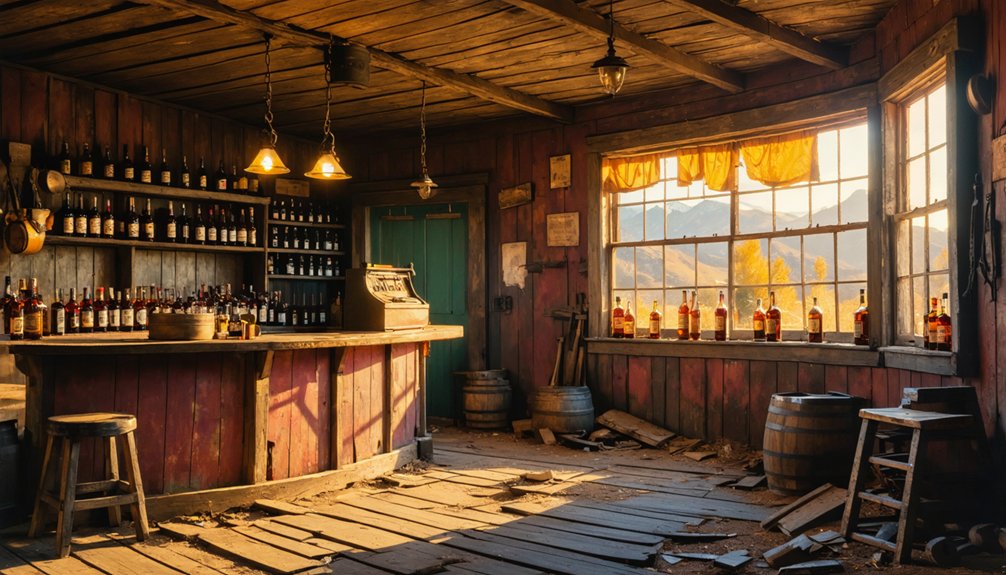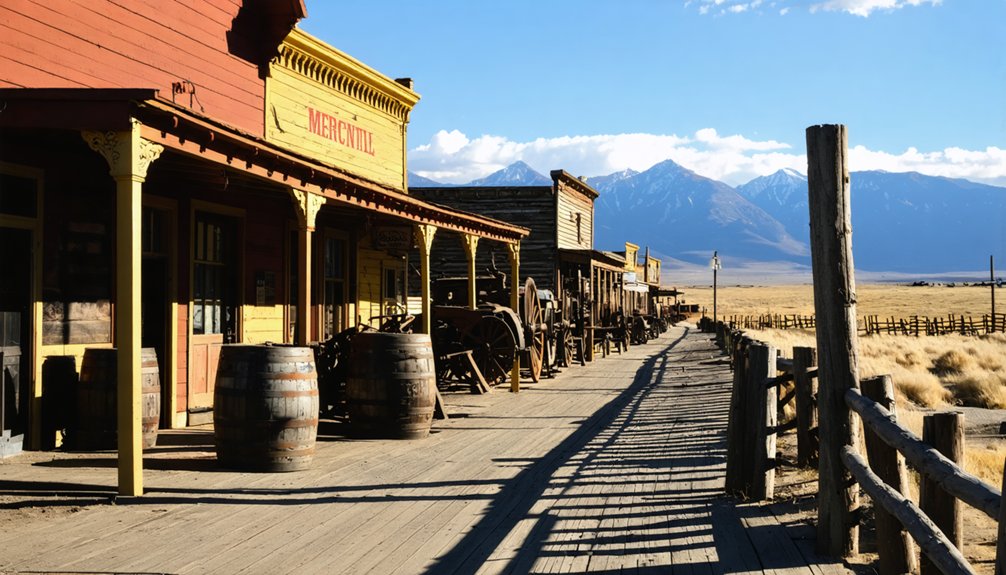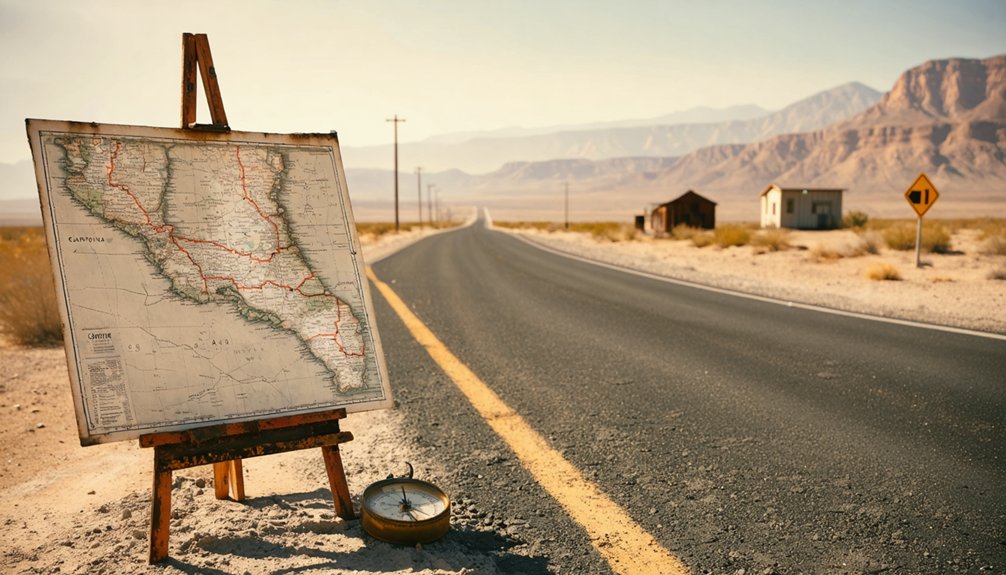
Your Asphalto ghost town adventure begins three miles northeast of McKittrick in western Kern County, where oil-stained hills conceal weathered structures and bubbling asphalt seeps. You’ll need to fuel up in McKittrick or Taft since no services exist at the 932-foot elevation site. Plan three to five days to explore surrounding Death Valley ghost towns like Rhyolite’s Bottle House and Ballarat’s authentic Old West remnants. Verify dirt road conditions with locals before departing, and discover how combining these haunting destinations creates an unforgettable journey.
Key Takeaways
- Asphalto sits three miles northeast of McKittrick in western Kern County at 932-foot elevation, accessible via dirt roads requiring condition verification.
- Fuel up in McKittrick or Taft beforehand, as no commercial services exist near the remote ghost town site.
- Combine your visit with nearby Death Valley ghost towns like Rhyolite, Ballarat, and Cerro Gordo for a comprehensive route.
- Allocate three to five days for thorough exploration of multiple sites across Kern County and Death Valley regions.
- Check seasonal access restrictions and GPS coordinates (35°18′17″N 119°36′03″W) before departing for Asphalto’s historical asphalt deposits.
Historical Background of Asphalto and Its Asphalt Deposits
For over 40,000 years, thick black pools of asphaltum have oozed through California’s coastal sediments, creating what Spanish explorers would call “Aguaje de La Brea”—the Watering Place of the Tar. When Friar Crespi arrived with the 1769 expedition, he documented these mysterious bitumen seeps bubbling from the earth’s fissures.
The geological significance of asphalt deposits extends beyond their commercial value—you’re standing where hydrocarbon molecules rose through 45 meters of Pleistocene alluvium, trapping everything in their path. This molasses-thick substance enabled the preservation of prehistoric wildlife for millennia, creating an irreplaceable fossil record.
Native Americans understood this land’s power long before Europeans arrived, harvesting asphaltum to waterproof baskets and seal their canoes. What started as a crucial watering hole along El Camino Viejo would transform into California’s ghost town of Asphalto.
Getting to the Asphalto Site Near McKittrick
Your journey to Asphalto begins in McKittrick, a tiny oil town clinging to Highway 33 in western Kern County. From there, you’ll navigate roughly three miles northeast through terrain that hasn’t changed much since the railroad days.
Three miles northeast of McKittrick lies Asphalto – a ghost town frozen in railroad-era solitude along unchanged western Kern County terrain.
Remote access considerations include:
- No commercial services – fuel up and pack provisions in McKittrick or Taft
- Dirt roads likely – verify current conditions with Kern County locals before departing
- GPS coordinates essential – 35°18′17″N 119°36′03″W guides you to the 932-foot elevation site
- Combined ghost town routes – regional tourism options include nearby oil field relics and fossil sites
The asphalt deposits that gave this place its name still mark the location. You’re chasing a settlement that vanished from maps after 1932, so expect minimal infrastructure and maximum solitude.
Exploring Nearby Death Valley Ghost Towns
Five legendary ghost towns lie within striking distance of Asphalto, each offering a distinct window into Death Valley’s mining past.
Among these hidden gems are the ghost towns near Big Blue Mill, which once thrived from the riches of nearby gold and silver mines. Today, they stand as haunting reminders of the past, inviting explorers to uncover their stories. Each site offers a unique glimpse into the lives of those who once called these towns home, making them a must-see for history enthusiasts.
Rhyolite stands as the crown jewel—just 4 miles west of Beatty with intact structures including the iconic Bottle House and a three-story bank building. You’ll navigate passenger-car-friendly roads here.
Ballarat delivers Old West authenticity 40 minutes south of Panamint Springs, where preserved machinery rusts beside adobe walls and feral mules descended from miners’ stock still roam freely.
For the adventurous, Panamint City demands a grueling 12.6-mile trek with 4,000 feet elevation gain, rewarding you with a towering brick smokestack and abandoned tunnels.
Cerro Gordo requires serious 4×4 capability—eight steep miles to 8,500 feet—while Chloride City hides within park boundaries, accessible only by backcountry routes.
What to See at Each Abandoned Mining Settlement
Each abandoned settlement reveals different fragments of Death Valley’s brutal mining legacy—from weathered timber frames to crumbling foundations that’ll transport you back to the 1860s boom-and-bust era.
These ghost towns stand as haunting monuments to Death Valley’s unforgiving landscape and the desperate miners who challenged it.
At Ward Mining Camp, you’ll discover remains of mining equipment including a collapsed four-stamp mill with intact workings and three deteriorating cabins. The mill’s rock foundation still stands across the old road where Ed Page once hobbled 2,000 feet between mine and mill until 1917.
What You’ll Find:
- Echo: Leveled tent sites visible only to experienced explorers at Echo Canyon’s head
- Emigrant Wash: Mining artifacts left behind scattered throughout surrounding areas after 1908 cloudburst devastation
- Coso: Hot springs and sporadic excavation sites from 1860s operations
- Cerro Gordo: California’s largest silver mine with extensive historical structures perched in rugged terrain
Planning Your Multi-Day Ghost Town Route Through Kern County and Death Valley
Allocate three to five days for unrestricted exploration. Ballarat’s adobe remnants along Panamint Valley Road make an ideal base before venturing into Death Valley’s 4WD territory.
Chloride City requires rugged approach roads, while Leadfield’s 1,749 surveyed lots tell stories of spectacular 1920s speculation. Check seasonal access restrictions for Panamint City and Skidoo—these remote canyons demand self-reliance and proper equipment.
Frequently Asked Questions
What Permits or Fees Are Required to Visit These Ghost Town Sites?
You won’t need permits to explore ghost towns, though 80% sit on private land. Potential liability concerns mean you’ll encounter Required liability waivers at managed sites. Most abandoned locations remain free—embrace your adventurous spirit responsibly and respect posted boundaries.
Are There Camping Facilities Available Near Asphalto or the Death Valley Ghost Towns?
You’ll find dry camping at Furnace Creek and Texas Springs near Death Valley ghost towns, offering overnight accommodations without hookups. These rustic sites put you near hiking trails nearby, letting you explore freely under star-filled desert skies.
What Supplies and Emergency Equipment Should I Bring for This Trip?
Bring navigation tools like GPS and paper maps, medical essentials including first aid supplies, plus water (3-5 gallons daily), emergency food, spare fuel, tire repair kit, and satellite communication devices. You’ll need complete self-sufficiency in this isolated terrain.
Is Cell Phone Service Available in These Remote Ghost Town Areas?
You’ll likely find spotty network coverage at best in Asphalto’s abandoned landscape. Picture yourself climbing a hillside, watching your signal strength fade to zero—that’s reality in California’s remote ghost towns. Download offline maps before departing civilization.
What Time of Year Is Best to Visit These Desert Locations?
You’ll find spring and fall offer the best experiences, with seasonal weather patterns delivering comfortable 60-80°F temperatures. These seasons provide ideal photography conditions—brilliant light without brutal heat—while giving you freedom to explore Asphalto’s ruins unrushed.