If you’re planning a ghost town road trip to Bakerville, you’ll need to recalibrate your map — it’s not in South Dakota at all. The real Bakerville sits in Clear Creek County, Colorado, near Silver Plume, born from the 1870s silver mining boom. You’re looking at roughly 400 miles westward from South Dakota via I-90 and I-70. Its skeletal structures and scattered artifacts reward the well-prepared traveler, and there’s far more to uncover before you hit the road.
Key Takeaways
- Bakerville is not in South Dakota; it’s located in Clear Creek County, Colorado, near Silver Plume along Stevens Gulch Road.
- From South Dakota, travel approximately 400 miles west via I-90, I-76 West, and I-70 West toward Silver Plume, Colorado.
- Visit during summer (June–August) or fall for optimal accessibility, as winter snow makes exploration dangerous and impossible.
- Check Colorado Department of Transportation advisories before traveling, particularly during snowpack season spanning November through late April.
- Pack water, sturdy footwear, a first aid kit, and a flashlight; respect site ethics by leaving artifacts undisturbed.
Is Bakerville a South Dakota Ghost Town or a Colorado One?
Although the article’s title promises a ghost town road trip to Bakerville, South Dakota, you’ll quickly discover that no such place exists within the state’s borders. No historical records, ghost town inventories, or tourism development databases link any Bakerville to South Dakota geography.
The real Bakerville sits in Clear Creek County, Colorado, a silver mining ghost town established during the 1870s boom near Silver Plume. It rests along Stevens Gulch Road, south of I-70, beneath the shadows of Grays and Torreys peaks.
Historical preservation efforts have documented its remnants faithfully, cementing its identity as distinctly Coloradan. So if you’re charting your freedom-driven road trip, redirect your compass westward — Bakerville belongs to Colorado’s rugged mining legacy, not South Dakota’s Black Hills frontier.
What Remains at Bakerville, Colorado Today?
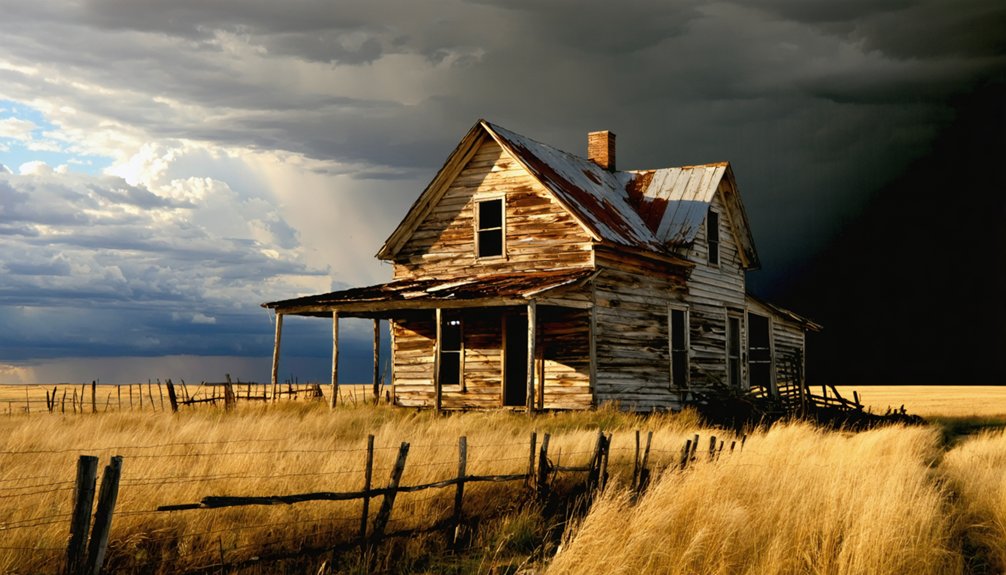
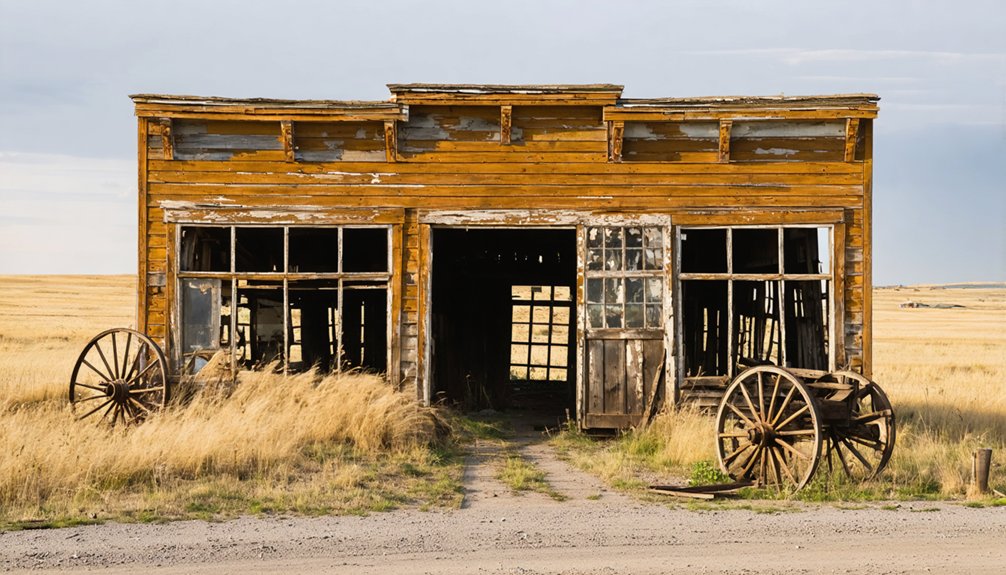
When you arrive at Bakerville, Colorado, you’ll find only skeletal remnants of structures that once supported a thriving silver mining community during the 1870s boom. Scattered artifacts and debris mark the site, offering tangible evidence of the town’s industrial past.
However, you must resist the urge to collect them, as removal is illegal and destroys the historical record. The site remains accessible via Stevens Gulch Road near Silver Plume, placing you within striking distance of Grays and Torreys peaks for a fuller appreciation of the region’s rugged geography.
Structural Ruins Still Standing
What remains at Bakerville, Colorado tells a quiet but compelling story of industrial ambition and swift abandonment. When you walk the site today, scattered timber foundations and collapsed walls speak directly to the region’s mining history, each beam a testament to the miners who carved ambition from mountain stone.
You’ll notice remnants of ore-processing structures half-reclaimed by alpine vegetation, their weathered forms holding remarkable detail despite decades of exposure.
Preservation efforts remain limited here, meaning the site stays raw and unmediated — exactly what freedom-seeking explorers appreciate. No interpretive signs sanitize the experience. You encounter history on its own terms.
Tread carefully, photograph deliberately, and resist the urge to disturb anything. What stands deserves to keep standing, silent and sovereign against the Rocky Mountain skyline.
Artifacts Left Behind
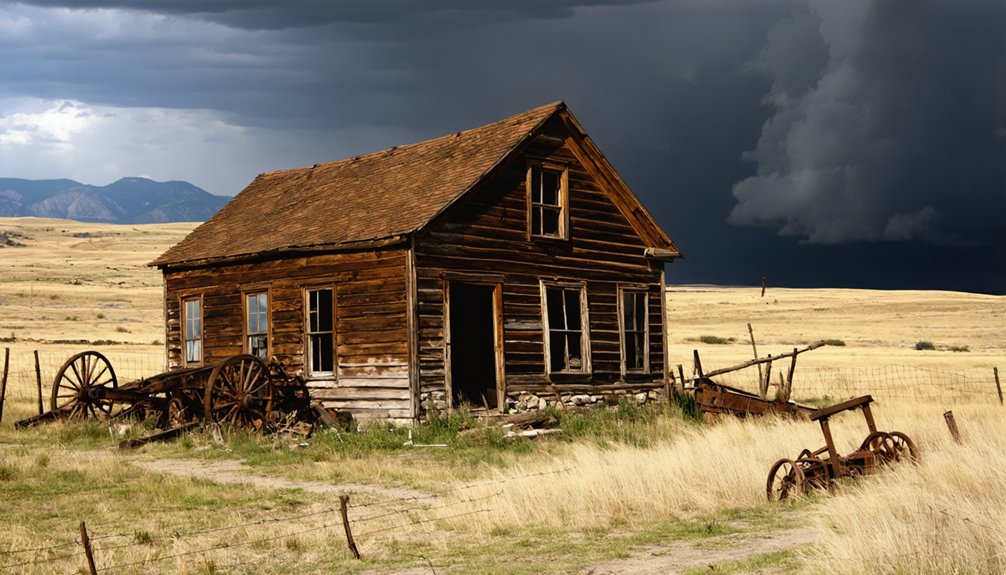
Scattered across the ground at Bakerville, Colorado, artifacts speak with an immediacy that no museum exhibit can replicate. You’ll encounter rusted mining equipment, shattered glass bottles, and twisted metal remnants that document daily survival during the silver boom. These historical artifacts connect you directly to laborers who carved meaning from unforgiving terrain.
Yet preservation challenges are severe here. Exposure to freeze-thaw cycles, erosion, and careless visitors continuously degrades what remains. Federal law prohibits removing any object, however small or seemingly insignificant. You must resist the temptation to pocket a nail or shard — that fragment carries irreplaceable historical DNA.
Photograph everything deliberately. Document spatial relationships between objects. Your restraint preserves this open-air archive for researchers and future explorers who deserve the same uncompromised encounter you’re experiencing now.
Current Site Accessibility
Three dirt roads and a cluster of decayed structural foundations define what greets you at Bakerville, Colorado today. You’ll navigate Stevens Gulch Road to reach these abandoned structures, remnants of the 1870s silver mining era that once drove ambitious men into these high alpine corridors.
The site’s historical significance becomes immediately tangible as you walk among collapsed timbers and scattered stone foundations.
Grays and Torreys Peaks tower above, providing dramatic geographic context for understanding why miners endured such harsh conditions here. You’re standing where an entire economic ecosystem once operated.
Access remains relatively open via I-70 near Silver Plume, but seasonal road conditions dictate your window for exploration. Prepare accordingly — rugged terrain rewards the deliberate traveler who respects both the landscape and its embedded history.
How Do You Get to Bakerville From South Dakota?
Before you map out your route, it’s worth knowing that Bakerville isn’t actually located in South Dakota — it’s a mining ghost town nestled in Clear Creek County, Colorado, near Silver Plume along Stevens Gulch Road.
If you’re departing from South Dakota, you’re looking at a westward journey of roughly 400 miles through the Great Plains into the Rockies.
Head southwest on I-90, then shift onto I-76 West into Colorado, connecting finally to I-70 West toward Silver Plume.
The ghost town legends surrounding Bakerville emerge from Colorado’s silver mining history of the 1870s, not the Black Hills.
Exit near Silver Plume and follow Stevens Gulch Road south toward Grays and Torreys peaks.
The ruins await those bold enough to chase authentic history across state lines.
When Is the Best Time to Visit Bakerville?
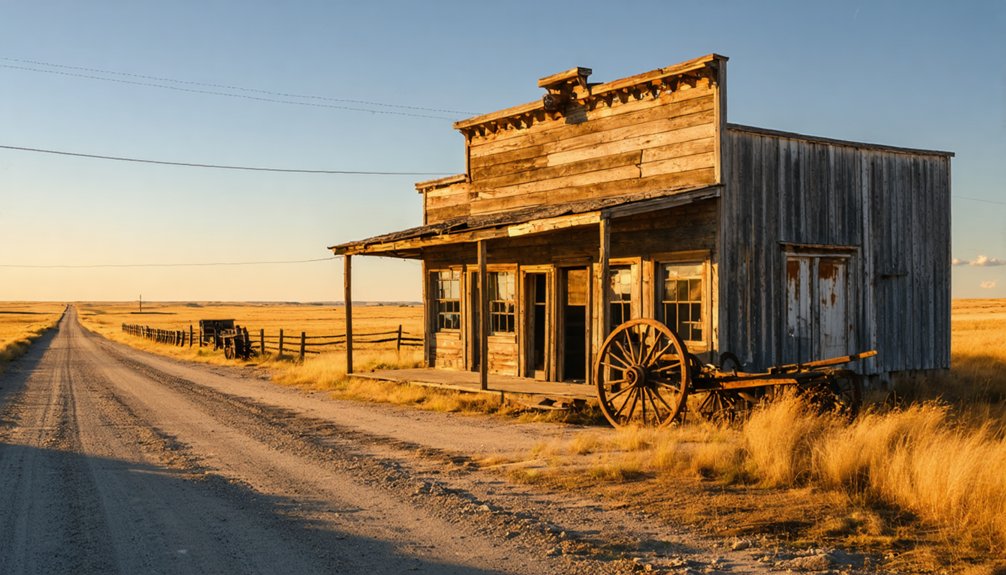
You’ll find summer the most accessible season for exploring Bakerville, as longer daylight hours and dry roads make traversing the remote terrain far more manageable.
Fall offers a compelling alternative, with cooler temperatures and dramatic foliage framing the site’s weathered remnants against vivid autumn color.
Winter, however, closes much of the surrounding landscape under heavy snow, rendering access treacherous and often impossible for standard vehicles.
Peak Summer Visiting Season
When should you plan your road trip to Bakerville? Summer, particularly June through August, offers the most accessible conditions for exploring this haunting remnant of frontier ambition. You’ll find longer daylight hours that reward thorough historical preservation efforts — photographing structural remnants, reading the landscape, absorbing the silence that replaced a once-thriving community.
Temperatures remain moderate, trails stay dry, and the surrounding Black Hills terrain reveals itself fully without winter’s obscuring snowpack. Local legends breathe most vividly during summer, when fellow travelers and regional historians frequent these sites, sharing oral histories passed through generations.
Arrive early morning to avoid afternoon heat and secure parking near trailheads. You’re not merely sightseeing — you’re bearing witness to lives lived at the edge of civilization’s westward push.
Fall Weather Advantages
Fall pulls something different from Bakerville’s bones. The summer crowds thin, temperatures drop into a bearable range, and the site breathes again. You’ll move through the remnants with sharper focus, reading the landscape without distraction. Fall light hits weathered wood differently — longer shadows, richer contrast, cleaner photographs.
Consider these fall advantages for your visit:
- Historical preservation efforts are more visible when vegetation recedes, exposing structural details
- Cooler temperatures let you explore longer without heat fatigue
- Reduced foot traffic means quieter, more intentional exploration
- Tourist amenities in nearby towns remain accessible before winter closures
You’re not just passing through a dead town — you’re reading a chapter most visitors skip. Fall gives you the margins.
Winter Access Challenges
Winter closes Bakerville hard. Snow buries Stevens Gulch Road under several feet of impassable accumulation, cutting you off from the site entirely. You can’t navigate those elevation grades once ice sets in, and avalanche risks make any attempt genuinely dangerous.
The historical preservation of these fragile remnants depends partly on winter’s isolation — fewer visitors mean less unintentional damage during vulnerable freeze-thaw cycles.
Yet winter carries its own haunting pull. Local legends suggest the gulch holds sounds that carry differently through cold air, as though the abandoned structures breathe.
Still, romanticizing access isn’t worth the risk. Road closures typically run November through late April, depending on snowpack. Check current Colorado Department of Transportation conditions before committing to any late-season departure.
Freedom means knowing when terrain commands respect.
What Should You Pack for a Ghost Town Road Trip?
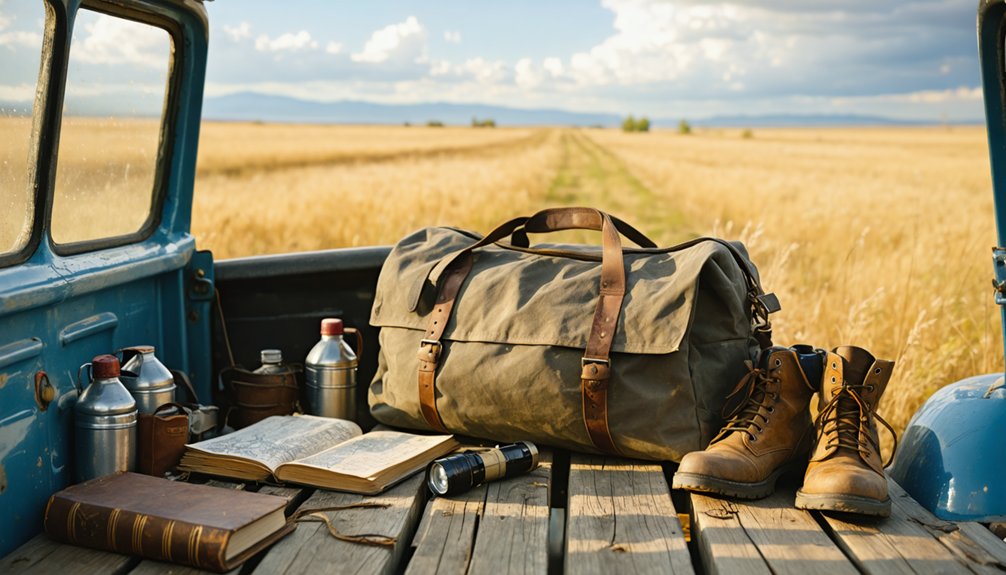
Packing smart separates a memorable ghost town road trip from a miserable one. Before you hit the open road toward Bakerville, assemble your gear deliberately. Freedom favors the prepared traveler, and remote ghost town terrain punishes the negligent.
Carry these essentials:
- Water and local cuisine provisions — desolate stretches offer no resupply points
- Sturdy footwear and sun protection — uneven debris fields demand ankle support and UV defense
- First aid kit and flashlight — abandoned structures harbor unexpected hazards after dark
- Travel insurance documentation — remote locations amplify medical evacuation costs dramatically
You’ll thank yourself for securing travel insurance before departure; emergencies don’t announce themselves courteously.
Sampling local cuisine along your route rewards cultural curiosity while breaking monotonous highway miles. Pack deliberately, travel confidently, and leave only footprints behind.
Which South Dakota Ghost Towns Belong on Your Route?
While Bakerville anchors your Colorado itinerary, South Dakota rewards the historically curious traveler with dozens of ghost towns scattered across its Black Hills terrain. You’ll find mining history etched into every abandoned shaft and crumbling foundation across Custer, Keystone, and Barren.
Each site carries local legends that transform ordinary ruins into living narratives of ambition, hardship, and eventual silence.
Venture through Custer State Park’s forgotten settlements, where nineteenth-century prospectors once chased gold with reckless conviction. Keystone’s remnants whisper stories of boomtown excess and sudden collapse. Barren offers perhaps the rawest experience, its skeletal structures standing defiantly against prairie winds.
Chart your route deliberately, cross-referencing historian-verified inventories against current accessibility maps. You’re not merely sightseeing — you’re traversing corridors where American frontier mythology became lived, documented reality.
What Rules Apply When Visiting Ghost Town Sites?
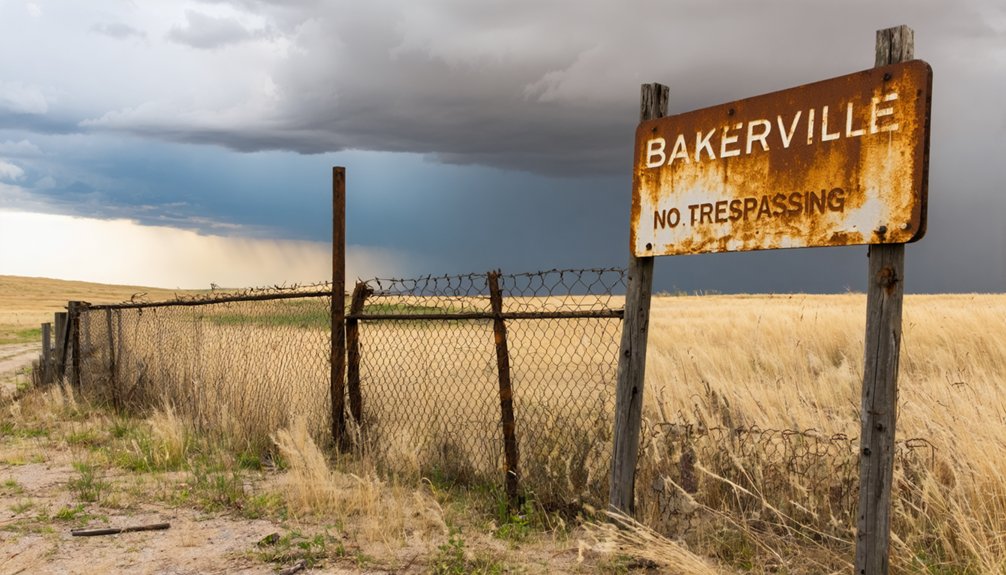
Exploring ghost towns carries legal and ethical responsibilities that shape every decision you make on-site. Historical preservation and visitor safety aren’t bureaucratic obstacles — they’re the framework that keeps these fragile sites accessible for future explorers like you.
Follow these essential rules:
- Photograph, don’t plunder — removing artifacts, bottles, or debris is illegal and permanently erases history
- Respect private property boundaries — many ghost town parcels are privately owned; trespassing violates both law and trust
- Carry safety essentials — water, first aid kits, and sturdy footwear protect you in remote, unstable terrain
- Leave no trace — your footprints should be the only evidence of your visit
These standards preserve both the integrity of each site and your freedom to keep exploring independently.
Frequently Asked Questions
Are Guided Tours Available for Ghost Towns in the Black Hills Region?
Yes, you’ll find guided exploration available for select Black Hills ghost towns. These tours champion historical preservation, letting you uncover forgotten frontier stories while roaming freely through hauntingly evocative landscapes that whisper tales of South Dakota’s storied, untamed past.
How Many Ghost Towns Are Officially Documented Across South Dakota Today?
Like echoes frozen in time, you’ll find 11 ghost towns officially documented across South Dakota today. These historical preservation treasures serve as compelling tourist attractions, letting you roam freely through the state’s mesmerizing, abandoned past.
Can Children Safely Explore Remote Ghost Town Sites During Road Trips?
Yes, children can embrace remote exploration safely if you’re vigilant. Prioritize child safety by supervising every step, packing first aid essentials, ensuring sturdy footwear, and teaching respectful boundaries—transforming these haunting, historically rich landscapes into unforgettable, responsibly adventurous family discoveries.
Are There Entrance Fees Required to Visit South Dakota Ghost Town Sites?
Like open gates to history, most South Dakota ghost town sites don’t require entrance fees. You’ll find fee exemptions common, though some managed Black Hills sites may charge nominal access costs—always verify before you roam freely.
What Nearby Accommodations Exist Close to Colorado Ghost Town Destinations?
You’ll find charming lodges near Silver Plume and Georgetown, Colorado, where historic preservation thrives amid local legends. These mountain retreats offer you authentic freedom—rustic cabins and boutique hotels nestled among breathtaking peaks, perfectly positioning your exploration of Colorado’s storied mining ghost towns.
References
- https://en.wikipedia.org/wiki/List_of_ghost_towns_in_South_Dakota
- https://www.youtube.com/watch?v=POtU2hFPQsU
- https://blackhillsatvdestinations.com/ghost-towns/
- https://en.wikipedia.org/wiki/Category:Ghost_towns_in_South_Dakota
- https://www.ghosttowns.com/states/sd/sd.html
- https://www.atlasobscura.com/things-to-do/south-dakota/ghost-towns
- https://www.youtube.com/watch?v=_0WNYsFLSLA
- https://kimsloans.wordpress.com/2024/06/13/cruisin-colorados-ghost-towns/
- https://www.sdhspress.com/journal/south-dakota-history-2-2/some-black-hills-ghost-towns-and-their-origins/vol-02-no-2-some-black-hills-ghost-towns-and-their-origins.pdf
- https://blackhillsatvdestinations.com/pioneers/