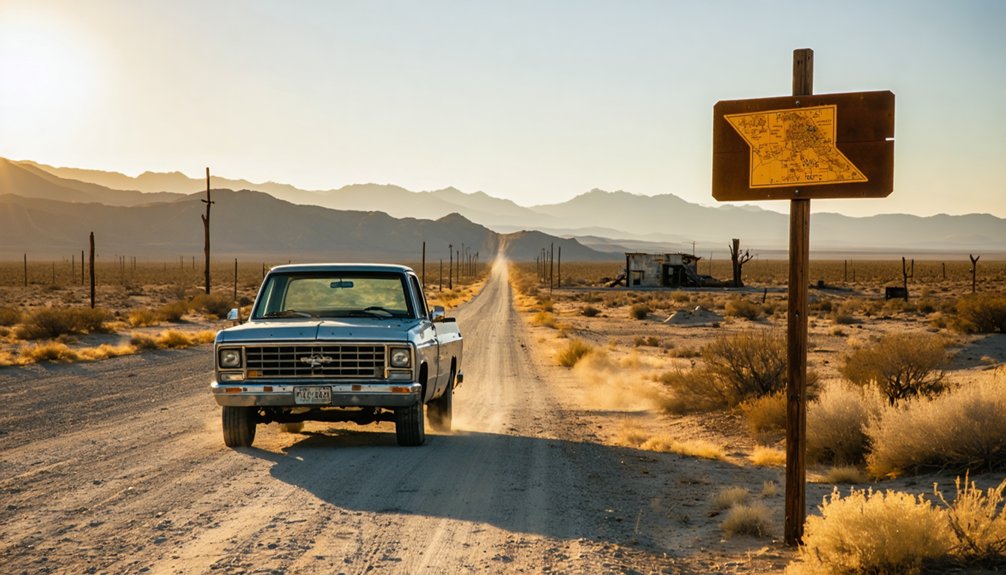
You’ll need a high-clearance 4WD vehicle to navigate the rutted backcountry roads leading to Balaklava Hill, where a privately-owned sawmill and converted general store stand as ghostly remnants of a once-thriving 200-resident Gold Rush community. The remote Nevada County site sits deep in Sierra Nevada forest, requiring landowner permission before you explore. Pack essentials for unpredictable conditions, and prepare for a journey through dense wilderness where miners once extracted 663 kilograms of gold before abandoning their dreams to nature’s reclamation.
Key Takeaways
- Balaklava Hill is a ghost town in Nevada County, California, originating from the 1800s Gold Rush era.
- Only a deteriorating sawmill and converted general store remain from the once 200-resident community.
- The property is privately owned, requiring permission from landowners before exploring the historic site.
- Access requires a high-clearance, four-wheel-drive vehicle due to challenging backcountry road conditions.
- Miners extracted 663 kilograms of gold before veins depleted, causing the town’s eventual abandonment.
The Mysterious Origins of Balaklava Hill
When you first hear the name Balaklava Hill, you might picture tumbleweeds rolling past weathered wooden buildings in California’s gold country. You’d be half right. This Nevada County ghost town, sitting four miles northeast of Quaker Hill, sprang up during the mid-1800s Gold Rush when prospectors carved communities from wilderness.
But here’s where it gets intriguing: the name itself echoes a Crimean port with roots in Ancient Greek influences, where settlements thrived as commercial centers before the Genoese trade empire built their Black Sea dominion. Whether California miners consciously chose this exotic reference or stumbled upon it remains unclear.
What’s certain: Balaklava Hill represents that quintessential American impulse to venture into untamed territory, stake your claim, and build something from nothing.
How a Lumber Mill Built a Community
How does a single sawmill transform wilderness into civilization? You’ll discover the answer at Balaclava, where the Richards family’s entrepreneurship turned water power into prosperity. After purchasing the mill in 1868, they created more than lumber—they built freedom through commerce. Their operation supplied markets from Buffalo to Montreal while anchoring a thriving community of stores, hotels, and forges.
But liberty came with responsibility. When the mill violated early environmental regulations by dumping sawdust downstream in 1903, courts sided with progress over pollution. The Richards family adapted, installing a massive burner that still stands today.
You’ll find this record of resilient family entrepreneurship at location BR0121, where water once powered dreams and determination rebuilt after fire destroyed everything in 1915.
When Gold Fever Gripped the Region
On January 24, 1848, a foreman’s glance into the American River’s tailrace at Sutter’s Mill changed everything. By March, Samuel Brannan’s public announcement transformed California from a sleepy territory of 7,500 into a magnet pulling 300,000 fortune-seekers.
Gold rush demographics reflected unprecedented migration—prospectors sailed from Australia, trekked from Chile, crossed from China, and abandoned East Coast cities for California’s promise.
This gold rush workforce diversity built communities overnight. You’ll find remnants of stores, homes, and schools that sprouted around streambeds where miners panned for nuggets. The fever accelerated statehood by 1850, turning wilderness into civilization within months.
At Balaklava Hill, between 1866 and 1881, miners extracted 663 kilograms of gold from 85,804 tons of quartz—the kind of productivity that justified leaving everything behind.
Why These Settlements Became Ghost Towns
You’ll notice the same patterns repeated across every ghost town in this region—mines that ran dry after their initial gold strikes, leaving behind empty promises and crumbling foundations. The Ratcliff Mine extracted 15,000 tons of ore between 1898 and 1903 before the veins gave out, and without rail connections to transport goods or sustain the economy, these remote settlements had no backup plan.
When the gold disappeared, so did the population, turning thriving communities of 500 residents with hotels and saloons into windswept ruins within two decades.
Resource Depletion and Exhaustion
When you stand among California’s silent ghost towns, you’re witnessing the inevitable aftermath of communities that consumed their reason for existence. Balaclava’s sawmill once churned out one million board feet weekly until surrounding forests vanished by the mid-1950s. Ballarat’s 500 residents scattered after two decades stripped the Panamint Mountains of gold. Oil towns like Mentry’s settlement thrived from 1875 until wells ran dry in the 1920s, leaving empty bunkhouses and silent machine shops.
Policy failures accelerated some collapses—the 1884 hydraulic mining ban shuttered operations at Malakoff Diggins overnight. Yet technological advancements proved equally decisive. When railroads rerouted through Redding, Old Shasta’s brick commercial district emptied within years. These weren’t gradual declines—they were resource-driven evacuations you can still trace today.
Economic Collapse of Mining
The gold veins that birthed Balaklava Hill’s bustling encampment during the 1850s wouldn’t sustain it forever. By the 1860s, surface deposits had vanished, forcing miners deeper underground where profits couldn’t match extraction costs. You’ll find that changing mining technologies required capital investments these small operators simply didn’t possess—hydraulic equipment and stamp mills belonged to wealthy corporations, not independent prospectors.
Global economic factors delivered the final blow. When metal prices plummeted in the 1870s, marginal operations like Balaklava Hill became economically unviable overnight. The settlement’s remote location meant transporting ore cost more than it yielded. Miners packed their belongings and chased opportunities elsewhere, leaving behind wooden structures that would slowly surrender to Calaveras County’s elements—a legacy to freedom’s restless pursuit.
Transportation and Isolation Issues
- Railroad rerouting through Poverty Flats isolated nearby Old Shasta, stranding brick buildings and residents
- Rugged dirt roads required constant maintenance that abandoned towns couldn’t sustain
- Mountain foothills forced miners into volcanic caliche cave homes, cut off from supply chains
- Canyon erosion from hydraulic operations created impassable barriers to overland transport
Without reliable access, even gold-rich settlements became prisons their inhabitants eventually abandoned.
What Remains at the Abandoned Sites Today
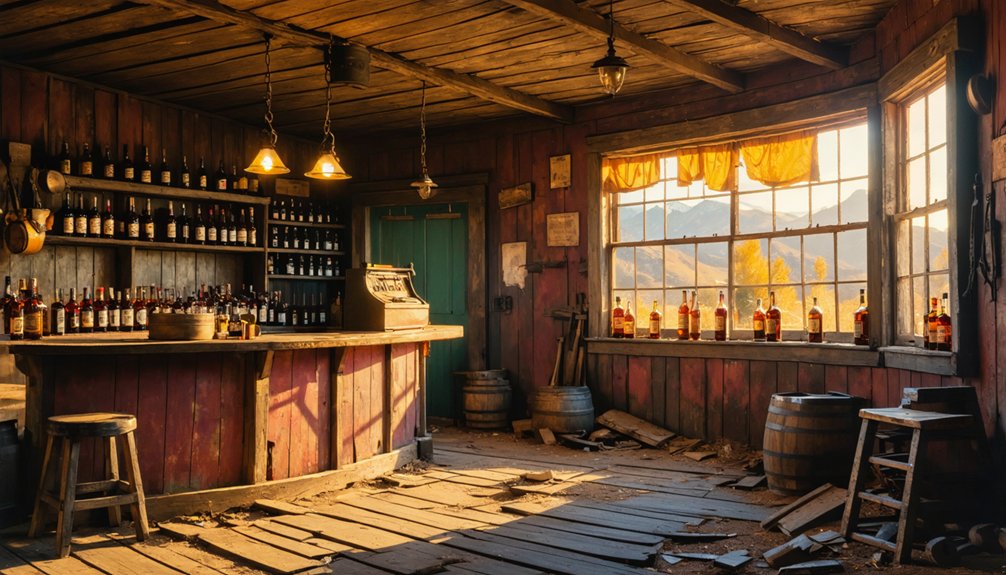
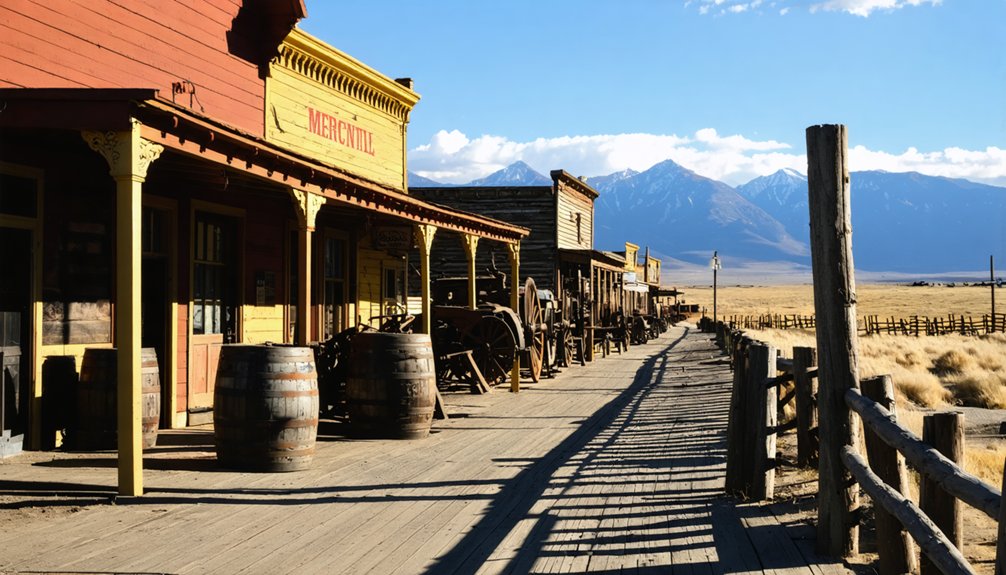
Little remains standing of Balaklava Hill’s once-thriving community of 200 residents. You’ll find the privately-owned sawmill still standing but deteriorating without preservation efforts—its owners rejected restoration initiatives 15 years ago. The general store’s been converted into a hunting camp after its collapsing attachment was torn down.
The blacksmith shop’s either decayed or been dismantled entirely, while two hotels burned down or simply rotted away.
These crumbling structures sit on private property, meaning you’ll need permission before exploring. The sawmill owner lives in the nearest building—stop there first. Trespassing risks triggering complete demolition of remaining sites. While a few occupied homes dot the surrounding area, the ghost town’s core stands empty. You’re free to chat with nearby residents who might share access details or historical insights.
Getting There: Routes and Road Conditions
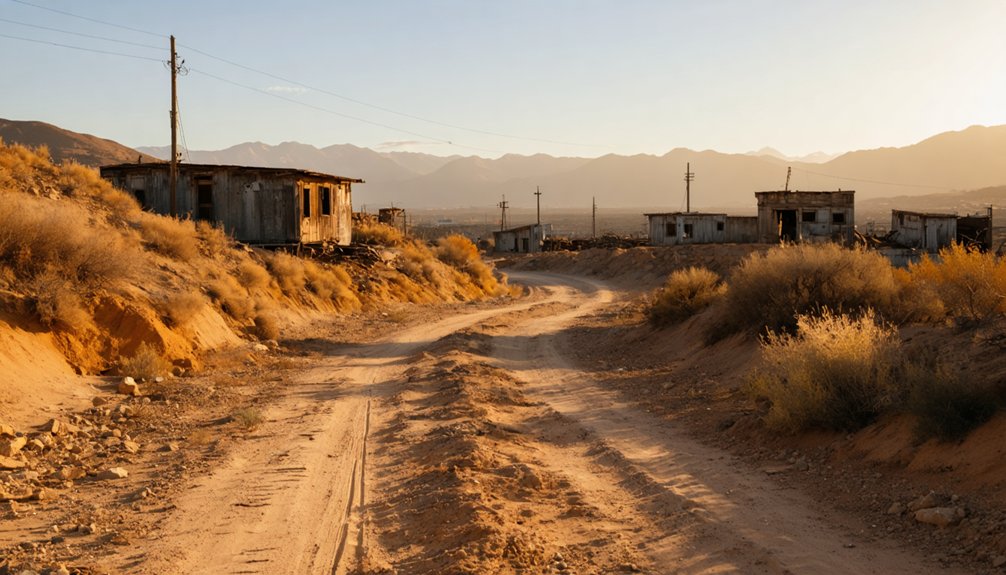
Reaching Balaklava Hill requires traversing Nevada County’s backcountry network, where pavement gives way to gravel and dirt approximately 20-30 miles from Nevada City. You’ll find the trailhead roughly 4 miles northeast of Quaker Hill, accessible via primitive mining roads that demand high-clearance vehicles—preferably with 4WD capability.
Essential Route Considerations:
- Seasonal accessibility challenges intensify during winter months when snow blankets higher elevations, making passages impassable without chains
- Cell service vanishes miles before arrival; download offline maps and inform someone of your itinerary
- Fuel up completely in Nevada City—no services exist beyond civilization’s edge
- Overnight camping opportunities abound throughout surrounding BLM lands, offering dispersed sites for those seeking extended exploration
Pack emergency supplies. These remote roads don’t forgive unpreparedness, but they reward self-reliant adventurers with solitude.
Essential Tips for Visiting Remote Ghost Towns
Abandoned structures beckoning from hillsides carry invisible dangers that demand respect and preparation. You’ll need proper respiratory protection—N95 respirators minimum—against mold and asbestos lurking in ghost town decay patterns.
Crumbling relics hide toxic threats in their shadows—respiratory protection isn’t optional when exploring decay’s domain.
Pack a headlamp, first aid kit, sturdy boots, and gloves before approaching any site. Test floors carefully; abandoned architectural elements often hide rotted boards and unstable foundations beneath weathered surfaces.
Walk the exterior first, identifying safe exits and collapsed sections. Never explore solo—share your location and return timeline with trusted contacts. Carry offline maps, marking chalk, and an air horn for emergencies.
Skip touching artifacts or disturbed soil; unknown contaminants persist decades after abandonment. Keep windows up when driving dusty roads, and always maintain a clear escape route.
Frequently Asked Questions
Are There Any Guided Tours Available for Balaklava Hill Ghost Town Sites?
No guided tours availability exists for Balaklava Hill—you’ll explore independently. However, private tour operators offer customizable ghost town adventures in nearby Death Valley and Bodie, letting you craft your own authentic Wild West discovery experience.
What Permits or Permissions Are Needed to Explore Private Property Ruins?
Gaining access to forgotten places starts with respect. You’ll need to obtain landowner permission through county records, then research local trespass laws. Document everything—written consent protects your freedom to explore while honoring property rights and avoiding legal trouble.
Can I Camp Overnight Near the Ghost Town Locations?
You’ll find dispersed BLM camping within 14-day limits near most ghost towns. However, campfires permitted only with California permits, and water availability concerns demand you pack sufficient supplies. Always camp 200 feet from water sources.
What Cell Phone Coverage Exists in These Remote Death Valley Areas?
Cell coverage crashes considerably in Death Valley’s remote reaches. You’ll find limited network coverage throughout—Verizon offers your best cellular data connectivity at 30% availability. Expect spotty signals near ghost towns, with Furnace Creek and Stovepipe Wells providing occasional connections.
Are There Any Nearby Towns With Lodging and Gas Stations?
You’ll find nearest motels in Healdsburg or Sebastopol, about an hour away, with available amenities like pools and breakfast. Gas stations dot Highway 101, letting you fuel up before venturing into Balaklava Hill’s wild, remote terrain.