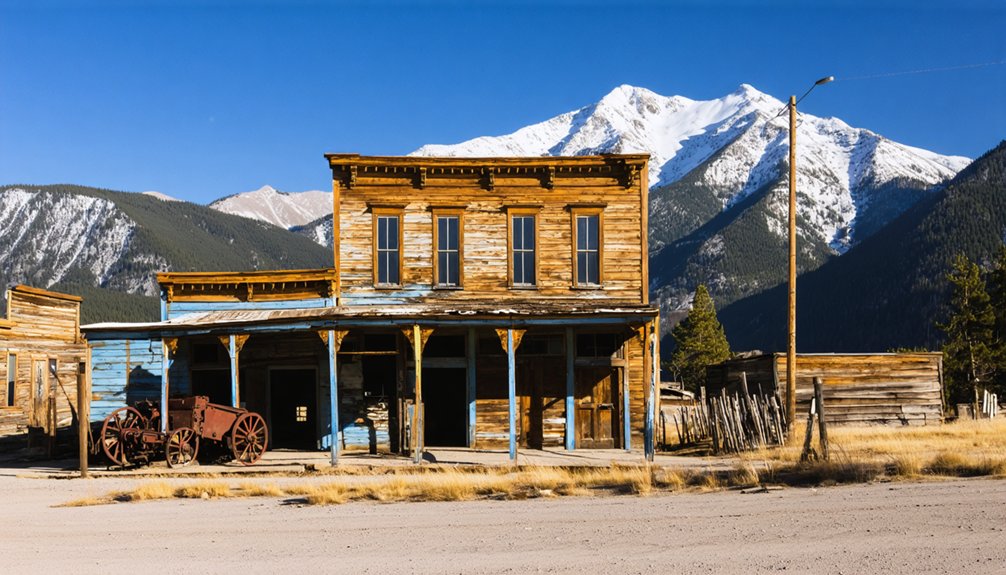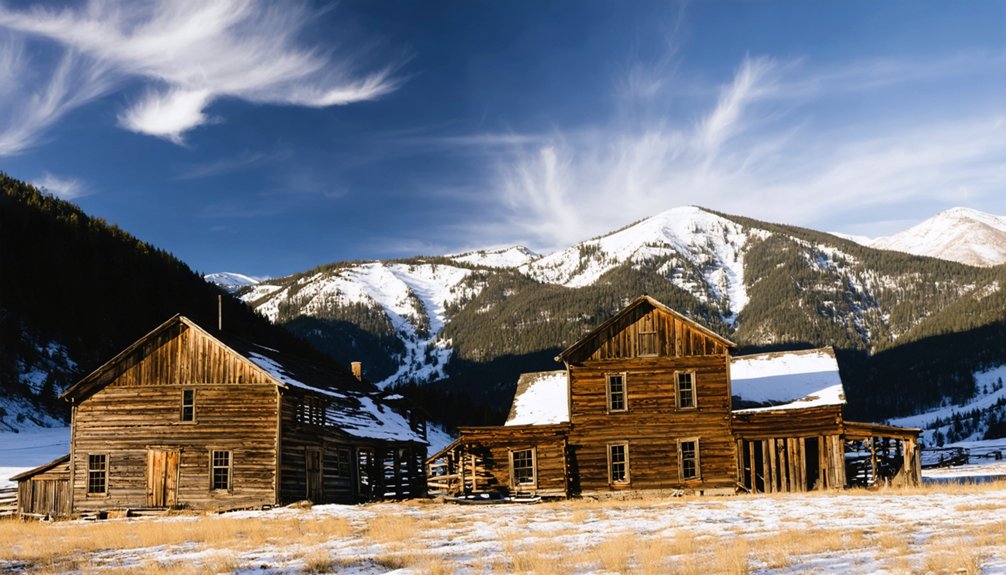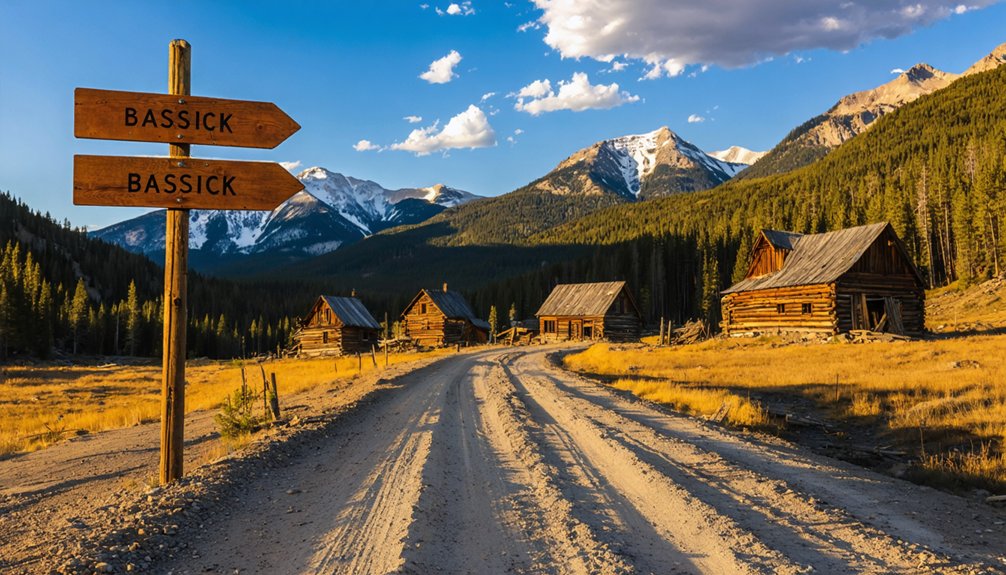
Drive seven miles east from Westcliffe on dirt roads that’ll test your vehicle’s clearance as you climb to 9,111 feet, where Bassick City‘s crumbling stone foundations and rusted ore-processing machinery whisper tales of an 1877 silver rush. You’ll find collapsed mine shafts marking 1,700-foot labyrinths, rainbow-hued tailings piles, and weathered timber frames against the Sangre de Cristo Range. Pack supplies, inform someone of your route, and time your visit for summer when snow won’t block access to this remarkably preserved archaeological site that holds engineering secrets beneath its surface.
Key Takeaways
- Located 7 miles east of Westcliffe at 8,986 feet elevation, accessible via dirt roads approximately 90 minutes from Colorado Springs.
- High-clearance vehicles recommended year-round; summer visits ideal to avoid snow and mud on challenging mountain terrain.
- Explore 1877 silver mining remnants including the Bassick mill framework, stone foundations, and a collapsed 1,700-foot shaft.
- Site features authentic 1880s structures, rusted machinery, rainbow-hued tailings piles, and National Register-eligible archaeological elements.
- Bring adequate supplies, inform someone of your itinerary, and respect the fragile historical and ecological integrity.
Getting to Querida: Routes and Road Conditions in Wet Mountain Valley
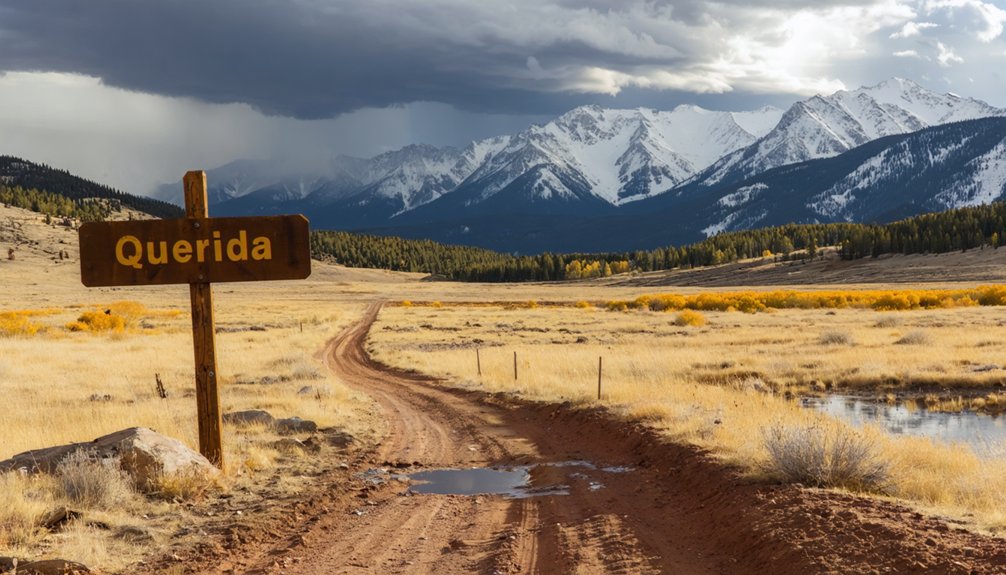
Nestled at 8,986 feet on the eastern edge of Wet Mountain Valley, Querida beckons adventure seekers willing to venture beyond Colorado’s well-traveled corridors. You’ll reach this ghost town via rural dirt roads stretching seven miles east from Westcliffe, the valley’s commercial hub.
Seasonal variability shapes your journey—winter brings snow-dusted peaks towering to 14,000 feet, while 320+ sunshine days annually guarantee reliable access most months.
The landscape diversity proves striking as you navigate between the Wet Mountains and Sangre de Cristo Range. From Colorado Springs, you’re 90 minutes away; Denver requires three hours. These low-traffic backroads wind through open ranchland and meadows, perfect for those craving solitude. The valley floor sits at 7,800 feet, maintaining that semi-arid charm with minimal development and zero light pollution.
The Rise and Fall of the Bassick Mine: A $2.5 Million Silver Legacy
Rising from Bassick Hill in 1877, the mine that would dominate Custer County’s Rosita Hills District emerged through ore-mineral discoveries at 9,111 feet elevation. You’re standing where mining engineering innovations pushed shafts beyond 1,700 feet—remarkable depth for that era—extracting gold and silver from steeply plunging breccia pipes cutting through trachyte rock.
Between 1885 and 1893, miners pulled 6.8 million grams of silver from these volcanic veins. The Bassick Mining Company’s mill processed high-grade ore while fluming tailings directly into the creek below, creating environmental impacts that required federal cleanup in 2002.
What Remains: Exploring the Archaeological Treasures of This Ghost Town
Scattered across Bassick Hill’s windswept slopes, the skeletal remains of Colorado’s silver boom era tell stories through crumbling stone foundations and rusted machinery frozen in time. You’ll discover the Bassick mill’s haunting framework, where gold ore once flowed through now-silent processing channels.
As you venture further into the abandoned mining town, the atmosphere thickens with the whispers of the past, exploring bassick city ghost stories that linger among the shadows. Each crumbling structure hides tales of forgotten lives and restless spirits, inviting curious souls to uncover the truths buried within these haunted ruins. Keep your senses sharp, for the echoes of laughter and sorrow may resonate long after the sun sets over Bassick Hill.
The collapsed mine shaft—marking an underground labyrinth exceeding 1,700 feet—sits exposed within the townsite like an open wound in the earth.
Original homes from the 1880s dot the landscape, showcasing resident architecture that sheltered 500 souls during the boom years. Rainbow-hued soil piles from mining operations create an otherworldly palette across the terrain. This ghost town earned National Register of Historic Places eligibility, making it the region’s first extensively documented mining settlement—your chance to walk through authenticated history.
Understanding the Hidden Chimney and Colorful Mining Remnants
Beneath your feet at Bassick lies a mysterious subterranean chimney—an invisible memorial to the ingenuity of 1870s mining engineers who carved elaborate ventilation systems deep into the mountain’s core. This hidden structure, distinct from surface chimneys you’ll photograph, adds archaeological depth to your exploration.
Below ground, 1870s engineers left their mark—a ventilation chimney invisible to modern eyes yet vital to understanding Bassick’s archaeological complexity.
Understanding underground mining complexes reveals how miners extracted $2.5 million in silver and gold while creating the colorful soil remnants you’ll discover scattered across the landscape.
These vibrant earth piles aren’t random—they’re tailings from ore processing, dumped into nearby creeks and piled around extraction sites. Each hue tells a chemical story of what miners sought. Appreciating environmental impacts becomes visceral here, where National Register-eligible remnants showcase both triumph and consequence.
You’re witnessing raw history, unfiltered and unapologetic.
Essential Tips for Visiting Remote Custer County Ghost Towns
Before you point your vehicle toward Querida’s weathered ruins, understand that this 5.5-mile journey east from Silver Cliff on Highway 96 demands respect for Custer County’s unforgiving terrain. Infrastructure challenges define these abandoned settlements—collapsed mine shafts lurk beneath overgrown paths, and crumbling structures teeter on unstable foundations. You’ll navigate year-round 2WD roads, though high-clearance vehicles handle rough sections better.
Summer visits sidestep snow and mud that transform alpine routes into impassable quagmires.
Pack water, snacks, and maps for these service-free zones where cell signals vanish. Ecological considerations matter: haul out waste, stick to established trails, and leave artifacts undisturbed. Sturdy boots protect ankles on uneven ground around decaying cabins. Check weather forecasts—mountain conditions shift without warning. Inform someone of your itinerary before venturing into these silent memorials to Colorado’s mining past.
Frequently Asked Questions
What Does the Name “Querida” Mean and How Is It Pronounced?
“Querida” means “beloved” in Spanish—a romantic term usage you’ll pronounce as “keh-REE-dah” with a rolled R. Pronunciation variations exist regionally, but this endearing word consistently expresses deep affection across Spanish-speaking cultures, embodying heartfelt connection.
When Did the Querida Post Office Operate Under That Name?
The Querida post office operated under that name from 1880 to 1906—a continuous 26-year timeline serving silver miners chasing fortune. You’ll find no office name history changes recorded, just one unbroken run through boom and inevitable bust.
Who Founded Bassickville and Discovered the Bassick Mine?
Edmund Chase Bassick, among early prospectors and notable mining figures, founded Bassickville and discovered the Bassick Mine in 1877. You’ll find this former sailor stumbled upon silvery stones while walking his daily route to work at Centennial Mine.
Is Querida Eligible for the National Register of Historic Places?
Querida’s historic preservation status remains uncertain without formal evaluation, though its architectural significance of remaining structures could qualify it. You’ll need verification that it’s retained integrity and meets National Register criteria for ghost town properties over 50 years old.
What Other Ghost Towns Are Near Querida in Colorado?
You’ll find Rosita just 2.1 miles south, one of several old mining camps near Querida. Silver Cliff sits 5.5 miles east as your base camp. While abandoned railroad stops around Querida have vanished, these ghost towns remain accessible for exploration.