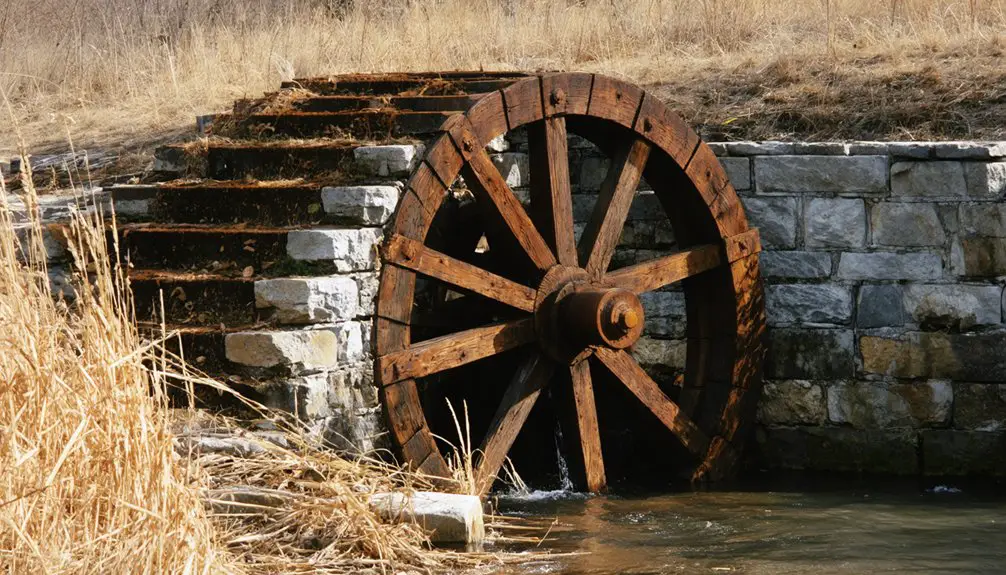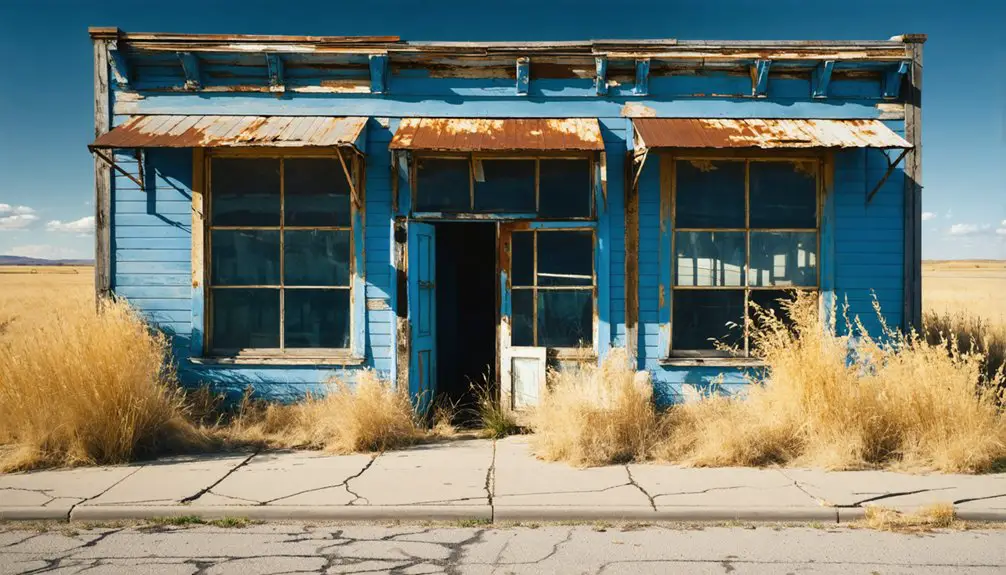
Navigate to Bayneville at coordinates 37°42.098’N, 99°53.628’W near Reinert, roughly 5 miles south-southeast of regional markers along Sedgwick County’s southern boundary. You’ll need GPS, offline maps, and sturdy boots to traverse private farmland where only foundation stones and earth depressions hint at this vanished 1854 Free State settlement. Cellular service disappears in these undeveloped areas, so download your route beforehand. Consider extending your journey into a ghost town loop covering Sedgwick County’s 100+ abandoned post office locations, where forgotten communities reveal Kansas’s hidden territorial history.
Key Takeaways
- Navigate to coordinates 37°42.098’N, 99°53.628’W near Reinert, approximately 5 miles south-southeast from regional markers.
- Download offline maps before departure as cellular coverage is unreliable in the undeveloped terrain surrounding Bayneville.
- Pack essential supplies including water, sunscreen, sturdy boots, and historical maps for traversing overgrown rural sites.
- Research property boundaries beforehand since only unmarked ruins on private farmland remain with uncertain town boundaries.
- Combine with Sedgwick County’s southern ghost town loop covering 15 abandoned settlements for an efficient half-day journey.
The Rise and Fall of Bayneville: A 50-Year Boom Town
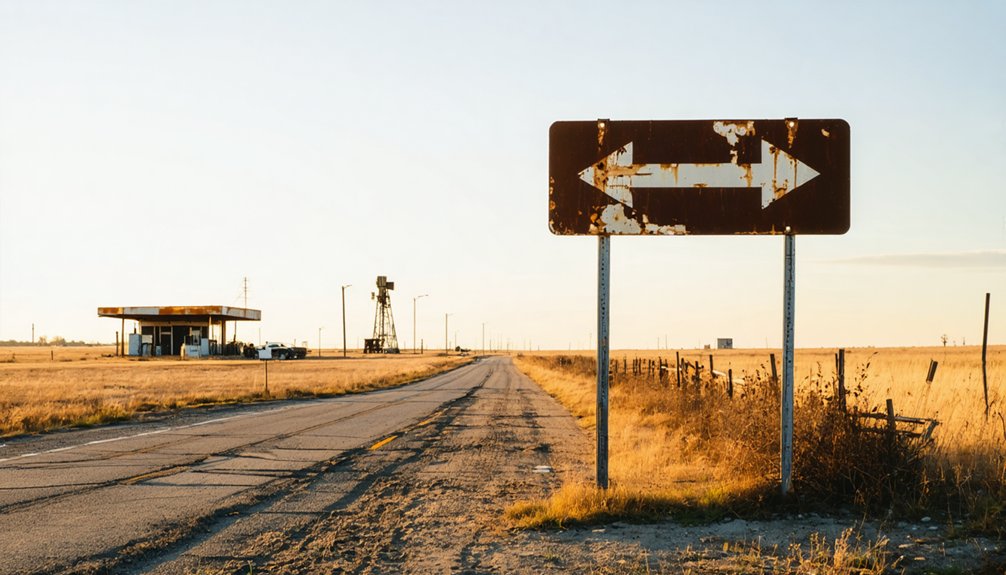
In 1854, when the Kansas-Nebraska Act tore open the question of slavery in America’s western territories, a remarkable alliance took shape along the Missouri River.
You’ll discover how Wyandot Indians, displaced from Ohio, partnered with Free Staters to establish a haven on rocky limestone bluffs. This integrated community welcomed white abolitionists, African-Americans seeking freedom, and Native settlers who shared a vision of opportunity.
What Remains at the Bayneville Site Today
Time has nearly erased Bayneville from the Kansas landscape, leaving only whispered traces of its integrated past. You won’t find preserved buildings standing sentinel over the prairie—those vanished decades ago. Instead, you’ll discover unmarked ruins scattered across private farmland, their locations known only to longtime residents and determined explorers.
Foundation stones peek through tall grass where businesses once thrived. Depressions in the earth mark former cellar holes and streets that connected a community. The exact boundaries remain uncertain, lost to time and cultivation. If you’re searching for this ghost town, you’ll need local guidance and permission to access the sites. What remains exists more in collective memory than physical form, making Bayneville one of Kansas’s most elusive historical mysteries.
The history of Reamsville, Kansas is intertwined with the stories of those who lived and worked there, shaping the landscape long before it was forgotten. Local legends speak of vibrant gatherings and the spirit of community that once filled the air, now only echoed in the whispers of the wind. Exploring these remnants allows us to connect with a past that, while fading, still beckons to those curious enough to seek it out.
Getting There: Directions and Access Routes
Finding Bayneville requires more determination than most Kansas ghost towns, as this vanished settlement sits at 37°42.098’N, 99°53.628’W along the south county line near another forgotten community called Reinert. You’ll navigate approximately five miles south-southeast from regional markers, but rural road conditions demand serious preparation—these aren’t maintained tourist routes. GPS navigation needs become critical since Bayneville appears only in historical records and Sedgwick County GIS mapping layers, not modern signage.
Your approach combines Kansas highway corridors with county boundary routes, following the path where railroads once connected forgotten towns like Leanna and Miley. Sedgwick County road networks provide access, though you’re venturing into undeveloped terrain where self-reliance matters. Download offline maps beforehand; cellular coverage proves unreliable where civilization surrendered decades ago.
Creating a Multi-Stop Sedgwick County Ghost Town Loop
Because Sedgwick County harbors over 100 former post office locations and dozens of abandoned settlements, you’ll craft a strategic route connecting the most accessible and historically significant sites. The southern loop encompasses 15 ghost towns from Iowaville to Wichita, while the northern circuit covers 12 locations in the county’s northwest quadrant. Historic photographs showcase ghost town decline, revealing how Wichita’s expansion absorbed these once-thriving communities.
Ideal touring route options include:
- Southern expedition: Bayneville (7:14 marker), Peck, Clonmel, and Viola create an efficient half-day journey
- Northern agricultural circuit: Furley’s substantial church ruins and bank vault, Greenwich’s cemetery, and Sundale’s remnants
- Railroad heritage path: Anness and Clonmel sites following historic rail corridors
- Cemetery documentation: Maple Grove and Greenwich burial grounds preserve community histories
Essential Tips for Exploring Kansas Ghost Town Sites
Successful ghost town exploration demands preparation that goes beyond plotting GPS coordinates on your dashboard screen. Before venturing into Kansas’s abandoned settlements, research property boundaries to avoid trespassing laws—many former townsites now sit on private land.
Bring historical maps and photographs to document the town’s former layout, helping you identify where Main Street once bustled or the schoolhouse stood. Pack water, sunscreen, and sturdy boots for traversing overgrown foundations and prairie grass.
Cell service often vanishes in remote locations, so download offline maps beforehand. Respect what remains: photograph without disturbing artifacts, and leave structures untouched. These forgotten places offer unmatched freedom to wander through history, but preserving them safeguards future adventurers’ ability to experience that same raw authenticity.
Frequently Asked Questions
Are There Any Restaurants or Gas Stations Near Bayneville?
You won’t find local gas stations in Bayneville itself, but nearby dining options await in Chase County. Head to Strong City’s Ad Astra for gourmet burgers, or explore Hays House Restaurant for authentic Flint Hills cuisine and freedom-seeking adventures.
What Photography Equipment Works Best for Ghost Town Documentation?
Want to capture Bayneville’s haunting essence? You’ll need a mirrorless camera with high ISO capability, a wide angle lens for expansive decay, and tripod stability for those long exposures that reveal every forgotten shadow and detail.
Do I Need Permission to Access the Bayneville Site?
You’ll need permission from private landowners before exploring Bayneville’s remnants. Kansas trespassing laws protect property rights, so research ownership beforehand. Contact local historical societies—they’ll often connect you with landowners who welcome respectful visitors documenting these vanishing landscapes.
What Time of Year Offers the Best Weather for Visiting?
Fall season offers you’ll find the best weather for exploring Bayneville’s ruins. You’ll enjoy mild temperatures between 45-71°F, clearer skies, and comfortable conditions perfect for wandering freely through abandoned structures without summer’s oppressive heat or winter’s harsh bite.
Are There Any Safety Concerns Like Snakes or Wild Animals?
You’ll face potential wildlife threats like rattlesnakes in summer months and coyotes year-round. Extreme weather conditions—sudden storms and temperature swings—pose greater risks than animals. Stay alert, bring water, and you’ll explore safely on your terms.