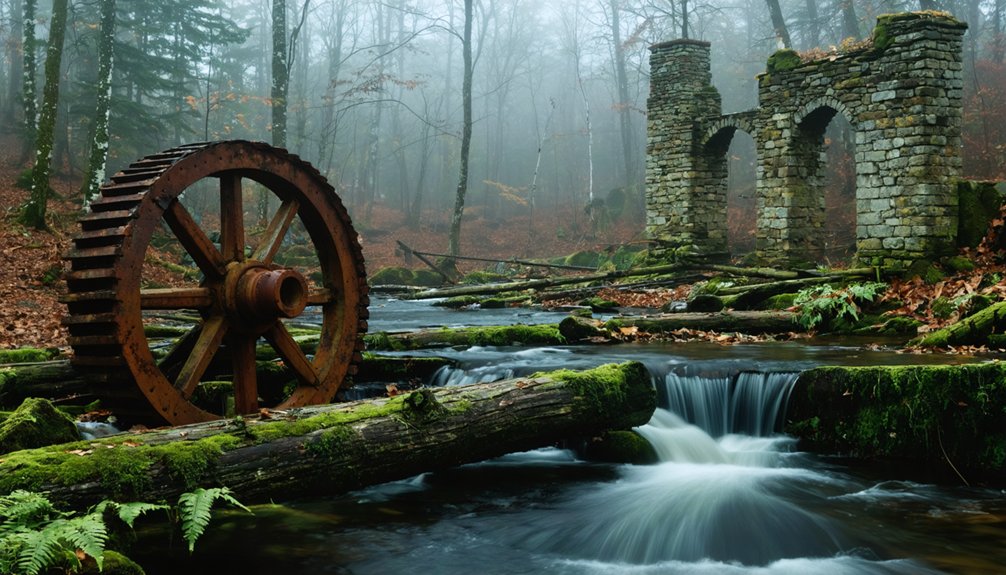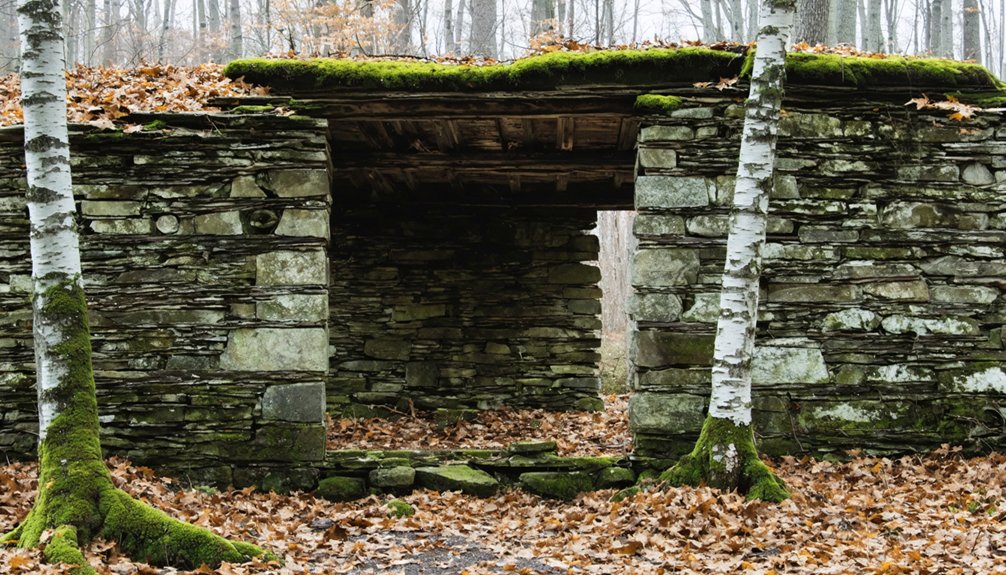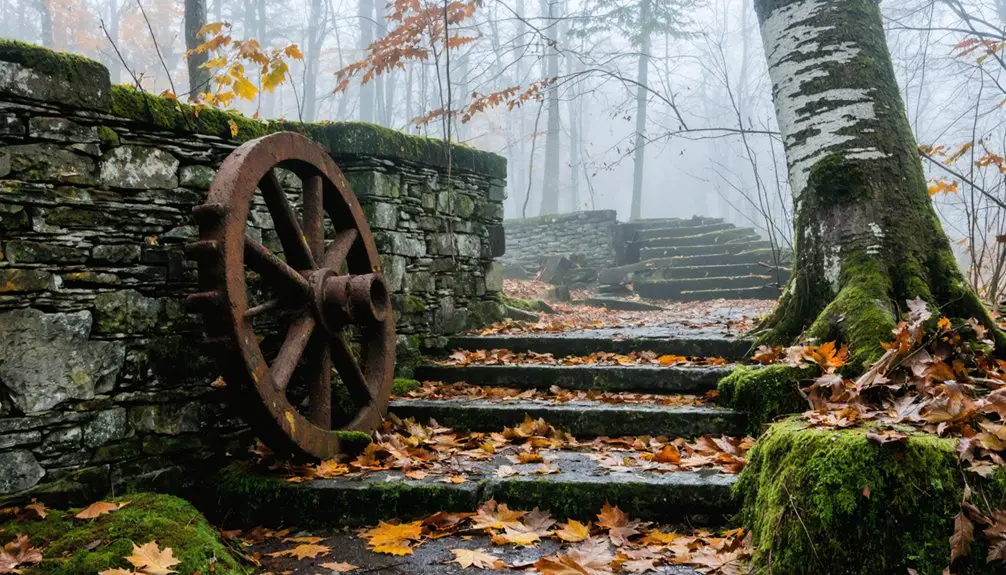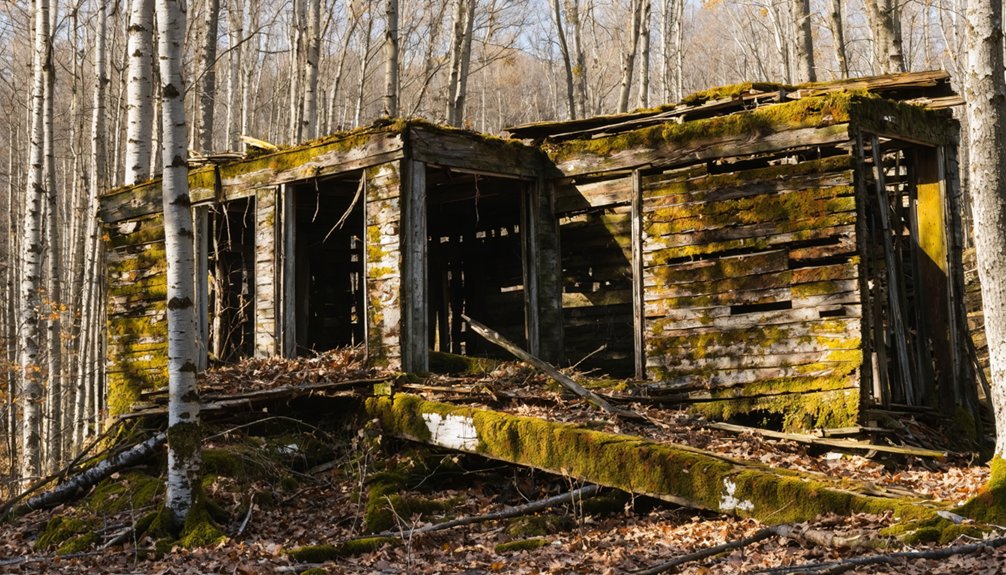
Start your ghost town road trip at the confluence of the Pemigewasset and Beebe Rivers in Campton, New Hampshire, where a once-thriving logging village vanished by 1942. You’ll find traces of 18 electrified homes, a general store, and a railroad that hauled spruce for World War I. Hike the old railroad bed, explore nearby ghost towns like Livermore and Zealand, and pack waterproof boots for muddy trails. There’s far more buried history here than you’d expect.
Key Takeaways
- Start at the confluence of the Pemigewasset and Beebe Rivers to find remnants of the once-thriving mill village established between 1917 and 1935.
- Follow the Flat Mountain Pond Trail along the old railroad bed, spanning roughly 25 miles with logging remnants and wetlands.
- Visit nearby ghost towns Livermore and Zealand for a comprehensive exploration of New Hampshire’s lumber history.
- Fall offers the best conditions with vibrant foliage and cooler temperatures; spring brings muddy trails requiring extra caution.
- Pack waterproof boots, bear spray, printed trail maps, and sufficient water, as black bears and moose inhabit the area.
Beebe River: The Logging Village That Vanished
Once a thriving mill village hummed at the confluence of the Pemigewasset and Beebe Rivers in Campton, New Hampshire — now there’s almost nothing left.
At the meeting of two rivers, a mill village once thrived — now, almost nothing remains.
Between 1917 and 1935, logging operations carved deep into the surrounding watershed, fueling a surprisingly complete community. Eighteen electrified homes, a boarding house for 200, a general store doubling as a post office and movie theater, a school, a ballfield — village life here wasn’t rough frontier living. It was organized, modern, and alive.
Then the hardwood ran out, textile mills shuttered, and the railroad went silent. By 1942, crews had pulled the steel rails for the war effort.
What loggers built in a season, time erased in decades. You’re chasing something that disappeared almost without a trace.
How Spruce, Fire, and Textile Decline Erased Beebe River
Three forces killed Beebe River, and none of them worked slowly.
First, the spruce harvesting stripped the hillsides bare, feeding World War I airplane factories while the railroad pushed deeper into Waterville’s watershed.
Then, in July 1923, fire impact tore through Flat Mountain, burning 3,500 acres and destroying logging Camps 11 and 12. Investigators blamed Woodstock Lumber Company’s railroad operations and leftover slash.
The land didn’t recover quickly.
Getting to Beebe River: Trailheads and Forest Roads
After the fires cooled and the mills closed, the forest quietly swallowed Beebe River whole—but you can still trace its bones.
Start your journey at the confluence of the Pemigewasset and Beebe Rivers in Campton, where village remnants still linger beneath the undergrowth. From there, trail access opens up along the old railroad bed, carrying you upstream through Sandwich and into Waterville.
The Flat Mountain Pond Trail follows these forest routes directly, winding past wetlands and through the ghost of Horseshoe curve. White Mountain National Forest roads keep the area reachable year-round, giving you genuine freedom to explore at your own pace.
For a deeper dive, combine Beebe River with nearby ghost towns like Livermore or Zealand and build a route worth remembering.
When to Visit Beebe River and How to Prepare
Timing shapes everything when you’re chasing a ghost town through the White Mountains. Fall delivers the sharpest seasonal attractions — hardwood color ignites the old railroad corridor, and cooler temperatures make the Flat Mountain Pond Trail far more forgiving.
Summer opens every forest road but draws crowds. Spring thaws turn the Beebe River bottomlands soft and muddy, so watch your footing near the Horseshoe corner.
Local wildlife — black bears, moose, and white-tailed deer — roam this watershed year-round, so carry bear spray and stay alert.
Pack waterproof boots, a printed trail map, and enough water for a half-day hike. Cell service disappears fast out here. The White Mountains don’t forgive careless preparation, but they reward those who arrive ready to move freely through forgotten history.
What Remains at the Ghost Town Site in Campton
Once you’re geared up and ready, the ghost town itself pulls you in at the confluence of the Pemigewasset and Beebe Rivers in Campton — the original heart of a village that once held eighteen electrified homes, a boarding house for two hundred workers, a general store doubling as post office and dance hall, and even a movie theater.
Today, village remnants speak quietly through foundations, overgrown lots, and the river’s unchanged course. The historical significance here runs deep — spruce harvested from this watershed helped build World War I aircraft, and an entire self-sufficient community thrived until hardwood exhaustion and mill closures erased it by 1935.
Walk the ground carefully. You’re reading a landscape that industry built, exploited, and abandoned, leaving only silence and stone behind.
Hiking the Old Beebe River Railroad Bed
From the village site, the old Beebe River Railroad bed stretches upstream like a long corridor into the forest, tracing roughly twenty-five miles of track that once carried spruce logs south toward the mill.
Today, the Flat Mountain Pond Trail follows much of this corridor, threading through Campton and Sandwich toward Waterville. You’ll cross wetlands, spot remnant trestles, and reach the dramatic hairpin bend called Horseshoe near the site of logging Camp 9.
The Flat Mountain Pond Trail winds through wetlands and remnant trestles, culminating at the dramatic Horseshoe bend near Camp 9.
For solid hiking tips rooted in railroad history: wear waterproof boots, since the trail hugs the river drainage and stays wet. Go in fall when foliage thins and old infrastructure becomes visible through the trees.
The steel rails are gone, pulled for wartime scrap in 1942, but the grade beneath your feet tells the whole story.
The Horseshoe Curve and Hidden Landmarks Along Beebe River
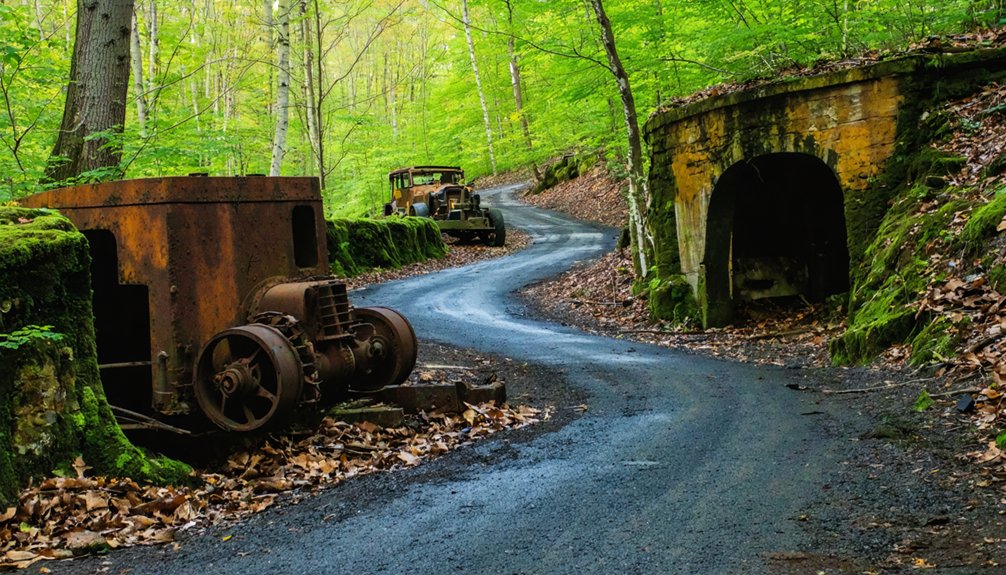
Deep in the drainage where the Beebe River bends hard against the hillside, you’ll find the Horseshoe—a tight hairpin curve the railroad engineers cut into the terrain near logging Camp 9 to keep the grade manageable as the line pushed north toward Waterville.
That Horseshoe history lives in the trail’s geometry today; the Flat Mountain Pond Trail still traces the curve, carrying you through wetlands that swallowed the old railbed decades ago.
Look past the vegetation and you’ll spot hidden landmarks—rusted hardware, earthen embankments, subtle grade changes that betray a working industrial corridor.
Spruce felled here once built World War I aircraft. Now the forest reclaims everything quietly.
Walk slowly. The landscape rewards attention, and freedom tastes sharper when you’re reading a wilderness that most people simply pass through.
What to See on the Flat Mountain Pond Trail
When you set foot on the Flat Mountain Pond Trail, you’re walking the same corridor that once carried loaded timber cars through the heart of New Hampshire’s logging country.
The old railroad bed stretches beneath your boots like a ghost map, guiding you past wetlands that have quietly reclaimed the land since the rails were pulled for the war effort in 1942.
Push on toward the Horseshoe curve, where the hairpin bend near Camp 9 still shapes the landscape, and the surrounding marshes hold a stillness that feels earned.
Historic Railroad Bed Exploration
Tracing the old Beebe River Railroad bed, the Flat Mountain Pond Trail carries you through one of New Hampshire’s most quietly haunting industrial landscapes.
You’re walking where locomotives once hauled spruce destined for World War I aircraft, where the logging industry carved a 25-mile rail corridor through Campton, Sandwich, and Waterville.
The railroad history here isn’t buried — it’s beneath your boots. Watch for grade changes, subtle embankments, and wetlands that reclaimed former trestles.
You’ll reach the Horseshoe, a dramatic hairpin curve near old Camp 9, where the terrain forced engineers to bend the line back on itself.
Standing there, surrounded by recovering forest, you feel the weight of what was built, worked hard, and ultimately abandoned to nature’s quiet reclamation.
Horseshoe Curve Wetlands
As the Flat Mountain Pond Trail bends through the Horseshoe, the landscape opens into a broad, saturated wetland that tells the story of what the railroad left behind.
The old rail bed’s disturbed earth and drainage patterns shaped this soggy ground over decades, creating prime habitat you won’t find just anywhere. Wildlife sightings here run the gamut — moose, wading birds, and beaver activity reward patient observers.
Trail conditions through this stretch turn soft and muddy after rain, so waterproof boots aren’t optional.
You’re walking the same hairpin corner where logging trains once groaned through tight curves hauling spruce destined for World War I aircraft. That industrial past feels distant now, swallowed by cattails and quiet water that have slowly reclaimed everything the lumber company left behind.
Extend Your Trip: Ghost Towns Near Beebe River Worth Visiting

If Beebe River’s vanished world leaves you hungry for more, you’re in luck — the surrounding White Mountains hold other ghost towns equally steeped in forgotten history.
Livermore, a 19th-century logging settlement deep in the Kancamagus corridor, and Zealand, a timber village that thrived briefly before fire and exhaustion claimed it, both reward visitors willing to follow old roads into quiet forests.
You can stitch these sites together into a single extended route, tracing the arc of New Hampshire’s boom-and-bust lumber era across the landscape that still bears its scars.
Livermore Ghost Town Nearby
Just a short drive from Beebe River, the ghost town of Livermore offers another haunting chapter in New Hampshire’s lumbering past.
Livermore history mirrors Beebe River’s arc—timber fueled its rise, exhaustion sealed its fate. Walking among Livermore remnants, you’ll feel the weight of lives once rooted here.
Three reasons Livermore deserves your stop:
- Abandoned railroad grades trace the forest floor, mapping vanished industry.
- Cellar holes and stone foundations emerge from the undergrowth like quiet confessions.
- The surrounding White Mountain National Forest reclaims every structure, offering raw, unfiltered wilderness.
You won’t find crowds or curated exhibits—just honest history returning to earth.
Pair Livermore with Beebe River for a single day that captures New Hampshire’s forgotten lumbering world completely.
Zealand’s Abandoned Settlement
Today, you’ll find abandoned structures and railway remnants swallowed by recovering forest, reclaimed by birch and spruce that Henry’s crews once felled without restraint.
The Zealand Valley Trail carries you through this quiet resurrection, past foundations and ghost-road corridors where loggers once moved timber.
Pairing Zealand with Beebe River gives you a fuller picture of the industrial hunger that once consumed these mountains.
Frequently Asked Questions
Can I Fish in the Beebe River While Exploring the Ghost Town?
You can cast a line in Beebe River’s crystal-clear waters while ghosts of the lumber era surround you. Always check New Hampshire’s fishing regulations first and assess current river conditions before you wade in.
Are There Guided Tours Available for the Beebe River Ghost Town Area?
Over 22,000 acres hold ghost town history here. No formal guided tours exist, but you’ll uncover Beebe River legends yourself, tracing abandoned railroad beds and crumbling village remnants through White Mountain National Forest’s atmospheric, freedom-filled wilderness trails.
Is Camping Permitted Along the Old Beebe River Railroad Bed?
You’ll want to verify current camping regulations with White Mountain National Forest, but dispersed camping’s often permitted along the old railroad bed, where river access to the crystal-clear Beebe invites you to sleep where loggers once roamed free.
Were Any Artifacts From Beebe River Preserved in Local Museums?
The knowledge doesn’t confirm preserved artifacts, but you’ll find the town’s historical significance alive in local folklore. Seek out Campton’s historical society — they’re your best lead for uncovering relics from this vanished lumber empire.
Are Pets Allowed on the Flat Mountain Pond Trail Near Beebe River?
The knowledge doesn’t confirm pet-friendly policies for the Flat Mountain Pond Trail, so check with White Mountain National Forest directly. Practice trail etiquette — keep your dog leashed as you walk where loggers and railcars once roamed.
References
- https://en.wikipedia.org/wiki/List_of_ghost_towns_in_New_Hampshire
- https://vitabrevis.americanancestors.org/2016/11/new-hampshire-ghost-town
- https://www.scenicnh.com/blog/2018/04/beebe-river-railroad/
- https://www.laconiadailysun.com/community/outdoors/following-the-beebe-river/article_5ddcc012-92a7-11e9-a3b2-5bee7698d29f.html
- https://wokq.com/2-new-hampshire-ghost-town-home/
- https://www.conservationfund.org/our-impact/projects/beebe-river-nh-reconnecting-a-river-wildlife-and-a-communitys-favorite-place/
- https://www.whitemountainhistory.org/abandoned-towns