You’ll find Bermont about 8 miles down Bermont Road from Highway 17 northeast of Punta Gorda, though accessing the actual townsite requires permission to cross private Babcock Ranch property. This 1900s sawmill community vanished by the 1920s when timber ran out, leaving barely distinguishable foundation outlines beneath overgrown vegetation. Charlotte County harbors over 20 ghost towns along its backroads, including nearby Sparkman and Shell Creek. Proper planning means securing landowner permission, wearing sturdy boots, and understanding the area’s layout before you set out on your exploration.
Key Takeaways
- Bermont is located in Charlotte County, Florida, accessible via Highway 17 northeast from Punta Gorda then Bermont Road for eight miles.
- The ghost town sits on private Babcock Ranch property requiring explicit permission to access via a final half-mile dirt road.
- Little remains of the 1900s-1920s sawmill community except scattered farmstead ruins and barely visible foundation outlines in overgrown landscape.
- Explore over 20 nearby Charlotte County ghost towns including Sparkman, Del-Verde, Shell Creek, Harborview, and Hickory Bluff for additional stops.
- Practice Leave No Trace ethics, wear sturdy boots, carry a flashlight, and never explore alone when visiting abandoned settlement sites.
The Rise and Fall of a Sawmill Community
The sawmills came first, then everything else followed. You’ll find Bermont’s story mirrors dozens of North Florida lumber towns that sprouted after 1900—timber corporations staking claims, cutting deals, building communities from scratch. By 1908, this Charlotte County settlement had earned its post office, signaling legitimacy in population demographics that included mill workers, their families, and entrepreneurs running the general store.
Typical day to day life revolved around lumber production and sugarcane operations. You’d catch baseball games against rival Sparkman on weekends, debate at the literary society, or worship in the schoolhouse-turned-Sunday-church. Workers carved out their own freedoms despite paternalistic company structures. The most productive operations, like Horton’s sawmill, could produce 7,500 board feet of lumber per day.
Then the timber ran out. By the 1920s boom’s end, Bermont joined Florida’s ghost town roster—abandoned, reclaimed by Babcock Ranch’s private lands. Similar operations in South Dade saw lumber shipped by sloop or schooner to Key West after the marketable pine was exhausted.
Getting to Bermont: Routes and Road Conditions
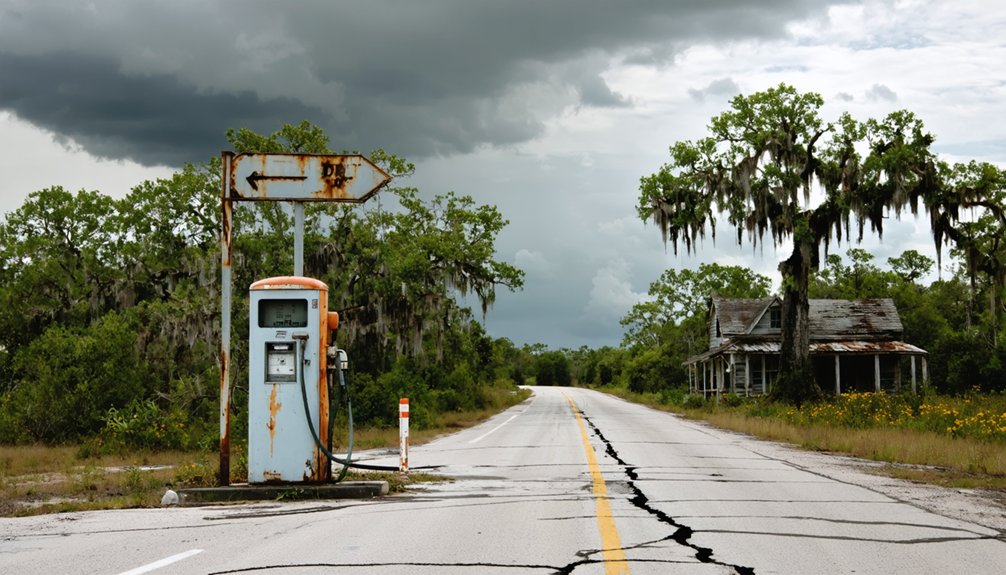
Finding Bermont today requires traversing a patchwork of county roads and private ranch land that’s swallowed most traces of the old mill town. From Punta Gorda, you’ll follow Highway 17 northeast before turning onto Bermont Road (County Road 74), continuing east for roughly eight miles through palmetto prairie dotted with oak, pine, and cabbage palms.
The final half-mile demands maneuvering a private dirt road—you’ll need permission before venturing onto these ranches, now protected wildlife habitat and ecological conservation areas. The landscape has reclaimed what civilization briefly interrupted. Pack water, download offline maps, and remember: Babcock Ranch Preserve surrounds much of this territory. You’re exploring land that’s returned to its wild roots, where nature’s freedom trumps human permanence. The area offers opportunities for kayaking, canoeing, and boating for those seeking outdoor recreation beyond the ghost town exploration.
When planning your departure, keep in mind that Charlotte County operates on Eastern Time Zone, which may affect your travel schedule if you’re coming from other parts of Florida or neighboring states.
What Remains at the Original Townsite
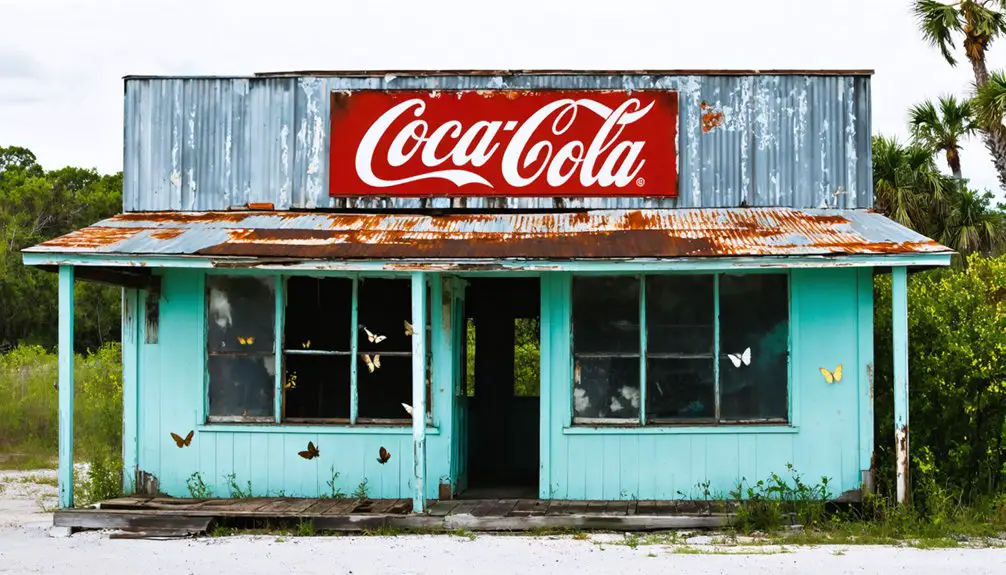
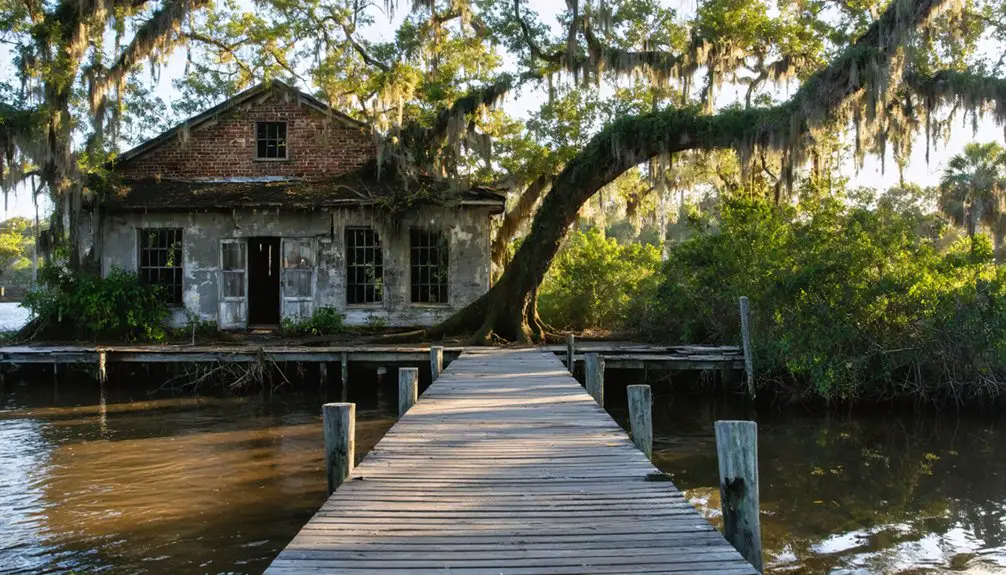
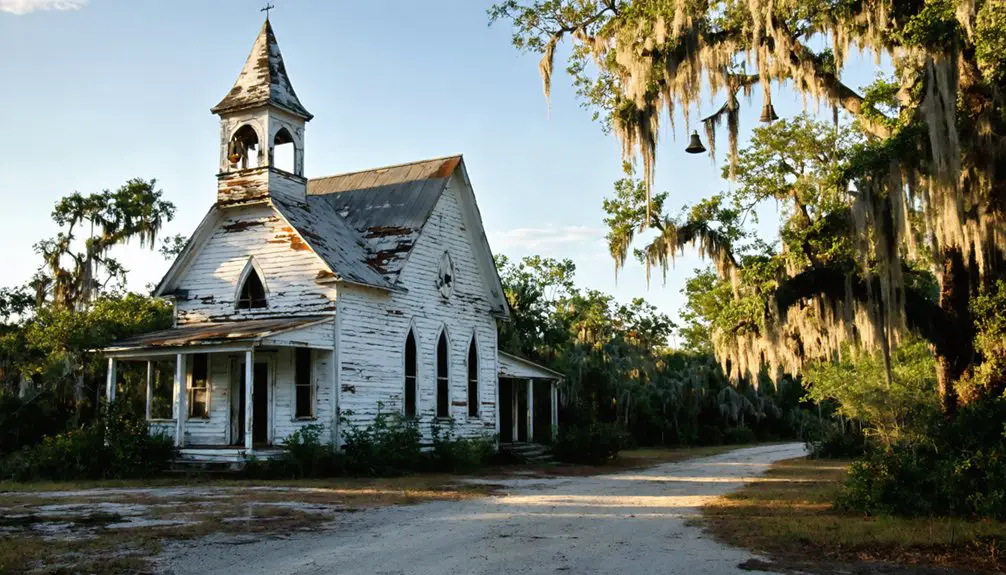
WhereBermont’s bustling sawmill once screamed through cypress logs, only silence and scrub palmetto remain. You’ll find the townsite swallowed by Babcock Ranch’s sprawling acreage, accessible via 2WD roads but firmly off-limits as private property. The post office that opened in 1908, the general store, the school-turned-Sunday-church—they’ve all vanished into Florida’s unforgiving soil.
If you could explore (you can’t legally), you’d discover precious few farmstead ruins scattered across the landscape. Historic building foundations lie buried beneath decades of undergrowth, their outlines barely distinguishable. The weekly newspaper’s offices? Gone. The debating society’s meeting hall? Reclaimed by nature. A sawmill and crate factory once operated on the Babcock Ranch property, connected by its own railroad spur. Even the baseball diamond where Bermont challenged Sparkman exists only in memory now, leaving you to imagine this once-thriving community from the roadside. The town shares its name with other Bermont locations, which are catalogued on disambiguation pages that help distinguish between similarly named places.
Exploring Nearby Abandoned Settlements
Over twenty ghost towns haunt Charlotte County’s backroads, each whispering stories of Florida’s boom-and-bust frontier cycle. You’ll find Sparkman north of SR 31, where area homesteading efforts after 1905 created a community complete with baseball team and general store.
Del-Verde’s 1920s street curbing still marks private property southwest of the SR 74 intersection. Shell Creek’s colonial era sawmill settlement operated an International Telegraph office along the creek’s south bank.
Harborview, Nathan Decoster’s 1870s vision upriver from Peace River, features streets named Guava, Banana, and Sapodilla—accessible today via Harborview Road. Most significant is Hickory Bluff, the Peace River’s first permanent settlement, predating Punta Gorda by over a decade before transforming into Charlotte Harbor post office. Further south, Fort Basinger stands as a reminder of Florida’s Seminole War era in neighboring Highlands County. These abandoned settlements are part of over 3,800 ghost towns that have been researched across the country, with heritage tourism now offering many a second chance to thrive.
Best Practices for Visiting Private Ghost Town Property
Before you set out to explore these forgotten settlements, you’ll need to understand the legal and ethical boundaries that protect both you and these historic sites.
Legal considerations for visiting require obtaining explicit permission from property owners—even for publicly owned sites. Research ownership through county records or local inquiries, and present yourself as a photographer rather than an explorer. Obey all no-trespassing signs without exception.
Always secure landowner permission before visiting abandoned sites, regardless of public or private ownership status.
Preservation considerations for abandoned towns demand Leave No Trace ethics. Don’t remove artifacts, even small items like rusty nails. Pick up any trash you find. These sites survive because visitors respect them.
Safety’s non-negotiable: wear sturdy boots, carry a flashlight, and never explore alone. Share your route plan with someone trustworthy. Plan ahead for the absence of basic facilities like restrooms and gas stations in these remote locations. Watch for hazards like asbestos and unstable structures in abandoned buildings. True freedom comes with responsibility.
Frequently Asked Questions
What Time of Year Offers the Most Comfortable Weather for Visiting Bermont?
November through April delivers the most comfortable conditions for exploring Bermont’s abandoned streets. You’ll enjoy mild temperatures between 65-75°F and low humidity—perfect freedom for wandering ghost town ruins without summer’s oppressive heat slowing you down.
Are There Any Historical Markers or Signs Identifying the Original Townsite?
You won’t find historical markers identifying Bermont’s original townsite. Historic preservation efforts haven’t reached this forgotten settlement, and no archaeological excavations have documented its location. You’ll need imagination and coordinates to explore this unmarked ghost town independently.
Can I Find Photographs or Maps of Bermont During Its Active Years?
You’ll discover old town photos and historical maps are scarce, but the Charlotte County Historical Society (941-629-7278) preserves what exists. Their oral histories and archives offer your best chance to glimpse Bermont’s vanished sawmill days.
What Amenities Are Available Near Bermont for Food and Restrooms?
You’ll find basic amenities in nearby towns like Punta Gorda and Arcadia, where pet-friendly restaurants welcome travelers. Truck stops along SR-70 offer public shower facilities, while convenience stores provide quick snacks and restrooms for your adventurous journey.
Did Any Notable Historical Figures Have Connections to Bermont’s Early Days?
No notable historical figures emerged from Bermont’s early days. You won’t find prominent business owners or enduring family legacies documented here—just everyday settlers who’ve faded into obscurity, leaving behind only whispers of their once-thriving sawmill community.
References
- https://www.ghosttowns.com/states/fl/bermont.html
- https://cchistoricalsociety.com/lost-towns/
- https://patchproflorida.com/blog/the-fascinating-history-of-floridas-ghost-towns/
- http://www.onlyinyourstate.com/experiences/florida/underwater-ghost-town-fl
- https://www.geotab.com/ghost-towns/
- https://en.wikipedia.org/wiki/List_of_ghost_towns_in_Florida
- http://www.shrimpnfishflorida.com/forums/threads/lake-county-fl-ghost-towns.5641/
- https://hsdade.com/the-sawmills-of-south-dade-chapter-2/
- https://clayclerk.com/historical-archives/education/celebrate-curriculum-topics/land-water-agriculture/sawmills/
- https://stars.library.ucf.edu/cgi/viewcontent.cgi?article=4132&context=fhq