You’ll find Big Blue Mill at 3,241 feet in Placer County’s Dutch Flat Mining District, accessible via Interstate 80 with a high-clearance vehicle—about 2.5 hours from San Francisco or one hour east of Sacramento. This peculiar site blends authentic relics with reconstructions, dominated by massive tailings piles from its cyclical mining past under Santa Rosa National Bank’s control until 1958. Pack camping gear, water, and emergency supplies for the remote backcountry terrain. The full story reveals why this ghost town’s banking-controlled history makes it unlike any forty-niner boomtown.
Key Takeaways
- Big Blue Mill sits at 3,241 feet in Placer County, accessible via Interstate 80 at Dutch Flat exit with high-clearance vehicle required.
- The site features restored buildings, mining equipment exhibits, tailings piles, and both original structures and careful reconstructions from templates.
- Winter snow often closes access roads; check seasonal conditions before visiting and use GPS coordinates 39.1856°N, -120.83580°W for navigation.
- Nearby ghost towns include Old Shasta, French Gulch, North Bloomfield’s Malakoff Diggins, and Placerville’s Gold Bug Mine for extended exploration.
- Pack camping gear, emergency supplies, water purification, first-aid kit, and GPS as the remote terrain lacks cell service.
Getting to Big Blue Mill: Routes and Travel Times

Nestled at 3,241 feet in Placer County’s Dutch Flat Mining District, Big Blue Mill sits where California’s gold rush legacy meets the rugged expanse of Tahoe National Forest. You’ll reach this weathered monument to mining history via Interstate 80, exiting at Dutch Flat—just 2.5 hours from San Francisco or one hour east of Sacramento. From Reno, you’re looking at a two-hour westbound drive.
Beyond Dutch Flat, forest service roads demand high-clearance vehicles and careful navigation using the coordinates: 39.1856°N, -120.83580°W. Seasonal road conditions dramatically affect accessibility—winter snow often renders routes impassable. Weekday vs. weekend travel matters here; you’ll encounter fewer recreational vehicles and forest service checkpoints on weekdays. Nevada City offers the closest jumping-off point at thirty minutes out, while Auburn provides supplies forty-five minutes away.
What to Know Before You Visit
Before you load your vehicle, understand this critical fact: Big Blue Mill exists in legal gray space where property boundaries blur between National Forest land and private mining claims. You’re venturing into territory where private property rights demand respect, yet operational history details remain frustratingly sparse in official records.
Essential prep for your expedition:
- Download offline maps – Cell service dies at 3,241 feet elevation
- Pack layered clothing – Sierra Nevada weather shifts violently within hours
- Carry physical coordinates (39.1856° N, -120.83580° W) as GPS backup
- Bring permission documentation – If landowners granted access, have proof ready
The site’s underground workings pose genuine hazards. Shafts collapse. Timbers rot. Nobody’s maintaining abandoned infrastructure here. Your freedom to explore ends where unmarked dangers begin.
The History Behind Big Blue Mill
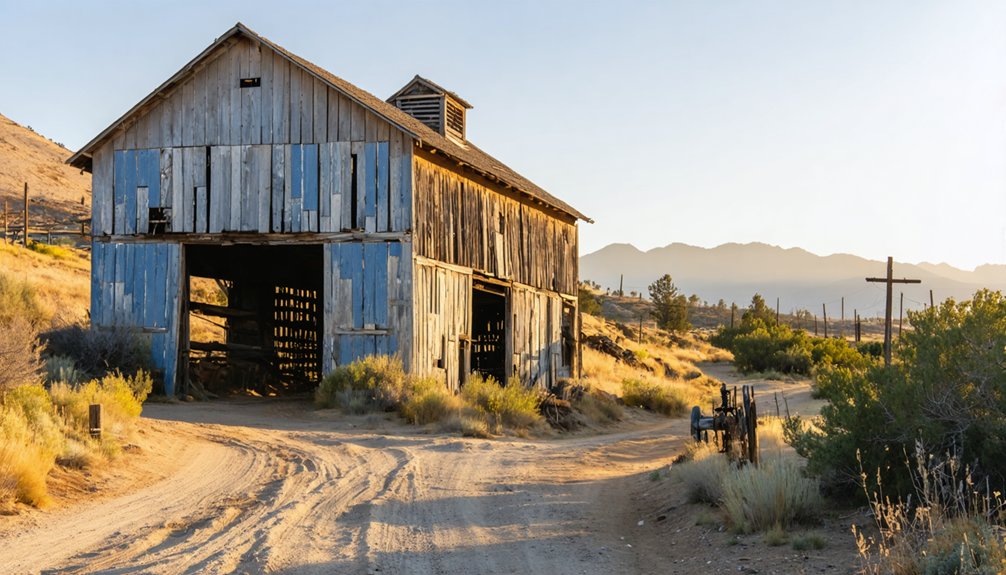
While thousands of prospectors chased California’s glittering promise after James W. Marshall discovered gold at Sutter’s Mill in 1848, Big Blue Mill’s story unfolded differently. You’ll find this wasn’t a forty-niner boomtown—Santa Rosa National Bank controlled the property through quieter cycles of dormancy and revival. The mine slept from 1913 to 1922 before lease acquisitions brought sporadic life back.
When the City of Redding purchased the land in 1927 for Benton Airfield, they continued the leasing tradition. The Larsen brothers’ 1938 lease sparked renewed hope—they discovered fresh quartz veins and invested $3,000 in mining activities. Their first ore load assayed at $750, but World War II shuttered operations in 1942. The city kept leasing until 1958, when Big Blue finally went silent.
What Remains at the Site Today
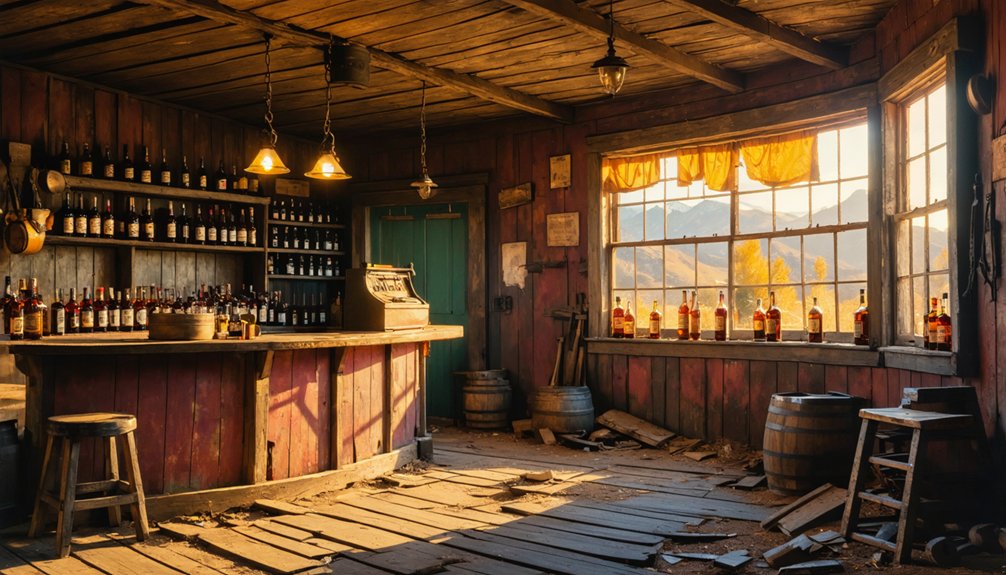
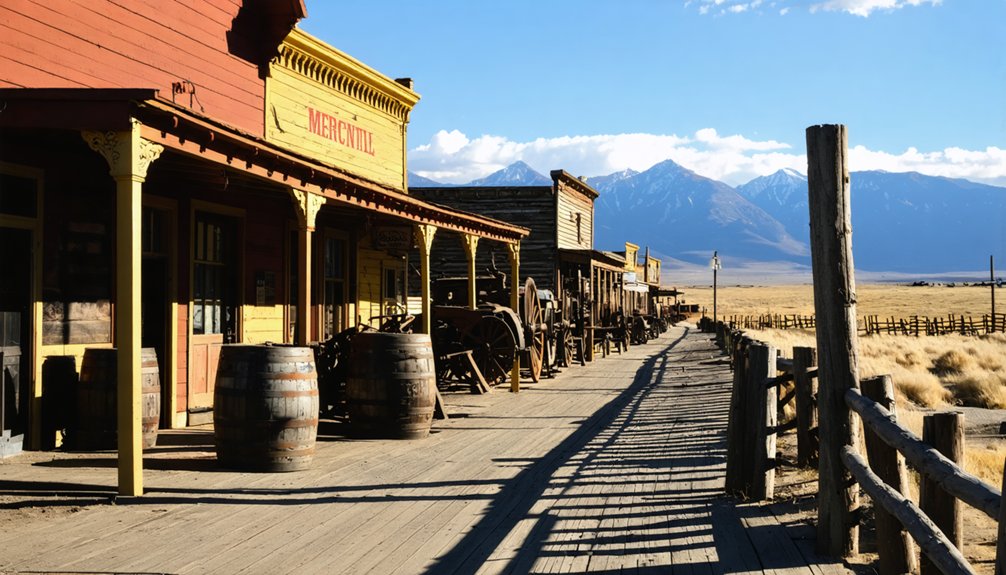
Today’s Big Blue Mill exists as a patchwork of genuine relics and careful reconstructions. You’ll find remnant preservation efforts concentrated on structures that survived California’s harsh desert conditions—a blacksmith shop, scattered original buildings, and milling equipment from the silver and borax boom days.
Authentic relics meet meticulous reconstruction in a desert landscape where California’s silver boom history survives against harsh conditions.
The site offers freedom-seekers tangible connections to industrial heritage:
- Giant tailings pile dominating the landscape, evidence to decades of extraction
- Mining equipment exhibits featuring limestone, bauxite, and iron ore samples
- Restored buildings rebuilt from scratch using surviving originals as templates
- Active mining supply stores stocking genuine gear alongside historical displays
Warning signs mark restricted areas where digging continues. The Mitsubishi Cement Corporation maintains operations adjacent to park boundaries, blending working industry with ghost town ruins.
Photography Tips and Best Viewing Spots
You’ll want to arrive at Big Blue Mill during the late afternoon when golden light washes across the weathered wooden boards and faded paint, revealing textures that midday sun flattens into obscurity.
Position yourself to capture the building’s corners and angles against the open sky—these geometric intersections tell the story of a structure defying time and gravity.
The mill’s distinctive blue hue photographs best when side-lit, creating shadows that emphasize every crack, splinter, and layer of peeling color.
Golden Hour Lighting Techniques
When the sun hangs low over Big Blue Mill’s weathered structures, you’re working with nature’s most forgiving light source—but only if you understand how to position yourself and your camera. The ruins transform during golden hour, offering opportunities beyond typical flat lighting setups.
Essential techniques for capturing Big Blue Mill:
- Backlight positioning – Place the sun behind deteriorating walls to create high contrast silhouette effects that emphasize the mill’s haunting architecture
- Rim lighting – Catch glowing edges along wooden beams and metal framework for dimensional depth
- Exposure balance – Meter for highlights to preserve detail in bright sky while pulling shadow information in post-processing
- Directional angles – Position yourself with sidelight to reveal texture in weathered surfaces and cast dramatic shadows through empty doorways
Historic Structure Composition Angles
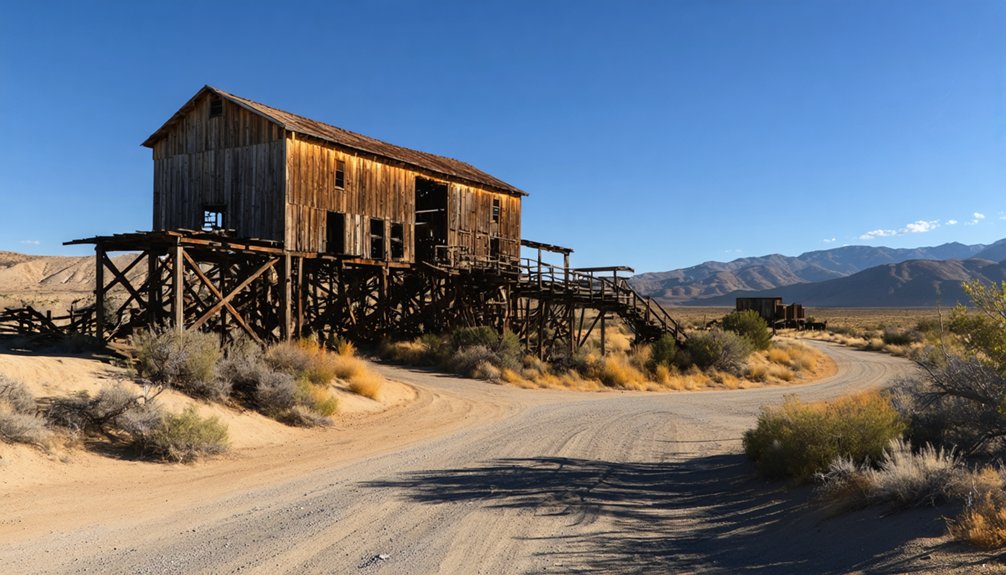
The metal mill standing at Big Blue Mine today presents a different challenge than the golden hour shots you’ve just mastered—here, you’re working with angular industrial geometry rather than warm atmospheric light.
Position yourself to capture the mill’s weathered textures against California’s rugged terrain at 3,241 feet. The structure’s architectural nuances emerge through contrast—frame conveyor belts jutting from protective snow sheds, or isolate corroded metal against sierra granite.
Unlike the original 1890s wooden mill, this replacement offers harder edges and industrial lines. Move around the site freely, shooting from low angles to emphasize the mill’s dominance over the landscape. The best compositions often come from unexpected positions where machinery, mountain, and sky intersect in ways that reveal both human ambition and nature’s supremacy.
Nearby Ghost Towns Worth Exploring
Northern California’s gold country sprawls across hundreds of miles, dotting the landscape with abandoned settlements that tell stories of fortune-seekers and failed dreams. You’ll find nearby towns with gold rush histories within easy driving distance, each offering distinct perspectives on mining life.
Essential Stops:
- Old Shasta – Six miles west of Redding, where brick building shells stand as monuments to a town that once rivaled San Francisco’s northern commerce.
- French Gulch – Founded 1849, this town retains authentic structures from its days as a California Trail terminus and supply hub.
- North Bloomfield – Home to Malakoff Diggins’ preserved hydraulic mining operations, complete with general store and schoolhouse.
- Placerville – The former “Hangtown” features regional mining museum exhibits at Gold Bug Mine and Marshall Gold Discovery State Park.
Where to Stay During Your Trip
Finding accommodations near Big Blue Mill requires flexibility, since this remote ghost town sits far from commercial lodging infrastructure. Your lodging options lean toward self-sufficiency: dispersed camping on public lands or primitive sites where you’ll pitch your tent under star-filled skies.
The nearest towns may offer basic motels or vacation rentals, though you’ll need to verify specific locations and distances beforehand. Without established accommodation recommendations for this particular destination, you’re embracing true backcountry exploration. Pack camping gear, water, and supplies for overnight stays in isolated terrain.
This independence defines the ghost town experience—trading comfort for authenticity, hotel rooms for campfires, and predictability for adventure. Research local land management regulations and seasonal road conditions before committing to overnight plans in this unforgiving landscape.
Exploring ghost town attractions in Temescal allows travelers to step back in time, uncovering stories that shaped the region. Each site tells a unique narrative, inviting visitors to engage with the remnants of the past while appreciating the natural beauty surrounding them. Embrace the unexpected and let curiosity lead the way as you navigate through these historical landscapes.
Essential Supplies and Safety Precautions
You’ll need more than enthusiasm to safely explore Big Blue Mine’s 3,241-foot elevation and remote mountain terrain. Pack emergency supplies—water, first-aid kit, flashlight, and food—since cell service vanishes once you leave Highway 178 and venture into Placer County’s abandoned mining country.
The Sierra’s variable conditions demand preparation: desert heat transforms to sudden mountain weather shifts, and those rickety structures won’t forgive careless exploration.
Critical Emergency Gear Needed
Desert exploration demands respect, and visiting abandoned mining sites like Big Blue Mill requires preparation that could mean the difference between adventure and disaster. You’re venturing beyond cell service and medical facilities, so pack accordingly.
Essential emergency gear includes:
- Water purification system – Carry tablets or a filter alongside your supply for dehydration prevention in exposed desert terrain
- Comprehensive first aid kits – Include bandages, antiseptic, pain relievers, and snake bite treatment specific to California’s backcountry
- Emergency shelter and fire starter – Mylar blankets and waterproof matches protect against overnight temperature drops
- GPS device with backup batteries – Don’t rely solely on your phone when exploring off-grid mining territory
Your freedom to roam remote ghost towns depends entirely on self-sufficiency and smart preparation.
Desert Weather Preparation Tips
While March temperatures around Big Blue Mill hover between comfortable 60s and scorching 110°F extremes, you’ll face dramatic thermal swings that catch unprepared explorers off-guard. Layer your clothing recommendations around this reality—start mornings in long sleeves, then strip down as midday heat builds, and bundle up again when those 50°F evenings roll in.
Desert hydration strategies demand more than casual sips. You’re losing moisture faster than you realize in this bone-dry air where sweat evaporates instantly. Pack twice the water you think necessary—one gallon per person minimum.
Those March winds that whip through the Mojave aren’t just atmospheric drama; they’ll dehydrate you relentlessly while raising wildfire risks across these parched landscapes where rain’s practically unheard of.
Frequently Asked Questions
Can I Bring My Pet Dog to Big Blue Mill?
You’ll find no documented pet friendly policies or on site accommodations at this abandoned mining location. However, you’re likely free to bring your leashed dog, though hazardous terrain, extreme temperatures, and toxic remnants demand careful consideration.
Are There Restroom Facilities Available Near the Site?
No dedicated facilities exist at Big Blue Mill itself. You’ll find public restrooms at nearby Big Sur state parks, though seasonal restroom hours apply. Plan your stops strategically—these remote locations demand self-sufficiency and advance preparation.
Is Cell Phone Reception Reliable in This Area?
Like pioneers venturing into the wilderness, you’ll find cell phone coverage availability nearly nonexistent at Big Blue Mill. Plan ahead—nearby internet hotspot locations are scarce in this remote California terrain, so download maps and embrace true disconnection.
What Is the Best Season to Visit Big Blue Mill?
Fall offers the best weather conditions for your Big Blue Mill adventure. You’ll find ideal visitation timeframe from September through October, with comfortable temperatures, clear skies, empty trails, and perfect visibility for exploring without summer’s oppressive heat or crowds.
Are There Guided Tours Available for Big Blue Mill?
You’ll find guided tours available by reservation only at Blue Ox Historic Village, showcasing Victorian millworks and 1800s machinery. Private tours let you explore at your pace, watching authentic woodworking craftsmanship in action—pure freedom to wander this living history.